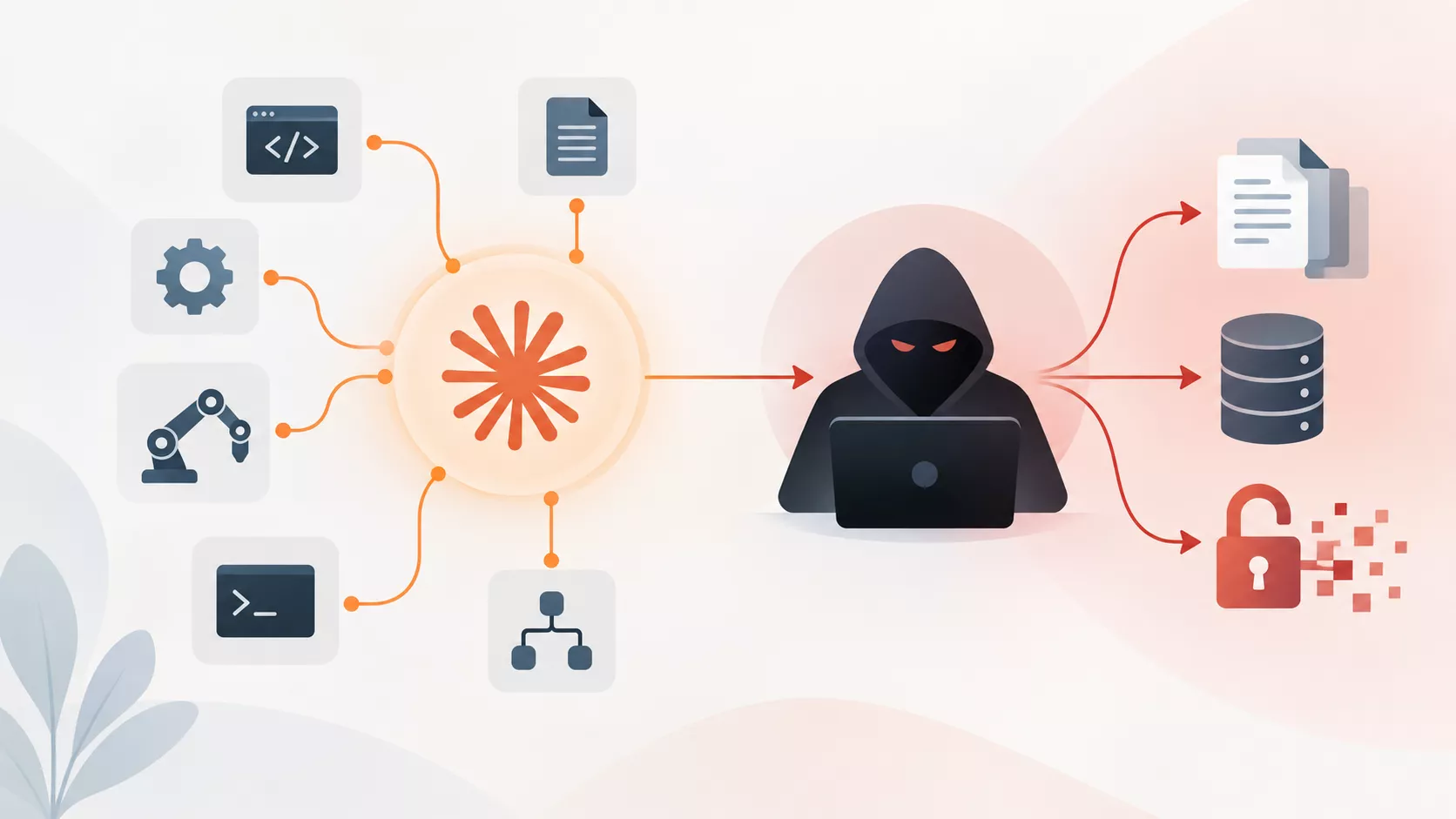
The term "security through obscurity" describes an old idea that networks and systems will remain secure so long as their architecture, along with any vulnerabilities or other weaknesses, remains secret or hidden. It was never a sound strategy for protecting sensitive assets and systems, but many organizations leaned on it due to lack of resources or complacency. Now it’s obsolete. Don’t believe us? Here’s proof. Software vendors and independent researchers alike are now using AI agents to find bugs – some very obscure and decades old – across products and open source code, leading to record-breaking numbers of security disclosures and patches, and a massive backlog for project maintainers. “You see open source platforms that have been visible to the tech community for a decade, these libraries that are run in 80 percent of web servers out there, people have stress-tested those for 10 years, and the community believed that they were really secure,” Brett Leatherman, assistant director of the FBI's Cyber Division, told The Register. “The latest models were able to break those and say, ‘yeah, there’s significant vulnerabilities in here.’” Whether or not security through obscurity is dead “isn't even an opinion question,” Trend Micro’s Zero Day Initiative chief bug hunter Dustin Childs told The Register, the day after Microsoft’s record-breaking Patch Tuesday addressed 974 CVEs. “When you look at all of the components patched by Adobe and Microsoft yesterday, you see components no one has talked about in years,” Childs said. “Telnet client – is this even still used in any secure environment? Windows RNDIS – the USB-networking protocol Microsoft has been trying to deprecate for years. NFS Portmapper – 1980s Unix tech. And Link Layer Topology Discovery – the Vista-era network-map protocol nobody's thought about since Vista – just to name a few.” Meanwhile, attackers are also using AI to reverse-engineer fixes and find exploits within hours. In one recent case, at least four espionage crews, most suspected of links to China, slammed shut the “patch-gap” window for open source Chromium, using an exploit kit developed shortly after the maintainers released an upstream patch – but before the downstream stable release was pushed to users. What this means for OT security During interviews at Black Hat in August, both former US National Cyber Director Chris Inglis and John Hultquist, chief analyst at Google Threat Intelligence Group, told us that they worry about what this means for critical operational technologies and industrial control systems (ICS). These are the systems that ensure the lights turn on when people flip a switch, gas flows out of pumps, and safe drinking water pours from faucets – all critical services that people use daily, and assume will continue working reliably. The OT systems themselves often use obscure protocols and proprietary hardware and software, which historically made them black boxes, even to IT specialists and hackers. AI upended this assumption. It means that criminals don't need to be OT experts to carry out destructive cyberattacks on critical networks and facilities. They just have to ask an agent to learn everything about these systems and do the dirty work for them. A couple of weeks after Black Hat, five US agencies said that attackers used AI-generated exploitation scripts to break into internet-exposed Siemens S7 Series programmable logic controllers (PLCs) at water, manufacturing, energy, and other critical facilities. “This is not a theoretical risk – it is an active threat,” the feds warned. AI “is excellent at technical troubleshooting, at knowing obscure systems and helping you make your way through it, and this makes me very concerned about industrial control systems,” Hultquist told The Register in an interview last week. “They've been largely secured because the expertise was in a handful of people's heads, and that's not going to last forever,” he said. AI can be a useful guide for attackers studying not just the application layer, but also the operating system, and even down into the firmware, Hultquist added. “That's going to have implications for a lot of different areas of security, but definitely for industrial control systems.” However, while this undoubtedly means more work for sysadmins and defenders, burying this outdated idea of security through obscurity isn’t necessarily a bad thing. 'Never a winning strategy' “I've always been of the mind that security through obscurity was never a winning strategy,” Katie Moussouris, founder and CEO of bug bounty consultancy Luta Security and the fairy godmother of bug bounties, told The Register. “But that's because I've been a hacker for so long. The argument always fails in the face of someone who decides to turn their gaze towards your organization. If there is something to find, they will find it.” Plus, she added, AI makes hacking a whole lot easier. “People might not have familiarity with the particular tech stack that you're running, but that is no longer a barrier because AI has ingested everything, and an AI is going to help them enumerate weak spots, even if they themselves are not familiar with the particular tech stack that they are pointing an AI towards,” Moussouris said. However, finding bugs and other weaknesses has never been the big security problem, she added. “It’s triaging and prioritization and actually getting things fixed.” This, Moussouris said, has also been her biggest issue with the way that organizations implement bug bounty programs. “AI is shining that bright light on the wrong end of the security picture, and unfortunately, AI hasn't caught up on the defensive side,” Moussouris said. “We're not there with AI automated patching, remediation – anything of the sort.” A couple of recent studies back this up, both finding that AI-generated patches fail more than half of the time. 1Password’s research team took six CVEs disclosed since March, and produced 6,080 patches using two frontier models: OpenAI's ChatGPT-5.5 and Anthropic's Opus 4.8. “The average success rate for generating a patch that fully resolved the vulnerability (without materially changing application behavior) was just 26.0 percent,” wrote Director of Security Research Keith Hoodlet, adding that even patches that did fix the flaw also mucked up the application’s behavior 20 percent of the time. This included things like changing “allow list” logic to “deny list” logic. “Conversely, LLM-generated patches did not resolve the vulnerability, added a new vulnerability, or both, an average 53.9% of the time,” Hoodlet said. Another study by app security shop Veracode found that, across more than 100 models and 80 coding tasks, the average security pass rate for AI-generated code was just 56 percent. “If people are telling you that you need to accelerate on the fixing side, and the defense side – that’s just not cutting it,” Moussouris said. “Orgs that are looking at this as we're going to throw more resources at finding and fixing bugs, and they're not investing in taking a look at their process failures that led to so many bugs – those organizations are going to die on the treadmill,” she added. “They will literally have a heart attack and die. Like there's no VO2 max that will make you fast enough to deal with all those bugs, and giving up is not the answer.” The answer, she says, is taking a more dynamic approach, assessing where your organization can find patterns that lead to a process improvement instead of patching vuln after vuln. “A lot of organizations don't even know how to measure their progress, so they are counting bugs and speed of fixing, which is one way to measure. We had this many criticals, and then we fixed them super fast, and we had this many high, this many medium,” Moussouris said. The number of flaws fixed is important, but it doesn’t show the entire picture, she added. This involves looking at types of vulnerabilities, too. “Like: We've got a lot of injection flaws. That's something we could solve with better, safer templates earlier in our CI/CD pipeline. This is something that we can prevent at scale, as opposed to fixing these like really easy to find and fix vulnerabilities really really fast.” ®
This one is for all the people who buy a router, set it up according to the default settings, and never look at it again. Unfortunately, default settings aren't really optimized to keep us safe and secure. Instead, they're designed to make the product work out-of-the-box for as many people as possible.
Ukraine’s Navy said one of its Sargan-3000 uncrewed surface vessels destroyed a Russian drone boat in the Black Sea, describing the engagement as the first battle in history between two uncrewed naval vessels. The Navy said its Defense Intelligence partners spotted the Russian craft before the Sargan-3000 closed in and destroyed it using a remote-controlled […]
As someone who is very fond of my smart home setup, I’ll be the first to admit that a lot of it is surplus to requirements. Rarely would I recommend everyone install color-changing bulbs or relinquish control of the HVAC to just a smartphone app or a Home Assistant integration.
Plus: The US disrupts the internet’s biggest black market, a Conti ransomware hacker gets prison time, Meta fails to stop AI-generated videos of child abuse.
Threat actors are increasingly using Claude-based AI workflows to automate cyberattacks, accelerate data theft, and reduce the technical expertise needed to run complex intrusions. Anthropic’s report details cyber espionage, financially motivated extortion, supply-chain compromise, and hacktivist activity disrupted between December 2025 and August 2026. Rather than using an AI chatbot only for occasional coding assistance, […]
China-linked threat actors UTA0560 and JungleBamboo chained a Google Chrome zero-day with a Windows kernel privilege-escalation flaw in phishing campaigns targeting NGOs and other victims. Volexity documented the operations, detected on September 1, 2026, as using identical browser-to-kernel exploit components but ultimately installing separate espionage payloads: the GRIMWEDGE JScript backdoor and the LONGTALE credential-stealing Chrome […]
A newly identified phishing campaign is abusing the legitimate Windows utility mshta.exe to execute malicious HTML Application (HTA) files, conduct system reconnaissance, and potentially deploy payloads designed to steal credentials and local secrets. Fortra’s Intelligence and Research Experts (FIRE) said the activity began in June and remains active, with operators regularly recompiling malware samples to […]
A swarm of AI agents believed to be operated internally by OpenAI uploaded more than 2,000 malicious packages to RubyGems in May 2026, abusing the ecosystem’s documentation build process to execute code remotely and attempting to steal user API keys through a then-undisclosed server-side flaw. Researchers Spencer Kitts, Thomas Larsen, and Sydney Von Arx said […]
The U.S. Cybersecurity and Infrastructure Security Agency (CISA) has added a critical GitLab flaw, tracked as CVE-2026-85706, to its Known Exploited Vulnerabilities catalog after confirming it was exploited in attacks. The issue affects both GitLab Community Edition and Enterprise Edition and requires urgent mitigation, particularly for internet-accessible GitLab instances. CVE-2026-85706 is a path traversal vulnerability […]
JFrog Artifactory instances continue to get hit hard. Multiple attackers are exploiting three JFrog Artifactory bugs to gain administrative control over vulnerable instances - in some cases, just days after the vendor published a patch - and then using this illicit access to install malicious plugins and backdoors. The three vulnerabilities are: CVE-2026-42018 is a high-severity, improper authentication flaw that can return an internal anonymous-user token to an unauthenticated caller when anonymous access is disabled. An attacker can use this token to authenticate to the repository manager and then access sensitive resources. JFrog patched this vulnerability on August 12. CVE-2026-42016 is a high-severity privilege-escalation bug. Artifactory doesn’t properly validate the token’s scope, and this can allow an attacker with low-privileged access to elevate privileges and perform actions that they should not be allowed to do. JFrog fixed this one on July 27. CVE-2026-82329 is a critical authentication-bypass vulnerability that allows unauthenticated attackers with network access to obtain administrative privileges. JFrog published a patch for it on August 28. Earlier this month, security researchers told The Register that miscreants began battering internet-exposed systems vulnerable to CVE-2026-82329 just four days after JFrog disclosed the bug. In addition to creating new administrative credentials, watchTowr’s honeypot network caught miscreants “enumerating users, groups, credential sets and federated access topologies,” said Yordan Ganchev, principal threat intelligence specialist at watchTowr. The one thing everyone agrees upon is that attackers didn’t start exploiting any of these CVEs until after JFrog issued fixes. In a Thursday report, Wiz security researchers “confirmed in-the-wild exploitation of all three vulnerabilities across multiple environments,” and noted that “patching velocity has been slow.” JFrog has not responded to any of The Register’s inquiries about attacks against any of the three CVEs. 'Patching velocity has been slow' Six weeks after JFrog disclosed CVE-2026-42016, 59 percent of organizations remain vulnerable, and 62 percent remain vulnerable to CVE-2026-42018 after four weeks. Organizations have been quicker to remediate the critical bug, CVE-2026-82329, although 49 percent remain vulnerable two weeks after its publication, according to Wiz. Beginning August 15 and running through September 8, Wiz spotted “multiple” attackers chaining CVE-2026-42018 and CVE-2026-42016 against self-hosted Artifactory instances to gain admin access. Many of these intruders then dropped a custom Rust backdoor to establish command-and-control (C2) capabilities. While the post-exploitation activity varies, Wiz reports observing attackers doing all types of mischief with their administrative access to compromised Artifactory instances, including establishing persistent admin accounts, installing Groovy plugins to achieve remote code execution on the server, executing shell commands run through the plugin to perform reconnaissance and scan for sensitive files, deliver second-stage payloads, and upload web shells. Then, between September 1 and 8, Wiz saw “several” attackers exploiting CVE-2026-82329. These intrusions were not a “unified attack chain by a single threat actor,” but spanned multiple illicit behaviors including exfiltration of configuration details, establishing persistent admin accounts, token minting for long-lived credentials, stealing keys, attaching their own SSH keys to created users in some cases, and enumerating users, repositories, and tokens. If you haven't already, patch vulnerable instances Wiz advises - and we strongly concur - upgrading to a fixed Artifactory version as soon as possible. “Given that exploitation may be possible remotely without authentication under the default configuration, organizations should prioritize internet-accessible Artifactory instances and restrict network access to trusted users and systems where possible,” the researchers added. “Organizations should also review Artifactory authentication and administrative activity for unexpected privileged access.” These latest exploits follow a rough few months for JFrog's package management system, which has been under fire from both human and AI attackers. OpenAI and JFrog revealed that OpenAI’s models broke out of their cages to hack Hugging Face by exploiting an Artifactory zero-day in July, and at Black Hat, the model provider said agents used Artifactory to build message boards and help each other access the open internet. ®
With CISA 2015 set to expire in September 2026, Congress has an opportunity to extend the statute beyond cyber to cover AI-related threats and mitigations.
With rockets propelling it down the sled track at Sandia National Laboratories, a semitrailer loaded with mock nuclear weapons slammed into a barrier. It took mere moments to complete the second and final full-scale crash test of the Mobile Guardian Transporter, a next-generation system that will carry nuclear weapons and other sensitive materials for the Department of Energy’s Office of Secure Transportation.
Argonne researchers study the movement of dust particles from concrete surfaces during a simulated radiological contamination scenario, measuring how pedestrians and moving cars affect the spread of the particles.

 Login
Login


 Ukraine’s Navy said one of its Sargan-3000 uncrewed surface vessels destroyed a Russian drone boat in the Black Sea, describing the engagement as the first battle in history between two uncrewed naval vessels. The Navy said its Defense Intelligence partners spotted the Russian craft before the Sargan-3000 closed in and destroyed it using a remote-controlled […]