❌

Reading view

There are new articles available, click to refresh the page.

Send Your Name to Titan Aboard NASA’s Dragonfly Mission

Graphic showing a gold rotorcraft flying in front of an orange moon, next to text that says “Journey to Titan, fly your name to another world.”
The “Journey to Titan” campaign offers the public the opportunity to fly their names on a microchip with NASA’s Dragonfly mission. The chip will ride aboard the Dragonfly rotorcraft as it explores Saturn’s moon Titan by air.
Credit: NASA/Johns Hopkins APL

You may never soar under the clouds or over the organic sands of Saturn’s moon Titan, but your name can. NASA is inviting the public to send their names aboard the agency’s Dragonfly rotorcraft and be part of the first science mission to fly and explore the surface of another world.  

To have your name included on a microchip aboard Dragonfly and receive a personalized digital boarding pass commemorating your place on this historic mission, visit:

https://go.nasa.gov/dragonfly-names

“NASA’s Dragonfly mission will simply blow your mind,” said Nicky Fox, associate administrator, Science Mission Directorate, NASA Headquarters in Washington. “By flying the first-ever rotorcraft science mission, NASA will explore Saturn’s largest moon, Titan, as we search for signs of habitability on a distant world that is most similar to our own. We are excited to bring humanity along for the journey of a lifetime, and we invite everyone to send their names on this small, but mighty rotorcraft that will unlock the secrets of the universe in what is widely considered one of the most exciting space missions of our lifetime.”

The public can secure a place on Dragonfly’s passenger list until 11:59 p.m. EST Jan. 15, 2027.

The Dragonfly rotorcraft is currently being assembled at the Johns Hopkins Applied Physics Laboratory (APL) in Laurel, Maryland. Scheduled to launch in 2028, the rotorcraft will travel to Titan, a remarkable world with a thick atmosphere, rivers and lakes of liquid methane, sweeping dunes, and a landscape rich in organic material. After arriving in 2034, Dragonfly will fly to different locations on the moon, exploring Titan’s diverse environments and searching for clues about prebiotic chemistry — the chemistry that came before biology — to help scientists better understand the ingredients and conditions for life.

Dragonfly is being designed and built under the direction of APL, which leads the mission for NASA. Elizabeth Turtle of APL is the principal investigator. Dragonfly is the fourth mission in NASA’s New Frontiers Program, managed by NASA’s Marshall Space Flight Center in Huntsville, Alabama, for the agency’s Science Mission Directorate.

For more information on NASA’s Dragonfly mission, visit:

https://science.nasa.gov/mission/dragonfly/

-end-

Karen Fox / Molly Wasser
Headquarters, Washington
240-285-5155 / 240-419-1732
karen.c.fox@nasa.gov / molly.l.wasser@nasa.gov

Mike Buckley
Johns Hopkins Applied Physics Laboratory
443-567-3145
michael.buckley@jhuapl.edu

Share

Details

Last Updated
Oct 29, 2026
Editor
Jessica Taveau

NASA, USDA Sign Agreement Advancing Earth Science, Agriculture  

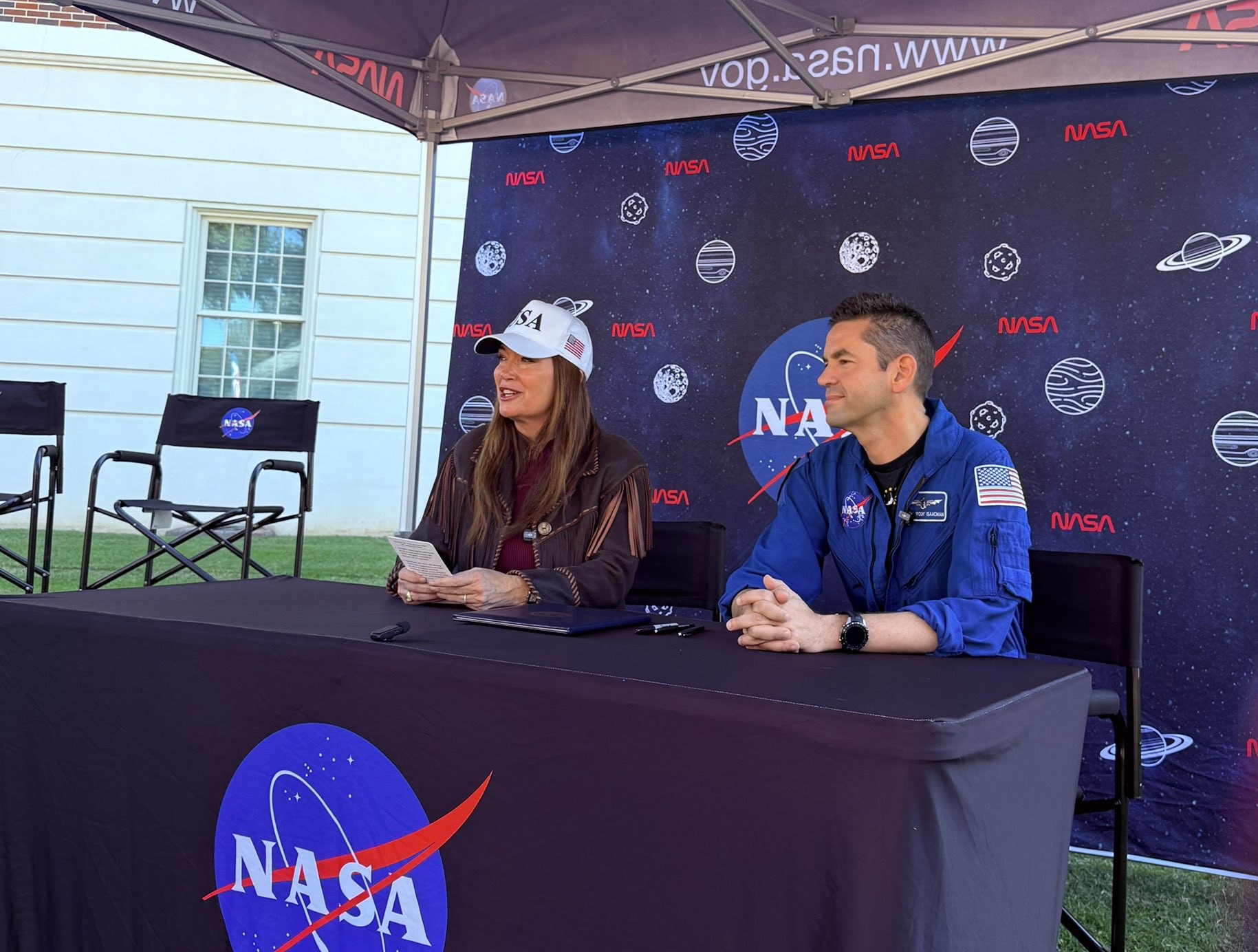
U.S. Secretary of Agriculture Brooke Rollins, left, and NASA Administrator Jared Isaacman signed a Memorandum of Understanding advancing agriculture and Earth science during an event at the University of Alabama in Tuscaloosa on Saturday, Oct. 24.
Credit: NASA

NASA and the U.S. Department of Agriculture (USDA) have signed a Memorandum of Understanding expanding cooperation in Earth observation, geospatial analytics, and advanced data technologies, supporting USDA’s data modernization plan for United States agriculture.

“NASA develops some of the most advanced sensing, computing, and analytical capabilities in the world, and we should put those tools to work wherever they can deliver meaningful outcomes for the American people,” said NASA Administrator Jared Isaacman. “By combining NASA’s Earth observation data and technical expertise with USDA’s knowledge of American agriculture, we can improve the information available to farmers and ranchers, strengthen our understanding of crop conditions and natural hazards, and pursue new high-risk, high-reward ideas that advance both science and American competitiveness.”

Isaacman and U.S. Secretary of Agriculture Brooke Rollins signed the agreement Oct. 24 during NASA’s Inspiration Tour at the University of Alabama in Tuscaloosa.

NASA and USDA’s longstanding partnership has supported collaborative research and data-sharing efforts that strengthen U.S. agriculture. The new agreement deepens this cooperation by focusing on improved data integration and enhanced coordination across Earth observation and agricultural applications.

“American farmers are the best in the world and deserve any solution we can leverage, even when it is out of this world. I am proud to announce that USDA will now work with Administrator Isaacman and NASA to utilize the full power of technology, research, and development to fortify U.S. agriculture,” said Rollins. “With this unprecedented partnership the Trump Administration is committing to a bright future of research and tech opportunities that will enhance USDA acreage and yield estimation and drive profitability for American agriculture.”

Under the new agreement, the agencies can explore activities in agricultural statistics, remote sensing science, modeling, geospatial data engineering, and super intelligence. NASA and USDA also will look at how to better align Earth observation data and analytical tools with agricultural needs, helping improve crop monitoring, acreage and yield estimates, and assessments of drought and other disasters.

The agencies will examine new approaches for managing and analyzing large datasets, strengthening USDA’s data systems while providing farmers, ranchers, and policymakers with more timely and reliable information.

For more information about NASA’s Earth science, visit:

https://science.nasa.gov/earth

-end-

Camille Gallo / Elizabeth Shaw  
Headquarters, Washington  
202-358-1600  
camille.m.gallo@nasa.gov / elizabeth.a.shaw@nasa.gov

Share

Details

Last Updated
Oct 26, 2026
Editor
Jennifer M. Dooren

Faster to Science: A Letter to the Science Community

Dear NASA Science Community, 

NASA Science wants to deliver science faster, so we’re changing how we compete and select missions. On Monday, October 26, we will host a virtual NASA Science Town Hall, from NASA Headquarters, to explain our new Competition Model 2.0 (CM 2.0), and answer your questions. (Details below.)

We have heard you. We have listened. We know that the burden of bringing great ideas forward has been too heavy for too long. It has taken years to move mission concepts through the current two-step process. This has often come with contract management challenges, unpredictability, and not enough funding.  NASA is committed to doing better — and I’m excited to share with you how we’re making it happen. 

I am so pleased that NASA Administrator Jared Isaacman has empowered the Science Mission Directorate to take action and make our mission selection process move more smoothly, efficiently, and effectively. The Administrator has directed us to accelerate the delivery of science, reduce the time and resources spent on long competitive processes, and focus funding on the highest-priority missions across every NASA Science division as quickly and affordably as possible. Predictability in delivering incredible science will be at the forefront of what we do. 

We are committed to getting this right. Some of these changes will take time to fully implement. We will roll them out in stages, be thoughtful about them, and refine them with your input along the way. But time is also of the essence. By streamlining how missions are proposed, reviewed, and selected, we can make meaningful change right now. That streamlined approach is Competition Model 2.0, or CM2.0, and it is how we are answering the Administrator’s call to get you to science faster. 

A Better Way to Compete

CM2.0 starts from a simple idea: compete on the science first. Proposals will be science-focused and will not require detailed engineering plans, cost, and implementation work until they are truly needed to make a decision. This frees you to spend more of your time doing science and less of it proposing how to do science. 

Here is how we will streamline mission selection across our mission classes: 

Flagships (directed missions):

CM2.0 will not change how we manage our largest missions since that process has already been reformed. After the James Webb Space Telescope, NASA conducted the Large Mission Study which drew lessons from Webb and best practices from our most successful flagships into a single, documented approach for building large missions more efficiently. Flagships will continue to follow that approach, with NASA directing the overall mission to a lead NASA Center and it will then compete the science teams and instruments through targeted solicitations. 

Astro-Probes, New Frontiers, and Discovery:

These missions will move to a new, accelerated two-step competition:

  • Step 1 asks for just three things: a compelling science case, a science implementation plan, and a proof-of-concept mission design. That removes roughly half of the material currently required in an Announcement of Opportunity (AO) response. This allows the initial selection to focus on what matters most, the science. It also opens the door wider, because a strong idea is judged on its merits rather than on the size of the team behind it. Principal Investigators (PI) without a major university or commercial backing will get a fair consideration, and NASA PIs at any NASA Center remain eligible to respond.
  • Step 2 is a Mission Implementation Study carried out with either NASA’s two Science Centers of Excellence, the Goddard Space Flight Center, or the Jet Propulsion Laboratory (JPL). NASA SMD may award an implementation study (under the management of GSFC) for New Frontiers or Discovery to JHU/APL depending on the science selected. The mission implementation study bridges pre-Phase A and Phase A by evaluating scientific merit, science implementation merit, and mission implementation merit to ensure that risks are surfaced early on rather than hidden. Down-selection to a single mission happens partway through Phase A, and the selected mission completes Phase A and then arrives at KDP-B with a matured mission implementation design. Teams that are not selected are freed from carrying concepts through the rest of Phase A on their own. 

These updates in the mission selection process will reduce time from AO to step 2 selection by up to 45 percent. This means that the original 35-months timeline will be reduced to about 19.5 months, all while having a stronger, more mature mission at the time of selection.  

MIDEX and Earth Explorer

These missions follow the same two-step approach with an even broader field of implementing organizations, including universities and industry partners. Implementing organizations and partners will be evaluated on past performance on projects of similar complexity and cost prior to mission selection. PI-led teams can request pairing with either a Goddard or JPL implementation team at Step 1 selection, and NASA can provide Center support where it will help with procurement, contract management, or quick resolution of technical challenges. This will result again in an up to a 45 percent reduction in the selection timeline. 

SMEX, Missions of Opportunity, Earth Venture, Hosted Payloads, and Ride Shares

These missions will move to a single-step competition with a smaller review team and virtual site visits. They will also be open to a broad range of implementing organizations. The time to final selection will drop from about 32 months to about 19 months which is a reduction of up to 40 percent. Our smallest missions will be riding the momentum of a maturing commercial space economy and will move even faster. This means more missions, more often, with more incredible science at a lower cost.  

The Principles Guiding Us

Commercial Capabilities for Every Mission Type

The commercial space industry has never been stronger—and it’s only gaining momentum. Mission and implementation teams will be expected to adopt industry best practices and emerging commercial capabilities, including commercial buses, subsystems, and multi-mission operations — wherever they offer a technical or cost benefit. No mission class is too large or too complex to benefit from the commercial industry. We will keep assessing the commercial landscape at regular intervals, building on our recent Science as a Service Request for Information. 

Science Merit Opens the Door

By competing on science first, established teams and first-time teams stand on equal footing. The best idea wins. 

Cost and Schedule Discipline

Great science deserves great stewardship. Rigorous cost and schedule control remains mandatory across every mission class. Phase A estimates will inform complexity and scope trades. Therefore, breaches of control thresholds will carry real consequences of up to, and including, mission termination. That discipline is how we keep the pipeline flowing for everyone. 

NASA Centers Strengthen Missions

Our NASA Centers lead the world in spaceflight experience. Therefore, by appropriately directing work at Goddard and JPL, we will save taxpayer dollars, eliminate unnecessary competition among NASA Centers, encourage collaboration, and keep critical skills thriving across the agency. 

This is a moment of real opportunity. We have an administrator who is empowering us to move faster and a commercial market that is ready to help. We have NASA Centers with unmatched expertise, and a science community whose ideas expand and redefine the bounds of human achievement in the cosmos. CM2.0 brings those strengths together so that more great ideas become great missions, all while being faster and returning more science at an affordable price for the benefit of all. 

NASA leads the world in discovery and innovation, but none of that happens on its own. It happens because of you. You are the reason the list of what’s “impossible” keeps getting shorter. I am so proud of what this community has achieved, and what incredible science we will continue to discover together 

Thank you for your brilliance, your dedication, and your partnership. The best of NASA Science is still ahead of us, and I cannot wait to see where this journey takes us. 

With gratitude and excitement, 

Nicola Fox, associate administrator, Science Mission Directorate, NASA Headquarters 

NASA Science Leadership to Hold Town Hall Meeting 

NASA will host a community town hall from 2 to 3 p.m. EDT Monday, Oct. 26, featuring Dr. Nicola “Nicky” Fox, associate administrator for the agency’s Science Mission Directorate, and other NASA science leaders. Fox will provide an overview of NASA’s new Competition Model 2.0 (CM 2.0), followed by an opportunity for participants to ask questions. 

Members of the science community, academia, media, and the public are invited to join the virtual town hall at: 

https://events.gcc.teams.microsoft.com/event/9e0b9170-49eb-4df1-a413-0a028c548c8f@7005d458-45be-48ae-8140-d43da96dd17b?source=copyLinkLegacyShareLinkDialog

Participants may submit questions and vote on questions submitted by others at: 

https://nasa.cnf.io/sessions/eawk

Questions will be screened for spam and inappropriate content before appearing publicly. NASA science leaders will address as many questions as time allows. 

A recording of the town hall will be posted online following the event. 

NASA to Help Unlock Mysteries of Mars’ Moons in Upcoming Mission

NASA is playing an important role in JAXA’s (Japan Aerospace Exploration Agency) MMX (Martian Moons eXploration) mission, to advance our understanding of Mars’ moons and build on the agency’s long history of exploring the Red Planet.

The mission aims to characterize and determine the origin of Mars’ moons Phobos and Deimos and deliver a sample of Phobos to Earth. The MMX spacecraft is targeting launch from JAXA’s Tanegashima Space Center in Japan at 3:41 p.m. EDT on Monday, Oct. 19 (4:41 a.m. JST on Tuesday, Oct. 20).

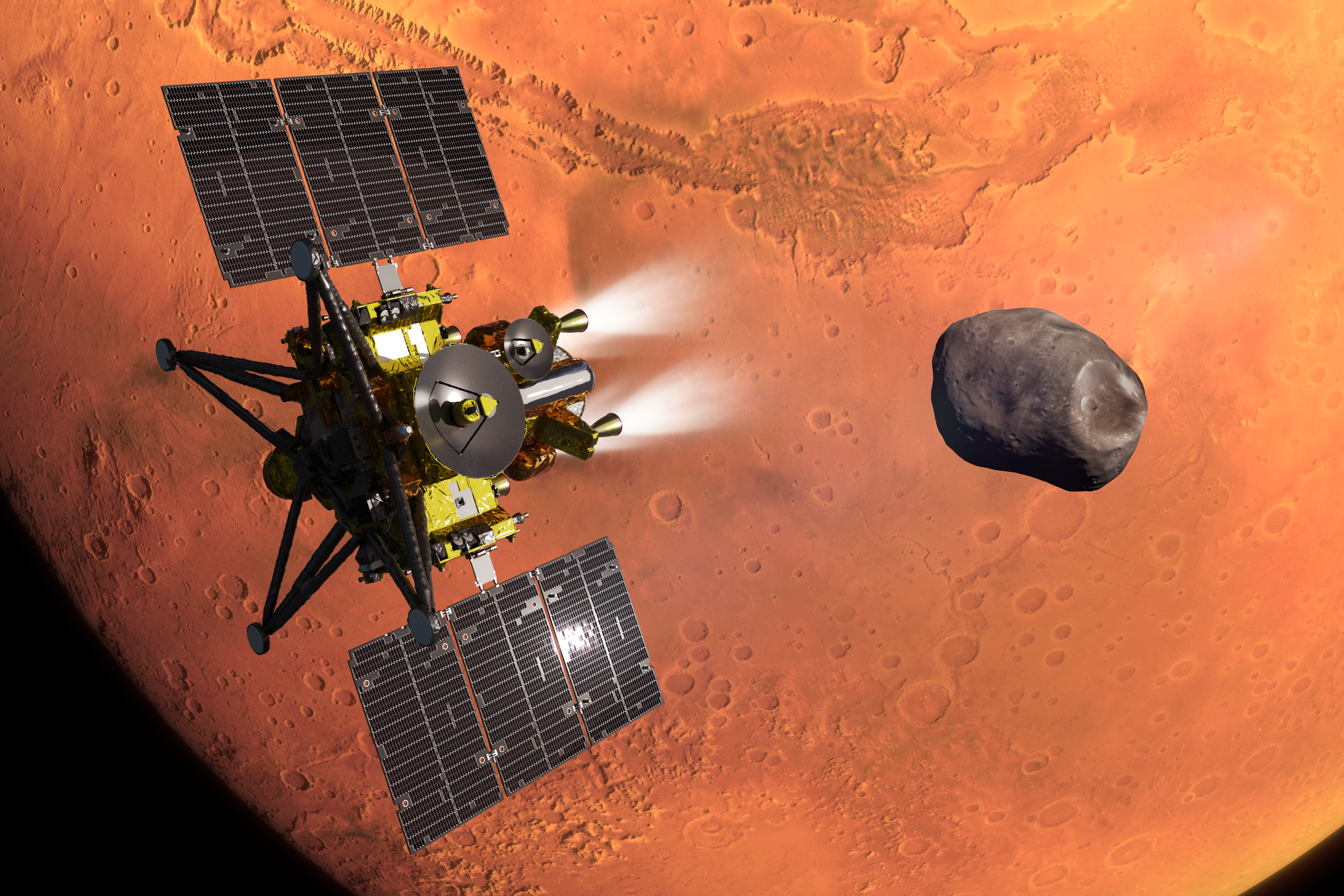
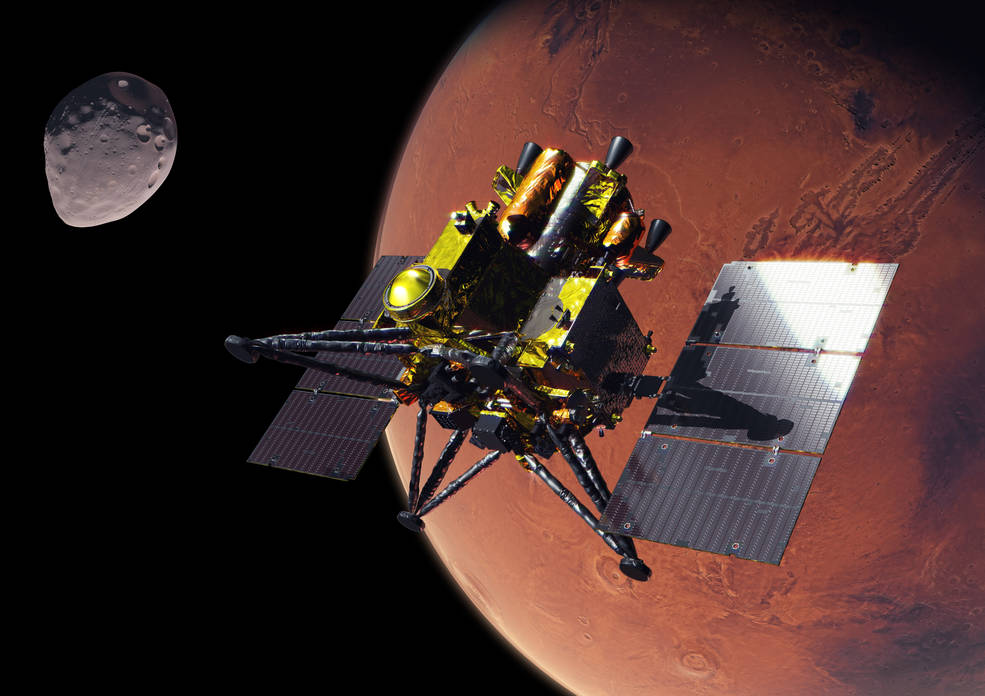
Artist's concept of JAXA's MMX spacecraft with the Martian moon Phobos and planet Mars in the background
An artist’s concept of JAXA’s MMX spacecraft during its Mars’ orbit insertion. The Martian moon Phobos, which MMX will explore and sample, is in the background.
JAXA

“The samples from MMX will bring forth paradigm-shifting science on the Mars system for generations to come, especially as NASA prepares to send the first humans to Mars,” said Nicky Fox, associate administrator, Science Mission Directorate, NASA Headquarters in Washington. “The NASA-JAXA sample curation partnership is extremely valuable, and I am proud that NASA Science is supporting MMX sample curation and will be sharing portions of these samples for study as we continue to expand humanity’s understanding of the universe for the benefit of all.”

NASA’s contributions to the mission include the Mars-moon Exploration with Gamma rays and Neutrons (MEGANE) spectrograph instrument, the Pneumatic Sampler (P-Sampler) technology demonstration, and communications and navigation support from the agency’s Deep Space Network, as well as funding United States scientists participating on the MMX science team.

Scientists have long debated the origin of Mars’ two moons. The data and samples collected by the MMX mission will help answer essential questions about the origins of these moons and the history of the solar system.

“Phobos and Deimos may be the remains of a massive impact on Mars that sent material into orbit around the planet, or they could be ancient asteroids that were captured by Mars’ gravity billions of years ago,” said Tom Statler, MMX program executive and program scientist at NASA Headquarters. “Having the answer will help illuminate that early era when Earth and the other inner planets may have been acquiring much of their water and organic compounds.”

The MEGANE (pronounced meh-GAH-nay, the Japanese word for eyeglasses) spectrograph will help scientists “see” what Phobos is made of by measuring neutrons and gamma rays emitted from the moon’s surface and determining its chemical elemental composition, which will provide important clues about its origin.

Mounted on one of the spacecraft’s landing legs, the P-Sampler is designed to collect a ground sample from Phobos. The system gathers surface material using bursts of high-pressure nitrogen gas, complementing JAXA’s C-Sampler, which will extract cores from a few inches deeper. NASA will obtain and curate about 15% of the total returned sample at the agency’s Johnson Space Center Astromaterials Lab in Houston, making it available for research for decades.

Another key part of NASA’s contribution to MMX is its scientific partnership with JAXA. NASA-supported researchers are working alongside international colleagues to help reveal the story of Phobos and will use mission data and returned samples to uncover new clues about the moon’s origin and the evolution of the Mars system.

The MMX spacecraft will arrive at Mars in August 2027 to begin its survey of the Red Planet’s two moons. After surveying Phobos in detail, the spacecraft will collect a sample of the moon’s surface no earlier than December 2028 and deliver it to Earth in 2031.

The MEGANE instrument was developed by the Johns Hopkins Applied Physics Laboratory. Honeybee Robotics, a Blue Origin company, developed the spacecraft’s pneumatic sampler mechanism. NASA’s contributions to the MMX mission were developed under the agency’s Discovery Program. The Discovery Program is managed by NASA’s Marshall Space Flight Center in Huntsville, Alabama, for the agency’s Science Mission Directorate in Washington.

For more information about the MMX mission, visit:

https://science.nasa.gov/mission/mmx

Karen Fox / Alana Johnson
Headquarters, Washington
240-285-5155 / 202-672-4780
karen.c.fox@nasa.gov / alana.r.johnson@nasa.gov

Facebook logo
Instagram logo
Linkedin logo

NASA Welcomes All Ages, Experience Levels for Space Apps Challenge

Registration is open for the 2026 NASA Space Apps Challenge, a two-day global event on Saturday, Nov. 14 and Sunday, Nov. 15, where teams work to create solutions inspired by NASA’s most ambitious exploration goals and making use of the agency’s free and open data. The annual challenge, often called a hackathon, is an intensive, collaborative problem-solving experience where participants tackle real-world challenges created by NASA subject matter experts.

This year’s Space Apps Challenge collectively supports three major focus areas: returning humans to the Moon, preparing for missions deeper into the solar system, and expanding understanding of the universe. Participants do not have to be programmers. Students, scientists, engineers, designers, storytellers, technologists, and space enthusiasts of all ages and experience levels can contribute their skills.

“At NASA, science is for everyone, and we’re inviting the next generation to help tackle some of humanity’s most critical challenges in space through the NASA Space Apps Challenge,” said Nicky Fox, associate administrator, Science Mission Directorate, NASA Headquarters in Washington. “Everything in NASA Science is interconnected, and this year, students from around the world can use NASA’s powerful data sets to help us build the ultimate interplanetary survival guide – supporting the science that will enable astronauts to thrive on the Moon and, eventually, Mars, while also inspiring ideas that improve everyday life on Earth and in space for the benefit of all.”

Supporting lunar exploration, Artemis planning

NASA continues to advance plans for a sustained human presence on the Moon through the Artemis program and Moon Base. Several of this year’s Space Apps challenges relate to analytical tools, operational considerations, and human‑system needs relevant to lunar missions. These include work related to surface operations at the Moon’s South Pole, the management of environmental constraints such as sunlight and communications windows, as well as approaches for evaluating the logistical and scientific demands of long‑duration lunar stays. Broader system‑level modeling challenges, such as those that simulate outpost operations or consider astronaut health and safety, mirror the complexity of planning for human activity on the lunar surface.

Strengthening readiness for Mars, deep space

NASA’s exploration strategy includes continued robotic exploration of the outer solar system and preparing for future human missions to Mars. Several challenges involve operational concepts for Martian surface activities, integrating data from multiple Mars missions, or reflecting the mission‑design trade‑offs required for deep‑space exploration. Others address fundamental concerns for long‑duration travel, such as monitoring physiological and behavioral health indicators, or examining how engineering and scientific choices shape mission execution in environments far from Earth.

Some of these challenges also align with NASA’s broader exploration portfolio, which includes ongoing work on future missions to destinations such as Jupiter’s moon Europa and Saturn’s moon Titan. By simulating mission‑design decisions or evaluating environmental analogs on Earth, certain challenges offer frameworks related to how NASA prepares for complex operational scenarios throughout the solar system.

Enhancing access to astrophysics

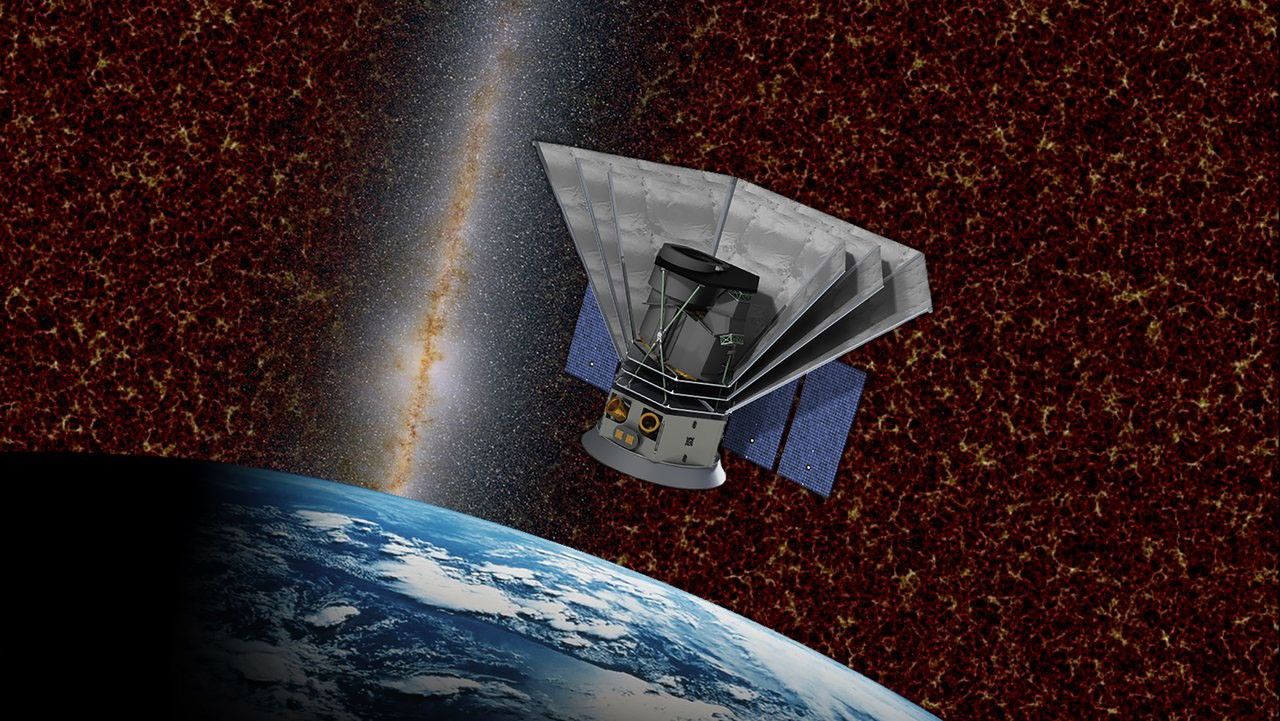
NASA’s astrophysics missions contribute to understanding the structure and history of the universe. In 2026, this includes active missions like Spectro-Photometer for the History of the Universe, Epoch of Reionization and Ices Explorer (SPHEREx), which is conducting a full‑sky spectral survey, as well as the continued development and deployment of observatories designed to investigate cosmic evolution and exoplanet, which are planets outside our solar system, populations.

Challenges associated with these efforts focus on improving public access to mission data, designing tools that help visualize changes in the sky over time, and supporting broader engagement with the scientific products derived from these missions.

Broader impact across NASA’s mission landscape

Together, these challenges illustrate how NASA’s open data ecosystem enables gold standard science, by freely offering such a wide breadth of information and research. By engaging with the Space Apps event, the entire nation can interact with the kind of real‑world needs defined by the agency.

Registration is available at the NASA Space Apps Challenge. Participants can join in one of 500+ local events, join a team, and select the challenge that they are most interested in addressing during the November hackathon.

NASA’s SpaceX CRS-35 Mission to Launch Health Research

NASA experiments focused on human and plant health and drug-resistant organisms will travel to the International Space Station aboard SpaceX’s 35th Commercial Resupply Services mission for the agency from Cape Canaveral Space Force Station in Florida, advancing research that benefits life on Earth and future exploration.

This research supports astronaut health during long-duration missions through four investigations from the agency’s Biological and Physical Sciences division, including 3D models of the human brain, a crop disease study, a faster way to assess astronaut health, and an analysis of antibiotic-resistant bacteria aboard the space station.

Tiny brain models, big questions

A new precision health investigation helps address a key question: What happens to the human brain in space?

The experiment sends small, lab-grown models of the human brain to the orbiting laboratory for five weeks. Researchers compare tissue models that traveled to space with identical ones kept on Earth to determine how a short spaceflight affects the human brain at the cellular level.

The effort could deepen our understanding of how the human brain responds to stress and help lay the groundwork for methods that counter risks to brain health that astronauts may face on future missions to the Moon and beyond.

Disease-resistant crops for space

A space crops investigation tests whether crop diseases develop faster and more severely in microgravity.

The experiment compares molecular and structural changes between Earth-grown and space station-grown plants infected with a disease-causing fungus. The findings could guide plant breeding on Earth to produce disease-resistant crops and help minimize yield losses in future space agriculture systems.

Space crops provide nutrition, increase dietary variety, and offer psychological benefits for astronauts during extended missions. They also absorb carbon dioxide, produce oxygen, and recycle water, which will become increasingly important as human missions extend farther from Earth.

Analysis helps astronauts thrive

The spacecraft also carries the first test of a compact microplate reader that arrived aboard the space station earlier this year.

The Commercially Enabled Rapid Space Science initiative experiment tests the device’s ability to detect and measure certain biomarkers such as antibodies, antigens, and proteins.

Use of the plate reader would allow scientists to analyze samples aboard the space station and obtain data quickly, rather than wait for the samples to return to Earth for analysis.

Ultimately, the research aims to support the timely detection of infections and other health issues in astronauts while expanding science capabilities in remote exploration locations where resupply will be more difficult.

Tracking antibiotic-resistant bacteria

A precision health investigation returns for its fourth and final planned stay aboard the space station to study how antibiotic-resistant bacteria survive and evolve in microgravity.

As part of the investigation, astronauts repeatedly sample surfaces throughout the space station to monitor for drug-resistant organisms.

The work could help develop ways to protect astronauts against bacterial infections during long-duration missions. On Earth, the findings could provide insight into how superbugs develop from the overuse of antibiotics.

To learn more about NASA’s biological and physical research in space, visit: https://science.nasa.gov/biological-physical/

Biological & Physical Sciences Division

  • NASA’s Biological and Physical Sciences Division pioneers scientific discovery and enables exploration by using space environments to conduct investigations not possible on Earth. Studying biological and physical phenomena under extreme conditions allows researchers to advance the fundamental scientific knowledge required to go farther and stay longer in space, while also benefitting life on Earth.

NASA Briefing to Highlight Contributions to Martian Moons Mission

Artist view of the MMX spacecraft with Mars background.
An artist’s concept of JAXA’s (Japan Aerospace Exploration Agency) Martian Moons eXploration (MMX) spacecraft at Mars.
Credit: JAXA

Media are invited to join NASA for a media teleconference at 4 p.m. EDT, Thursday, Oct. 15, to preview the agency’s contributions to JAXA’s (Japan Aerospace Exploration Agency) Martian Moons eXploration (MMX) mission. The mission is scheduled to launch from JAXA’s Tanegashima Space Center in Japan on Monday, Oct. 19 EDT (Tuesday, Oct. 20 JST).

Audio of the media teleconference will stream on the agency’s website at:

https://www.nasa.gov/live

Participants in the briefing, who will provide an overview of the mission and NASA’s contributions, include:

  • Lindsay Hays, acting director, Planetary Science Division, NASA Headquarters in Washington
  • Tom Statler, MMX program executive and scientist, Planetary Science Division, NASA Headquarters
  • David Lawrence, MEGANE (Mars-moon Exploration with Gamma-rays and Neutrons) principal investigator, Johns Hopkins Applied Physics Laboratory
  • Kris Zacny, vice president, Blue Origin’s Honeybee Robotics

Media interested in participating by phone must RSVP no later than two hours prior to the start of the teleconference to Molly Wasser at molly.l.wasser@nasa.gov. A copy of NASA’s media accreditation policy is online. 

The MMX spacecraft will arrive at Mars in August 2027 to begin its survey of the Red Planet’s two moons, Phobos and Deimos. After surveying Phobos in detail, the spacecraft will collect a sample of the moon’s surface no earlier than December 2028 and deliver it to Earth in 2031. NASA’s contributions to the mission include the MEGANE gamma-ray and neutron spectrometer, the spacecraft’s surface sampler mechanism, and communications and navigation support from the agency’s Deep Space Network, as well as funding United States scientists participating on the MMX science team.

The MEGANE instrument was developed by Johns Hopkins Applied Physics Laboratory. Honeybee Robotics, a Blue Origin company, developed the spacecraft’s pneumatic sampler mechanism. NASA’s contributions to the MMX mission were funded by the agency’s Discovery Program, which provides frequent flight opportunities for high-value, focused planetary science investigations. The Discovery Program is managed by NASA’s Marshall Space Flight Center in Huntsville, Alabama, for the agency’s Science Mission Directorate in Washington.

For more information about the MMX mission, visit:

https://science.nasa.gov/mission/mmx/

-end-

Karen Fox / Alana Johnson
Headquarters, Washington
240-285-5155 / 202-672-4780
karen.c.fox@nasa.gov / alana.r.johnson@nasa.gov

Share

Details

Last Updated
Oct 08, 2026
Editor
Jessica Taveau

NASA Announces Bold Science Initiatives for America’s Golden Age Summit

NASA insignia.
Credit: NASA

Editor’s note: This release was updated Oct. 8, 2026 with the formal name of the summit.

NASA is launching two new science and technology initiatives to deepen scientific understanding and accelerate the innovation that will shape America’s future in space.

The initiatives are announced in conjunction with the White House Office of Science and Technology Policy’s (OSTP) “Science: A Golden Age Summit” in Washington on Thursday with top U.S. agency leaders. The programs reflect NASA’s commitment to pioneering research and transformative technologies and advancing the Trump Administration’s vision as outlined in the July report to the President, Science: A New Golden Age. One focuses on peer review and the other on fellowship researchers.

“NASA has a proud history of pursuing bold ideas and achieving the near impossible,” said NASA Administrator Jared Isaacman. “Under President Trump’s leadership, we are building on that legacy by creating new opportunities for great science, experimenting with how we evaluate and accelerate the best ideas, and investing in the next generation of researchers through the Genesis Mission Fellowships. We are entering a new Golden Age of American innovation and discovery, and NASA will be at the forefront.”

During a fireside chat, Isaacman and Michael Kratsios, assistant to the President for science and technology and director of OSTP, will discuss the following:

  • Establishing a coordinated metascience initiative within NASA’s Science Mission Directorate to strengthen the reliability, efficiency, transparency, and overall productivity of the agency’s scientific practices. As part of this effort, NASA is expanding the agency’s use of dual anonymous peer review to ensure proposals are evaluated solely on their intrinsic scientific merit. This approach enhances fairness and supports innovative and unconventional research ideas. Started as a pilot program during the first Trump Administration, this initiative has helped position NASA as a leader in advancing best practices in scientific review.
  • NASA will support 10 Genesis Mission Fellows, who are accelerated doctoral students with dual competencies in super intelligence (SI) and science or engineering. Fellows will work directly on NASA mission areas and conduct research at NASA laboratories, advancing SI-enabled scientific discovery. The fellowships will be based on NASA’s successful Future Investigators in NASA Earth and Space Science and Technology program.

NASA leads the nation in space exploration, scientific discovery, and technological innovation. Through these new initiatives, NASA will continue to inspire the world and drive progress in science and technology.

Learn more about NASA science at:

https://science.nasa.gov

-end-

Camille Gallo / Elizabeth Shaw
Headquarters, Washington
202-358-1600
camille.m.gallo@nasa.gov / elizabeth.a.shaw@nasa.gov

Share

Details

Last Updated
Oct 08, 2026
Editor
Jennifer M. Dooren

NASA, International Partners Advance Work on Space Crops

NASA, CSA (Canadian Space Agency), and the German Aerospace Center signed a joint statement of intent to begin coordinated, preparatory work toward an Earth-based demonstrator to learn how to grow crops on the Moon, which will be essential to helping astronauts go farther and stay longer in space.

The Lunar Agriculture Module-Ground Test Demonstrator aims to develop the technologies needed to grow space crops and study how they perform under atmospheres and controlled environments similar to those expected during missions at Moon Base. Through Moon Base, NASA and its partners will build the infrastructure to support an enduring human presence near the Moon’s South Pole, advancing science and technology while preparing for future human missions to Mars.

Space crops will provide deep space crews with whole-food nutrition and increase dietary variety.  They can also absorb carbon dioxide, produce oxygen, and recycle water. These capabilities will become increasingly important as human missions extend farther from our home planet.

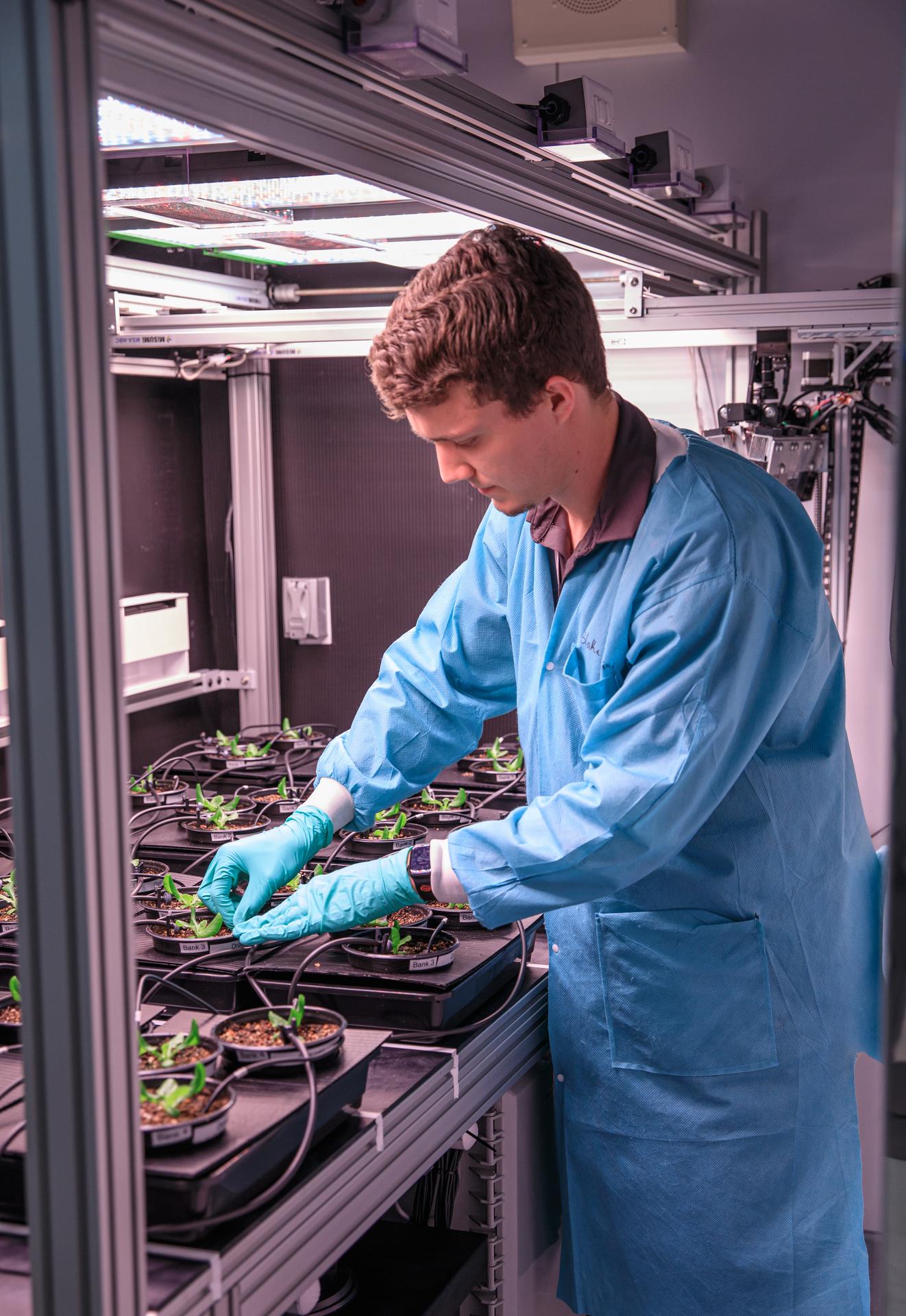
Horticulture scientist Blake Costine adjusts moisture sensors for the Advanced Plant Imaging project at NASA’s Kennedy Space Center on April 17, 2023. In this project, hyperspectral cameras are used to assess plant health. The activity is taking place inside the Plant Production Area at the Florida spaceport’s Space Station Processing Facility.
NASA/Isaac Watson

Download the PDF

LAM-GTD Joint Statement

Sep 30, 2026

PDF (501.13 KB)

❌