Preparations for Next Moonwalk Simulations Underway (and Underwater)
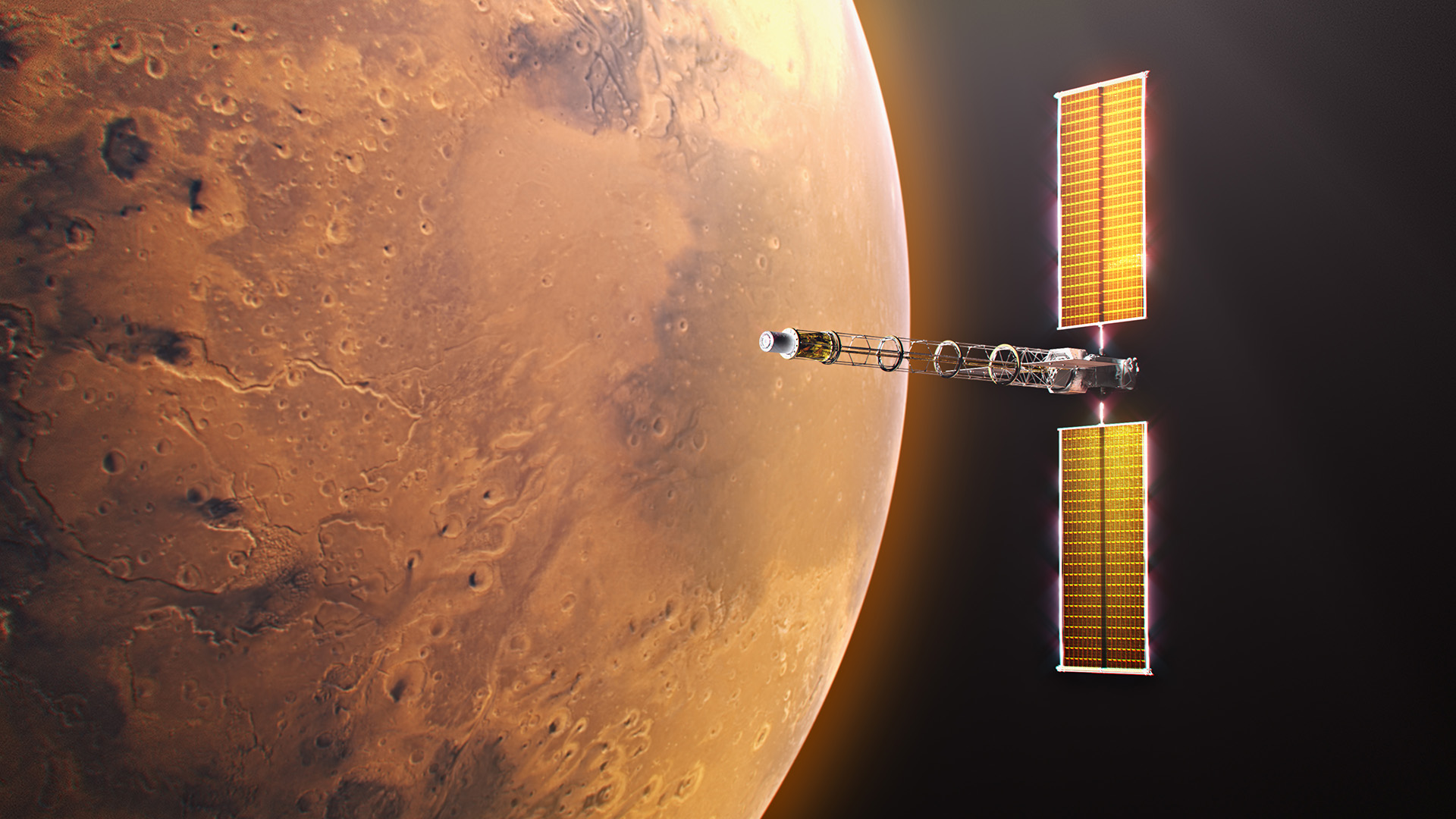
Space Reactor-1 Freedom will be the first spacecraft ever to demonstrate fission power beyond Earth’s orbit, traveling to Mars to deliver a science payload called SkyFall.
NASA/Alberto Bertolin
Destined for Mars and beyond, NASA’s Space Reactor-1 (SR-1) Freedom will be humanity’s first fission-powered spacecraft to travel outside Earth’s orbit. Announced during NASA’s “Ignition” event, this mission will demonstrate nuclear electric propulsion in deep space, and progress is underway on its key element: the nuclear power module. To expedite development of the spacecraft, NASA and its partners have mutually agreed to key contract actions that will advance the SR‑1 Freedom mission.
“These contract actions not only reduce technical risk and help us maintain momentum toward our 2028 launch, but they also strengthen collaboration across our partners,” said Steve Sinacore, SR-1 Freedom program director. “These actions keep SR‑1 Freedom on track and ensure we’re building the strongest possible foundation for NASA’s first fission‑powered voyage beyond Earth orbit while developing technology extensible to a vibrant space nuclear future.”
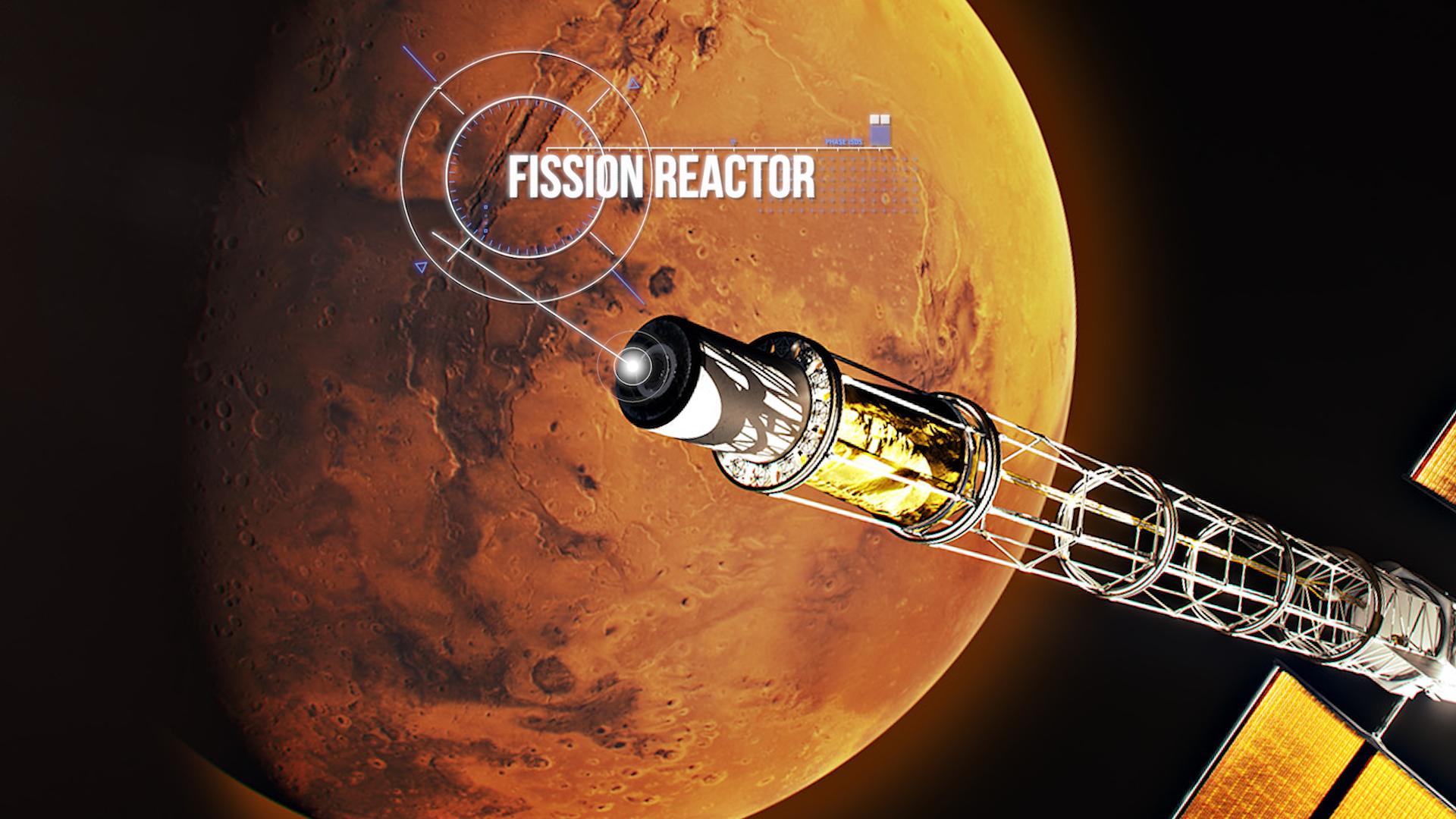
Space Reactor-1 Freedom’s nuclear power module, located at the end of the spacecraft’s boom, consists of a reactor that generates heat through nuclear fission and a power conversion system that converts that heat into electricity to power systems and electric propulsion.
NASA/Alberto Bertolin
Sierra Lobo Inc. will provide the nuclear power module’s closed Brayton cycle power conversion system, which converts thermal energy from its fission reactor into electrical power needed for SR-1 Freedom’s nuclear electric propulsion demonstration. The work will be conducted under the Space Flight Systems Development and Operations Contract III, awarded in 2024, to support spaceflight hardware design, development, testing, and operations at NASA’s Glenn Research Center in Cleveland.
The power conversion system will be integrated with the fission reactor, which is being designed and developed by the Department of Energy (DOE)’s Idaho National Laboratory to complete the nuclear power module. NASA and DOE incorporate thorough safety standards throughout the design and development of the SR-1 Freedom spacecraft, including interagency safety reviews, continuous oversight by a NASA chief safety officer, regulatory compliance, and a rigorous safety design process focusing on hazards, failure tolerance, and nuclear safety. In addition, the nuclear reactor portion of SR-1 Freedom will remain inactive until the spacecraft leaves Earth orbit.
Launching in late 2028, SR‑1 Freedom will deliver the SkyFall science mission, a team of three Mars helicopters evolved from the Ingenuity design, to collect scientific data, demonstrate exploration zones, and identify potential water sources. The mission will pave the way for deep space exploration and next‑generation fission-powered systems designed to keep NASA’s Moon Base operating through periods of darkness and in locations where solar power alone is not sufficient.
Preparations for Next Moonwalk Simulations Underway (and Underwater)
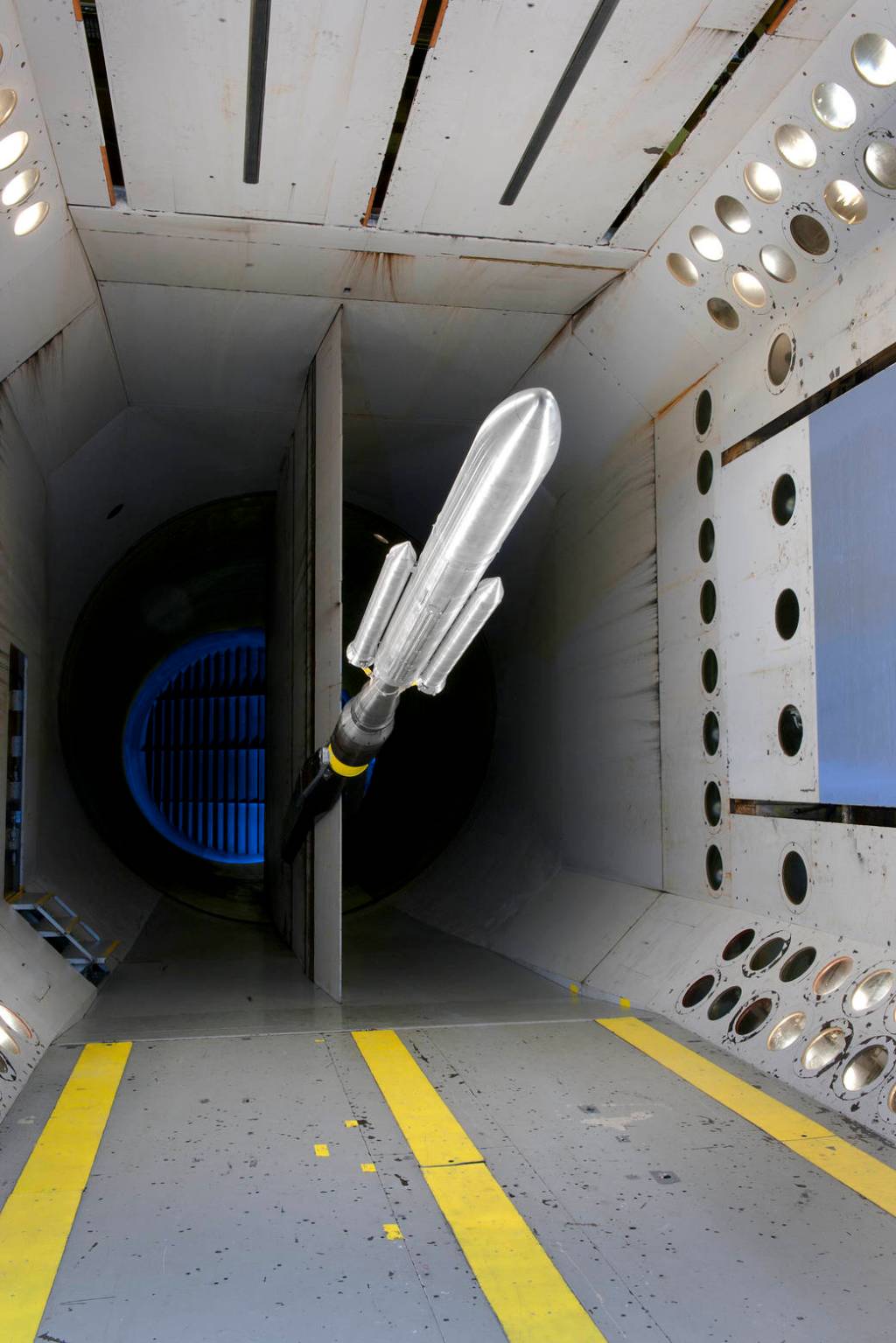
Research teams at the NASA Glenn Research Center perform experiments in world-class facilities such as the 9- by 15-Foot Low-Speed Wind Tunnel (9 x15 LSWT), the Aero-Acoustic Propulsion Laboratory (AAPL), the Small Hot Jet Acoustic Rig (SHJAR), the Nozzle Acoustic Test Rig (NATR), the DGEN AeroPropulsion Research Turbofan (DART), and the Acoustical Testing Laboratory (ATL).
9×15 Low-Speed Wind Tunnel (9×15 LSWT)
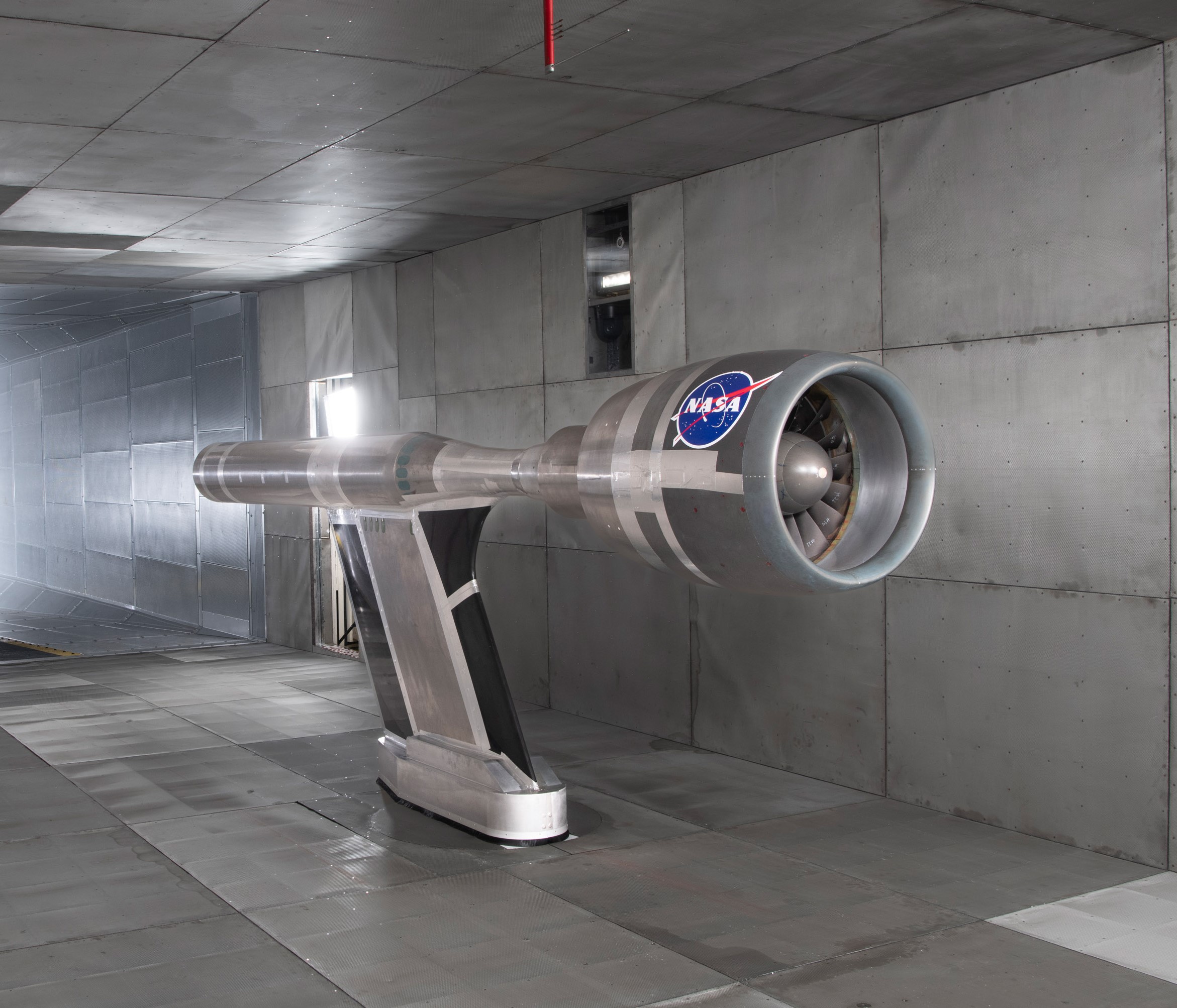
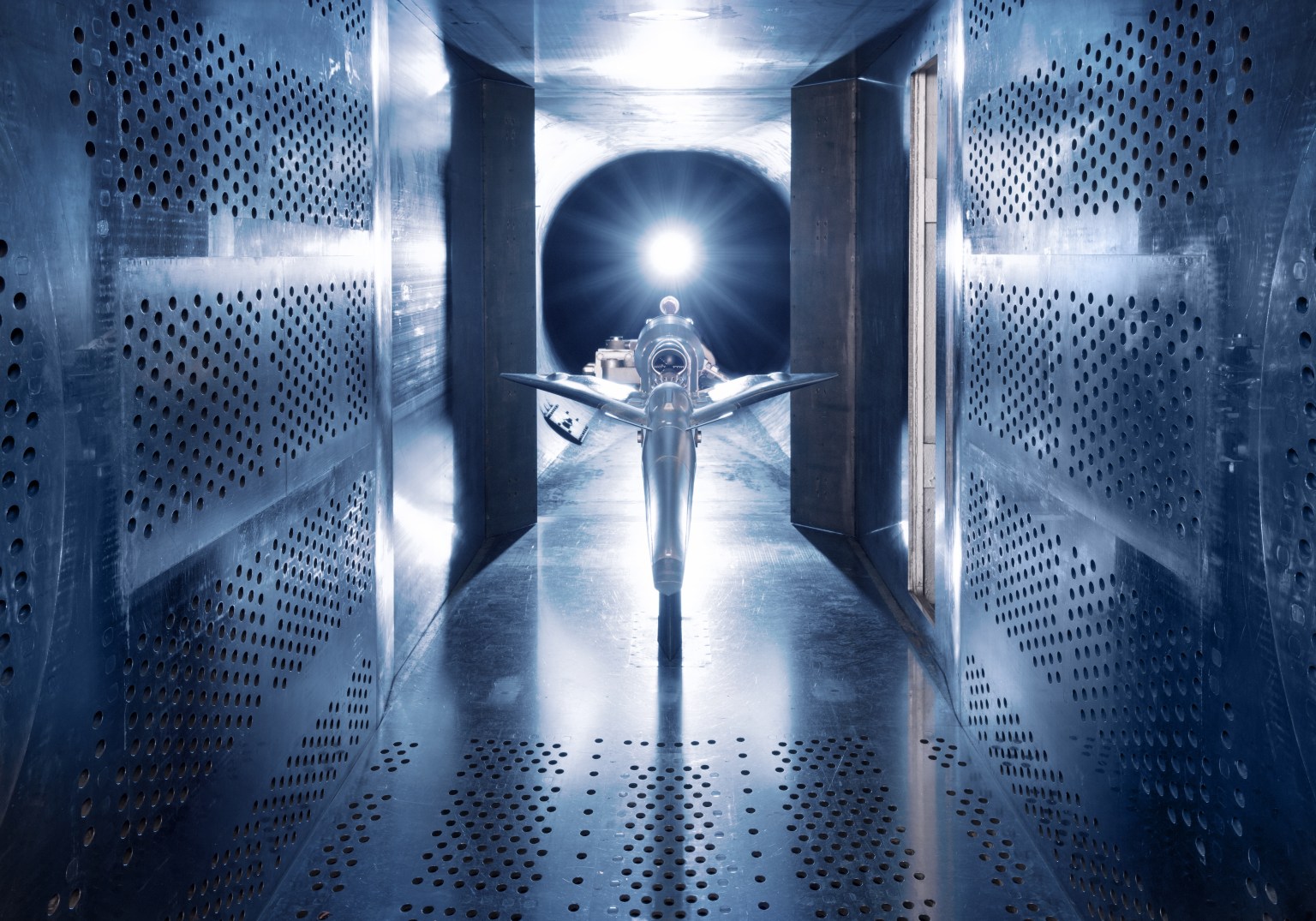
The 9- by 15-Foot Low Speed Wind Tunnel is specially designed to give researchers a controlled environment to study aircraft engine aerodynamics and acoustics at takeoff and landing conditions. This helps us to reduce noise in communities near airports. Major modifications were completed in 2019 to improve the flow and lower the background noise of the tunnel. A new 5-sensor traversing microphone rake helps measure sound produced by scale experimental propulsors. Read more about the capabilities of the 9 x 15 LSWT on our facilities page.
Advanced Ducted Propulsor (ADP) Fan Commissioning Test (side view) in the 9×15 Low-Speed Wind Tunnel.
NASA
Aero-Acoustic Propulsion Laboratory (AAPL)
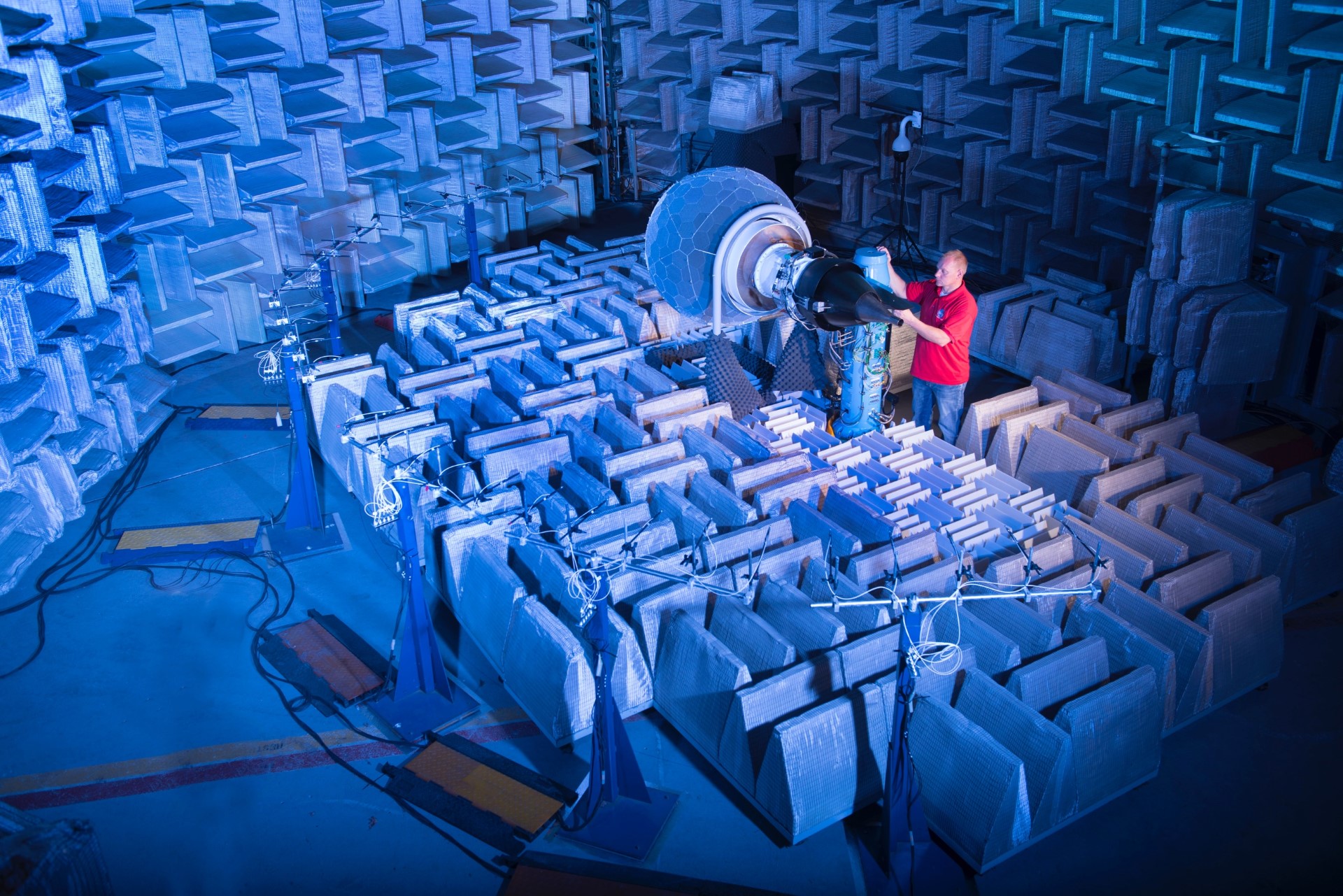
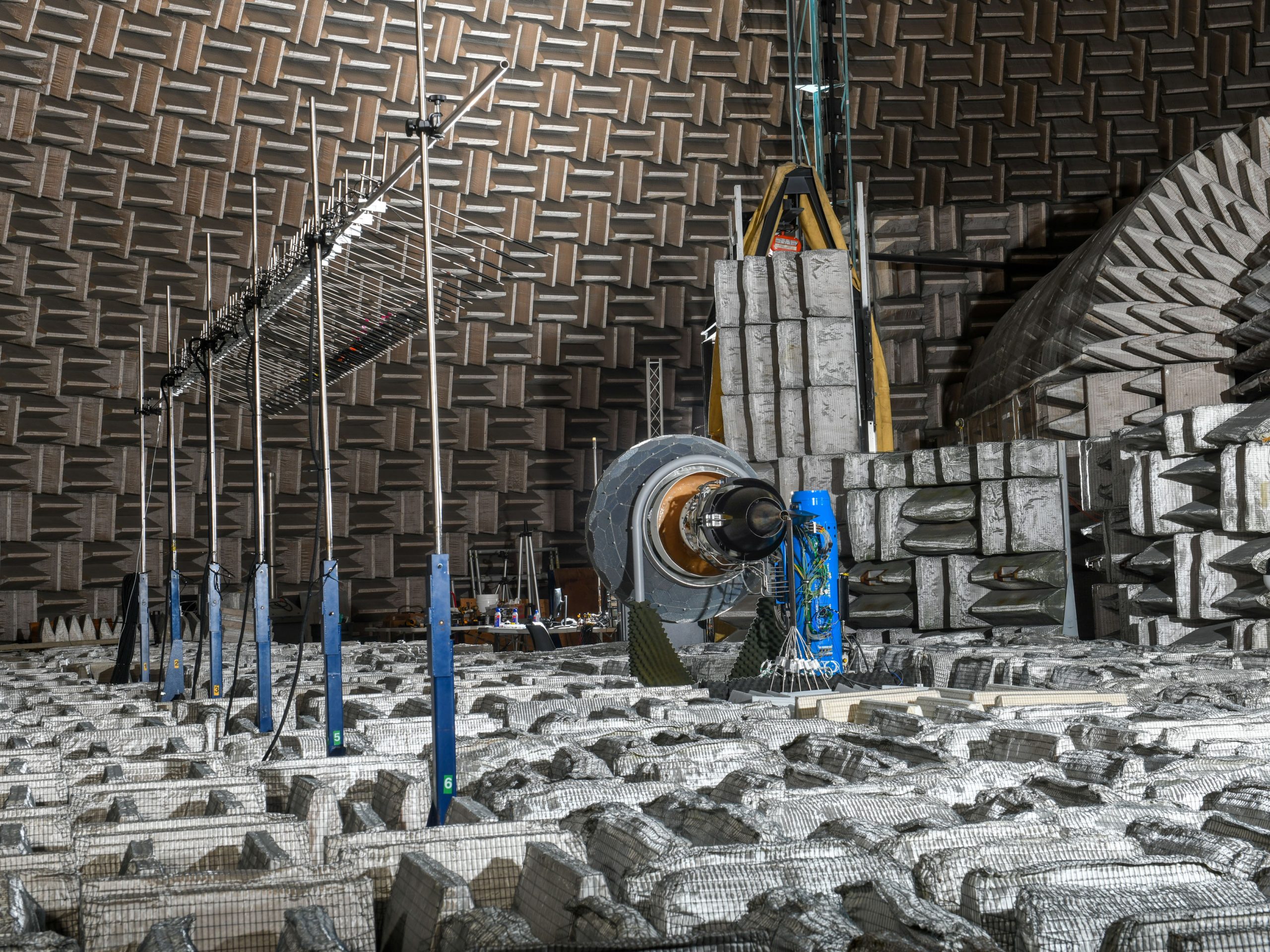
The Aero-Acoustic Propulsion Laboratory (AAPL) is a dual-purpose 65-foot radius geodesic dome used to reduce community noise and perform aeroacoustic tests of aircraft engines and engine components. The test area inside the dome can be configured as a hemi-anechoic or anechoic chamber. There are no echoes in the dome during tests because 17,000 custom-designed 2-ft thick fiberglass wedges are mounted to the inside surface of the dome walls and placed on the floor and around test rigs to absorb sound and prevent sound reflections. When AAPL was constructed in 1993, it was the first known free-standing geodesic dome to include materials to reduce transmission of sound through the walls and absorb sound within it. AAPL currently houses the Nozzle Acoustic Test Rig (NATR), Small Hot Jet Acoustic Rig (SHJAR), and the DGEN 380 Aeropropulsion Research Turbofan (DART). Read more about the capabilities of the AAPL on our facilities page.
The Aero-Acoustic Propulsion Laboratory at The NASA Glenn Research Center in Cleveland is an anechoic chamber used to measure noise from experimental aircraft engines such as the DGEN 380 Aeropropulsion Research Turbofan (DART) shown here.
NASA/Bridget Caswell
Small Hot Jet Acoustic Rig (SHJAR)
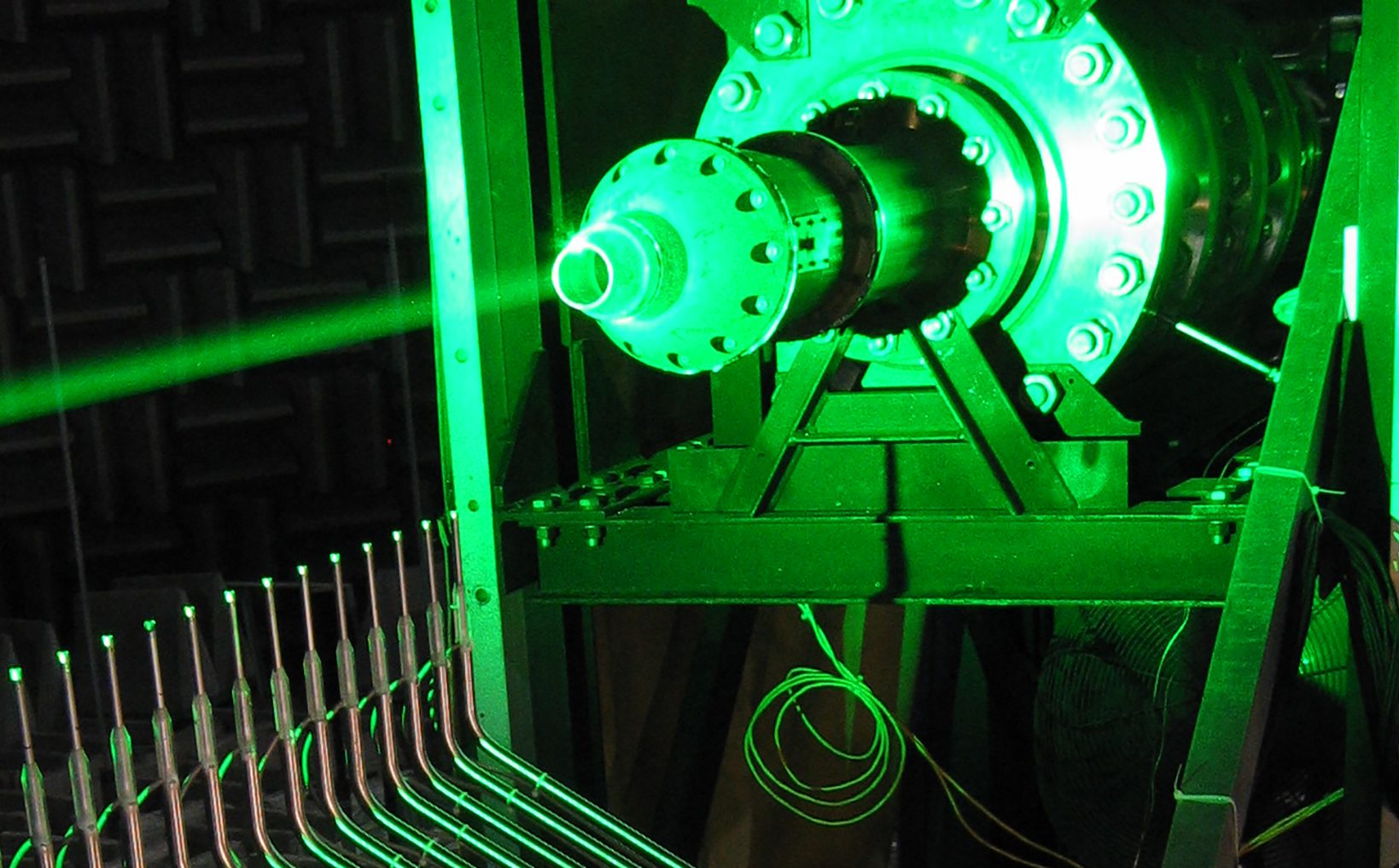
SHJAR is one of three rigs installed inside the anechoic dome of the Aeroacoustic Propulsion Lab. It can be used to test single stream nozzles up to 5 cm in diameter, Mach 2.0 and 800 K. SHJAR is a key tool in connecting the dots between nozzle geometry, jet flow, and noise. Creative nozzle designs are inexpensively created for this rig, and their impact on flow and noise is measured with world-leading measurement techniques. Researchers at NASA Glenn have been using SHJAR to develop advanced flow measurement techniques like Rayleigh Scattering, Raman Scattering, digital Schleiren, and real-time Particle Image Velocimetry. Three-dimensional microphone arrays have been deployed to map the sources of the noise. These techniques hold the promise of unlocking some of the mysteries of how the turbulence caused by the nozzle creates noise. The data from this rig is used to validate the computer codes that are being developed to calculate jet noise. Better noise prediction codes will help engineers design quieter nozzles.
Among the many firsts in turbulent jet research produced on SHJAR, time-resolved measurements of turbulent temperature were recently made using Raman-based optical methods, achieving high-frequency measurements of thermodynamic temperature fluctuations needed to complete turbulence models used in heat transfer as well as jet noise. In 2006, researchers had used the first time-resolved particle image velocimetry to measured space-time correlations of turbulent velocities in hot jets, a flow statistic key to the production of noise. Time-resolved velocimetry was also used to map convection speeds of turbulence, another flow metric required by jet noise theory but previously unavailable in hot jets.
The SHJAR is not only a good place to develop advanced diagnostic techniques, it has been a good testbed for exploring canonical problems in jet noise such as how the installation of the jet on an aircraft changes the noise produced by the jet. Jet-surface interaction, where the plume of the jet interacts with the wings, flaps, and tail of an aircraft, was identified as a fundamentally different noise mechanism in SHJAR tests.
Most of these ground-breaking measurement techniques and practical noise insights first developed on the relatively simple SHJAR have been deployed on the high-fidelity Nozzle Acoustic Test Rig (NATR), co-located in the Aero-Acoustic Propulsion Lab. Read more about the capabilities of the SHJAR on our facilities page.
Simultaneous measurements of turbulent flow and near-field acoustics in the Small Hot Jet Acoustic Rig (SHJAR)
NASA
Nozzle Acoustic Test Rig (NATR)
The Nozzle Acoustic Test Rig (NATR), a free-jet wind tunnel, plays a key role in evaluating jet noise reduction concepts so that only the most promising concepts are selected for full-scale engine tests. Scale models of nozzles from both military and commercial aircraft engines can be tested in the NATR, which is one of three test rigs housed in the NASA Glenn Aero-Acoustic Propulsion Lab. The NATR can simulate take-off and landing flight conditions up to Mach 0.35. A jet engine simulator with up to three streams of air at a variety of pressures and temperatures simulate the flow of a turbofan engine to evaluate advanced nozzle concepts. The arc of microphones overhead simultaneously measures the far-field noise at all angles, allowing accurate translation of measurements to those of an actual aircraft flying overhead. The NATR enables engineers to evaluate a number of nozzle noise reduction concepts at a fraction of the cost and time required for a full-scale engine test.
Over its 30-year history, NATR has been the origin of many important jet noise breakthroughs. First built to support jet noise testing for the High-Speed Research program on commercial supersonic airliners, the facility has hosted many test programs led by NASA and industry. The chevron nozzles seen flying on today’s aircraft were first ‘discovered’ during a NASA-led test campaign in 1997. Over the years industry has used the rig to develop noise prediction methods for near-term designs. NASA has explored low-noise concepts for engines that are not yet available, such as engines with dual-fan systems. Recent tests have measured the noise likely to be heard from supersonic airliners, reducing the risk that these unique aircraft will not be allowed to fly from current airports. The tests also point to technologies to reduce their noise, allowing the aircraft designers to make the aircraft more efficient and environmentally acceptable.
The ability to test nozzle with flight is critical, as this has a strong impact on the noise produced by the relative velocity of the jet and the surrounding air, and it is a key feature allowing noise measurements to be directly transformed to what would be heard from a real airplane flying overhead. The large size of the anechoic space around the NATR is also critical to measuring the true acoustic far-field of the jet nozzle. The NATR in the Aero-Acoustic Propulsion Lab is one of the very few facilities in the world where these measurements are possible, and the only facility where both flow diagnostics and acoustics can be made on the same rig, a key capability in understanding the relationship between jet flow and noise. Read more about the capabilities of the NATR on our facilities page.
Harware photographs of Lear Jet Nozzle Test 2018 in the Aero-Acoustic Propulsion Laboratory AAPL, Nozzle Acoustic Test Rig, NATR
NASA/ Rami Daud
DGEN AeroPropulsion Research Turbofan (DART)
DGEN 380 is the primary component integrated into the NASA Glenn Research Center’s DGEN Aero-propulsion Research Turbofan (DART). It serves as a flexible, relevant, experimental aeroacoustic and aero-performance test bed, providing valuable information throughout NASA’s technology maturation process for a variety of multidisciplinary research that includes turbofan noise, engine controls, installation effects, and measurement technologies.
Recent tests were completed August 2019 to develop a better understanding of propulsion-noise sources to enable improved turbofan noise-prediction methods and noise-mitigation techniques. Simultaneous acoustic measurements were obtained using a circumferential infinite-tube-probe array at the core-nozzle exit in conjunction with sideline and farfield microphone arrays. The extensive data set will allow for the application of advanced source-separation and phased-array methods to elucidate not only the core-noise structure, but also the propagation characteristics of other propulsion noise sources. Read more about the capabilities of the DART on our facilities page.
DGEN 380 AeroPropulsion Research Turbofan (DART) in the Aero-Acoustic Propulsion Laboratory.
NASA
Acoustical Testing Laboratory
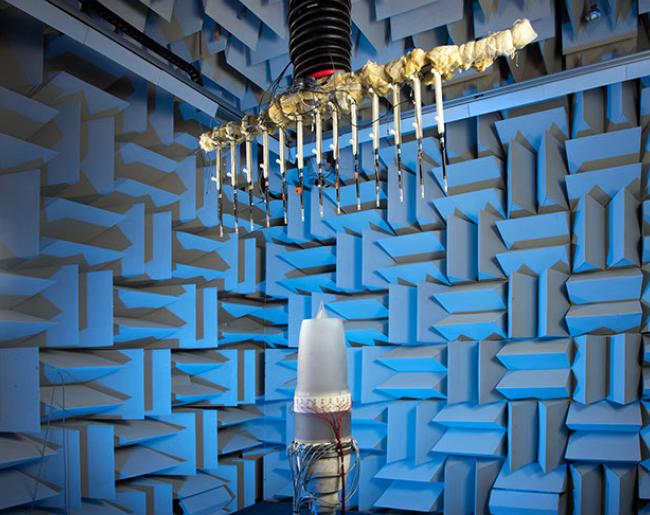
The Acoustical Testing Laboratory at NASA GRC is used to support NASA’s human space exploration and aeronautics research missions. The ATL is a versatile test chamber that can be configured as an anechoic or hemi-anechoic chamber. Dense rubber material in the walls and ceiling of the ATL absorb or reflect sound from the outside. 34-inch deep fiberglass wedges that line the walls and floor are designed to absorb 99% of incident sound above 100 Hz which helps create an ideal environment for making acoustic measurements. A separate control room is attached for any noisy equipment or persons needed to perform the measurements.
The ATL has been used to quantify the noise emissions of experiments performed on the International Space Station, to measure noise sources and levels from electric motors, to calibrate microphone equipment, to measure the effectiveness of acoustic liners for aircraft engine models and to evaluate the over-the-wing engine placement for reducing takeoff and landing noise. Recent tests in the ATL have also included a scale model of a supersonic aircraft engine inlet and a spacecraft cabin ventilation fan.
Webb Measures Distance to Farthest Fast Radio Burst, Suggesting Origin
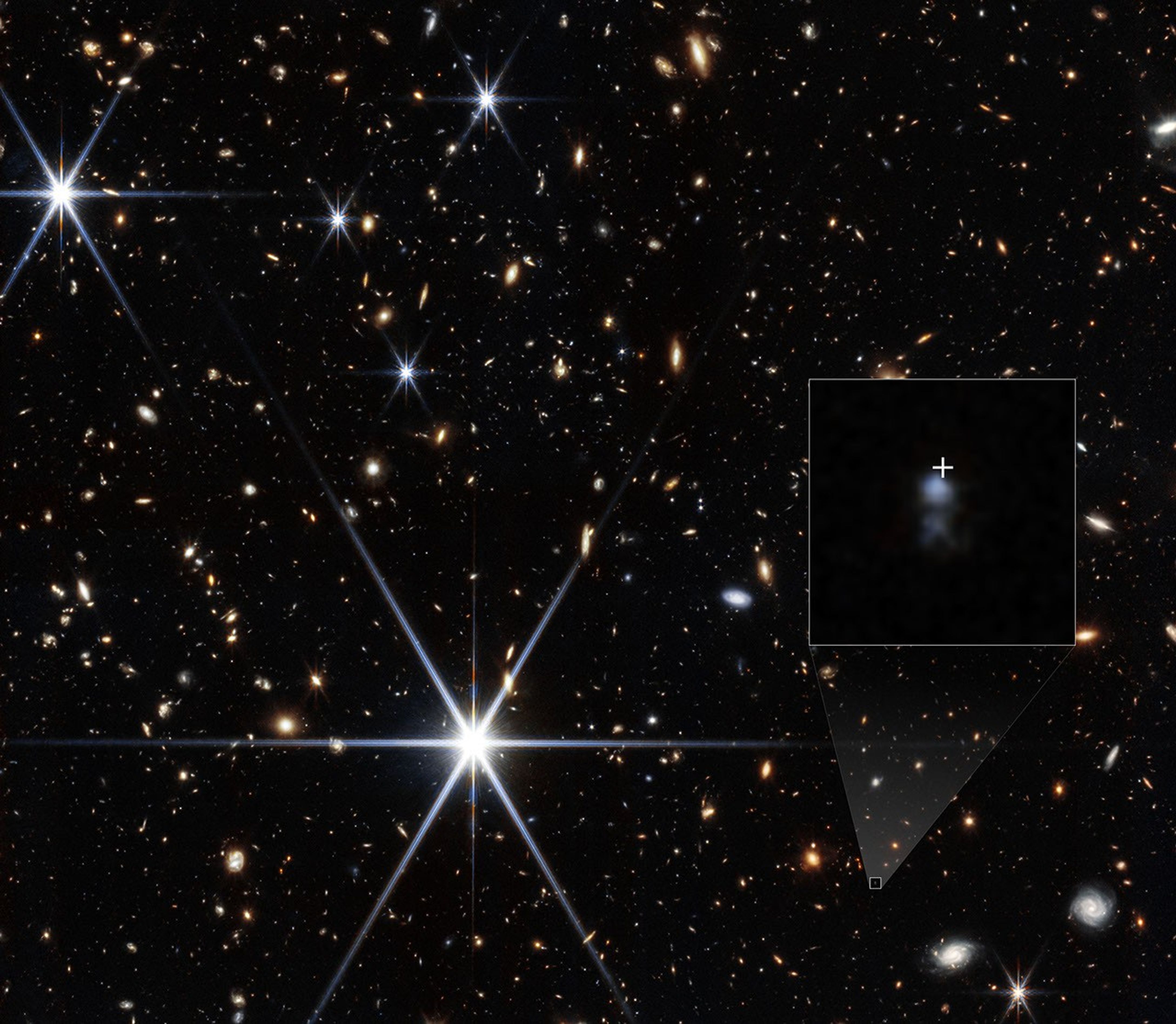
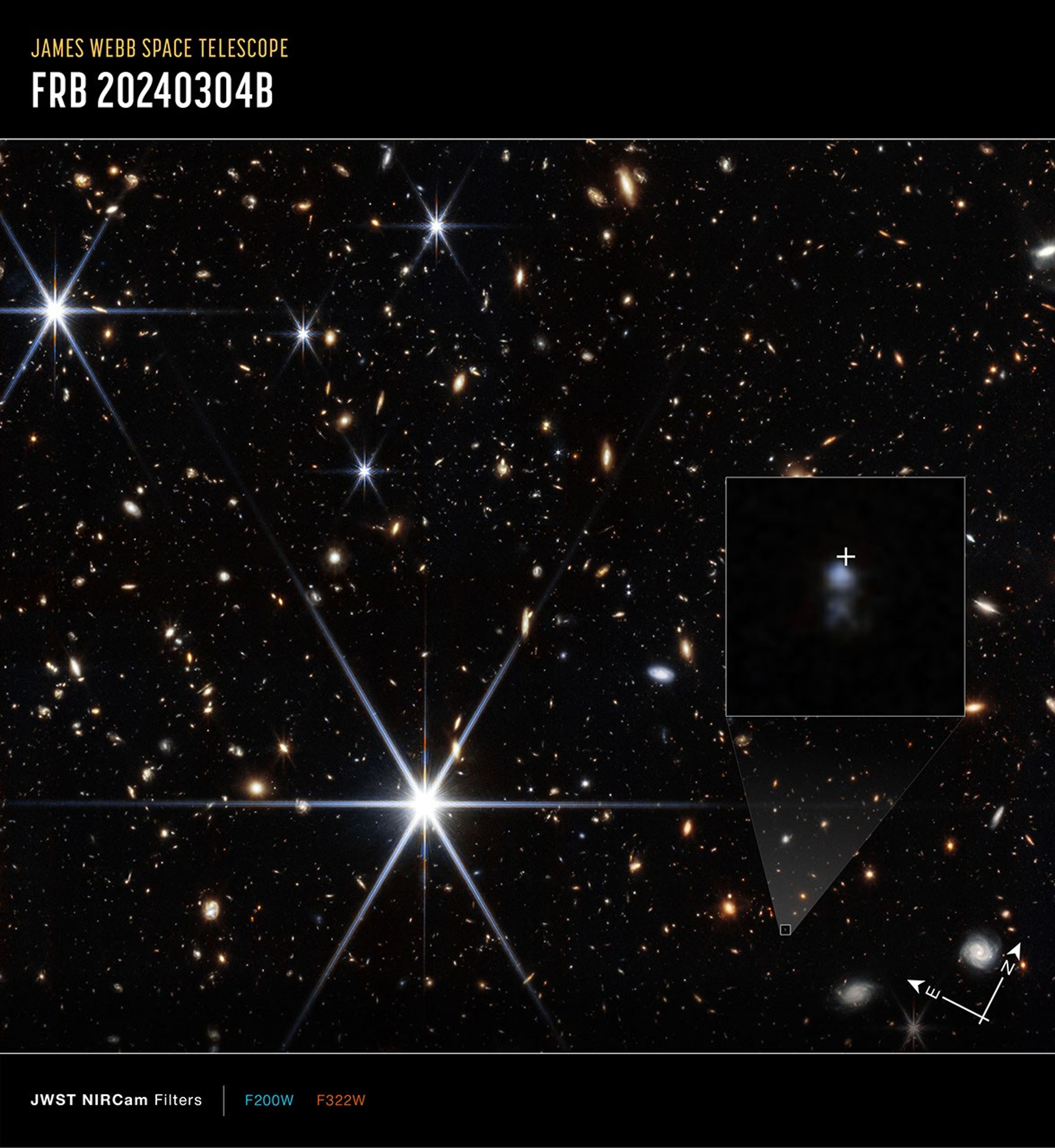
NASA’s James Webb Space Telescope’s NIRCam (Near-Infrared Camera) was able to detect the host galaxy of the fast radio burst called FRB 20240304B, whose location is shown by the white cross. They found it is a small dwarf galaxy actively forming stars.
Credits: Image: NASA, ESA, CSA, STScI, Themiya Nanayakkara (USYD); Image Processing: Joseph DePasquale (STScI)
First discovered in 2007, fast radio bursts are enigmatic, millisecond-long flashes of radio emission from the distant universe. Their origin remains uncertain, particularly since most are seen once and never again. Astronomers using NASA’s James Webb Space Telescope have pinpointed the host galaxy of the most distant fast radio burst (FRB) seen to date. Their finding has implications for what kind of energetic event creates these bursts.
“What makes fast radio bursts interesting is that we don’t know what generates them. We have theories for what objects produce them, but we don’t have conclusive proof,” said Manisha Caleb of the University of Sydney, lead author on the study published Thursday in the journal Science.
The MeerTRAP team used the MeerKAT telescope to detect the burst on March 4, 2024, leading to its designation as FRB 20240304B. The radio data from this burst suggested that it was extremely distant, possibly the most distant one seen to date. To confirm that distance, though, astronomers would need to study its host galaxy. Although they knew the location of the FRB very precisely, the world’s largest ground-based telescopes could not see any galaxy at that spot in the sky. As a result, the team turned to the Webb telescope.
Image: FRB 20240304B (NIRCam Image)
NASA’s James Webb Space Telescope’s NIRCam (Near-Infrared Camera) was able to detect the host galaxy of the fast radio burst called FRB 20240304B, whose location is shown by the white cross. They found it is a small dwarf galaxy actively forming stars.
Image: NASA, ESA, CSA, STScI, Themiya Nanayakkara (USYD); Image Processing: Joseph DePasquale (STScI)
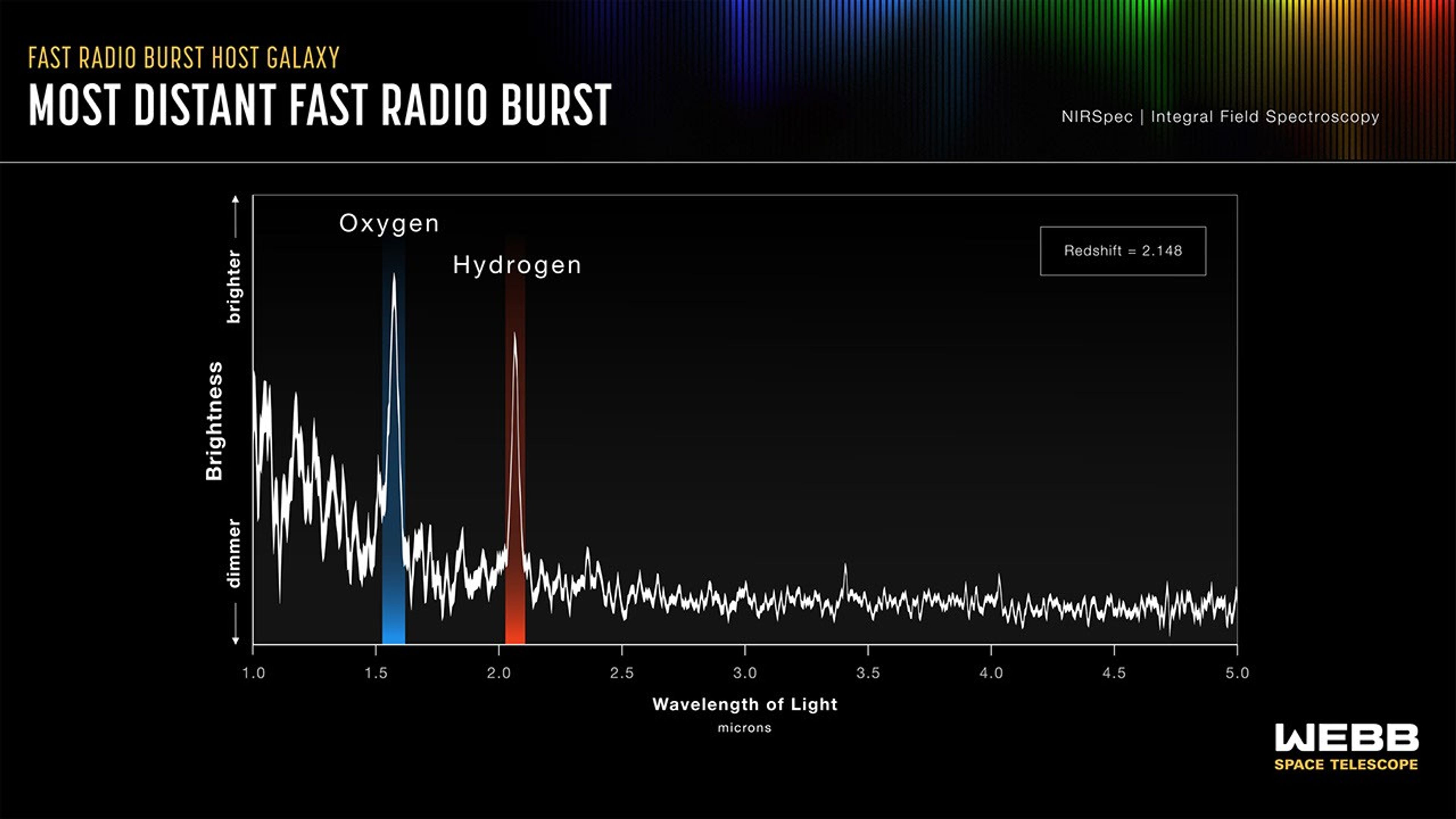
Webb’s NIRCam (Near-Infrared Camera) instrument detected a galaxy in the right location, and its NIRSpec (Near-Infrared Spectrograph) instrument provided a precise measurement of the galaxy’s redshift: 2.148, corresponding to a time just 3 billion years after the big bang. The vast majority of FRBs detected to date occurred billions of years later in cosmic history.
The team discovered that the host galaxy of FRB 20240304B was not typical of other galaxies with FRBs. Most FRB galaxies are massive star-forming galaxies, but the galaxy they found was 1,000 times less massive than they expected.
“We thought it would be a big, nicely formed galaxy with lots of stars, and instead it was a little dwarf galaxy, although it was actively forming stars,” said Caleb.
“The host sticks out in the whole galaxy sample that we have. And it definitely was not what we were expecting,” said Ben Stappers of the University of Manchester, United Kingdom, a co-author on the paper. “This combination of using the MeerTRAP project on the MeerKAT telescope to discover and localize these distant bursts and Webb to study their hosts is very exciting.”
The galaxy existed at the height of “cosmic noon” – a period in the history of the universe when star formation was at its peak. The galaxy’s rate of star formation suggested that the majority of its stars may have formed within just 30 million years.
This has important implications for the origin of fast radio bursts. One theory suggests that FRBs may originate from the merger of two neutron stars. However, the process of orbiting neutron stars gradually approaching closer and closer until they collide is expected to take billions of years. As a result, FRBs would be expected to be associated with older galaxies containing more evolved stellar populations.
A second theory proposes that an FRB can originate from a single, young, highly magnetic neutron star known as a magnetar through a mechanism like starquakes. In that case, once a massive star explodes as a supernova and leaves behind a magnetar, an FRB might occur relatively quickly with no large time delay. As a result, FRBs would also be expected to be found in younger galaxies like the host of FRB 20240304B.
“Our work suggests that it’s very unlikely that this FRB was produced by a merger,” said Caleb.
“Our results further show the amazing capability of Webb where we can push boundaries beyond what was previously possible,” said co-author Themiya Nanayakkara of the University of Sydney, Australia.
In addition to being a record-holder, the new FRB enabled the team to learn more about the billions of light-years of apparently empty space between the burst and Earth.
“A fast radio burst is almost like a cosmic flashlight. It lights up everything along the path. It carries an imprint of everything that it travels through, so you can use it to trace the ‘cosmic web’ – the otherwise invisible matter and structures that it encounters along the way,” said co-author J. Xavier Prochaska of the University of California, Santa Cruz.
The team found the imprint of two cosmic structures on the FRB’s signal – one previously unknown galaxy cluster at a redshift of 0.3 (about 3.5 billion light-years from Earth), and the nearby Virgo Cluster, which is located about 54 million light-years from Earth.
Image: Farthest Fast Radio Burst Host Galaxy Spectrum
Astronomers using NASA’s James Webb Space Telescope were able to study the host galaxy of the most distant known fast radio burst (FRB). They confirmed it has a cosmological redshift of 2.148 and that the FRB occurred just 3 billion years after the big bang.
Illustration: NASA, ESA, CSA, Joseph Olmsted (STScI); Science: Manisha Caleb (SIfA)
In the future, the team is excited about the potential to discover more distant FRBs. They estimate that the MeerKAT telescope may be able to detect and localize several FRBs per year at a redshift greater than 1.0, meaning they existed more than halfway back to the start of the universe. As other new radio telescope facilities and instruments come online, that discovery pace may grow. The Webb telescope will be essential for characterizing those distant host galaxies.
The James Webb Space Telescope is the world’s premier space science observatory. Webb is solving mysteries in our solar system, looking beyond to distant worlds around other stars, and probing the mysterious structures and origins of our universe and our place in it. Webb is an international program led by NASA with its partners, ESA (European Space Agency) and CSA (Canadian Space Agency).
The following sections contain links to download this article’s images and videos in all available resolutions followed by related information links, media contacts, and if available, research paper and Spanish translation links.
Related Images & Videos
FRB 20240304B (NIRCam Image)
NASA’s James Webb Space Telescope’s NIRCam (Near-Infrared Camera) was able to detect the host galaxy of the fast radio burst called FRB 20240304B, whose location is shown by the white cross. They found it is a small dwarf galaxy actively forming stars.
Farthest Fast Radio Burst Host Galaxy Spectrum
Astronomers using NASA’s James Webb Space Telescope were able to study the host galaxy of the most distant known fast radio burst (FRB). They confirmed it has a cosmological redshift of 2.148 and that the FRB occurred just 3 billion years after the big bang.
FRB 20240304B (NIRCam Compass Image)
This image of the host galaxy of fast radio burst FRB 20240304B, captured by the James Webb Space Telescope’s Near Infrared Camera (NIRCam), shows compass arrows, scale bar, and color key for reference.
NASA’s Webb Captures Commotion From Nebula’s Stellar Jets
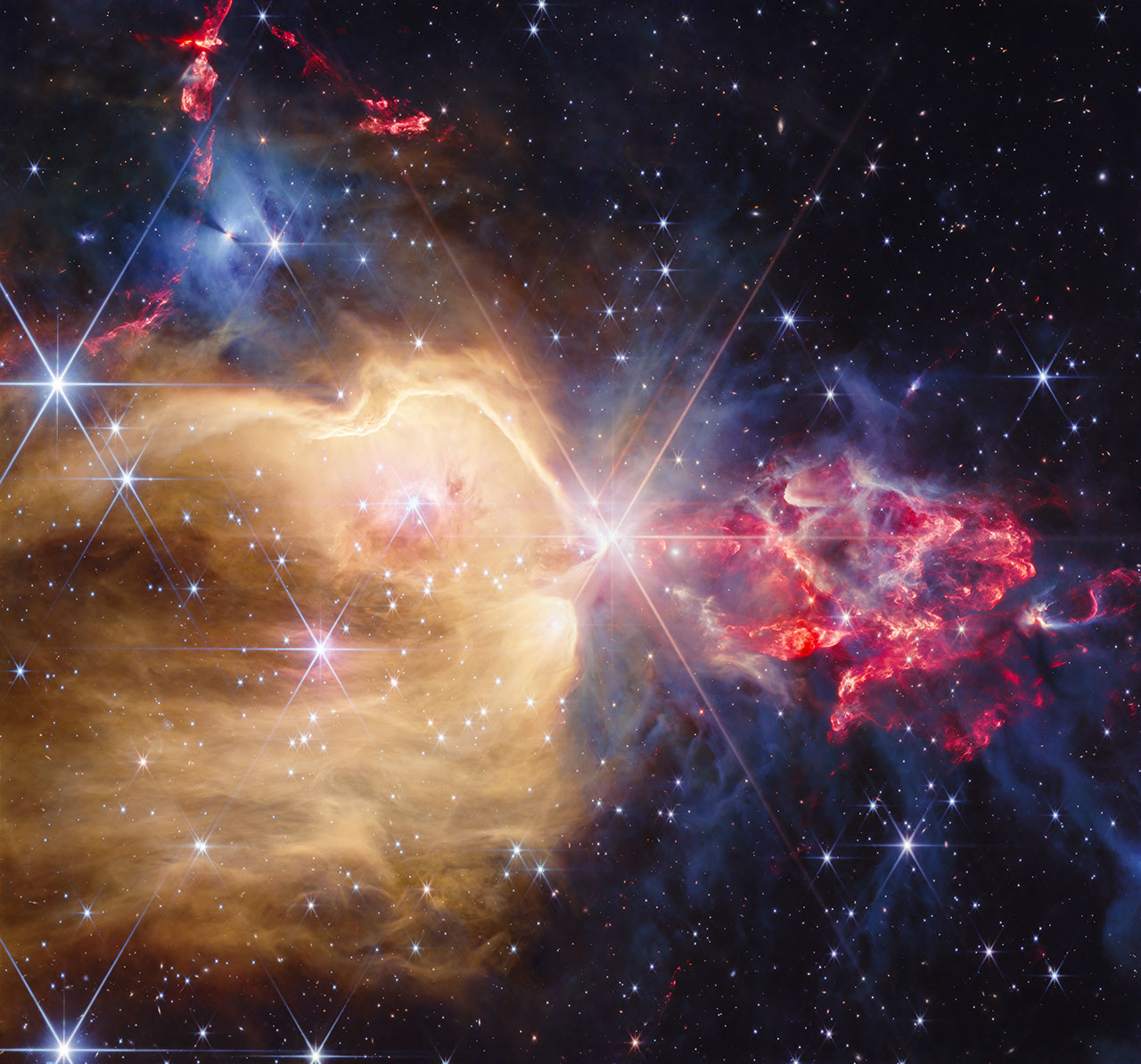
NASA’s James Webb Space Telescope has revealed many protostars and stars within the glowing gases of NGC 7129. Hot, atomic hydrogen gas is shown here in the golden region, while cooler, molecular hydrogen gas, shocked by embedded protostars, is represented in red.
A cauldron of cosmic creation is being revealed in a new image from NASA’s James Webb Space Telescope. Webb has unveiled numerous stars formerly hidden by clouds of dust in a stellar nursery known as NGC 7129, which resides about 3,300 light-years from Earth.
Stars, the engines of elemental creation, have life cycles that begin with their birth in molecular clouds – cold, dense regions of dust and gas. Because of these dusty cocoons, young stars are often impossible to view by many telescopes, particularly those incapable of capturing infrared light. Webb, however, has a high degree of infrared sensitivity, allowing astronomers to peer through that dust and study the beginning of the star life cycle.
Image: NGC 7129 (NIRCam Image)
NASA’s James Webb Space Telescope has revealed many protostars and stars within the glowing gases of NGC 7129. Hot, atomic hydrogen gas is shown here in the golden region, while cooler, molecular hydrogen gas, shocked by embedded protostars, is represented in red.
Image: NASA, ESA, CSA, STScI; Image Processing: Alyssa Pagan (STScI)
The stars from this cluster are in different stages of their development, as the more massive stars form and evolve the fastest. The most massive (and the most mature) is the region’s luminous central star, LkH(alpha) 234 (pronounced Lick-H-alpha). This star, which sports the image’s most prominent diffraction pattern, is a pre-main-sequence star weighing around 5 to 8 times the mass of our Sun. Pre-main-sequence stars like these have mostly finished gathering mass and are contracting under the force of gravity, causing their temperatures to rise. In time, this star will fuse its own hydrogen like our Sun.
The cavity to its left, which appears in gold and spans about 3.5 light-years, is the largest demonstration of the central star’s impact. Outflows from an earlier stage of the star’s life cycle carve into the dense molecular cloud of hydrogen. Both the outflows and the star’s light energize the gas, causing it to glow. While much of this hydrogen gas is blown away, a large amount is also compressed, creating the conditions for even more stars to form.
Interactive: The Colorful Clouds of NGC 7129
Explore the details of NGC 7129 in to uncover the hidden features and activity within the clouds of this young star-forming region. In this interactive, venture to individual points of interest or follow guided tours through related locations and stories. Launch in full-screen for the complete interactive experience — or view directly in your browser.
NASA and STScI
A few of these stars are visible within the cavity. Several of them are also pre-main-sequence and emit stellar winds. The nearby bow shocks, the curved compressed gas that appears near the stars, are created as those winds push into the energetic gas and create their own, smaller cavities.
Together, the central and embedded stars also create the sharp ridge seen at the top of the golden cavity. Their light generates a hot environment that pushes against the colder and denser molecular gas outside the cavity, and creates a boundary known as a photodissociation region. In this region, the molecules of hydrogen break down into atoms. By influencing the temperature and chemistry of the region, this collection of stars offers insight into how these molecular clouds will gradually erode over millions of years.
The region to the right of the central star narrates a different, but equally chaotic tale. This clumpy matter represented in red hides much younger objects than those on the left: protostars. The protostar stage is earlier than the pre-main-sequence stage and occurs after molecular clouds of gas and dust initially compress and fragment.
As the protostars accumulate matter and increase their mass, they eject outflows of superheated material. These outflows interact with the dense, gray, translucent matter the protostars are wrapped within, creating shocks that cause a textured appearance. The red glow is also the result of the interaction. Multiple outflows from multiple stars overlap from our point of view, leading to the scene’s chaotic look.
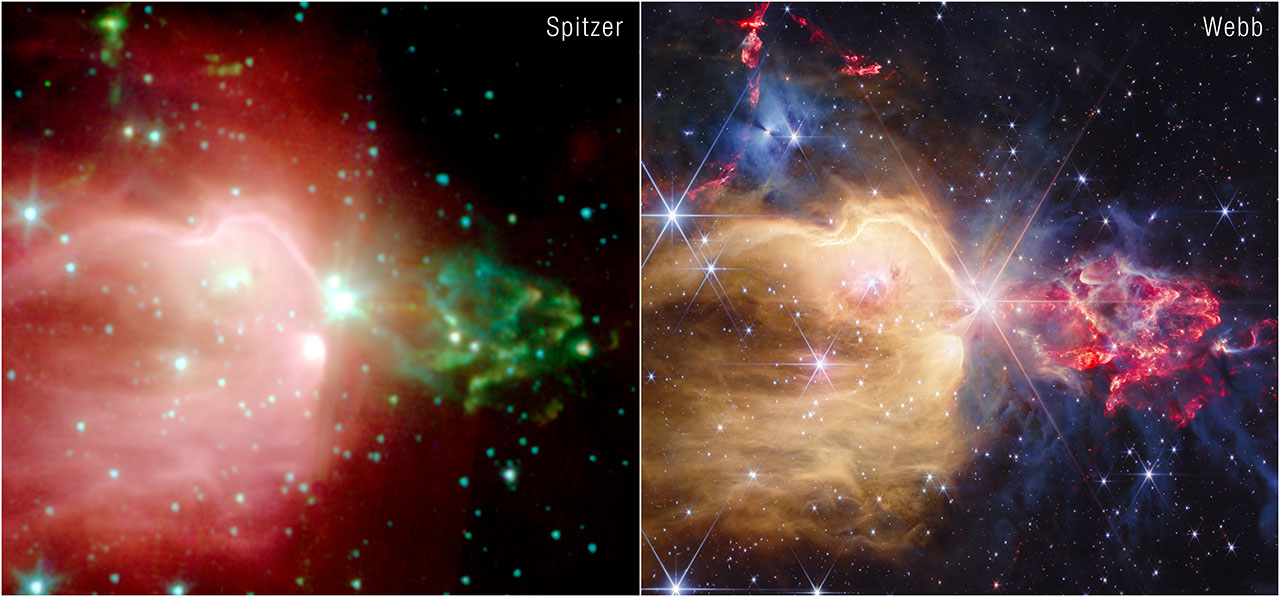
Image: NGC 7129 Side-by-Side (Spitzer and Webb Image)
NASA’s retired Spitzer Space Telescope observed the gas and dust within NGC 7129; however, NASA’s James Webb Space Telescope’s improved resolution shows more detailed gas and dust filaments, along with many background galaxies.
More of these protostellar outflows can be seen at the upper left of the image, near a blue-colored nebula. The center of this blue region hosts a protostar surrounded by a donut-shaped disk of material. This disk casts a shadow against the surrounding nebula, reminiscent of a similar structure known as the “Bat Shadow” that was observed by NASA’s Hubble Space Telescope.
Webb’s high spatial resolution reveals many rich structures in the region’s gas, building on research done previously by NASA’s retired Spitzer Space Telescope. Astronomers will continue to use this Webb data to study how the stars and protostars in this region influence the surrounding gas and dust.
The James Webb Space Telescope is the world’s premier space science observatory. Webb is solving mysteries in our solar system, looking beyond to distant worlds around other stars, and probing the mysterious structures and origins of our universe and our place in it. Webb is an international program led by NASA with its partners, ESA (European Space Agency) and CSA (Canadian Space Agency).
The following sections contain links to download this article’s images and videos in all available resolutions followed by related information links, media contacts, and if available, research paper and Spanish translation links.
Related Images & Videos
NGC 7129 (NIRCam Image)
NASA’s James Webb Space Telescope has revealed many protostars and stars within the glowing gases of NGC 7129. Hot, atomic hydrogen gas is shown here in the golden region, while cooler, molecular hydrogen gas, shocked by embedded protostars, is represented in red.
NGC 7129 Side-by-Side (Spitzer and Webb Image)
NASA’s retired Spitzer Space Telescope observed the gas and dust within NGC 7129; however, NASA’s James Webb Space Telescope’s improved resolution shows more detailed gas and dust filaments, along with many background galaxies.
NASA’s Webb Provides Crash Course on Planet-Shattering Collisions
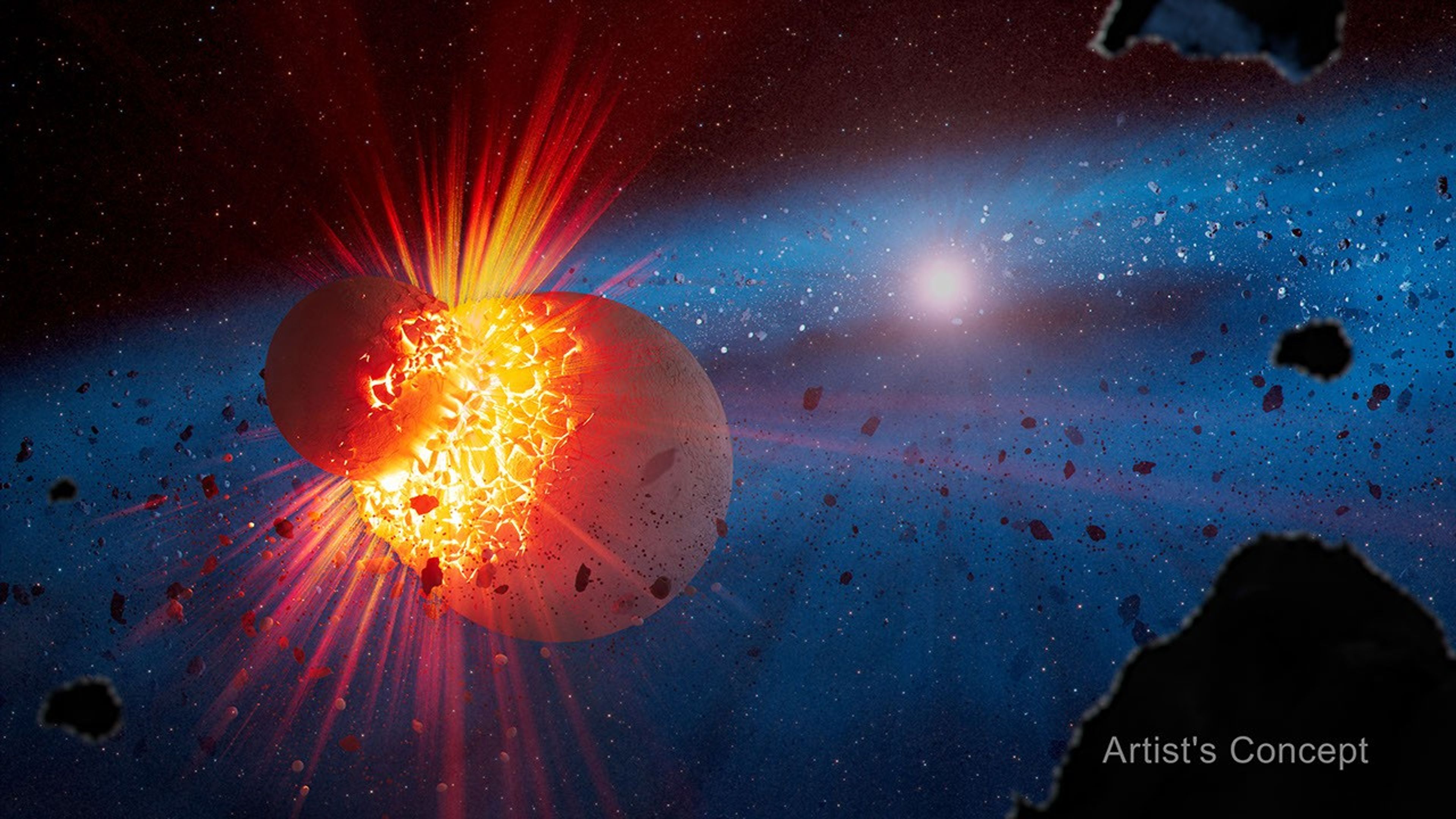
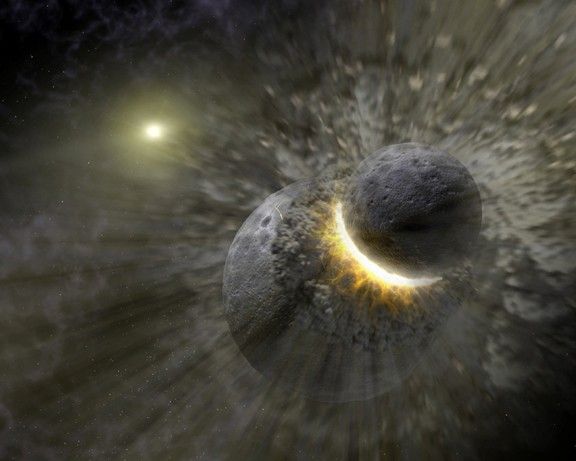
The types of collisions within young stellar systems known as extreme debris disks are relevant to scientists’ understanding of our own solar system, which is thought to have undergone similar impact events that created our Moon and shaped Earth’s initial state.
Credits: Artwork: NASA, ESA, CSA, Joseph Olmsted (STScI)
In the early history of our solar system, scientists theorize that a Mars-sized object called Theia smashed into the infant Earth, vaporizing massive amounts of rock and blasting it into space. Some of that material coalesced into the Moon, where NASA’s Artemis program is returning humans, preparing for Mars, and shaping the future of space exploration.
That long-ago, violent collision reshaped our home planet. Astronomers have used NASA’s James Webb Space Telescope to examine a class of young stellar systems that show signs of similar upheavals, providing clues to the amount of energy in their collisions. The results offer insights into the composition and evolution of these chaotic systems.
The types of collisions within young stellar systems known as extreme debris disks are relevant to scientists’ understanding of our own solar system, which is thought to have undergone similar impact events that created our Moon and shaped Earth’s initial state.
Artwork: NASA, ESA, CSA, Joseph Olmsted (STScI)
The environment surrounding a star changes as it ages, beginning with a juvenile, gas-rich protoplanetary disk where forming planets can reside, before evolving to a gas-poor debris disk. During its mission lifetime, NASA’s retired Spitzer Space Telescope examined the debris disk stage and discovered a subclass termed extreme debris disks. These systems harbor unusually large amounts of warm dust close to the star, in the region comparable to where rocky planets orbit in our solar system. A team of astronomers led by Kate Su of the Space Science Institute in Boulder, Colorado investigated these intriguing objects with Webb.
Contrary to theoretical predictions, which suggest we should observe many extreme debris disks, observations indicate that these environments are rare. Scientists estimate roughly only 1% of young stars show observable signatures of this phase based on the data collected so far, including possibly our own solar system during its formation. Despite their rarity, the team was able to compile a sample of 21 extreme debris disks, including five from Spitzer’s archival data and 16 from Webb, with 12 newly observed disks and follow-up observations on four of Spitzer’s.
“This is the first time we have gathered enough systems to truly understand this subclass that we call extreme debris disks,” said Su, lead author of the paper. “Before Webb, we had limited information. We knew that they are weird and very different from the typical cold debris disks that we know, like Vega and Fomalhaut. Now that we have more data, we can pin down what these disks represent for planet formation and evolution.”
The team confirmed that extreme debris disks share three key properties: smaller dust grains than those in protoplanetary or classic debris disks, a high concentration of warm dust, and irregular brightness variations, all revealed by mid-infrared spectra from Webb and Spitzer.
To determine the driving factor for these qualities, the team studied the mineralogical makeup of the disks. They found that their sample could be categorized into silica-rich and silica-poor disks. Volcanic glass like obsidian is one example of silica-rich material found on Earth, whereas the silica-poor mineral forsterite appears as green sand grains on some beaches in Hawaii. An extreme debris disk’s category relays information on the type of collisions producing the impact debris and may help account for its variability in infrared brightness.
“To just see their mid-infrared emission and beautiful spectral features with Webb, which allowed us to identify their compositions, was the most exciting thing for me,” said Agnes Kospal of Konkoly Observatory in Budapest, Hungary, and a coauthor of the study. “We have no other way to study these planetary embryos directly because they are too small.”
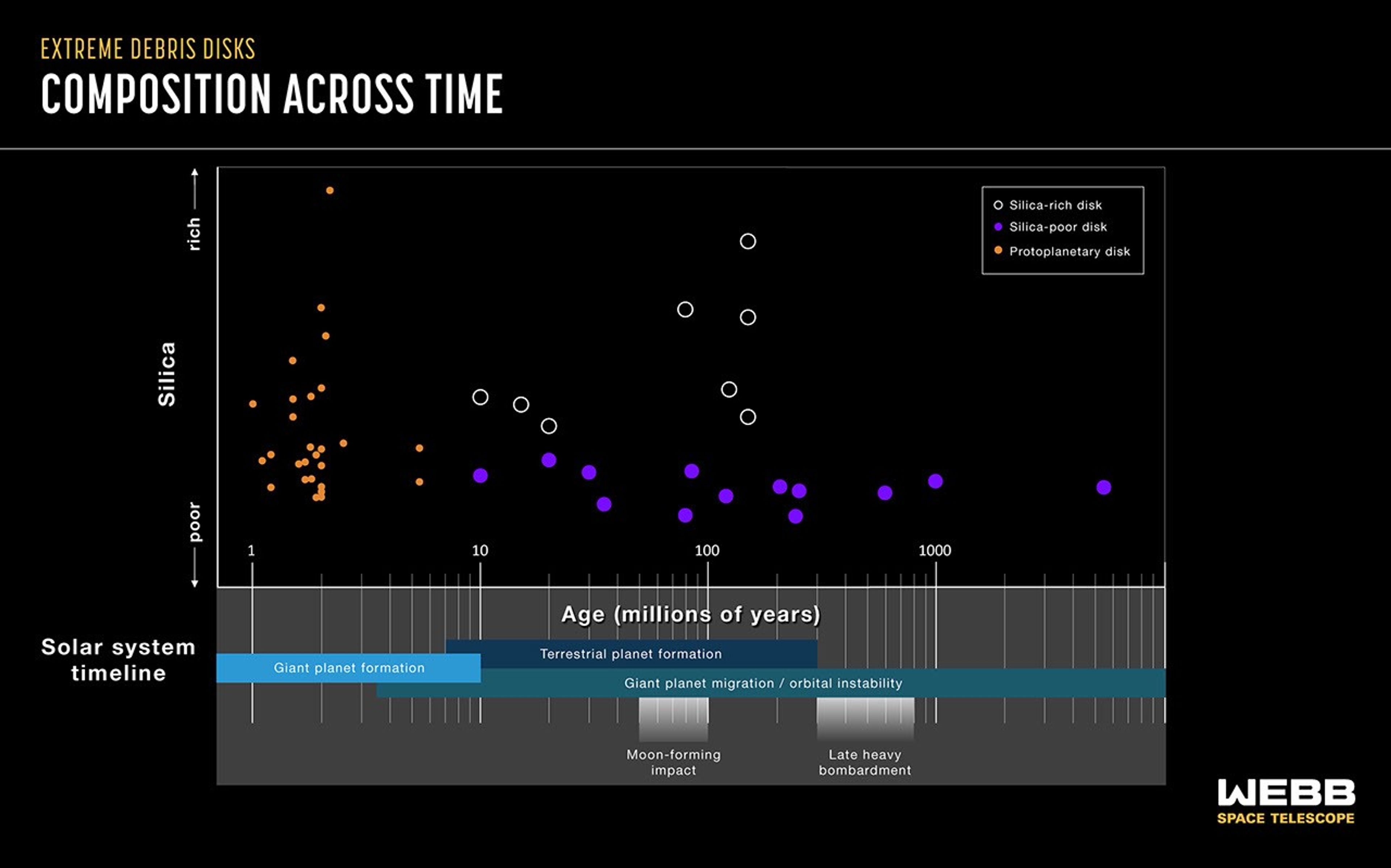
Of their sample, about one-third is silica-rich, suggesting these disks are produced by high-energy impacts between Mars-sized bodies where a significant portion of the material is vaporized. The remaining two-thirds of their sample is silica-poor, indicating that the collisions are occurring on smaller scales, like grazing, between Moon-sized objects. Silica-rich disks are found only around stars younger than 300 million years, while silica-poor disks persist across a broad range of ages and often show greater brightness variability. The team proposes that this variability is driven by the rapid evolution of fresh debris through orbital changes and additional impacts.
Their findings can be applied to our own solar system, which may have experienced more than one extreme debris disk phase.
“How rocky planets formed and giant planets evolved are part of the broader story of the solar system’s formation. It’s all one story,” said Su. “Our work on extreme debris disks helps us bring together the big picture of what we currently understand.”
Image: Composition of Extreme Debris Disks Across Time
By investigating the compositions of extreme debris disks, scientists inferred that silica-rich disks are produced by high-energy impacts of Mars-sized objects, while silica-poor disks are created by less energetic events from Moon-sized bodies.
Illustration: NASA, ESA, CSA, Joseph Olmsted (STScI)
Simulations suggest that terrestrial planets, such as Earth, should form within the first few hundred million years of a solar system’s formation. This period fits with the ages of silica-rich extreme debris disks observed so far and aligns with the estimation that Earth and the Moon formed around 100 million years after the Sun formed, with the Moon likely being the result of a collision between Earth and a Mars-sized object.
As for whether our Sun underwent a silica-poor extreme disk phase, if older silica-poor disks and their random intervals of infrared brightness do reflect orbital instability, this would be broadly consistent with the Late Heavy Bombardment hypothesis for our solar system. In that scenario, the gas giant planets migrated significant distances, gravitationally disrupting the orbits of smaller bodies and triggering catastrophic collisions that generated the short-lived, dust-rich phases observed in extreme debris disks.
“Of course, there’s many things we still don’t know about these disks,” said Attila Moor of Konkoly Observatory, a coauthor of the study. “We expect no silica-rich systems among older extreme debris disks. We only have three disks in our sample that fit that age criteria, so it’ll be nice to observe more of these systems to confirm our hypothesis.”
The James Webb Space Telescope is the world’s premier space science observatory. Webb is solving mysteries in our solar system, looking beyond to distant worlds around other stars, and probing the mysterious structures and origins of our universe and our place in it. Webb is an international program led by NASA with its partners, ESA (European Space Agency) and CSA (Canadian Space Agency).
The following sections contain links to download this article’s images and videos in all available resolutions followed by related information links, media contacts, and if available, research paper and Spanish translation links.
Related Images & Videos
Extreme Debris Disk (Artist’s Concept)
The types of collisions within young stellar systems known as extreme debris disks are relevant to scientists’ understanding of our own solar system, which is thought to have undergone similar impact events that created our Moon and shaped Earth’s initial state.
Composition of Extreme Debris Disks Across Time
By investigating the compositions of extreme debris disks, scientists inferred that silica-rich disks are produced by high-energy impacts of Mars-sized objects, while silica-poor disks are created by less energetic events from Moon-sized bodies.
NASA, CSA (Canadian Space Agency), and the German Aerospace Center signed a joint statement of intent to begin coordinated, preparatory work toward an Earth-based demonstrator to learn how to grow crops on the Moon, which will be essential to helping astronauts go farther and stay longer in space.
The Lunar Agriculture Module-Ground Test Demonstrator aims to develop the technologies needed to grow space crops and study how they perform under atmospheres and controlled environments similar to those expected during missions at Moon Base. Through Moon Base, NASA and its partners will build the infrastructure to support an enduring human presence near the Moon’s South Pole, advancing science and technology while preparing for future human missions to Mars.
Space crops will provide deep space crews with whole-food nutrition and increase dietary variety. They can also absorb carbon dioxide, produce oxygen, and recycle water. These capabilities will become increasingly important as human missions extend farther from our home planet.
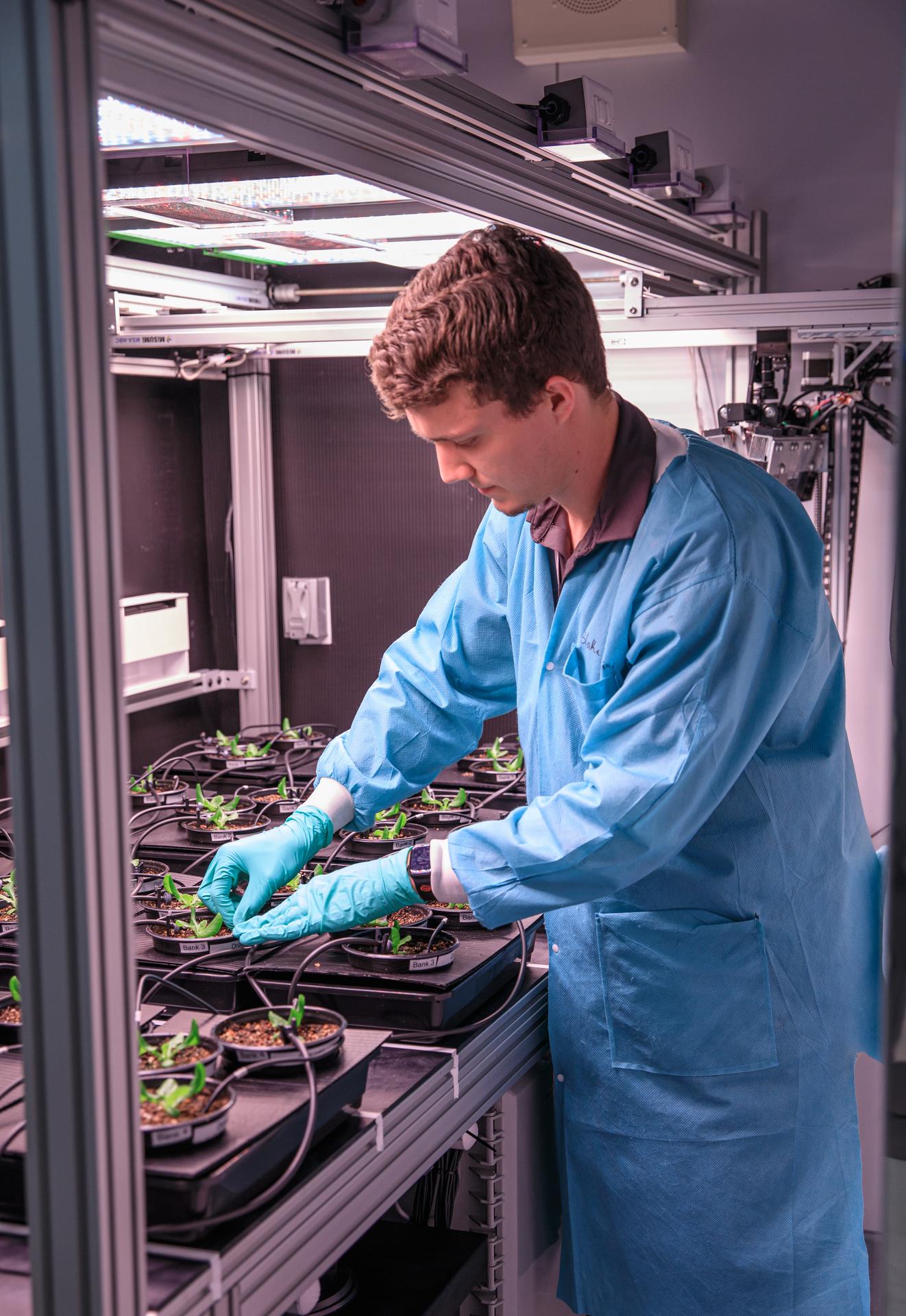
Horticulture scientist Blake Costine adjusts moisture sensors for the Advanced Plant Imaging project at NASA’s Kennedy Space Center on April 17, 2023. In this project, hyperspectral cameras are used to assess plant health. The activity is taking place inside the Plant Production Area at the Florida spaceport’s Space Station Processing Facility.
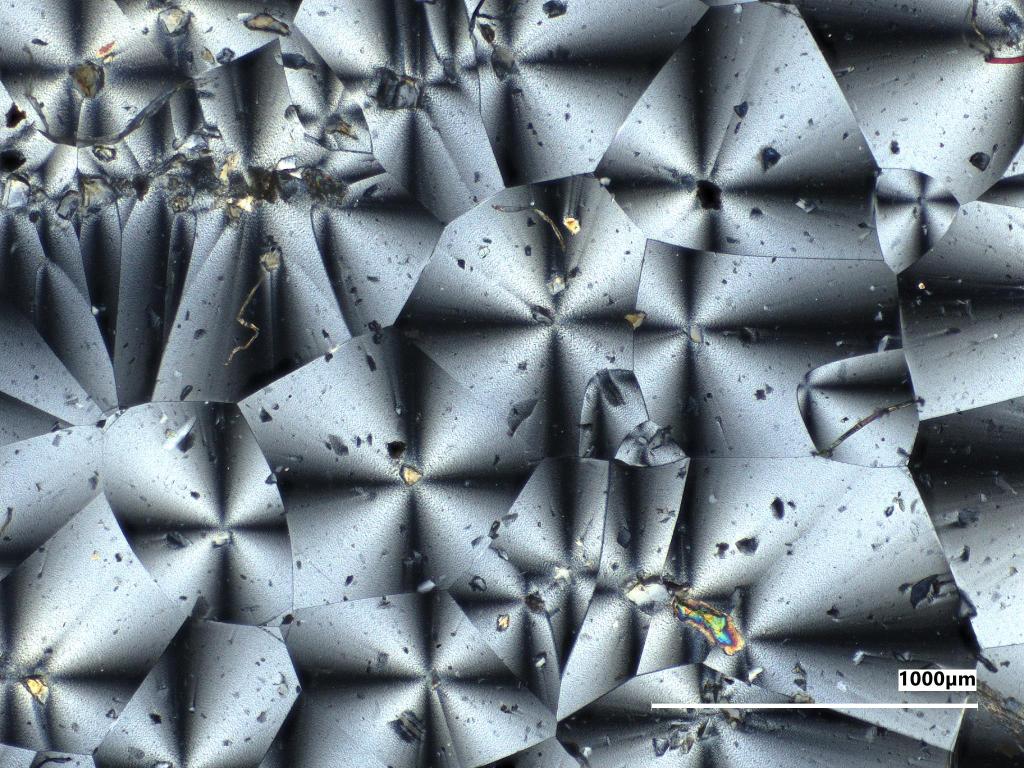
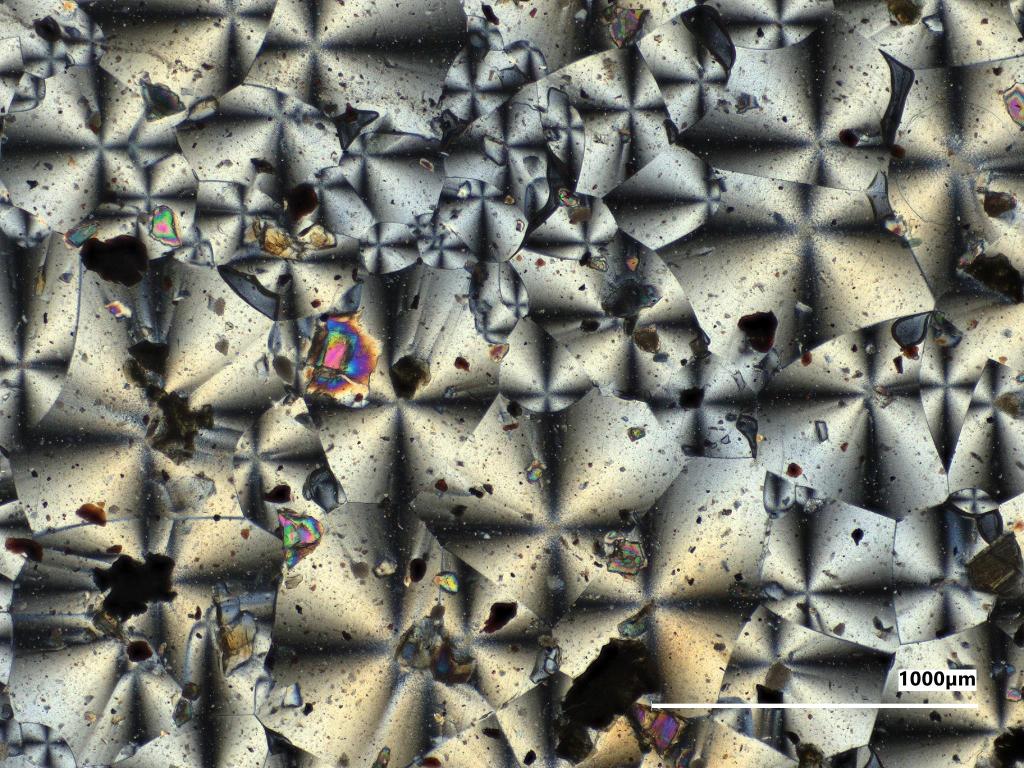
Photos taken using a microscope reveal the colorful, kaleidoscope-like crystal structure of a new NASA-made material that could be used for manufacturing during future space missions. Developed at NASA’s Glenn Research Center in Cleveland, the material could be created directly on the Moon or Mars, allowing NASA to pack fewer supplies — saving weight and reducing launch costs.
To make the material, research chemical engineer Allison Christy and her team of summer interns at NASA Glenn — Tyler Klinchuch, Ethan Bilodeau, and Emma Levenson — mixed a special plastic with simulated Moon and Mars dust. This plastic is biodegradable and could be produced by bacteria fed with crew waste or carbon dioxide.
“The plastic literally grows within the bacteria’s little bodies,” Christy said. “It’s really cool.”
The team found that incorporating simulated lunar and Martian dust particles into this plastic made it stronger and easier to process. Adding different types and amounts of dust allowed them to adjust the material’s properties. The gray image shows sample material manufactured using mock Moon dust, while the reddish image shows material made with mock Mars dust.
The material could be used to manufacture equipment used inside future Moon or Mars habitats, like structural brackets, wrenches, or chairs. By potentially enabling on‑demand, fully recyclable fabrication with lunar surface material, this could help advance NASA’s objective of a permanent Moon Base by reducing resupply needs and empowering crews to build and repair essential equipment on-site.
“You can’t just bring everything with you to the Moon or Mars,” Christy said. “If something breaks, you have to find a way to fix it with what you have. This is a very versatile material, which is a huge benefit.”
Going forward, the team hopes to analyze whether this material could also be used outside in the harsh environments of the lunar or Martian surfaces.
The material is now undergoing testing in Glenn’s Lunar Environment Structural Test Rig to see how it holds up in extreme temperatures. Several samples are also slated to launch aboard the upcoming Materials International Space Station Experiment 23 (MISSE-23) mission and will be exposed to intense conditions outside the station.
This research is funded through NASA Glenn’s 2026 Center Innovation Fund, which is managed by the agency’s Research and Technology Mission Directorate.

 Login