❌

Reading view

There are new articles available, click to refresh the page.

Job Seekers Who Use AI for Applications Need to be on the Lookout for Scams

Researchers at Malwarebytes warn that job seekers are increasingly vulnerable to scams as AI enables them to take a “spray-and-pray” approach to job applications.

Users who have automated their job application process are more likely to forget where they’ve applied, and an unsolicited message from a recruiter may seem more plausible. Job seekers can also be more willing to overlook or ignore red flags associated with scams, since they’re anxious to avoid missing an opportunity.

President Trump to Highlight Crackdown on Overseas Crypto Scams

Bitcoin Magazine

President Trump to Highlight Crackdown on Overseas Crypto Scams

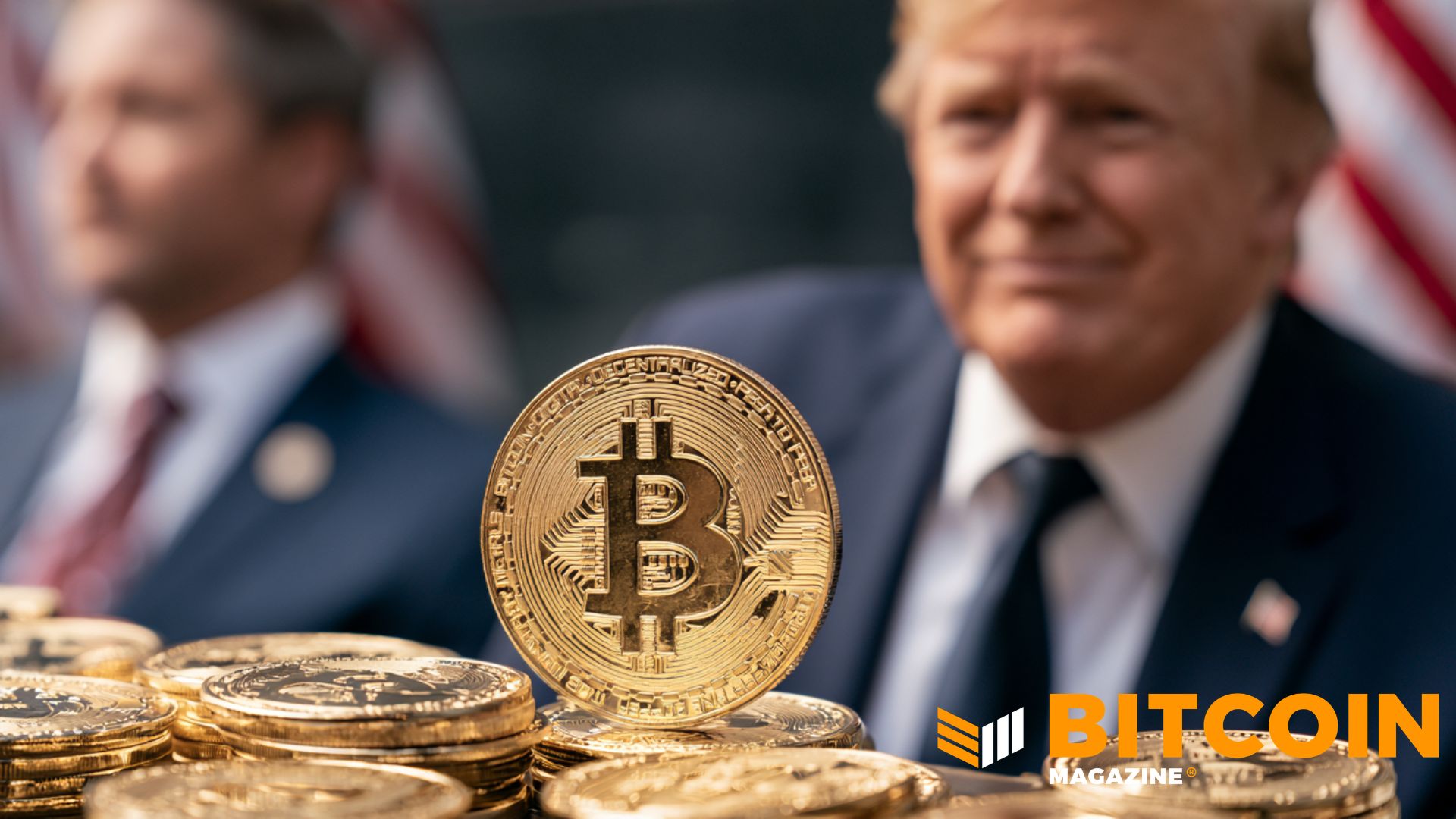
President Donald Trump will use a White House event on Wednesday to spotlight his administration’s push against foreign criminal networks that lure Americans into fake crypto investments, a White House official told Reuters.

The remarks are part of a broader event on cyber crime prevention. Trump and members of his cabinet plan to point to the government’s seizure of fraudulent crypto investment websites and its work to shut down online impersonation scams, the official reportedly said.

Homeland Security Secretary Markwayne Mullin, FBI Director Kash Patel, Defense Secretary Pete Hegseth and Attorney General Todd Blanche are expected to attend.

The event follows a March executive order in which Trump directed the Justice Department to prioritize the identification and prosecution of online scammers. He followed that with a memo directing the Department of Homeland Security to work with private companies to surveil foreign criminal hacking groups.

Record losses in internet and crypto scams

The numbers behind the crackdown are grim. Americans filed more than one million complaints with the FBI about internet scams in 2025, a 17% increase from 2024, and reported record losses.

Crypto fraud accounted for more than half of that damage. The FBI’s Internet Crime Complaint Center logged 181,565 crypto-related complaints and $11.366 billion in losses for 2025, making digital assets the single most loss-heavy category in the report. Crypto investment scams drained $7.2 billion of that total.

The FBI traced much of the activity to organized criminal enterprises in Southeast Asia — in Cambodia, Laos and Burma — that use victims of human trafficking as forced labor inside scam compounds. Criminals make contact through text messages, social media, dating apps and digital ads before steering victims to fake platforms that display fabricated profits. When victims try to withdraw, scammers demand taxes and fees and vanish.

Americans aged 60 and older bore the heaviest burden, with $4.43 billion in crypto-related losses. Crypto ATM scams produced $389 million in losses, a 58% jump from 2024, and recovery scams that target prior victims generated another $1.4 billion.

The global picture is worse. Chainalysis data from January showed illicit crypto addresses received at least $154 billion in 2025, a 162% increase from 2024. North Korea-linked hackers stole $2 billion over the year, including the $1.5 billion Bybit exploit, the largest crypto heist on record.

Enforcement has produced some solid results. The FBI’s Operation Level Up notified 3,780 victims of active crypto investment fraud in 2025 and saved an estimated $225.8 million. A Scam Center Strike Force that combines the DOJ, FBI, Secret Service, State Department and Treasury’s OFAC targets the Southeast Asian compounds.

According to Reuters, Trump and his sons have added at least $2.3 billion to the family fortune from their main crypto ventures, while the investors they courted have absorbed a $2.3 billion hit. 

In October 2025, Trump pardoned Changpeng Zhao, the Binance founder convicted after the exchange pleaded guilty to failing to maintain an effective anti-money laundering program.

Democrats in Congress have accused the Trump family of using the presidency to enrich itself through its crypto ventures, a charge the White House rejects.

White House spokeswoman Anna Kelly said that “all actions by President Trump and his administration are taken in the best interest of the American people.”

This post President Trump to Highlight Crackdown on Overseas Crypto Scams first appeared on Bitcoin Magazine and is written by Micah Zimmerman.

Free Helpline for Victims of Online Crime Pilots in South Africa

South Africans who fall victim to cybercrime now have more support available. MiDO Academy, The Cyber Helpline (UK) and Amazon Web Services (AWS) launched the pilot of The Cyber Helpline in South Africa, a free, confidential service providing practical guidance and compassionate support to individuals affected by online fraud, investment and employment scams, hacked accounts, phishing and smishing, social media fake profiles, sextortion, online harassment, identity theft, malware and ransomware incidents.

Binance And Coinbase Join West Africa Scam Crackdown As 28 Arrested

The arrest count is striking, but the scale of the online infrastructure removed may be the bigger story. An international effort against West African scam networks has resulted in 28 arrests, while technology companies say they removed more than 3.7 million accounts, pages and groups linked to fraudulent activity.

TL;DR: The US Justice Department says its October crackdown led to 28 arrests in Ghana and Nigeria. Binance and Coinbase were among the industry participants, and partners identified more than $11 million in potentially freezable funds, not confirmed recoveries.

The operation, called Joint Disruption Week, brought investigators together at the UK’s National Crime Agency in London during the week beginning October 6. Authorities targeted networks accused of investment fraud, impersonation and other online schemes that reach victims well beyond West Africa.

According to the Justice Department’s October 13 announcement, Ghanaian authorities arrested 19 people and seized 303 electronic devices in an operation near Accra. Nine more arrests were reported in Nigeria. Investigators also identified 117 trafficking victims in Ghana, a reminder that scam-centre operations can involve people held against their will as well as the victims losing money online.

Binance and Coinbase joined companies including Chainalysis, Elliptic, Meta, Google and Microsoft in sharing intelligence or disrupting the infrastructure used by scammers. That collaboration can help investigators connect social-media accounts, payments and wallet activity, but it should not be confused with proof that every suspect used cryptocurrency.

There is also an important distinction in the money figure. Officials said private-sector partners identified more than $11 million in funds that could potentially be frozen. They did not say that $11 million had been seized or returned to victims.

The real test now is how much of the identified money authorities can actually secure and how many disrupted operations stay offline.

Written by the News Desk and edited by Samuel Rae.

Super Scam Me documentary shows what it takes to catch a romance scammer

If you got a DM from an unverified Jon Bon Jovi account after commenting on one of his official Instagram posts, what would it take to make you believe it was really the rock star hoping to connect? And at what point when he starts asking you to send money—like lose-your-house kind of money—would you snap out of the fantasy and stop draining your bank account?

In a documentary premiering Saturday—Super Scam Me—investigative journalist Mariana van Zeller goes deep into this toxic love-bombing terrain. In a clip that Ars is exclusively debuting below, you can see how van Zeller worked with an ethical hacker, Arman the Cyber, to use a fake bitcoin receipt and bait the fake Bon Jovi, giving the victim some much-needed closure.

Sneak peek at National Geographic's Super Scam Me.

Scamming a romance scammer

Broadcasting on National Geographic at 9 pm ET and available to stream on Disney+ and Hulu, the documentary takes viewers on an empathetic quest to understand how the line between “lover” and “fraud victim” gets blurred in romance scams that the Federal Trade Commission says cost Americans nearly $1.5 billion in losses each year.

Read full article

Comments

© National Geographic

Report: 9 out of 10 Americans Have Been Targeted by Scams

91% of Americans have been targeted by a scam, and 17% have fallen victim to one, according to a new survey by Consumer Reports. Notably, 20% of respondents said the latest scam they encountered was personalized, indicating that attackers are increasingly using automation and public or leaked information to craft targeted phishing attacks.

Warning: Tech Support Scams Are Abusing Google Ads

Researchers at Netskope are tracking a phishing kit that hijacks users’ browser windows to display fake security alerts. The malicious websites are distributed via Google Ads, and pose as normal online stores. Once a user clicks a link on the page, however, the site will present them with an urgent-looking security warning.

Attackers Use Vishing Attacks to Distribute New Android Malware

Attackers are distributing a new Android malware called “WindRelay” via phone-based social engineering attacks, according to researchers at Group-IB. The attackers call the victims, impersonating bank employees and instruct them to install a malicious app. In one instance observed by Group-IB, the scammers carried out the entire attack in just thirteen minutes.

Apple Warns Users to be Wary of Unsolicited FaceTime Calls

Apple is warning users to be wary of unsolicited FaceTime calls amidst a wave of scams impersonating Apple Support, Malwarebytes reports. The scammers inform the user that there’s been fraudulent activity or a technical problem associated with their account, and trick the victim into handing over payment card details, banking credentials or Apple ID logins.

❌