Reading view

There are new articles available, click to refresh the page.

Microsoft 2.5: A new series on the people shaping the company’s future

Nearly 20 years ago (!), in 2007, I published my first and only book: Microsoft 2.0. It focused on changes I expected at the company in the “Post-Gates” era. What would remain the same and what likely would be different once co-founder and CEO Bill Gates had left the building?

CEO Satya Nadella has not exited the company (yet). But there’s no question that Microsoft and its mission have morphed considerably in the past year or two. I’m not quite ready to christen this the Microsoft 3.0 era, even though Nadella handed the reins of Microsoft’s dominant commercial business to Judson Althoff nearly a year ago.

That decision resulted in Nadella moving into more of a “founder mode” role, allowing him to focus less on the day-to-day work of running the business. (Microsoft historians may recall that Gates made a somewhat similar move back in 2000 when he became Microsoft’s chief software architect.)

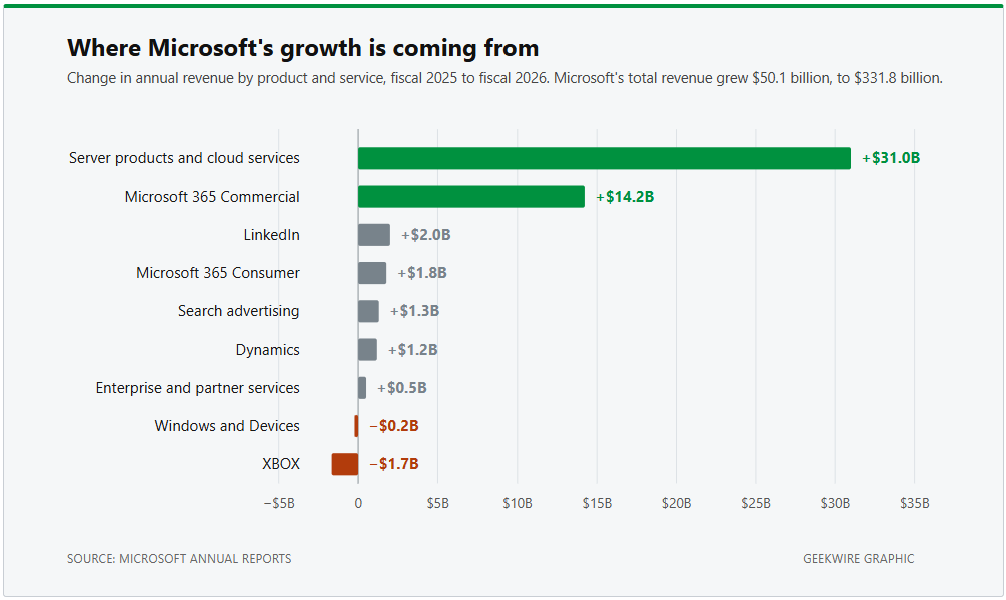
While it might not yet be time for Microsoft 3.0, we arguably could be in the “Microsoft 2.5” era. Windows and Office are still around and still play a big role. Microsoft still builds and sells developer tools and databases. But there’s no question that the cloud and all things AI are at the top of the pecking order now.

I’m embarking on a series here at GeekWire that will focus on what matters to Microsoft and, by extension, to its customers, partners, investors, and employees these days. Who are some of the people shaping and leading the company? What are their opportunities and challenges right now?

Over the next few weeks, I will be profiling various Microsoft execs working on plans for Microsoft’s ongoing evolution. Some are company veterans; some are newcomers. I’ll be talking with top execs from Microsoft’s Security, Copilot, Windows + Devices, Xbox, GitHub, and more.

I’m interested in their strategies for Microsoft’s key products and technologies and how they plan to try to turn Microsoft’s ambitious vision into reality. What are their teams building? What do they see as their biggest challenges and opportunities? And where do they see the technologies in their respective areas heading?

I feel like many of us who’ve been keeping track of the biggest tech companies (myself included) have fallen into the trap of blaming or attributing everything a company does to AI. Layoffs? AI is the culprit. Price increases? It’s all thanks to AI. Changing sales strategies? Chalk it up to AI …

But upon further reflection, I believe Microsoft’s strategy is more nuanced than “AI or bust.” There’s no question that Microsoft’s AI ambitions are shaping its goals and tactics. But Microsoft, as a heavily enterprise-focused entity, can’t simply stop supporting products that aren’t built from the ground up with AI (as much as it might like to do so). Nor can it just leave behind customers who aren’t 100% onboard with its AI moves.

Couple those enterprise hurdles with some not-so-popular consumer decisions, like axing 3,200 people in the gaming unit, and Microsoft’s approach to turning the ship looks a lot trickier.

Our Microsoft 2.5 series kicks off Thursday. Stay tuned.

How Apple’s big lawsuit could disrupt OpenAI’s IPO plans

Apple filed a trade secrets lawsuit against OpenAI last Friday, and it’s not messing around. The complaint alleges a pattern of misconduct reaching all the way up to OpenAI’s chief hardware officer and claims more than 400 former Apple employees now work at the company. OpenAI’s response so far has been carefully hedged, and the timing couldn’t be worse with the company reportedly eyeing an IPO […]

JPMorgan Chase bets on Seattle to build its AI control layer

Lori Beer, JPMorgan Chase’s global chief information officer, at the JPMorganChase Center in Seattle. (GeekWire Photo / Todd Bishop)

JPMorgan Chase is building out a new AI software infrastructure team, anchored in Seattle, focused on running AI across its data centers and outside providers in a way that controls costs, protects its intellectual property, and avoids tying its fortunes to any one vendor.

Lori Beer, the bank’s global CIO, discussed the effort as part of a broader interview Tuesday during a stop in Seattle. She said the bank is being “careful about lock-in, strategic risk, financial risk, all those things.”

The move comes as business and tech leaders — including Microsoft CEO Satya Nadella and Palantir CEO Alex Karp — publicly warn about the risks of letting a small number of AI vendors accumulate control over costs, data, and the choice of which AI tools businesses can use.

Beer described the new group as an AI infrastructure team but said it works at the software level, separate from JPMorgan groups that build data centers or procure hardware.

She said the group will, for example, develop systems to determine when to route different types of AI workloads to JPMorgan’s own data centers, when to tap into public cloud providers, and when to use newer specialty computing suppliers.

AI agents are one example of where the bank is drawing a line.

Beer said JPMorgan will build and own the software that runs its agents, while treating the underlying AI models as interchangeable. The agentic layer is specific to JPMorgan’s business, whereas the underlying models are general-purpose, and JPMorgan wants to be able to switch among them as the market changes. 

Cost is another focus. Given the option, Beer said, engineers naturally reach for the newest and most powerful model, even when a cheaper one works as well. Systems built by the new team will route specific workloads to different types of models.

The new AI infrastructure team will be spread across multiple JPMorgan locations, but Beer said the Seattle area offers a high concentration of the required skills, including engineers who built cloud infrastructure at Amazon, Microsoft, and other tech platforms before joining JPMorgan. 

It’s part of a broader focus on AI at JPMorgan’s Seattle Tech Center, which has grown to about 400 people since opening in 2018, with a heavy emphasis on cybersecurity.

JPMorgan said this week that it has named Ture Armas, the bank’s CTO for Commercial Bank Lending Technology, to lead the Seattle Tech Center. Armas will continue in his existing role while adding oversight of the tech center’s strategy, talent, and community engagement. He replaces Mamtha Banerjee, who left in March.

The Seattle Tech Center is preparing to move next month into an expanded space at the JPMorganChase Center, the skyscraper that was renamed from the Russell Investments Center in January. The tech center is currently located in a smaller space in a nearby building. The move will put engineers closer to business teams, which Beer called critical as AI accelerates the pace of product development.

Beer, who started her career as a software engineer at a nuclear facility, joined JPMorgan in 2014 from health insurer WellPoint. In 2017, she became the first CIO to sit on the bank’s Operating Committee. She oversees a technology division of about 70,000 people, including 45,000 engineers, with a $20 billion annual budget. 

JPMorgan reported record second-quarter results Tuesday morning, topping Wall Street expectations. On the earnings call, CEO Jamie Dimon said the bank has almost 1,000 AI use cases across the business, with about 50 he described as the most important, in areas including risk, fraud, marketing, note-taking, and document reading.

In what turned out to be a preview of Beer’s comments later in the day, CFO Jeremy Barnum described the bank’s AI priorities: “Use the right model for the right purpose, be smart about open source where appropriate, and ensure that you’re getting value out of it ultimately.” 

Xbox at a crossroads: 25 years later, Microsoft is done playing around

Xbox at a gamescom briefing in 2014. Microsoft is pressing its games division to turn a profit. (Microsoft Photo)

In 2007, Microsoft’s Xbox 360 consoles started dying — overheating until three lights on the front blinked red, a defect gamers came to call the “red ring of death.” Microsoft’s response was to extend the warranty on every machine and take a charge of more than $1 billion to fix the problem, making it one of the costliest product failures in the company’s history.

Microsoft could afford it financially, but the bigger factor was strategy. Xbox was a bet on the living room, and for a company minting money on Windows and Office at the time, losing a billion or so was a justifiable cost of staying in the game.

Nearly two decades later, that patience has run out.

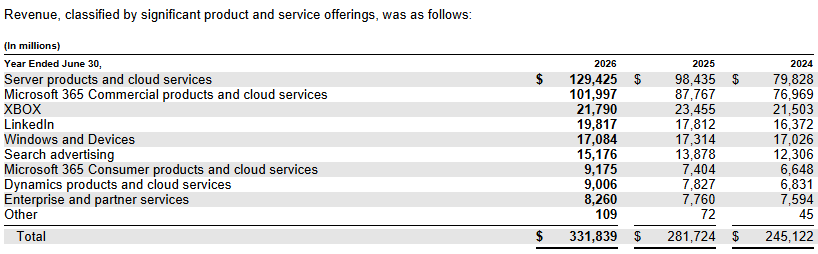
“Going forward, this cannot continue,” the new Xbox CEO Asha Sharma wrote in a memo to employees last month, offering a blunt assessment of a business that has spent more than $20 billion over five years, only to see its core revenue fall by nearly half a billion dollars, running at a thin 3% profit margin, by Microsoft’s own internal measures.

With thousands of layoffs expected to be announced across Microsoft as soon as next week, the Xbox division is likely to be among the hardest hit.

The cuts reach across the company — including sales and consulting — part of a restructuring that has become routine around the close of Microsoft’s fiscal year. But for Xbox, they’re an early step in a broader effort to reset the business, rein in costs, and position the division for healthier profits.

Microsoft CEO Satya Nadella has been blunt about it: the company has spent years subsidizing Xbox rather than profiting from it, and that era is over. The videos and livestreams of people playing Xbox games that fill YouTube generate more money than Microsoft makes from the games themselves, he noted in an appearance on the Hard Fork podcast.

“No one can accuse Microsoft of not having invested for the last 25 years,” Nadella said. “And now we have to turn this into a sustainable business.”

Long-term strategic bet

Turning it around means breaking a pattern that runs through Xbox’s history.

Xbox launched in 2001 and lost money for most of its first decade. Microsoft absorbed the losses and stayed in — going up against Sony’s PlayStation and Nintendo — because it saw a strategic prize in owning a piece of the living room, and later mobile. Online gaming also gave the company early experience running services at scale, which fed its cloud ambitions.

Over time, the goal shifted from selling hardware to selling subscriptions.

Xbox Live, launched in 2002, turned online play into recurring revenue. Game Pass, which arrived in 2017, let players pay a monthly fee — the top tier is about $23 — for a library of games, including Microsoft’s own new releases the day they come out. The idea was to get people paying for Xbox everywhere: consoles, PCs, phones and the cloud.

And when growth stalled, Microsoft doubled down. It paid $7.5 billion in 2021 for Bethesda, the studio behind Fallout and The Elder Scrolls, then $69 billion in 2023 for Activision Blizzard (whose games include Call of Duty, World of Warcraft, Diablo and the mobile hit Candy Crush) the largest acquisition in Microsoft’s history.

A series of economic headwinds

In recent years, almost everything about the economics of gaming has turned against Xbox at the same time.

Hardware loses money, and AI is making it worse. Microsoft sells consoles at or below cost, banking on games and subscriptions to make up the difference. But AI data centers are consuming so much memory and storage that chip prices have spiked. That has forced Microsoft to raise Xbox console prices, most recently a $100-to-$150 hike this summer that it blamed directly on component costs.

Xbox lost the console war. By most estimates, Sony’s PlayStation 5 has outsold the Xbox Series X and S more than two to one. A smaller base means fewer game sales and subscriptions to offset the upfront hardware losses. That has left Xbox a distant second for the entire generation.

Revenue is shrinking. Even setting aside the games it gained from Activision, Xbox’s annual revenue has fallen nearly $500 million over five years — while the money going into the business keeps climbing. It has been investing more to earn less.

Microsoft’s most recent quarterly filing shows gaming revenue of $16.8 billion for the nine months through March, down about $1.1 billion, or 6%, from a year earlier.

Game Pass cuts into sales. Handing subscribers a new game the day it launches undercuts the roughly $70 they would have paid to buy it. The service delivers steady subscription income, but thinner economics on the games themselves.

Activision didn’t fix the margins. Even with one of gaming’s most profitable businesses folded in, Xbox earns only about 3 cents of profit on every dollar — well under the 17 to 22 cents typical in the industry. If the biggest acquisition in company history can’t move the margin, little will.

Every spare billion is flowing to AI. Microsoft is pouring more than $100 billion a year into the data centers and chips behind its AI push, trying to capitalize on the boom. Against a risk and payoff that big, a gaming business that barely breaks even feels like yesterday’s strategic bet.

What’s next for Xbox

The cuts have already started. In recent weeks, Microsoft has signaled plans to close or sell some studios, including Ninja Theory, maker of the acclaimed “Hellblade” series.

Shedding staff, studios and marketing will lift Xbox’s profit margins in the near term. What it won’t do is fix the underlying problem: a business can trim its way to a better number only so much before it has to generate more revenue.

Sharma’s plan, so far, is to concentrate on Xbox’s biggest franchises, funding blockbusters like Halo and Fallout while pulling back elsewhere. It’s leaning on Game Pass and releasing most of its games on PCs and rival consoles from Sony and Nintendo, reaching players well beyond Xbox’s shrinking base, even as it holds back a few new exclusives like Gears of War to give owners a reason to stay.

Microsoft is also rethinking the console itself. In her memo, Sharma described a “hardware component crisis” that has left the company unable to make as many consoles as players want, and called for “a new business model and partnerships” for its hardware.

How far the reset ultimately goes is an open question. The Information reported that Microsoft has weighed making Xbox a standalone subsidiary, a joint venture, or a spin-off, though nothing is imminent.

Microsoft’s response to the Xbox 360 “red ring of death,” July 6, 2007. (Seattle Post-Intelligencer / NewsBank)

Whatever happens next, it’s clear that times have changed. In 2007, as the red ring of death crisis emerged, Peter Moore, who ran the Xbox business at the time, and his boss Robbie Bach went to then-CEO Steve Ballmer to ask for the money to repair and replace the failing consoles.

Ballmer didn’t flinch. “What’s it going to cost?” he asked, as Moore later recalled.

Told it was $1.15 billion, Ballmer said, simply: “Do it.”

Moore credits that decision with saving Xbox. There would have been no Xbox One, he said, without Ballmer’s willingness to spend more than a billion dollars to protect the brand.

Nearly two decades later, Microsoft is done writing that kind of check.

Microsoft unveils $2.5B ‘Frontier Company’ to embed AI engineers inside customers

Satya Nadella says the industry shouldn’t “cede value to a few models that eat everything they see.” (GeekWire File Photo / Kevin Lisota)

Microsoft is launching a new AI “company.” It won’t be a separate legal entity, and most of its 6,000 people already work at Microsoft. But the $2.5 billion behind it is real, and the stakes are big, given how many of its AI partners and rivals are racing to do basically the same thing. 

The tech giant on Thursday announced “The Microsoft Frontier Company,” which will embed engineers inside customers to build and run AI systems. It will be led by Rodrigo Kede Lima, a longtime Microsoft sales and enterprise leader, most recently president of Microsoft Asia.

This practice is known in the industry as forward-deployed engineering, in which a company sends its own technical employees to work inside a customer’s operations to design, build, deploy and operate AI systems on-site rather than selling a tool and walking away. 

The model was pioneered two decades ago by Palantir, but in recent months the approach has become the hot new thing in enterprise AI. Amazon committed $1 billion to its own forward-deployed engineering initiative just two days ago. (Some inside Microsoft suspect that its rival may have caught wind of what it was planning and moved to announce first.) 

Anthropic and OpenAI launched rival ventures in May to put engineers inside enterprise customers. Unlike Microsoft’s initiative, the OpenAI Deployment Company, as the ChatGPT maker’s venture is known, is an actual standalone entity — majority-owned by OpenAI but backed by more than $4 billion from a partnership led by the private-equity firm TPG. 

Similarly, Anthropic teamed with Goldman Sachs, Blackstone and Hellman & Friedman on a $1.5 billion venture — not yet named — to embed engineers inside mid-sized companies, starting with the investment firms’ own portfolio businesses.

Microsoft is attempting to one-up them all. 

“This goes beyond what has been labeled as Forward Deployed Engineering (FDE) and will be the largest, most capable, outcome-driven engineering organization in the industry,” wrote Judson Althoff, CEO of Microsoft’s commercial business, in a post announcing the new initiative Thursday morning.

Responding to questions from GeekWire, a Microsoft spokesperson called the new initiative “a purpose-built company with its own leadership and financial accountability” but stopped short of calling it a separate legal entity or standalone company.

The spokesperson said the organization “brings together more than 6,000 industry, engineering and AI professionals, drawn primarily from Microsoft’s existing engineering and forward-deployed teams,” noting that it will “grow through a combination of internal talent and external hiring across engineering, AI, and industry roles.”

Separately, some consulting roles are among those expected to be impacted by the round of layoffs anticipated next week.

Microsoft wouldn’t say whether the $2.5 billion is new spending or repurposed from existing budgets, or over what period it’s being spent. The company also hasn’t yet spelled out what the new organization means for the future of its existing consulting and services units.

Across the industry, this is happening now because the payoff from AI has proven harder to capture than many companies expected. Businesses across the economy have adopted tools like ChatGPT, Claude, Gemini and Copilot, only to find that impressive demos don’t automatically translate into results. The technology is powerful, but deploying it can be difficult inside a real company, with its own data, rules and entrenched ways of working.

So the AI providers have started sending their own engineers to work inside those companies, figuring out where the AI can actually help, then building it into their operations.

“Having the model alone doesn’t change your workflows or how you operate,” said Marc Nachmann, Goldman Sachs’ global head of asset and wealth management, in an interview with CNBC about the Anthropic partnership. “You need people who can combine the technology with what’s actually happening in the business and implement those changes.” 

The big AI providers have multiple reasons to do this. Each of them wants to get more businesses using its AI platform at higher volumes. All of them are looking to drive long-term demand for the AI capacity they’re collectively spending hundreds of billions of dollars to build.

Another big reason: AI models are becoming commodities, getting cheaper and more similar by the month. The big money for the likes of Microsoft is in selling the services needed to make AI pay off inside a company, which is a far bigger market than just selling the models themselves.

Microsoft is pitching privacy and trust as a selling point. Its promise is that a customer’s data and hard-won knowledge stay the customer’s alone. Microsoft says it won’t feed them into training its AI models in ways that would hand the same advantages to the customer’s rivals. 

It’s also promising choice: customers can run whichever AI model fits the job, from OpenAI, Anthropic, Microsoft, or open-source providers, not locked into using one.

Microsoft CEO Satya Nadella has argued that a company should be able to exchange one AI model for another without losing all the institutional knowledge it has built up. 

That’s his test, as he put it, for whether a business still controls its own future.

“The last thing any of us want is a world where every company across every sector is ceding value to a few models that eat everything they see,” Nadella wrote in a June 14 essay. “If all the value is accrued by only a few models, the political economy will simply not tolerate it. There is no societal permission for an AI future that hollows out entire industries.”

Whether that vision of swappable AI models becomes a reality remains to be seen. There’s actually a risk for customers that the opposite will happen in the forward deployed engineering approach. Even if they can theoretically swap in a competitor’s AI model, working with Microsoft’s engineers means their systems naturally end up running on Microsoft’s cloud platform and related technologies, making it very difficult to jump ship.

It’s also not clear how new all of this really is for the company. Microsoft already runs a large in-house delivery arm — Industry Solutions Delivery, the group that absorbed what used to be called Microsoft Consulting Services — with thousands of consultants and engineers building and deploying technology inside customer organizations. 

Microsoft also has programs like FastTrack to help customers roll out its software, and over the past year it has been rolling out “forward-deployed engineering” teams with partners, including a dedicated practice with Accenture and a $1 billion, five-year alliance with EY.

So ultimately the Microsoft Frontier Company is less a new company than a new push behind work the actual company was already doing, albeit bigger and better-branded than before.

Microsoft set for new round of job cuts next week, spanning Xbox, sales and consulting

GeekWire File Photo

Microsoft is preparing to cut thousands of jobs next week, continuing to rein in operating costs as the company pours unprecedented sums into AI infrastructure. 

Business Insider broke the news Tuesday afternoon, saying that the cuts will impact less than 2.5% of the company’s global workforce of about 220,000 people. It includes not just Xbox, where cuts have been signaled for weeks, but also layoffs in sales and consulting. 

GeekWire confirmed the details of the report with a person familiar with the company’s plan. Microsoft isn’t commenting on the report.

The timing follows a familiar pattern. Microsoft often restructures its operations around the close of its fiscal year on June 30, and the cuts would come just as the new year begins. 

The reductions were bigger last year. Microsoft laid off more than 15,000 people in two rounds of cuts a few weeks apart: about 6,000 in May 2025, then around 9,000 (roughly 4% of the company at the time) in early July 2025.

One difference this year: Microsoft’s first-ever voluntary retirement program. About a third of the approximately 8,750 eligible U.S. employees took the buyout, reportedly allowing the company to cut a smaller share of its workforce through layoffs than a year ago. 

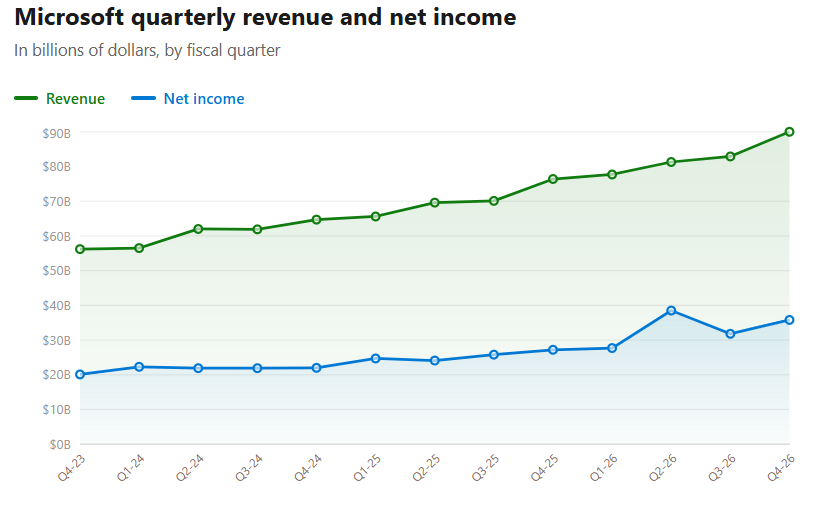
The company is on pace to spend more than $100 billion building AI and cloud infrastructure in the fiscal year that just ended — up from $88.7 billion the year before — with about two-thirds going to the chips that power AI. 

Microsoft shares closed Tuesday at $373.02, down 19% over the past month and near a 52-week low, as Wall Street questions whether its heavy AI spending will pay off.

The layoffs come amid a broader wave of restructuring across the tech industry, which has shed more jobs than any other sector this year. U.S. tech companies have announced 123,653 cuts so far in 2026, up 66% from the same stretch of 2025, according to a report from outplacement firm Challenger, Gray & Christmas. 

Across all sectors, not just tech, AI was the most commonly cited reason for job cuts in May — the third straight month it has led the list. The 38,579 cuts attributed to AI were the most in any month since Challenger began tracking the cause in 2023. For the year, AI has been linked to 87,714 cuts, already surpassing the 54,836 attributed to it in all of 2025.

Mary Jo Foley: What’s a consumer-focused outsider doing at the helm of Microsoft’s AI push?

Jacob Andreou speaks onstage during TechCrunch Disrupt 2023. (Photo by Kimberly White/Getty Images for TechCrunch, CC By 2.0)

It’s not surprising that Microsoft is looking to turn its Copilot platform into a “Super App,” given that its rivals are doing the same. But Microsoft is going about the task in a way that doesn’t follow its usual playbook, by putting a big bet on a consumer-savvy hire from the outside with some feather-ruffling ways.

The company’s newly minted Copilot Executive Vice President Jacob Andreou came to Microsoft from Greylock Partners and before that, Snapchat-maker Snap. Andreou currently oversees more than 11,000 Microsoft employees, according to a recent profile in Fortune.

Microsoft is bringing onboard another former Snap (and Discord) vice president, Peter Sellis, to help, GeekWire has learned. Sources say Sellis will be leading Copilot Design, Growth and Engineering, reporting to Andreou.

Andreou is part of a recently formed Copilot Leadership Team. His charter is to lead the “Copilot experience” by driving design, product, growth and engineering, as outlined in a March 2026 reorg memo from CEO Satya Nadella. He is one of a small group charged with shaping the future of Copilot, alongside others focused on the underlying Copilot platform and AI models.

Given Andreou’s Snap background, his plan to meld Microsoft’s consumer and enterprise Copilot experiences makes sense. It won’t be a snap, however. (See what I did there?)

Even though both share the Copilot brand, consumer Copilot and Microsoft 365 Copilot don’t work the same way or use the same data sources or architecture. To boot, Microsoft hasn’t had a lot of luck with this kind of consumer-enterprise unification, as evidenced by the low interest in and uptake of its free, consumer-focused Teams product compared to its business-focused Teams collaboration offering.

The 33-year-old, Los Angeles-based Andreou seemingly is undaunted by the challenge and is pushing some employees to clock 12-hour days to keep up with younger, AI-focused companies, Fortune reports.

Microsoft was infamous for requiring employees to work long hours and weekends during crunch times leading up to delivering Windows NT and Windows 95, but not so much in recent years. Microsoft is known as a place where outsiders often struggle to thrive compared to those who climb the corporate ladder for years, making Andreou’s approach feel even riskier.

Andreou has been a big backer of the Tasks productivity layer in consumer Copilot, which is still in public preview. Tasks, which enables Copilot to handle actionable items, is similar to the recently released Copilot Cowork layer that is part of Microsoft 365 Copilot. (I asked Microsoft if the two would merge as a single Cowork-type offering at some point but was told the company had no comment.)

However, the holy grail remains the “Super App.” With the Copilot Super App, Microsoft is looking to give consumers and business users a reason to stay within Copilot regardless of the AI task with which they – or their agents – are engaging.

“Come summer, we will be bringing coding to all knowledge work within one Copilot Super App. That’s really exciting. So you’re going to have Chat, Cowork, and Code all in Copilot,” Nadella told Microsoft Build conference attendees in early June.

Microsoft isn’t the only AI-focused company working on extending its AI coding capability beyond just developers. Nor is it the only one betting on the Super App concept.

  • OpenAI is working to turn ChatGPT into a Super App that brings together ChatGPT and Codex into a single environment that operates like a personal assistant.
  • Anthropic is extending Claude to become a Super App (though it hasn’t used that terminology), as well, by creating a single environment that combines productivity, development and automation tools.

The Copilot Super App isn’t Andreou’s only focus. He tells Fortune that AI model choice and home-grown AI model excellence also are among his key priorities.

Microsoft is expanding model choice in the Copilot Cowork feature beyond Anthropic to include OpenAI and soon, Microsoft’s own Cowork 1 model – which may be based on Microsoft’s hosted version of the open-source DeepSeek model. Cowork 1 will be the newest addition to Microsoft’s growing pool of Microsoft-developed models, seven of which debuted at Build this year. Microsoft is seeking to position itself as the champion of lower cost, efficient models built for those who are token-maxxed out.

Andreou definitely has his work cut out for him as a consumer guy in a heavily enterprise-centric company.

Microsoft 365 Copilot and consumer Copilot are just two of more than two dozen different “Copilot”-branded commercial offerings available across the various Microsoft product teams, which can feel overwhelming.

Microsoft also needs to give users a clearer way to find and use the quickly expanding stable of first- and third-party agents, like the OpenClaw-based Microsoft Scout personal assistant. Will Andreou and his Super App quest bring at least some order to the Copilot and agent madness? We’ll know more sometime this summer.

❌