 Login
Login
AI research startup Listen Labs scrubbed a $1.5B funding round for Salesforce talks
Listen Labs walked away from a signed Series C term sheet from Menlo Ventures, sources say.

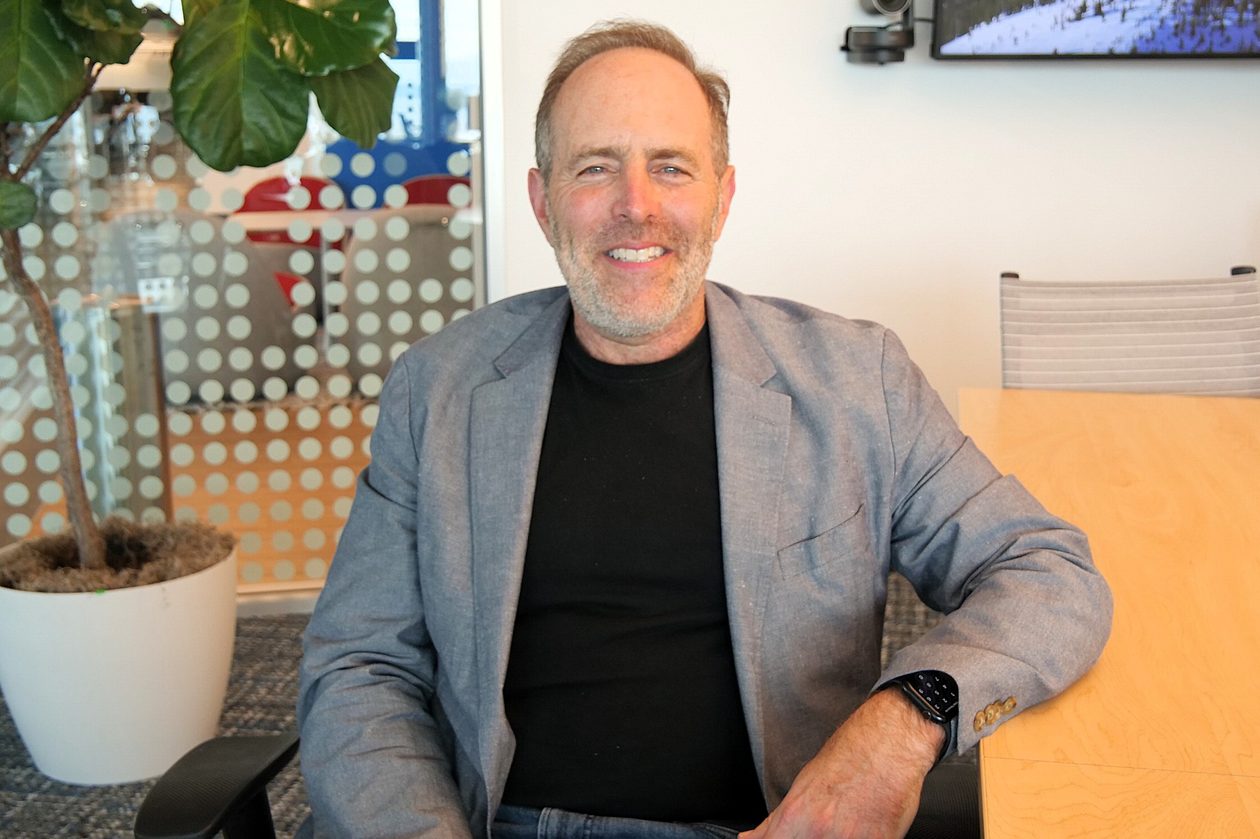
Highspot’s branding is still everywhere inside its longtime headquarters at World Trade Center East, overlooking the Seattle waterfront. But outside the corner office that once belonged to the sales software company’s co-founder and CEO, “Seismic” is scribbled on the whiteboard.
That’s how fresh the merger is. Two weeks after San Diego-based Seismic took over its Seattle-based rival, Seismic CEO Rob Tarkoff is in town this week for the first board meeting since the combination was completed, and the inaugural gathering of the combined company’s senior leadership team.
Highspot and Seismic sell sales enablement software: systems that manage the pitch decks, case studies and training materials salespeople use, and track which ones help close deals.
Founded in 2011 by Robert Wahbe and two former Microsoft colleagues, Highspot raised $650 million and held the top spot on the GeekWire 200, our ranking of the region’s privately held tech companies, prior to the merger. Wahbe, its CEO until the deal closed, is now on Seismic’s board.
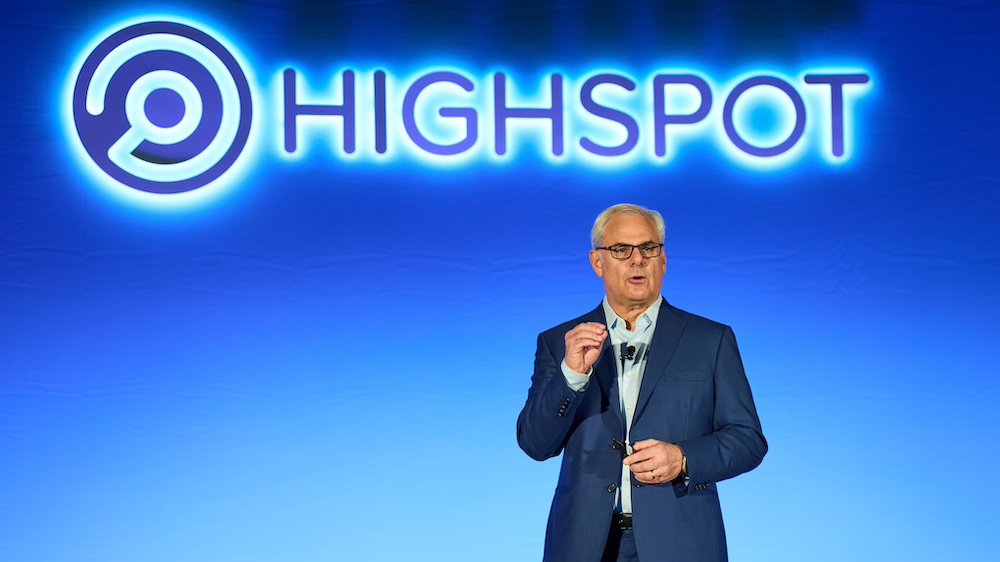
Tarkoff, a lawyer by training who spent much of his career in corporate development and M&A, became Seismic’s CEO in October 2025, succeeding co-founder Doug Winter. He had previously spent seven years running Oracle’s customer experience business.
The Highspot deal was announced in February, four months into his tenure.
Tarkoff addressed a wide range of questions from GeekWire in an interview Monday afternoon in Wahbe’s former office, which now serves as an ad hoc meeting room.
Here are the main takeaways from the interview:
A $600 million company: Tarkoff disclosed the combined company’s annual recurring revenue for the first time, putting it at about $600 million, with about $200 million of that coming from Highspot.
That makes the combined business three times the size Highspot was on its own and 50% bigger than Seismic. Tarkoff said the larger size will be an adjustment for people across both companies as they come together. “We’re getting closer to being a billion dollar company,” he said.
The companies did not disclose the financial terms of the deal, and Tarkoff declined to say whether the transaction put Highspot above or below the $3.5 billion valuation it reached in 2022.
Tim Porter, managing director at Madrona, which led Highspot’s Series A in 2014, called it a “multi-billion-dollar merger” in a post after the deal closed. Porter, who serves as a board observer at Seismic following the combination, wrote that Madrona hopes to help build the combined company into “a truly iconic AI software company, through a potential IPO and beyond.”
Permira, the private equity firm that has backed Seismic since 2020, remains the controlling shareholder of the combined company.
Impact on jobs: Seismic said when the deal closed that Highspot had more than 700 employees and that the combined company would have about 1,700 total. Tarkoff said in a statement at the time that the companies were “carefully evaluating our organizations to identify areas of overlap,” and that “any decisions will be communicated directly and proactively to employees.”
Since then, word of initial job cuts has started to emerge on LinkedIn and other online forums, but the company has not provided specifics or disclosed any numbers.
Asked for an update on job reductions this week, Tarkoff said, “We did our best to try to find roles for everybody that we could, but there’s always some level of overlap where you don’t need two people doing a task that requires one.”
Tarkoff did not provide numbers or address the question of whether more job cuts are coming. He said the company feels “really good about where we are from a go-forward staff perspective,” while adding: “We will continue to push performance and push growth and acceleration.”
Seismic’s future in Seattle: Tarkoff said Seismic will keep Highspot’s Seattle offices at World Trade Center East, where the company has a long-term lease. He called Seattle “one of the top centers of excellence for tech talent,” citing the ability to recruit from Amazon, Microsoft and others.
There will be no designated Seattle site leader, he said, describing the office as one of the company’s major centers rather than a headquarters.
However, several senior leaders of the combined company are based in Seattle, including Kurt Berglund, who led engineering at Highspot and is now Seismic’s senior vice president of AI.
Others include chief human resources officer Kimberly Schultz, who joined Seismic in June after 11 years at Amazon, where she led the team responsible for integrating acquisitions and divestitures, and Lucas Welch, VP of brand and communications, who spent nearly eight years at Highspot.
Tarkoff said a number of the company’s top engineers are based in Seattle as well.
Seismic’s other major locations include San Diego, Boston, Toronto, Vancouver, B.C., London and Hyderabad, India, where Tarkoff said the company has more than doubled its presence. Gurpreet Singh Pall, who was Highspot India’s chief operating officer, now leads Seismic’s India operations.
Product plans: The current Highspot and Seismic platforms both will continue to be sold and supported for the time being, Tarkoff said. He declined to set a timetable for eventually consolidating them, saying customers will move to a new platform when one is ready.
Now that the companies are able to work directly together, he said they’ve come to see that the two products are closer than he understood before the deal closed. Seismic has focused on complex enterprise workflows and regulated industries, financial services in particular, while Highspot built for a broader market of upper mid-market and lower enterprise customers.
With two teams no longer building the same things, he said, engineering can move to new work — more AI agents, additional content governance features, and deeper industry-specific workflows such as archiving and records retention.
Rivals are making the opposite case. Ali Akhtar, CEO of Letter AI, wrote in a LinkedIn post last week that mergers in the category turn companies inward for quarters or years, predicting “stalled innovation, layoffs, and distractions from delivering customer value,” and a period of reduced support for customers on legacy platforms. Akhtar is offering to buy out their contracts.
Pricing: Tarkoff said seat-based subscriptions aren’t going away, because enterprises want predictable costs. He said he’s skeptical of the usage-based pricing some AI vendors have adopted, pointing to high-profile examples of companies blowing past their budgets.
“Token-maxing is not really a good model long term, because it’s just going to force enterprises to use less,” he said.
He said Seismic is working toward pricing tied to outcomes rather than usage.
The Salesforce question: A week after the Seismic-Highspot merger closed, Salesforce and Anthropic announced Claudeforce, making Claude the default model across Slack and parts of Salesforce’s Agentforce platform.
Salesforce is both a channel and a rival for Seismic. Seismic’s software sells through the Salesforce AppExchange, and its Aura AI runs inside Agentforce, Salesforce’s agent platform. At the same time, Salesforce’s Sales Cloud includes its own sales enablement tools. And Agentforce agents increasingly do work that enablement platforms have owned.
Asked whether the partnership makes Salesforce a tougher competitor, Tarkoff said no.
As sellers start working inside Claude rather than inside individual applications, he said, the assistant will call each company separately — Salesforce for customer records, Seismic for approved content and sales materials. That makes Seismic a peer of Salesforce inside Claude, rather than an add-on inside Salesforce’s own product.
“It actually puts us more on an even playing field with Salesforce,” he said.
But Salesforce is considerably further along. Claudeforce launched with a Salesforce plugin carrying 37 prebuilt sales skills, in pilot now and due in open beta this month.
Much of the early analysis of the Salesforce-Anthropic partnership saw it as evidence that enterprise AI is consolidating around a few deep platform alliances rather than opening up.
Seismic’s next fiscal year begins Feb. 1. Tarkoff said he expects to spend much of the intervening months on the road with customers and employees. Seismic plans to give the first detailed look at its new product roadmap at its Shift conference, Oct. 12-15 in Carlsbad, Calif.
Researchers observed the novel campaign exploiting unauthenticated guest access to quietly enumerate and exfiltrate exposed data from both platforms.
The post Stealthy ‘City-Forum’ Attacks Target Salesforce and ServiceNow With Custom Toolset appeared first on SecurityWeek.
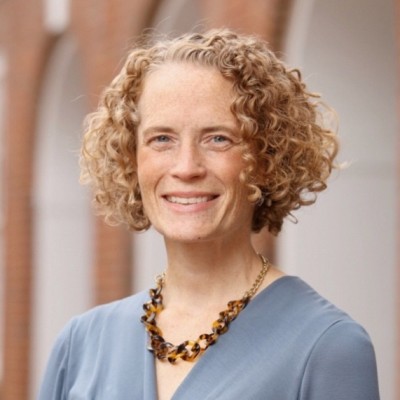
— Hannah McClellan Richards has left Amazon after more than 15 years to become chief operating officer of micromobility company Lime.
“Ensuring hundreds of thousands of light electric vehicles are available, fully charged, when and where riders need them, at global scale is exactly the kind of operational challenge I love,” she said on LinkedIn, praising Lime’s carbon-free, affordable transportation model.
McClellan Richards previously served as VP of operations, product and tech for Amazon’s pharmacy division. Other past roles include technical advisor and chief of staff to the CEO of Worldwide Amazon Stores, and VP of freight, inbound transportation and returns. She will serve in the new role remotely.

— Ankur Sinha, former chief product and technology officer at Remitly, shared that he’s taken a role at Anthropic as head of enterprise and verticals. Sinha was at Seattle’s Remitly for more than four years, and was previously an engineering director at Google and spent more than a decade at Microsoft, working primarily on Xbox.
“Moving from transforming lives with trusted financial services that transcend borders (Remitly’s mission) to ensuring the world safely makes the transition through transformative AI (Anthropic’s mission), a few things stay constant,” Sinha said on LinkedIn. “The impact on human lives is what makes the work worth doing, and trust and safety are critical to doing it well. I’m super stoked to be part of this and to help carry it forward.”
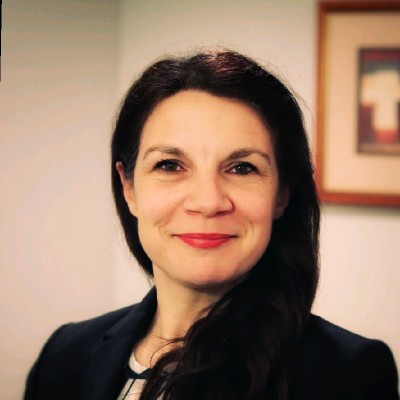
— Christine Chambers has been named chief financial officer of Redmond, Wash.-based lidar maker MicroVision. She joins from Fusemachines and previously served as CFO of PetMeds and RealNetworks. Chambers was also a financial vice president at Seattle-area company Rosetta Stone.
MicroVision, which develops lidar sensors and perception software for autonomous driving and security use cases, cut 49 jobs in March, targeting engineering and technical roles.
Chambers’ appointment was disclosed in a federal filing and takes effect Aug. 27.
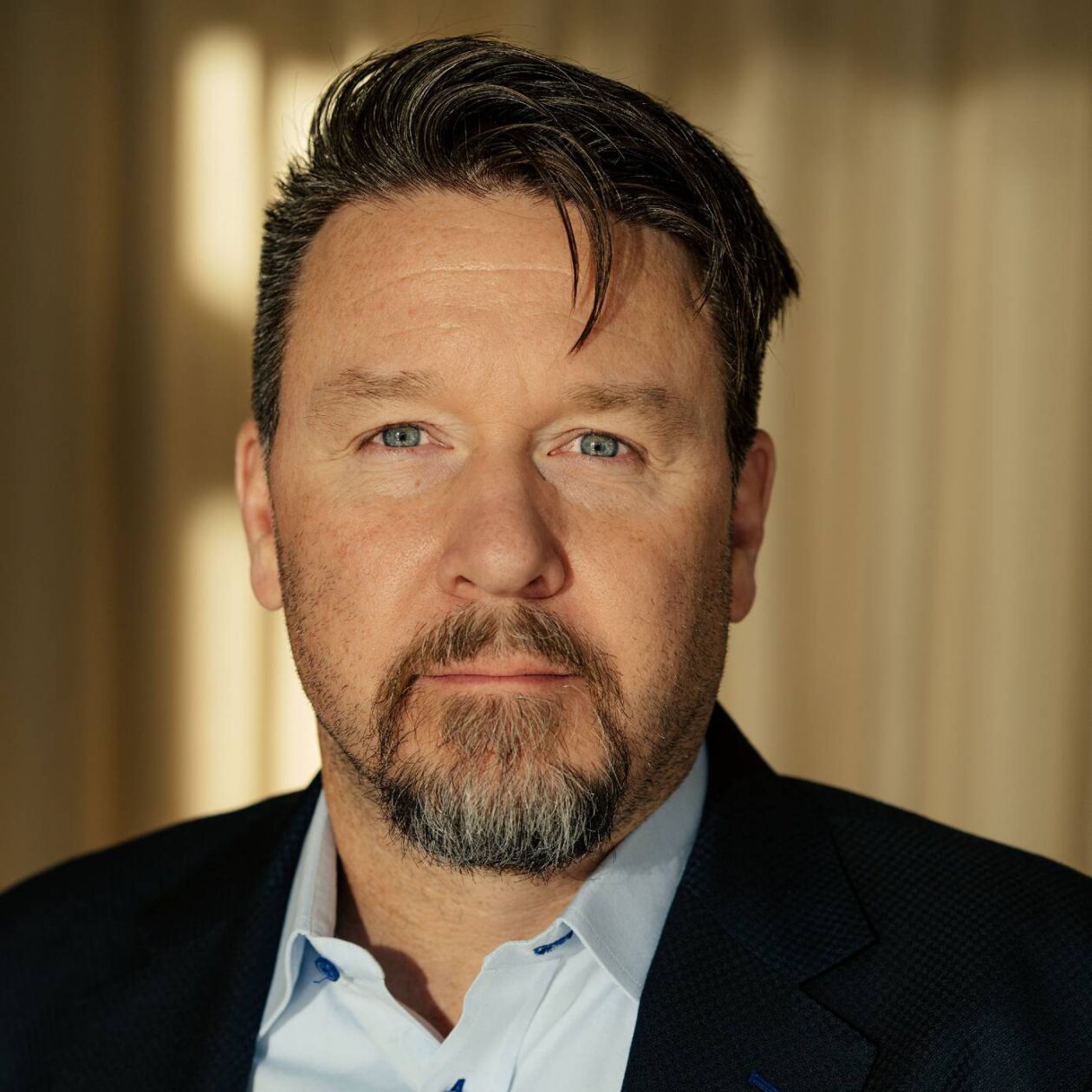
— Slalom has appointed Dan Garrison chief AI officer of the Seattle-based global business and technology consulting firm.
Garrison, who is based in Detroit, spent nearly 30 years at Accenture, most recently serving as chief technology officer for Accenture Song. His experience there included work in quantum computing and generative AI, integration of acquired businesses, and technology strategy leadership.
“Dan has an incredible amount of hands-on technical depth, enterprise transformation experience, and entrepreneurial energy,” said Brian Turner, Slalom’s chief capability officer, in a statement.
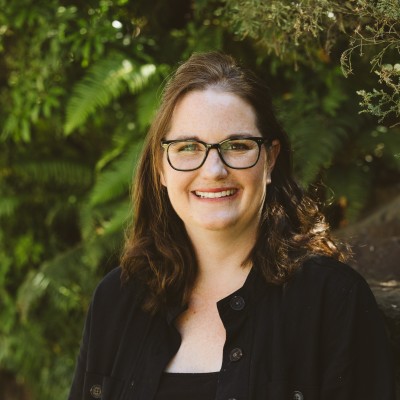
— AI infrastructure and data center company Crusoe has hired Celeste Grebe as senior vice president of financial planning and analysis. She will be based in Crusoe’s Bellevue office, which opened in December.
Grebe joins from CoreWeave and was previously with Microsoft for more than a decade across two stints. She left the tech giant as chief financial officer of cloud and AI data centers. She was also with PicMonkey as a vice president.
“It’s rare to find a company positioned to shape infrastructure at this scale, with such a deep understanding of, and partnership with, its customers—and that’s exactly what drew me here,” Grebe said on LinkedIn.
— Gravyty, a Seattle-based ed-tech company, named two new executives:
— Richard Tso has taken a role as senior director analyst of AI marketing strategy for Gartner. He joins from Microsoft, where he worked for nearly a decade over two stints. Tso was most recently director of product marketing management for Azure and has held marketing roles for Microsoft Viva, Edge, PowerPoint and other products.
Tso was a founding member of Round, an organization providing mentorship and support for tech executives. Other past roles include leadership positions at Persefoni and LivePerson.
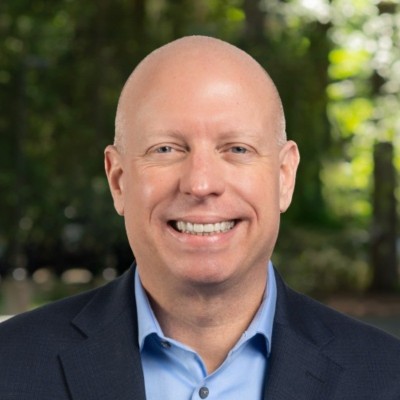
— TerraPower’s former chief operations officer, Eric Williams, is joining rival Hadron Energy as executive vice president of engineering. Williams was with Bellevue, Wash.-based TerraPower for 12 years, leading design and operations of its modular nuclear reactor and helping secure Nuclear Regulatory Commission construction permits.
“I have spent my career proving that advanced nuclear technology can be engineered, licensed, and deployed in the United States,” Williams said in a statement. “The mission at Hadron to commercialize a first-of-a-kind microreactor (MMR) is exactly where the nuclear industry needs to go.”
Williams’ move to New York-based Hadron is effective Aug. 31.
— Seattle’s Ian Wathen was promoted to chief financial officer of Conga, a Houston-based company that helps businesses coordinate their pricing, quoting, contracting, rebates and communications.
— Brittany Jarnot was promoted to senior manager of state and local government affairs in the West for Salesforce.
— Kristy Carrington was promoted to the role of chief executive for the North Division for Providence, overseeing operations in Western Washington and Alaska for the healthcare system.
— Colin Dale is now director of sales for Factal, a Seattle company providing risk intelligence, working out of its London office.
— And in case you missed it, Zillow announced a series of executive changes: CFO Jeremy Hofmann‘s role is expanding to include chief operating officer, while Jun Choo, who became chief operating officer in 2024, is stepping down to focus on his health and will serve as an advisor through the end of the year.
Editor’s note: Updated on Aug. 10 at 1:20 p.m. with news of Ankur Sinha’s new role.

Salesforce is cutting 59 jobs in Washington state, impacting a wide variety of tech roles at offices in Seattle and Bellevue, according to a new state filing.
The layoffs at the San Francisco-based enterprise software giant, as well as data visualization company Tableau, are effective Oct. 5 according to a Worker Adjustment and Retraining Notification from the state’s Employment Security Department.
Affected positions include software engineers, product management directors, incident commanders, technical support engineers, and leadership roles across marketing and sustainability.
GeekWire reached out to Salesforce for comment on the reason behind the layoffs and for updated workforce numbers in the Seattle area. We’ll update this story when we hear back.
Last September, 93 employees in Washington state were laid off by Salesforce. At the same time, CEO Marc Benioff was touting efficiency gains at the company achieved through the use of AI tools.
The latest reductions come amid a broader restructuring at Salesforce, marking its third round of job cuts this year. The San Francisco Business Times reported that 74 employees are being laid off at the company’s headquarters, accompanied by a reshuffle in the C-suite that promoted Miguel Milano to COO.
Amid the restructuring, the company continues to pull in top regional leadership. Longtime Microsoft cybersecurity executive Krishna Kumar Parthasarathy announced last week that he’s joining Salesforce as executive vice president of engineering.
Salesforce acquired Seattle-based Tableau in 2019 for $15.7 billion. Despite the recurring job reductions, the company recently renewed its lease for roughly 114,000 square feet at the Data 1 office building in Seattle’s Fremont neighborhood, signaling an ongoing commitment to its long-term home in the city.
In other tech industry layoffs this week, Google announced it was eliminating 52 jobs in Washington and Zillow is cutting 91 jobs.

— Teri Hatfield was named chief revenue officer for Iterable, a customer engagement platform. The Seattle-area tech executive most recently served as executive vice president of sales and solutions at Salesforce and CRO of Tableau, which Salesforce acquired in 2019. She joined Tableau in 2012 and spent more than a decade in sales leadership roles at Verizon earlier in her career.
“I’ve come to believe that great customer relationships don’t start with technology. They start with understanding your customers,” Hatfield said on LinkedIn. “Iterable stood out because it’s built around that belief.”
Hatfield will work remotely for Iterable, which is based in San Francisco.
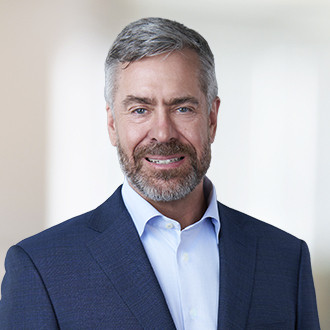
— Seattle-area attorney Ken Miller has joined Arnold & Porter as a partner in the life sciences and technology transactions teams within the law firm’s corporate and finance group.
Miller began his legal career at Perkins Coie, where he spent 16 years focused on tech companies and nonprofit organizations.
In 2015, he moved to the Gates Foundation as associate general counsel, briefly serving as lead counsel for the Gates Medical Research Institute before returning to the foundation as director of legal. In that role, he led work tied to the Global Health Division, the research institute, and business development and licensing, privacy and AI.

— Ben Reed is now chief marketing officer for AIM Intelligent Machines (AIM), a Seattle-area startup developing software that lets bulldozers and excavators operate on their own.
Reed previously ran a firm offering AI marketing and go-to-market advisory services. Other past roles include CMO for Sanctuary AI and a decade at Microsoft, where he departed as head of strategic storytelling for the company’s digital transformation platform.
“I’ve spent much of my career helping frontier technologies become understandable, credible, and consequential, from Microsoft Surface and HoloLens to physical AI, humanoids, and robotics. At AIM, the unusual opportunity is that the technology, customers, deployments, and proof already exist,” Reed said on LinkedIn.
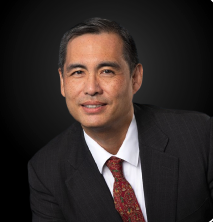
— Aerospace startup Gravitics named Philip Wong chief financial officer. The Marysville, Wash.-based company designs and manufactures modular space infrastructure such as commercial space station modules, cargo-carrying spacecraft and orbital carriers. Its customers include U.S. Space Force and Axiom Space. On Tuesday, Gravitics announced a partnership with Lockheed Martin on a Department of War contract.
Wong joins Gravitics from Viasat, a communications company providing satellite internet services, where he led financial strategy and investment planning. He previously held leadership roles at Pure Storage and Seagate Technology and is based in California.
“Philip has spent 30 years deploying capital across satellite, network, and space infrastructure … He knows how to translate real engineering programs into the financial strategy that supports them,” said Colin Doughan, co-founder and CEO of Gravitics, in a statement.
— Ian Fliflet, former chief growth officer at Seattle online sales platform OfferUp, is sharing his insights on Intro, a service that provides video chats with experts from wide-ranging backgrounds.
— Katy Brown, president of Microsoft’s Americas Markets & Industries organization, was named to Avanade’s board of directors. Brown has been with the tech giant for nearly 30 years and is past president and board chair of the Professional Businesswomen of California. She also serves as executive sponsor of the Bay Area Women at Microsoft group.
— Ben Minicucci, CEO and president of Alaska Air Group, has joined Lyft’s board of directors. Minicucci has spent more than two decades with the airline, which is the parent company of Alaska Airlines, Hawaiian Airlines and Horizon Air.
— Seattle tech leader Ash Wahi was appointed to MoPOP’s board of directors. Wahi is the founder and CEO of Revenaut, a startup building an AI marketing tool. His career includes leadership roles in product and advertising at Microsoft, Snap and Meta.
— TiE Seattle, a nonprofit supporting entrepreneurship, named five new members to its board of directors:
— JT McCrone, a Fred Hutch Cancer Center genomic epidemiologist, was named leader of Nextstrain, an open-source project that tracks the evolution and spread of viral and bacterial pathogens in real time.
The effort is primarily based in Seattle at Fred Hutch and two institutions in Basel, Switzerland. It has received $1.5 million from the Gates Foundation to support its next phase, which aims to make analyses of viral evolution more accessible and scalable.
— Graham Littlehale is now an investing partner with venture firm Felicis. He previously served as vice president of Point72 Ventures.
