Plus: The US disrupts the internet’s biggest black market, a Conti ransomware hacker gets prison time, Meta fails to stop AI-generated videos of child abuse.
The company’s September event introduced Apple’s first ever foldable iPhone, along with new iPhone 18 Pro models, updates to the Apple Watch, some AirPods, and more advances to Siri AI.
Plus: Tens of millions of US and Canadian drivers’ licenses go up for sale on the dark web, the US military finally tries to tackle the risk online ad data poses to troops, and more.
It’s a regrettable reality that there is never enough time to cover all the interesting scientific stories we come across. So every month, we highlight a handful of the best stories that nearly slipped through the cracks. August’s list includes the discovery of a new celestial object astronomers have dubbed a "black hole star"; breaking down plastics with microbes and turning them into edible cookies; how whale calls are connected to Einstein's special theory of relativity; and how avocado tree flowers switch sex during the day, among other highlights.
Discovery of a "black hole star"
Credit:
Rohan Naidu (University of Hawai'i)
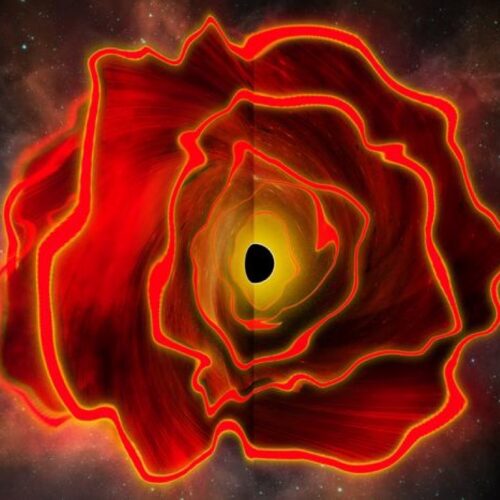
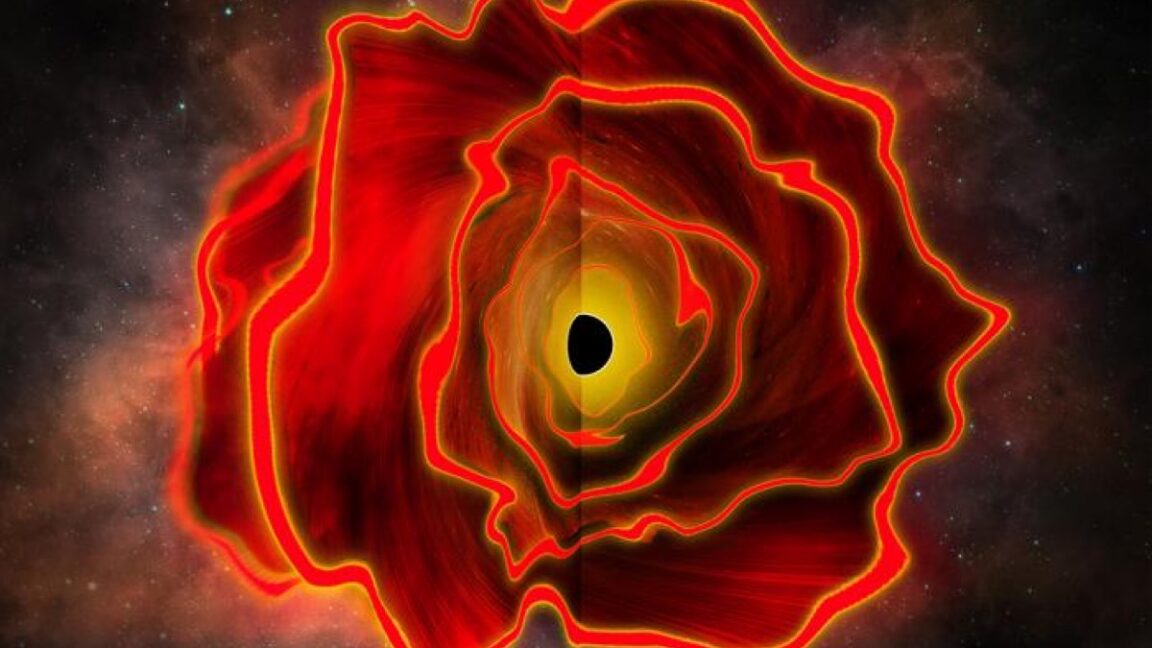
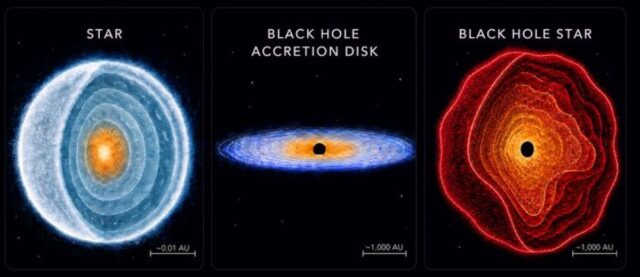
In 2024, astronomers combing through datasets taken by the James Webb Space Telescope noticed hundreds of mysterious little red dots lurking therein, believed to be baby quasars. They existed when the Universe was just a few hundred million years old. One such object in particular captured scientists' interest: a red dot that was extremely red and very bright, but whose properties didn't fit with any known astrophysical object. Astronomers have now concluded that the little red dot is a "black hole star," so named because it is the size of a large star but produces far more energy than would be possible via nuclear fusion—energy comparable to what an active black hole would produce.
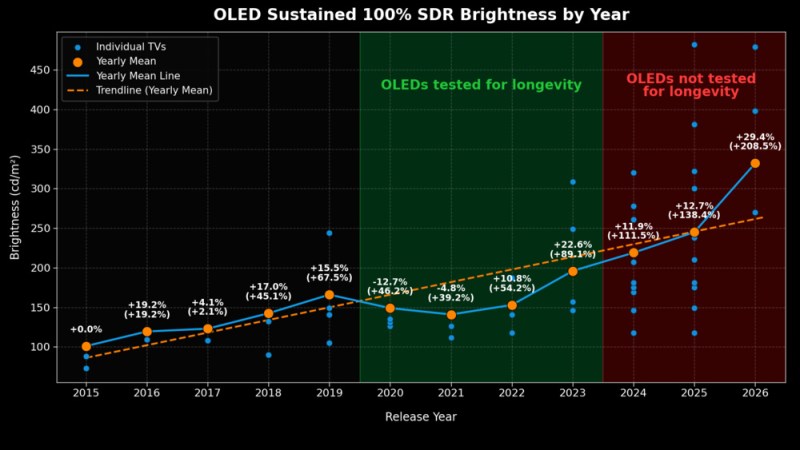
OLED displays solve many of the problems suffered by LC displays, including color fidelity, dynamic range and power usage. That said, especially in the early days OLED gained a reputation for dim screens, short lifespans and burn-in. Over time better organic dyes were developed, along with burn-in prevention methods that have made OLEDs much closer to LCDs in terms of longevity. In a recent comparison between OLED TVs by RTings it’s however clear that between 2017 and 2023 there haven’t been any major advances beyond bumps in brightness.
The relatively dim screens were a major problem, as they prevented OLEDs from displaying HDR content. This issue has been well and truly addressed, as confirmed by RTings’ testing, but after an over 10,000 hours stress test that simulates about 10 years of regular use at maximum SDR brightness, especially static elements like the CNN TV banner happily burned in even on the newest models with all burn-in prevention measures enabled.
Here the biggest take-away is probably that even if the expected panel lifespan at full brightness is still the same, this higher brightness budget means that you can gain some lifespan by cranking the brightness way down. It’s also essential to keep features like pixel refresh cycles enabled, as demonstrated by [Hardware Unboxed] and their abuse of a QD-OLED monitor where a worst-case 6,000 hour stress-test managed to create some impressive levels of burn-in from uneven subpixel wear.
 Login
Login




 Credit:
Rohan Naidu (University of Hawai'i)
Credit:
Rohan Naidu (University of Hawai'i)