Food delivery robots from Coco Robotics and Serve Robotics face lawsuits alleging they collected facial and hand measurements without consent, raising questions about biometric privacy and public surveillance.
Hundreds of employees at the US robotics firm Boston Dynamics signed a petition calling for executives to halt a sale of the company’s robot dogs to US Immigration and Customs Enforcement—but executives stood by the deal, while saying the robots would not be weaponized.
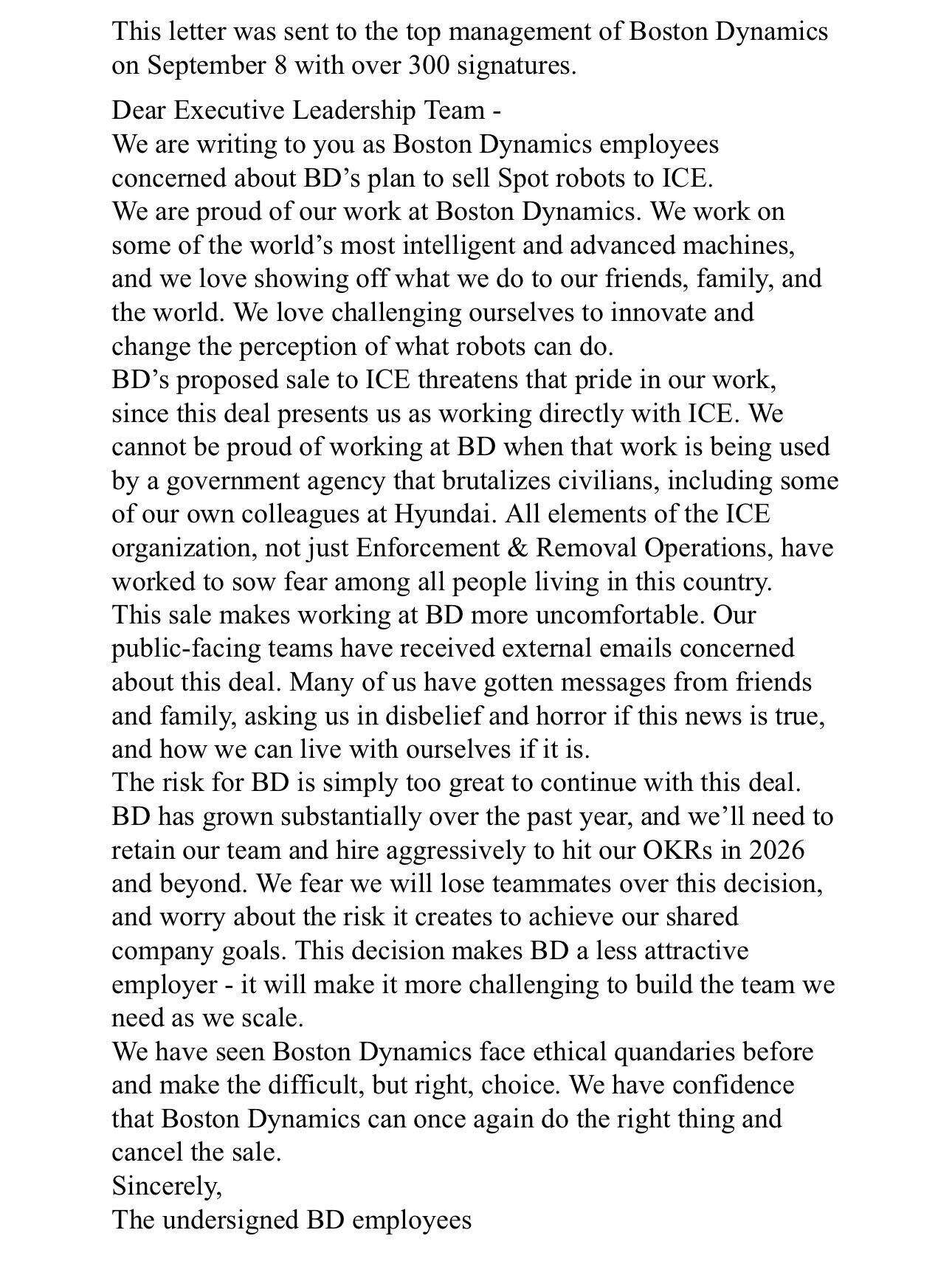
On September 25, the Department of Homeland Security contract awarded $1.3 million to a Connecticut company called Radeco to provide ICE with modified versions of Boston Dynamics’ quadruped robots. But Boston Dynamics workers sent the petition letter with more than 300 signatures—half of them anonymous—to the company’s executives in early September and shared copies with The Boston Globe and WBUR public radio station.
“Many of us have gotten messages from friends and family, asking us in disbelief and horror if this news is true, and how we can live with ourselves if it is,” according to the petition. “The risk for Boston Dynamics is simply too great to continue with this deal.”
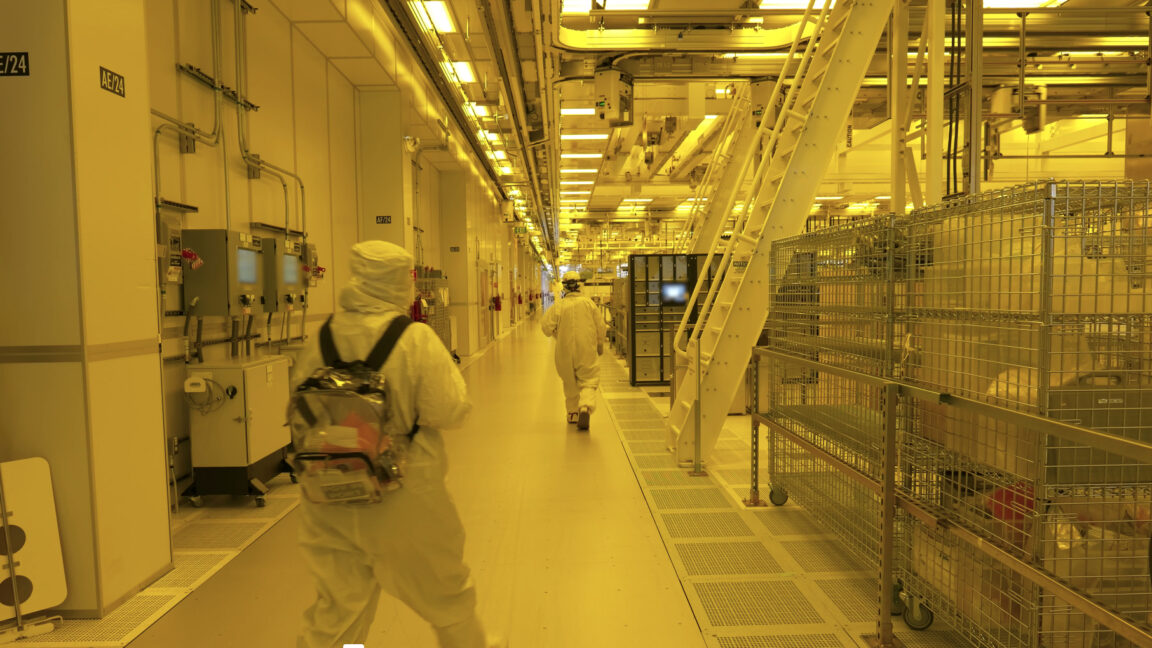
US chip champion Intel was so confused by the US government ban on foreign-made robots that it requested and received a waiver “out of an abundance of caution.” The tech company wanted to make sure that it could continue using certain robotic vehicles in its US chip fabs.
The uncertainty surrounding the Federal Communications Commission ban on certain foreign-made robots was revealed in the agency’s decision to grant Intel’s waiver request. On October 22, the FCC published its order allowing Intel to continue using the foreign-made robots in US semiconductor manufacturing facilities for a period of one year.
The robots in question are automated guided vehicles operating on “tracks or predefined paths” while often requiring operator oversight, according to Intel’s website. They help to move materials and items around within warehouses and factory floors.
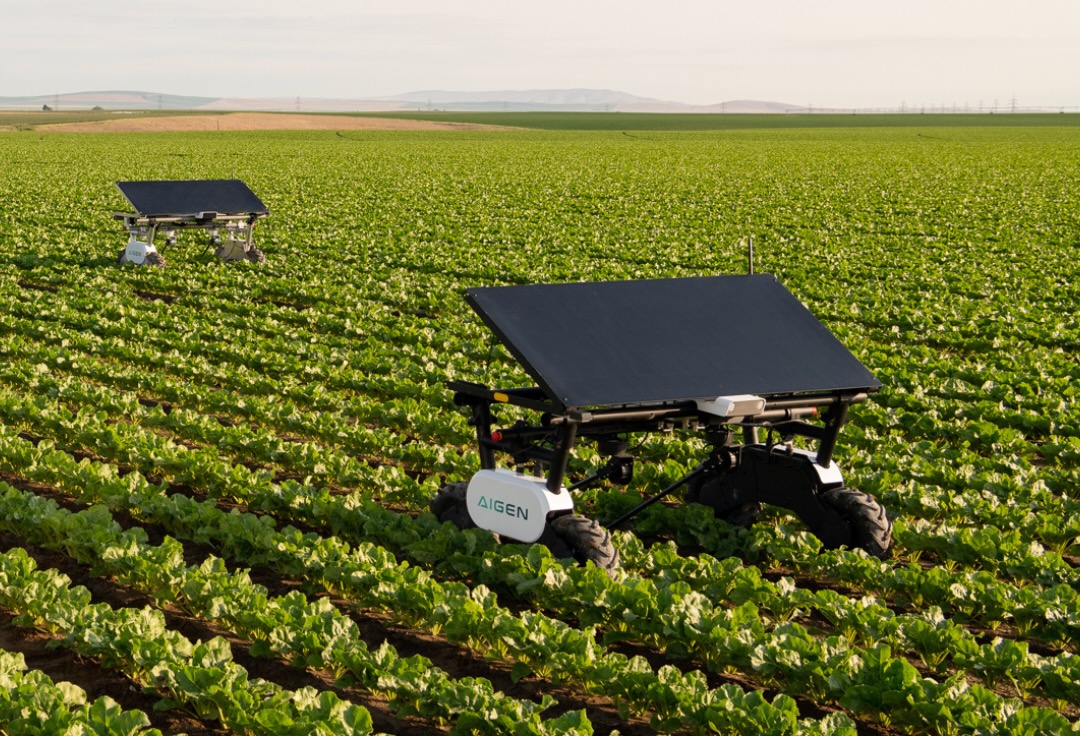
For years, Aigen has been building and tweaking solar-powered robots designed to pull weeds on farms. But the Redmond, Wash., startup is also raising a crop of its own: a growing, AI-generated collection of digital weeds and plants that teaches those robots what to pull.
That synthetic data, which Aigen calls Alchemy, is changing what the company can sell. Training its robots on a new crop used to require three to four years of collecting and labeling real-world images, co-founder and CTO Richard Wurden said. Now it takes about a week, helping Aigen attract growers of asparagus, hops, flowers, lettuce and more.
Wurden spoke with GeekWire by phone from FIRA USA, a three-day agricultural robotics expo at Yakima’s State Fair Park that wrapped up Thursday. He said Aigen made several sales at the show, including to growers it previously couldn’t serve.
“Now we’re saying yes to a bunch of crops, where previously we were locked into just doing a few,” he said.
Aigen is nearly sold out of robots for the 2027 season following the show, according to the company.
Aigen’s solar design is also getting more attention as fuel costs climb. U.S. diesel prices are up roughly 70% from a year ago, according to EIA data, and averaged nearly $6.30 a gallon this month, according to AAA. Many rival weed-control machines are pulled by diesel tractors, Wurden said, while Aigen’s robots run entirely on solar panels with a battery backup.
“It just so happens running a solar-powered robot without pesticides is the best possible timing right now,” he said.
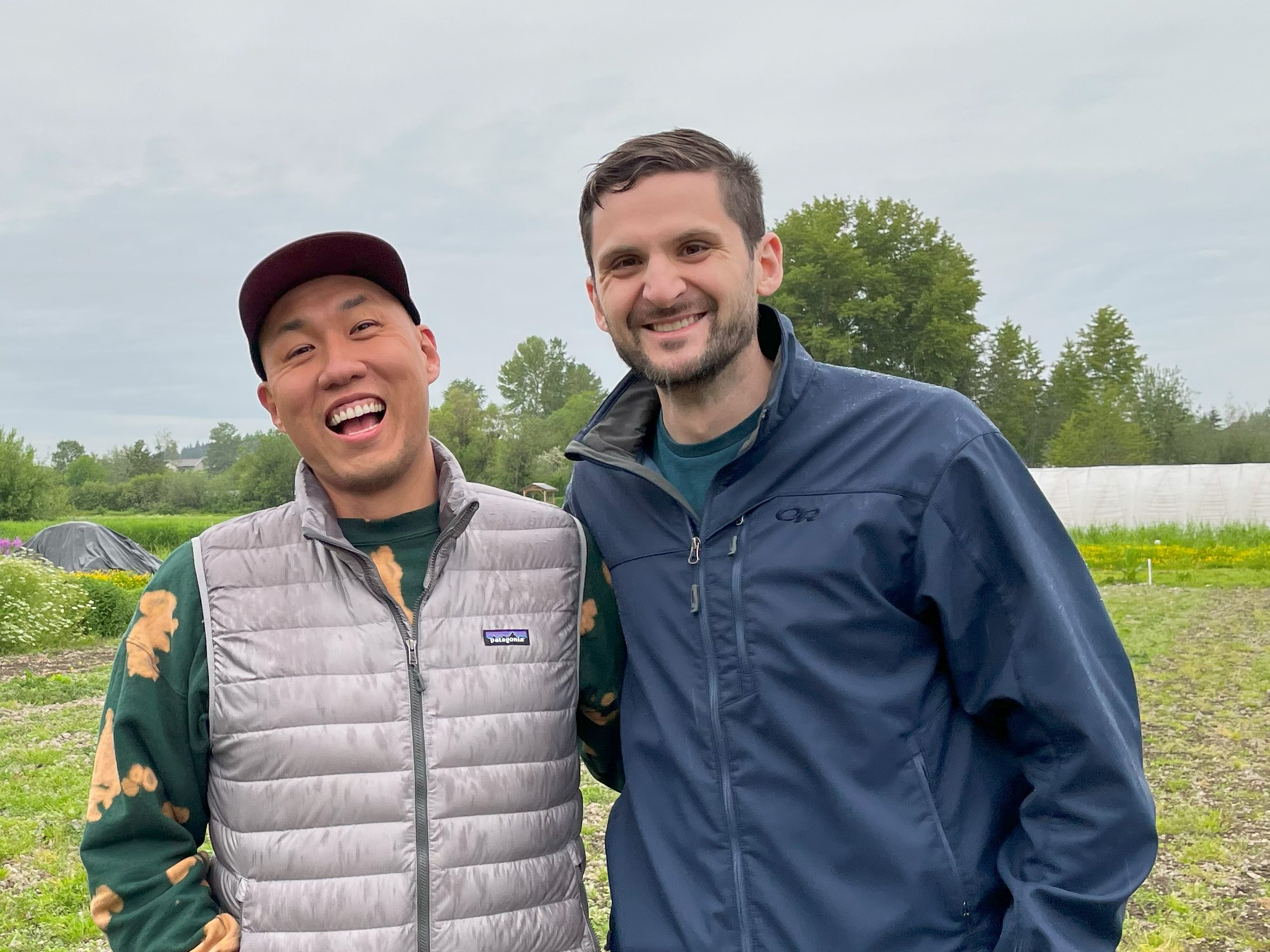
Aigen co-founders Kenny Lee and Richard Wurden. (Aigen Photo)
Wurden and CEO Kenny Lee founded Aigen in 2020 after meeting in a climate-focused Slack group and discovering they lived about five minutes apart. Wurden, a mechanical engineer, previously worked on battery systems at Tesla and at Seattle electric boat maker Pure Watercraft. Lee is a cybersecurity veteran who co-founded Weblife.io, which Proofpoint acquired in 2017.
The mission is personal for both founders. Lee had non-Hodgkin’s lymphoma and Wurden has type 1 diabetes — diseases Wurden said have been linked to herbicide use.
The startup raised a $4 million seed round in 2022 and a $12 million round in 2023 led by ReGen Ventures, with participation from NEA and others. Wurden said the company has raised about $26 million in total. The startup now has about 15 employees.
Aigen’s Element robots are about 6 feet wide and topped with a roughly 400-watt solar panel. Cameras and AI distinguish weeds from crops, and mechanical arms pull the weeds out at the root. The robots cost $50,000 to $70,000 each depending on configuration, and Aigen typically sells them in packs of five, Wurden said.
Aigen has built more than 100 robots, all assembled in Redmond, and logged more than 15,000 hours in fields in California, Minnesota and North Dakota. Customers include organic soybean growers in North Dakota and tomato growers in California, Wurden said, and the company is expanding a recent pilot with an unnamed Fortune 500 company.
Alchemy has also become a product in its own right.
Large agribusinesses are using Aigen’s synthetic data, Wurden said. Because the plants are generated in simulation, each one comes perfectly labeled. That matters when weeds and crops overlap in ways that are hard to sort out from real photos, especially under shifting daylight. Aigen’s robots don’t use artificial lights. Wurden said the startup built the system out of necessity, because it couldn’t afford to pay people to label images by hand.
“Our AI now labels the data for us,” he said.
The company is choosy about who gets that data. Wurden said the company would work with precision-spraying companies that use less herbicide, but not with operations that broadcast-spray fields.
Next up: robots on Washington farms early next year, the company says. It’s also developing an orchard version with arms that reach out to weed between trees. And a next-generation robot is in the works.
Aigen is one of several Washington startups using AI to fight weeds. Issaquah-based TerraClear maps individual weeds so farmers’ existing sprayers hit only those spots. Seattle-based Carbon Robotics zaps weeds with lasers and trained its AI on 150 million labeled images of real plants. Aigen is betting synthetic data can teach its robots new crops faster.
Wurden said it’s refreshing to see technologists working on these problems rather than focusing on ad clicks or another gadget or service that may not be good for society.
“I support every company working on ag technology and things that help farmers, because farmers have felt like they’re left behind for a long time,” he said. “It’s a good way to cross the aisle in politics, too. Everybody needs food.”
Nvidia and Agile Robots unveiled Agile ONE SN, a compact humanoid with Jetson Thor computing and Isaac GR00T training tools. Here's what it can do, its specifications, and when it launches.
Nvidia and Agile Robots unveiled Agile ONE SN, a compact humanoid with Jetson Thor computing and Isaac GR00T training tools. Here's what it can do, its specifications, and when it launches.
China's Unitree unveils the H2-X humanoid robot with kung fu moves and rescue demonstrations, but questions remain about its autonomy, safety and endurance.
China's Unitree unveils the H2-X humanoid robot with kung fu moves and rescue demonstrations, but questions remain about its autonomy, safety and endurance.
Faraday Future unveiled a $2,490 humanoid robot and $299 mini model for developers and students, with robotics training, AI tools and phased availability.
Faraday Future unveiled a $2,490 humanoid robot and $299 mini model for developers and students, with robotics training, AI tools and phased availability.
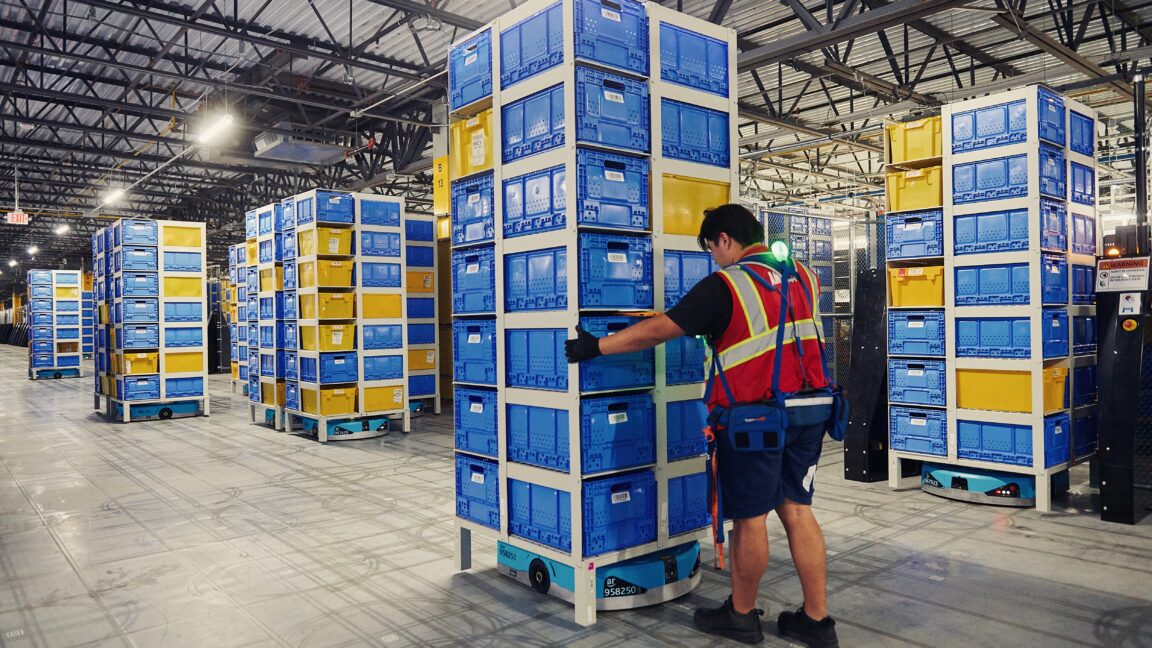
No organization in the world operates more robots than Amazon. The company already has more than 1 million robots working in warehouses around the clock to make tens of millions of same-day and one-day package deliveries happen on a daily basis—and Amazon is poised to significantly grow that robotic fleet in the coming years as it establishes new factories to churn out increasingly more capable robot workers.
Despite deploying so many robots, Amazon is also the second-largest corporate employer in the world, with more than 1.5 million full-time and part-time human workers, according to its 2025 annual report. Amazon executives say that the growing robot fleet has eased the burden on its human workforce by taking on the toughest fulfillment center tasks that carry the greatest risks of physical fatigue and injury. But labor advocacy groups and independent researchers point to evidence suggesting that warehouse automation driven by AI is not all upside for the humans who work alongside robots.
“For the last 100 years, most of the automation that we've seen usually happens away from workers—you're taking that high-risk task away from the worker, and you're doing so in a way that is not physically proximate,” Brad Greenwood, professor of business at George Mason University, told Ars. “The rise of collaborative robots really changes that dynamic for two reasons: one is that it is physically proximate, and two, the robot has the ability to dictate the pace of work.”
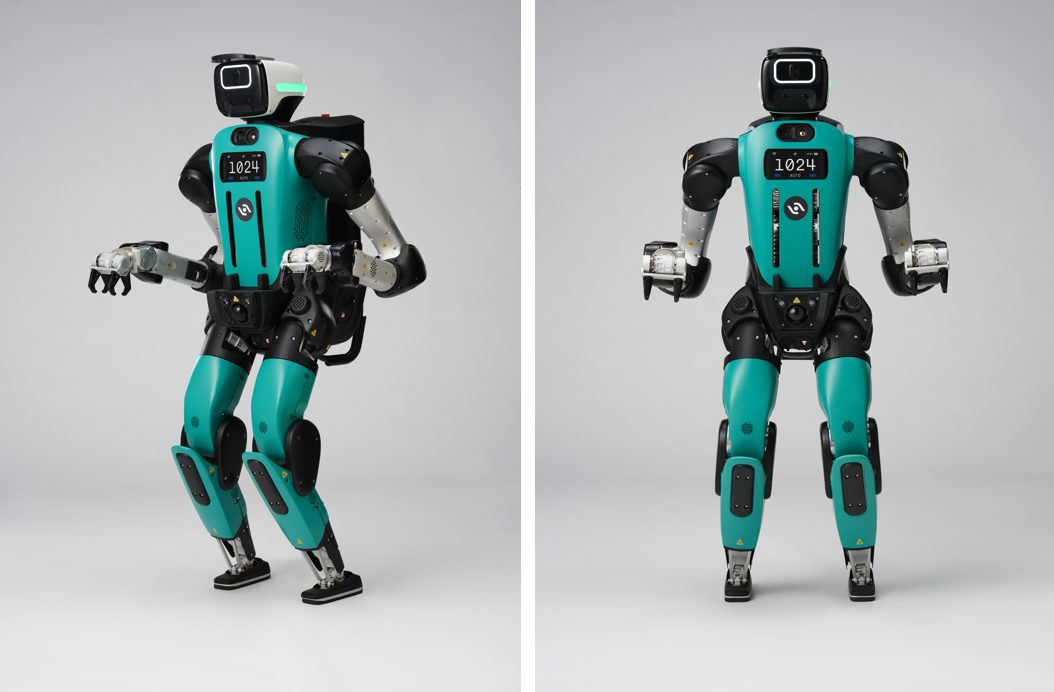
Two views of Agility Robotics’ new Digit 5, which is designed to work alongside people without safety barriers. (Agility Robotics Photo)
Agility Robotics unveiled the next version of its Digit humanoid robot, which it says is designed to work safely alongside people in warehouses and factories without the barriers that are usually required.
The Salem, Ore.-based company, which is preparing to go public through a $2.5 billion SPAC merger, said Digit 5 is its first humanoid built for “cooperatively safe” work at scale.
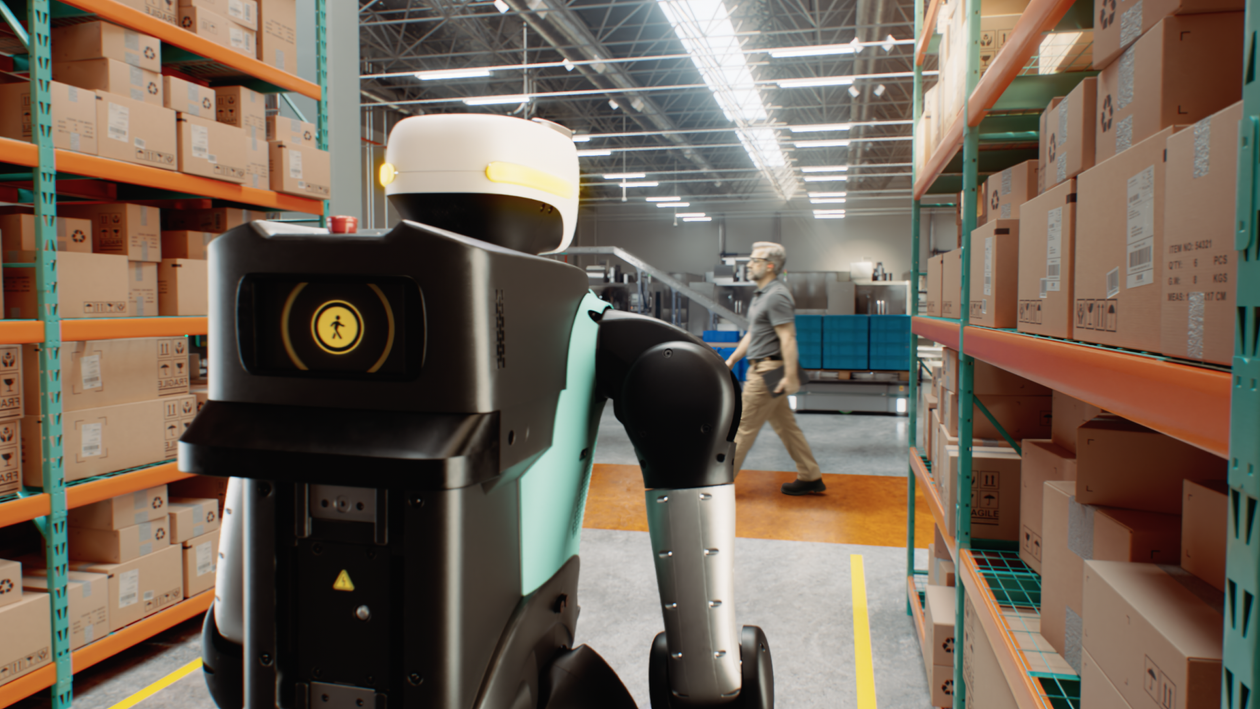
The robot uses AI and multiple sensors to watch for nearby people. Depending on the situation, it steers around them, stops or sits down. Visual and audio cues signal what it’s about to do, and a separate safety controller triggers its responses when someone gets too close.
Digit 5 can lift up to 50 pounds, 40% more than its predecessor, and reach objects as high as 7.2 feet off the ground, up from 5.5 feet, according to the company. A new battery runs for 90 minutes and recharges in 9 minutes, which Agility says allows more than 20 hours of work in a 24-hour day. Its grippers can be swapped for different jobs.
Digit 5 signals that it has spotted a nearby worker in this rendering. (Agility Robotics Image)
Digit 4, the current model, has mostly moved totes, logging more than 65,000 hours at customers including GXO, Schaeffler, Amazon and Toyota’s Canadian manufacturing arm, according to the company. Agility says Digit 5 will take on more of a facility’s work — unloading pallets, tending machines, gathering parts and inspecting items before loading them back onto pallets for shipment.
Amazon, an early Agility investor, has run multiple pilots of earlier Digit models, including one GeekWire observed at a warehouse south of Seattle in 2023. It bought five Digit robots for $1.05 million, according to Agility’s S-4 registration statement, filed with the SEC this month in connection with its merger with Churchill Capital Corp XI, a special purpose acquisition company.
Agility says it had more than $300 million in multi-year orders for Digit 5 as of May, contingent on hitting certain milestones. According to the S-4, those orders are from one customer, for 1,000 robots over three years. The filing doesn’t name the customer, but it also describes a May deal for at least 1,000 robots with a “related party,” an accounting term for those with close ties to a company, such as major investors.
Agility had $1.78 million in net sales in 2025, up from $310,000 the year before. Its loss from operations doubled to $140.2 million.
Its auditor, Grant Thornton, included a going-concern warning in the report, citing substantial doubt about the company’s ability to keep operating. Agility said in the filing that the cash forecasts behind that conclusion didn’t take into account the SPAC deal, which the companies said in June could provide more than $620 million in gross cash proceeds before any shareholder redemptions.
In the S-4, Agility names Boston Dynamics, Tesla, Apptronik, Figure AI and 1X Technologies among its competitors, many of which it describes as well-funded.
Early access to Digit 5 is expected to begin in the first half of 2027, with general availability by the end of the year. The robots are assembled at the company’s RoboFab factory in Salem, which is designed to produce up to 10,000 robots a year.

 Login