Dimensional advertised $20-an-hour robot dog walkers who might need to carry the machines home. Its software and Anthropic's research show how much human help useful AI-powered robots can still require.
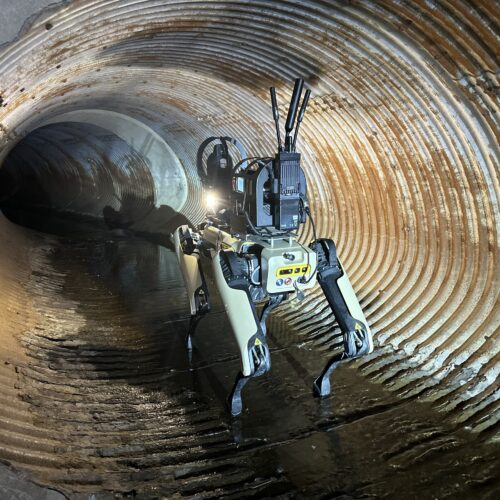
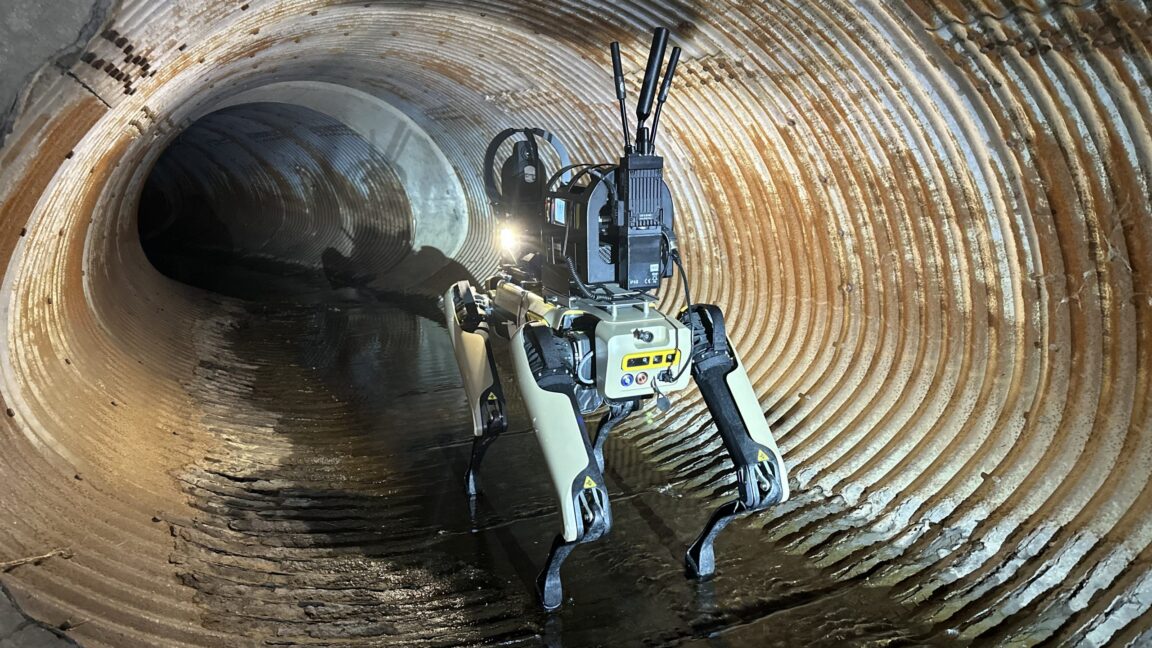
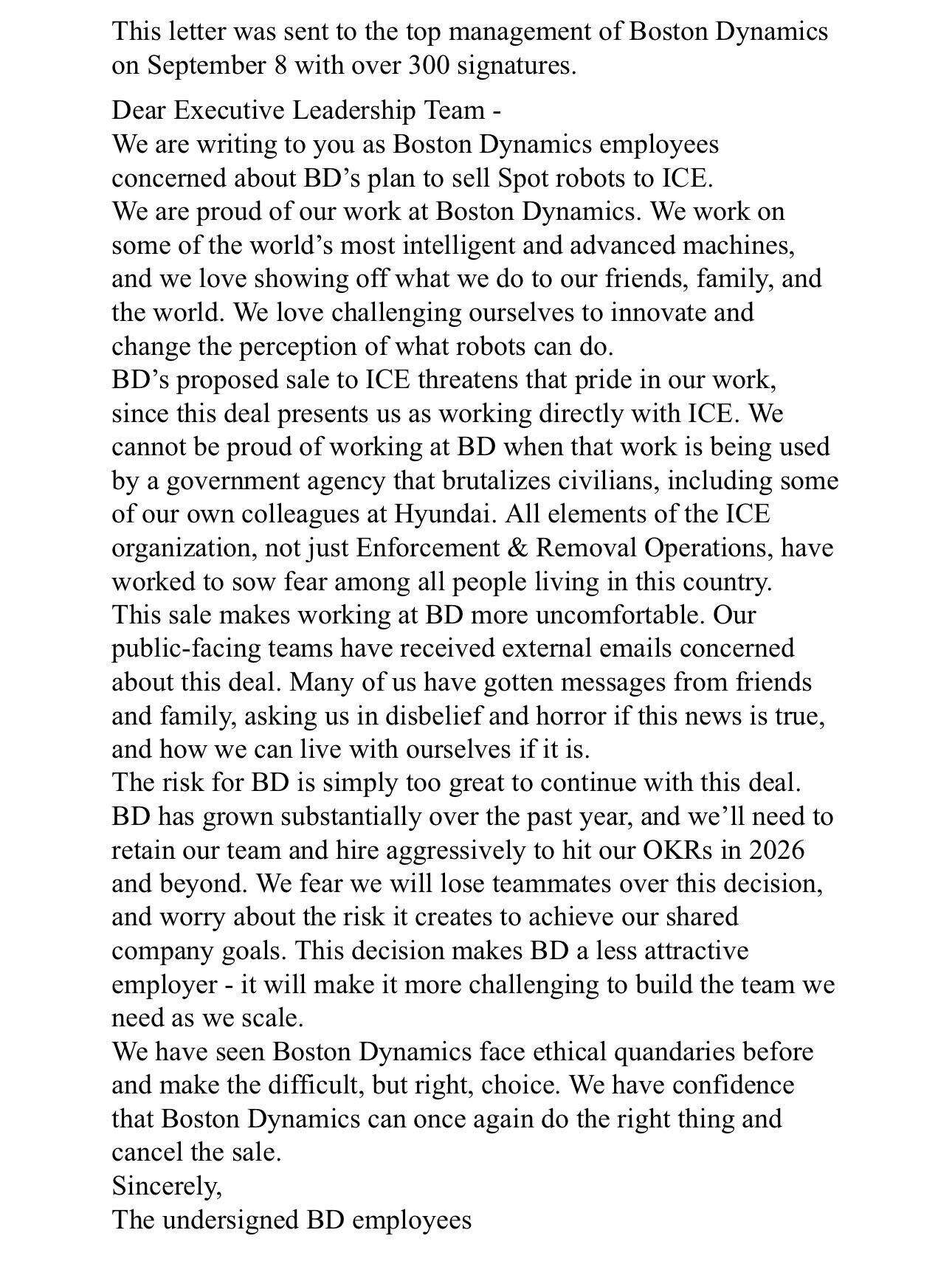
Hundreds of employees at the US robotics firm Boston Dynamics signed a petition calling for executives to halt a sale of the company’s robot dogs to US Immigration and Customs Enforcement—but executives stood by the deal, while saying the robots would not be weaponized.
On September 25, the Department of Homeland Security contract awarded $1.3 million to a Connecticut company called Radeco to provide ICE with modified versions of Boston Dynamics’ quadruped robots. But Boston Dynamics workers sent the petition letter with more than 300 signatures—half of them anonymous—to the company’s executives in early September and shared copies with The Boston Globe and WBUR public radio station.
“Many of us have gotten messages from friends and family, asking us in disbelief and horror if this news is true, and how we can live with ourselves if it is,” according to the petition. “The risk for Boston Dynamics is simply too great to continue with this deal.”
Bedrock Robotics, which is now valued at $4.1 billion, is particularly focused on autonomous excavators, in part because of a growing shortage of skilled operators.
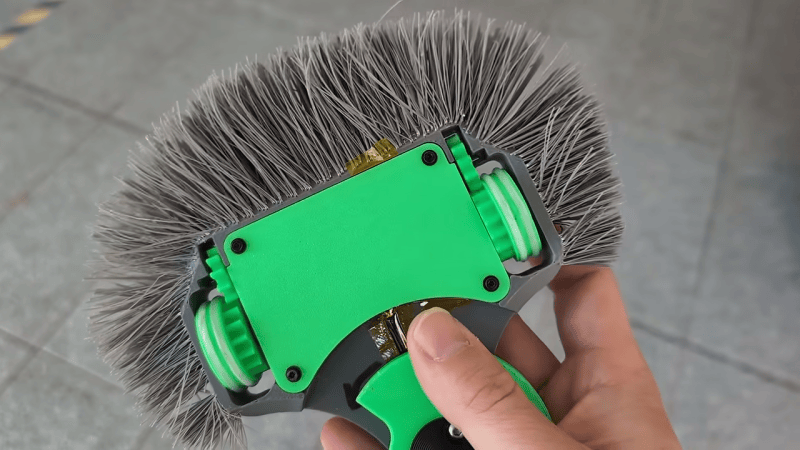
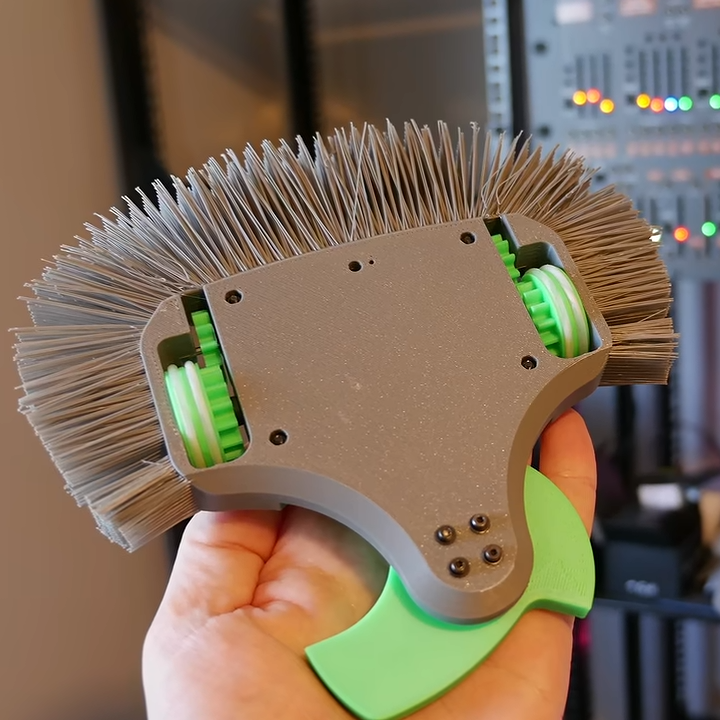
Just to set the stage, [Angus]’s new robot competes in the plastic antweight (or “plant”) division, in which robots are limited to 150 grams with both chassis and weapons made of plastic. In such circumstances, one can see how a mane of thick, rigid “hairs” might actually punch above its weight, so to speak.
The green shape at the bottom is a spinning weapon. The bristles cover the sides and rear.
Nothing settles a question like a good experiment, so [Angus] sat down and redesigned his latest robot to replace its outer shell with a thick wad of bristles, in the style of a 3D printed lion’s mane. Filament is bridged between the model and an outer support structure, which is cut away afterwards to expose the “hairs”.
How well did it perform? Well enough to merit further study! Where past robots got their outer shells broken up, the hairy robot seems to have come through quite intact. It seems the idea might not be as silly as it first seemed, at least in the plastic antweight division.
3D printers have been fantastic in the field of combat robotics. First they were great because they made custom parts easier and more accessible to hobbyists, but things have evolved more since then. Now folks compete by putting motors and electronics inside almost entirely 3D printed robots. There’s never been a better time to get into combat robotics, and experiment with unorthodox designs.
US chip champion Intel was so confused by the US government ban on foreign-made robots that it requested and received a waiver “out of an abundance of caution.” The tech company wanted to make sure that it could continue using certain robotic vehicles in its US chip fabs.
The uncertainty surrounding the Federal Communications Commission ban on certain foreign-made robots was revealed in the agency’s decision to grant Intel’s waiver request. On October 22, the FCC published its order allowing Intel to continue using the foreign-made robots in US semiconductor manufacturing facilities for a period of one year.
The robots in question are automated guided vehicles operating on “tracks or predefined paths” while often requiring operator oversight, according to Intel’s website. They help to move materials and items around within warehouses and factory floors.
Nvidia and Agile Robots unveiled Agile ONE SN, a compact humanoid with Jetson Thor computing and Isaac GR00T training tools. Here's what it can do, its specifications, and when it launches.
Nvidia and Hugging Face show how a $399 duck-shaped robot learns to walk using AI simulation. Here's how Microduck works, what it costs, and when buyers may get one.
China's Unitree unveils the H2-X humanoid robot with kung fu moves and rescue demonstrations, but questions remain about its autonomy, safety and endurance.
China's Unitree unveils the H2-X humanoid robot with kung fu moves and rescue demonstrations, but questions remain about its autonomy, safety and endurance.

 Login