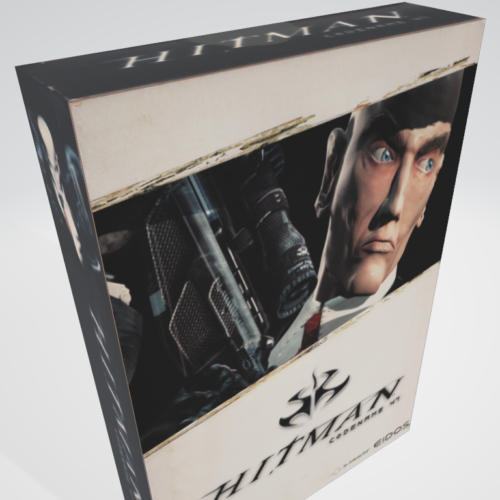
Those who remember PC gaming in the days before Steam may have fond memories of the "big box" packaging that made those games stand out as shelf eye candy and sought-after in-home collectibles. Today, PC gaming platform GOG is hoping to reignite some of the nostalgia for those days by adding downloadable 3D models and printable, foldable high-res packaging scans for a handful of PC games on the platform.
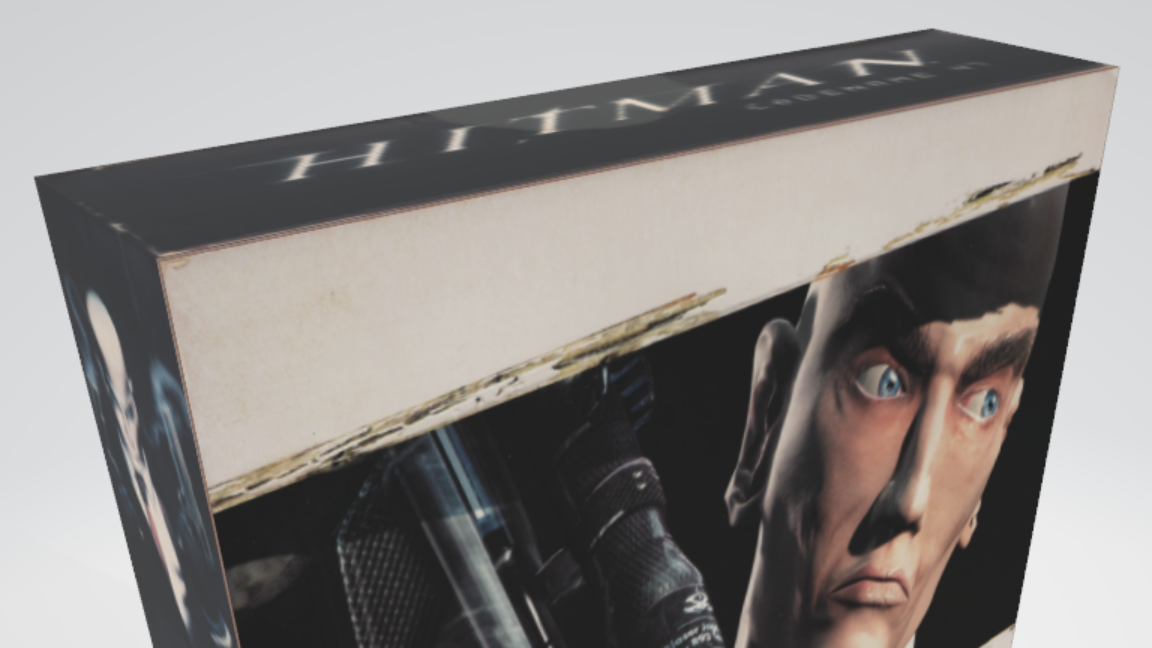
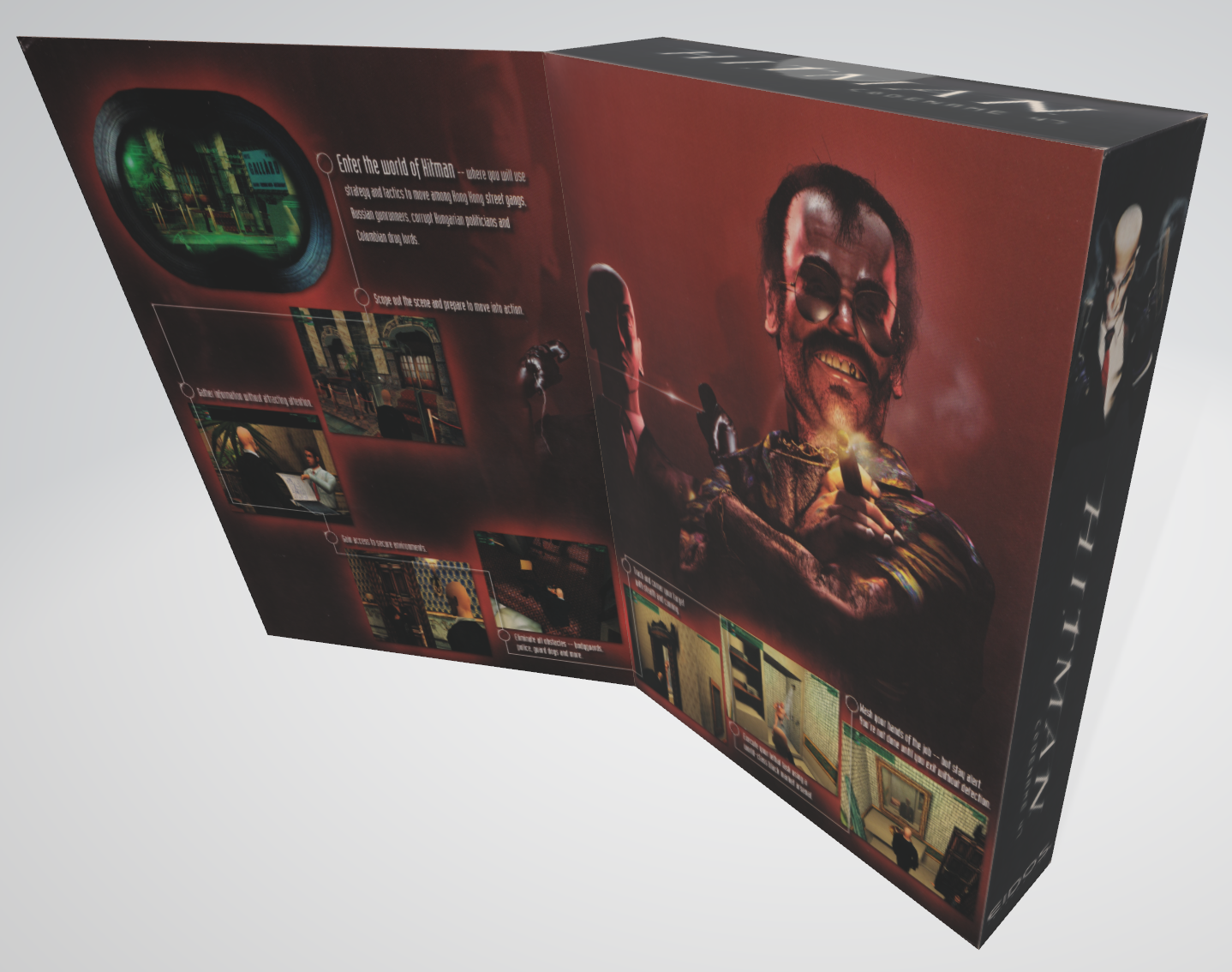
Thus far, the "Printable Big Box" collection on GOG is limited to just five games: Armikrog, Descent, Hitman: Codename 47, Myst, and Star Trek: 25th Anniversary. Players browsing those games on the GOG store will now see "3D Boxes" listed among the included "Goodies" before purchase. Owners of those games on GOG can download a ZIP file containing a version of the box art as an animated 3D object file (in an easy-to-open GLB format) and a "flat printable template" in PDF, SVG, and Adobe Illustrator formats. Those downloads allow for what GOG calls "a proper papercraft project for anyone who misses shelves full of PC game boxes."
The 3D model animates to show the front flap opening.
Credit:
GOG
"Physical media doesn’t survive the way software can—boxes get lost, crushed, thrown out," GOG writes in today's announcement. "Scanning them, and letting you print your own, is preservation in a different shape: the same mission that keeps these games running on modern PCs, applied to the objects they used to come in."
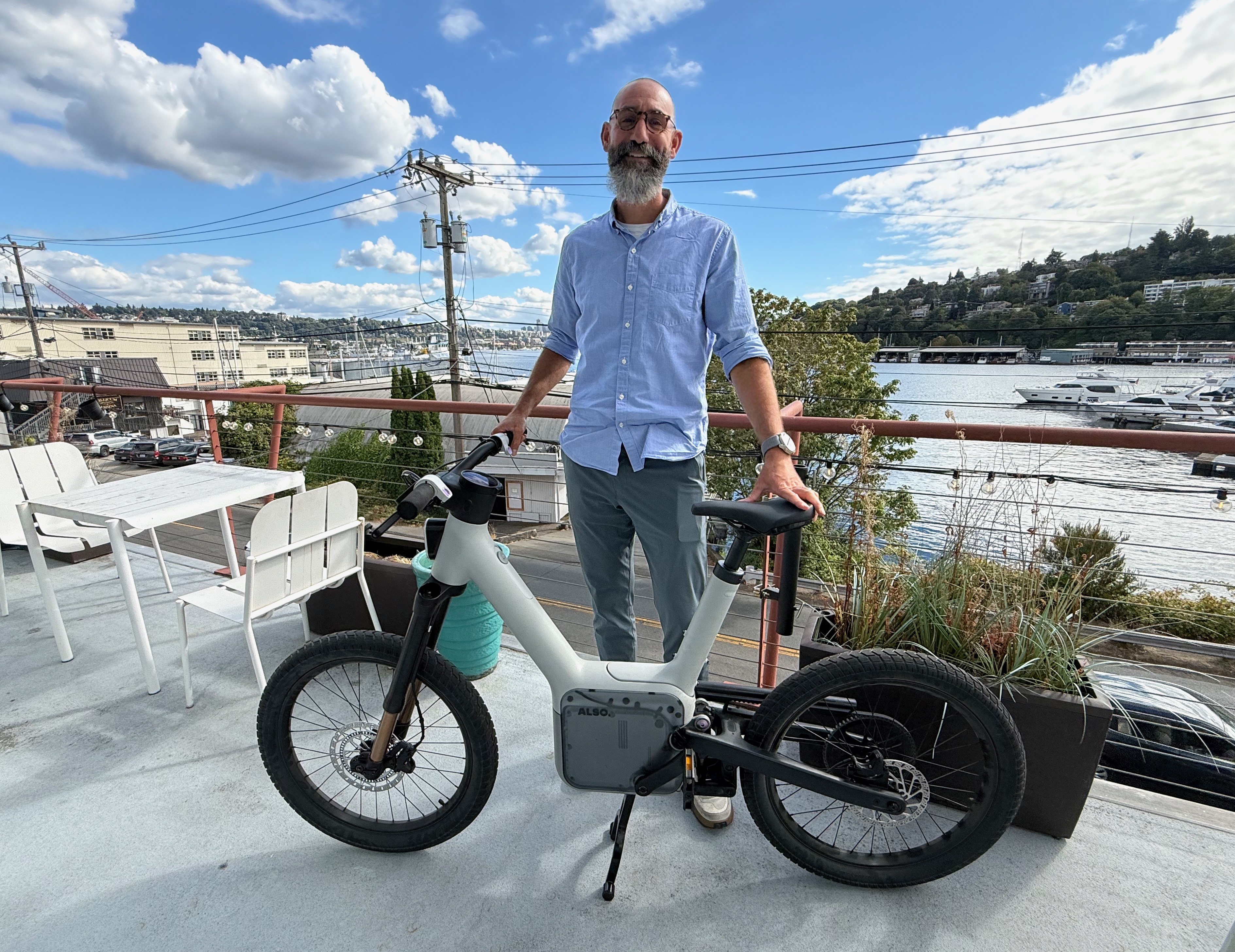
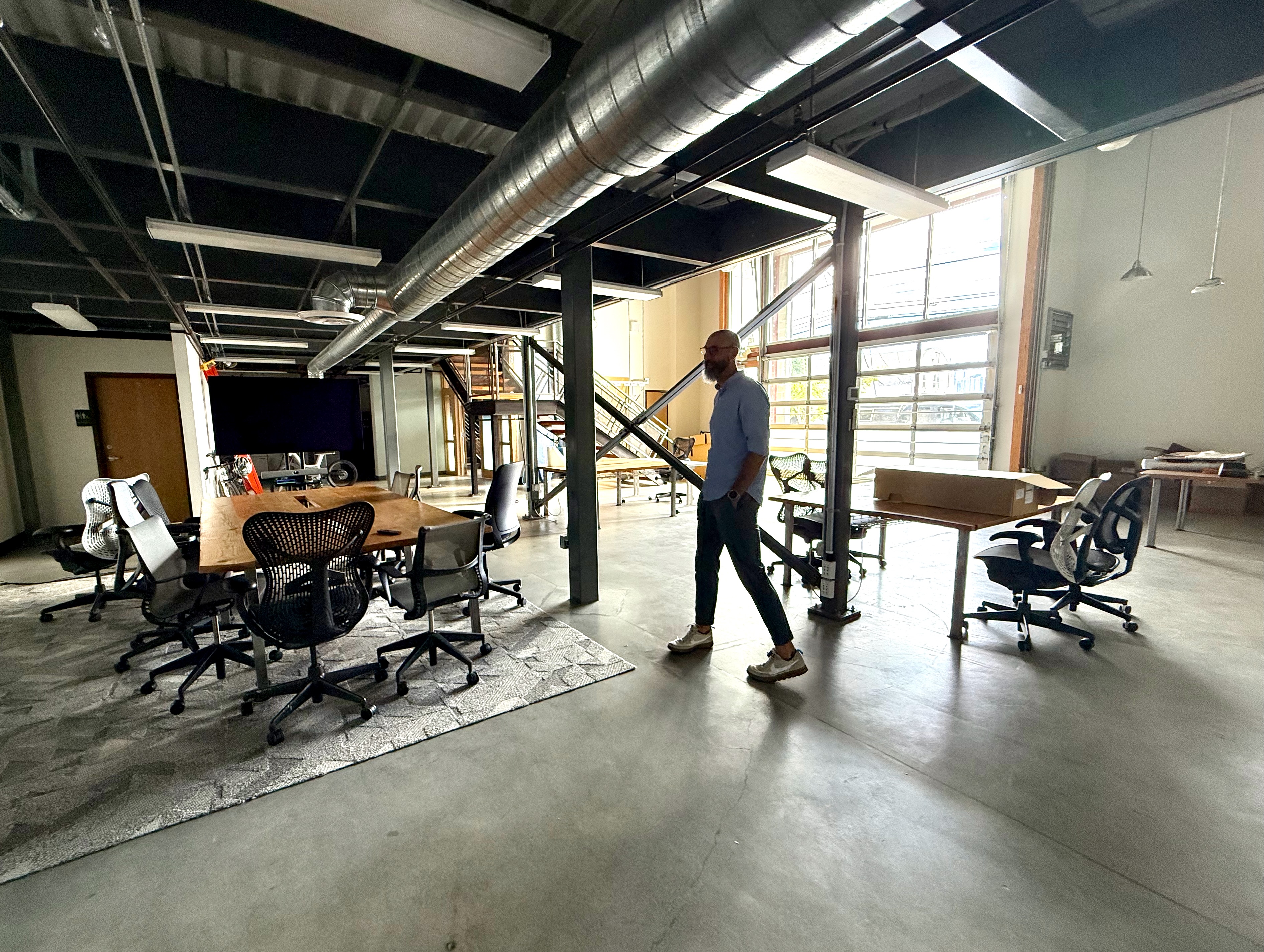
Ben Steele, chief commercial officer for Also, poses with the company’s TM-B e-bike on the deck of Also’s new offices in Seattle. (GeekWire Photo / Kurt Schlosser)
Also, a fast-growing electric micromobility startup born out of Rivian in Silicon Valley, has quietly pulled into Seattle and planted a flag at the epicenter of the city’s bike culture with an office on the north end of Lake Union.
The 17,459-square-foot space at 1300 N. Northlake Way — which previously housed military-grade autonomous vehicle startup Overland AI — is situated directly along the Burke-Gilman Trail at the busy intersection of the Fremont and Wallingford neighborhoods. The headquarters for Brooks Running and the flagship store for outdoor retailer Evo are right across the street.
Ben Steele, Also’s chief commercial officer, is heading up the office. A nine-year veteran of REI, he was attracted to Also’s mission-based vision for the future of micromobility. He’s been tasked with building out the startup’s business operations, marketing, and customer functions from scratch.
First he had to find a dynamic office space. He called the location the hottest spot in the No. 1 bike commuting city in America.
“If you do the heat map in Strava for bike commuting, that is the white-hot spot,” Steele told GeekWire during a tour of the office. “When we said where do we want to be, we want to be where our customers are, where they’re working, where they’re living, where they’re shopping. And we want to be where bike commuters are. And this is that hot spot.”
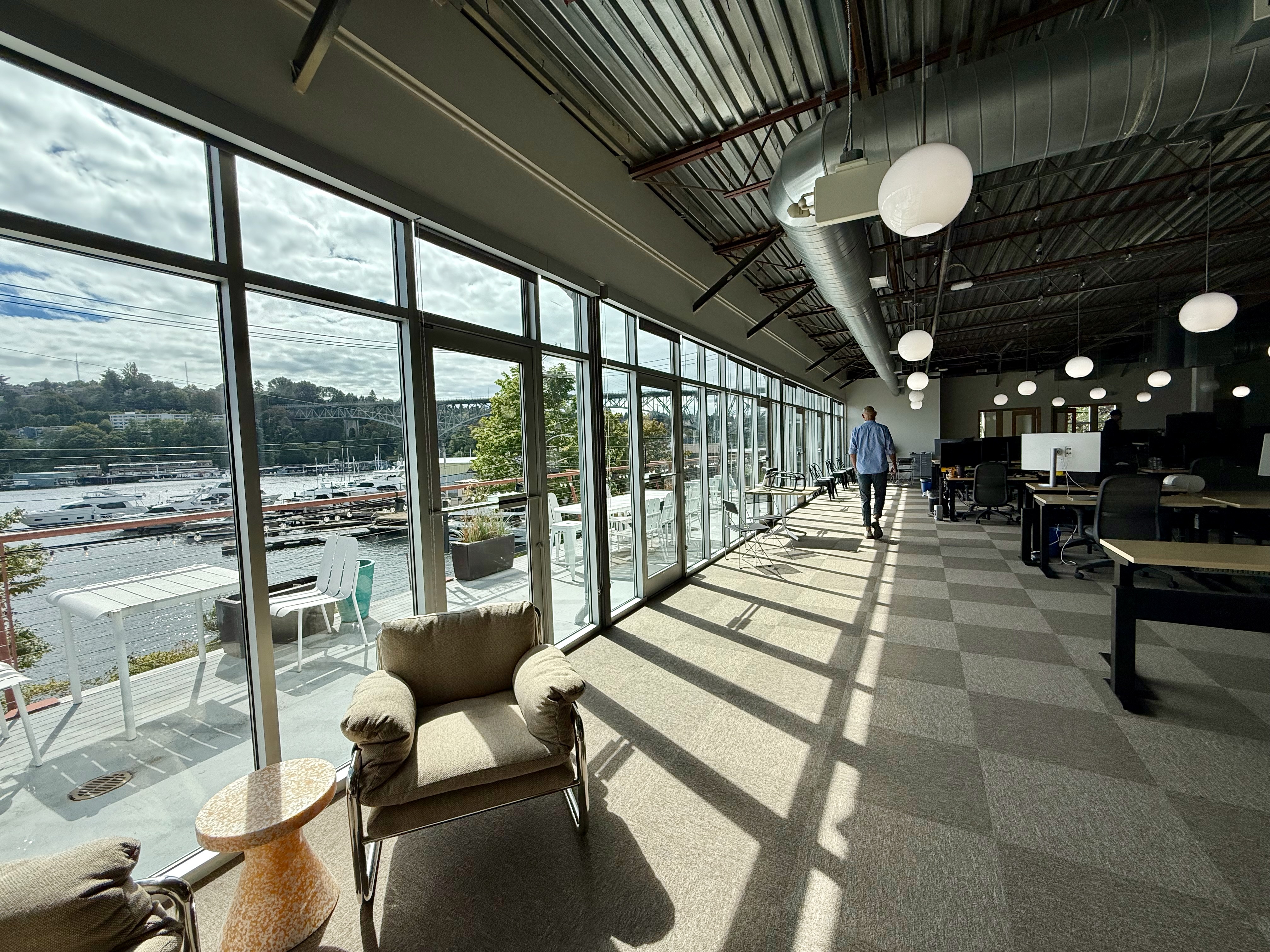
Also’s North Lake Union office space is home to 38 employees so far. (GeekWire Photo / Kurt Schlosser)
Founded inside electric vehicle maker Rivian more than three years ago as a special projects group, Palo Alto, Calif.-based Also officially spun out as an independent company in March 2025. The startup is focused on developing software-defined micromobility solutions designed to replace car trips and last-mile commercial delivery, backed by partnerships with Amazon and DoorDash.
Also was co-founded by Rivian founder and CEO RJ Scaringe alongside Chris Yu, Rivian’s former vice president of future programs, who serves as Also’s president. The startup has already commanded major investor backing, achieving a $1 billion unicorn valuation following its spinout to fund vehicle development and scale its commercial operations.
The Seattle space officially opened in April and is currently home to 38 employees, with capacity to grow to around 60 on a second floor featuring sweeping views of Lake Union and the downtown skyline.
Also employs roughly 350 people globally across Palo Alto, Seattle, and a new commercial team in Ghent, Belgium. The hybrid Seattle office requires employees in three days a week — though Steele notes cross-functional visits regularly push daily headcount past 50. The company has drawn talent from Seattle-area giants like REI, Brooks, Rad Power Bikes, Sonos, and Amazon.
Steele pointed to the city’s unique intersection of cycling culture, software technology, and deep consumer retail roots as the primary draw for building a major presence outside Silicon Valley.
“If you think about retail and commercial talent, innovative companies like Nordstrom and Amazon and Starbucks and yes, REI, the talent pool that we have to draw from for this part of the business, this is really the sweet spot to do it,” Steele said.
Also’s Ben Steel inside the ground-floor space that will become Also’s first retail store. (GeekWire Photo / Kurt Schlosser)
On the ground floor of the building, Also plans to build out its very first dedicated retail store and customer service bay, complete with space for a co-working or food and beverage partner. Steele called the layout a deliberate move to keep the commercial team grounded in real-world rider interactions.
“The theory is, we want our team really living that experience with our customers,” Steele said. “To have our retail and our office together really means we’re not theorizing about what does that experience look like with our customers. We’re living it every day.”
In the meantime, local riders can try Also’s flagship e-bike, the TM-B, across the street through a pop-up at Evo. Seattle is one of 10 initial U.S. markets where mobile sales teams are conducting test spins out of dedicated vans, coffee shops, and partner locations like Evo and Rivian spaces. Nationwide, the company has already surpassed 10,000 test rides for the high-tech bike, which starts at $3,500.
Beyond personal e-bikes, Also is setting its sights on transforming commercial delivery — a push anchored by a high-profile multi-year collaboration with Amazon, headquartered just across the lake in South Lake Union.
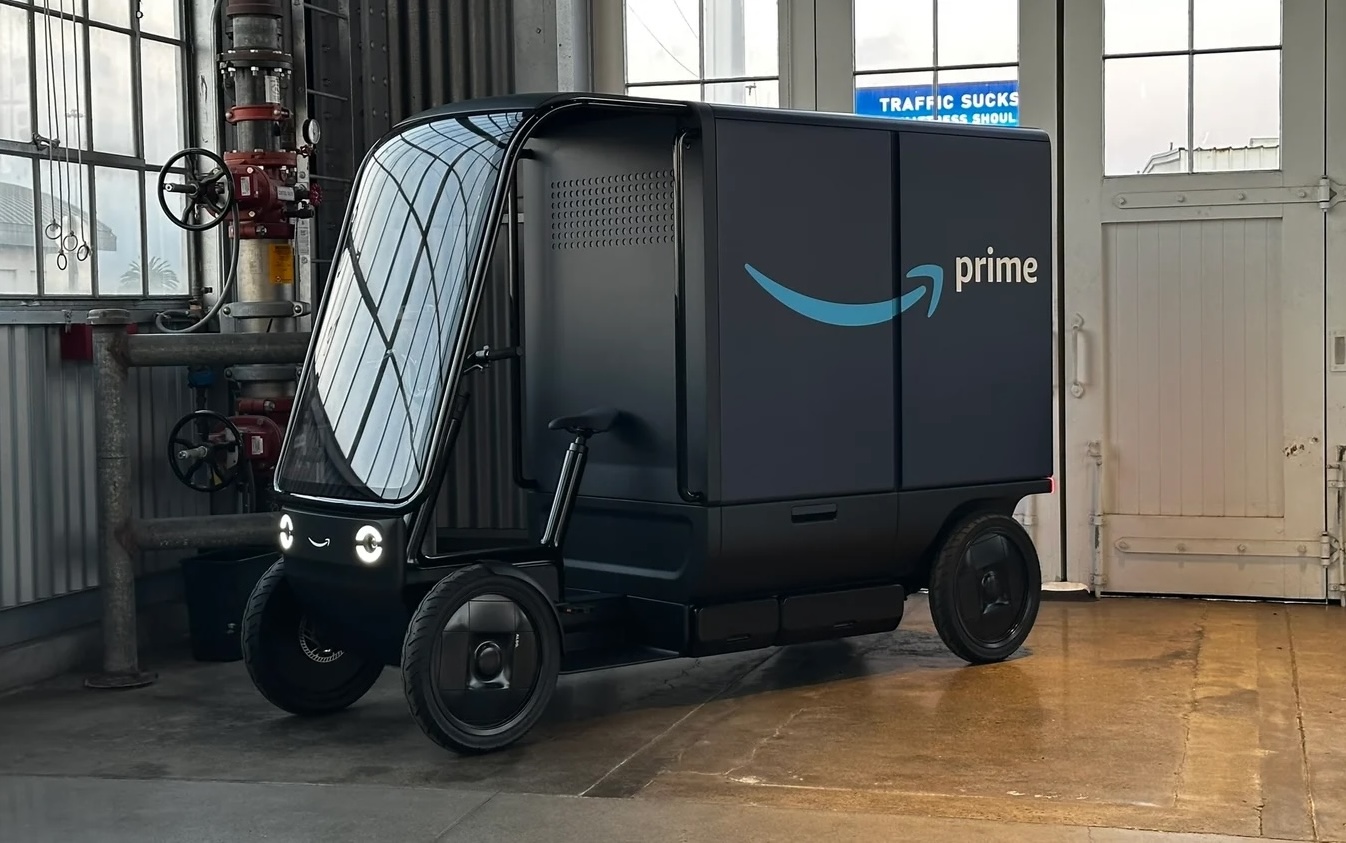
The partnership, announced last fall, centers on a customized pedal-assist e-cargo quad (the TM-Q) designed to navigate dense city centers and operate within dedicated bike lanes. Also plans to roll out prototype units with Amazon in two cities later this year before broader expansion in 2027.
“If you think about a city like Paris, where they’ve closed a lot of Paris down to cars, you can use a vehicle like that to get into the city,” Steele said, pointing out that the quad leverages automotive-grade technology to carry heavy delivery loads up steep hills without the high maintenance of traditional bike chains and derailleurs.
With the look of a mini Rivian electric delivery van, Also’s prototype for a customized Amazon Prime e-cargo quad (the TM-Q) is designed to navigate dense city centers. (Also Photo)
The company is also collaborating with DoorDash to test autonomous last-mile delivery using smaller form-factor vehicles capable of traveling up to 30 mph on streets, hopping curbs, and navigating sidewalks directly to a customer’s front door.
Also enters the market as Seattle’s e-bike landscape undergoes a major shift. The city was once ground zero for breakout success Rad Power Bikes, which helped pioneer consumer e-bikes before suffering a steep post-pandemic downturn that culminated in a Chapter 11 bankruptcy filing and an asset sale early this year.
Steele, who watched Rad’s trajectory from his time leading retail operations at REI, noted that Also is taking explicit notes from the broader e-bike industry’s past missteps. Rather than treating their machines like standard bicycles with added batteries, Also is focusing heavily on custom, automotive-grade hardware and software-defined integration — while staying intentionally lean on retail overhead.
“Building the best e-bike is not our mission,” Steele said. “Building the future of micromobility is our mission. And the first thing we’re building is the best e-bike.”
That philosophy directly shapes how Also plans to roll out its physical footprint. With customer orders now converting and initial Launch Edition bikes shipping over the coming weeks, Steele says the startup is taking an adaptable approach rather than rushing to sign leases on traditional retail store networks.
In addition to fixed hubs like the North Lake Union location, Also is launching a national “test spin tour” using mobile vans to bring 10 bikes and dedicated staff to 20 cities across six weeks.
“I don’t want to be beholden to a single model,” Steele said of the expansion plans. “The thing I wanted to not do is say let’s go build 10 stores and then see if that’s right. Long-term vision is to be really adaptable and really agile with how we do it, and to have what’s the right solution in each market versus a single model that we try to drop in everywhere.”
For Steele, bringing Also to Seattle isn’t just about opening an outpost or testing hardware — it’s about actively shaping the daily routine of local commuters along the lake.
“We want this to be a part of that vibrancy of the neighborhood, not just a place you go by,” Steele said.
That civic integration hits close to home for Steele, who lives near the University of Washington and instead of sitting in his car on Montlake, commutes down the Burke-Gilman Trail on an Also e-bike every morning.
“I arrive at work less stressed out on the Burke-Gilman Trail,” Steele said. “I’m living the product benefit every day. It’s pretty awesome.”
Members of the BuyWander team, including co-founders Brock Kowalchuk and Jordan Allen, celebrate with the company’s 10,000th customer in Spokane, Wash. in 2025. (BuyWander Photo)
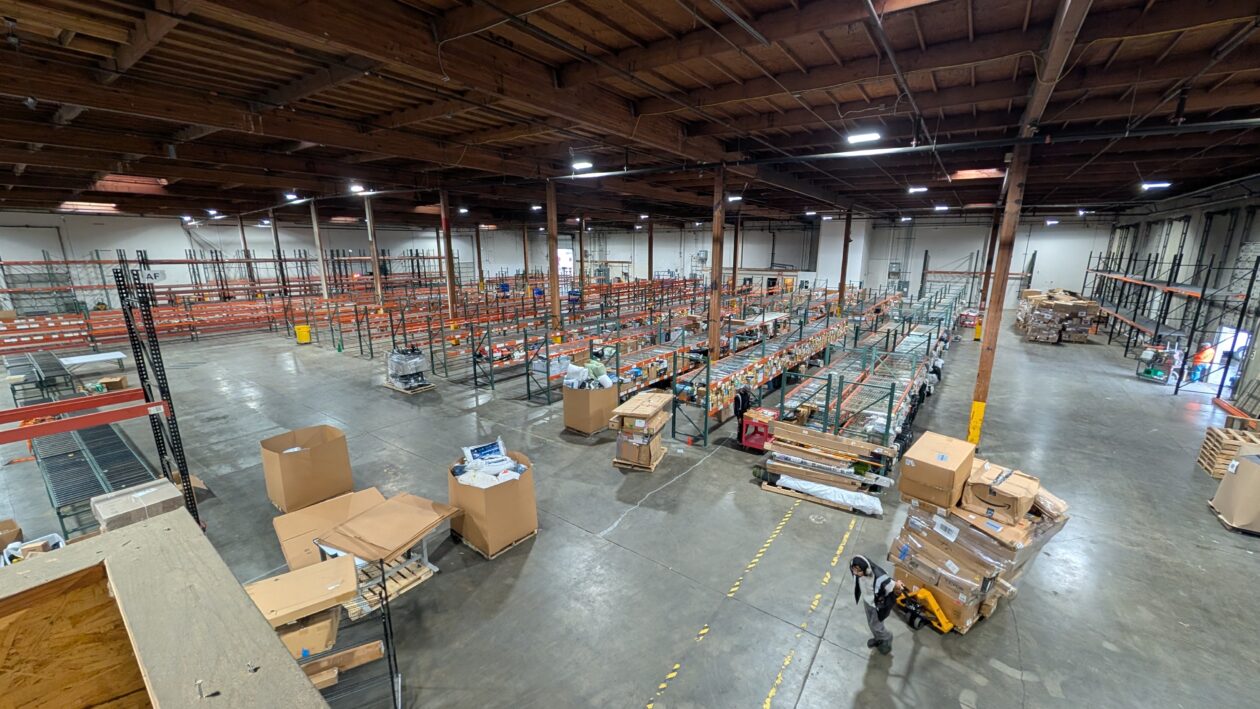
BuyWander, the Spokane, Wash.-born startup building an auction marketplace for returned and overstocked retail goods, has moved its headquarters to the Seattle area and grown to 325 employees as it expands its warehouse network across the country.
The company said Tuesday that it has added four executives to its leadership team, including two former Amazon employees, as it pushes into new markets including Denver and Chicago.
BuyWander is now based in Kent, Wash., where it has 45 employees. The company said it moved its corporate headquarters from Spokane to the Seattle area this month, putting its leadership team closer to the region’s large retail and e-commerce ecosystem.
GeekWire last wrote about BuyWander in April 2025, when the startup employed 22 people and was on the verge of opening a 30,000-square-foot warehouse in Kent after raising $2 million in seed funding.
Founded in 2023 by Jordan Allen and Brock Kowalchuk, BuyWander’s marketplace sells returned and overstocked merchandise from retailers including Amazon, Target, Walmart and Home Depot. Products start at a $1 opening bid in seven-day online auctions, with buyers picking up purchases at local BuyWander warehouses rather than having them shipped.
Current items for sale on the marketplace include: window air conditioning units; steel gate fencing; carbon fiber rear trunk spoilers; Jeep Wrangler seat covers; countertop microwave ovens, pop-up canopy tents and dozens of other products.
The model is aimed at giving returned merchandise another route to consumers rather than leaving it in warehouses or sending it to landfills. BuyWander’s technology is designed to scan, sort and identify inventory before putting it up for auction.
The BuyWander warehouse in Kent, Washington. (BuyWander photo)
The sector is filled with rivals, including companies such as Mac.bid, B-Stock, Liquidation.com and ReturnPro, which focuses more on solutions for retailers.
Allen previously founded Stay Alfred, a Spokane-based short-term rental company that shut down in 2020, amid the pandemic, after expanding to more than 30 cities.
“Auction commerce is having a real moment, and it’s exciting to build the team to meet it,” Allen said in a statement Tuesday.
The four new executives are:
Laura Sasser, chief operating officer, who spent nearly 20 years at liquidation and inventory-management company Channel Control Merchants and most recently was senior vice president of operations at FullSpeed Automotive where she oversaw facilities, inventory management, and loss prevention.
Daniel Kiepfer, vice president of data and AI, who previously led data and analytics at Seattle online jewelry retailer Blue Nile and held roles at Microsoft, RealSelf and McKinsey.
Abu Marcose, senior director of warehouse technology, who spent 12 years at Amazon, most recently as a senior software development manager on Amazon’s Supply Chain Optimization Technologies team.
Roger Ling, director of marketing, who previously led integrated marketing at DoorDash and held go-to-market and product marketing roles at Amazon, including work on Prime Big Deal Days and Amazon Business.
Marcose’s hiring is particularly notable for BuyWander’s push to build technology around its warehouse operations. At Amazon, he worked on capacity planning, network optimization and generative and agentic AI systems used in fulfillment operations.
Ling’s experience also fits BuyWander’s retail focus, bringing experience in both Amazon’s e-commerce operation and DoorDash’s consumer marketplace.
Sasser’s experience will help the two-year-old startup expand into new markets, helping customers find deals in new geographies.
“My focus now is building the operational backbone that lets it scale across every new market we enter,” she said in a statement.
BuyWander said it currently operates eight warehouses, with Denver and Chicago among its newest locations, and plans to continue expanding nationally over the next year. The bulk of its employee base works in stocking, intake and customer service.
The company is backed by Triple Impact Capital, Animal Capital, Data Tech Fund, Vinay Menda, Quiet Capital, Maria Routimine, Eric Klein, James Dorman and Tom Simpson.
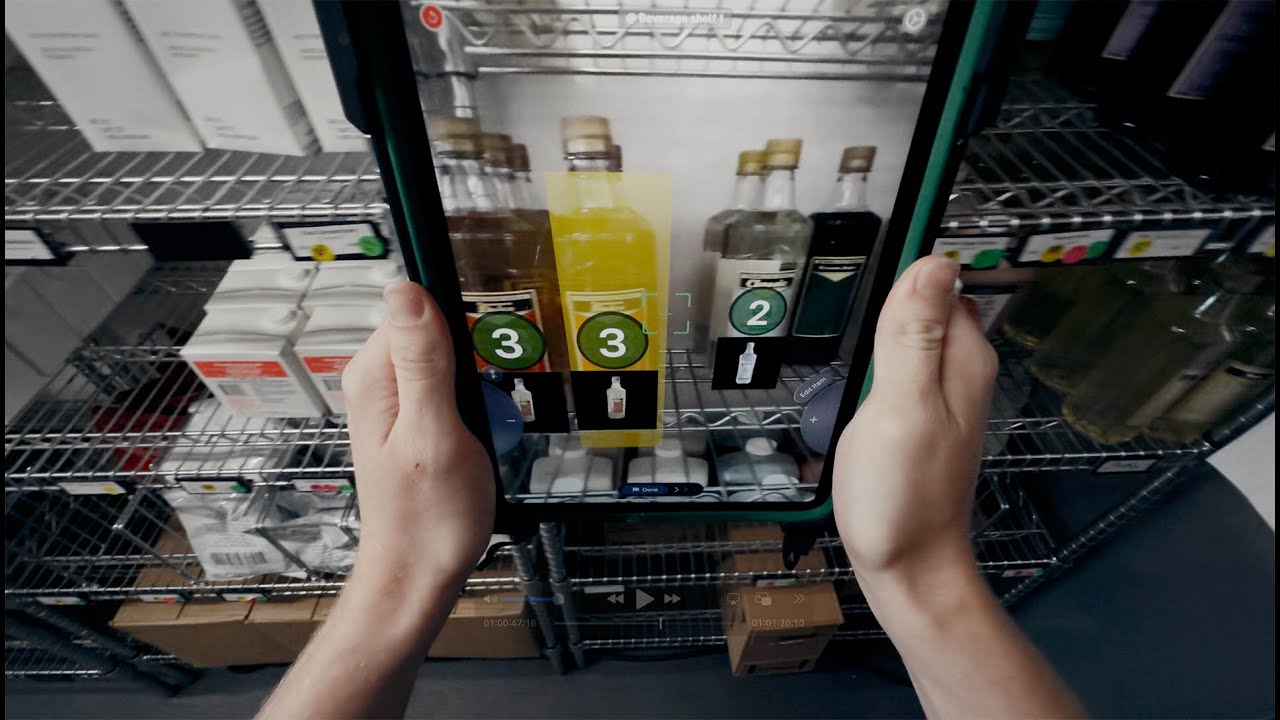
Starbucks was using technology from Redmond-based NomadGo to automate how workers counted inventory items. (Starbucks Photo)
When Starbucks scrapped an AI-powered inventory counting tool back in May, just nine months after revealing the new system, it landed as a surprise to those tracking the coffee giant’s high-tech ambitions. A new report from Fast Company tells the inside story of how the national rollout disintegrated — and why the Redmond, Wash.-based startup behind it was left “blindsided.”
Known as “Automated Counting,” the tool was built in partnership with NomadGo to scan backroom storage shelves using iPad Pros equipped with computer vision, spatial computing, and augmented reality. It was designed to automatically tally coffee bags, milk, syrups, and other key supplies.
The idea was to turn an hour-long manual chore into a 10-to-12-minute job so baristas could focus on making drinks and connecting with customers.
The technology was deployed rapidly across all 11,300 company-operated Starbucks locations in North America. But almost immediately, real-world store environments triggered rampant glitches, according to Fast Company.
Baristas reported camera errors — such as shiny refrigerator reflections doubling milk counts or the app misidentifying syrups and trash cans — while stores with spotty Wi-Fi frequently had their counting progress wiped out entirely mid-scan.
According to Fast Company, the technical breakdowns stemmed from both software limitations and outdated infrastructure. While NomadGo’s computer vision achieved 99% accuracy in controlled tests, CEO David Greschler noted that computer vision inherently struggles when inventory changes — requiring up to six weeks of retraining for seasonal holiday cups or limited-time packaging that NomadGo developers sometimes only learned about once items hit store shelves.
Compounding the problem, people involved in building the tool pointed to Starbucks’ backend network, which relies on a legacy IBM AS/400 system dating back to the 1990s, making it difficult for cutting-edge AI to process real-time store data reliably.
When Starbucks notified NomadGo on April 3 that it was pulling the plug, the startup was reportedly blindsided. Greschler called the decision “a complete surprise,” telling Fast Company that “there’s nothing you can do when leadership and strategy change.”
Within days of losing its centerpiece enterprise client, NomadGo was forced to lay off a large chunk of its 30-person workforce, according to the report, including the technical team that managed the Starbucks integration. Six weeks later, on May 18, Starbucks formally notified baristas that Automated Counting was retired, instructing them to rip the QR tracking codes off backroom shelves and return to manual tallies.
A Starbucks spokesperson provided GeekWire with this statement on Monday:
“Human connection is at the core of our business, which is why we have invested $500 million to put more partners (employees) in our coffeehouses. We use technology to support human connection, not to replace it. This tool was designed to simplify a routine task and give partners more time with their customers. When it fell short, we listened to feedback and changed course. That is what innovation looks like at Starbucks: listening, learning, and adapting.”
GeekWire also contacted NomadGo, and we’ll update this story when we hear back.
Despite retiring Automated Counting, Starbucks has pushed forward with other AI initiatives across its business. The coffee giant is building an AI-powered ordering companion inside its mobile app to translate cravings into custom recipes, while testing a ChatGPT integration that suggests drinks based on a customer’s mood or outfit.
For store staff, the company continues to rely on Green Dot Assist, a generative AI virtual assistant built to help baristas quickly look up recipes, standards, and store operating procedures.
Kraken Card Launch Brings Everyday Crypto Spending Back Into The Exchange Race is a useful reminder that crypto coverage is not only about token prices. Sometimes the more important story is the infrastructure, regulation, security, or product layer sitting underneath the market noise.
The immediate point is straightforward: kraken launched a payment card for spending crypto and cash balances. That gives readers something concrete to work with, rather than another vague sentiment update.
TL;DR
Kraken launched a payment card for spending crypto and cash balances.
The product is aimed at real-time retail payments and crypto-to-fiat conversion.
It puts Kraken deeper into the consumer payments race.
Why This Matters Now
The timing matters because Kraken is already part of a wider conversation across the market. Traders want to know whether the development changes liquidity or risk. Builders want to know whether it changes what can be deployed. Compliance teams want to know whether it changes how platforms operate.
In that sense, the story is bigger than one headline. It sits inside the ongoing shift from speculative crypto cycles toward more practical questions: who can use these systems, how safe are they, and whether the underlying incentives actually work.
The best way to read it is with discipline. It is not a guarantee of immediate upside, and it should not be treated as one. But it does add a fresh data point to the way the market is thinking about Kraken.
The Kraken Angle
For Kraken, the important part is the specific mechanism. If this is a security issue, the risk sits in dependencies and user protection. If it is a listing or product launch, the question is access and liquidity. If it is a governance or research proposal, the question is whether the idea can survive implementation.
That is where this update becomes useful. It is not just a label attached to a trend. It gives readers a way to understand what might actually change if the development gains traction.
Crypto has a habit of turning every announcement into a broad market claim. This one deserves a narrower read. The value is in seeing how it affects the users, developers, institutions, or traders closest to the issue.
The Risk Side
There is also a caution attached. Source material can confirm that a development exists, but it cannot prove that adoption will follow. A proposal still needs support. A product still needs users. A chart still needs confirmation. A compliance tool still needs integration.
That is why the responsible reading is not to oversell the story. The stronger takeaway is that this adds to a pattern. The crypto market is steadily becoming more professional, more technical, and more sensitive to real operational details.
Readers should also watch for follow-up signals. That could mean developer feedback, exchange support, regulatory response, wallet adoption, liquidity data, or simply whether market participants continue reacting after the first headline fades.
What Comes Next
The next stage will decide whether this remains a narrow update or becomes part of a larger market theme. In crypto, that difference matters. Plenty of stories look important for a few hours and then disappear. The ones that last usually show up again through usage, liquidity, enforcement, governance, or developer adoption.
For now, this gives the market another piece of information to weigh. It is specific enough to be useful, but still early enough that readers should keep the caveats in view.
That makes it worth covering without pretending it settles anything. The story is a signal, not a final verdict.
The key is not to confuse coverage with certainty. Kraken stories can move quickly, especially when they touch security, regulation, listings, infrastructure, or price levels. The useful approach is to track the next confirming detail rather than assume the first update carries the whole market story. That is how traders avoid chasing noise and how readers separate a genuine development from another passing headline.

 Login
Login
 The 3D model animates to show the front flap opening.
Credit:
GOG
The 3D model animates to show the front flap opening.
Credit:
GOG