❌

Reading view

There are new articles available, click to refresh the page.

NASA University Challenge Ignites Trajectory of Drone Entrepreneur

4 min read

Preparations for Next Moonwalk Simulations Underway (and Underwater)
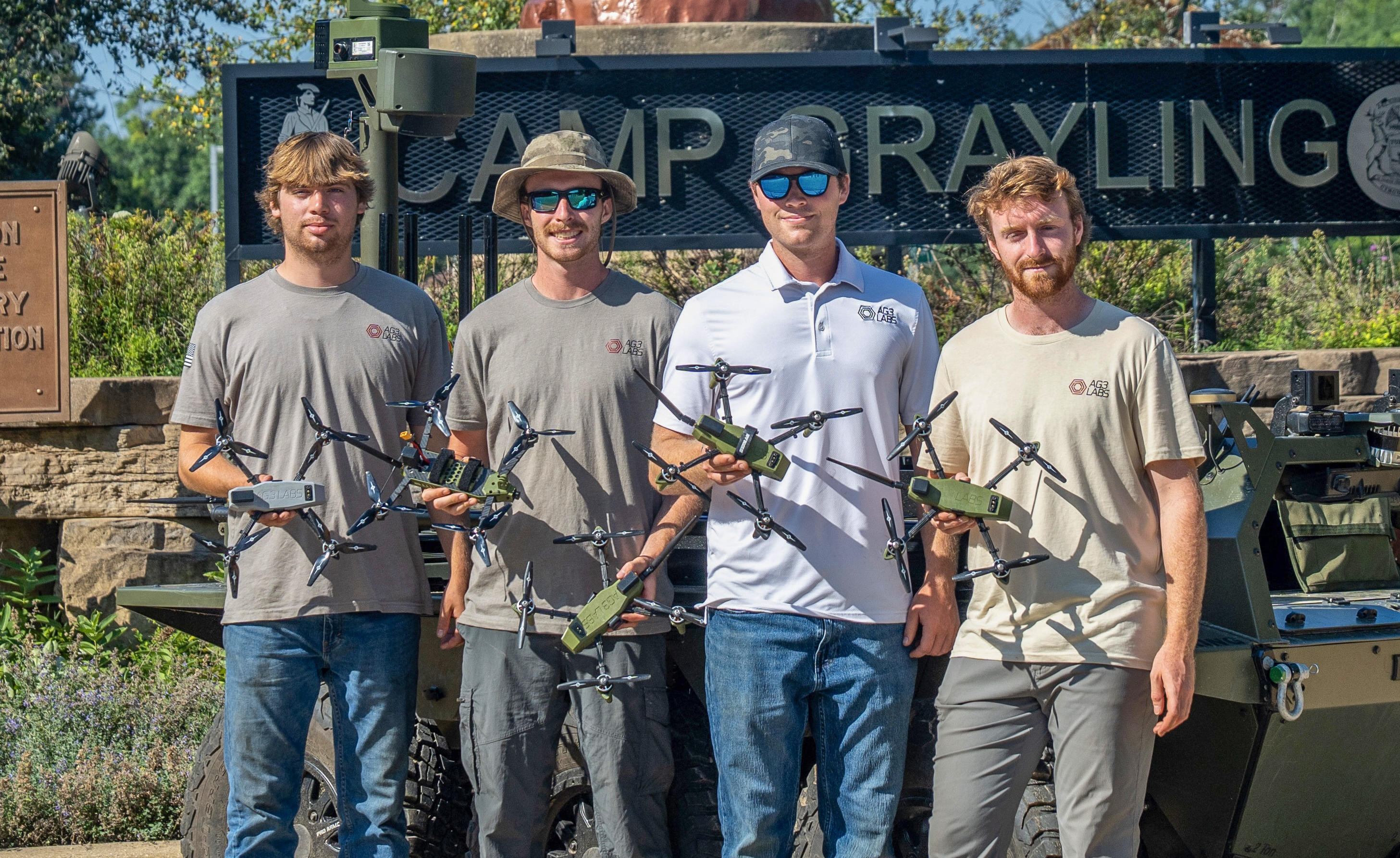
NASA University Challenge image shows four men dressed in t-shirts and jeans, each holding a small quad-copter drone, stand in front of a “Camp Grayling” sign with trees and bushes in the background.
Four co-founders of AG3 Labs –from left Matt Atkinson, Gavin Gardner, Ryan Atkinson, and Gryson Gardner – show off the military training drones their company builds at a U.S. Army event at Camp Grayling in Michigan. As a student, Gavin was on a Michigan State team twice selected for participation in NASA’s University Student Research Challenge. His NASA experience served as a foundation for the creation of AG3.
AG3 Labs

Five years ago, Gavin Gardner was a Michigan State University engineering student researching next-generation drone technology as part of a NASA grant. Garder expected the research to be demanding – but he was surprised that navigating the financial side of the work presented an even greater challenge.

Although Gardner was used to leading fellow students in a lab setting, he and his team were completely new to things like creating budgets, handling large sums of money, and promoting their work for crowdfunding.

That’s why demonstrating both engineering and entrepreneurship skills are major tentpoles of NASA’s University Student Research Challenge (USRC), an initiative that provides grants to teams of college students interested in helping the agency realize its aeronautical research goals.

“Half the battle is building your product,” Gardner said recently. “The other half is selling the product in a way that everyone else can understand what you’re doing and not talking in nerdy, engineering ways.”

We hope that every team that participates in the program sees, like Gavin, how they can grow technically, entrepreneurially, and use the opportunity as a launchpad for their own innovative careers.

STEVEN HOLZ

STEVEN HOLZ

NASA USRC Manager

Gardner and his Michigan State USRC alumni teammates are still using those lessons today, as aerospace developers. In 2024, they founded their own company, AG3 Labs, which specializes in drones for military training exercises.

“I don’t think I would discredit our technical expertise in getting us to where we are today, but I know that USRC was a booster that really amplified our trajectory at such a young age,” Gardner said.

NASA USRC manager Steven Holz said Gardner’s experience shows what students can accomplish when they receive both a grant and guidance – enabling a future workforce and contributing to the aviation industry.

“We are proud to see the success of USRC alumni,” Holz said. “We hope that every team that participates in the program sees, like Gavin, how they can grow technically, entrepreneurially, and use the opportunity as a launchpad for their own innovative careers.” 

Research path

Gardner’s path to running his own company began with a middle school age trip to Space Camp, where he began realizing that he wanted to be an engineer.

The engineering bug also bit his brother, Gryson Gardner, and the two of them would often be found in their Michigan garage tinkering with various machinery, including drones and electronic kits.

When Gardner arrived at Michigan State, he looked for extracurricular groups and found one dedicated to the increasingly popular hobby of drones. He gained hands-on, practical experience in how drones are made and operated.

In 2021, Gardner received an email from a friend who told him they had just won a USRC grant from NASA for an activity called Aerial Intra-city Delivery Electric Drones (AIDED), and they needed help building a new drone.

“We had this idea that instead of flying through the whole city, why can’t a drone just hitchhike a ride on a city bus like everyone else does?” Gardner said.

The concept was for a cargo-carrying drone to take off, dock on top of public transportation such as a bus, charge its batteries while riding along, and then take off for its final leg of the delivery. The team built and flew a full-scale drone to prove the concept but decided against pursuing a commercial venture.

“The commercial drone market kind of scared us a little bit with the large number of regulations that go into operating such a novel idea like this with flying over people in a dense city,” Gardner said.

But the team’s demonstration of technical prowess and confidence led to a second USRC award from NASA in 2023 – the Laser Energized Aerial Drone System (LEADS), which focused on using a laser to transfer power directly to a drone in flight.

While working on LEADS, which led to flying a prototype, Gardner’s network of contacts within the drone community expanded to include NASA personnel at the Glenn Research Center in Cleveland, who made him aware of internship opportunities, which he applied for and was accepted while in graduate school.
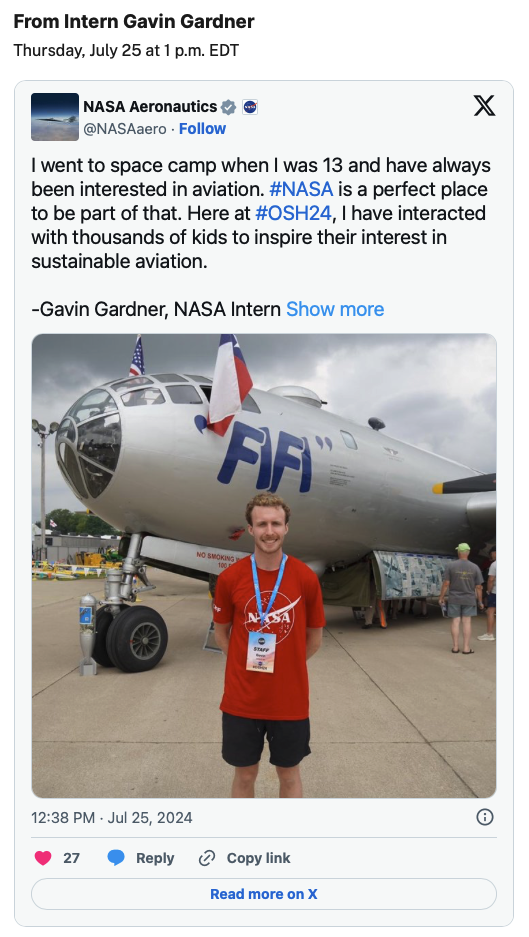
Screen shot of Gavin Gardner's intern post whee he is standing in front of the FIFI aircraft wearing a red NASA t-shirt and dark shorts.
Gavin Gardner, a University Student Research Challenge participant who went on to co-found his own drone company, also was a NASA intern in 2024 and wrote this social media post. 

Student challenge paves way for opportunity 

As his graduation in the spring of 2025 with a master’s degree approached, Gardner took the initial steps in late 2024 to co-found with his brother and other USRC alumni AG3 Labs after a friend suggested the military could use low-cost drones to test effective counter drone systems.

An initial award from the U.S. Army led to more contracts, allowing the company to expand and ramp up its operations, where today their production capability enables thousands of drones to be built each month.

Gardner credits his experience with USRC, especially when it came to learning more about the business side of running a technical operation, with helping create the opportunities for success he and his team are experiencing today.

About the Author

Jim Banke

Jim Banke

Aeronautics Senior Writer

Jim Banke is a veteran aviation and aerospace communicator with more than 40 years of experience as a writer, producer, consultant, and project manager based at Cape Canaveral, Florida. He is part of NASA Aeronautics' Strategic Communications Team and is Senior Writer for the Aeronautics Division within the Research Technology Mission Directorate. In 2007 he was recognized with a Distinguished Public Service Medal, NASA's highest honor for a non-government employee.
Facebook logo
Instagram logo
Linkedin logo

NASA’s X-59 Aircraft and Test Pilot

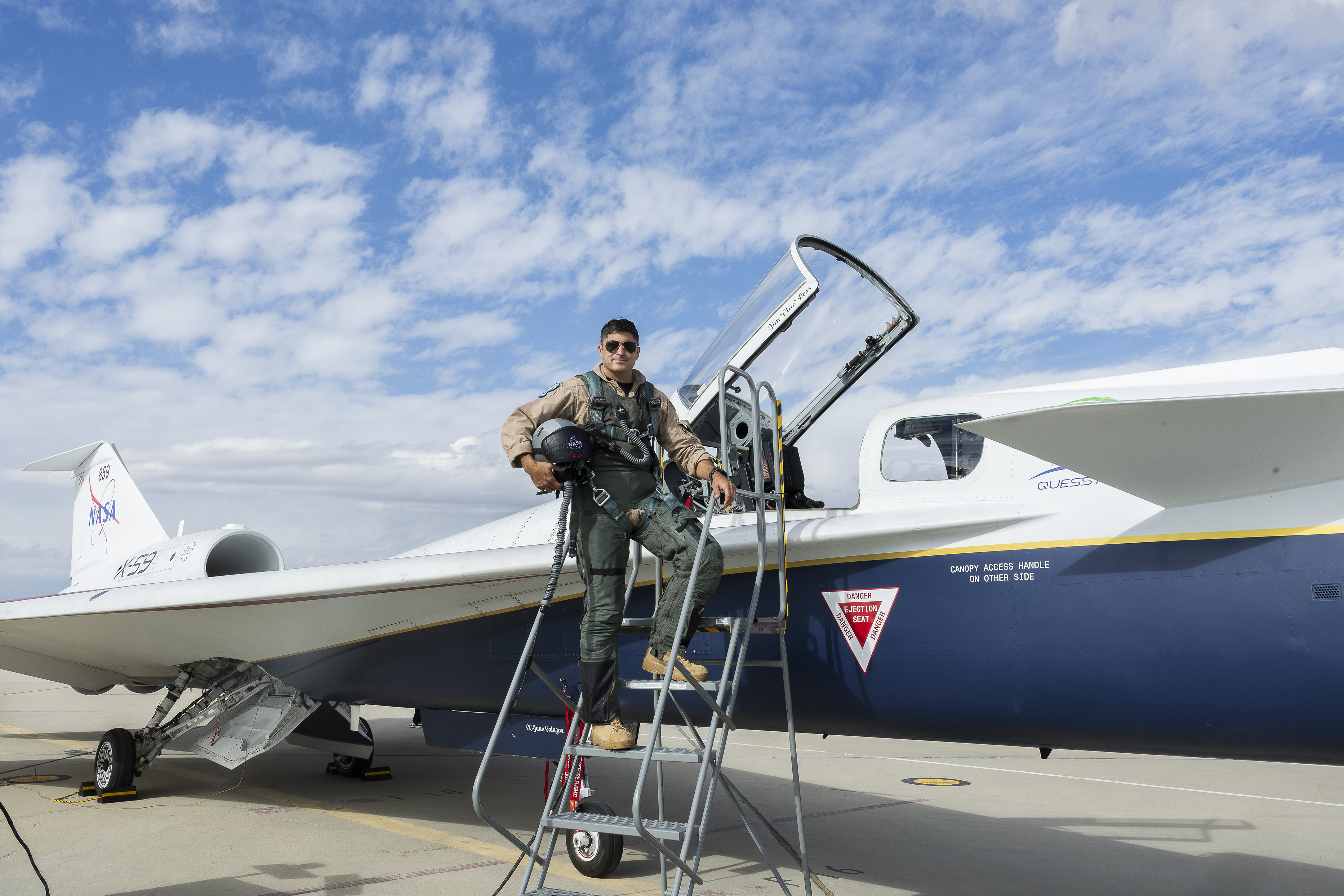
NASA test pilot Mike Lippert stands on a gray metal ladder before getting into the X-59 plane. He is holding his helmet under his right arm. The cockpit of the plane is open.
NASA/Carla Escamilla

NASA test pilot Mike Lippert poses for a photo ahead of his first time flying the agency’s X-59 quiet supersonic research aircraft on Oct. 21, 2026. The X-59 has flown numerous times since its inaugural flight in November 2025; its first supersonic flight was on June 5, 2026.

Lippert took off from NASA’s Armstrong Flight Research Center in Edwards, California, and landed one hour later. The flight came after scheduled maintenance and a review of the X-59’s systems following the aircraft’s busiest week of testing to date.

Read more about Lippert and the Oct. 21 flight.

Image credit: NASA/Carla Escamilla

NASA Develops Batteries to Power Humanity’s Return to Moon

5 min read

Preparations for Next Moonwalk Simulations Underway (and Underwater)

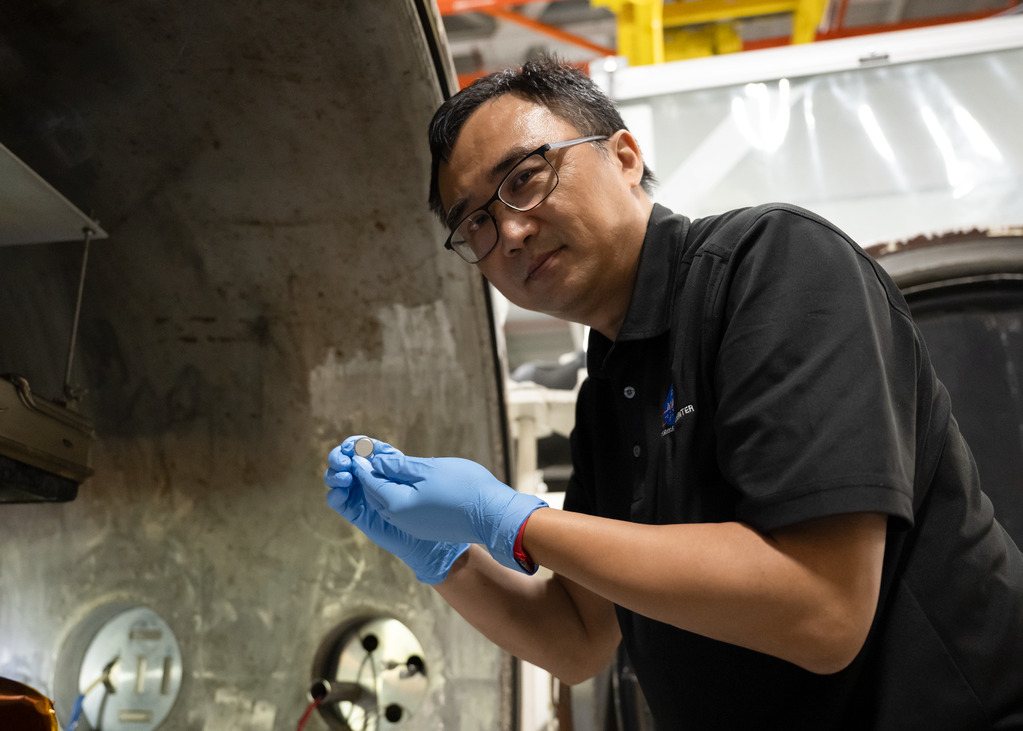
Yi Lin, SPEARS testing and research lead at NASA Langley, holds one of the small coin-cell batteries that had just undergone thermal vacuum testing.
NASA/Ryan Hill

If you’ve ever had your car start sluggishly, or not at all, on a particularly frigid winter morning, you know standard batteries do not like extreme cold. That’s why NASA researchers are working to develop a battery that could function in the brutal cold of the Moon’s South Pole, where nighttime temperatures plunge to minus 328 degrees Fahrenheit (minus 200 Celsius). 

For future lunar operations, a battery will need to work immediately when warmed up and be able to power everything from an astronaut’s emergency kit to a rover capable of exploring the Moon’s darkest craters — all without posing a fire hazard. 

A team of NASA researchers is working to make all that happen. The project is called Solid Power for Extreme Environment Adaptability and Resilience in Space (SPEARS), and it could provide NASA with an important tool to help power humanity’s sustained presence on the Moon through the Artemis campaign. 

“Batteries have become an important part of our lives here on Earth, which enable our laptops, cell phones, power tools, and even our vehicles,” said Donald Dornbusch, principal investigator for SPEARS at NASA’s Glenn Research Center in Cleveland, where the project is led. “We will need them on the Moon, too, and these batteries will be required to operate reliably and safely in this harsh environment. That’s why we’re working on this technology.” 

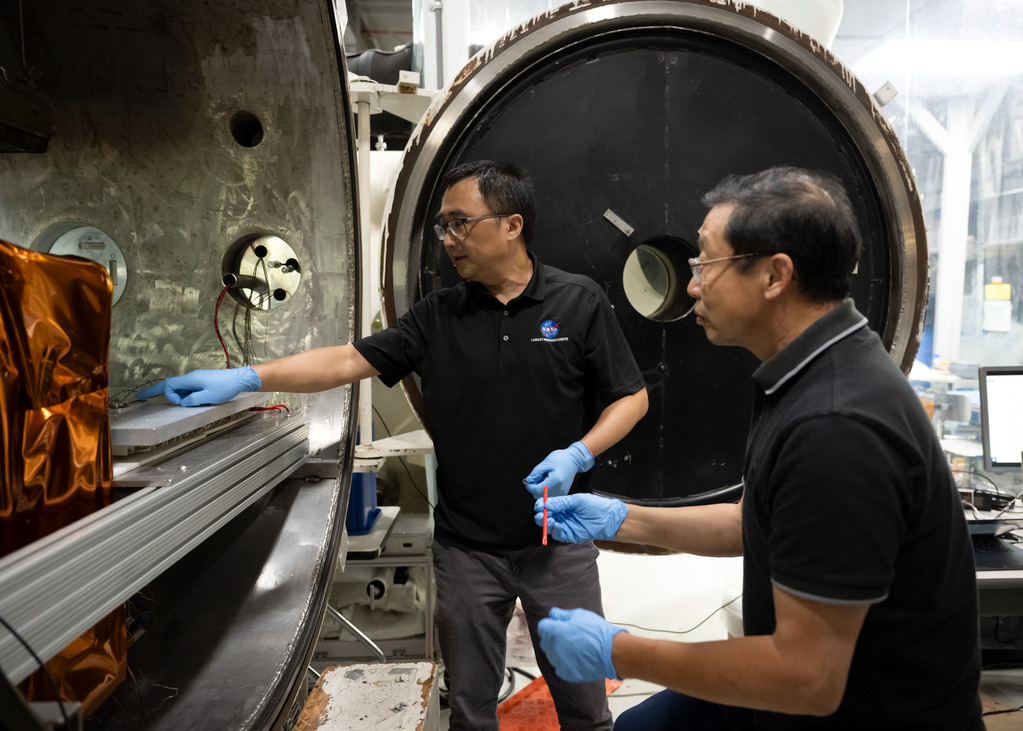
Yi Lin, left, SPEARS testing and research lead, and Ji Su, a polymer materials scientist and the task lead, during the removal of SPEARS batteries from thermal vacuum testing at NASA Langley.
NASA/Ryan Hill

Splashy problem, solid solution

Traditional lithium-ion batteries like those in your cell phone and laptop have a critical weakness: they rely on liquid electrolytes. Cool a conventional battery to the Moon’s nighttime temperatures, and that liquid would freeze, potentially damaging the battery. Heat it up too much — say, to daytime lunar temperatures of 212 F (100 C) — and it won’t work until cooled. Expose the liquid to the vacuum of space, and it evaporates. 

SPEARS batteries solve these problems by replacing the liquid electrolyte with a solid ceramic- or polymer-based material. This change could unlock several advantages. First and foremost, they could operate in the heat and extreme cold. 

During recent thermal vacuum testing at NASA’s Langley Research Center in Hampton, Virginia, small prototype battery cells operated well up to 176 F (80 C), down to minus 76 F (minus 60 C), and with slightly reduced performance down to minus 112 F (minus 80 C). 

“We proved for the first time that these cells can work down to minus 80 degrees Celsius,” said Yi Lin, SPEARS testing and research lead at NASA Langley.  

Lin also said he’s confident they can improve performance and maybe even expand that range in coming years. 

The batteries need to remain reliable through exposure to the Moon’s wild temperature swings between day and night. The thermal vacuum testing showed that after exposure to temperature extremes from 212 F (100 C) to minus 274 F (minus 170 C), SPEARS batteries don’t sustain damage.  

Just like the chemistry in your earbuds is different from the chemistry in your phone, which is different from the chemistry in your car, all these chemistries can still function with a solid electrolyte. We can tune for energy, tune for power, tune for durability, depending on the application.

Yi Lin

Yi Lin

SPEARS testing and research lead

Not even solid-state batteries will function while they’re at a temperature as low as minus 274 F, but because solid electrolytes don’t freeze like a liquid, the batteries can survive the extreme low temperatures.  

In order to get the batteries working again after exposure to such cold, small heaters come into play. SPEARS batteries wouldn’t need to be kept warm all the time, just warmed up to operational temperature. That could reduce the need for heavy thermal management systems in spacecraft and lunar habitats, allowing for lighter designs, lower costs, and longer mission durations. 

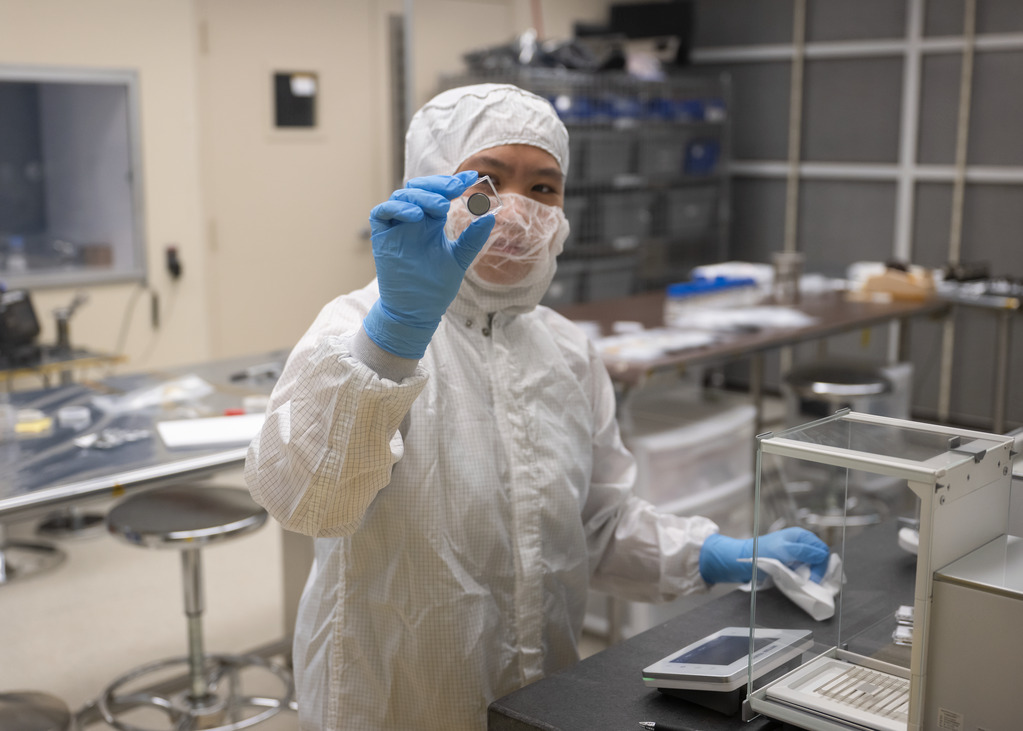
Nike Lin, a support engineer/technician on the thermal vacuum team, holds up a battery.
Nike Lin, a support engineer/technician on the thermal vacuum team, takes weight measurements of batteries following thermal vacuum testing.
NASA/Ryan Hill

Power for Moon, Earth

The applications for these solid-state batteries are nearly limitless, from small tools like drills that must operate in shadowed lunar craters, to rovers and emergency power packs for astronauts. They also could provide power solutions for long-duration scientific instruments. 

“We can tune the chemistry by using different electrode materials,” said Lin. “Just like the chemistry in your earbuds is different from the chemistry in your phone, which is different from the chemistry in your car, all these chemistries can still function with a solid electrolyte. We can tune for energy, tune for power, tune for durability, depending on the application.” 

While SPEARS is designed for space, the technology could be spun off into Earth-based applications. In fact, SPEARS evolved out of a previous battery project Lin and Dornbusch worked on that focused on aeronautic applications. 

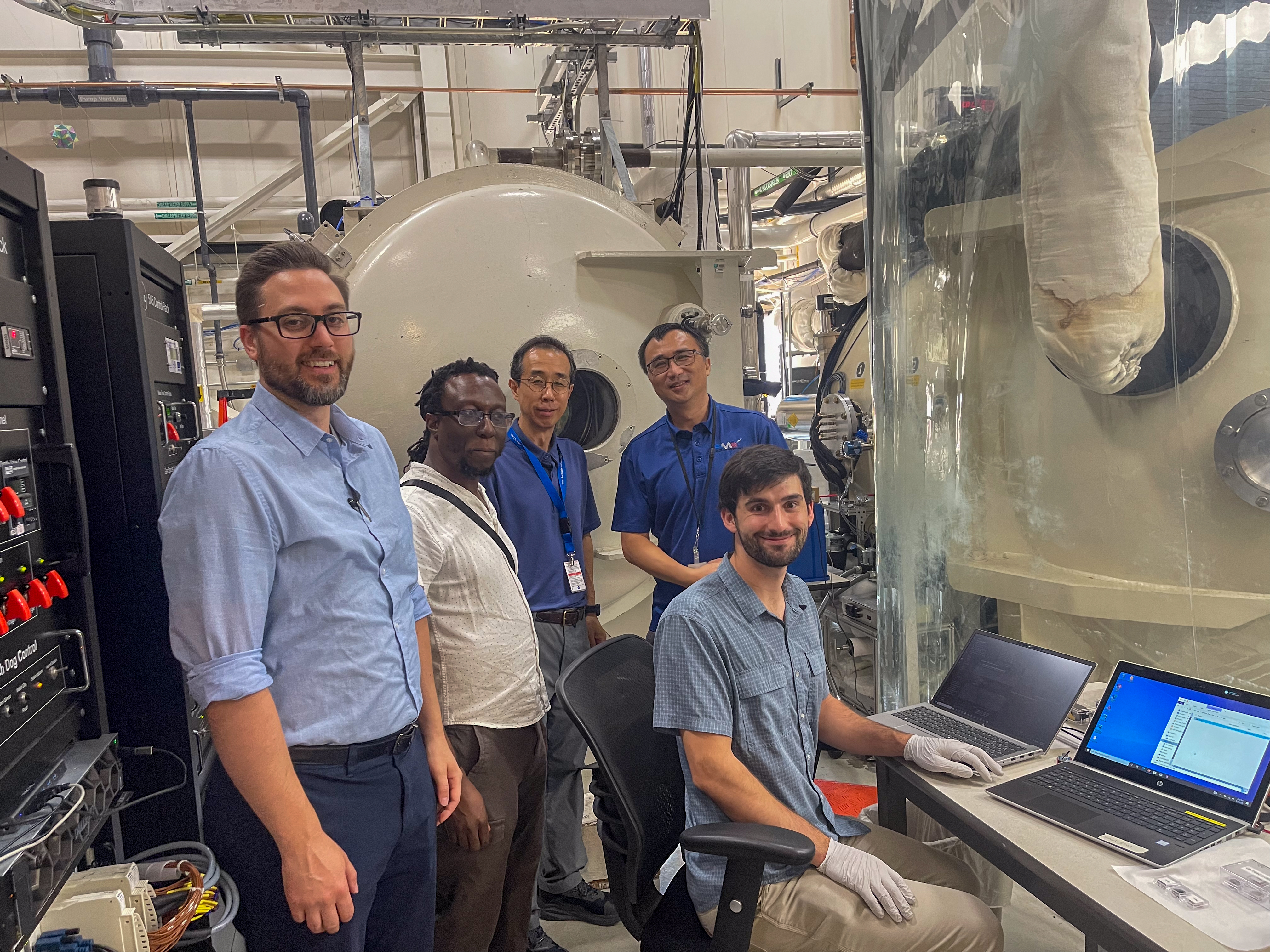
From left to right: Donald Dornbusch (NASA Glenn), Godfrey Sauti, Sang-Hyon Chu, Yi Lin (NASA Langley), and Malachi Mooney-Rivkin (NASA Ames), during a round of TVAC testing at NASA Langley.
NASA

“The potential market for solid-state batteries is very broad,” said Ji Su, a polymer materials scientist and the task lead at NASA Langley. “Automobiles, cell phones, communication devices, drones — anything that needs a portable power supply.” 

The SPEARS project began in 2026 with funding through the Advanced Research and Technology division within the agency’s Research and Technology Mission Directorate. The project is set to focus on technology development in its first stages before potentially shifting toward commercial collaboration. NASA’s Ames Research Center in California’s Silicon Valley is working to develop flight hardware such as test boards and electronics to help prepare the SPEARS batteries for spaceflight and test them in space environments. 

NASA’s SSPICY Mission to Demonstrate In-Space Inspection Technologies

2 min read

Preparations for Next Moonwalk Simulations Underway (and Underwater)

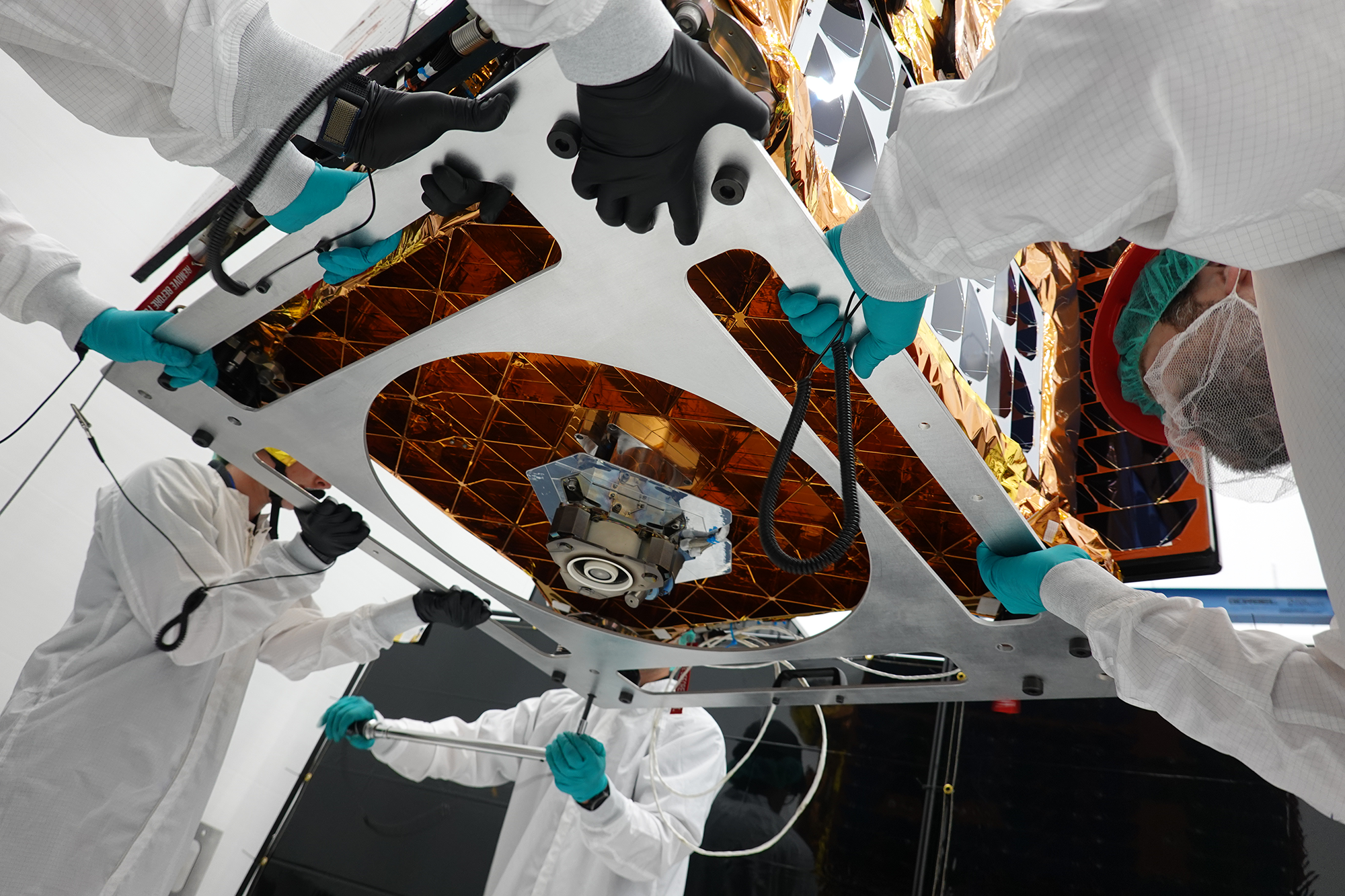
Four people in white suits with teal gloves hold the underside of the SSPICY spacecraft's white frame with
Technicians at Starfish Space prepare the Otter spacecraft ahead of NASA’s SSPICY technology demonstration mission. The spacecraft will demonstrate technologies that could reduce orbital debris.
Starfish Space

A new NASA-supported spacecraft will get up close to satellites that are no longer in service, demonstrating technologies that could support future in-space repairs and reduce orbital debris.

The Small Spacecraft Propulsion and Inspection Capability (SSPICY) mission launched Oct. 1 from Vandenberg Space Force Base in California. The mission is a technology demonstration where an Otter spacecraft will approach up to four inoperable space objects of U.S. origin in low Earth orbit, such as satellites and rocket bodies.

In early 2027, the Otter spacecraft, built by Starfish Space, will begin to navigate within hundreds of yards of each object to perform inspections, using autonomous guidance and control software with minimal input from ground controllers. Computer vision and sensors enable software to make real-time navigation decisions as the spacecraft approaches each target.

During inspection, the Otter spacecraft will gather critical information about each object, such as spin rate, orientation, and surface condition. An electric propulsion system will enable SSPICY to travel between objects, and an articulating robotic boom will test pointing the spacecraft’s thrusters for precise maneuvering between different orbits.

This mission is the first time these technologies will be tested together as an integrated system, paving the way for future autonomous servicing and orbital debris inspection.

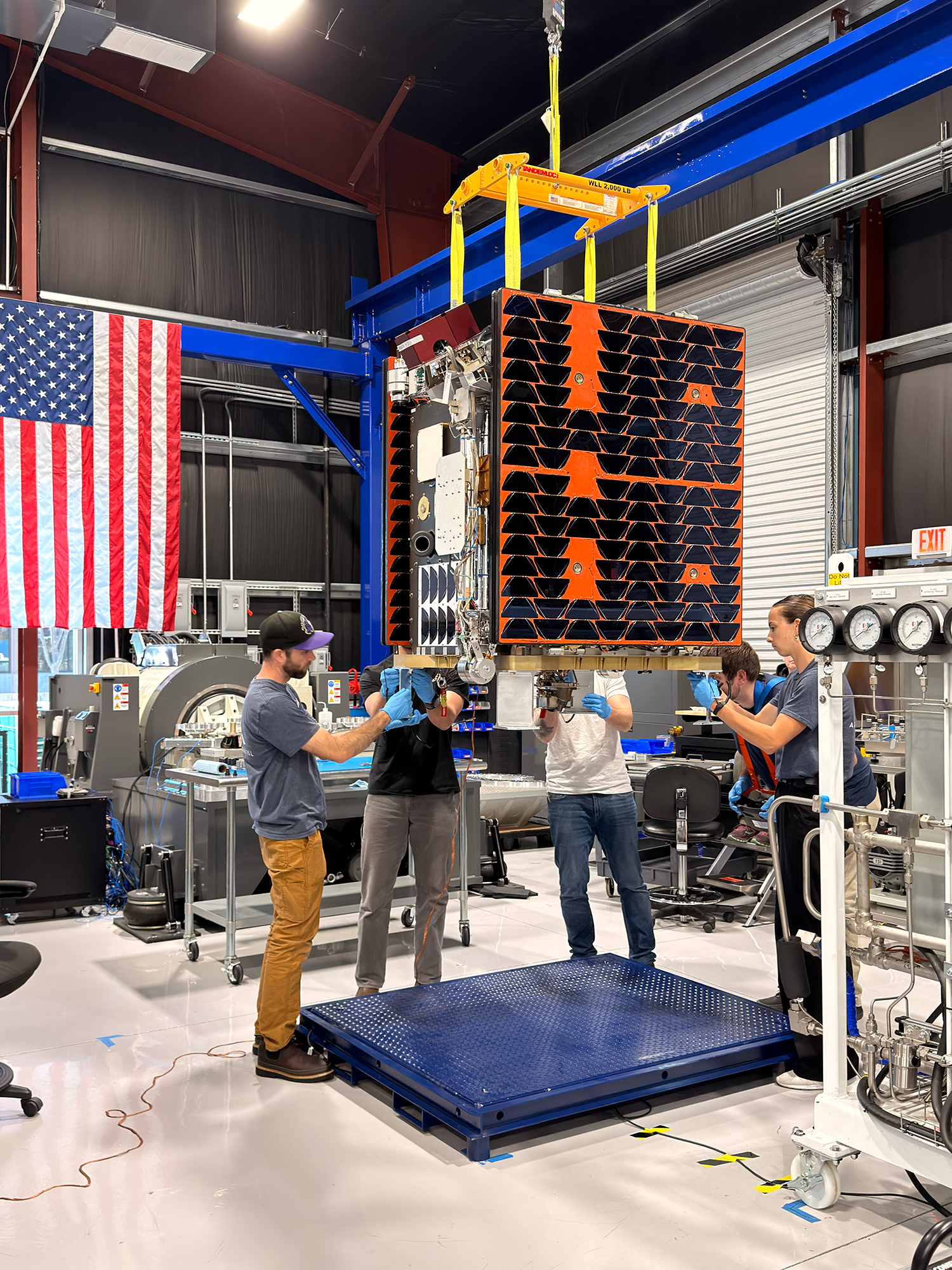
Four individuals stand in a large room with an American flag and equipment in the background. Above them, the SSPICY spacecraft is held by a ceiling mount.
Technicians prepare the Otter spacecraft for NASA’s SSPICY mission at Starfish Space facilities in Seattle. The spacecraft, which is about the size of a washing machine, will autonomously navigate to inoperable space objects of U.S. origin to inspect them, testing technologies to one day make in-space repair possible.

During the SSPICY mission, the Otter spacecraft won’t touch or dock with any satellites, but will test the technologies needed to one day enable missions to service or repair objects in orbit, or to safely remove them by pulling them into Earth’s atmosphere for disposal.

Space objects like rocket bodies and satellites that are experiencing issues or no longer in service can break apart or collide with one another, creating varying forms of orbital debris from large fragments to small particles. With thousands of satellites launched each year to provide communications, weather forecasting, navigation, and other services that people rely on daily, keeping the space near Earth safe for operations is increasingly critical.

Starfish Space developed and operates the Otter 24C spacecraft, which is performing the SSPICY mission. NASA’s Small Spacecraft and Distributed Systems program within the agency’s Research and Technology Mission Directorate funds and manages the technology demonstration.

NASA’s Small Business Innovation Research / Small Business Technology Transfer program funded awards to Starfish Space to support early development of the spacecraft’s key technologies and capabilities.  

NASA Opens 2027 Human Lander Challenge for Lunar Communications

3 min read

Preparations for Next Moonwalk Simulations Underway (and Underwater)

Banner image for 2027 Human Lander Challenge.
NASA

NASA’s 2027 Human Lander Challenge is seeking ideas from college and university students to help address one of the most critical needs for sustained lunar exploration: reliable communications.

As NASA prepares for long-term human presence on the Moon through the Artemis and Moon Base programs, communications systems will be just as important as spacecraft and rockets. A resilient communications system will connect astronauts, rovers, habitats, landers, mission support teams on Earth, and more. Reliable communications are essential for ensuring safety, coordinating complex operations, and enabling timely decision-making in the harsh and remote lunar environment.

“Reliable communications will be at the heart of our ability to explore and operate on the Moon,” said Jeremy Del Greco, Human Landing System program communications integration lead at NASA’s Marshall Space Flight Center in Huntsville, Alabama. “As Artemis and Moon Base missions expand our presence beyond Earth, we will need dependable connections across the lunar surface and beyond. The 2027 Human Lander Challenge gives students the opportunity to help shape the communications capabilities of tomorrow and support future lunar exploration.”

The 2027 competition invites United States-based collegiate teams and their faculty advisers to develop innovative, systems-level solutions to better understand, establish, and optimize lunar communications for landers and surface operations that can be implemented within three to five years.

Teams should submit a non-binding notice of intent by Thursday, Oct. 15, if they would like to participate. Proposal packages, including a five to seven-page proposal and a two-minute video, are due March 4, 2027.

While teams may propose solutions outside of the focus areas, NASA has identified three main categories to advance future lunar communications capabilities:

  • Hardware:
    • Space-rated wireless networks and electronics
    • Antenna signal propagation, modeling, and environmental mitigation
  • Software:
    • Data efficiency and link optimization
    • Network management and scheduling
  • Architecture
    • Surface communications system architecture
    • Orbital communications system architecture

Based on proposal package evaluations in phase 1, up to 12 finalist teams will be selected to receive $9,000 and advance to phase 2 of the competition, which includes a final design review in Huntsville, Alabama, home of NASA’s Marshall Space Flight Center, June 21–24, 2027. The top three teams from phase 2 will share a total prize of $18,000.

The Human Lander Challenge is administered by the National Institute of Aerospace on behalf of the agency and supports NASA’s efforts to foster innovative solutions to a variety of areas for long-duration human spaceflight plans at the Moon. The Human Lander Challenge is sponsored by the agency’s Human Spaceflight Mission Directorate’s Human Landing System Program Office.

Through the Artemis program, NASA will send astronauts to explore the Moon for scientific discovery, economic benefits, and to build the foundation for the first crewed missions to Mars – for the benefit of all.

For more information on NASA’s Human Lander Challenge and how to participate, visit:

https://hulc.nianet.org/

NASA Opens Applications for Second Season of ORBIT Student Challenge

2 Min Read

NASA Opens Applications for Second Season of ORBIT Student Challenge

Following a successful inaugural year of ingenuity and career building, NASA ORBIT (Opportunities in Research, Business, Innovation, and Technology) has officially returned for a second season to bring university and college student innovation to the forefront of Earth technology development and deep-space exploration.

Registration for the 2026–2027 challenge is open through Monday, Nov. 16, 2026, through the NASA STEM Gateway.

Expanded for its second season with up to $500,000 in total prize funding, NASA’s ORBIT invites student teams to explore their boldest ideas and invent their brightest solutions. Through the competition, students must conduct targeted research, conceptualize early models, and perform feasibility analyses to refine their proposals. Top-performing teams earn a spot at the in-person Pitch Showcase to present their solutions to a panel of expert judges, who select award recipients based on their presentations and interactive Q&A sessions.

ORBIT has two challenge tracks for teams to choose from. Participants in the ORBIT Earth track must select a NASA-owned patent and develop novel commercial or nonprofit applications addressing critical terrestrial problems. Whether reimagining drones for reduced noise pollution or designing improved medical technology for better patient care, students must demonstrate clear pathways to public benefit.

The ORBIT Space focuses on next-generation space exploration technology designed to support NASA’s Artemis program and future initiatives to establish a sustainable human presence on the Moon, Mars, and beyond. Teams competing in this track develop viable concepts for power, communications, navigation, living solutions, astronaut health and well-being, and more.

Projects that successfully unite the goals of both the Earth and Space tracks can also qualify for a special Integration Bonus, but this season also introduces two new specialty recognitions: the Faculty Advisors’ Choice Award, celebrating professionalism and cross-team communications, and the Next Steps Award, recognizing teams with the strongest roadmaps to continuing their project development after the conclusion of the challenge.

Together with core prizes, ORBIT celebrates student excellence and drives key technical solutions while building a pipeline of interdisciplinary talent. The challenge provides students with immersive experience in NASA’s core missions, direct access to agency mentors, and industry-ready skills that bridge academia and aerospace careers.

For complete competition details, eligibility requirements, and official rules, visit: https://nasaorbit.org/

Registration is open until Nov.16, 2026, through the NASA STEM Gateway.

NASA Armstrong Celebrates 80 Years of Flight Innovation

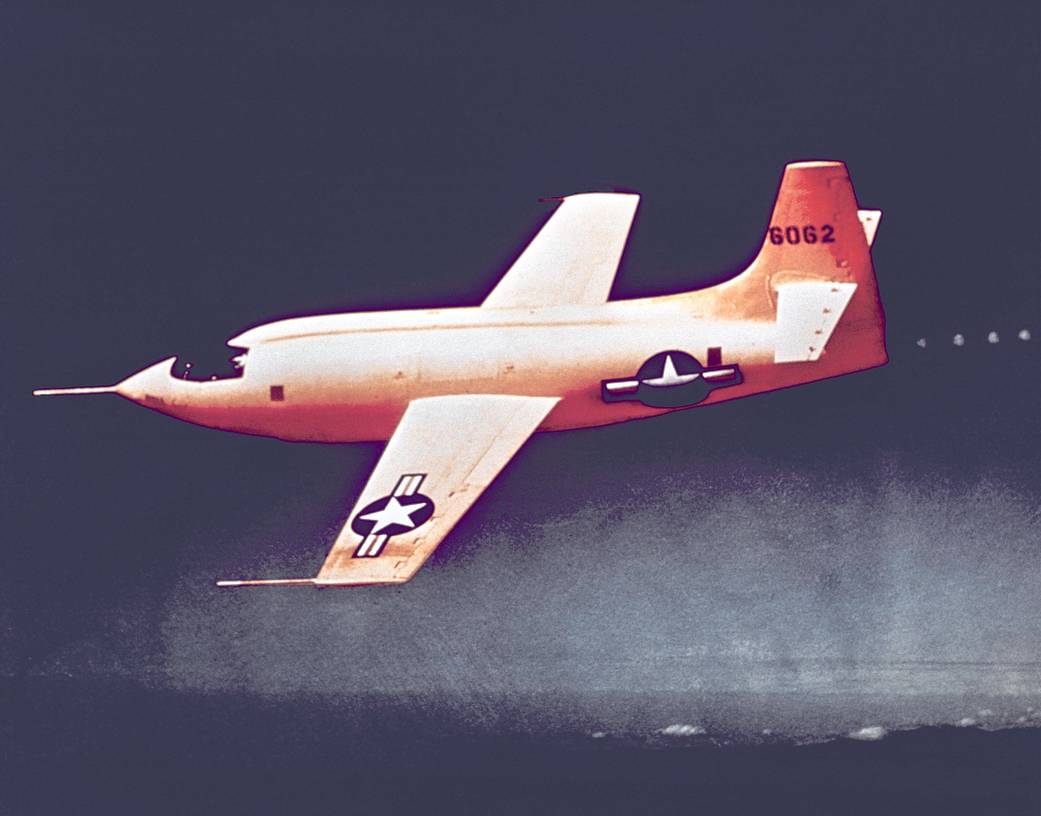
On Sept. 30, 1946, five National Advisory Committee of Aeronautics (NACA) engineers arrived at Muroc Army Airfield in California’s high desert to achieve supersonic flight for the first time. In less than two years, NACA flew the X-1 aircraft faster than the speed of sound, marking an important milestone in aviation history.

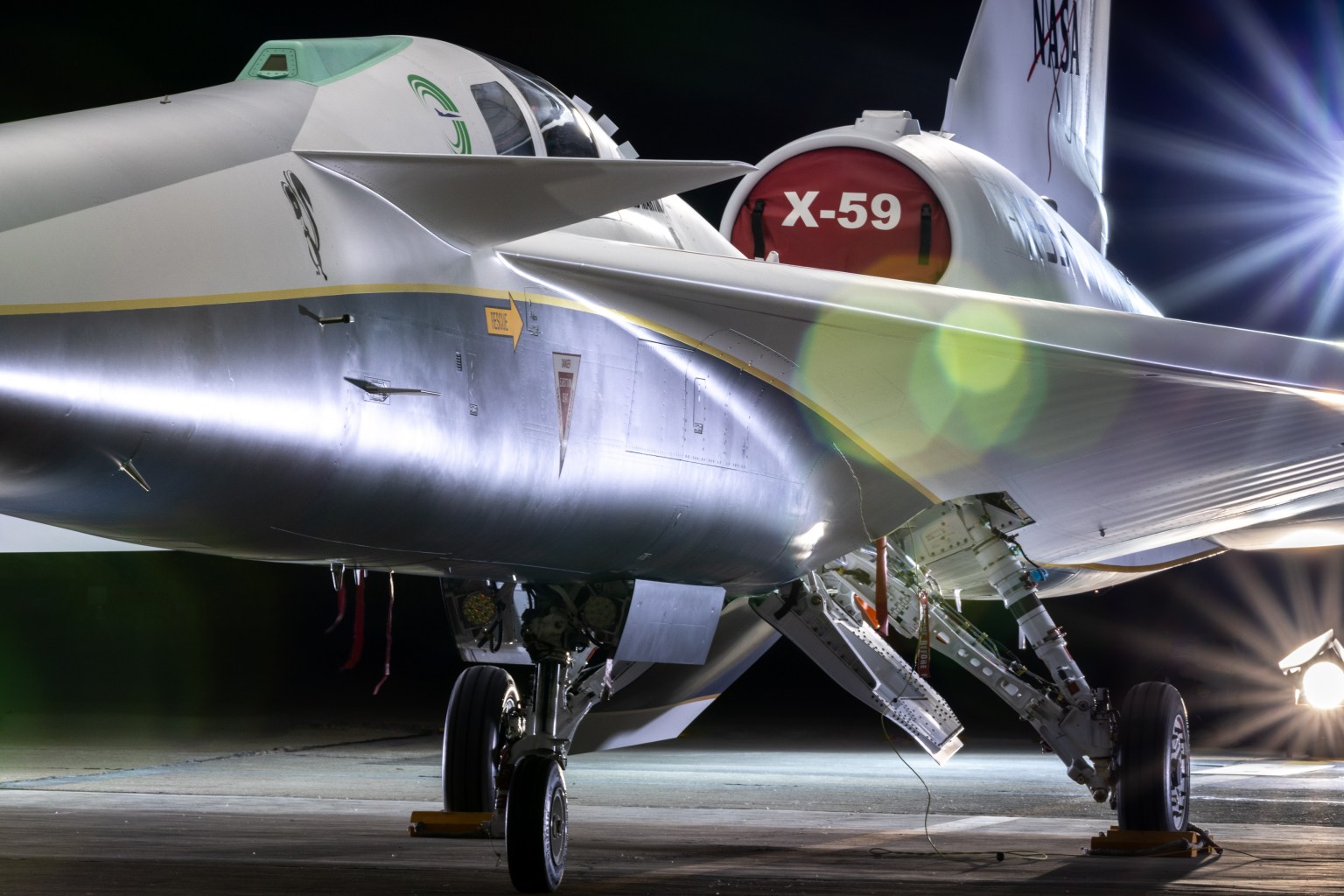
Fast forward 80 years, and that former NACA outpost is now NASA’s Armstrong Flight Research Center in Edwards, California, flying the X-59 supersonic X-plane in the same skies to demonstrate that supersonic flight doesn’t have to come with a boom.

Over Armstrong’s 80-year history, the center has supported milestone missions ranging from space shuttle landings to SR-71 flights, shaping the evolution of science, aeronautics, and space research.

This Southern California NASA center is poised to lead the next era of aeronautics and human spaceflight, advancing technologies that will define the future of flight.

Fast facts

  • NASA Administrator Jared Isaacman recently named Armstrong as the agency’s Center of Excellence for Flight Test and Aircraft Operations, recognizing the center’s unmatched rigor in executing unique missions only NASA can fly.
  • To support NASA’s Artemis missions and return to the Moon, Armstrong uses research aircraft such as a 737 for astronaut suit testing, the G-III for Artemis II heat-shield data collection, and an F/A-18 aircraft that tested the autopilot for the SLS (Space Launch System) rocket.
  • NASA’s aeronautics centerpiece, the X-59, is undergoing rigorous testing and a series of flights at Armstrong to prepare for upcoming quiet supersonic demonstrations over U.S. communities.
  • NASA Armstrong has transformed commercial and military aviation — from early supersonic flight research to digital fly-by-wire — and continues working with other government agencies, industry, and academia to make flying safer, more autonomous, and more efficient.
  • The center plays a vital role in global science by flying aircraft like the ER-2, C-20A, and Gulfstream G-III/IV/V to collect critical data on wildfires, glacier melt, pollution, minerals, and more.

Behind these achievements are the engineers, pilots, technicians, and mission support teams who continue to push the boundaries of what’s possible.

For more about NASA Armstrong, visit:

https://www.nasa.gov/armstrong

-end-

Dede Dinius / Teresa Whiting
Armstrong Flight Research Center, Edwards, California
661-276-3449
darin.l.dinius@nasa.gov / teresa.whiting@nasa.gov

💾

Red, White, and Boom, the U.S. Air Force Test Center’s celebration of America’s 250th anniversary and NASA Armstrong’s commemoration of its 80th year, was Fr...

NASA Tests Dual Mode Propulsion CubeSat Ahead of Launch

Spacecraft propulsion traditionally relies on volatile fuels and separate, bulky systems for different types of maneuvering in space. NASA is working to change that paradigm. Engineers at NASA’s Marshall Space Flight Center in Huntsville, Alabama, recently completed a rigorous series of environmental and physical tests on a new small satellite designed to make spaceflight safer and more efficient.

The ASCENT (Advanced Spacecraft Energetic Non-Toxic) Propulsion Dual Mode mission is a flight demonstration of a spacecraft about the size of a large shoebox. The mission will test a single, integrated propulsion system that uses a common fuel tank to feed two different types of engines.

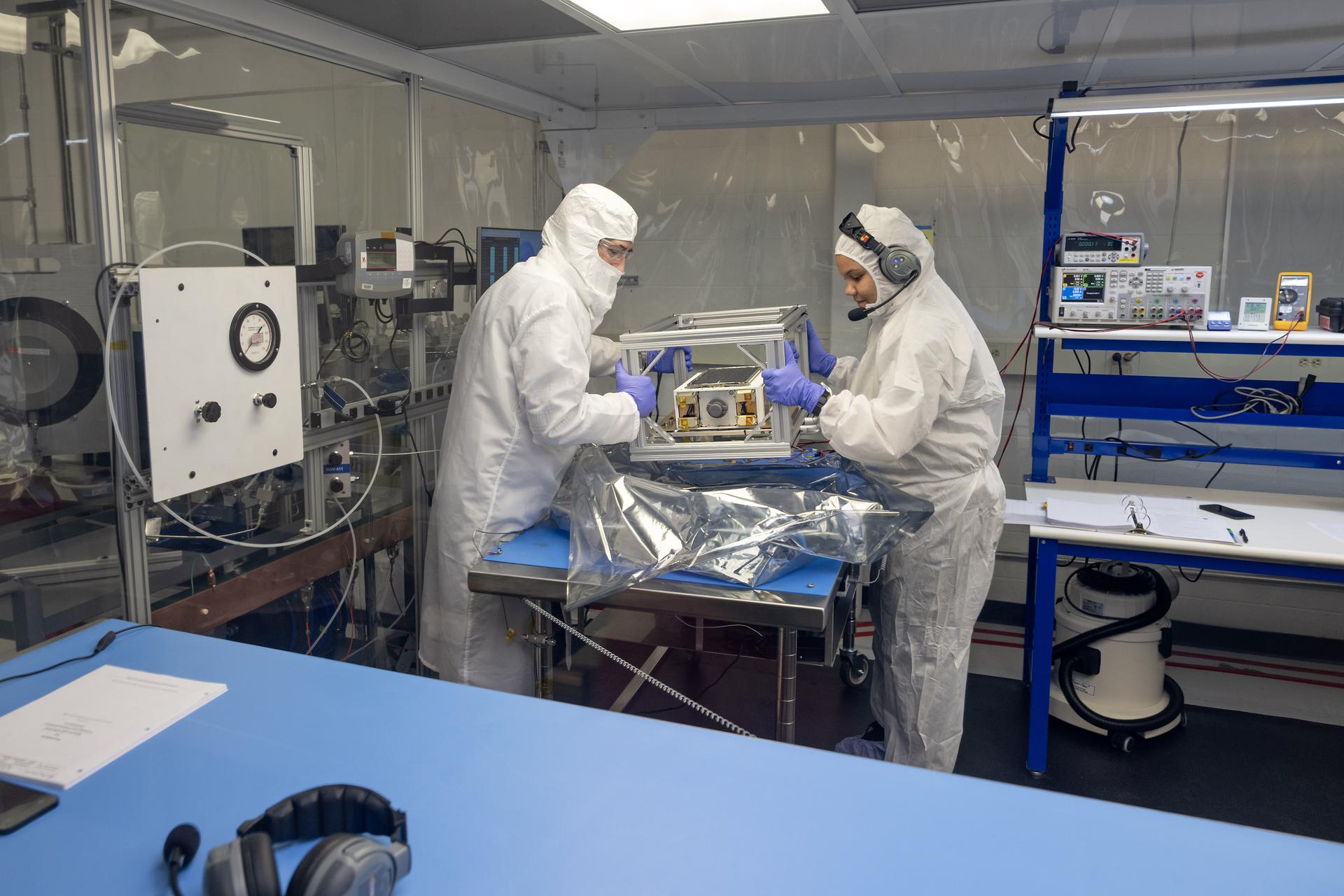
An Album of photos showing NASA engineers and technicians in white protective clean room suits working on a small, rectangular spacecraft module. They are shown inspecting the hardware on a laboratory workbench, wrapping it in silver foil, and loading it into a large, metallic vacuum chamber at NASA's Marshall Space Flight Center
Dr. Nehemiah Williams, the demonstration’s project manager at NASA, prepares to start testing the mission’s flight hardware in a clean room at NASA’s Marshall Space Flight Center in Huntsville, Alabama. The mission will demonstrate a single, non-toxic propulsion system that combines both high-thrust and low-thrust capabilities into a common tank.
NASA/Charles Beason

Typically, spacecraft carry two separate propulsion systems to navigate: a high-thrust chemical system for rapid movements like entering orbit, and a low-thrust electric system for highly efficient, slow maneuvers like maintaining a position. This requires multiple fuel tanks and heavy plumbing, which eats up valuable space and weight.

The spacecraft being developed uses a single non-toxic propellant called ASCENT. By feeding both a high-thrust combustion engine and low-thrust electrospray thrusters from one central tank, the spacecraft saves critical mass and volume. For future missions, this means more room for scientific instruments and the ability to launch on smaller, less expensive rockets.

Bringing this concept to flight requires a nationwide collaborative effort. While NASA Marshall manages the mission, the spacecraft relies on electrospray thrusters developed by the Massachusetts Institute of Technology, a chemical propulsion module built by Plasma Processes, and a spacecraft bus integrated by the Georgia Institute of Technology.

“There are a lot of odds and ends, and a lot of small challenges and some big ones,” said Nehemiah Williams, the demonstration’s project manager at NASA Marshall. “But ensuring the functionality of the propulsion system across all these different teams is what makes the mission successful.”

Before a spacecraft can safely operate in the harsh environment of low Earth orbit, it must pass a battery of tests on the ground. Over the past few months, the engineering team at Marshall has put the flight hardware through its paces inside the center’s Small Spacecraft Servicing and Integration Lab.

To verify the integrity of the unified propulsion system, the team conducted extensive leak testing. Engineers performed a pressurized helium leak test of the spacecraft inside a vacuum chamber to ensure the integrity of the spacecraft’s seals, successfully proving those seals were working as intended. Because the system shares a single tank of ASCENT propellant to feed two different thruster types, ensuring that the fuel lines and valves are perfectly sealed is vital for mission safety and success.

An Album of photos showing NASA engineers and technicians in white protective clean room suits working on a small, rectangular (CubeSat) spacecraft module. They are shown inspecting the hardware on a laboratory workbench, wrapping it in silver foil, and loading it into a large, metallic vacuum chamber at NASA's Marshall Space Flight Center
Propulsion subject matter expert Chris Burnside left, and propulsion lead Ebony Bland, right, prepare the mission’s flight hardware for testing inside a clean room at NASA’s Marshall Space Flight Center in Huntsville, Alabama. The 6-U CubeSat recently underwent rigorous spin, thermal vacuum, and leak tests to ensure its innovative, non-toxic propulsion system is ready for the extreme environment of space.
NASA/Charles Beason

The team also subjected the spacecraft to thermal vacuum testing. Space is an unforgiving environment characterized by a total lack of air and extreme temperature swings. By placing the spacecraft inside a specialized vacuum chamber that mimics these harsh conditions, engineers can ensure that the electronics, thrusters, and mechanical systems will operate normally once in orbit.

Additionally, the spacecraft underwent a spin test. Just like a tire on a car, a spacecraft needs to be perfectly balanced. The spin test measures the spacecraft’s mass properties and center of gravity. This validates the CubeSat’s ability to stably fly and maintain the correct attitude, allowing its antennas to communicate with Earth and its solar panels to accurately catch the Sun’s rays.

With the environmental and physical testing now complete, the mission is entering its final stages of preparation. The team will complete the final system checkouts, integrate the spacecraft’s solar arrays, and ship the hardware to its launch destination.

The ASCENT Propulsion Dual Mode mission is manifested to launch no earlier than October 1 as a payload aboard a SpaceX Falcon 9 rocket from Vandenberg Space Force Base in California.

Once deployed into an orbit about 325 miles above Earth, the spacecraft will begin a nine-month mission. After an initial checkout period, the operations team will execute short chemical and electric maneuvers. If successful, the spacecraft will spend several months performing multiple orbit-raising and lowering maneuvers, alternating between its high-thrust and low-thrust engines to prove the dual-mode concept works in space.

The ASCENT Propulsion Dual Mode mission is managed and funded by NASA’s Small Spacecraft & Distributed Systems (SSDS) within the agency’s Research and Technology Mission Directorate at NASA Headquarters in Washington. SSDS is based at NASA’s Ames Research Center in California’s Silicon Valley.

About the Author

Joel Wallace

Public Affairs Officer

Share

Details

Last Updated
Sep 25, 2026
Editor
Lee Mohon
Contact
Keep Exploring

Discover More Topics From NASA

❌