Space Force doesn’t know how many personnel it needs, watchdog finds

© Getty Images/Neal McNeil

© Getty Images/Neal McNeil

© Getty Images/pcess609

© Federal News Network
In the early years of the United States, when the nascent US Navy was still getting its sea legs, several presidents used privateers to capture or destroy enemy warships when armed naval vessels were unable to do so.
President John Adams was one of the most vigorous proponents of commissioning private vessels for national ends. His administration issued letters of marque and reprisal during the so-called "Quasi-War" with France in the final years of the 18th century. These letters created the legal distinction between privateering and piracy.
One of the letters signed by Adams, dated November 1799, authorized the use of a merchant ship to "subdue, seize, and take any armed French vessel" found near US coastal waters of "elsewhere on the high seas." France also routinely used privateers against US shipping at the time.


© MPI/Getty Images

Jean Paoli has spent his career making documents readable by machines — first as a co-creator of XML, then helping build the file formats behind Microsoft Office. Now his Kirkland, Wash.-based startup, Docugami, is open-sourcing the technology at the heart of its business, betting it can become a standard way to turn documents into data that people and AI agents can trust.
The company is releasing its technology, called DGML (short for Document Graph Markup Language), under Apache 2.0, a widely used open-source license, so other developers and companies can adopt it.
The idea is to turn it into a shared standard that no single company owns, much as XML became a common foundation across the tech industry.
The move reflects a shift in where the value is created in AI. Docugami until now has made its money selling software that turns unstructured documents into usable data. It’s betting now that there’s more value in proving that data is trustworthy instead.
How it works: Docugami is teaming up with Inveniam, a Detroit company whose software helps big investors keep tabs on the mountains of paperwork behind real estate and other hard-to-value assets. Inveniam will record a kind of digital fingerprint of each piece of DGML data on NVNM Chain, its blockchain built with Mantra, a crypto firm that Inveniam is acquiring.
That means, for example, that a single fact buried in a 200-page lease — such as the rental rate, a renewal option, or a default clause — can be verified on its own, without exposing the whole document. An investor, auditor, or AI agent can trace it to the page it came from.
To work with documents, AI systems usually convert them into a simpler format first. DGML enters a growing field of contenders in that regard, competing with the popular Markdown format and DocLang, a new open standard for AI-ready documents backed by IBM, Nvidia and Red Hat.
The business model: This is a big move for a company of Docugami’s size, taking the 30-person startup in a new direction. Paoli is handing the industry the technology his team spent years building, and pinning the company’s future on a larger idea.
The plan is to make money not from the format itself but from the value of the trusted data. Once a company converts its leases or loans into DGML and anchors the key numbers on the blockchain, investors, lenders and auditors can pay to draw on that verified data.
Docugami will share in the revenue through its partnership with Inveniam. The company also stands to collect a small fee each time a piece of data is recorded on the chain.
The company is giving away the DGML format and a working version of the software, but not everything. Paoli said the company is keeping some of its own technology private, including AI models it has fine-tuned to read documents, and could sell those or other tools to enterprises.
“The business model of everybody is changing. And if you know any company where it’s not true, you need to tell me, because I haven’t met them yet,” Paoli said in an interview.
Docugami has raised about $13 million to date, including a $10 million seed round in 2020 that drew the first investment in Grammarly’s history.
The partnership: Paoli met Patrick O’Meara, Inveniam’s CEO, a few months ago, through a former Microsoft colleague who had become one of O’Meara’s advisers. They quickly realized they had been working toward the same idea from different directions.
Inveniam, founded in 2017, helps big investors keep track of assets that are hard to value, like office towers, private loans and infrastructure. It monitors the documents behind those assets and flags changes as they happen, and its clients include some of the world’s largest sovereign wealth funds, according to O’Meara.
What it lacked was a consistent way to break those documents into verifiable pieces. That is what Docugami provides.
“We’re not putting the data itself on-chain, just a fingerprint of the document. Change one bit, one byte, one pixel, and the hash won’t match,” O’Meara said.
The blockchain comes from Mantra, a crypto company run by John Patrick Mullin. Inveniam invested $20 million in Mantra last year and has since agreed to acquire it outright. Mantra’s OM token collapsed in April 2025, erasing several billion dollars in value.
Paoli said the project uses the underlying blockchain, not the token.
“Crypto as an industry has gone through a lot of changes in the last 18 to 24 months, and it’s growing up in a lot of ways. This is a real use case with fundamental value, not just pure speculation,” Mantra’s Mullin said in an interview.
The result is a division of labor: Docugami turns documents into data, Inveniam verifies it and brings the customers, and Mantra provides the chain where the proof is recorded.
The DGML specification, sample documents and reference code are at dgml.io and on GitHub.
Editor’s note: This story was updated after publication to correct the name of a competing document format, DocLang, and to note that Inveniam’s blockchain is called NVNM Chain.
Read more of this story at Slashdot.
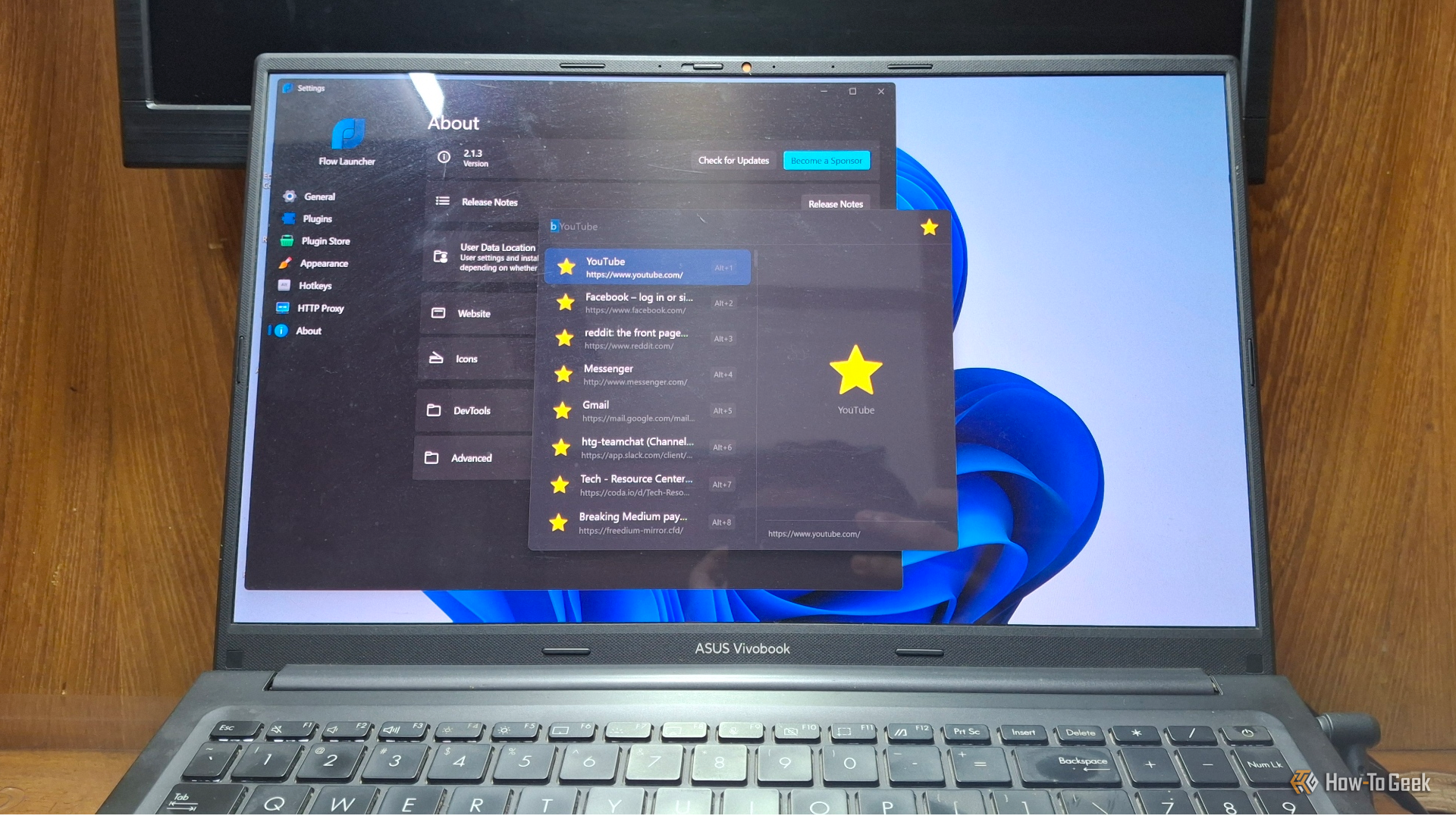
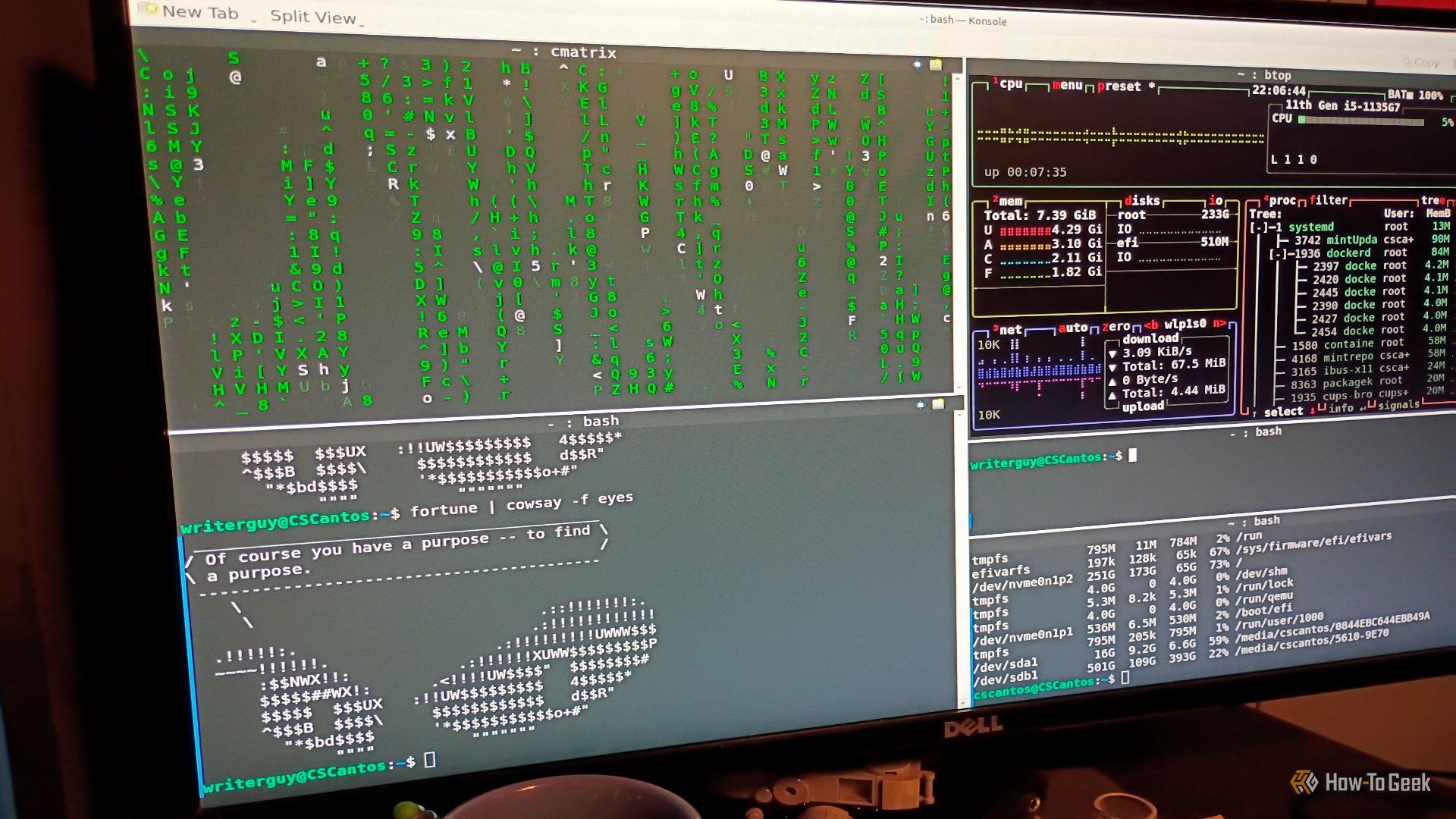
The Pentagon’s Space Systems Command awarded Rocket Lab USA a $266 million contract for suborbital launch services, according to a Department of War contract announcement, covering 12 confirmed launches with an option for six more, all to be conducted from the Pacific Spaceport Complex on Kodiak Island, Alaska, through the end of 2028. The contract […] Did you know there are different Linux terminals, some with unique and special features that can genuinely improve your day-to-day experience? For the average user, the choice doesn't matter much, but if you're planning to get serious about the terminal—using terminal apps, Vim, or Emacs—the terminal you choose becomes almost as important as the Linux distribution you run. With that in mind, here's why I settled on my current terminal, along with how the other popular options compare to my daily driver.


At least in theory, video games are more resistant to becoming lost media thanks to their digital nature — they’re easy to copy and emulators have saved many titles that are otherwise locked in corporate vaults. But emulators give us something beyond simple preservation: they can also be used to enhance games well beyond the capabilities of the original systems while still preserving the souls of the games, as this NES emulator manages to do.
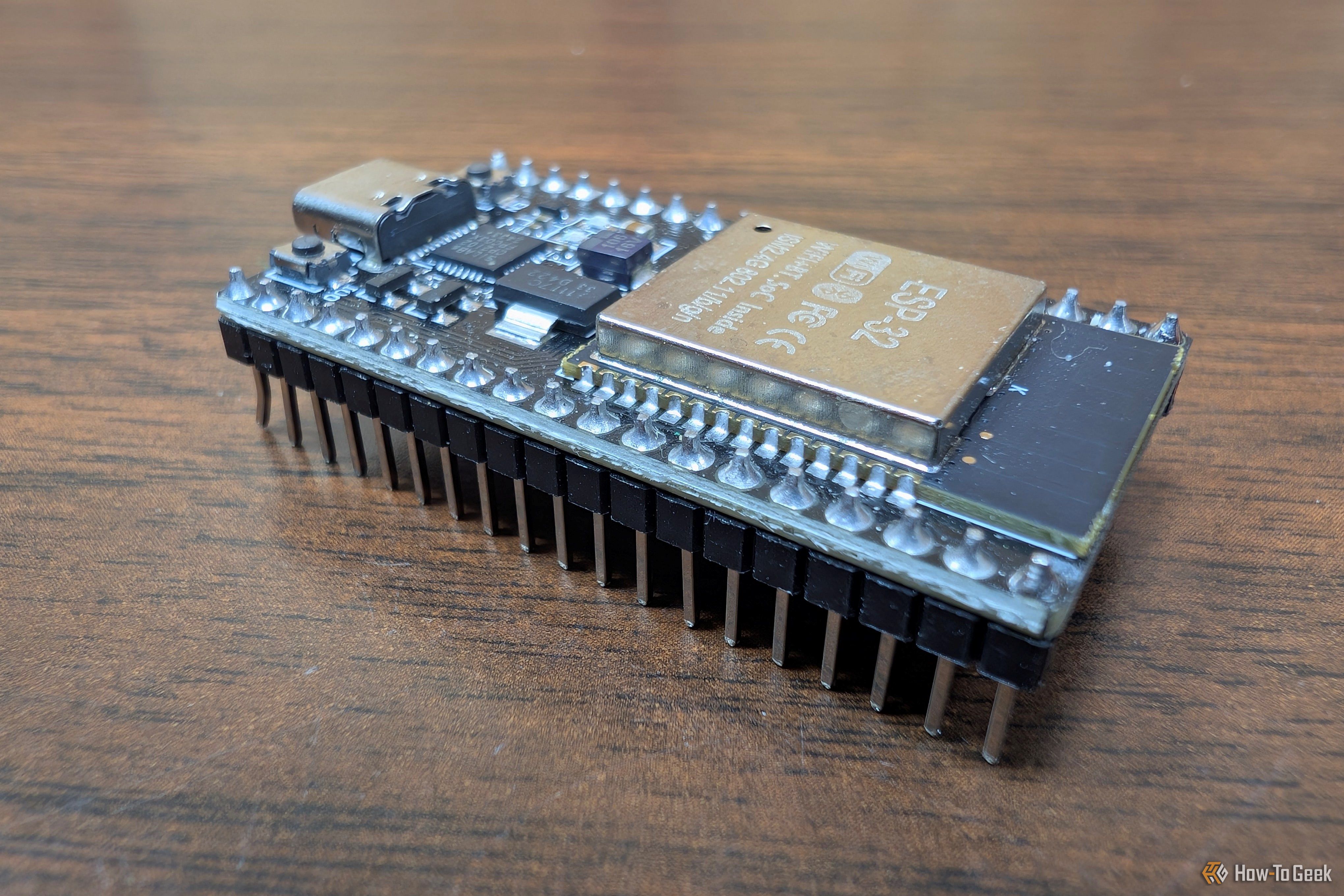
The emulator is called Anemoia-ESP32, and as its name suggests is a re-write of the Anemoia emulator specifically built for the ESP32. By modern standards these little chips don’t pack much of a punch, but compared to original NES hardware they’re more than up to the task of gaming. This project aims to recreate the Nintendo Entertainment System experience as faithfully as possible, hitting 60 FPS in most instances, as well as maintaining full audio emulation. Running on an ESP32 enables some truly small handheld options that would be difficult to achieve with more traditional platforms for emulation. There are some PCBs available here as well, but aren’t required to explore this project with.
As far as extra features compared to original NES hardware, the emulator does support save states and has a number of other settings improvements. Installation is as easy as flashing any other firmware image onto an ESP32, which these days can even be done from the browser. No word on whether or not it will eventually support emulating dual Picture Processing Units, but we can hope.
A Ukrainian drone maker that helped push the Russian Navy out of much of the Black Sea is bringing its combat-tested kamikaze boats to American shipyards. UFORCE, the London-registered parent of Ukraine’s MAGURA unmanned surface vessel program, signed a memorandum of understanding this week with RECONCRAFT, the Alaska-founded builder of Special Operations combatant craft, to […] 
© Federal News Network

© Federal News Network
Google Photos caps your free storage at 15GB, and that isn't just your email—it is pooled between Drive, Gmail, Photos, and every other Google service. Given how many things it gets used for, that storage space disappears pretty quickly. If you need more storage, or if you use iCloud, you're basically forced to opt into a monthly subscription.


© Getty Images/iStockphoto/designer491
Muscle memory is hard to shake. If you've spent years in Photoshop, you're not going to have a good time switching to GIMP. It took me three tries to switch over, and even then, tools like PhotoGIMP were incredibly helpful. You're unlearning years of shortcuts and what feels ingrained, which is hard to commit to for a tool you've never used before. If you're on the fence about switching to an alternative, then this tool is exactly what you need.

The European Commission has fined Alibaba €550 million under the Digital Services Act, the largest penalty issued under the law so far.
The post EU Hits Alibaba With Record $629 Million Fine Over AliExpress Counterfeit Goods appeared first on TechRepublic.
The European Commission has fined Alibaba €550 million under the Digital Services Act, the largest penalty issued under the law so far.
The post EU Hits Alibaba With Record $629 Million Fine Over AliExpress Counterfeit Goods appeared first on TechRepublic.
Welcome back, aspiring cyberwarriors!
Lately, we’ve covered several tools you can use with your laptop to track nearby devices and people. While they’re useful, their effectiveness depends on the strength of your Bluetooth adapter, and, of course, you need to have your laptop with you.
This time, we’re doing things differently. We want to show you a device that can automatically monitor nearby devices for extended periods, anywhere you choose to place it, and as often as you want. It doesn’t rely solely on Bluetooth, as it also uses Wi-Fi, which is far more likely to be enabled, increasing the chances of detecting someone in your area.
Paxcounter is an open-source firmware project that takes a cheap little ESP32 development board and turns it into a sensor that can count people. Almost every smartphone in the world is constantly sending out small Wi-Fi signals, called probe requests, and Bluetooth signals too, even when the phone is not connected to anything. Paxcounter listens for these signals in the air. It counts how many different devices it hears during each scan, and from that, it can tell you a real time estimate of how many people are nearby.
The project started out as a simple way to measure how many passengers or pedestrians pass through a certain spot. But over time, it grew into something much bigger. Now it works as a general purpose IoT platform, built on hardware that usually costs somewhere between $10 and $30. Besides its main job of counting Wi-Fi and Bluetooth devices, a Paxcounter can also read environmental sensors, track its GPS position, keep accurate time, and send all of that data out through LoRaWAN, MQTT, a local serial connection, or straight onto an SD card.
The way Paxcounter counts people is simple, but it was clearly built with privacy in mind from the very start. Every scan cycle, which lasts 60 seconds by default, the device switches its Wi-Fi and Bluetooth radios into scanning mode and listens for probe requests and advertisement packets coming from nearby devices. Each of these packets carries a MAC address. Paxcounter takes just the last two bytes of that address and turns them into a short, temporary ID. This ID is only used to check for duplicates during that one scan cycle. Once the cycle ends, the count of unique IDs gets sent out, and the whole list is wiped from memory. The firmware also does not try to fingerprint any device. It never tries to figure out a phone’s brand, its operating system, or who owns it. All it wants to know is whether that device has already been counted in the current window.

This scan and clear cycle just keeps repeating, either nonstop or on a schedule if deep sleep power saving is turned on. The results, which include the Wi-Fi count, the Bluetooth count, and sometimes live sensor readings too, get packed into a small payload and sent out through whatever channel the device is set up to use. One thing worth knowing is that Wi-Fi and Bluetooth scanning actually share the same 2.4 GHz radio hardware on the ESP32. So running both scans at the same time slightly lowers the accuracy of each one. Because of that, the project’s own advice is to split Wi-Fi only counting and Bluetooth only counting across two separate devices whenever the best possible accuracy is needed for both.
Paxcounter comes with a hardware abstraction layer and its own pin mapping files for dozens of ESP32 and ESP32-S3 boards. These come from well known manufacturers like LILYGO and TTGO, Heltec, Pycom, WeMos, M5Stack, and Adafruit, and there is also a generic template ready for boards that are not officially supported yet. LILYGO even sells a ready-made board called Paxcounter LoRa, built specifically to run this firmware.

Depending on which board you pick, your device can end up supporting a LoRaWAN radio for sending data over long distances while using very little power, an OLED status screen, or a single color, RGB, or larger LED matrix light to show status. It can also support a physical button for flipping through display pages or sending an alarm message, battery voltage monitoring, GPS positioning, a real time clock chip along with IF482 or DCF77 time telegram output, and even an SD card slot for logging data locally when there is no network around.
Because the whole system was designed to be truly portable, the documentation goes into real detail about power draw, which usually sits somewhere between 450 and 1000 milliwatts depending on how the device is set up. It also makes good use of the ESP32’s deep sleep mode, so a device can keep running for a long stretch of time on just one 18650 lithium ion battery cell. Members of the community have already shared several 3D printable enclosure designs on Thingiverse for the more popular boards.

Paxcounter is built using PlatformIO instead of the plain Arduino IDE. This choice lets it work smoothly with editors like Visual Studio Code, Atom, or Eclipse, and it gives the project reproducible, script driven builds. In fact, the repository runs an automated PlatformIO build check every single time the code changes, using GitHub Actions, and there is even a CodeFactor badge that keeps an eye on ongoing code quality.
The configuration is intentionally spread across a handful of different files instead of being crammed into just one. This keeps board specific settings, behavioral settings, and personal settings nicely separated from each other. The platformio.ini file is where you select which board’s hardware profile you want to compile against. The paxcounter.conf file handles behavioral settings, things like how long a scan cycle lasts, sleep timing, and payload options. The shared lmic_config.h file sets the LoRaWAN region and frequency plan, so it matches the rules where you live. The shared loraconf.h file holds the device’s LoRaWAN join credentials, and the project recommends using OTAA rather than ABP for this. And the shared ota.conf file stores the Wi-Fi credentials the device uses for over the air firmware updates.
You can upload firmware the traditional way, over USB, or once a device has joined a LoRaWAN network, you can push updates over the air instead. A remote command tells the board to connect to Wi-Fi, check a hosted repository called PAX.express for a newer build, and then download and flash it automatically. If anything goes wrong during that process, it will roll back to the previous version on its own. Devices can also be set up to open a small local web based bootstrap menu right when they power on, which lets you upload a firmware file manually, even from a phone in tethering mode, without needing PlatformIO installed on site.
Beyond just picking a board, Paxcounter gives you a long list of settings you can tune to fit your needs. It can log environmental data from sensors like the Bosch BMP180, BME280, BMP280, or BME680, read a Nova SDS011 particulate matter sensor to track dust in the air, and keep accurate time using either a DS3231 real time clock or a connected GPS module.

On boards that come with an OLED display, Paxcounter shows live status information you can cycle through with a short press of the button. This includes the current pax count, meaning the people count, a histogram of recent activity, GPS status, environmental sensor readings, and the time of day.

A long press of that same button sends an alarm message out over the network instead, which is a simple way to flag a problem from out in the field without needing any other kind of interface. Even on boards that do not have a display at all, a status LED still tells you what the device is doing through its blink pattern. You get a brief flash whenever a new Wi-Fi or Bluetooth device is spotted, a quick blink while the device is joining the LoRaWAN network, a short blink during data transmission, and a slow, long blink if there is a LoRaWAN stack error. Boards that have an RGB LED get a color coded version of these same signals.

Once a Paxcounter has counted the people nearby and packed everything into a message, that data has to go somewhere so you can actually see it. How that happens depends on which output the device is using, and the good news is you can turn on more than one at the same time. If you are using LoRaWAN, which is the most common setup, the device does not send the data straight to you. Instead, a nearby LoRaWAN gateway picks up the signal first and forwards it on to a network server, usually The Things Stack. There is a small decoder script included with the project, and its job is to take that raw message and turn it into numbers you can actually read, something like a pax count of 14. From there, The Things Stack can pass the data along to your own app or dashboard using MQTT or a webhook, or you can simply watch it come in live through the built in console.
If a board does not have LoRa hardware built in, it can just skip the gateway completely and send that same kind of data straight to an MQTT service over Wi-Fi instead. You can also connect the device to a computer using a USB cable and read the numbers directly from a serial connection. This is a simple way to test things out without needing to set up a network at all. If SD card logging is turned on, everything also gets saved locally as a CSV file, so you can pull the card out later and open it up in a spreadsheet. This comes in handy in places where there is no network coverage to rely on.
Because a single Paxcounter device is cheap to build and can be left running unattended for a long time, you will find it popping up in a pretty wide range of places. Retailers and shopping centers use it to measure foot traffic without needing to install cameras. Event organizers use it to watch how crowds move around a venue in real time. Pentesters can get a passive read on how many Wi-Fi and Bluetooth devices are active in a building, or to notice unexpected devices showing up where they shouldn’t, all without needing camera access or network credentials.
Since Paxcounter’s whole job involves listening to wireless traffic, its documentation is unusually upfront about the legal side of things. It points out that sniffing Wi-Fi and Bluetooth MAC addresses may be regulated or restricted depending on where you live, and it links to specific starting references for the US, the UK, the Netherlands and the EU, and Germany. It also makes clear that the legal responsibility for how a device is built and deployed falls on the person doing it, especially for public deployments where the results might get published somewhere. On the technical side of privacy, the project’s own design actually holds up pretty well against that legal backdrop. Identifiers are only ever built from the last two bytes of a scanned MAC address, they are kept in memory just for the length of one scan cycle, and then they are discarded completely. No MAC addresses or identifiers are ever sent out over the network, and the firmware does not do any extra tracking or fingerprinting of the devices it scans.
What really makes Paxcounter stand out is not any single feature on its own. It is the whole combination working together. One piece of open source firmware supports dozens of cheap boards, runs for a long time on a small battery, counts people without saving anything identifying about them, doubles as a general environmental sensor node, speaks LoRaWAN, MQTT, serial, and SD card all at once, and can be fully reconfigured from a distance once it is out in the field. The full source code, the complete board list, and all the documentation are available on GitHub.
If you enjoy experimenting with frequencies and trying new things, we recommend signing up for our SDR for Hackers training. With Master OTW, you’ll learn how to use your computer and inexpensive SDR hardware to explore and hack a wide range of radio signals.
The post SDR (Signals Intelligence) for Hackers: Tracking People with ESP32-Paxcounter first appeared on Hackers Arise.

Clarify, the Seattle-based AI startup that has raised more than $22 million to take on Salesforce and other CRM incumbents, has made its first acquisition: San Francisco-based Seam AI.
Seam’s technology monitors buying signals across the web — such as funding rounds, hiring, website activity, and executive job moves — and surfaces them to sales teams. Clarify plans to fold the technology into a new product called Clarify Signals, slated to launch later this year.
Clarify is led by co-founders Patrick Thompson (CEO) and Ondrej Hrebicek (CTO), who previously co-founded Iteratively, a Seattle data-analytics startup that was acquired in 2021 by Amplitude, the publicly traded digital-analytics company.
Rationale: Clarify says the deal is part of a shift beyond what it calls a “system of record” that tracks what already happened to a “system of awareness” that flags what’s about to happen.
Thompson said the Seam deal fills a gap in what Clarify’s own AI can pull from the open web, giving the CRM access to proprietary datasets that can’t be reached with a simple search.
“The value that Seam is providing is typically the information that’s not necessarily easy to get from the web,” Thompson explained in an interview. “It’s the harder stuff to find.”
Hrebicek said Clarify’s customers have been looking for a bigger and richer dataset — the ability to “look around the corners on who would be a good lead.”
Deal points: Financial terms weren’t disclosed. Clarify, which had raised a total of $22.5 million in its seed and Series A rounds from investors including U.S. Venture Partners, Gradient Ventures, and Madrona, said it brought in additional funding as part of the deal but did not disclose the amount.
As part of the acquisition, five Seam employees are joining Clarify, including Seam co-founder and CEO Nicholas Scavone. With the deal, Clarify is adding a San Francisco office alongside its Seattle headquarters. The company now has 30 people total.
Backstory: Scavone started Seam in 2020 after five years at Okta, where he saw teams accumulate many different sales and marketing systems, with customer data scattered across all of them.
Seam raised $7 million including angel funding and a seed round led by Bessemer Venture Partners in April 2024. It counts Zapier, GoFundMe, Drata, and Betterment among its customers. Existing customers are on hold while the technology is integrated into Clarify, but many have already indicated they plan to move over to the new platform.
Scavone said he had been weighing whether to raise a new round or find a home for the company when he and Thompson, who have known each other for years, began talking about a combination.
“We’re all going after the same big incumbents here,” he said, explaining that he ultimately decided Seam had a better chance of taking on the market’s dominant players by joining forces with Clarify than as a standalone company.
In a post announcing the deal, the Seam and Clarify founders said they “realized we weren’t building competing products—we were building different halves of the same future.”
Landscape: Clarify is entering a crowded field. Sales-intelligence platforms like Clay, ZoomInfo, and Apollo already sell third-party data to revenue teams, and 6sense and Demandbase lead the account-based marketing category Seam had been targeting.
Thompson said one edge for Clarify is that signals arrive inside the CRM sellers already use, not a separate dashboard.
The company was co-founded in early 2024 by Thompson, Hrebicek, and Austin Hay, a marketing-technology operator who served as co-CEO alongside Thompson. Hay departed in September 2025 and is now with Khosla Ventures, per his LinkedIn.
What’s next: Clarify plans to launch Signals later this year, Thompson said, noting that the company is considering raising additional funds in a Series B round early next year.
It seems as though $5.6 billion wasn't enough. That was the news from the US Space Force on Friday, when military officials announced they were tripling the maximum value of one of the service's National Security Space Launch contracts to $17 billion.
The expansion of the Space Force's National Security Space Launch (NSSL) Phase 3 contract comes as the Pentagon signals rising demand for military satellite launches. The NSSL program is set up to allow Space Systems Command, which oversees the Space Force's launch program, to select from a pool of launch providers for individual missions to deliver the military's satellites to orbit.
The NSSL program has two parts. Lane 1 covers the Space Force's more risk-tolerant missions, such as medium-lift launches with experimental payloads or rideshare missions carrying satellites for the Pentagon's surveillance or data relay constellations. Lane 2 includes higher-priority strategic missions, like the government's largest and most expensive spy satellites, or radiation-hardened communications satellites designed to survive a nuclear war.


© SpaceX