❌

Reading view

There are new articles available, click to refresh the page.

Google Debuting a Bank-Grade Crypto Custody Tool Built on Split Keys: Report

Bitcoin Magazine

Google Debuting a Bank-Grade Crypto Custody Tool Built on Split Keys: Report

Google is reportedly unveiling Google Multi-Party Compute, a crypto custody system that splits signing keys across separate systems, at its first digital assets symposium in New York today. The product is in private preview with several financial institutions. Alphabet has started using it to secure its own assets, according to CoinDesk reporting.

Google plans commercial availability in early 2027 and has not disclosed pricing.

The system applies multi-party computation to a signing key. The key is divided into fragments held by separate parties or machines, and a transaction requires a set number of fragments to sign.Β 

The full key is never assembled in one place. A bank could hold one share on its own hardware, another in Google Cloud, and a third with a rival cloud provider. Institutions can set thresholds such as two-of-three or five-of-seven. Before any signature, a policy engine running inside Google’s Confidential Space checks the transfer against limits, destination restrictions, and approval rules.Β 

Google says it has no access to key shares in unencrypted form, per CoinDesk.

Crypto’s security issues

The pitch rests on a persistent problem. Chainalysis attributed 43.8% of cryptocurrency stolen in 2024 to compromised private keys. DeFiLlama data shows roughly 40% of the $16.69 billion lost to hacks through June came from key compromises. In June, an attacker took seven keys from one developer’s computer during the Humanity Protocol breach and drained wallets across two networks.Β 

Such incidents show how concentrated signing authority creates a single point of failure. The industry has responded by recommending multi-vendor multisignature setups that spread control across hardware and software providers.

Google also frames the product against AI-enabled fraud. Chainalysis found that scams linked to AI tool vendors averaged $3.2 million per operation in 2025, compared with $719,000 for other scams. The report links the two figures but does not prove that AI caused the difference.Β 

Ethereum researcher Justin Drake has warned that AI could eventually find mathematical shortcuts that weaken wallet signatures. No AI system has shown that capability. Google’s MPC design targets stolen credentials and unauthorized transfers, not a break in the underlying cryptography.

Quantum computing presents a separate, longer-term risk. Google researchers estimated that a sufficiently powerful future machine could derive a bitcoin private key from an exposed public key in about nine minutes. Roughly 6.9 million bitcoin have exposed public keys. Google says its architecture can adopt post-quantum signatures later without forcing institutions to rebuild their systems, but it has set no timetable. Background on how quantum machines threaten bitcoin explains which addresses are most exposed.

Google enters a market led by Fireblocks, Fordefi, and BitGo. Google argued to CoinDesk that its banking relationships and security expertise give it an advantage. It also positions itself as a neutral supplier for banks that do not want to rely on competitors.Β 

Banks already use specialized platforms, such as BNP Paribas’s custody work with Metaco, and multi-institution vaults built with BitGo.

This post Google Debuting a Bank-Grade Crypto Custody Tool Built on Split Keys: Report first appeared on Bitcoin Magazine and is written by Micah Zimmerman.
Cryptocurrency: Security Analysis of Hardware Crypto Wallets

Welcome back, aspiring cyberwarriors!

October 2026 brought a clear demonstration that hardware wallets, while far safer than software alternatives, are not immune to sophisticated physical attacks.Β 

Beginning on 9 October, hundreds of users who had purchased Ledger devices through the Southeast Asian reseller CryptoBilis saw their funds drained across Bitcoin, Ethereum, TRON and other chains. On-chain researchers estimated losses between roughly $86 million and more than $100 million. Ledger confirmed that at least one affected device contained an unauthorized hardware implant and stated that every confirmed loss in the incident was linked to a device sold by CryptoBilis. The company has emphasized that its own infrastructure, firmware and direct sales channels were not compromised.

The Supply-Chain Attack

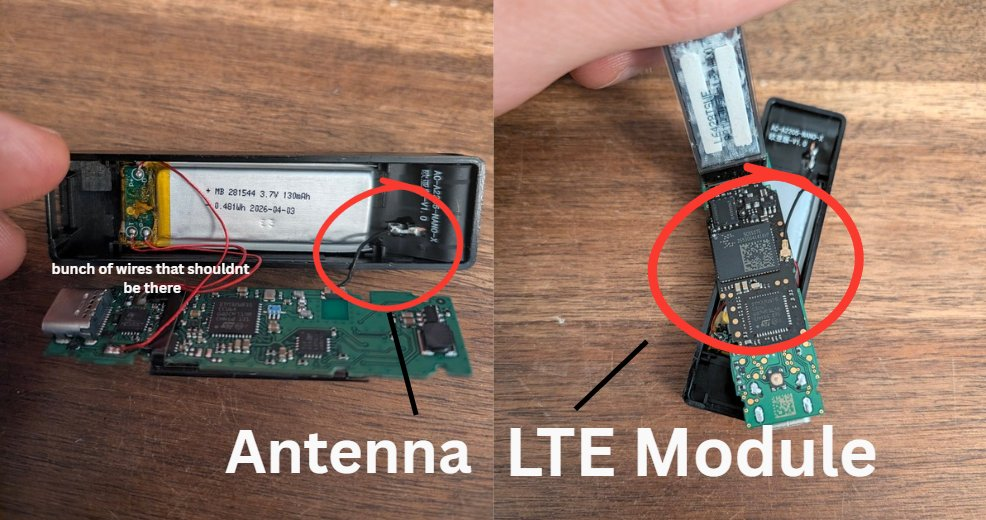
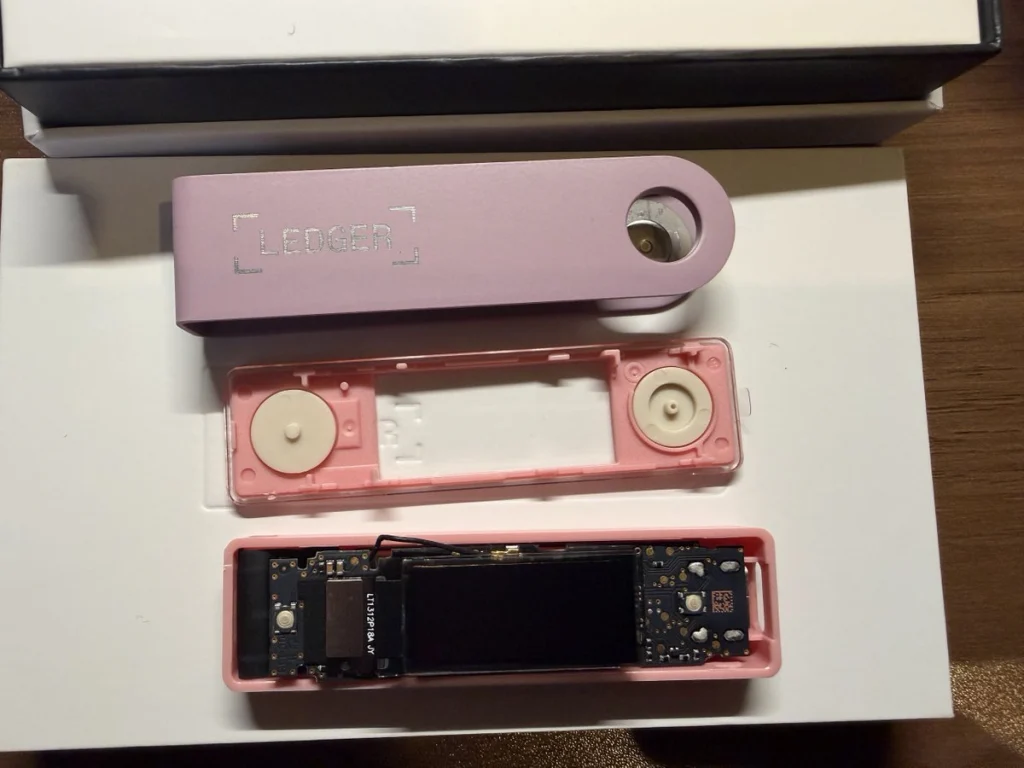
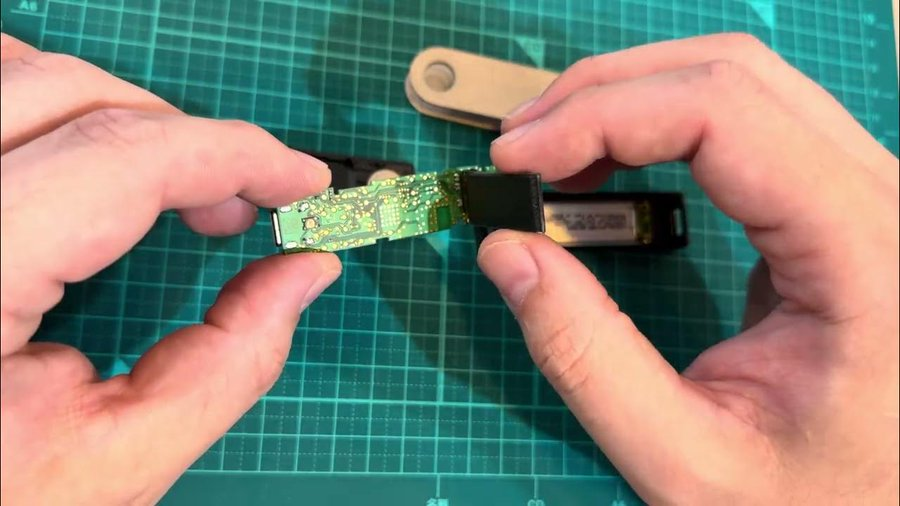
The attack was physical. Someone in the distribution chain opened genuine Ledger Nano X devices, installed a small circuit board and resealed them. The implant sits inside the enclosure under or behind the screen where foam padding normally rests, and taps the SPI bus that carries data from the Secure Element to the display. When the owner sets up the device and the screen shows the 24-word recovery phrase, the implant’s microcontroller recognizes those screens, reconstructs the words and sends them out over LTE using a provisioned eSIM and a small antenna. Because the original Secure Element remains untouched, the device continues to pass Ledger’s Genuine Check. Mark KarpelΓ¨s and Tibane Labs have documented multiple generations of the implant, progressing from early versions with visible wires and a smaller battery to later flex-circuit designs that are harder to notice and sometimes keep the original battery.

Source: Mark Karpelès

Mark Karpelès publicly posted a photo of a unit that arrived from Malaysia with flawless packaging. The extra hardware only became visible when he opened the case.  

Source: Mark Karpelès

Similar implants have been reported in devices obtained through other channels, including Japanese marketplaces and at least one European store, although Ledger has so far tied every confirmed fund loss specifically to CryptoBilis purchases.Β 

It was confirmed that the Ledger supply chain is compromised in Europe as well. Source: @0xJohannes_Β 

The company has asked the reseller to halt sales and has advised recent buyers not to initialize unused devices. Those who already completed setup are told to move their assets to a new signer purchased directly from Ledger and initialized with a fresh seed phrase.

How to Buy a Hardware Wallet Safely

The single most effective protection is to purchase directly from the manufacturer’s own online store.

Authorized resellers are listed on the manufacturer’s website, yet CryptoBilis was also a partner that introduced modified units into the channel. Marketplace listings of third-party shops carry a much higher risk of both counterfeits and implants.Β 

Once the package arrives, you should confirm that a new device requires you to generate a recovery phrase yourself on first use. Any recovery phrase that’s already written on a card or printed in documentation belongs to someone else and should never be used. The phrase must appear only on the device’s own screen and you must write it down yourself on paper or metal. Never type it into a computer or phone, don’t use websites or applications with it.Β 

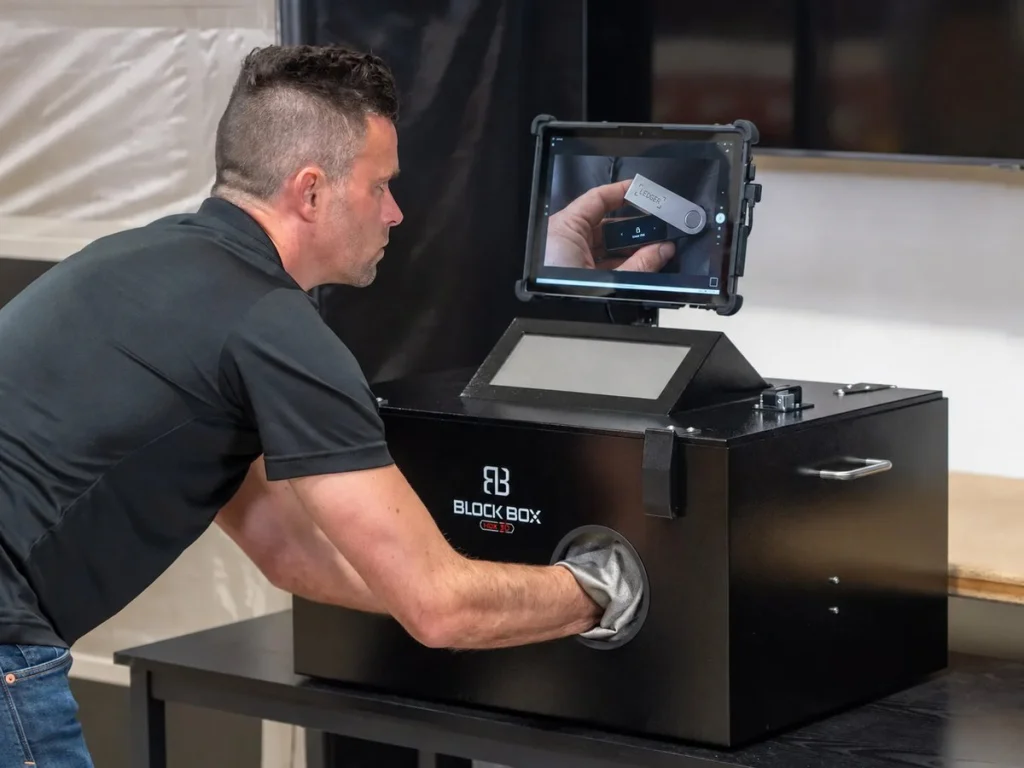
Below you can see a photo of the hardwallet owner signing a transaction inside the faraday cage to avoid any interference and possible theft.

Source: @oren_z0

Check Your WalletΒ Β Β 

The first question is the source of the device. Anyone who bought a Ledger from CryptoBilis or another untrusted reseller in recent months should treat the unit as unsafe.Β  Genuine Check is still worth running because it confirms that the Secure Element is original and the firmware is approved, yet it can’t detect added circuitry that merely listens to the screen.Β 

You can also visually inspect the case for extra wires or antennas that can reveal tampering, but modern implants are designed to be inconspicuous and reliable detection usually requires opening the device. After a wallet is set up, compare receiving addresses shown on the device screen against those displayed in the companion application and review transaction history on block explorers for unexpected outgoing transfers. The recovery phrase must be generated by the device under your direct observation and written down only by you.

Mark Karpelès also has a few videos on opening and closing Ledger wallets that you might find helpful.

What to Do If You Suspect Compromise

If a device was purchased from CryptoBilis or any other questionable source and has already been initialized, the existing recovery phrase should be treated as compromised. Move your assets to a new wallet whose seed was generated on a trusted device bought directly from the manufacturer. Never reuse the old seed for any purpose.

More Recommendations

A BIP-39 passphrase adds a meaningful layer of protection because it isn’t displayed during ordinary setup and must be known in addition to the seed. It’s also known as passphrase (the extra β€œ25th word”). It’s optional and you may choose it later. It is not generated or displayed by the device during ordinary setup. Adding it creates a hidden wallet, which means you have completely different keys and addresses.Β 

For larger holdings use a multisignature arrangement to reduce reliance on any single device. Always check the address where you send your money to, as it can often be replaced by malware or bots making small transactions with similar addresses to mislead you into sending money to this similar address.Β 

Hardware wallets still provide strong protection against the majority of remote thefts precisely because private keys never leave the Secure Element and every transaction requires physical confirmation on the device itself.Β 

Summary

Hardware wallets can pass authenticity tests and still contain an implant capable of capturing the recovery phrase the moment it appears on screen. The best thing you can do is to buy devices only from the manufacturer, generate the seed yourself on the device and write it down offline. For anyone who recently purchased a device from a third party, the cost of generating a new seed and moving funds is far lower than the cost of discovering the compromise after the fact.

The post Cryptocurrency: Security Analysis of Hardware Crypto Wallets first appeared on Hackers Arise.

The Internet goes on high alert after discovery of 8 compromised TLS certs

Security personnel around the world are on high alert Tuesday following the discovery of eight TLS certificates with private keys so weak they could allow anyone to mint trusted browser and app credentials for any site on the Internet.

As of late morning Tuesday, browser makers and some major apps and programming languages had blocked all eight of the intermediate certificates. There are no reports of certificate transparency logs, which track the issuance of all browser-trusted certificates, showing the compromised keys being used maliciously. The threat remains far from over, however, because it will be hard and time-consuming to update other key parts of the Internet, such as Linux distributions and embedded and Internet of Things devices.

One word: bonkers

The eight intermediate certificates belong to India-based certificate authority eMudhra Limited. An informal advisory published to emudhra.we-have-a-problem.com over on Tuesday posted the message β€œWe have a problem here - Wayne.” The words were digitally signed using the private key of one of the eMudhra certificates. With proof that the reporting party had control of the key, defenders scrambled because the same key could be used to sign unauthorized certificates that would be trusted by millions of servers worldwide.

Read full article

Comments

Β© Getty Images

❌