Obama recently said that Democrats need to make artificial intelligence one of their “central agendas” and “have a very clear plan” to address concerns around the technology’s economic impact and safety.
Fusion startups are inking defense-related deals, reigniting the relationship between fusion and national security that might have gone dormant, but never completely disappeared.
The use of coal to generate electricity on the US grid has been plunging for nearly two decades, and the first Trump administration was unable to affect the trend. So his second administration has attempted more aggressive interventions to prop up coal use. One of its most direct means of doing so is to order coal plants that were scheduled to close to remain open, even if there is no need for them.
The administration's justification for these orders is a statute that allows the Department of Energy (DOE) to declare an emergency in the case of wartime or a sudden shortfall in generation. A number of parties, including states where coal plants have been slated to close, have challenged this declaration. And on Friday, in the first of these cases to make its way through the courts, the declaration was judged to be contrary to the statute. While this only affects a single coal plant in Michigan, the reasoning of the decision will apply to every coal plant closure that has been blocked by the DOE.
No emergency
The decision was issued by a unanimous three-judge panel from the DC Circuit's Court of Appeals. It focuses on the J.H. Campbell Generating Plant, which was scheduled to close last year but has been kept open by a total of five emergency declarations by the DOE, each limited to 90 days by the Federal Power Act. At issue was section 202(c) of that Act, which allows the DOE to declare emergencies when the US is at war or when “an emergency exists by reason of a sudden increase in the demand for electric energy, or a shortage of electric energy.”
The New Mexico Supreme Court held a ChatGPT-using lawyer in direct contempt of court for submitting a brief with "false testimony from wholly fabricated witnesses," including fake police testimony and other mistakes. The state's top court referred the lawyer to a disciplinary board for further proceedings and concluded that he "demonstrated a lack of remorse and a lack of concern for his client."
Attorney Stephen Aarons "admitted to the Court that he did not verify the factual claims and legal authority in his AI-generated brief before signing it and filing it with the Court, and that he did not inform his client of this failure or that the brief in chief contained multiple factual and legal misrepresentations," the state Supreme Court said in an order on Wednesday.
Aarons has been a criminal defense lawyer in New Mexico for over 40 years and was hired by a defendant's family members to appeal a murder conviction. Aaron's now-former client, Oscar Renee Sandoval, was sentenced to life in prison in February 2025 after being convicted of killing Shiereen Al-Jibury, who was his partner and the mother of his children.
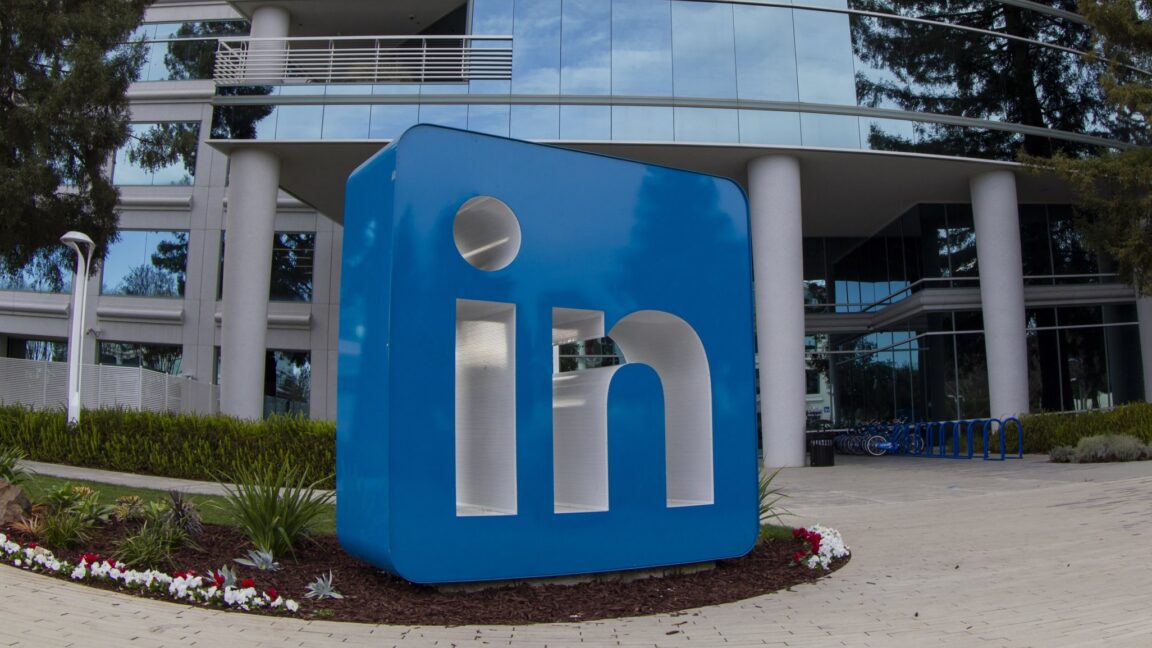
LinkedIn beat two lawsuits over its practice of scanning users’ browser extensions, with a judge granting the Microsoft subsidiary's motion to dismiss the cases. The users who sued LinkedIn failed to adequately allege that they have standing to sue because neither asserted that they "had browser extensions installed that conveyed private information to LinkedIn," ruled Judge Vince Chhabria in US District Court for the Northern District of California.
In his ruling on Tuesday, Chhabria gave the plaintiffs leave to amend their complaints but said he doubts they can make a plausible case. "Given LinkedIn’s further arguments that users voluntarily download browser extensions, which by their nature intentionally expose data to websites, it seems unlikely that the plaintiffs will ever be able to allege a privacy violation, much less prevail at the end of the day," Chhabria wrote.
California residents Nicholas Farrell and Jeff Ganan separately filed class actions against LinkedIn in April, seeking to represent themselves and other LinkedIn users. Ganan's attorney, J.R. Howell, said he is evaluating whether to bring the claims in a California state court, which has different requirements on standing, or to appeal the US district court ruling in the US Court of Appeals for the Ninth Circuit.
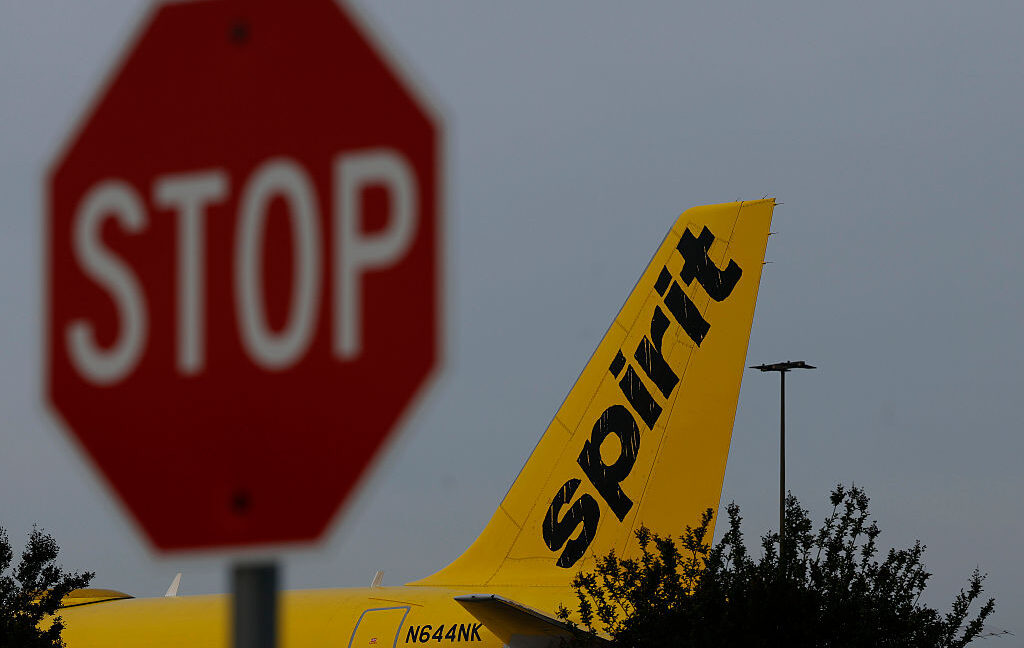
Doug Kreuzkamp was shocked when news outlets reported that Google won an auction to buy a huge amount of operational data as part of Spirit Airlines’ bankruptcy proceedings.
Kreuzkamp founded a startup called Springshot in 2011, which created a widely used proprietary platform that helps humans and AI systems improve airline efficiency and quickly solve logistics problems so flights can stay on time and airlines can operate as smoothly as possible. Hundreds of airports use it globally.
Springshot powered Spirit’s technology stack for the last three years, right up to the “very last flight,” Kreuzkamp told Ars. Yet his company got no notice when Spirit prepared to auction off a massive dataset that he thinks likely improperly includes a substantial amount of data and intellectual property (IP) that Springshot owns—not Spirit.
ABC's Jimmy Kimmel said he will be interviewing a Democratic candidate for Senate tonight, but the interview will be on YouTube only and not broadcast on TV because of threats made by the Federal Communications Commission.
Kimmel has been a prime target in the Trump FCC's attacks on ABC and its owner, Disney. In his monologue last night, Kimmel said he'll be interviewing Democrat James Talarico, a state representative who is running against Texas Attorney General Ken Paxton for a seat in the US Senate.
In previous years, such an interview would have aired on the broadcast show via local stations throughout the country, Kimmel said. This time, it will only be on the Jimmy Kimmel Live YouTube channel in order to prevent further trouble for individual stations that hold FCC licenses, he said.
Amid negotiations for a new EU-wide corporate status, an open letter signed by unicorn founders and investors warns that 'EU Inc.' shouldn’t be watered down.
The United States has now named six Chinese AI firms accused of waging industrial-scale attacks distilling US frontier AI model capabilities and perhaps sparing billions in Chinese development costs.
In a joint release Tuesday, the National Security Agency (NSA), Cybersecurity and Infrastructure Security Agency (CISA), and Federal Bureau of Investigation (FBI) alleged that DeepSeek, Moonshot AI, Alibaba, MiniMax, StepFun, and Z.AI have been attacking US models since at least late 2024. The firms “likely” acted with “Chinese government awareness” when extracting capabilities from US models, including variants of Claude, GPT, Gemini, and Grok, agencies said.
“China-based AI companies that conduct industrial-scale distillation against US AI models see significantly shorter AI development timelines and reduced financial expenditures in training a frontier model,” agencies said.
Amazon discriminated against pregnant warehouse employees by denying accommodations like bathroom breaks and the option to sit while working, according to a lawsuit filed yesterday by four women who worked for Amazon while pregnant. The lawsuit is a class-action complaint that seeks to represent Amazon workers throughout the US.
"Plaintiffs Willamina Barclay, Kristina Green, Jennifer Hatch, and Dazaria Parks were formerly Amazon warehouse employees," said the lawsuit filed in US District Court for the Eastern District of New York. "All four became pregnant. All four asked Amazon for basic pregnancy-related accommodations so they could keep doing their jobs. Amazon denied them basic modifications the law recognizes pregnant workers regularly need, even in uncomplicated pregnancies: Bathroom breaks. An extra 15-minute break. Sitting instead of standing."
The lawsuit said the four plaintiffs were unlawfully terminated from jobs at Amazon facilities in New York between April 2025 and July 2026. After the plaintiffs "took medically necessary breaks or absences to get off their feet, visit the doctor, or go to the emergency room, they were punished," the lawsuit said. "Amazon deducted their limited bank of unpaid time off. Soon enough, they had depleted that limited bank of 'unpaid time off,' and Amazon threatened to terminate them."

 Login
Login