
Reading view

There are new articles available, click to refresh the page.

Pakistan’s New Military Order Is a Warning for Washington

In Washington, Field Marshal Asim Munir increasingly looks like the man who can make Pakistan useful to the United States. Pakistan has just written Munir even more deeply into the architecture of the state as he now sits atop a legally centralized command that reaches conventional forces, strategic systems, and the prime minister’s national-security advice. Munir, now formally serving as Chief of Defense Forces, speaks directly with President Donald Trump and has become Washington’s principal channel for engaging Tehran.

The latest restructuring of Pakistan’s military command has actually made the opposite case. The 27th Constitutional Amendment, followed by legislation passed this month to implement the new command architecture, has concentrated unprecedented authority in Munir’s hands. Yet his military cannot stabilize Pakistan-administered Kashmir, cannot contain the Tehreek-e-Taliban Pakistan (TTP) and Baloch insurgents, and has still signed a mutual-defense pact with Turkey and Saudi Arabia—dubbed the Mecca Accord—that could drag it into distant crises. For the world, treating Pakistan as a reliable intermediary in negotiations with Iran would be a mistake of timing and of judgment as the state becomes more militarized domestically, more ambitious diplomatically, and increasingly overstretched militarily.

A Field Marshal Above the State

In November 2025, the 27th Constitutional Amendment abolished the chairman of the Joint Chiefs of Staff Committee and created the office of Chief of Defense Forces (CDF), held concurrently by the army chief. The restructuring was completed with another step this month when Pakistan’s parliament passed the Defense Forces Act 2026 and amendments to the National Command Authority Act, providing the statutory framework for Munir's new position and headquarters. The new architecture gives the CDF a central role in operational command and joint military coordination across the armed forces.

The new law places the army, navy, and air force under a unified Defense Forces Headquarters commanded by Munir. He is designated the prime minister’s principal military adviser on national security and defense and exercises operational command and control across the services with sweeping personnel authority—hiring, firing, retirement, and extensions. Amendments to the National Command Authority law align nuclear and strategic command with the same hierarchy, with a new four-star Commander of the National Strategic Command sitting alongside the CDF. The significance goes beyond military administration, as Munir now occupies a position from which military command, strategic security policy and foreign-policy influence converge. He is not constitutionally Pakistan's president or prime minister, but describing him merely as a military officer increasingly misses the political reality. Such radical consolidation of power in Pakistan’s civil-military landscape matters for Washington because the United States is increasingly treating Munir personally as a diplomatic asset. Therefore, Washington must factor in that any “Pakistani” channel on Iran now runs, in practice, through a single command that answers first to its own institutional interests.

Consolidation Without Control

The strongest argument against treating Munir's Pakistan as a reliable strategic partner can actually be found inside Pakistan itself. The military has acquired unprecedented institutional power, yet the state remains under enormous security pressure. Pakistan Institute for Conflict and Security Studies data show that July 2026 was the deadliest month of the year, with 606 people killed in militant violence and counter-militancy operations, including 112 security personnel and 401 militants. The violence is concentrated precisely in Khyber Pakhtunkhwa (KPK) and Balochistan, where Pakistan's military has struggled for years. Such a security landscape is a sustained counterinsurgency burden for a military that is simultaneously presenting itself as a regional security provider.

The latest round of violence in Pakistan-Administered Kashmir has added another layer of security burden for an overly stretched military. In the surrounding areas of Rawalkot, Pakistan-administered Kashmir, protests led by the Joint Awami Action Committee (JAAC) escalated after authorities outlawed the movement under anti-terrorism laws, suspended mobile data and internet services, and deployed security forces ahead of a JAAC-organized June 9 strike. According to a local human rights watchdog report dated August 8, at least 89 civilians died in Pakistan-administered Kashmir as a direct result of the state’s brutal crackdown on unarmed protesters.

Locals demanded cheaper power from dams that generate electricity for Pakistan, representation that is not diluted by non-resident seats, and an end to elite privileges. The state’s answer was lethal force, sedition cases, travel advisories, and the criminalization of a civic coalition that had previously extracted limited subsidies through protest. That is the Balochistan playbook applied to a territory Pakistan still markets internationally as “Azad” or free. It did not produce consent but a banned movement, underground leaders, and a legitimacy crisis inside a territory the army treats as strategic hinterland. If Munir’s new command structure was meant to deliver coherence, Kashmir shows the opposite, where a security establishment that can rewrite the constitution faster than it can address bread-and-butter revolt. An army that cannot manage a rights protest in Muzaffarabad and Rawalakot without mass casualties is not an army that can be trusted to midwife a delicate regional settlement with Iran or be a reliable partner for the so-called Mecca Accord.

Pakistan’s Utility Should Not Be Mistaken for Reliability

US talks with Iran already sit on a knife-edge of “Economic D-Day” politics, Hormuz control, and factional vetoes inside Tehran. None of this means the United States should abandon Pakistan as that would be strategically simplistic. Pakistan remains nuclear-armed, sits between Iran, Afghanistan, India and China, and retains diplomatic access across the Muslim world. Its ability to communicate with Tehran can be useful, particularly when direct US-Iranian channels are blocked. Three factors that Washington should use to distinguish between utility and reliability while dealing with Munir’s Pakistan:

First, Munir’s legal supremacy does not equal policy reliability. A CDF who is also army chief, principal adviser, and strategic-command fulcrum will filter any Iran file through the army’s need to look indispensable at home—that incentive points toward swagger, not quiet brokerage.

Second, Washington cannot treat Islamabad’s internal security failure as a side issue. An institution that answers civic protest in Kashmir with live fire and a terrorist ban is the same institution that would be asked to counsel restraint, verification, and de-escalation with Iran. The record says it prefers coercion when legitimacy frays.

Third, Munir’s capacity is already committed to a plethora of insurgencies. TTP and Baloch campaigns consume attention, ammunition, and men. A Mecca clause adds hypothetical external obligations without adding spare combat power. A partner that is simultaneously over-centralized and overstretched cannot deliver the one thing Washington would need from it: consistent, low-drama influence on a file that can restart a wider war.

If the United States wants Pakistan to help mediate with Iran, it should judge Islamabad by the outcomes of that diplomacy, not by the personal access Munir enjoys in Washington. And if Washington wants Pakistan as a security partner, it should look beyond the impressive authority of its field marshal to the increasingly unstable state that authority is supposed to govern. A stronger Pakistani army does not automatically produce a stronger Pakistan. And a stronger Munir does not automatically produce a more reliable American partner.

The Cipher Brief is committed to publishing a range of perspectives on national security issues submitted by deeply experienced national security professionals. Opinions expressed are those of the author and do not represent the views or opinions of The Cipher Brief.

Have a perspective to share based on your experience in the national security field? Send it to Editor@thecipherbrief.com for publication consideration.

Read more expert-driven national security insights, perspective and analysis in The Cipher Brief
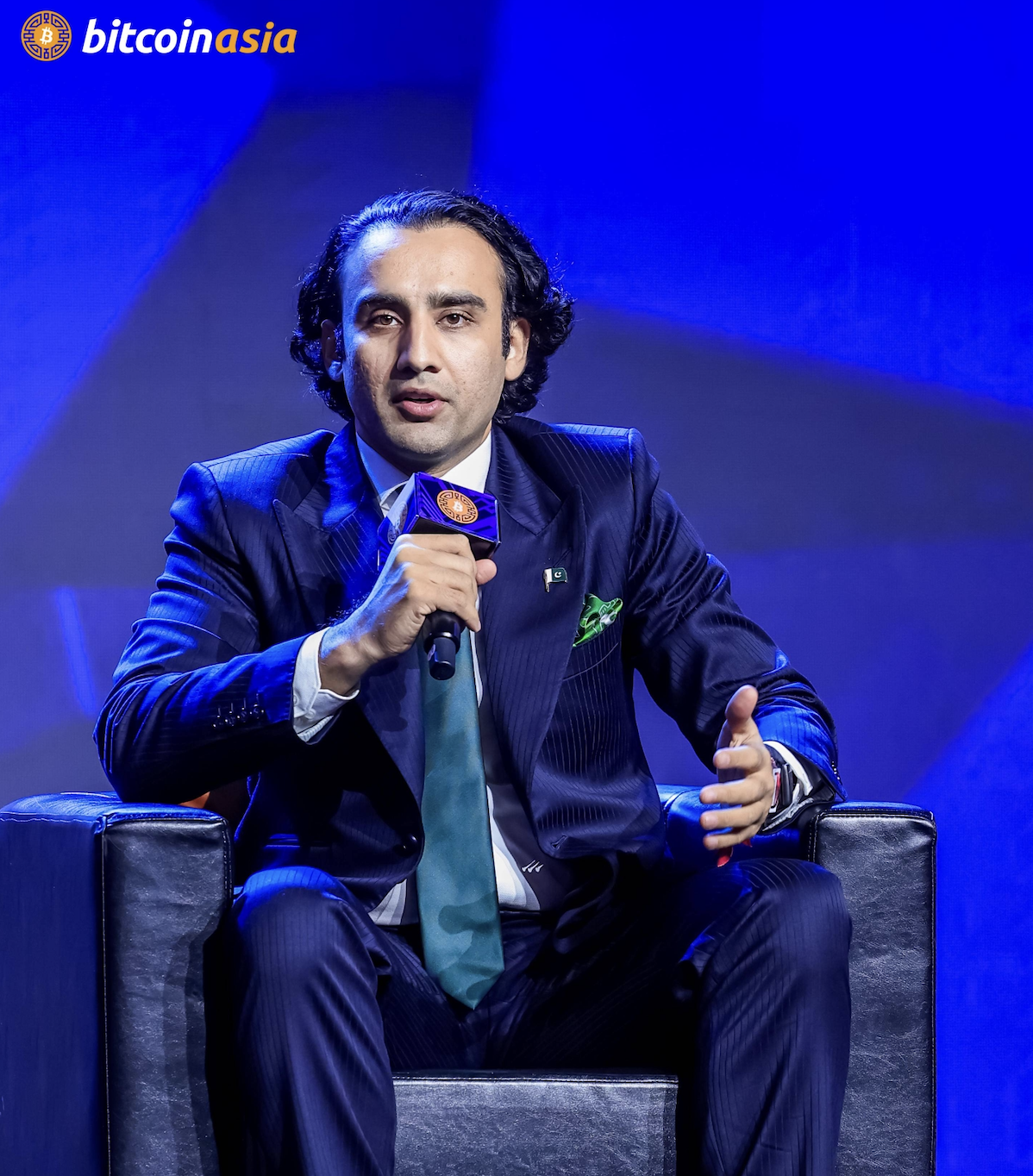
Pakistan Built Its Crypto Regulatory Regime Using Just 8% of Its Budget, Minister Bilal Bin Saqib Reveals at Bitcoin Asia

Bitcoin Magazine

Pakistan Built Its Crypto Regulatory Regime Using Just 8% of Its Budget, Minister Bilal Bin Saqib Reveals at Bitcoin Asia

Pakistan has launched its virtual asset regulatory regime in less than six months while using just 8% of the budget allocated to build it, according to Bilal Bin Saqib, the country’s Minister of State and Chairman of the Pakistan Virtual Assets Regulatory Authority (PVARA).

Speaking at Bitcoin Asia in Hong Kong on August 28, Saqib said approximately $200,000 was used to build and operationalize the new regulatory framework, leaving roughly 92% of the approved budget unspent.

“We used only 8% of our approved budget to get this done,” Saqib announced. “Government should not measure success by how much money it spends. It should measure success by how much it delivers.”

Pakistan moved from primary legislation to notified regulations and a live licensing regime in under six months, establishing a formal pathway for companies operating in the digital asset sector.

The framework covers activities including exchanges, custody, brokerage, asset management, lending and settlement, while introducing requirements around governance, anti-money laundering and counter-terrorism financing, customer asset safeguarding, cybersecurity and market conduct.

For Pakistan, the regulatory rollout represents a significant shift toward bringing Bitcoin and digital asset activity into the formal financial system and providing companies with a defined framework for operating in the country.

Rethinking How Governments Build

Saqib framed the PVARA rollout as more than a regulatory achievement, arguing that it demonstrates how governments can operate differently in an environment where technology is developing rapidly.

Rather than building a large bureaucracy, the authority focused on smaller teams, technology-driven workflows and delivering a functioning regulatory framework.

“Technology is moving at machine speed. Government has to learn how to move much faster without compromising structure, accountability or consumer protection,” Saqib stated.

Saqib argued that governments need to balance speed with institutional credibility as emerging technologies continue to develop.

“Speed without structure can be dangerous. But structure without speed can become irrelevant.”

The approach reflects a broader vision for how Pakistan intends to compete in financial technology. Rather than simply adopting technologies developed elsewhere, the country is positioning itself to participate in the development of new financial infrastructure.

Beyond Crypto: The Agentic Economy

Saqib said Pakistan’s regulatory ambitions extend beyond today’s digital asset market.

The country is looking toward an economy increasingly shaped by tokenized markets, programmable payments, stablecoins, machine-to-machine commerce and artificial intelligence agents.

AI agents could eventually transact on behalf of individuals, companies and other machines, creating new questions around financial authority, identity, compliance and consumer protection.

Among the questions governments may need to address are who is responsible when an AI agent executes a financial transaction, how delegated authority should work and how anti-money laundering controls can function when machines transact directly with one another.

“Today we are regulating virtual asset service providers,” Saqib stated. “Tomorrow we will need regulation around agentic payments and the agentic economy.”

Saqib described the country’s virtual asset framework as an initial building block for this broader financial system.

Pakistan Wants to Build at the Frontier

The strategy represents an attempt to compress the traditional timeline for emerging markets, which often adopt financial and technological innovations after they have already matured in larger economies.

“Emerging markets do not have to spend the next decade catching up. We can build at the frontier,” Saqib said.

With a population of more than 240 million, Pakistan represents a potentially significant market for emerging financial technologies.

For PVARA, the immediate test will be whether the new regulatory regime can attract legitimate digital asset businesses while maintaining the consumer protections and oversight built into the framework.

But Saqib’s vision extends beyond regulation itself.

Pakistan’s rapid transition from legislation to live licensing — accomplished with only 8% of its approved budget — is being presented as a model for how governments can approach the next generation of financial infrastructure.

The country now wants to apply that same philosophy to an economy where digital assets, artificial intelligence and programmable finance increasingly converge.

You can watch Saqib’s full appearance at Bitcoin Asia 2026 below.

This post Pakistan Built Its Crypto Regulatory Regime Using Just 8% of Its Budget, Minister Bilal Bin Saqib Reveals at Bitcoin Asia first appeared on Bitcoin Magazine and is written by Nik.

💾

Enjoy the videos and music you love, upload original content, and share it all with friends, family, and the world on YouTube.

Pakistan’s Crypto Pitch: “Come Build Here” as Virtual Assets Act Moves Forward

Bitcoin Magazine

Pakistan’s Crypto Pitch: “Come Build Here” as Virtual Assets Act Moves Forward

Pakistan has announced a new regulatory framework for crypto after banning the asset class for close to a decade, 

Announcing the news in an X post Friday, Bilal Bin Saqib, the special assistant to the prime minister on blockchain and cryptocurrency, invited foreign businesses to come to the country and set up shop.  

Pakistan’s Virtual Assets Act introduces the country’s first comprehensive legal framework for overseeing virtual assets and the businesses that operate in this space. 

8 years of prohibition end today.

Chairman PVARA @BilalBinSaqib announces the notification of the Licensing Regulations and the opening of the licensing portal, and sets out what licensing requires of providers and what it guarantees consumers.

Get licensed. Get compliant. Come… pic.twitter.com/STVPsoX1so

— Pakistan Virtual Assets Regulatory Authority (@PakistanVARA) August 21, 2026

“For approximately a decade, Pakistan’s answer to virtual assets was complete permission and complete ban — but history tells us that technology never waits for permission,” Bin Saqib said. 

He added: “To the companies watching Pakistan from outside, the front door is open for you. Come, get licensed. Come, get banked. Come, build here under rules that are clear, public and enforceable.” 

In a separate post, Bin Saqib said that the country now has “the rules, the regulator and the licensing framework to bring virtual assets into the formal economy, protect consumers and build the foundation for the next generation of financial infrastructure.”

Pakistan’s virtual Assets Act was approved by the senate earlier this year and then signed into law by President Asif Ali Zardari. Friday’s announcement indicates that licensing regulations are now in place. 

Pakistan has made a crypto-friendly pivot in recent years. In 2025, plans to launch a national strategic Bitcoin reserve were announced at the Bitcoin 2025.

Before that, the country announced that it was allocating 2,000 MW of surplus electricity to Bitcoin mining and AI data centers in an initiative aimed at generating revenue, creating jobs, and attracting foreign investment, according to the Pakistani government.

The country has played an important part as a mediator between the U.S. and Iran. A relationship started forming between the two after it became an affiliate of Trump-backed crypto project, World Liberty Financial. 

Weeks after President Donald Trump’s return to power last year, WLF leaders went to Islamabad to meet with Pakistan’s prime minister. 

This post Pakistan’s Crypto Pitch: “Come Build Here” as Virtual Assets Act Moves Forward first appeared on Bitcoin Magazine and is written by Mathew Di Salvo.

Trump’s Dangerous Bet on Pakistan’s Army Chief

In the dusty streets of Rawalakot in Pakistan-occupied Kashmir this June, security forces opened fire on demonstrators demanding basic rights and an end to elite privileges. At least 11 people were killed in the clashes, with eyewitnesses and local leaders describing heavy, indiscriminate firing on what began as a largely peaceful protest. Families mourned as authorities claimed “miscreants” had provoked the violence. A year earlier, in March 2025, Pakistan security forces arrested prominent Baloch human rights defender Dr. Mahrang Baloch during a sit-in in Quetta, Balochistan, who was protesting enforced disappearances and police excesses. She now faces life imprisonment on terrorism-related charges widely viewed by rights groups as politically motivated reprisal for her activism against the military’s heavy-handed tactics in Balochistan. These scenes of repression unfold against a backdrop of deepening militarisation in Pakistan. Meanwhile, in Washington, President Trump has repeatedly hosted and publicly praised Pakistan’s Army Chief, Field Marshal Asim Munir—calling him his “favorite” and crediting Pakistan with special insight into Iran.

President Donald Trump’s courtship of Munir may look like transactional statecraft, but it is also dangerously short-sighted. Trump’s administration has leaned on Munir as a key interlocutor in US-Iran diplomacy, hosting him at the White House and highlighting Pakistan’s role in passing messages and facilitating talks during periods of heightened tensions. However, it ignores fundamental divergences in strategic interests. It rewards a military establishment whose consolidation of power at home is actively destabilizing the very region the United States claims to want stabilized.

A Dubious Mediator

Trump has publicly credited Pakistan with special insight into Iran, noting that Pakistanis “know Iran very well, better than most.” Munir has been positioned as a back-channel messenger and facilitator during periods of US-Iran tension. In reality, however, Munir’s role in the negotiations deserves scrutiny, not applause. It appeared to align with Tehran’s demand that Washington ease pressure before talks could proceed. Munir reportedly told Trump that the US blockade of Iranian ports was a major obstacle to negotiations, reinforcing Iran’s position rather than balancing between both sides.

Pakistan’s mediation appeared to endorse Tehran’s preferred sequence: de-escalation by Washington first, negotiations only afterward. Pakistan may have been useful as a messenger, but usefulness is not the same as strategic alignment. A state that presses Washington to relieve pressure on Iran while presenting itself as an American partner is not acting from shared security priorities. It is managing its own regional equities—border stability with Iran, domestic pro-Iran sentiment, Gulf diplomacy, and its need to remain relevant to multiple camps at once. Trump’s personal comfort with Munir risks mistaking tactical access for strategic convergence. Naturally, Washington has made this mistake before, because the ghosts of US-Pakistan policy apparently enjoy repeat performances.

The “Hard State” Washington Is Normalizing

The problem with Washington’s engagement lies not only in Pakistan’s foreign policy but in the domestic system Field Marshal Asim Munir now represents. The 27th Constitutional Amendment significantly expanded the Army Chief’s authority, creating a new overarching military command, placing the navy and Air Force under his control, and granting him direct oversight of the nuclear arsenal. It also curtailed the Supreme Court’s jurisdiction through a parallel judicial structure.

The 27th Amendment is not an abstract doctrine, as it also manifests in the military’s expanding economic empire. The Fauji Foundation, the army’s flagship conglomerate, controls assets estimated at $5.9–6 billion according to the Wealth Perception Index 2025—making it one of Pakistan’s largest business groups. Its engineering arm, the Frontier Works Organization (FWO), has secured major infrastructure projects, including the Machike–Thallian–Taru Jabba White Oil Pipeline, routed through the military-dominated Special Investment Facilitation Council (SIFC). Marketed as a single-window facilitator, the SIFC bypasses standard public procurement, parliamentary oversight, and regulatory scrutiny—effectively funneling strategic contracts to military-linked entities.

The critical minerals angle is especially revealing. A US company signed a $500 million agreement with Pakistan’s FWO to develop critical minerals and establish a poly-metallic refinery, with initial exports including antimony, copper, gold, tungsten, and rare earth elements. Diversifying US supply chains away from China is a legitimate strategic priority. But doing so through Pakistan’s expanding military-commercial ecosystem risks rewarding the very institution hollowing out civilian oversight, weakening democratic checks, and converting foreign investment into military power. That is not strategic diversification, but dependence dressed up as realism.

Repression at Home, Bombs Abroad

Munir’s Pakistan is not just authoritarian in structure but also coercive in practice. In Pakistan-administered Kashmir, mass protests over governance, elite privileges, and political representation have repeatedly turned deadly. Last month’s clashes in Pakistan-administered Kashmir have left more than 30 people killed as police and paramilitary forces remain deployed against protesters.

Balochistan tells an even darker story. Amnesty International has reported that prominent Baloch activist Mahrag Baloch had been charged in more than two dozen anti-terrorism cases after a prolonged period of unlawful detention. Baloch was sentenced to life imprisonment in June 2026, in a case that is politically motivated and procedurally flawed. And then there is Afghanistan, where Pakistan’s military operations across the border have been reckless and devastating. Human Rights Watch called a March 2026 Pakistani airstrike on a Kabul drug treatment center unlawful and a possible war crime, in which at least 143 people were killed and more than 250 injured, most of them patients. Most recently, following an attack targeting Pakistani paramilitary personnel in Karachi, the Air Force carried out strikes that killed at least 28 civilians and injured 49 along the Afghan border.

Conclusion

This is the regime Trump is courting: one that crushes protest in Kashmir, jails Baloch activists, militarizes the economy, weakens courts, and bombs Afghanistan while marketing itself as a regional peacemaker.

The United States does not need to cut off Pakistan. That would be lazy policy masquerading as moral clarity. Pakistan remains geopolitically relevant because it borders Iran, Afghanistan, India, and China; it has nuclear weapons; and it can be useful in limited diplomatic channels. But Washington must stop confusing utility with trust. Trump’s courtship of Munir risks repeating the oldest mistake in US-Pakistan relations, which is rewarding the Pakistani military for short-term access while ignoring long-term divergence. Pakistan’s regional aspirations do not align cleanly with US priorities. It hedges with Iran, deepens ties with China, antagonizes India, suppresses democratic dissent, and uses its military-commercial complex to convert foreign engagement into domestic power.

Munir may offer Washington a convenient channel, but channels can also become traps. If the United States elevates Munir without demanding accountability, it will not stabilize South Asia or the Middle East. It will legitimize a military regime that has learned to monetize crisis, repression, and geography. That is not strategic realism, but “short-termism” dressed up as diplomacy.

The Cipher Brief is committed to publishing a range of perspectives on national security issues submitted by deeply experienced national security professionals. Opinions expressed are those of the author and do not represent the views or opinions of The Cipher Brief.

Have a perspective to share based on your experience in the national security field? Send it to Editor@thecipherbrief.com for publication consideration.

Read more expert-driven national security insights, perspective and analysis in The Cipher Brief

❌