Meta Muse users are adopting the app for shopping and personal productivity, the company said during its Q3 earnings call. The AI app now has over 10M users.
Muse, the new general-purpose AI agent from Meta, can expose sensitive information when users share conversations through web links, researchers reported Monday. In response to questions from Ars about the behavior, Meta said it's suspending the sharing feature while the company reviews it and considers making changes.
Like many online services, Muse has allowed users to share searches, conversations, images, and similar content with other people. Such share features usually involve clicking an option to create a unique URL that anyone can use to load a page hosting the content. To keep potentially sensitive information from being accessible to unintended people, the URLs typically contain a long sequence of text that can’t be easily guessed.
A single query is all that's required
Muse, which Meta CEO Mark Zuckerberg said last month was “built from the ground up for privacy and security,” seems to take the same precautions. But a central design decision for constructing URLs has made the links easy to discover. As a result, researchers from security firm Claroc said they were able to enumerate 6,800 links Muse users created for sharing conversations with others. After opening a few hundred of them, the researchers found information that was clearly not intended to be publicly available, including:
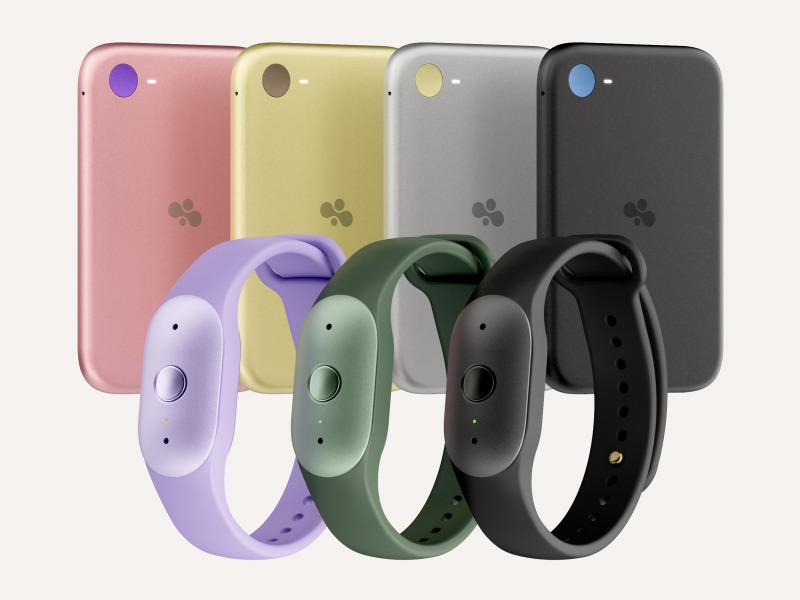
Amazon’s new Bee Frontier wristbands, front, and Bee Eclipse devices, which attach magnetically to the back of a phone. (Amazon Image)
Bee, the AI wearables startup Amazon acquired last year, makes devices that remember what people say in everyday conversations. A new update, announced Thursday morning, includes a feature that turns those passing remarks into shopping suggestions on Amazon.com.
For example, as described by Amazon, someone might mention offhand that they’re out of dish soap, and a product recommendation would show up on Amazon.com and in the Bee mobile and desktop apps. Amazon pitches it as a way for people to remember to buy things they need.
It’s the kind of thing many people have long suspected their phones of doing secretly, listening to conversations and serving up related content or ads. Researchers haven’t found evidence of that. Either way, Amazon’s twist is to do it openly — and to make it voluntary.
The feature is opt-in, meaning it won’t happen unless users choose to connect their Bee accounts to Amazon.com, and Bee says it won’t share data with Amazon without user consent.
The Amazon.com integration requires Bee Pro, a $12 monthly subscription that also includes unlimited conversation summaries and the ability to ask Alexa+ about things Bee has captured.
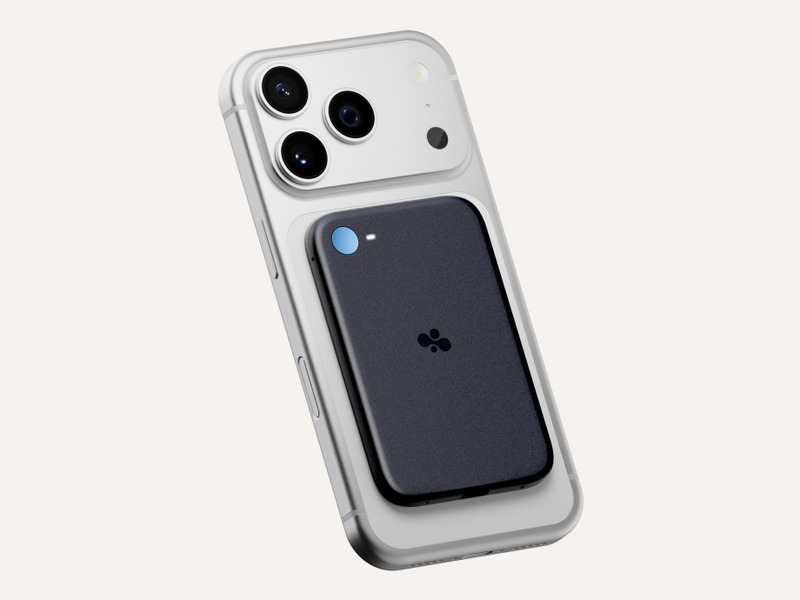
New hardware: The feature is part of a broader announcement that includes the first new Bee devices under Amazon’s ownership: Bee Frontier, a $74.99 wristband that can also clip onto clothing, and Bee Eclipse, which attaches magnetically to the back of a phone and starts at $99.99.
Bee Eclipse attaches magnetically to the back of a phone and starts at $99.99. Amazon says it will be available soon. (Amazon Image)
Bee Frontier, available now, has dual microphones, up to seven days of battery life and IP67 water resistance. Bee Eclipse, about the size of a credit card, runs more than 21 days on a charge and will be available soon, Amazon says.
Amazon says Bee lets people pay attention to a conversation instead of taking notes, keeping track of details such as when and where they agreed to meet a friend. The devices turn conversations into summaries, to-dos and reminders.
Users can read their summaries in the Bee mobile app or a new desktop app, formatted for different kinds of conversations, such as lectures, care plans and brainstorming sessions. Bee also picks up on recurring themes in conversations and suggests goals and actions.
Bee connects to apps including Gmail, Google Calendar and Microsoft Outlook. After a call or meeting, it can list action items, draft follow-up emails or create calendar invites based on the conversation.
Users can also link Bee to Apple HealthKit and to their photos. Most of those features, including the desktop app and third-party integrations, also require Bee Pro.
Without a subscription, Bee users get conversation summaries and 14 days of memory. New customers get 30 days of Bee Pro free.
How Bee handles privacy: Amazon says Bee runs on a system it calls Bee Private Compute, which processes conversations in an isolated environment where “no one, including Amazon, can access your data.” Audio is deleted after it’s processed, and transcripts are encrypted with keys controlled by the user’s device.
Both new devices turn on and off with a single button and show a light when they’re running. For phone calls, Bee Eclipse prompts users to get permission from the other people on the call each time it starts, according to Amazon.
Bee and Amazon: Amazon acquired Bee in July 2025 for an undisclosed price. At the time, the San Francisco startup, led by co-founders Maria de Lourdes Zollo and Ethan Sutin, had raised $7 million and sold a $49.99 wristband called Bee Pioneer.
Thursday’s update connects Bee to two of Amazon’s biggest consumer businesses: its online store, through the product recommendations; and Alexa+, the new version of its longtime voice assistant, by letting users ask Alexa+ on an Echo device about things Bee has captured.
Amazon isn’t the only tech giant betting on AI devices.
Apple last month announced Siri Recap, an opt-in feature that summarizes conversations on its new Apple Watches, set to arrive in beta later this year.
Meta bought Limitless, maker of a conversation-recording pendant, in December 2025, and last month unveiled the Muse Charm, a keychain-sized device for its Muse AI agent that’s set to ship this December.
Bee also competes with startups such as Plaud, Omi and Friend, which make AI recorders and pendants that listen to conversations, and with AI notetaking apps such as Granola and Otter that work on a phone, with no extra device required.
GeekWire co-founders Todd Bishop, left, and John Cook open the GeekWire Podcast and VIP dinner, presented by Northern Trust, at Daniel’s Broiler in downtown Seattle. (Photo by Tanya Srisuthisuriya)
This week: Amazon is blocking Meta’s new Muse AI assistant from shopping on Amazon.com, saying the agent doesn’t identify itself and violates the site’s conditions of use. We explain why the standoff is an early sign of a much bigger fight over whether AI agents can use websites and apps on people’s behalf, and why Amazon has so much riding on the answer.
For the definitive word on the issue, we ask Muse what it has to say for itself, and get an impressively sophisticated and evenhanded response.
We recorded this week’s show live at Daniel’s Broiler in downtown Seattle, in front of a room of startup founders and CEOs, at a dinner hosted and sponsored by Northern Trust.
Mike Fridgen, a longtime Seattle entrepreneur and Madrona venture partner now working on a stealth startup, joins us to talk about whether Seattle is still a good place to build a company. The conversation covers the region’s talent, its history and the debate over taxes including Seattle’s JumpStart payroll tax, which Mayor Katie Wilson’s new budget holds flat.
Then we take questions from the room. Ridge AI CEO Ellie Fields asks how business leaders can engage productively in building the region, Latch CEO Stefan Kalb asks why Seattle has less venture capital than the Bay Area and ACME Brains founder Mary Jesse asks how to get past polarization.
Todd Bishop, left, and John Cook talk with Mike Fridgen during the live recording of the GeekWire Podcast at Daniel’s Broiler in downtown Seattle. (Photo by Tanya Srisuthisuriya)
We close with a satellite-themed GeekWire Trivia Challenge and an unexpected announcement from Starfish Space co-founder Austin Link.
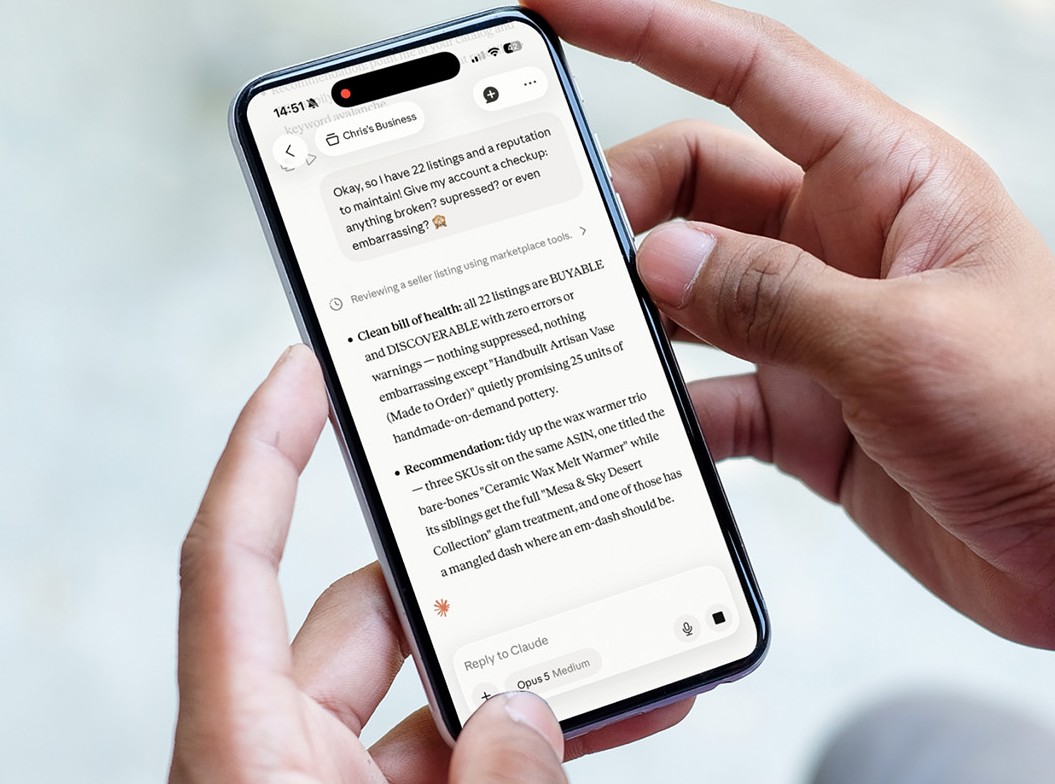
A seller’s account checkup in Anthropic’s Claude app, using Amazon’s new selling partner plugin. (Amazon Image)
Amazon announced new AI tools for its independent sellers Wednesday, led by a plugin that lets them run their Amazon businesses from Anthropic’s Claude or Amazon’s own Quick assistant.
The idea is to let sellers check inventory, adjust prices and update listings without opening Seller Central, which merchants have used for years to manage their Amazon businesses. Amazon says about 90% of sellers already use some form of outside AI to run parts of their operations.
“Our vision was that they would never have to log into Seller Central,” said Mary Beth Westmoreland, Amazon’s vice president of Worldwide Selling Partner Experience, in an interview. “We would just bring it to them where they work.”
The company is making the announcement at Accelerate, its annual seller conference, taking place in Seattle this week. It’s also releasing automations that monitor a seller’s business in the background and can act on it with the seller’s approval, and an upgraded Seller Assistant that remembers a seller’s pricing patterns, inventory cycles and growth goals from one session to the next.
The stakes: Independent sellers account for more than 60% of units sold on Amazon worldwide, and the fees Amazon charges them brought in $46.8 billion in the second quarter, more revenue than AWS.
Those fees are one of the issues in the Federal Trade Commission’s antitrust case against Amazon, which accuses the company of overcharging sellers and punishing them for offering lower prices elsewhere. Amazon has denied the allegations and called the suit “wrong on the facts and the law.”
The case is set for trial in March 2027 in federal court in Seattle.
Amazon’s advertising business, which includes the sponsored listings sellers buy to promote their products, brought in $19.8 billion in the quarter, up 26% from a year earlier. When it filed the case, the FTC said advertising had become “virtually necessary for sellers to do business,” and that Amazon’s combined fees take close to half of many sellers’ revenue.
Sellers are a tough and pragmatic crowd. The loudest ovation at last year’s Accelerate went to a housekeeping fix rather than a new tool, when Amazon ended commingling, the practice of mixing identical inventory from different sellers in its warehouses.
Which agents get in: By starting to officially connect its seller tools to outside AI platforms, Amazon is loosening its grip on the technology sellers use to manage their presence in the company’s e-commerce store, although it still decides which platforms to support.
The announcement comes days after Amazon blocked Meta’s Muse, a new AI agent that can shop on behalf of consumers, from its store. Amazon says outside agents need to identify themselves and follow the rules of the sites they use.
Amazon is a major investor in Anthropic, and the AI company’s Claude models already power Seller Assistant, the AI technology built into the Seller Central portal that answers sellers’ questions and, with their approval, updates listings and prices.
The company says more integrations will follow Claude and Quick. “We’ve built this in a way that should be modular enough for us to continue to publish plugins,” Westmoreland said.
How it works: Amazon says connecting Claude takes about 60 seconds and no coding. The plugin pulls a seller’s listings, inventory levels, sales analytics and performance metrics into the outside assistant, which can then act on the account the way Seller Assistant does inside Seller Central.
Sellers choose which types of data the plugin can reach and approve each action before it’s carried out. The company says it doesn’t see the other business data in a seller’s assistant.
The plugin is in beta in Amazon’s U.S. stores, with international expansion to follow.
Among other announcements, Seller Assistant is getting a new canvas feature, a visual workspace generated on the fly from a seller’s live data. Sellers can use it to compare pricing strategies or diagnose ad campaigns, and it redraws as they ask follow-up questions.
In addition, Amazon says it’s giving every primary selling account holder worldwide a free 12-month subscription to Amazon Quick Plus, available through Dec. 31, 2026, with two additional co-workers covered at no cost.
This year’s event comes amid a leadership change in the seller organization. Amit Agarwal, a 27-year Amazon veteran who launched its India marketplace, took over selling partner services in February as Dharmesh Mehta moved to become CEO Andy Jassy’s technical advisor.
Amazon and Meta are at odds over AI agents that shop on customers’ behalf. (GeekWire Illustration / GPT 5.6 Sol)
Amazon blocked Meta’s Muse AI agent from its store Sunday night, and leaders across the tech industry have spent the past two days debating the bigger questions raised by the move.
Among them: whether the big platforms will agree on rules for agents crossing into each other’s territory, how money will change hands when they do, and how many people will actually want AI agents doing their shopping in the first place.
This will be “a bigger battle than anyone anticipates,” wrote Palo Alto Networks CEO Nikesh Arora in a post on X, predicting that Apple, Google and possibly TikTok will build their own personal agents. Every shopping and services app will have to decide whether to let outside agents in, he wrote.
The industry is “basically two weeks into this entire topic,” Box CEO Aaron Levie said on CNBC Tuesday morning. Agents are “going to change how we interact with most forms of commerce,” he said, and “different companies will respond in different ways.”
Elon Musk is already pointing to a potential technical loophole. Amazon “won’t be able to tell whether the buyer is a human or an AI acting on their behalf if access is via the user’s IP address & cookies,” the xAI founder wrote on X Monday.
Amazon’s Conditions of Use require agents to identify themselves as agents in every request they make to its site. That is one of the violations that Amazon cited in blocking Muse this weekend.
Deals in the works? Amazon CEO Andy Jassy has said on earnings calls that the company was having conversations with companies that want to run agents for commerce. Those talks are still underway, The Information reported Monday, but it’s not clear whether any agreements are close to happening.
Meta CEO Mark Zuckerberg said on the Sources podcast that Muse would “take a very small cut of whatever the transaction is” — potentially paid by the businesses users buy from.
Amazon’s retail margins are thin, and its advertising business, which generated more than $68 billion in revenue last year, depends on people browsing its pages, not agents jumping in to complete purchases.
Amazon vs. Perplexity: Possibly foreshadowing where the Meta dispute is headed, Amazon sued Perplexity in November over Comet, the AI company’s browser, which had an agent that shopped on Amazon.com through customers’ own accounts.
The underlying case is still going, and the decision did leave Amazon an opening. It said Amazon could still sue over its contract with customers, and on Monday Amazon did just that: adding a claim that Perplexity caused customers to break that agreement, the same Conditions of Use the company used to block Muse.
What about Amazon’s agent? The e-commerce giant’s Buy for Me agent “does some of the things that Amazon is trying to stop other AI agents from doing,” pointed out journalist Jason Del Rey, who publishes The Aisle newsletter. Amazon’s answer is that Buy for Me identifies itself and lets brands opt out, two things it says Muse doesn’t do.
Meta, for the record, has not responded publicly to the Amazon dispute. But investors have. Meta stock jumped 11% Monday to its highest close in a year, and rose again Tuesday morning.
After all of this, are agents really better shoppers? Martin Peers of The Informationused Muse on Monday to buy a pen and a notebook from small retailers. He found the process “surprisingly smooth,” but wrote that it was “still a lot faster and easier to go directly to Amazon.”
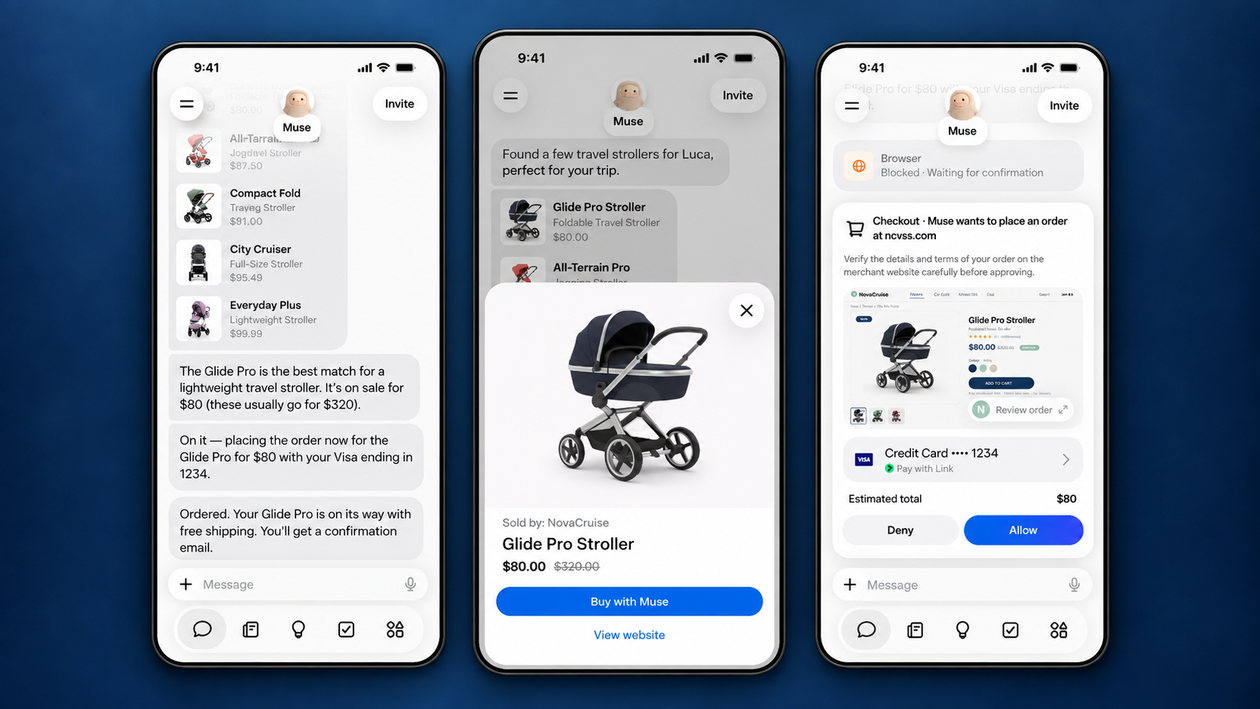
Meta’s promotional images show Muse comparing strollers and asking for approval before placing an order. (Meta Images)
Amazon says it has cut off Meta’s new Muse personal AI agent from shopping on Amazon.com on behalf of customers, after attempting unsuccessfully to get the Facebook parent company to voluntarily exclude the e-commerce site from the experience.
The problem, Amazon says, is that it never agreed to any of it. Meta didn’t tell Amazon that Muse would access its store, the agent doesn’t identify itself when it browses, and it appears to capture and store customer credentials, which the company says could create privacy and security risks.
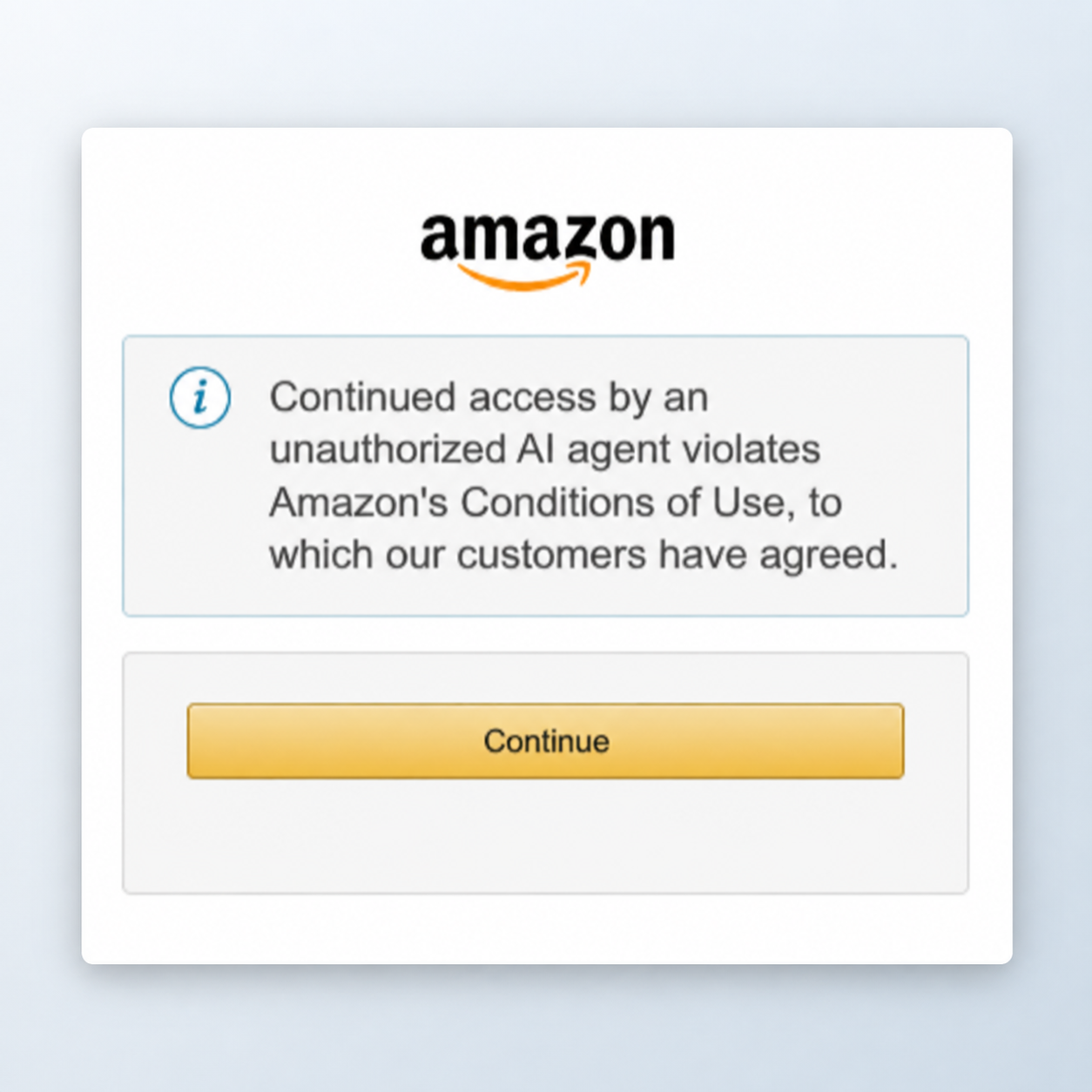
As of Sunday night, people trying to use Muse to shop on Amazon were seeing the popup, “Continued access by an unauthorized AI agent violates Amazon’s Conditions of Use, to which our customers have agreed.”
“We think it’s fairly straightforward that third-party applications that offer to make purchases on behalf of customers from other businesses should operate openly and respect service provider decisions about whether or not to participate,” an Amazon spokesperson said in a statement.
Meta did not immediately respond to a request for comment Sunday night.
The company said previously that Muse “has no visibility into people’s passwords or payment methods,” and that credentials a user shares “go into secure storage, so Muse can use them without seeing them, including passwords a person types into the browser themselves.”
Business partners: The standoff between the tech giants is especially notable because the two companies work together: Amazon products have been purchasable inside Facebook and Instagram since 2023, and Meta signed a multibillion-dollar deal in April to run agentic AI workloads on Amazon’s Graviton chips.
It’s part of a larger debate over who controls the online shopping experience and the customer relationship when AI agents buy items on behalf of consumers.
The message Amazon is showing people who use Meta’s Muse agent to shop on its site. (Amazon Image)
On Sunday night, Amazon said it is in direct conversation with Meta about the issue. Asked whether it would consider taking legal action, the company declined to comment.
The business stakes are high for Amazon. In addition to operating its flagship e-commerce site, Amazon generated more than $68 billion in ad revenue last year — a business that depends on people browsing its pages and seeing sponsored products.
Security implications: Muse can reach account pages and order history if a customer prompts it to do so, Amazon says. Because the agent doesn’t identify itself, the company says, that amounts to an undisclosed third party moving through customer accounts, processing transactions and handling sensitive data without Amazon’s knowledge or consent.
Amazon said agents that operate openly help keep the customer experience safe and reliable, and that other services buying on a customer’s behalf typically do so with the merchant’s agreement. It cited food delivery apps and the restaurants they take orders for, and online travel agencies and the airlines they book tickets with.
“Agentic third-party applications such as Muse have the same obligations, and we’ve requested that Meta remove Amazon from the experience,” Amazon’s spokesperson said in the statement.
The court denied Amazon’s petition for rehearing on Sept. 10. However, the ruling left one avenue open for Amazon: claims built on contracts and terms of service. The message Muse users are now seeing doesn’t accuse anyone of hacking but cites Amazon’s Conditions of Use.
How Muse works: Meta launched Muse on Sept. 8 as a personal agent that carries out multi-step tasks rather than answering one-off questions, connecting to services including email, calendar, payments, dining and shopping.
It’s free, with paid subscription tiers, and available on iOS, Android, muse.ai and WhatsApp.
Meta says the agent runs on a secure virtual machine, with its own browser, and checks with the user before sensitive actions like sending an email or making a purchase. A separate monitoring agent called Sentinel has to approve anything Muse sends to the internet.
The Muse launch materials describe the mechanism now at the center of the dispute: If a service has a public API, Muse can connect to it using credentials the user provides. If it has no API at all, Meta says, the agent “can use the service through a browser the way you would.”
Muse has caught on fast. A week after launch, it became the No. 1 free app in Apple’s U.S. App Store, ahead of ChatGPT. Early users have described it switching an auto insurance policy, hunting down discount codes at checkout, and loading an online grocery cart.
Amazon launched Alexa for Shopping in May, an AI agent that researches products and makes recommendations. Its own agentic shopping feature, Buy for Me, finds items on external brands’ sites, but the company points out that Buy for Me identifies itself and lets brands opt out.
 Login