Zcash mining activity has risen more than 2.5 times in 2026 as stronger ZEC prices have pushed estimated revenue per megawatt-hour to about four times the level generated by Bitcoin miners. Zcash mining returns have outpaced Bitcoin per machine Grayscale…
Currently, market attention is gradually shifting toward the countdown to the procedural vote on the Digital Asset Market Clarity Act (CLARITY Act) on September 15. Against the backdrop of unclear regulatory expectations, XRP has recently performed relatively weakly. At the…
XRP derivatives experienced a rare 10,535% liquidation imbalance during the Labor Day period, a time typically characterized by lower liquidity. XRP has recently undergone significant market volatility. Amidst the relatively low liquidity of the Labor Day holiday, the price briefly…
As Bitcoin prices continue to fluctuate, investors are increasingly concerned about short-term market risks, and more and more BTC holders are beginning to explore cloud mining and other digital asset methods to generate daily income of up to $2,700. Unlike…
The U.S. Treasury Department fully launched its government debt buyback program on Sep. 7, boosting market expectations regarding the near-term liquidity of Bitcoin and XRP. The program has a weekly cap of $14.5 billion. According to the blockchain media outlet…
Marathon Digital reported August production of 670 Bitcoin, while its corporate treasury balance reached 25,000 BTC under its full HODL strategy.
The update gives investors a fresh look at one of the largest public Bitcoin miners at a time when mining companies are being judged on more than production alone. Hashrate, power costs, treasury strategy, uptime, and capital discipline all matter now.
Marathon’s August report gives the market two simple numbers to work with: 670 BTC mined during the month and 25,000 BTC held on the balance sheet.
Both matter, but they tell different parts of the story.
The company’s treasury balance reached 25,000 BTC.
Marathon retained mined coins under its full HODL strategy.
Production Shows Operating Strength
Monthly Bitcoin production remains a core mining metric.
It tells investors how much BTC a company actually mined during the reporting period. That makes it more useful than headline hashrate alone, because production reflects the real effect of uptime, network difficulty, machine deployment, and operational execution.
Marathon’s 670 BTC August output shows the company remains a major force in the mining sector.
But production should still be read in context. Bitcoin mining is competitive. Every miner is fighting for the same block rewards, and global network difficulty can shift the economics quickly.
That is why investors compare output against deployed hashrate, energy costs, and operating margins.
The 25,000 BTC Treasury Is The Bigger Balance Sheet Story
Marathon’s treasury balance is also important.
Holding 25,000 BTC gives the company large direct exposure to Bitcoin price movements. That can make the equity more attractive to investors looking for public-market Bitcoin exposure, but it also brings volatility.
A full HODL strategy means Marathon is not selling mined coins into the market as part of its normal monthly process.
That can support the company’s long-term Bitcoin exposure, but it also means the balance sheet becomes more tied to BTC price.
For shareholders, that is both the appeal and the risk.
Mining Companies Are Becoming Treasury Vehicles
Public miners increasingly sit between two narratives.
They are operating companies that run infrastructure, deploy machines, negotiate energy contracts, and manage data centers. But they can also become Bitcoin treasury vehicles when they retain mined BTC.
Marathon is firmly in that second conversation.
The company’s treasury size makes its Bitcoin holdings a central part of how investors evaluate it. That does not replace operational performance, but it does mean BTC price can heavily influence market perception.
What Not To Overstate
The August production figure should not be confused with Bitcoin sold.
The company reported a full HODL strategy for mined coins, so the correct framing is production plus treasury growth, not miner selling.
It is also important not to overstate the treasury’s dollar value without checking the exact BTC price used.
Bitcoin moves quickly, and treasury valuations can change hour by hour.
The Market Read
Marathon’s August update gives Bitcoin mining investors a useful snapshot.
The company mined 670 BTC, kept its HODL strategy intact, and reported a 25,000 BTC treasury balance. That keeps Marathon near the center of the public miner conversation.
The next questions are familiar: how efficiently it can keep mining, how network difficulty evolves, how power costs behave, and whether the company continues holding through future market volatility.
For now, Marathon remains both a miner and a major public-company Bitcoin treasury story.
This article draws on Marathon Digital’s August 2026 Bitcoin production update.
This article was written by the News Desk and edited by Samuel Rae.
This report is based on information released by Ir. at Ir
CleanSpark has expanded its operational deployed hashrate beyond 30 EH/s after completing the acquisition of two Mississippi data center facilities.
The company said the deal added 75 MW of operational power capacity, helping it pass the 30 EH/s milestone ahead of schedule. For Bitcoin mining investors, that is a meaningful operational update because hashrate growth remains one of the cleanest ways to track a miner’s scale.
But the wording matters.
Operational deployed hashrate is not the same thing as theoretical nameplate capacity. It also does not automatically tell investors how much Bitcoin the company will mine every month. Mining output depends on uptime, network difficulty, energy costs, machine efficiency, and the wider hashprice environment.
CleanSpark passed 30 EH/s in operational deployed hashrate.
The milestone followed the acquisition of two Mississippi data center facilities.
The facilities added 75 MW of operational power capacity.
Why 30 EH/s Matters
Bitcoin mining is a scale business.
The more efficient hashrate a miner controls, the stronger its chance of earning block rewards relative to competitors. That is why miners constantly report operational capacity, energized sites, deployed machines, and monthly production.
Crossing 30 EH/s puts CleanSpark deeper into the top tier of public Bitcoin miners.
It also gives investors a measurable milestone. In a sector full of forward-looking expansion plans, actual deployed hashrate matters more than promises.
CleanSpark is telling the market that the capacity is operational, not just planned.
The Mississippi Facilities Add Power
Power is one of the most important assets in Bitcoin mining.
ASICs matter, but miners cannot scale without reliable electricity, site control, cooling, and infrastructure. The Mississippi acquisition adds 75 MW of operational capacity, giving CleanSpark more room to run machines and expand output.
That kind of facility deal can be just as important as buying new miners.
In the post-halving environment, miners need both scale and efficiency. Higher network difficulty means weaker operators can get squeezed, especially if power costs are high or uptime is poor.
Operational capacity is the foundation of survival.
Hashrate Does Not Equal Bitcoin Production
Investors should avoid treating the hashrate milestone as a direct production guarantee.
A miner can have strong deployed capacity and still face lower output if network difficulty rises sharply. It can also lose efficiency through downtime, curtailment, extreme weather, maintenance, power constraints, or machine underperformance.
Bitcoin mining is always relative.
CleanSpark’s 30 EH/s matters because it improves the company’s competitive position. But the actual BTC mined depends on how that hashrate performs against the global network.
That is why monthly production updates remain important.
Miners Are Still Repricing Around Infrastructure
The mining sector is changing.
Investors are no longer looking only at Bitcoin mined each month. They are also studying power assets, data center optionality, high-performance computing opportunities, balance-sheet discipline, and merger activity.
CleanSpark’s facility acquisition fits that broader shift.
Owning or controlling power-heavy infrastructure can give miners options. Some will stay focused on Bitcoin. Others may explore AI or HPC hosting. Either way, access to power is becoming a more valuable strategic asset.
The Market Signal
CleanSpark’s update gives the market a concrete operating milestone.
The company has added capacity, passed 30 EH/s, and strengthened its position among public Bitcoin miners. That does not remove mining-cycle risk, but it does show execution on infrastructure expansion.
For investors, the next things to watch are uptime, monthly BTC production, fleet efficiency, hashprice, and whether the Mississippi assets contribute consistently.
In Bitcoin mining, scale helps. Execution decides whether that scale pays off.
This article draws on CleanSpark’s investor materials relating to its 30 EH/s operational hashrate milestone.
This article was written by the News Desk and edited by Samuel Rae.
This report is based on information released by Ir. at Ir
Dan Loeb’s Third Point has disclosed an equity position in Core Scientific, adding another institutional name to the growing trade around Bitcoin miners moving deeper into AI infrastructure.
The position appeared in Third Point’s Q2 13F filing, with the fund reporting 54,000 shares of Core Scientific. That is not the same as buying Bitcoin directly. It is equity exposure to a company that built its identity around Bitcoin mining infrastructure and has since become part of a wider market conversation around high-performance computing, data centers, and AI demand.
That distinction matters.
The trade is not simply “hedge fund buys Bitcoin.” It is more subtle: institutional capital is looking at parts of the old mining stack and asking whether those assets can be repurposed for the next compute cycle.
For more details, visit the official Sec platform.
TL;DR
Third Point disclosed a 54,000-share position in Core Scientific in its Q2 13F filing.
The position gives the fund equity exposure to a Bitcoin miner tied to the AI infrastructure theme.
This should not be described as direct Bitcoin accumulation by Third Point.
Why Bitcoin Miners Became AI Infrastructure Candidates
Bitcoin miners already own or lease large-scale energy and data-center infrastructure.
That made them natural candidates for AI compute pivots. The AI boom has created heavy demand for power, land, cooling, hosting, and high-density facilities. Some mining companies have been able to reposition part of their infrastructure for high-performance computing customers.
Core Scientific sits directly inside that market shift.
A company once valued mainly on Bitcoin production can now be assessed through a wider lens: power capacity, hosting contracts, data-center optionality, balance-sheet repair, and exposure to AI compute demand.
That changes how investors think about the sector.
Third Point’s Position Is A Signal, Not A Verdict
A 54,000-share position is not enough on its own to define the entire trade.
But Third Point is a well-known institutional investor, and its 13F disclosures are watched because they can show how sophisticated funds are positioning across changing themes.
The Core Scientific stake suggests that Bitcoin miner equities are no longer being viewed only as leveraged BTC proxies.
They may also be treated as infrastructure assets.
That matters because the mining sector has been volatile. Miners face Bitcoin price risk, energy costs, halving pressure, debt, hardware cycles, and operational competition. AI hosting offers a potential second business line that may be less directly tied to BTC price.
Not Direct Bitcoin Exposure
This point needs to stay clear.
Third Point’s filing does not show spot Bitcoin accumulation. It does not prove the fund is making a direct BTC treasury allocation. It shows a public-equity position in a company connected to Bitcoin mining and AI infrastructure.
That still matters for crypto markets, but for a different reason.
It shows institutional investors may be approaching Bitcoin-adjacent infrastructure through equities rather than coins. That can be attractive for funds that prefer regulated securities, public filings, and traditional portfolio frameworks.
Mining equities can offer crypto exposure without requiring custody of digital assets.
AI Could Reshape Miner Valuations
The biggest question is how durable the AI pivot becomes.
If miners can sign long-term compute or data-center contracts, their valuations may become less dependent on Bitcoin production alone. Investors may begin comparing them with infrastructure, power, or data-center companies rather than only with other miners.
But execution risk is high.
Mining facilities are not automatically AI data centers. AI workloads require different hardware, customer relationships, reliability standards, capital spending, and technical operations. Not every miner will successfully make that transition.
That is why institutional positions like Third Point’s are interesting. They show interest in the theme, but the winners still need to prove themselves.
The Market Read
The Core Scientific stake is another sign that the Bitcoin mining sector is changing.
The old story was simple: miners produced BTC and traded as leveraged proxies for Bitcoin. The new story is more complicated. Some miners are still BTC production businesses. Some are becoming energy infrastructure companies. Some are trying to become AI compute platforms.
Third Point’s filing adds weight to that second narrative.
For Bitcoin markets, this does not mean institutional investors are all buying BTC through mining equities. It means the infrastructure surrounding Bitcoin is becoming useful in other high-demand sectors.
That may make mining stocks more important to traditional investors, even when those investors are not directly buying the coin.
This article is based on Third Point’s Q2 13F filing and public disclosures relating to Core Scientific.
This article was written by the News Desk and edited by Samuel Rae.
This report is based on information released by Sec. at Sec
As part of its nuclear fusion processes, the Sun produces a particularly interesting isotope of helium, known as helium-3. Some of this helium-3 escapes the Sun's gravitational pull as part of the solar wind, a stream of charged particles that emanates out across the Solar System.
Over billions of years, this wind has bombarded every body in the vicinity of the Sun, including Earth's Moon. Lacking a magnetic field or atmosphere, the Moon's surface has no barrier to prevent the constant flow of this wind.
This means that helium-3 has been striking the lunar soil, or regolith, for a long time. These helium ions penetrate only a little way into the individual grains of this soil, but periodically meteorites have struck the lunar surface to churn the soil, mixing some of this helium-3 a little below the surface.
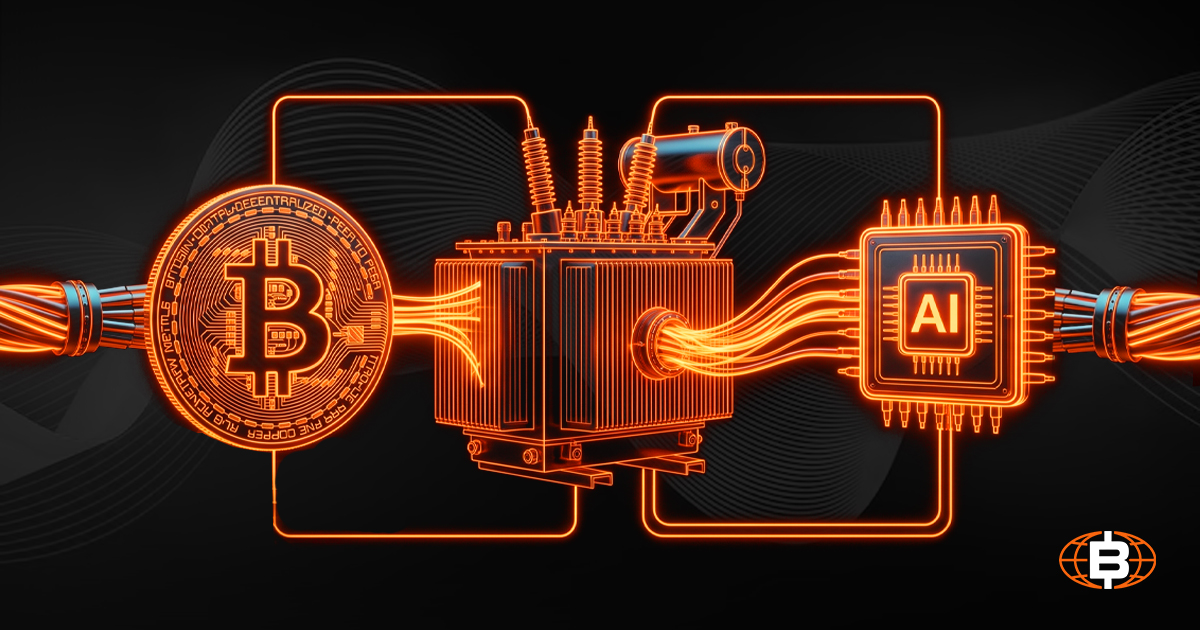
If you’ve scanned headlines over the last year, you’ve likely seen the prevailing market narrative: Bitcoin miners are pivoting to AI data centers, signaling a retreat from proof-of-work.
To casual observers, this looks like a surrender, proof that Bitcoin was just a temporary placeholder until a “better” compute workload arrived.
However, through the lens of power infrastructure and energy economics, that narrative gets the reality completely backwards. The migration isn’t a sign of Bitcoin’s weakness; it is a long-overdue, structurally bullish rebalancing of capital efficiency and global energy pricing.
Here is the underlying reality the market misunderstands.
AI vs. Bitcoin: Opposite Workloads, Same Megawatts
The misconception stems from assuming all digital workloads are created equal. In reality, Artificial Intelligence and Bitcoin Mining require completely opposite operational environments:
AI Training Clusters Are Fragile: If a 100-megawatt AI facility drops power mid-run, millions of dollars of LLM training state are destroyed. AI demands high-grade baseload power, ultra-low latency fiber, and 99.999% continuous uptime.
Bitcoin Miners Are Ultra-Flexible: Bitcoin mining is completely indifferent to latency or location. ASICs can operate anywhere power is cheap. Crucially, if grid power prices spike or local utilities demand load reduction, a miner can curtail power in seconds without losing data or damaging hardware.
The Power Bottleneck: Why Energized Sites Are the Ultimate Asset
AI hyperscalers face a massive speed-to-market bottleneck: securing new 100+ megawatt grid interconnections with utilities can take 3 to 5 years. Meanwhile, Bitcoin miners spent the last decade securing high-voltage interconnections, power purchase agreements (PPAs), and physical site footprint.
Rather than AI “pricing miners off the grid,” miners are acting as pragmatic energy arbitrageurs. They don’t care about the compute payload, they care about maximizing dollar yield per megawatt.
When post-halving mining margins tighten, leasing or retrofitting prime grid-tied sites for high-margin AI workloads becomes a natural capital allocation play. Miners aren’t being evicted; they are monetizing their most valuable asset: time-to-power.
Taming Balance Sheet Volatility
The primary structural weakness of public Bitcoin mining companies has always been balance sheet exposure during bear markets. When hash prices drop, debt-heavy miners are forced to dump mined Bitcoin reserves onto the open market to pay electricity bills and corporate overhead—creating downward price pressure.
The AI shift fundamentally alters this balance sheet dynamic:
Predictable USD Cash Flow: Multi-year hosting leases signed with AI hyperscalers generate steady, high-margin dollar revenue.
Reduced Forced Selling: With corporate overhead covered by AI revenue, operators no longer need to dump their Bitcoin treasury at market bottoms.
The “Mullet” Data Center: Forward-thinking operators run a hybrid model, using high-margin AI workloads on grid-tied power to cover fixed costs, while using flexible Bitcoin mining to monetize off-peak power and provide lucrative demand-response services back to the grid.
The Bottom Line: Pure Energy Capitalism
The shift taking place across global data centers isn’t a trade-off where one technology “wins” and the other loses. It is a market optimization.
AI hyperscalers get the energized, grid-connected real estate they need to meet immediate compute demands without waiting half a decade in a utility queue. Bitcoin miners get predictable cash flows, lower cost of capital, and stronger balance sheets to navigate halving cycles.
Instead of competing for power, AI and Bitcoin infrastructure are converging into a symbiotic relationship, allocating every megawatt of global energy to its highest and best financial use.
Disclaimer: This content was prepared on behalf of Bitcoin For Corporations for informational purposes only. It reflects the author’s own analysis and opinion and should not be relied upon as investment advice. Nothing in this article constitutes an offer, invitation, or solicitation to purchase, sell, or subscribe for any security or financial product.
Keel Infrastructure has decommissioned all of its US Bitcoin mining sites as it repurposes those locations for AI and high-performance computing workloads.
The company, formerly Bitfarms, disclosed the shift in its August 2026 Form 10-Q. It reported a $65 million net loss and $819 million in total liquidity, while still holding $121 million in Bitcoin reserves.
That last point matters.
Keel is not exiting crypto entirely. It still operates mining sites in Canada and still holds Bitcoin. But in the United States, the company is moving away from mining and toward AI-focused infrastructure.
That makes Keel another example of a broader mining-sector pivot: power assets are becoming valuable beyond Bitcoin.
For more details, visit the official Sec platform.
TL;DR
Keel decommissioned all US Bitcoin mining sites.
The company is repurposing those sites for AI/HPC workloads.
Keel still operates mining sites in Canada and holds Bitcoin reserves.
Why Miners Are Looking At AI
Bitcoin miners have something AI companies desperately need: power.
They have sites, grid connections, power agreements, data-center experience, cooling systems, and operational knowledge. Those assets can sometimes be redirected toward high-performance computing.
AI demand has made that optionality more valuable.
Bitcoin mining revenue is cyclical. It depends on BTC price, mining difficulty, energy costs, block rewards, and transaction fees. AI data-center revenue can be more contract-based and potentially more predictable if customers sign long-term agreements.
That does not mean AI is easy money. It does mean miners are looking at their infrastructure differently.
US Mining Economics Are Under Pressure
Keel’s US exit suggests mining economics in certain regions may no longer justify continued operation.
Power costs, competition, facility upgrades, hardware efficiency, and post-halving economics all matter. If a site can generate more attractive returns as an AI/HPC facility than as a Bitcoin mine, management has a clear incentive to pivot.
That is especially true when AI demand is strong and customers are hunting for capacity.
The company’s $65 million net loss adds pressure to the decision. A firm with losses and valuable infrastructure has to ask where that infrastructure earns the best return.
In the US, Keel’s answer appears to be AI.
This Is Not A Full Crypto Exit
The framing needs care.
Keel still operates mining sites in Canada. It still holds $121 million in Bitcoin reserves. The company is not shutting down every mining operation or abandoning crypto completely.
The shift is regional and strategic.
That makes the story more interesting than a simple “miner quits Bitcoin” headline. Keel is reallocating US power assets while preserving other exposure.
The result is a hybrid model: some crypto, some AI, some infrastructure monetization.
Bitcoin Miners Are Becoming Data-Center Companies
The mining industry is changing because the assets behind mining are useful for more than hashing.
A miner with cheap power and a large site can mine Bitcoin, host machines, provide grid flexibility, or build AI compute capacity. The best option may change depending on market conditions.
That flexibility could reshape valuations.
Investors may start valuing miners less like pure Bitcoin proxies and more like power-and-compute infrastructure businesses. Companies that can secure high-value AI customers may receive a different market multiple from miners exposed only to BTC economics.
Keel’s pivot fits that trend.
What To Watch Next
The next question is execution.
Repurposing mining sites for AI/HPC is not automatic. AI workloads require different hardware, reliability standards, networking, cooling, and customer contracts. A former mining site may have power, but it still needs the right buildout.
Investors will watch how quickly Keel can convert sites, sign customers, and generate revenue from the new strategy.
For the Bitcoin mining sector, the signal is clear.
Power assets are being repriced. If AI can pay more for the same megawatts, miners will keep considering pivots.
Keel’s US mining exit is not the end of Bitcoin mining. It is another sign that mining companies are learning to monetize energy in more than one way.
This article is based on Keel Infrastructure’s August 2026 Form 10-Q filing.
This article was written by the News Desk and edited by Samuel Rae.
This report is based on information released by Sec. at Sec
The Bitcoin Improvement Proposal (BIP)-110 appeared to stall at the weekend, when the nodes that support the proposal broke away from the main network and produced the chain split people had been warning about — a tiny, stalled one.
The split came Saturday at block 961,632, when the proposal entered its mandatory signaling window. Nodes running BIP-110 software began rejecting any block that failed to signal support through version bit 4. When the first block at that height arrived without the signal, those nodes rejected it and peeled away onto a separate chain.
And it has gone almost nowhere since.
A pseudonymous mining group called Roughnecks produced both BIP-110 blocks — heights 961,632 and 961,633 — using Ocean’s DATUM protocol, then stopped. By Sunday afternoon the enforcing branch remained stuck at 961,633 while Bitcoin’s dominant chain had advanced to 961,744, a gap of 111 blocks and roughly 17 hours without a new block on the fork.
The support was never there. Only 51 of the 2,016 blocks in the preceding difficulty period signaled for the proposal, about 2.53%, against the 55% threshold needed for voluntary lock-in. Since the mandatory window opened, none of the first 113 blocks on the dominant chain have signaled.
Bitcoin’s difficulty adjustment compounds the problem. The fork inherited the main chain’s difficulty but commands a negligible share of hashpower, and cannot make mining easier until it completes a full 2,016-block period. Estimates of how long that would take range from under a year to decades, depending on the hashrate assumed.
BIP-110, formally the Reduced Data Temporary Softfork, would have capped arbitrary data in transactions for roughly a year, targeting Ordinals inscriptions and oversized OP_RETURN payloads.
Michael Saylor and Blockstream’s Adam Back both opposed it publicly, objecting less to the goal than to an activation method they argued invited exactly this outcome. Saylor wrote Sunday that Bitcoin had worked as designed, putting 99.85% of hashpower on the main chain.
Mining company Ocean, whose team supported the proposal, informed clients that some miners using Ocean’s Stratum templates may have believed they were mining on Bitcoin while their hashrate was directed to the new BIP-110 chain.
The company said it would reimburse miners affected with rewards they would have earned on the non-BIP-110 chain during that window.
Canadian digital asset manager 3iQ Corp. will work to manage some of the Bitcoin reserves of Bhutan’s Gelephu Mindfulness City project.
3iQ, Canada’s biggest and oldest digital asset fund manager, will not only manage the 10,000 Bitcoins pledged to build the new region, but also invest in local talent and establish a long-term physical presence in Gelephu as the region positions itself as Bhutan’s new offshore digital financial hub, according to a statement.
Bhutan last year said it would use 10,000 Bitcoins to fund a special administrative region called the Gelephu Mindfulness City. First announced in 2023, the GMC will be “a world-class economic hub in southern Bhutan.”
“From the very inception we were aligned with GMC’s vision to create a next-generation economic hub that attracts global talent while being committed to Bhutan’s cultural values and environmental principles,” 3iQ’s director and CEO, Pascal St-Jean, said in a statement.
The GMC’s Board Director, Jigdrel Singay, added: “Beyond their institutional expertise and global track record in digital asset management, what stood out to us was their genuine commitment to investing in people, transferring knowledge and building local capabilities.”
Bhutan has been buying Bitcoin for years, and the GMC project is a way of using its stack to
Bhutan started quietly mining Bitcoin in 2019. Then, in 2024, it announced it held a reserve of the digital coins before in January 2025 saying it would hold other cryptocurrencies on its balance sheet.
According to Bhutan’s government, the GMC, will be “a new economic hub in southern Bhutan designed around mindfulness, sustainability, and innovation,” and is central to Bhutan’s broader effort to diversify its economy beyond hydropower and tourism.
The plan is similar to El Salvador‘s crypto ambitions. The tiny Central American nation also announced plans in 2021 for a smart city dubbed “Bitcoin City” — a tax-free economic hub aimed at attracting the nomadic wealthy and tech entrepreneurs, funded via Bitcoin-backed tokenized bonds.

 Login
Login