 Login
Login
Your Windows 11 PC is wasting RAM on 5 apps you probably don't even use
Windows 11 and its native apps don't have the best reputation. Microsoft has packed the system with all kinds of features, making it feel increasingly bloated.
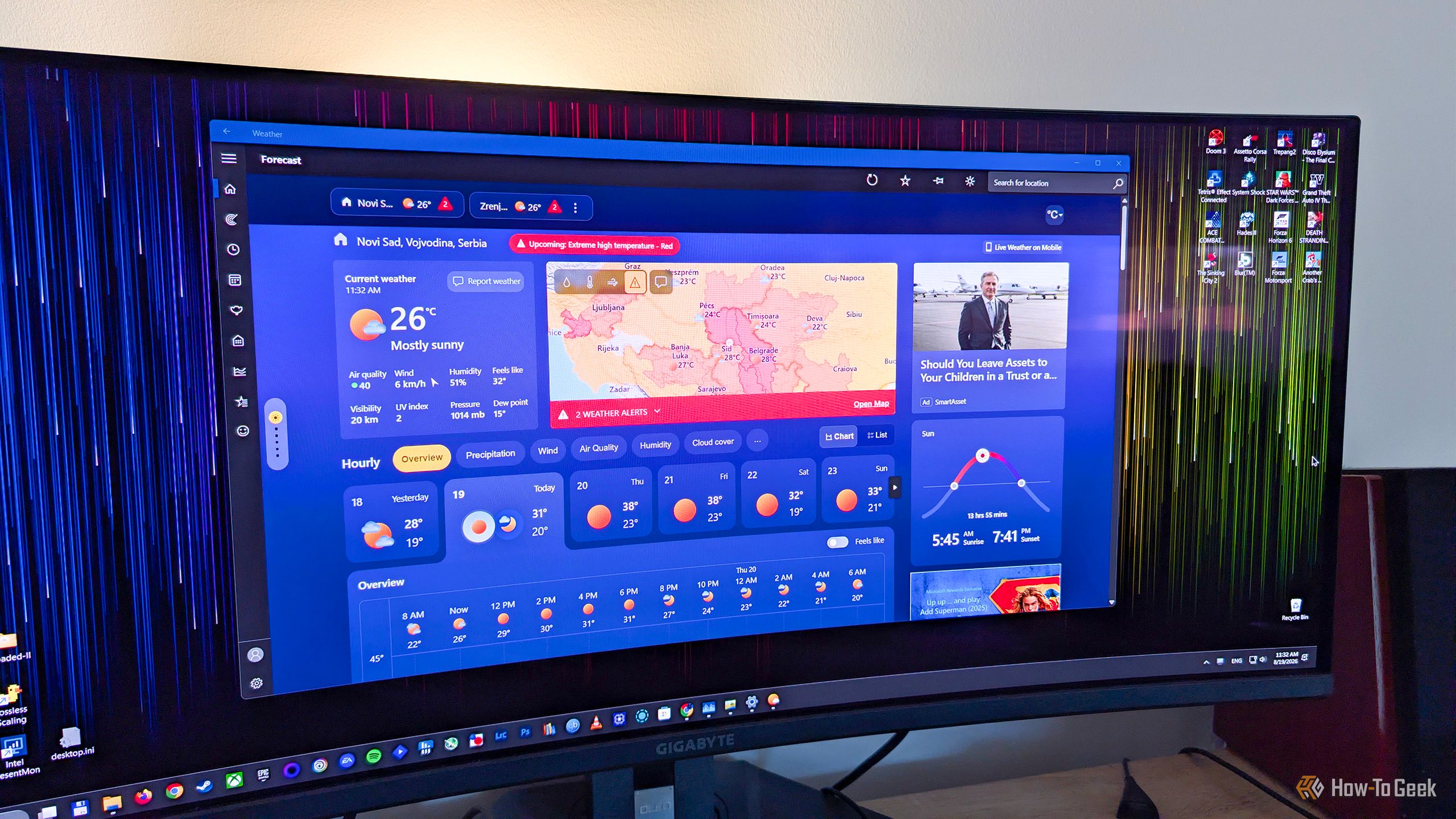

Windows 11 and its native apps don't have the best reputation. Microsoft has packed the system with all kinds of features, making it feel increasingly bloated.
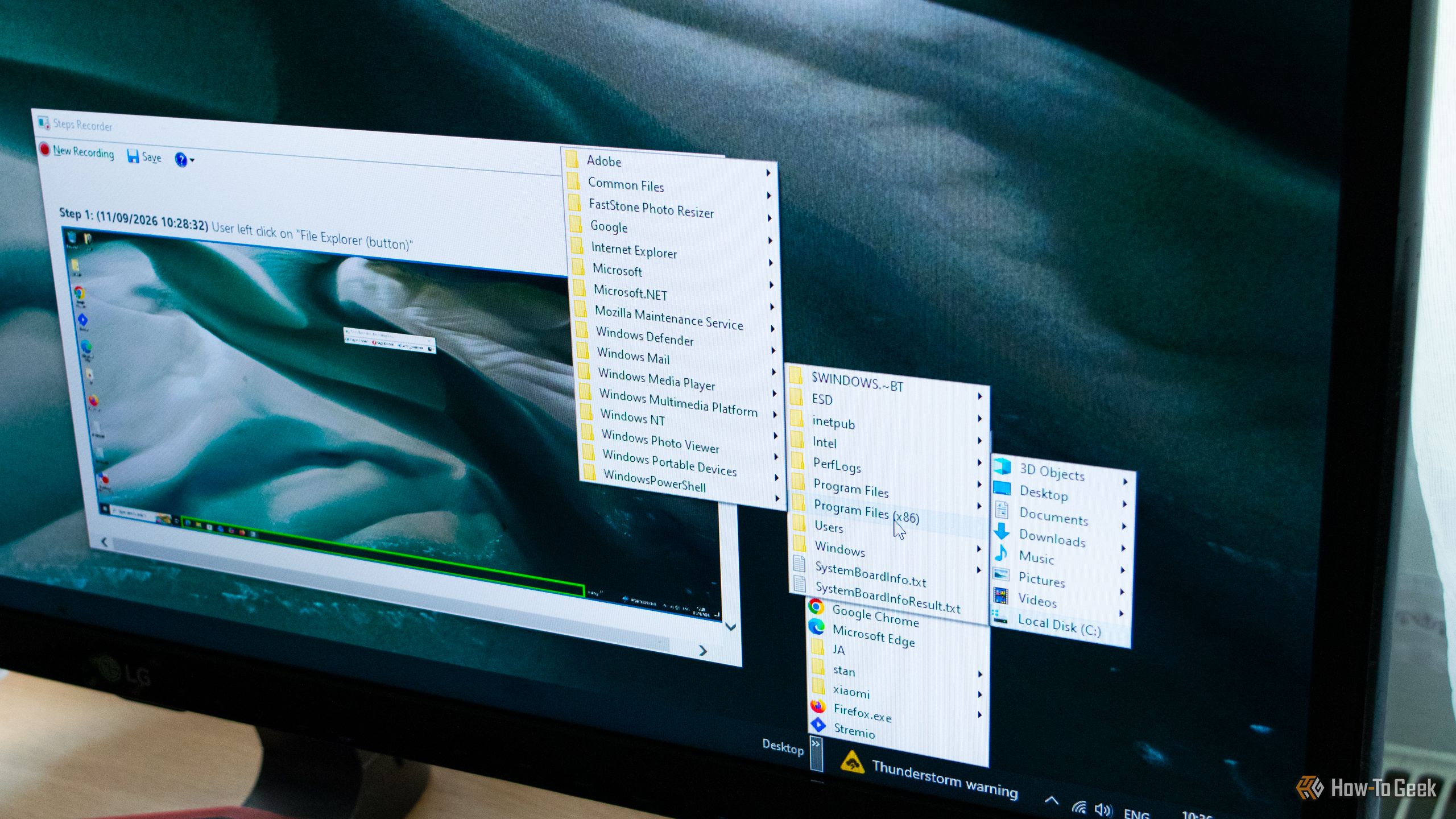
Microsoft included a number of really helpful features and tools in past versions of Windows that many users came to love. While some of these utilities have survived the transition to Windows 11, others were left by the wayside. Some even made it to Windows 11, only to be retired in one of its subsequent updates. Here are some of my favorite classic Windows tools that are missing from Windows 11, with the latest version of Windows still lacking equivalent features.

This week on the GeekWire Podcast: A study commissioned by the City of Seattle says the city is not in decline but is in danger — finding that 10 companies, nine of them in tech, pay three-quarters of the payroll tax on large employers, and that the tax structure uniquely penalizes the hiring of senior, high-compensation workers.
The report says Seattle should be most concerned about AI but most active in cleantech, the one industry the city can actually shape, since it owns the electric utility and controls permitting, building codes and land use.
Meanwhile, the Seattle Times and Newsday sue Microsoft and OpenAI, accusing them of copying hundreds of thousands of articles to train their AI models, putting Microsoft’s hometown paper against a company that helps fund some of its journalism.
And Apple’s first foldable arrives as the iPhone Duo, reviving the name of the dual-screen phone Microsoft gave up on in 2023, with Surface fans arguing Apple took more than the name.
Which leads us to a new GeekWire Trivia Challenge about the Microsoft products that Apple later turned into categories. Stick around to the final segment to see if you can figure it out.
Subscribe to GeekWire in Apple Podcasts, Spotify, or wherever you listen.
Audio editing and production by Curt Milton.
Like a lot of Windows users, I resisted Linux for years for two main reasons. I expected a steep learning curve, and I assumed I'd have to give up some of the Windows apps I rely on every day. Either one is enough to make switching feel like more trouble than it's worth.
For longer than I care to remember, I've written Excel formulas, dragged them down hundreds of rows, copied calculations across columns, and built running totals one cell at a time. This works, but I always find I'm doing too much work, especially when some of those jobs can be handled by a single formula sitting in a single cell.

Microsoft is testing automatic Light and Dark Mode switching in Windows 11, with scheduling based on sunrise, sunset, fixed times, or PC activity.
The post Microsoft May Soon Fix Windows 11’s Obvious Dark Mode Automation Gap appeared first on TechRepublic.
See what you missed in Daily Tech Insider from Sept. 7–11.
The post AI Agents, Foldables, Cyberthreats, and Chip Deals Define This Week in Tech appeared first on TechRepublic.
Microsoft is testing automatic Light and Dark Mode switching in Windows 11, with scheduling based on sunrise, sunset, fixed times, or PC activity.
The post Microsoft May Soon Fix Windows 11’s Obvious Dark Mode Automation Gap appeared first on TechRepublic.
See what you missed in Daily Tech Insider from Sept. 7–11.
The post AI Agents, Foldables, Cyberthreats, and Chip Deals Define This Week in Tech appeared first on TechRepublic.
Microsoft's PowerToys suite of Windows utilities, which you can download from GitHub or install through the Microsoft Store, has earned a reputation as a tool designed for — and used exclusively by — Windows power users. But the reality is more nuanced.

I've spent a frankly unreasonable amount of time in Excel, so I've had plenty of opportunities to find out which habits make my life easier—and which ones come back to haunt me later. Over the years, I've gradually ditched a handful of things that seemed harmless at the time but made my spreadsheets harder to sort, filter, update, or understand. Here are five things I stopped doing in Excel, and why my spreadsheets have become much more reliable as a result.

Sometimes the best Excel projects start with something the program can't do out of the box. Surprisingly, Excel doesn't have a built-in timeline chart. So I experimented with a regular line chart, and 10 minutes later, I had a series of events mapped out in a dynamic timeline. Want to give it a try this weekend? Here's what I did.


GeekWire is profiling over the next few weeks some of the people and teams that are shaping the evolution of Microsoft in what we’re calling its “Microsoft 2.5” era.
Just Don’t Call It an ‘Agentic OS.’ Given Microsoft’s one-pointed AI focus these days, it’s not surprising that the Windows organization is on the agentic train.
But Executive Vice President of Windows + Devices Pavan Davuluri has learned the hard way not to call Windows an agentic OS. He did so back in November 2025, via a tweet and blog post, and the customer backlash was quick and biting.
But Davuluri has not done a complete U-turn because of the criticism. Instead, he has changed how he talks about where Windows is going — which is still in an agentic direction.
“The user of Windows going forward will continue to be users … but it’s also going to add these agentic workloads,” the nearly 26-year Microsoft veteran Davuluri told GeekWire in a recent interview.
During his time at Microsoft, he’s held a variety of roles, from intern to General Manager of Surface, to Corporate Vice President of Windows Silicon & Systems Integration. He was appointed Executive Vice President of Windows + Devices in March 2026, reporting directly to CEO Satya Nadella.
Windows needs to evolve to support agentic workloads through new platform capabilities that the team is building under the covers, Davuluri said. These low-level capabilities, or “primitives,” affect how Windows handles security, identity, governance, observability, and performance when it comes to building and running agents natively.
These coming changes likely will affect the Windows file system, security model, PowerShell, and other foundational components.
Microsoft already is working on Windows identity and manageability to make them better able to service agents. Windows can assign agents a local ID, or a cloud-provisioned identity backed by Entra.
And it also has an early preview of technology known as Microsoft Execution Containers, meant to help secure agents by running untrusted code in sandboxes or virtual machines. It’s these system-level areas where the team is focusing first in preparation for a human+agent future, Davuluri said, rather than the UX/UI level.
Going Back to Basics. Windows has had a lot of very different leaders over the years, with very different management styles and priorities.
For his part, Davuluri said he plans to run the Windows and Surface teams with four principles in mind: Maintaining customer obsession; treating Windows as a complete end-to-end system (“full stack”); focusing on complete user experiences and workflows rather than individual features; and building Windows openly and transparently, with clearer communication about plans and priorities.
On the heels of his promotion to EVP, Davuluri committed publicly to the much-needed goals of improving Windows quality and reliability. In a blog post, he outlined some of the requested changes that his team would be making to Windows, ranging from fixing the way the Insider test program works, to more granular improvements like allowing users to reposition the Windows task bar.
And since then, the team largely has been delivering to the surprise and delight of many long-time Windows users.
Davuluri has also been working to shift the conversation from which new features are coming to a specific build to what are the outcomes Microsoft wants to enable for specific groups of Windows users.
“There is no one single sort of ring for a billion-plus users on the platform,” Davuluri said. Windows users encompass people who use the product in a variety of different ways, so “we need to get clarity in our minds on the things that we do that lift all boats that raise the entire platform — and things that we have to go do that are specific and unique to each of our sets of users based on how they primarily or typically use the device.”
Full-Stack Thinking. Is there still a role for Microsoft as a PC maker in the coming agentic future? Not surprisingly, given his heavily hardware-focused background, Davuluri insisted there is.
When Microsoft debuted its first Surface devices in 2012, officials said the company needed to build its own hardware to create reference designs and innovative form-factor examples for other Windows PC makers.
These days, most Surfaces that ship arguably are not better, spec- or design-wise, than other PCs. But Microsoft still needs to keep a hand in hardware design to understand the full stack, Davuluri claimed.
Surface plays a key role in how Microsoft develops platform abstractions, incubates support for technologies like pen, facial-recognition, and neural-processing units that later spread across Windows, and optimizes for silicon-to-cloud, he said.
While the company’s attempt to create a distinct category of “Copilot+” AI PCs fizzled, Microsoft continues to try to find AI-centric reasons to convince customers to choose Windows devices. Davuluri and others have referred to the idea of “unmetered intelligence” to attempt to make the case for running AI models locally on PCs.
This fall, Microsoft (and other Windows PC makers) plan to roll out new PCs built on the Nvidia RTX Spark platform. The coming Surface Laptop Ultra, which will be optimized for RTX Spark, is aimed at creators, developers and AI builders, all of whom — Microsoft is hoping — will be fueling the growth of its next target user category: Agents.
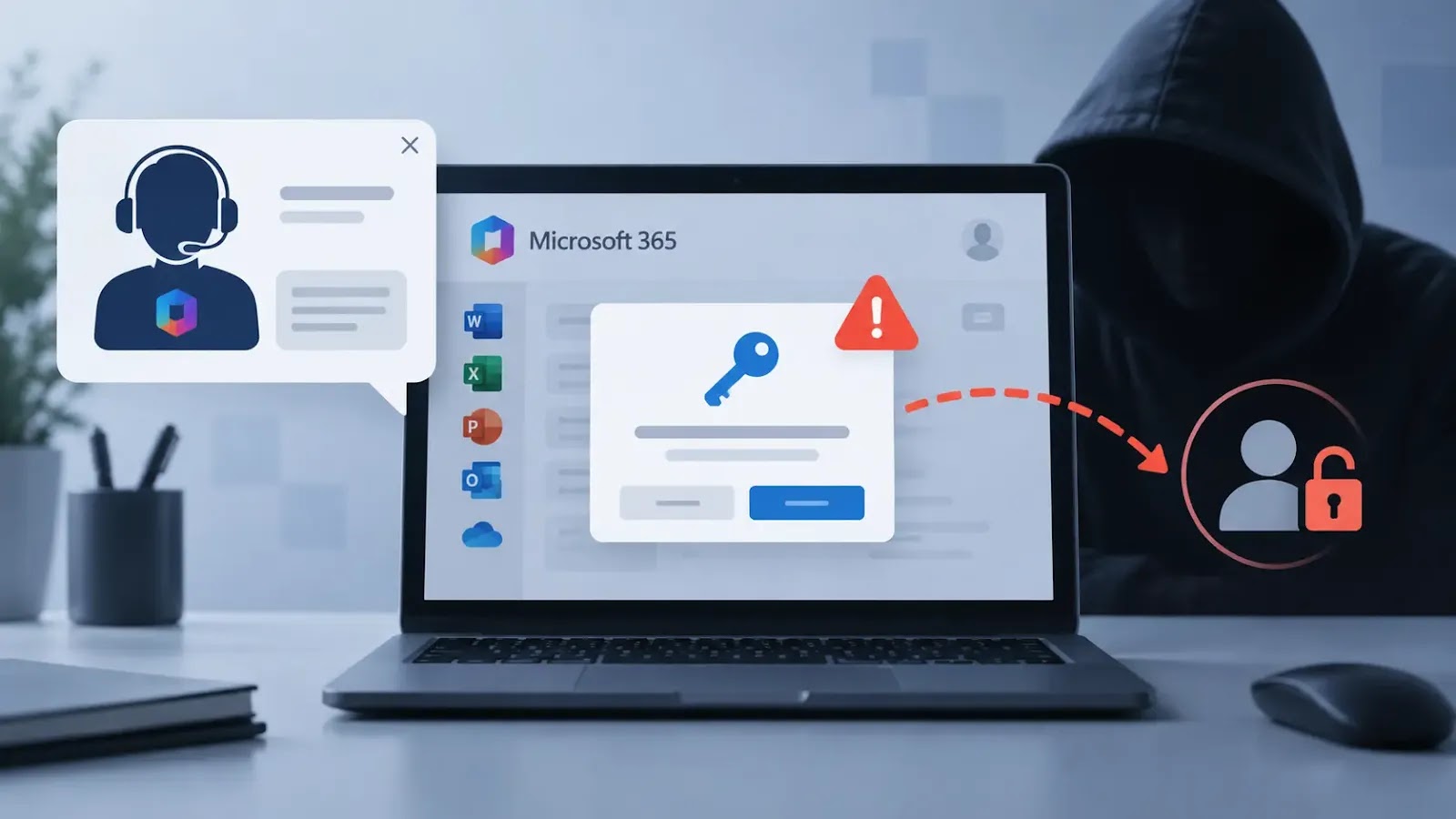
Threat actors are impersonating corporate IT helpdesk staff in an active social-engineering campaign that hijacks Microsoft 365 identities, establishes MFA persistence, and systematically collects data from SharePoint, OneDrive, and Exchange Online. Microsoft Security Research said it has observed the cloud-focused intrusions since May 2026. The activity is marked by unusual sign-ins, attacker-added authentication methods, extensive […]
The post Hackers Pose as IT Support to Hijack Microsoft 365 Accounts With Fake Passkey Alerts appeared first on GBHackers Security | #1 Globally Trusted Cyber Security News Platform.
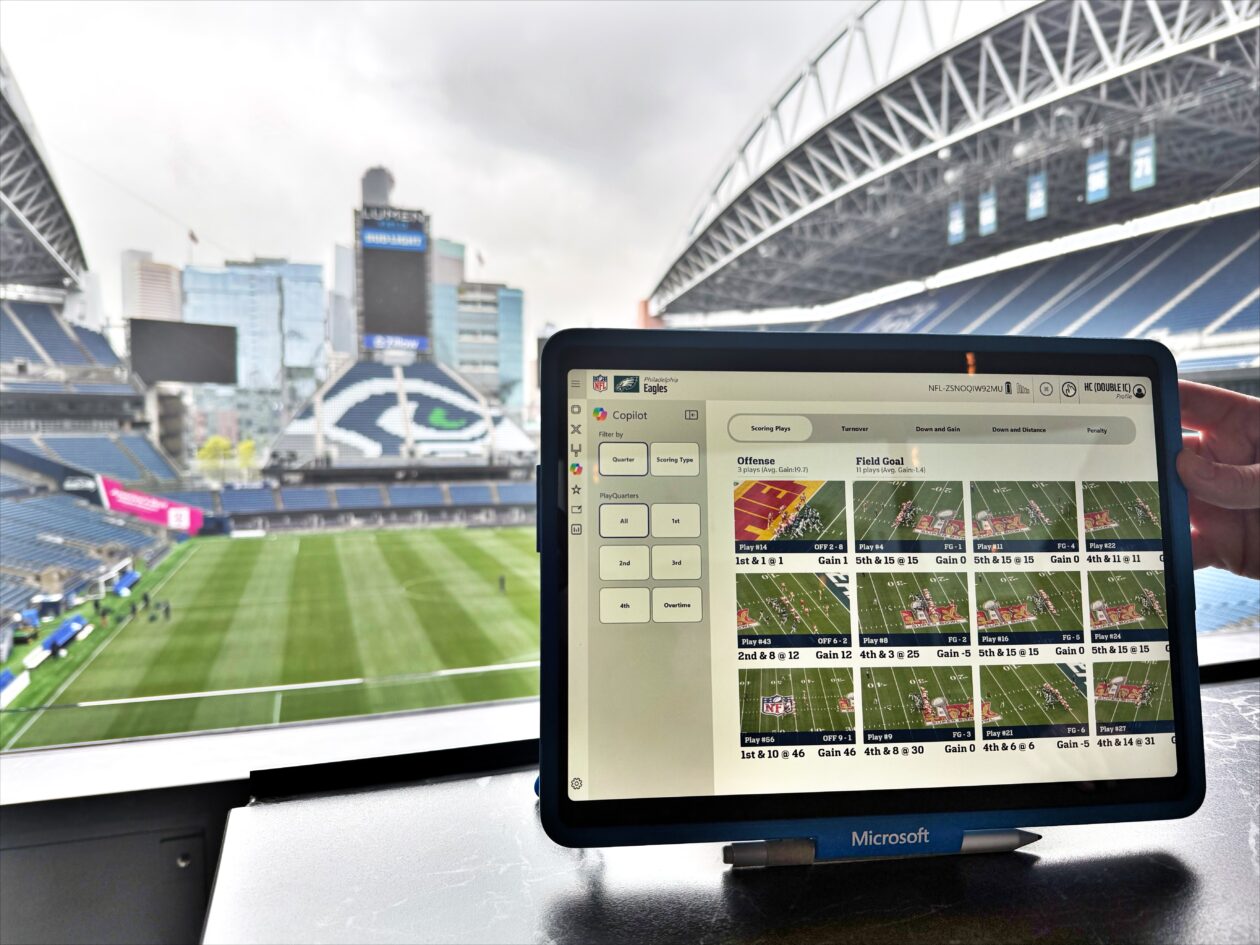
The Microsoft Surface tablets on NFL sidelines — a game-day fixture since 2014 — got a close-up on national television Wednesday night, with NBC highlighting new AI-powered workflows debuting in the Seattle Seahawks’ season opener.
During the broadcast, NBC play-by-play announcer Mike Tirico pointed out the new Surface devices — clad in Action Green cases, no less — in the Seattle coaches’ box above Lumen Field.
Tirico said Seattle head coach Mike Macdonald’s staff, including Brian Eayrs, the director of football analysis and special situations, now has direct access to Microsoft Copilot in real time. The broadcast showcased how the AI assistant is being layered onto sideline hardware to deliver instant data insights and help coaches make faster strategy adjustments.
“They can make sharper calls between series,” Tirico said. “So Copilot is going to give them a little bit more of an opportunity to do some real-time stuff on these tablets as the season goes on.”
It all amounted to a pretty good 40-second ad placement for Microsoft. Coupled with mentions of Next Gen Stats — powered by Amazon Web Services — it was a good night for Cloud City tech giants.
The technology and Eayrs are also featured in a video that Microsoft CEO Satya Nadella shared on X earlier in the day.
With the @NFL back tonight, love seeing @Seahawks analyst Brian Eayrs and coaches across the league using new Copilot and Excel tools to help with decision making in the booths and on the sidelines. pic.twitter.com/PbHugcbLIJ
— Satya Nadella (@satyanadella) September 9, 2026
GeekWire got an early look at Microsoft’s expanding tech suite back in April during a demonstration at Lumen Field. While the rugged Surface tablets on the sidelines remain the most visible hardware, Microsoft showed how Copilot is being integrated deeper into coaching workflows — from custom pre-game templates to running real-time analyses on formation tendencies, snap counts, and player load mid-game.
The core promise of the tech isn’t replacing human judgment — it’s raw speed. In a booth setup like Eayrs’, dedicated analysts use a real-time Excel dashboard that ingests live play-by-play data directly from the NFL. Using Copilot, they can instantly query formation tendencies or player usage metrics on the fly without building complex formulas by hand during the game.
The output from the booth can then be communicated down to the sideline, where coaches and players review still photos and quick situational data on their handheld tablets between drives.
To maintain competitive integrity, the NFL strictly regulates how and when these devices operate.
Under league rules, sideline and booth tablets run on a closed, league-controlled network with no internet access or custom third-party apps allowed. The hardware is locked away by league officials until right before kickoff, collected immediately after the game, and monitored under the NFL’s “Equity Rule.”
If one team’s tech setup fails, the opposing team’s access is restricted or paused to ensure neither side gets an unfair advantage.
The willingness to embrace real-time AI lines up directly with Macdonald’s overarching coaching philosophy.
Macdonald, who previously welcomed being called a “football nerd,” told GeekWire last year that his approach is all about “old school principles, new school methods,” emphasizing that earlier data delivery helps drive better decisions.
“I think it’s cool to be into stuff that is high-tech, data-driven,” Macdonald said at the time. “You’re telling me you’re smart and you’re trying to find edges and trying to find new frontier — that’s cool to me. It sounds like a winning formula.”
Macdonald, who has a Super Bowl ring to show for his coaching style, also called himself a “psycho data guy” who needs “numbers and tendencies” in another interview last year.
Did Copilot and AI provide an edge on Wednesday night?
Macdonald and his analytics team will have to answer to that, but the Seahawks defense certainly made the ultimate call when it mattered most — sealing a 13-10 victory over the New England Patriots with a last-second interception.

[Editor’s Note: Jacob Colker is co-founder and co-managing director of AI House.]
Seattle is one of the most talented, creative and inventive places in the world. But if we want the rest of the country to see us that way, we have to start acting like we believe it ourselves.
Let’s talk about what it means to be proud.
My mother grew up in Tarnów, Poland. She escaped communism and came to the United States in 1978 looking for a better life. She found one, built a family, and has lived in America for nearly 50 years.
But my mom is still very, very Polish.
Several times a year, I get a message: “Jakub. Did you see this?”
I already know what’s coming.
Some Polish person did something. A Polish athlete won something. A Polish scientist discovered something. Some guy with a Polish grandmother finished third in a regional Nebraska chess tournament. Doesn’t matter. Poland.
“Jakub. Look at this person.”
Okay, Mom. Who is she?
“POLISH.”
That’s it. That’s the story.
And I love it, because Mom has this completely indestructible pride in where she comes from. Plenty of us know someone like this: a Greek mom, Vietnamese dad, Indian uncle or Nigerian aunt. Somebody from their corner of the world did something great, and you are going to hear about it.
There is power in that instinct. Not because your people are better, but because you believe your place matters.
Seattle could use more of that.
We are almost pathologically humble. Our response to notable achievements is often a polite nod before everybody gets back to our regularly scheduled Seattle freeze.
That humility is working against us.
I see Seattle’s potential every day working alongside dozens of entrepreneurs building startups. Some of the most ambitious and talented people in the world are already here.
We have many billion-dollar startups across the region and more than 200,000 people working across technology, science, space, health and startups. That is more than enough talent to build yet a dozen more unicorns.
Nearly 40% of the world flies every day on airplanes built here. Blue Origin and SpaceX build rockets here. Starbucks, Amazon, Costco, REI and Nordstrom reshaped how the world shops. Microsoft helped put computing into our homes. AWS and Azure helped make the cloud the infrastructure of modern life. The University of Washington ranks among the world’s best. Seattle medical breakthroughs have helped save tens of millions of lives. We are pushing forward fusion energy, aerospace and maritime innovation. And let’s not forget: we just won the darn Super Bowl.
And so, so much more.
So why, despite all the evidence, do we still seem to have a communal case of imposter syndrome?
This is not a city lacking accomplishments.
It is a city with a branding problem.
Cities have brands whether they intend to or not. Silicon Valley is where ambitious people build companies. Nashville is music. Los Angeles for film and television.
Seattle’s cultural humility mostly assumes our accomplishments speak for themselves.
They don’t.
Reputation gets built one story at a time. You hear one story and it is interesting. You hear 10 and you notice a pattern. You hear 50 and your beliefs begin to change: That’s where important science happens. That’s where talented people live. That’s where I should invest, build or work.
Those beliefs shape real decisions about where people move, where companies get built and where investors put their money.
Step 1: Let’s tell one clear story — Seattle’s talent pool is ridiculous.
Seattle is where deep technical talent meets deep domain expertise to build consequential things: AI, aerospace, cloud computing, medicine, fusion, robotics, maritime technology and enterprise software.
We do not need 50 slogans. We do not need another consultant-led branding exercise. We need one simple idea that people outside this region can remember: Seattle’s talent pool is ridiculous.
There is a reason some of the world’s most important companies have built major engineering centers, research hubs and second headquarters here for decades. They come for the talent.
And that talent is why Seattle will not just participate in the future. We will lead in building it.
Step 2: Let’s use the megaphones we already have.
Seattle already has outlets (including this one) telling this story — publications, podcasts and social channels that document the region’s startups, breakthroughs and product launches.
Every day, startups are raising money, scientists are making breakthroughs, companies are launching products, engineers are building technology and institutions are pushing this region forward.
That is not just tech news. That is the raw material of Seattle’s reputation. So let’s use it.
When you read or hear about a Seattle startup doing something remarkable, share it. When you see a story about a breakthrough at Fred Hutch or the University of Washington, send it to someone outside the region. When a local company raises money, lands a major customer or gets acquired, don’t just scroll past it. Amplify it.
Step 3: Let’s treat every local win as Seattle’s win.
When a local robotics company ships something remarkable, that is Seattle’s story.
When a maritime startup reinvents how ports operate, that is Seattle’s story.
When our AI research labs, or hometown heroes in Amazon and Microsoft, create breakthroughs, that is Seattle’s story.
When a biotech company lands a major breakthrough, when a game studio creates a global hit, when a clean-energy company reaches a milestone, that is Seattle’s story.
Our companies, universities, hospitals, labs, investors, civic organizations and business leaders should act like an amplification network for one another. Stop treating somebody else’s success as somebody else’s news.
Their win is our collective proof.
Step 4: Let’s put Seattle on the label.
Founders need to say where they are building. “Made with ❤️in Seattle” should be on the bottom of every website. Put Seattle in the press release. Put it in the LinkedIn post. Mention it onstage. Say it in interviews. Tell investors. Tell customers.
Silicon Valley companies have spent decades attaching their success to their geography. We should do the same. If you build something extraordinary here, make sure the world knows it was built here.
Step 5: Let’s do a better job of selling Seattle.
Every venture capitalist, founder, executive and civic leader in this region should be able to explain in 60 seconds why somebody should build a company here.
Not defend Seattle. Not apologize for Seattle. Sell Seattle.
Reminder: It’s the talent.
(And also cream cheese on hot dogs.)
When investors and founders from New York, Boston or San Francisco come to town, show them the region. Introduce them to engineers, researchers and entrepreneurs. Bring them into the community. Let them see what is happening.
The best branding campaign is somebody getting on a plane home saying, I had no idea all of this was happening in Seattle.
Insert all the Ted Lasso jokes you want, but this stuff matters.
There is no giant Seattle marketing department coming to save us. There is no national referee who will eventually review the evidence and declare that Seattle deserves more respect.
When somebody here does something extraordinary, act like it. Read the story. Share the post. Send the article to your team. Text it to your friend in New York. Put it in the group chat. Bring it up over dinner. Tell your kids.
Basically, become my Polish mother.
My mom doesn’t give a hoot that Kraków ranks No. 6 on some list or Warsaw is No. 8 on another. She doesn’t need a clickbait listicle to tell her Poland matters. She already believes it does.
We have to build our reputation ourselves. The good news is that we already have everything we need: extraordinary companies, world-class institutions, ambitious people, groundbreaking science and media documenting it all.
What we have been missing is the confidence to start being more loud. Stories become patterns, patterns become reputation, and reputation becomes gravity.
Gravity is what creates influence and respect.
Pride is not something somebody else gives you. You don’t wait until the rest of the country decides your home is important. YOU decide it is. Then you act like it.
Let’s get to work.
There's no denying that Microsoft has been stuffing many of Windows' default apps with superfluous features, turning them into bloated pieces of software filled with (mostly) AI features no one needs, with the Copilot-infested Notepad being a prime example.
Microsoft’s record September Patch Tuesday fixes 974 vulnerabilities, including two exploited zero-days. Here’s what IT teams should prioritize.
The post Microsoft Fixes 974 Flaws in Record Patch Tuesday appeared first on TechRepublic.
Microsoft Copilot and Google Gemini offer different paths beyond Claude, with ecosystem fit, governance, pricing, and workflows shaping the choice.
The post Best Claude Alternatives for Business: Microsoft Copilot vs Google Gemini in 2026 appeared first on TechRepublic.
Microsoft’s record September Patch Tuesday fixes 974 vulnerabilities, including two exploited zero-days. Here’s what IT teams should prioritize.
The post Microsoft Fixes 974 Flaws in Record Patch Tuesday appeared first on TechRepublic.
