 Login

Maigret – OSINT Username Search Tool
Maigret's database lists 5,900 sites, but a default run checks 500 and the list updates itself. How to install it, use it and pin what you searched.

Welcome back, aspiring cyberwarriors!
Every username you ever created leaves a digital footprint across the internet. In the wrong hands, those footprints tell a story: your habits, location, friends, employer, and real name. Username OSINT is one of the most powerful weapons in any reconnaissance arsenal. We have previously discussed a popular tool for these tasks called Sherlock. Still, circumstances change, and sometimes we need a more comprehensive tool for profile investigation.
So, in this article, we’re going to check out Maigret. Let’s get rolling!
Maigret is a free, open-source Python tool that finds online accounts linked to a username. You give it a username, and it checks more than 3,000 websites (social networks, forums, coding platforms, and more) to see where that name is registered. By default, it scans the 500 most popular sites, and you can switch to the full list.
Unlike a simple lookup, Maigret tries to build a profile (“dossier”) of the person. It reads the public profile pages it finds and extracts details such as names, links, and other usernames. It then searches those new leads, which is called recursive search. It can save results as HTML, PDF, CSV, TXT, or JSON reports. It also offers an optional AI mode that can summarize the findings.
Sherlock, which inspired Maigret, does one thing well: it quickly checks whether a username exists on a few hundred popular sites and lists the matching links. Maigret goes further.
| Sherlock | Maigret | |
|---|---|---|
| Goal | Fast, simple username check | Deeper profile investigation |
| Sites covered | Several hundred | 3,000+ |
| Extracts data from profiles | No | Yes |
| Follows new leads recursively | No | Yes |
| Reports | Basic output | HTML, PDF, CSV, TXT, JSON |
| Best for | Quick checks | Detailed research |
How to Use Maigret
First, make sure you have Python and pip installed. Then, clone the repository from GitHub.
kali> git clone https://github.com/soxoj/maigret && cd maigret
kali> python3 -m venv .venv
kali> source .venv/bin/activate
kali> pip3 install .
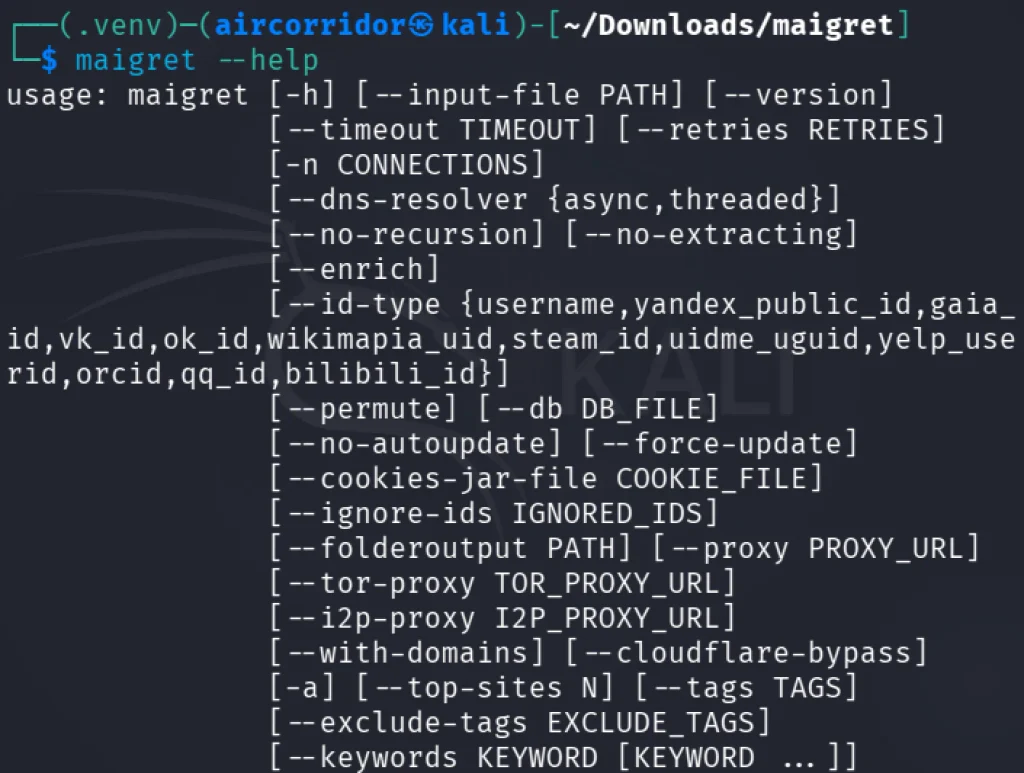
That’s it, the tool is ready to go. We can check the help screen to confirm the installation is correct.
kali> maigret –help
The simplest way to use Maigret is to feed it a single username and let it do the work:
kali> maigret username
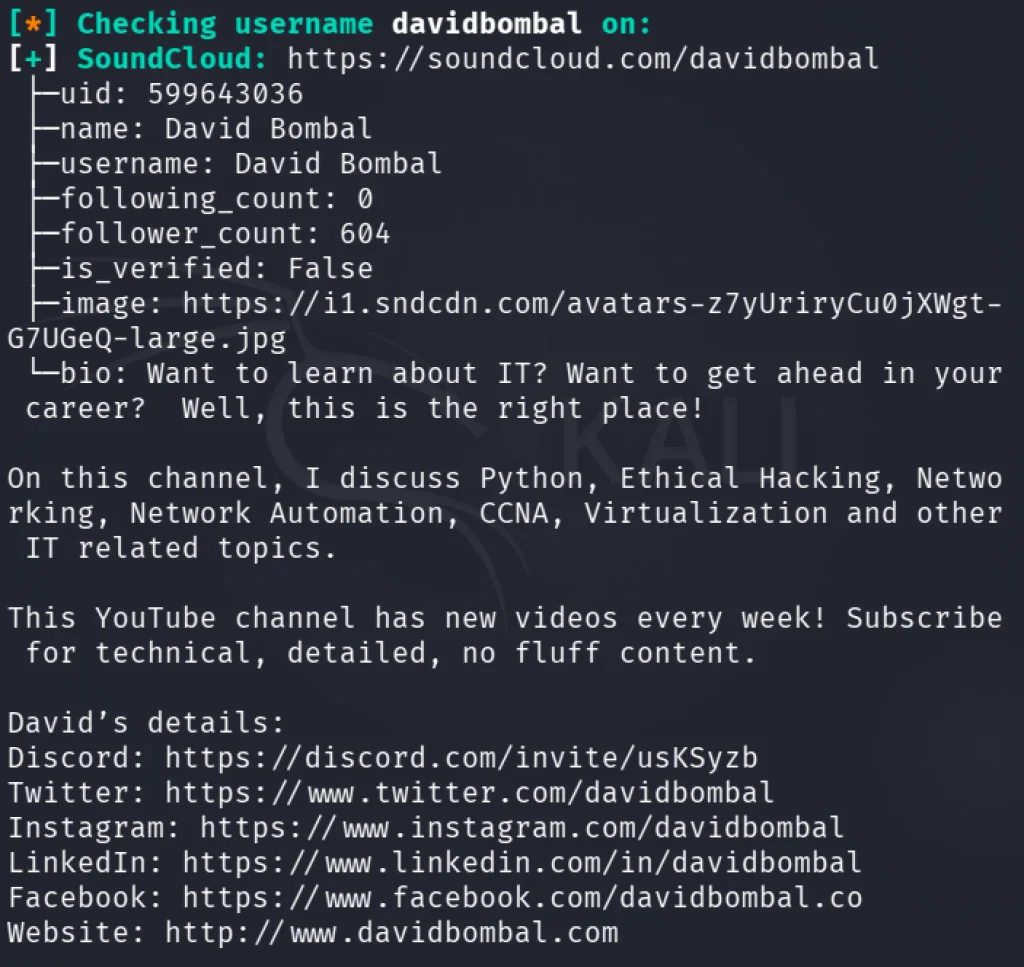
Maigret checks the 500 most popular sites, ordered by popularity. This is the best starting point because it’s fast and covers the platforms where most people have accounts. To turn on full database mode, use the -a flag.
Maigret has many flags that allow you to search very specifically. For example, we can target one website:
kali> maigret username –site GitHub
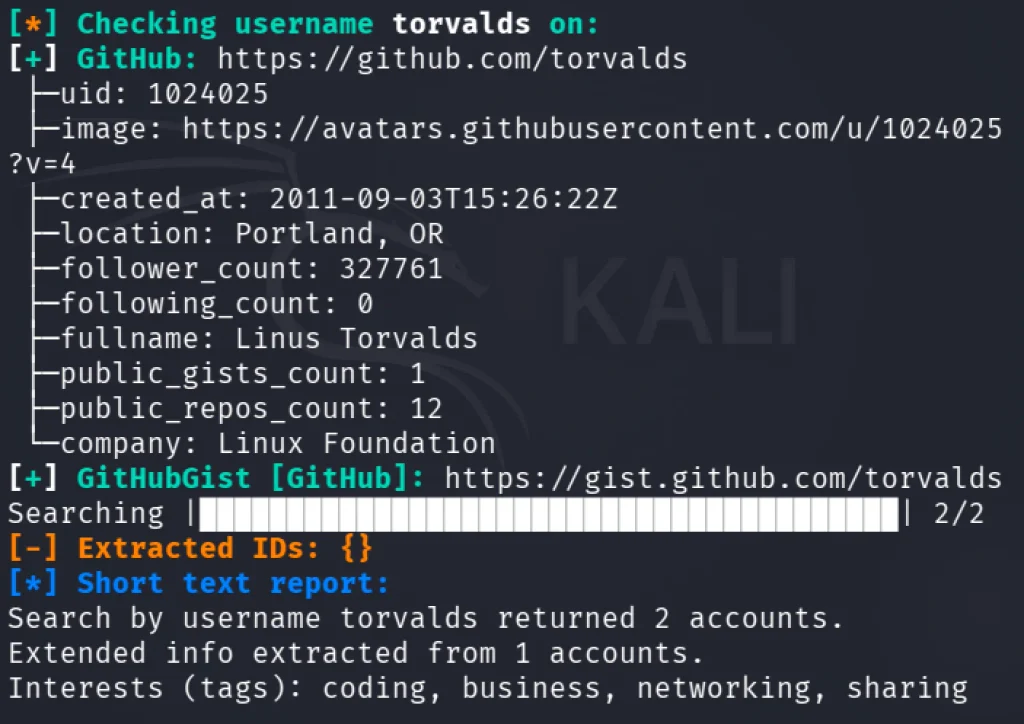
In the screenshot above, you can see the found tags. We can search by them as well:
kali> maigret username –tags coding
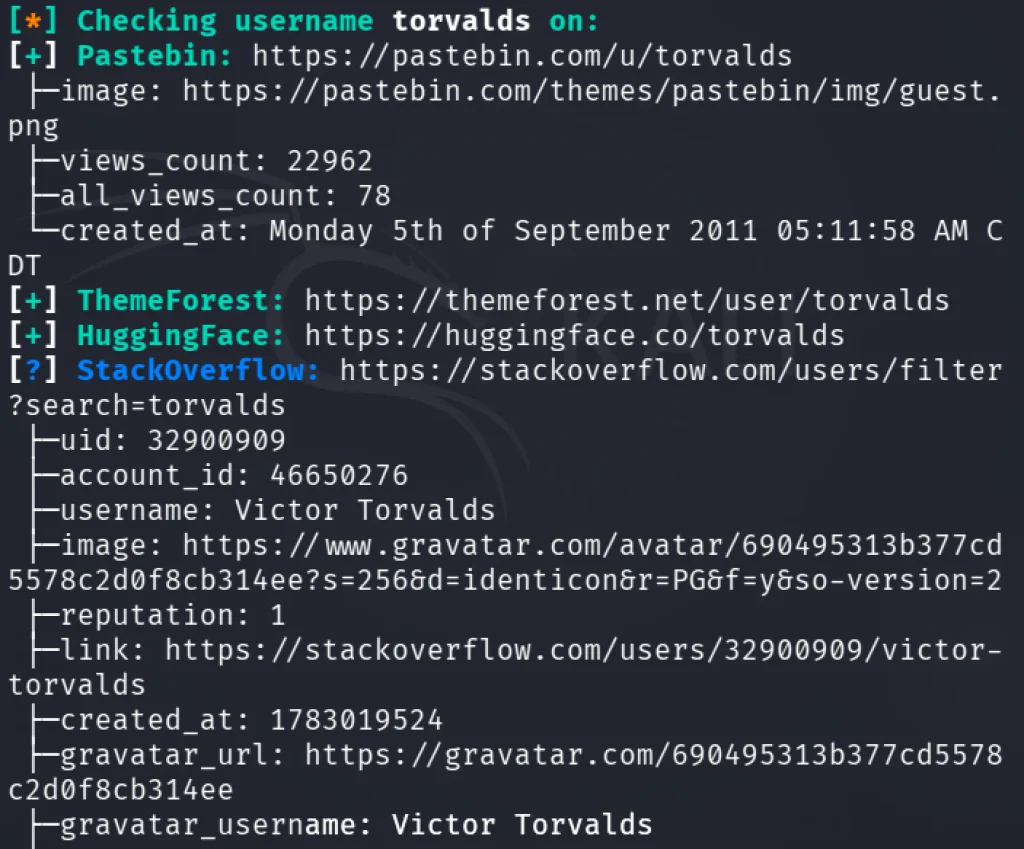
Another valuable feature is username permutation. Maigret can generate and search username variants (for example, combining first and last names in common patterns).
kali> maigret –permute firstname lastname
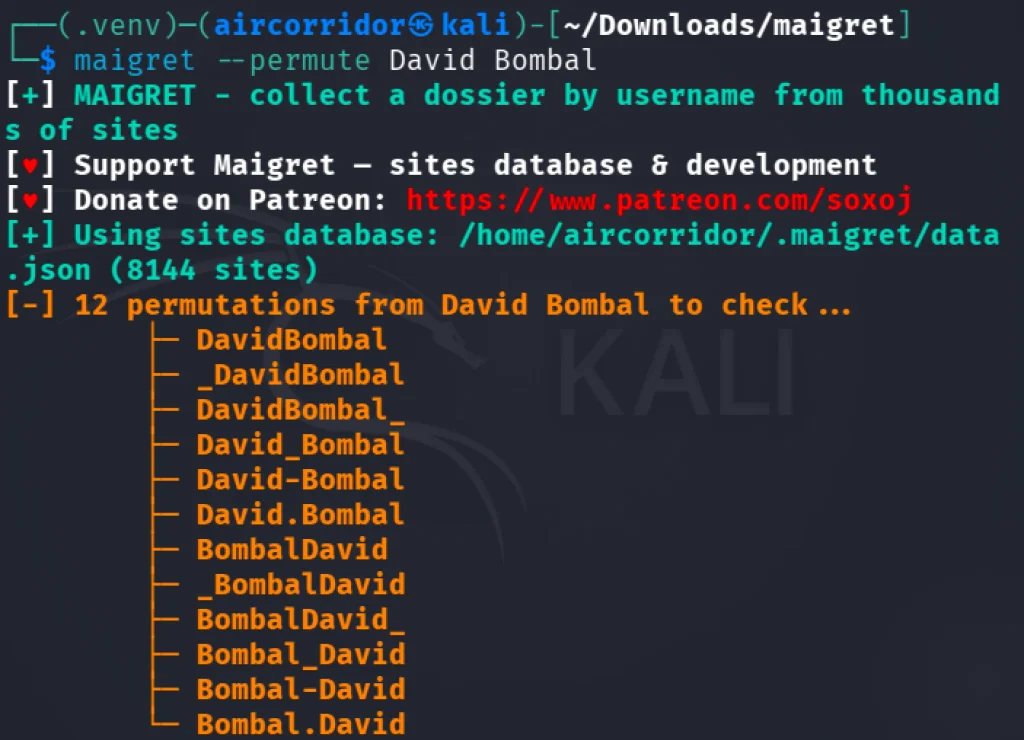
Maigret supports many output formats. For demonstration purposes, let’s test the HTML report; it is the most readable option.
kali> maigret username –html
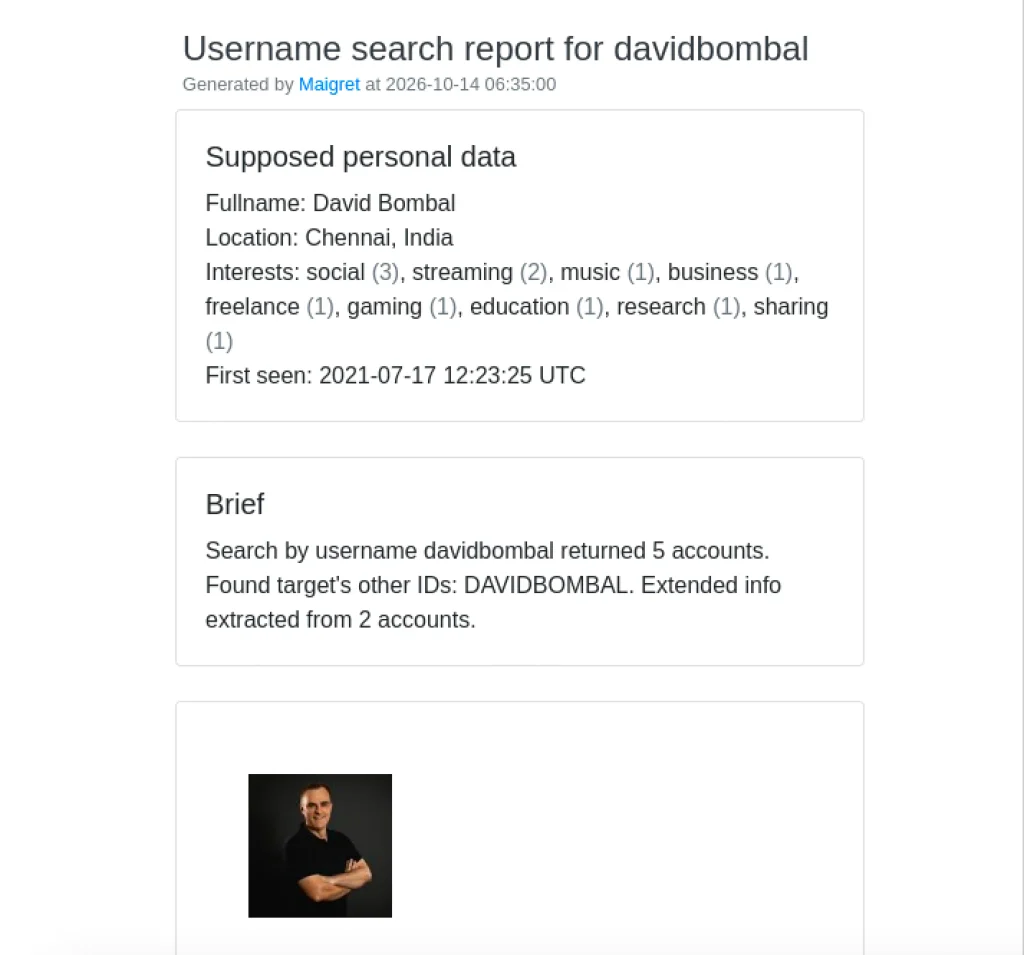
This creates a standalone file in your results directory with all the findings organized, including images.
It’s also worth testing the graph flag.
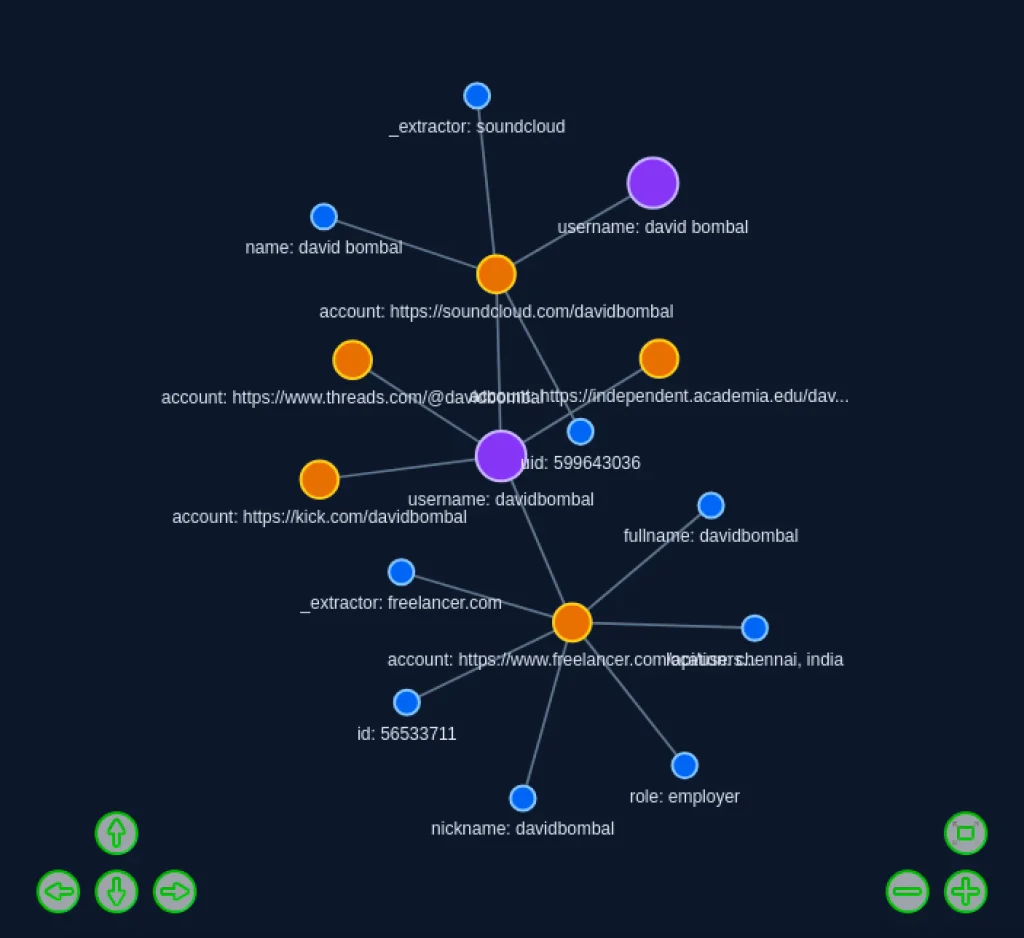
Also, Maigret can send its findings to an external LLM to produce a written summary. For this task, create the file ~/.maigret/settings.json with the following content:
{
 "openai_api_key": "sk-or-v1-YOUR_OPENROUTER_KEY",
 "openai_api_base_url": "https://openrouter.ai/api/v1",
 "openai_model": "openai/gpt-4o-mini"
}
Then type:
kali> maigret username –ai
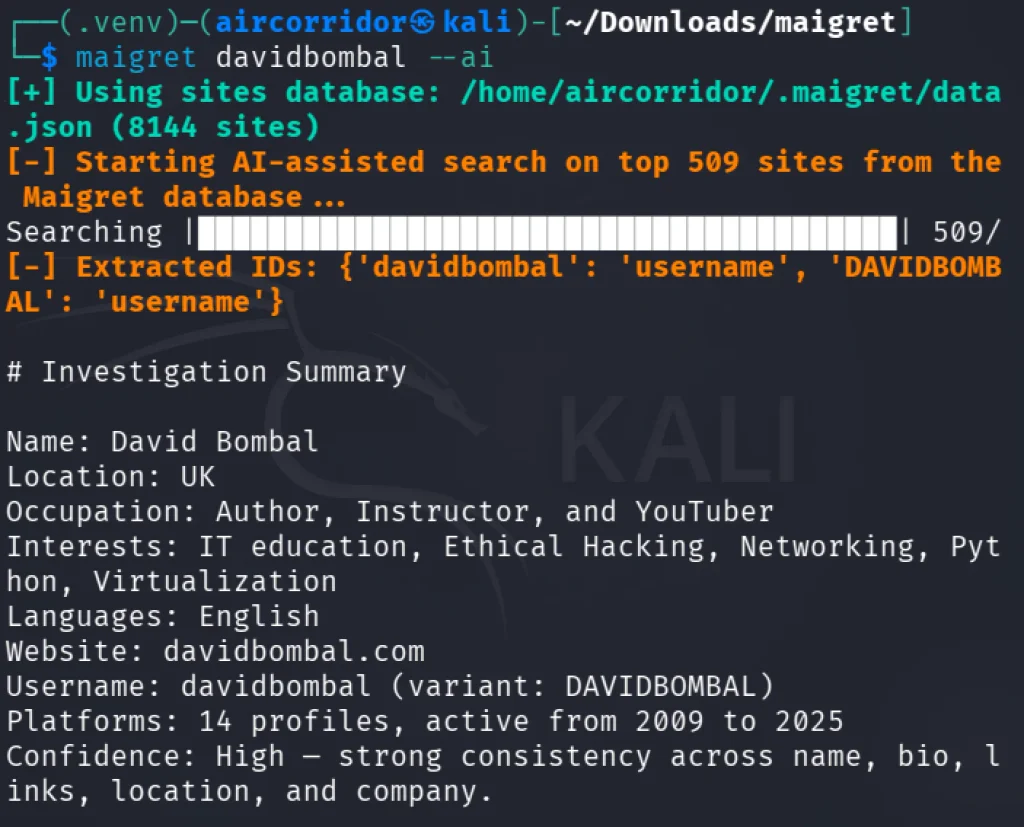
Maigret turns OSINT from a quick lookup into a proper investigation. It covers 3,000+ sites, parses profile data, follows new leads recursively, and can write an AI summary. I recommend testing it. It may find a place in your hackers’ toolbox.
The post Open-Source Intelligence (OSINT): Turn One Username into a Full Digital Dossier with Maigret first appeared on Hackers Arise.
