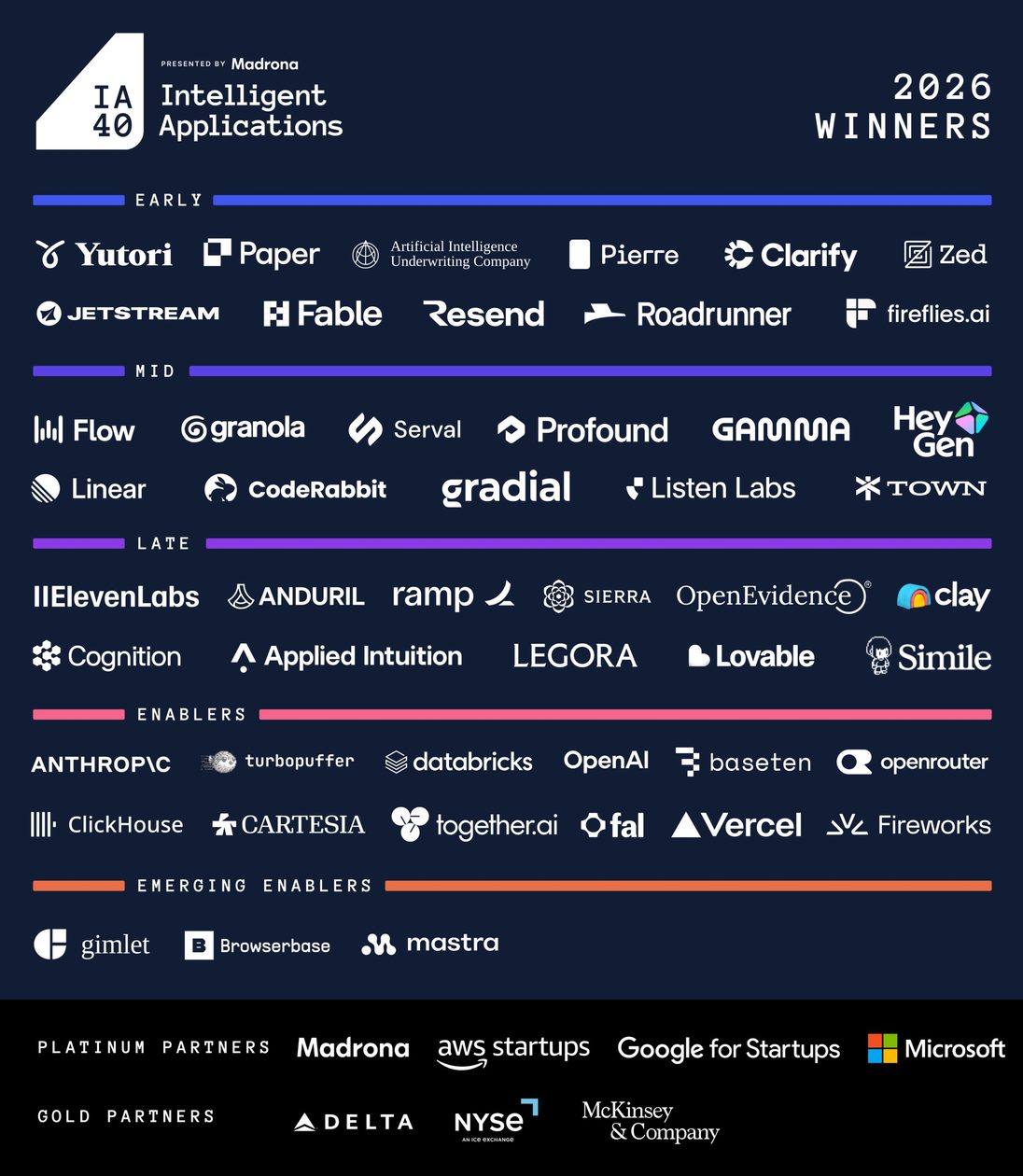
The winners on Madrona’s 2026 Intelligent Applications 40 list, grouped by funding stage. (Madrona Image)
Seattle-based venture capital firm Madrona released its sixth annual Intelligent Applications 40 list this week, naming 45 private AI companies (the five extras come from ties) that have collectively raised $410 billion from investors across the industry.
Three of them — Anthropic, OpenAI and Databricks — account for 92% of that total.
The uneven distribution of funding reflects a larger split in the tech industry, as the largest AI companies make huge bets on the computing capacity needed to meet demand for their models, while almost everyone else builds businesses on top of them.
The frontier labs are “increasingly funded by strategic capital from the likes of Amazon, Google, Nvidia and SoftBank rather than traditional venture,” Madrona’s Matt McIlwain and Rolanda Fu wrote in a post accompanying the list. That scale, they added, “makes every other category on this list look capital light by comparison.”
On top of that, he said, hundreds of billions of dollars are flowing into OpenAI and Anthropic.
“And what I say to both the big tech companies and to the people funding the model companies: thank you very much,” McIlwain said on Bloomberg TV, noting that the five largest tech companies will spend an estimated $750 billion in capital expenditures this year.
But even setting those big three aside, McIlwain said, the rest of the winners have raised an average of more than $800 million each. That’s a total of $34 billion combined. Companies across the list are raising far more than they used to, enough that Madrona had to redraw its own categories.
The list sorts companies by total capital raised, and this year the ceiling for “early stage” rose to $50 million, up from the $30 million threshold that held for the previous five lists. The cutoff for “emerging enablers,” its category for smaller infrastructure companies, doubled to $100 million.
“Companies across the board are raising more money, and the definition for what ‘early’ means continues to shift higher,” McIlwain and Fu wrote.
Madrona has published the IA40 since 2021 as a roster of the private companies it considers most important in building and enabling AI applications. According to the firm, this year’s list drew on input from 72 investors representing 54 venture and corporate firms, who nominated and voted on more than 450 companies, with PitchBook data factored into the scoring.
Gradial, which builds AI agents for enterprise marketing, is a first-time winner in the mid-stage category; it raised $65 million in June at a $675 million valuation, bringing its total to $120 million.
Last year’s list included two other Seattle-area companies in addition to Clarify.
OpenAI acquired one of them, Bellevue-based Statsig, for $1.1 billion in September 2025, making Statsig founder Vijaye Raji its CTO of applications.
Security startup Dropzone AI, which was on the list last year, did not repeat this year.
Madrona, one of the Seattle region’s largest and oldest venture capital firms, is an investor in all four — Clarify, Gradial, Statsig and Dropzone AI — although it also invests outside the region, and many of the companies on the IA40 are not in its portfolio.
Databricks, the San Francisco-based data and AI company (which leased 142,000 square feet in Bellevue this year), is the only company to appear on all six IA40 lists. That said, 23 of last year’s 40 winners returned this year, a 58% repeat rate, up from 33% the year before.
McIlwain and Fu wrote that the biggest and most established companies on the list are holding their spots, noting that “the age of experimentation is giving way to an age of enterprise readiness,” with buyers and investors “paying premiums for companies that can demonstrate real ROI.”
Madrona will recognize the winners at its IA40 Summit in Seattle on Sept. 29 and 30.
Updated with Matt McIlwain’s comments to Bloomberg TV.
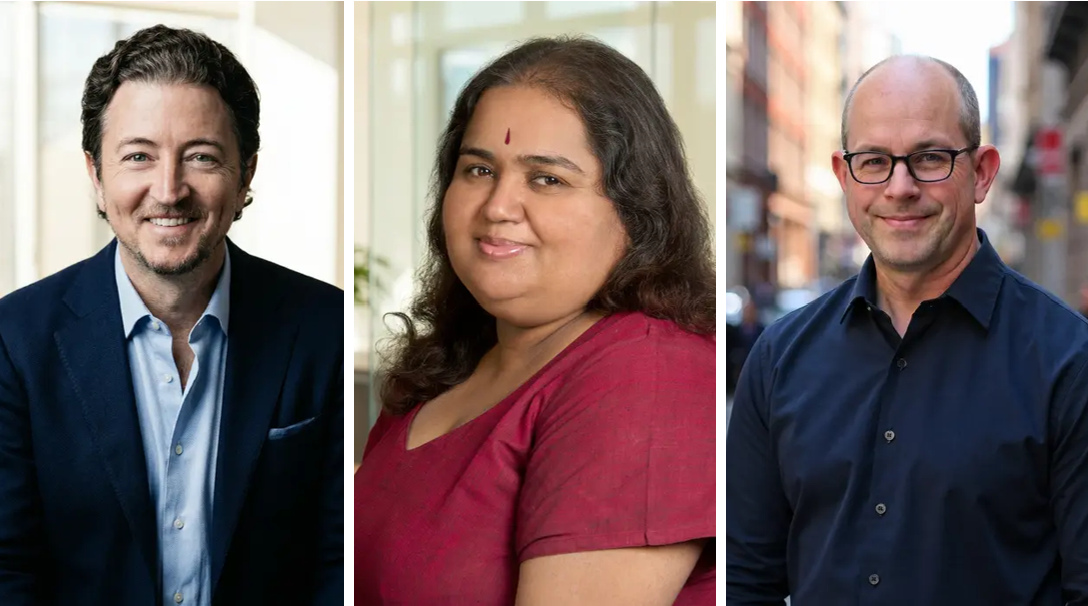
L-R: OnTrade co-founders Zachary Harl, chief investment officer; Raji Subramanian, CEO; and Matt Williams, president. (OnTrade Photos)
The co-founders of Pro.com, the Seattle-based home-improvement marketplace acquired by Opendoor in 2021, are back with a new company targeting what seems on the surface a very different kind of market: AI-powered software for the wealth management industry.
But Rajalakshmi “Raji” Subramanian and Matt Williams say the new challenge matches the same pattern: a huge industry held back not by a lack of customers, but by a shortage of professionals and tools.
Their Seattle startup, OnTrade, co-founded with former Bank of America chief investment officer Zachary Harl, has been operating under the radar since 2024, raising an undisclosed amount of funding from General Catalyst, Madrona and angel investors.
OnTrade’s chief technology officer is Jean Bredeche, who co-founded Quantopian, the algorithmic trading platform, and later served as a director of engineering at Robinhood.
How it works: OnTrade connects software that financial advisors already use — including CRM, portfolio accounting, trading, and compliance programs — into a single interface.
It then deploys AI agents to handle the type of work that advisors have traditionally done manually, such as scanning portfolios for tax-loss harvesting opportunities, flagging accounts that have drifted from their targets, or drafting proposals and reports for clients.
The humans approve everything before it reaches a client. The idea is to help them serve more clients without sacrificing the quality of their work, expanding access to wealth-management services that tend to be concentrated among more affluent households.
“Wealth management, if you look at the industry, does not have a demand problem; it has an access problem,” said Subramanian, the company’s CEO, in an interview. “Many people who’d like access to wealth management don’t have access to wealth management, and that’s what we’re here to solve.”
Harl, OnTrade’s chief investment officer, called raw foundation models the “brilliant PhDs” of the AI world — impressive on paper, but not as valuable to a specific industry such as wealth management until they understand its portfolios, policies, compliance rules, and client relationships. Vertical AI solutions like OnTrade, he said, are better positioned to connect that general-purpose intelligence to a specific firm’s data and workflows so the technology can do trusted work.
Industry shakeup: OnTrade is emerging at a pivotal moment, two days after investment giant Vanguard agreed to acquire wealth-management platform Altruist reportedly valued at $4 billion. OnTrade’s founders cite the deal as validation of the vertical AI opportunity they’re pursuing.
In a LinkedIn post Thursday, Subramanian wrote that the Vanguard-Altruist deal signals something bigger than a battle over where advisors park their clients’ assets: that capturing the opportunity “requires a new operating model rather than AI-enhanced versions of today’s applications.”
The wealth management industry’s unit of scale, she wrote, is shifting “from the number of people a firm employs to the intelligence and agency it can deploy.”
The founders: Subramanian joined Amazon in the late 1990s as an early engineer who helped build Amazon Marketplace and AWS, and later led the digitization of books for Kindle.
Amazon was where she met Williams, who had founded a startup called LiveBid that Amazon acquired in 1999. He spent 11 years there, including a stint as a technical advisor to Jeff Bezos, then left to run Digg as CEO and served as an entrepreneur in residence at Andreessen Horowitz.
Subramanian went on to run engineering at Yahoo Finance, where she helped open up market data that had previously been the province of institutional investors, giving her an early look at the problem that OnTrade is now aiming to solve.
In 2013, the two co-founded Pro.com, a tech-driven home improvement marketplace that raised early funding from investors including Madrona, Maveron, Bezos and Andreessen Horowitz.
Real estate tech company Opendoor acquired Pro.com in 2021, and brought both founders on as executives — Subramanian as chief technology officer, Williams as head of the Pro.com unit and senior vice president of retail.
Harl spent many years at Bank of America, rising to chief investment officer, where he managed the bank’s asset portfolios and large balance sheet risks across multiple market cycles. He is a chartered financial analyst (CFA), with a math and computer science degree from Indiana University, and a statistics degree from the London School of Economics.
He served on the U.S. Treasury Borrowing Advisory Committee under Secretaries Steven Mnuchin and Janet Yellen, advising on debt management, before joining Opendoor in 2023 as chief risk officer. That’s where he met Subramanian and Williams, before making the startup leap with them.
Traction and competition: The company’s technology is already in use at firms ranging in size from boutique advisories to large national practices, said Williams, the company’s president.
He said one client used the platform to win a billion-dollar family office account, and that another recouped the full annual cost of the platform in less than 30 days. He called that “a small window into what’s going to happen on a larger scale.”
The wealth management software market has many established players — such as Orion Advisor Solutions, Envestnet, and Addepar — but the OnTrade founders say they see them as partners, not rivals. OnTrade integrates with those systems rather than replacing them.
That distinguishes the company from Altruist, the Vanguard acquisition target, which built its own full stack, including its own custodian, the financial institution where client assets are held. That approach requires firms to move client assets onto its platform.
OnTrade doesn’t ask firms to replace their existing tools or move their clients’ money. Instead, it plugs into what’s already there.
The broader timing may work in their favor. As baby boomers age, an estimated $50 trillion or more in assets is expected to pass to younger generations in the coming decades — creating a wave of new clients who will need financial advisors, and new pressure on firms to serve them.
That’s where home improvement and wealth management have something in common.
“There aren’t many bigger places, other than health, wealth and real estate, where you can impact a population, especially an underserved population,” Williams said. “That was at the heart of the motivation.”
This week on the GeekWire Podcast: What should Liverpool FC fans expect from Jeff Bezos as a member of the storied English Premier League club’s new minority ownership group? We consult the Amazon leadership principles for the answer.
Plus, a tip and an SEC filing lead to a scoop on a former Meta AI director’s new startup, the GeekWire Editorial Board convenes to decide whether Dave Clark’s Auger stays on the GeekWire 200 after moving its HQ to Dallas, and Microsoft quietly semi-retires its AI blob.
Kevin Carlberg, founder and CEO of Noosphere Labs. (UW Photo)
A former Meta AI research director has raised $10.25 million for a Seattle-area startup working on what it calls “human-centered physical intelligence” — AI designed to help people interact with and make sense of the physical world, beyond text and images on screens.
A company called Noosphere Labs, led by Kevin Carlberg, disclosed the financing in a Form D filed Monday with the Securities and Exchange Commission. Reached via phone by GeekWire on Monday evening, Carlberg said he wasn’t yet ready to share details about the startup.
Trilogy Equity Partners confirmed that it led the round. One of the directors listed in the Form D filing is Amy McCullough, a managing director at the Bellevue-based venture firm. Madrona, the Seattle VC firm, separately confirmed that it had “major participation” in the round.
Carlberg’s personal website describes him as founder and CEO of a “stealth AI startup focused on physical AI and real-world intelligence.” The company’s website says, “Human-centered physical intelligence. Built for the world we inhabit,” with a “Coming Soon” title.
The website styles the name Noösphere, with two dots over the second “o” signaling that it’s pronounced as a separate syllable: NOH-uh-sfeer. The term dates to the 1920s, describing a sphere of human thought wrapped around the planet the way the biosphere wraps it in life.
Carlberg spent more than five years at Meta, where he led a research team spanning Reality Labs Research and the company’s Fundamental AI Research group, working on physical AI and simulation for wearable computers and virtual and mixed-reality devices.
Before that, he spent eight years at Sandia National Laboratories developing methods to make massive physics simulations run in near-real time for national security applications. He holds a doctorate from Stanford and is an affiliate associate professor of applied mathematics and mechanical engineering at the University of Washington.
Although Carlberg hasn’t publicly detailed what the new startup is building, his research points to the problems he’s been focused on.
In a paper for the NeurIPS conference last year, for example, he and his Meta colleagues built a benchmark for “assistive wearable agents” — smart glasses and similar devices that figure out what a person is trying to do from video, audio and other signals, without being asked.
Noting how little prior work existed, they assembled a dataset from 348 participants to test it. The best AI models produced a relevant answer only 55% of the time, they found. The researchers concluded that current models “remain far from practical usefulness” at the task.
Also listed as a director in the startup’s filing is Tyler Simpson, a Seattle-area software executive who co-founded commute-management startup Luum, spent 11 years at Microsoft, and was most recently a director and technical program manager at Meta, overlapping with Carlberg.
Carlberg left Meta at the end of 2024 and announced on his website that he was taking a sabbatical. He incorporated Noosphere Labs early this year.
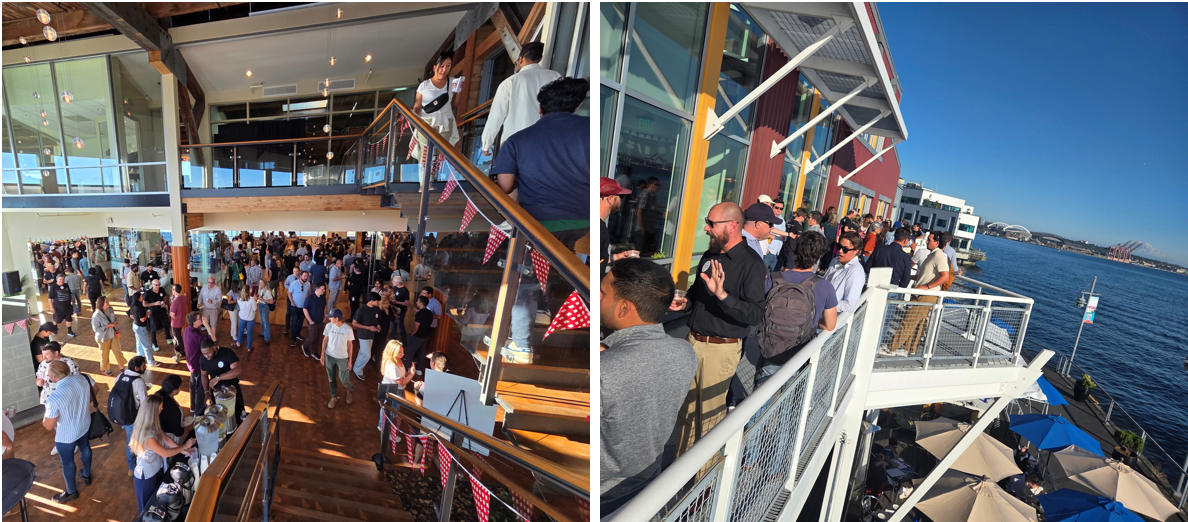
Seattle Tech Week attendees fill AI House at Pier 70, spilling onto the deck overlooking Elliott Bay. (GeekWire Photos / Todd Bishop)
Attending as many Seattle Tech Week events as possible and talking with as many people as I could, I was struck by the number of people looking for work and the volume of visitors from the Bay Area, including a number of investors looking to get a sense for what the regional tech scene is about.
It was hard not to imagine them being impressed with the sheer level of engagement and enthusiasm, even if they didn’t happen to catch Jacob Colker’s rallying cry. With more than 250 events (and waiting lists for many of them) it was more than any one person could take in.
It wasn’t Seattle AI Week — that’s still to come in October — but given the moment in tech and the world, the topic of artificial intelligence was naturally the main throughline of the week.
A panel that changed my perspective was early in the week, called “Foundation Models Go Vertical,” hosted by the Seattle pre-seed firm Ascend at Washington 1000 downtown. Founding general partner Kirby Winfield told the room that 600 people had tried to get in.
One of the biggest insights was from Manos Koukoumidis, CEO of Kirkland-based Oumi and a former Google Cloud AI engineering manager who led large language model efforts there.
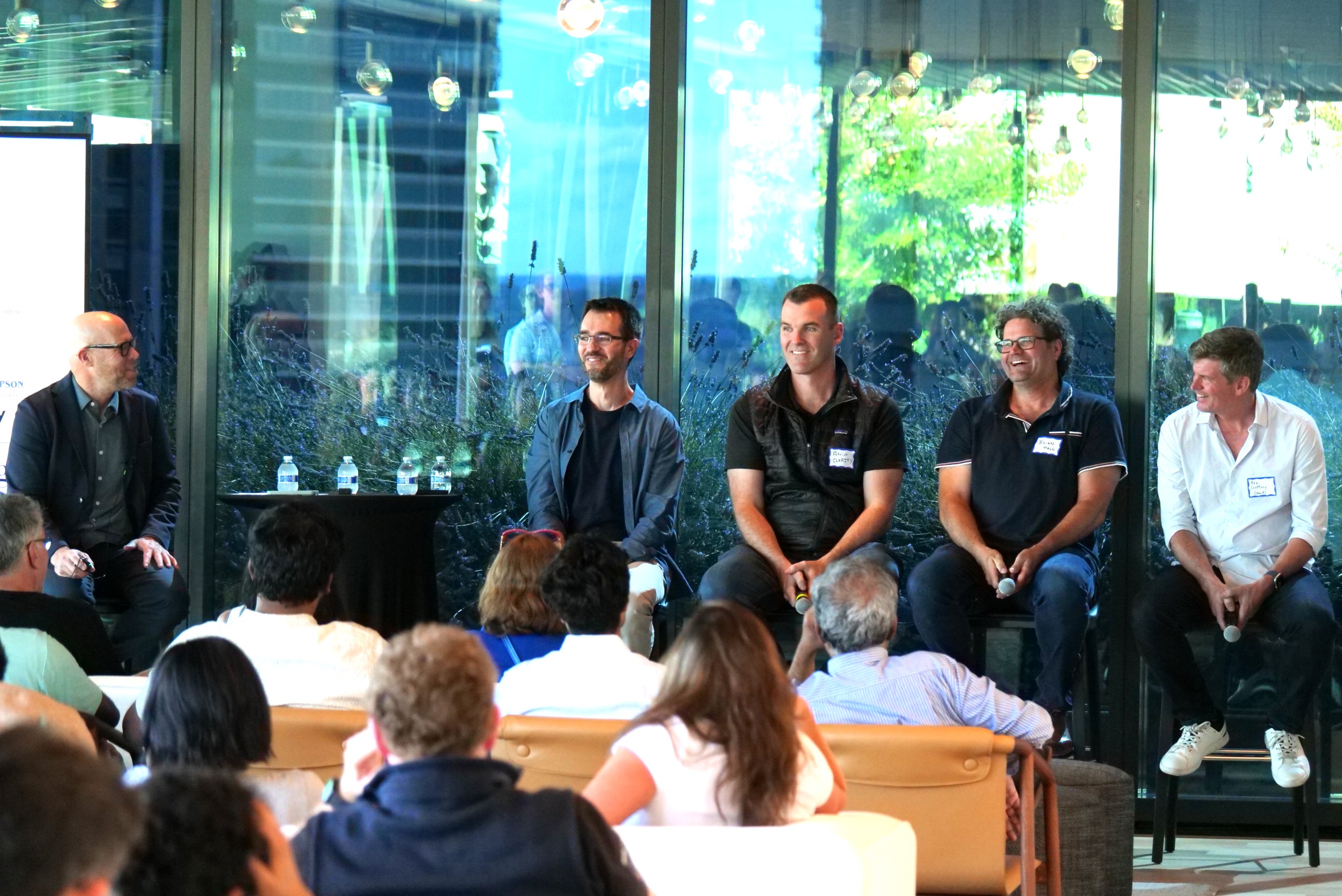
From left: moderator Boaz Ashkenazy of the Shift AI podcast, Manos Koukoumidis of Oumi, Patrick Thompson of Clarify, Brian Hall of Mistral AI, and Ben Gaffney of OpenAI at the “Foundation Models Go Vertical” panel, hosted by Ascend. (GeekWire Photo / Todd Bishop)
Companies that are racing to build on top of the frontier models, he said, are renting a kind of intelligence that has very little to do with their own businesses.
“Enterprises are using a model that is trained on 5% of the world’s data that sits on the web, not the other 95%,” he said, referring to the data sitting inside their own organizations.
Which led him to the question (and the point) that I keep coming back to: If the intelligence at the center of the product belongs to someone else, he asked, “are you really an AI company, or an application company on top of somebody else’s intelligence?”
The next day, in the audience for a recording of the Founded & Funded podcast by Seattle Tech Week organizer Madrona, I posed the question that we debated on last week’s episode of our GeekWire Podcast: what should Seattle founders and investors make of venture numbers that rank Philadelphia, Austin, and New York ahead of them?
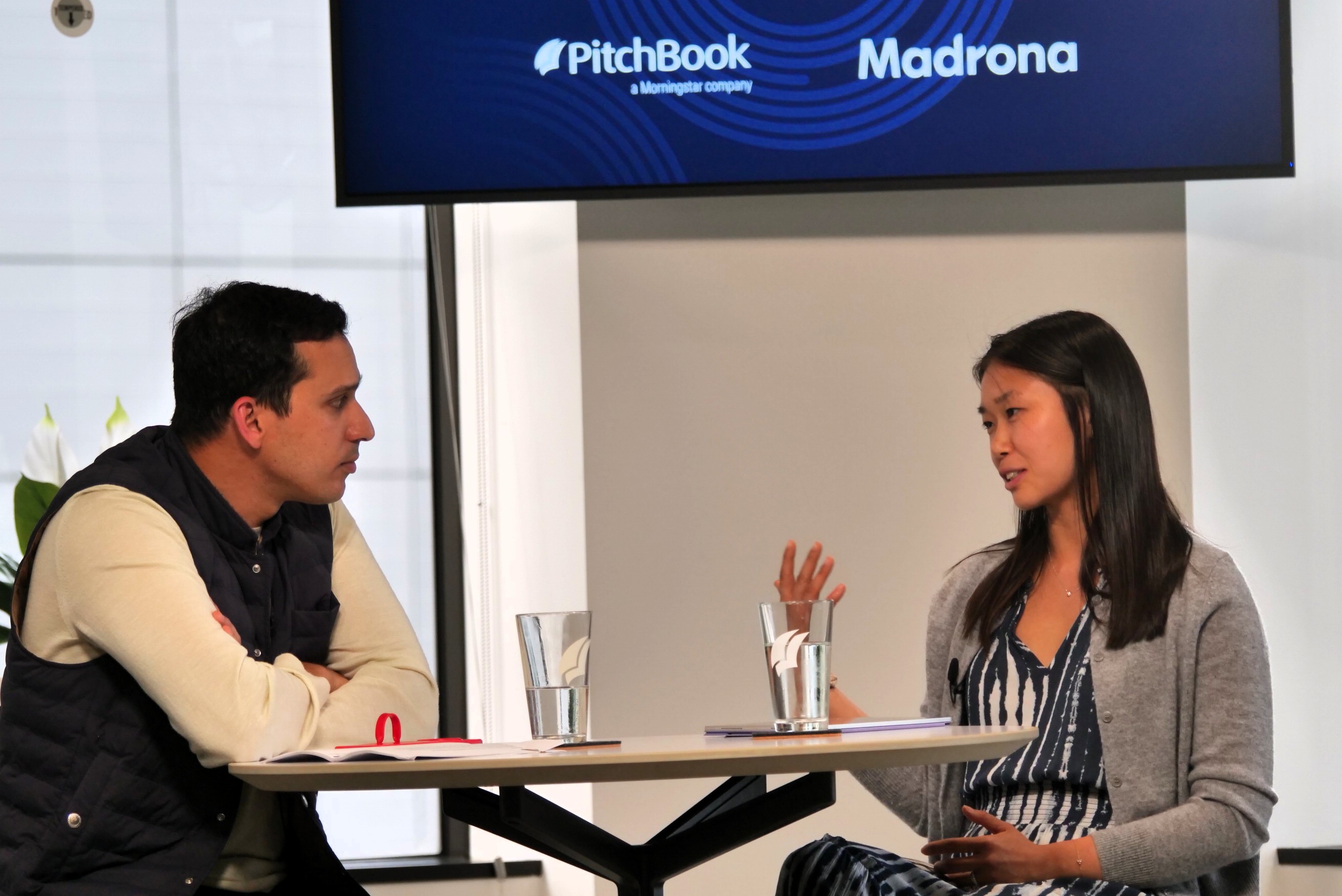
It was the right place to ask, given that the show featured Nizar Tarhuni, EVP for research and market intelligence at PitchBook, which tracks the numbers, and Madrona partner Sabrina Albert.
PitchBook’s Nizar Tarhuni and Madrona partner Sabrina Albert during a live recording of Madrona’s Founded & Funded podcast at Seattle Tech Week. (GeekWire Photo / Todd Bishop)
Albert pointed out that the numbers don’t capture everything. A company can have a big engineering group in Seattle, or even a co-founder here, and still be counted as a Bay Area company, she said. Large engineering offices for OpenAI and Anthropic are the latest examples.
Tarhuni made a similar point: “There’s so much talent in some of the biggest unicorns that are actually working out of Seattle,” he said. In terms of overall economic activity, he added, “there’s a lot more here that doesn’t make its way into those numbers.”
Other quotes and insights that stood out from the sessions we attended:
Patrick Thompson, CEO of Seattle-based Clarify, said his company’s Anthropic bill had tripled in three months. He has shifted spending to AWS Bedrock, citing reliability problems, and now runs smaller models locally on his own laptop for low-level work.
Madrona’s Albert, on the shift to selling outcomes: “Before, when you were thinking about traditional software, you would charge for a seat or a unit of software. But now you can really fundamentally change it. … If I deliver this outcome for you, then you can actually pay me for it.”
Ken Horenstein, founder of Pack Ventures, which invests in startups tied to the University of Washington, on the knock that Seattle is slow: research institutions here are “choosing problems that are 10, 15, 20, 50-year problems,” he said. “Sometimes people put that as a negative rap on us because we don’t go really fast and flame really bright like you might see in other markets. But I actually think that can be used as a benefit.”
Ben Gaffney, deputy general counsel at OpenAI, on the notion that AI is thinning out headcount: “Even within the legal team that I work in, we need more people. Even though we’re getting all these massive productivity gains, it isn’t like you don’t need people to supervise this stuff.”
Brian Hall, the longtime Microsoft, AWS and Google executive who became chief marketing officer at Mistral AI in June, on where this all ends up: “We’re gonna laugh when we thought that AI was gonna save us time.”
Ascend’s Winfield, on the limits of what investors provide: “If I invested in you, it’s not because I’m smart about your market. It’s because you’re smart about your market. … If you’re looking for answers from your investors, you’re in trouble.”
Karl Siebrecht, co-founder and CEO of Flexe, at a networking event, telling founders to stop networking: “Spending time as a founder trying to market yourself to investors, I think, is a fallacy. If you focus on building a valuable company … I can promise you, investors will find you.”
Molly Klein, founder and CEO of Perk Events, who runs some of GeekWire’s biggest events, on why any of this happens in the first place: “Events are hands-down the strongest business development tool that you have,” she said. “One conversation may take six emails in three weeks. At an event, it happens in 10 minutes, because you’re getting that face-to-face time.”
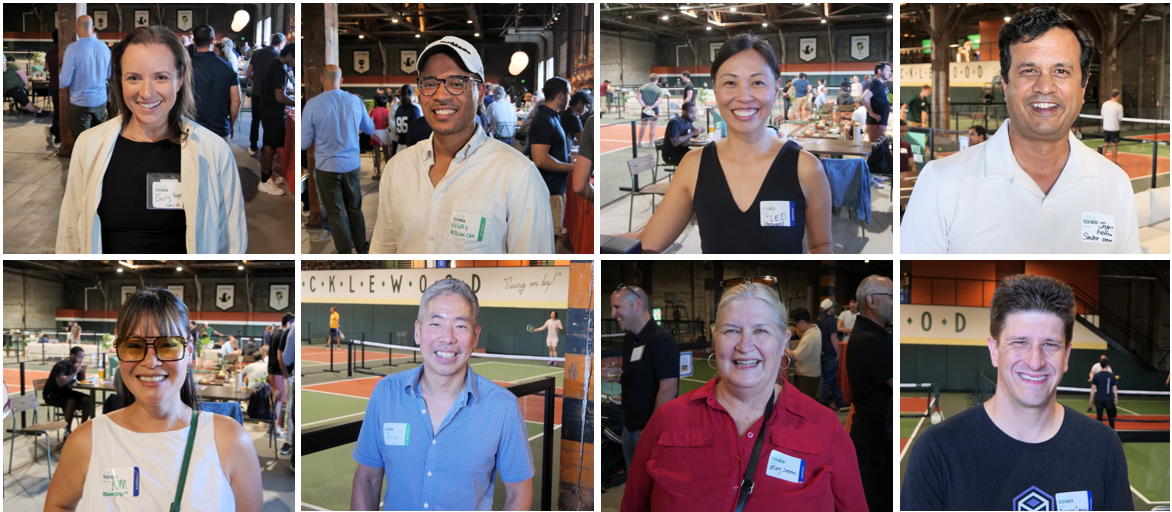
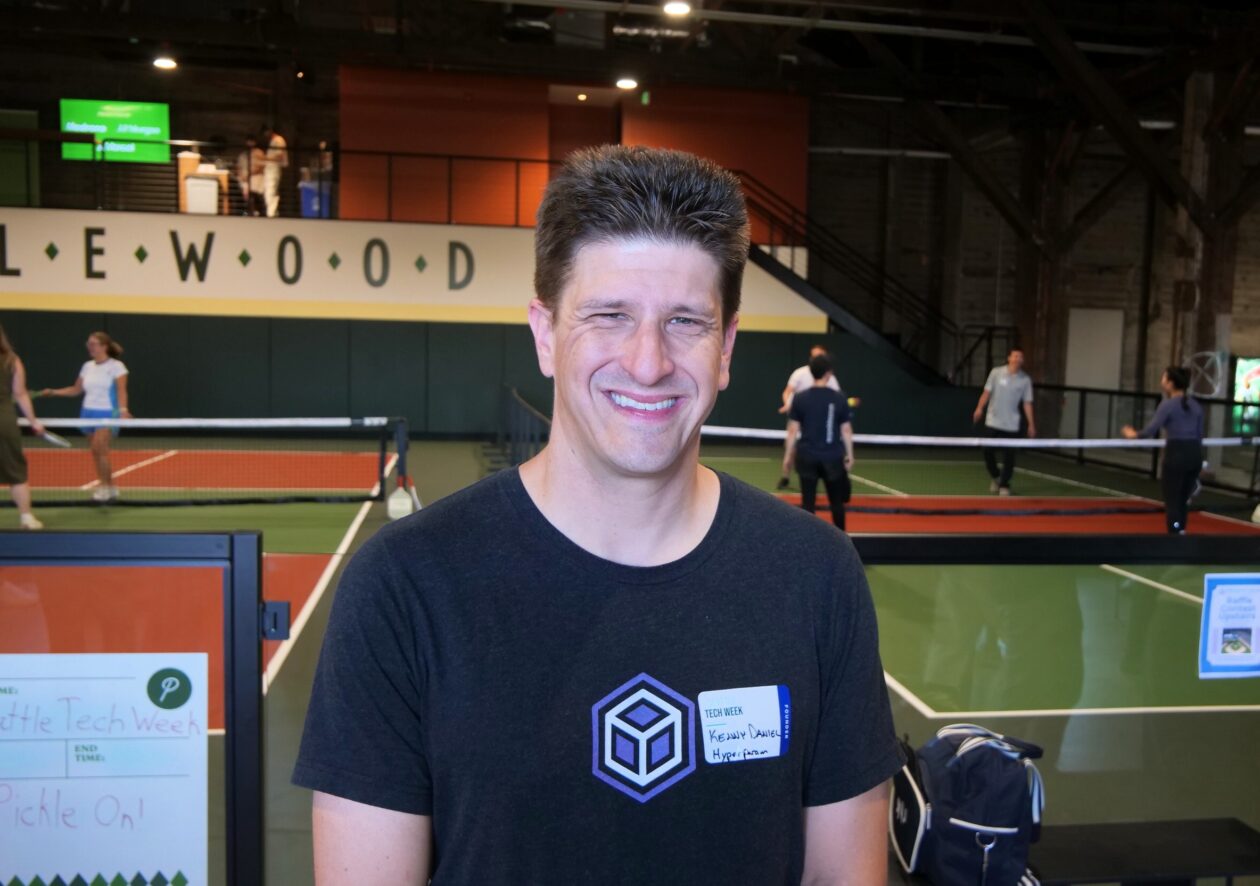
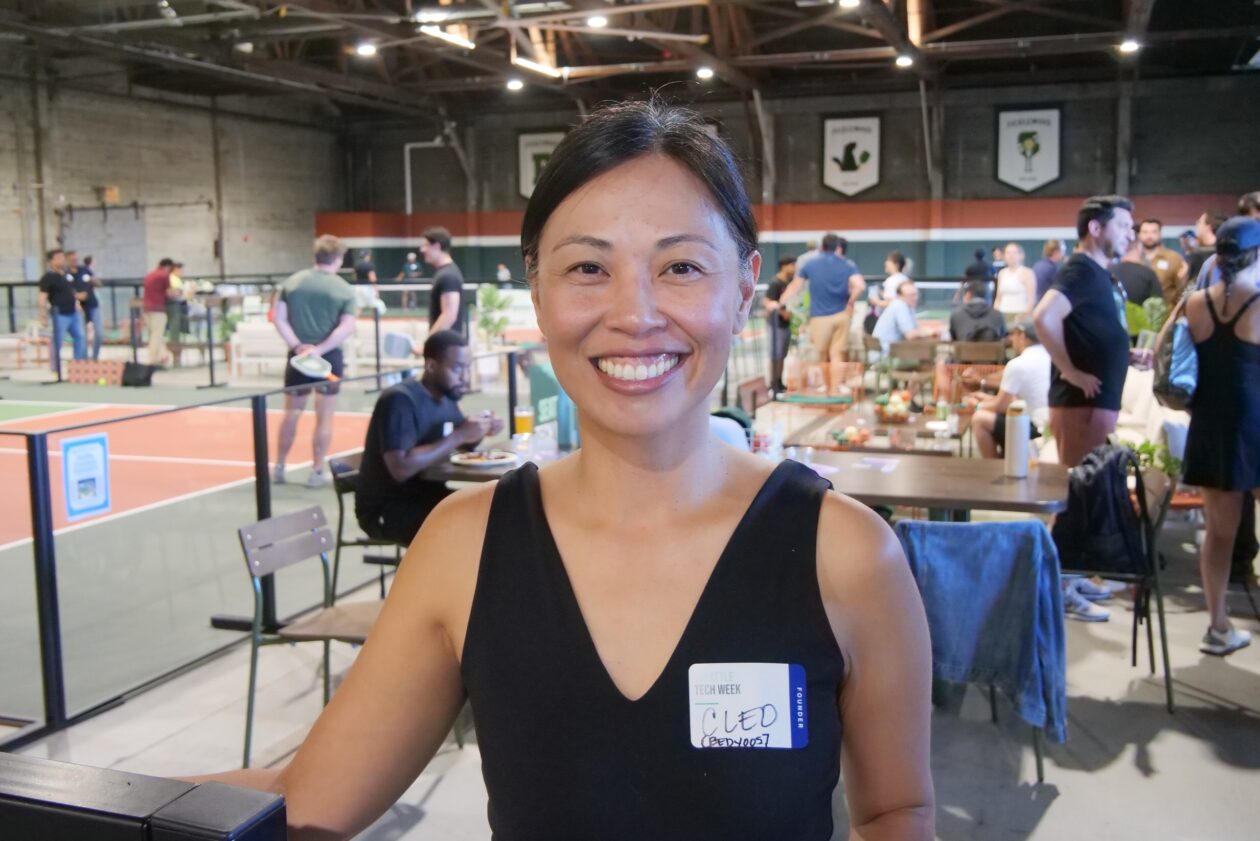
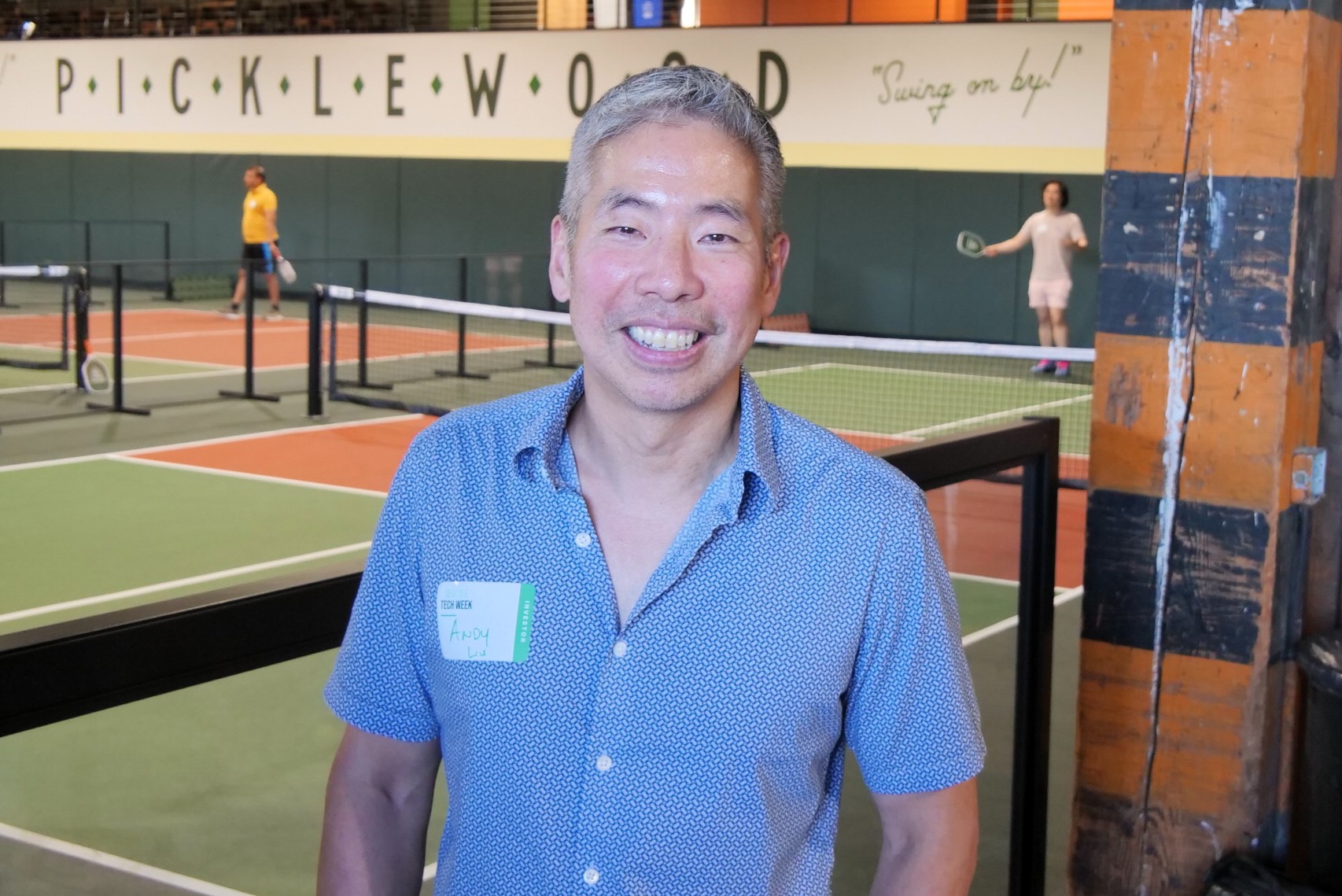
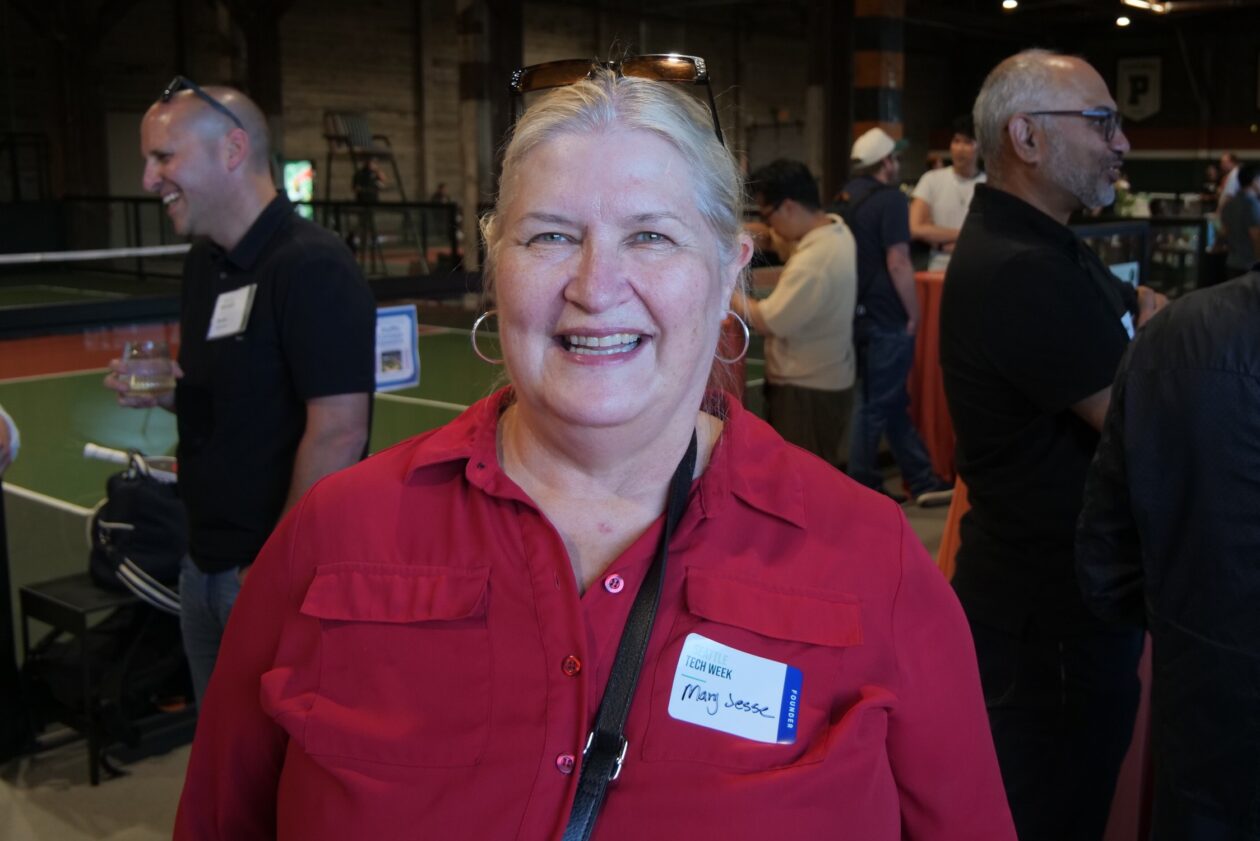
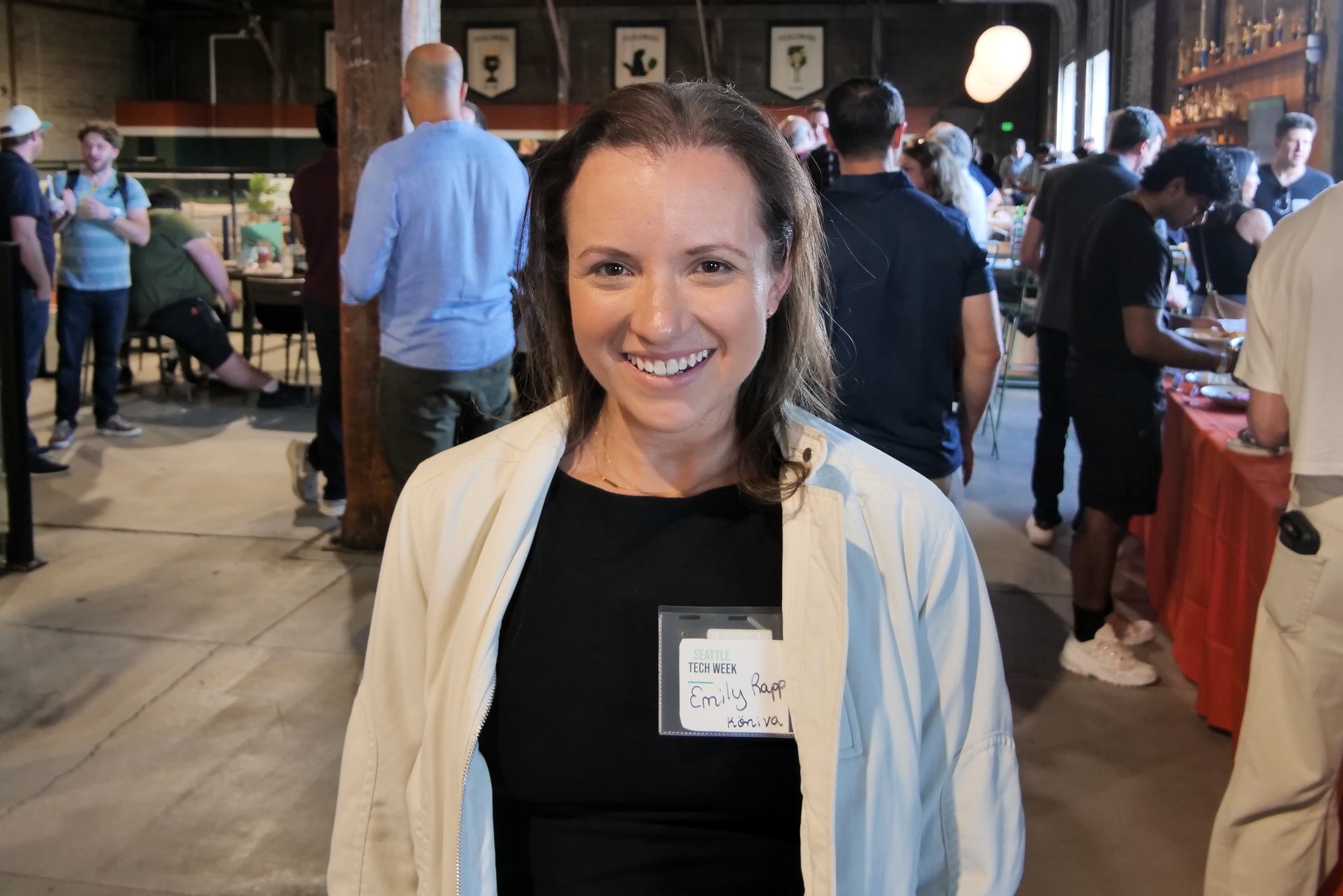
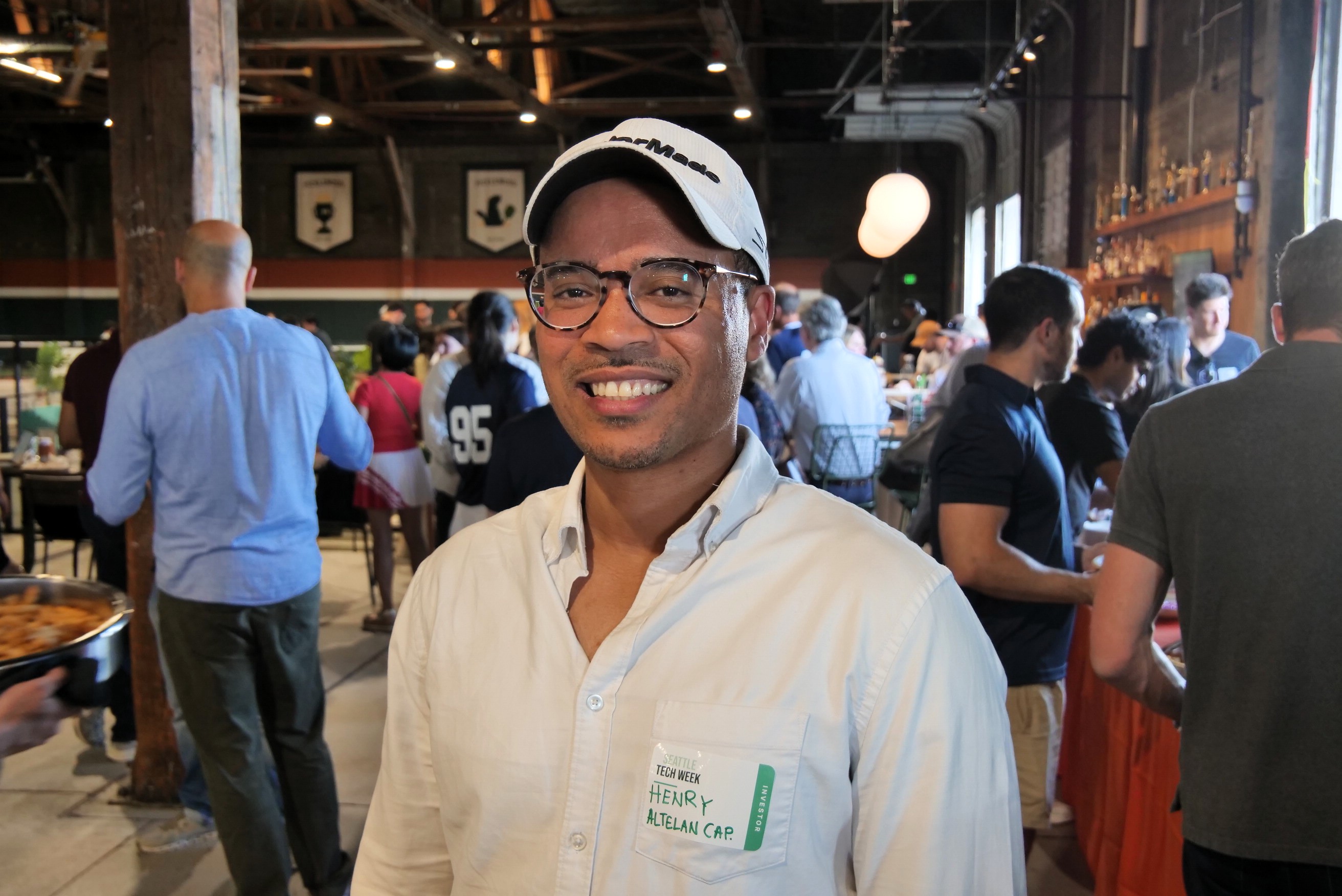
Top row from left: Emily Rapp, Henry Arias, Cleo Escarez, and Jagan Nemani. Bottom row from left: Kim Vu, Andy Liu, Mary Jesse, and Kenny Daniel, at the Seattle Tech Week kickoff. (GeekWire Photos / Todd Bishop)
The fourth annual Seattle Tech Week got off to a big start Monday, with panels and parties bringing together thousands of people from across the region and out of state. Organizers said the week features more than 250 events and drew more than 29,000 event registrations.
We went to Madrona’s kickoff event at Picklewood Paddle Club with one question for the founders, investors, and operators we met: What are you building? Here’s what we heard and learned.
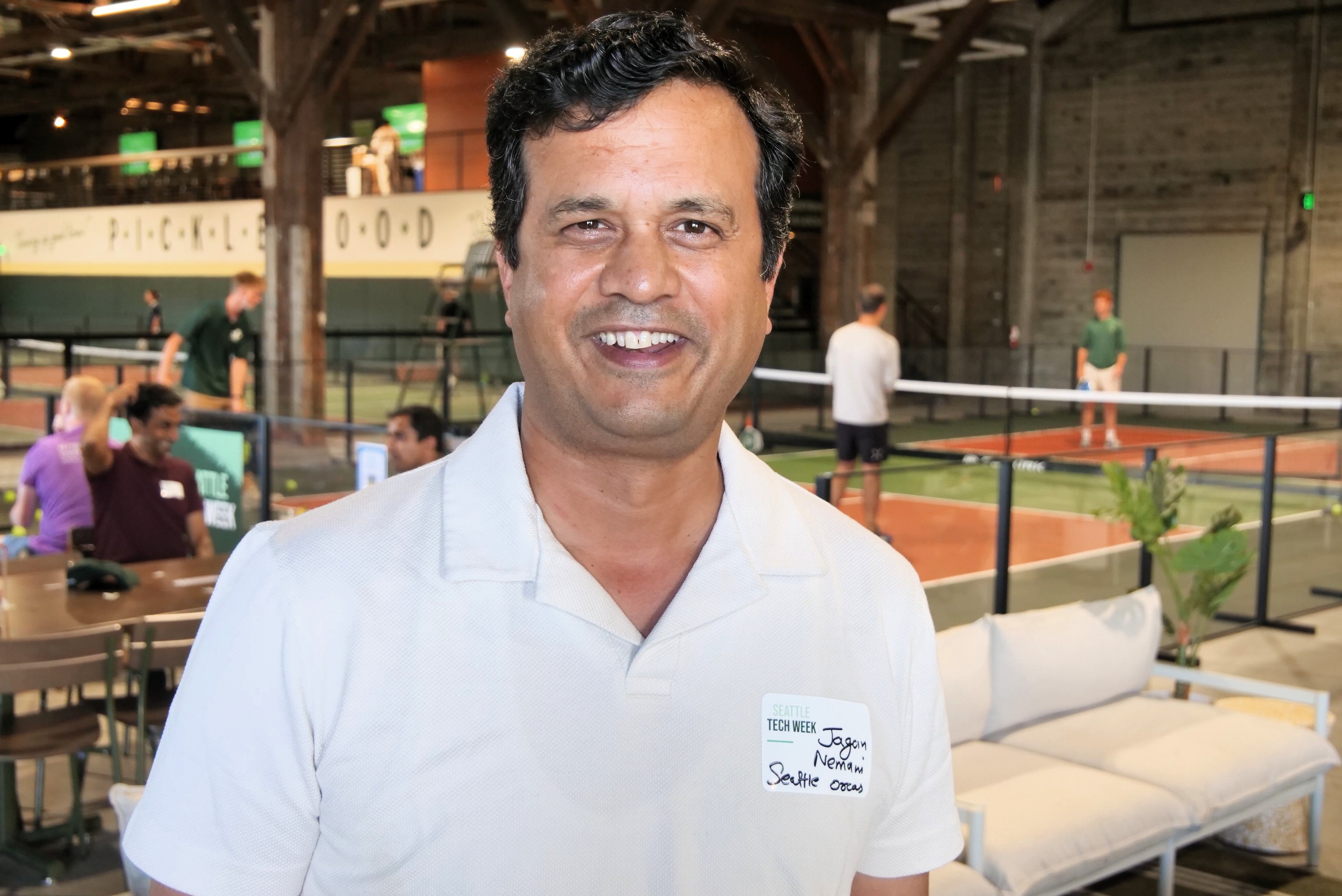
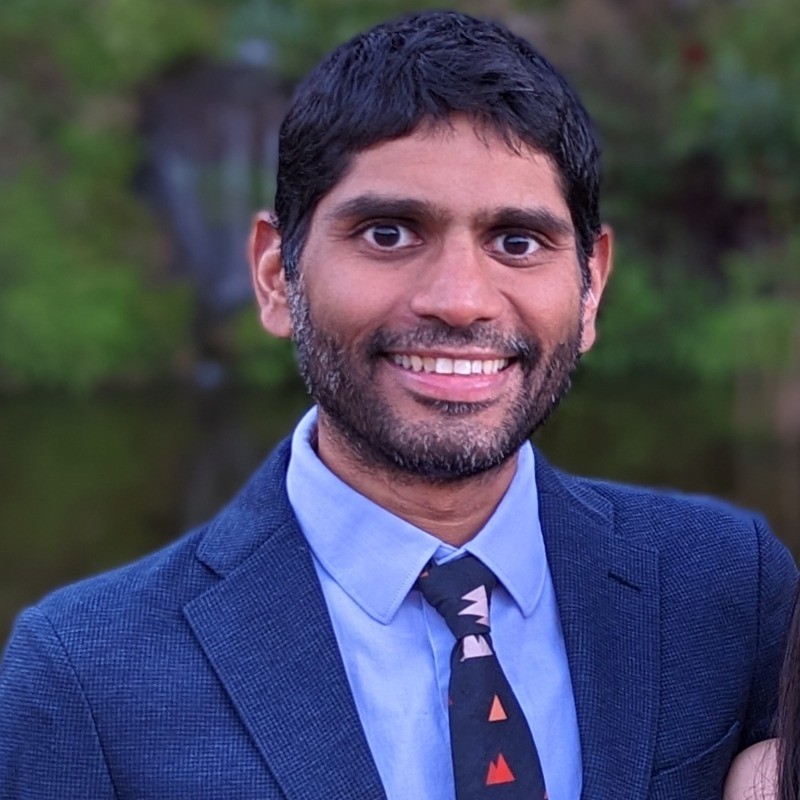
Jagan Nemani, chief product officer of the Seattle Orcas. (GeekWire Photos / Todd Bishop)
What he’s building: An AI system that runs a professional cricket franchise — flights, hotels, ground transportation, and daily schedules for players and staff, all handled over WhatsApp.
Nemani is chief product officer of the Seattle Orcas, the Major League Cricket team now in its fourth season. For the first three, he ran team operations the old-fashioned way: “I ran the entire operations using spreadsheets and people and processes,” he said. That meant tracking a constant stream of inbound flights, hotel blocks and car bookings across a season.
This year, he used Claude Code to build the backend for an AI agent that took over roughly 80% of the operation: booking flights, hotels and cars, dealing directly with hotels and transportation vendors, and telling players and staff when their flight lands, which hotel they’re in, and who’s picking them up. It also handles daily schedules, down to massage appointments.
To accommodate players and staff who were reluctant to adopt new tech tools, he built it to run on WhatsApp, the messaging app they already used every day.
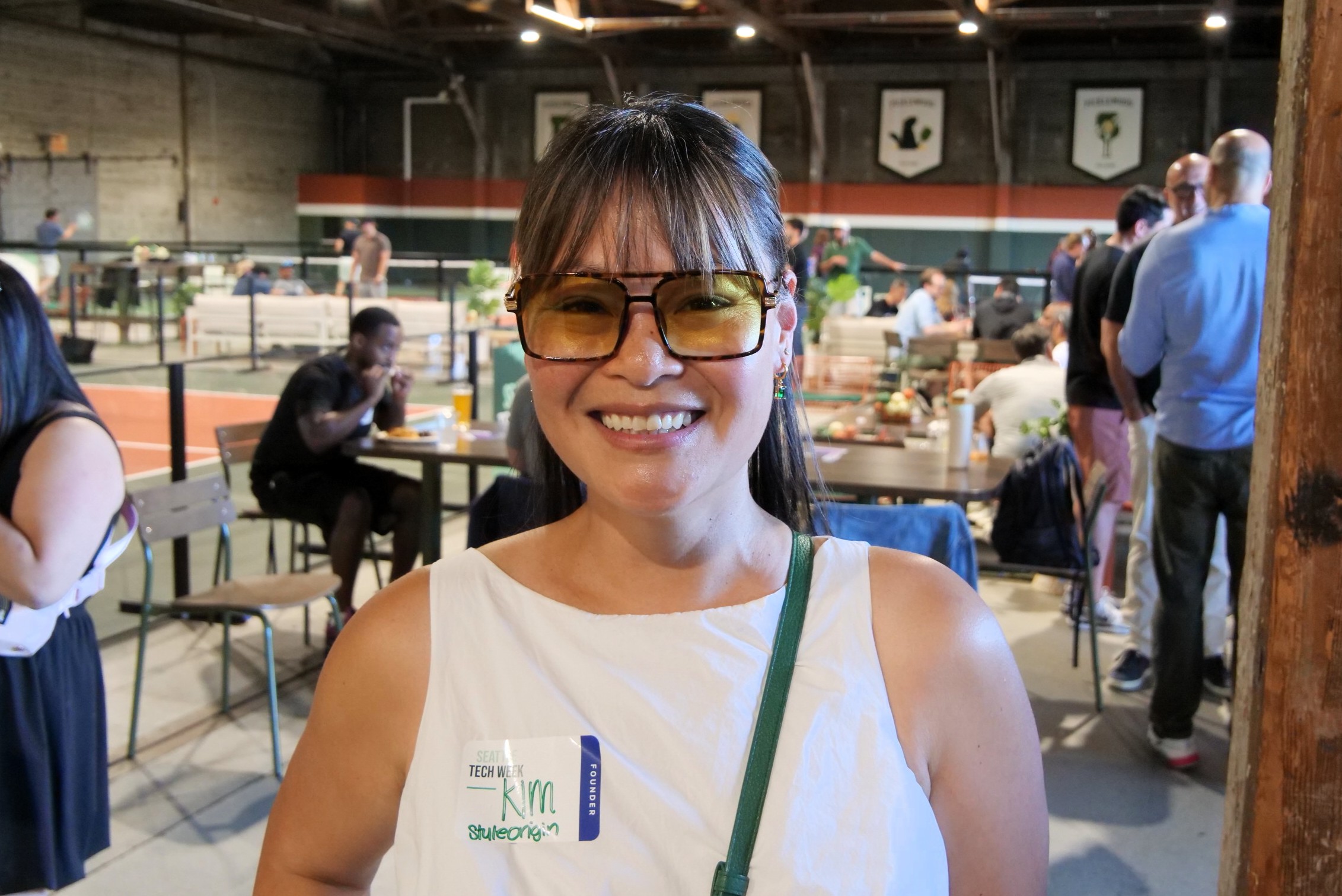
What she’s building: A B2B tool that lets thrift, vintage, and consignment resellers photograph an item and get back the identification, pricing, and listing details they now assemble by hand.
Vu is founder and CEO of StyleOrigin. Getting a single secondhand garment listed for sale is still manual work that takes 30 to 45 minutes an item, she said. With StyleOrigin, a reseller takes one image and an AI analysis returns what they need to list and price it. The company also gives sellers data to guide inventory decisions.
She found the problem herself. Vu ran environmental, social and governance work at Remitly until she stepped down in 2023, then took a year off and started selling vintage clothing. She assumed she was slow because she was new to it. “But turns out everybody does it the same, and so there wasn’t really any good solution out there.”
She taught herself to code and built the first version of the product. StyleOrigin has a working MVP but no revenue yet. More than 70 stores around the country are on a waitlist, and Vu is about to bring her first engineer aboard.
What he’s building: Tools for collecting, storing, and analyzing the data AI systems produce — the record of what agents actually did, not just the code they shipped.
Daniel is founder of Hyperparam, an early-stage Seattle startup, and previously co-founded Algorithmia, the Seattle machine learning company acquired by DataRobot in 2021.
Companies are spending heavily on AI without much sense of what they’re getting, he said. “AI is producing this wall of tokens. Companies are paying huge amounts of money to generate all these tokens, but they have really no visibility into what are these agents doing.”
Every token leaves a trail, and Daniel said most companies ignore it. Mining it would show them where AI is working and where it’s wasting money.
“Where are models being stupid? Where are they going down rabbit holes?” Older analytics tools can’t help, he said, because they were built for numbers and clicks: “People haven’t really been thinking about what do you do when the majority of the data being produced in the world is text.”
What she’s building: An urban mine — recovering precious metals from jewelry and returning them to the supply chain for clean technology.
Escarez is founder of Redyoos, which GeekWire featured in Startup Radar last year. The jewelry industry accounts for 40% to 50% of the global supply of precious metals, she said — the same materials found in “anything that has an on and off button,” from cell phones to wiring.
Demand for those metals is climbing with AI and clean energy, and Escarez said projections point to a supply shortfall of 700% over the next couple of decades. “We mathematically cannot solve this deficit,” she said, which is why she sees jewelry as a viable source.
Redyoos collects jewelry, refines what contains precious metals, and sells the recovered material to clean-tech manufacturers.
Escarez, a former chief operating officer at Boma Silver Jewelry and brand manager at Starbucks, has bootstrapped the company, which has been live a little over a year and is generating revenue. She is now raising a pre-seed round.
What he’s building: An engineering team inside a venture capital firm, automating the work of investing.
Liu is a partner at Unlock Venture Partners, which he helped launch in 2018 to back early-stage startups in Seattle and Los Angeles, and which raised a $60 million second fund in 2022. A longtime Seattle entrepreneur and angel investor with stakes in close to 100 companies, he was previously CEO of BuddyTV, acquired by Vizio, and of NetConversions, acquired by aQuantive.
“We actually have an engineering team that’s trying to automate a lot of what we do in VC,” Liu said, “and trying to make sure we can scale our business just like our own portfolio companies.”
The work covers deal memos and diligence on prospective investments, along with the mechanics of dealing with the firm’s own investors and collecting updates from portfolio companies.
The point, he said, is better decisions: “How do we get smarter as VCs?”
What she’s building: Private AI — letting people own their own data and context, use any large language model, and not be tracked or trained on.
Jesse is co-founder and CEO of ACME Brains, whose first product, nexie, is in beta. GeekWire wrote about the origins of the company last year: after her husband passed away, she turned to ChatGPT and found real comfort in it, then ran into its limits — it couldn’t carry the context of their conversations, and she had concerns about the privacy of what she was telling it.
nexie keeps a user’s notes, journals, and conversations in what the company calls a personal context engine, and carries that context across AI services instead of leaving it scattered in separate chat histories.
Trading privacy for free services goes back to the early internet, she said, but AI tilts the exchange further. A chatbot draws information out of a person in conversation, then combines it with everything already known about them. “AIs can talk you into your data,” she said.
An electrical engineer with more than two dozen patents who spent decades in wireless at McCaw Cellular and AT&T Wireless, Jesse said most people don’t grasp how AI actually behaves, which leaves them exposed — seniors especially. “You need people that understand it to help protect people that don’t.” Her co-founders are Alan Caplan, Amazon’s original general counsel, and patent attorney and engineer Bob Bergstrom.
What she’s building: Voice AI that lets bar and restaurant staff count inventory out loud instead of writing it down by hand.
Rapp is founder and CEO of Köniva. A typical hotel resort bar spends 12 hours and four people on an inventory count, she said; with Köniva it’s two people and 3-and-a-half hours, and more accurate. Staff download an app and wear a lapel mic — you want both hands free on a ladder — and count out loud the way they always have.
She came to the problem after a career in big tech and ad tech. Not wanting to build for an industry she’d never worked in, she took a part-time job at Canlis after training as a sommelier.
When she was injured, the wine director let her help with inventory reconciliation and handed her a clipboard of handwritten numbers plus a login to the restaurant’s inventory software. She asked why they were still using paper and pencil when a whole engineering team had built software for the job. The wine director’s answer: it was faster.
Köniva has 10 customers. At several high-end hotels and restaurants, Rapp said, staff put the app on their personal credit cards to start using it, then helped her pitch their own procurement departments — an unusual path in an industry she said has been badly burned by technology.
“It is insane how bad tech has been to them,” she said.
Henry Arias, founder and managing partner of Altelan Capital.
What he’s building: A growth equity firm investing at the intersection of food brands and food tech.
Arias is founder and managing partner of Altelan Capital, a Seattle firm he started last year. It underwrites companies around the Series A stage, generally, providing growth capital and strategic support.
He came up in the industry itself, leading finance at restaurants and breweries and most recently running corporate development and financial planning for Seattle Hospitality Group. That operator lens, he said, is what he brings to investments and to coaching founders on growth. He has been an investor since 2015.
Arias calls Altelan an AI-native investment fund, using AI tools to get up to speed on an industry and test assumptions about a business’s ability to scale and where the risks are. He’s equally interested in where the technology doesn’t belong and simplicity is the better option: “AI is great, but it may not be the right tool for the job.”
The bigger shift he’s watching is food and digitization. The industry has traditionally worked off “the proverbial clipboard and a notepad,” he said, and the pandemic accelerated the move to technology across the supply chain. “There are many applications of tech in food,” he said, “and that’s what keeps us up and gets us excited every day.”
— Jeff Lyon is now chief information security officer at Seattle’s Remitly. Lyon joins from Coinbase, where he was head of infrastructure security for two years. Past roles include security leadership at Robinhood and Amazon Web Services. Lyon also served as a petty officer with the U.S. Navy for more than nine years.
“Remitly’s mission to transform lives through trusted financial services that transcend borders resonates deeply and is a natural progression of my work building security organizations, secure applications, and safe-by-default platforms across fintech,” Lyon said in a LinkedIn post.
Remitly has seen a reshuffling of leadership since co-founder and CEO Matt Oppenheimer departed in February. Ankur Sinha resigned as chief product and technology officer in June, and Rina Hahn left as chief marketing officer earlier this month. Veteran tech and finance executive Sebastian Gunningham now leads the company.
Joseph Williams. (Dept. of Commerce Photo)
— Joseph Williams, a longtime Seattle-area leader at the intersection of tech and public service, was named director of Cybersecurity Programs at Western Washington University.
Williams most recently served as the governance, risk management and compliance (GRC) practice director at consulting firm Artemis Connection. His varied career includes working as information and communications technology sector lead for the Washington State Department of Commerce; Seattle office director for Pacific Northwest National Laboratory; and divisional CTO at Microsoft.
Williams’ experience “sets the stage for propelling our cybersecurity programs to new heights as we seek to equip and empower our graduates to be successful in exciting careers in a fast-changing technology landscape,” said Filip Jagodzinski, computer sciences’ department chair.
Kartik Murthy. (LinkedIn Photo)
— Kartik Murthy was named vice president of product for Yoodli, a roleplay platform using AI to help people improve their professional skills.
Murthy joins the Seattle-based startup from the cybersecurity company Coalition, where he served as head of product for four years. He has held product management roles at companies including Meta, Google and Uber.
“In a world where many AI products try to automate workflows, Yoodli is taking a bet on humans and it’s already paying off,” Murthy said on LinkedIn.
Phoebe Weiser. (LinkedIn Photo)
— Phoebe Weiser is now an investor at the longtime Seattle venture firm Madrona. She joins from Databricks, where she worked as a product manager, and previously held internship and full-time roles at Microsoft.
“After building in security at Microsoft and data engineering at Databricks, I’m looking forward to partnering with the next generation of founders. I’m especially grateful to the managers, mentors, and teammates over the past few years for everything they taught me about building products at scale,” she said on LinkedIn.
— Salman Taherian is now head of AI for Grant Thornton, a Chicago firm offering audit, assurance, tax and advisory services. Taherian, who is based at the company’s office in Bellevue, Wash., joins from Amazon Web Services where he was global head of agentic AI and strategic partner accounts. Past employers include Wipro Limited and Relx.
— Two Fred Hutch Cancer Center researchers have received endowed chairs:
Kate Markey, an assistant professor at Fred Hutch and UW Medicine, has received the Innovators Network Endowed Chair. Markey is a bone marrow transplant physician and studies how gut bacteria affect recovery for cancer patients.
Sita Kugel, a pancreatic cancer researcher and Fred Hutch professor, is the inaugural recipient of the Leung Roy Family Endowed Chair.
— Jeff Weintraub was appointed chief operating officer and chief financial officer for Nabu, a Seattle startup that publicly launched this year that’s building tools for software product teams. Its co-founders are Jon Grant and Eric Thompson.
Weintraub was most recently at Apple for more than 12 years, leaving the role of director of consumer and enterprise support engineering. Earlier in his career he was with Intel and also owned a bathroom fixture manufacturing company.

 Login
Login