Obama recently said that Democrats need to make artificial intelligence one of their “central agendas” and “have a very clear plan” to address concerns around the technology’s economic impact and safety.
Michael Jensen, left, and Steven Brugger are leading BrainChild Bio. (Photos via BrainChild Bio)
Seattle biotech startup BrainChild Bio has raised $116 million to advance an experimental CAR T cell therapy for one of the deadliest forms of childhood brain cancer.
The Series A financing will primarily fund a pivotal Phase 2 clinical trial of an investigational therapy being developed for diffuse intrinsic pontine glioma, or DIPG. The rare brainstem tumor primarily affects children ages 5 to 10 and has few treatment options.
The financing was led by an undisclosed private family fund and foundation, with participation from BrainChild Bio’s initial investor, Seattle Children’s, and new investor WRF Capital.
BrainChild Bio is building on CAR T cell technology developed at Seattle Children’s and licensed exclusively to the company in 2023. The approach involves genetically engineering a patient’s own T cells to recognize and attack cancer cells.
The company says its new therapy has now entered its ILLUMINATE Phase 2 study, designed as a registration-stage trial that could eventually support an application to the U.S. Food and Drug Administration.
DIPG presents a particularly difficult challenge for cancer researchers because the tumors grow in the brainstem, an area critical to basic functions, and the blood-brain barrier can limit the ability of treatments to reach the tumor.
BrainChild Bio’s approach delivers the CAR T cells directly into cerebrospinal fluid through an implanted catheter, allowing the cells to reach the tumor locally and potentially be administered repeatedly.
About 300 children in the U.S. are diagnosed with DIPG each year, a devastating brain tumor with no cure and few treatment options. Radiation is the current standard of care, but children diagnosed with DIPG have a median overall survival of only about 11 months.
BrainChild Bio also plans to use proceeds from the new financing to advance a CAR T therapy designed to target three different cancer markers, toward initial clinical testing in glioblastoma.
The company was founded by Michael Jensen, who previously helped develop the underlying work at Seattle Children’s and was a co-founder of Umoja Biopharma and Juno Therapeutics. The CEO is Steven Brugger, who most recently served as founder and CEO of Affinivax, a biotech company which was acquired by GSK for $3.3 billion in 2022.
“This financing enables us to chart our path forward to serve the children and families afflicted with devastating brain tumors and represents a new paradigm for treating CNS brain tumors in children and adults,” Jensen said in a statement. “Our team at BrainChild Bio is steadfast in its commitment to harness CAR T cell technology in CNS tumors and we are uniquely positioned to do so.”
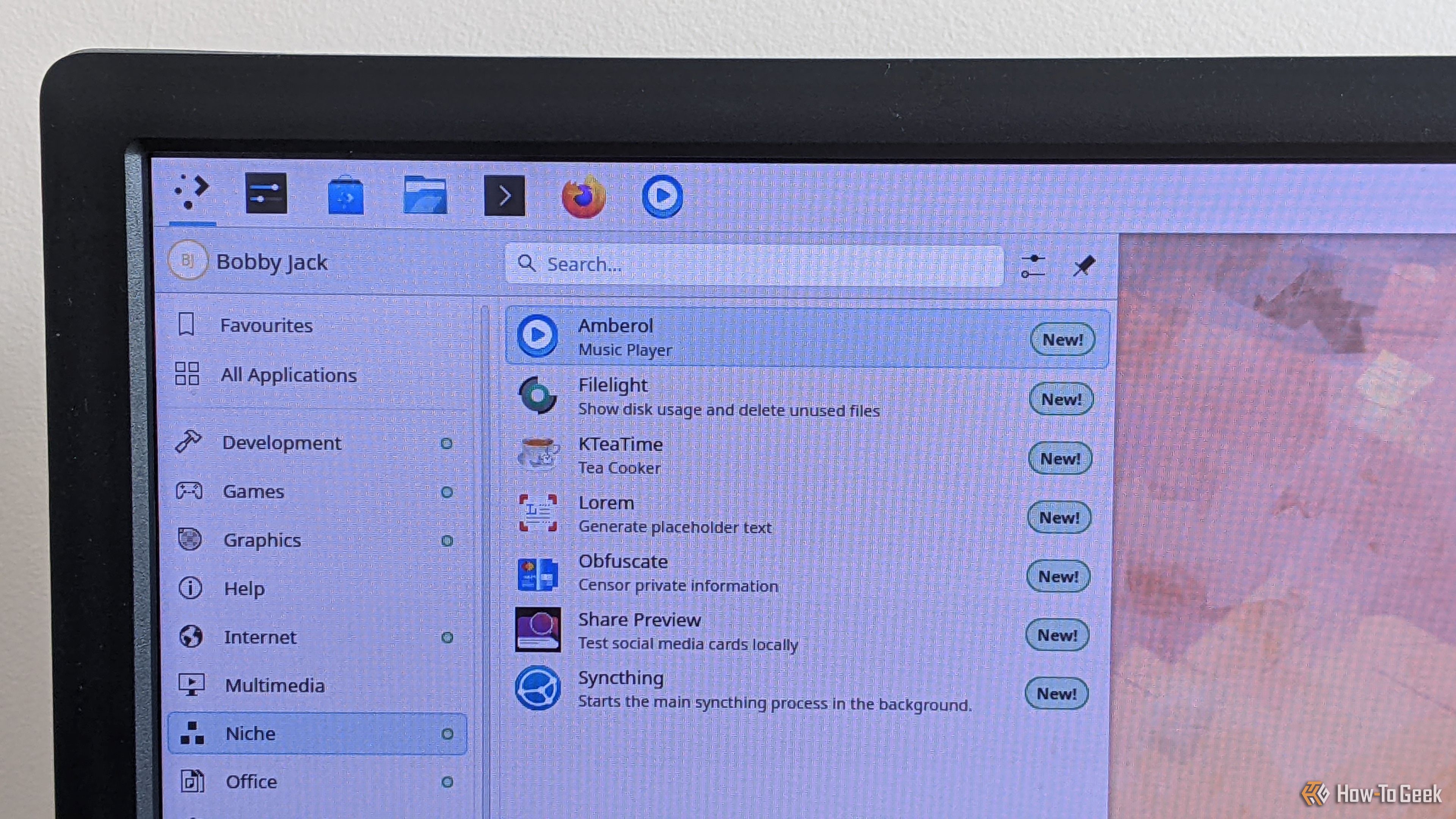
Firefox, GIMP, and LibreOffice are the obvious, popular apps that you'll see everyone recommend for your Linux system. But there are many more apps beyond those.
Bored of making same porridge and mudde using ragi flour, why not try this simple and easy ragi flour upma. This ragi upma also known as finger millet upma is made with ragi flour, whole spices, onions, chillies, carrots, coconut. It is fast to make, healthy, nutritious and makes a filling iron rich breakfast. Ragi...
Open-source software is wonderful: it's free, diverse, and surprisingly accessible. You might feel that software development is a secret world of privilege and insider knowledge, but OSS has made great strides to overturn this misunderstanding.
If you've been in the Linux space for a while, you know just how customizable KDE Plasma can be. However, a lot of us only limit that customization to picking the theme or moving the panel. What surprises me is how many plug-in surfaces Plasma exposes that I barely even touched. On top of that, they sit right next to the Plasma features you probably use daily.
The first Japanese citizen to launch into space, Toyohiro Akiyama was also the first commercially sponsored cosmonaut and the world's first journalist to file reports while on a spaceflight.
Akiyama, 84, died last Wednesday, August 26, of lower gastrointestinal bleeding, news agencies in Japan reported. A funeral was held with his close relatives in attendance.
As a correspondent for the Tokyo Broadcasting System (TBS), Akiyama was chosen out of his 162 fellow employees who applied to fly to space in celebration of the network's 40th anniversary. He trained at the Gagarin Cosmonaut Training Center in Star City, located outside of Moscow, and was assigned to the Soyuz TM-11 crew.
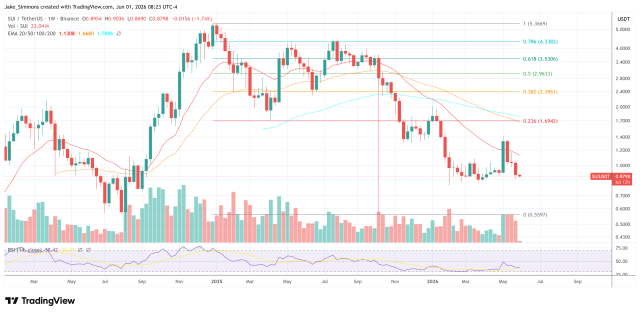
Sui Network’s total value locked is holding around the $1.2 billion level, keeping the chain in the conversation as traders watch where DeFiliquidity is moving.
TVL is not the same as users. It is not the same as revenue. It does not prove that every application on the network is thriving.
But it is still one of the most watched signals in DeFi because it shows how much value is sitting inside protocols on a chain. For Sui, holding the $1.2 billion area gives the ecosystem a useful liquidity marker.
For more details, visit the official Defillama platform.
TL;DR
Sui Network TVL is holding around $1.2 billion.
The figure points to continued DeFi liquidity on the chain.
TVL should not be treated as a direct measure of active users.
Why TVL Still Matters
TVL has lost some of its magic since the early DeFi boom.
Back then, every rising TVL chart was treated like proof that a protocol was winning. The market is more careful now, and rightly so. TVL can be boosted by incentives, asset-price changes, looping, or a few large depositors.
Even with those limits, TVL still matters.
It shows whether capital is present. Without liquidity, DeFi apps struggle. Lending markets need deposits. DEXs need pools. Yield products need assets. Traders need depth.
So when Sui holds a $1.2 billion TVL level, it tells the market that the chain has meaningful DeFi capital to work with.
Sui Is Fighting In A Crowded Market
Sui is competing against some very strong ecosystems.
Ethereum and its Layer-2s still dominate much of DeFi. Solana has deep retail momentum. BNB Chain has distribution. Avalanche, Arbitrum, Base, and others all have their own liquidity pockets.
That makes Sui’s TVL important.
The network needs visible metrics to stay in the conversation, and DeFi liquidity is one of the clearest. Holding a billion-dollar-plus level helps show that Sui is not just a narrative chain. It has capital deployed across applications.
TVL Does Not Prove User Growth
This needs to stay clear.
A high TVL number does not mean daily active users are rising. It does not mean transaction quality is improving. It does not mean developers are shipping faster. It simply tells us how much value is locked in DeFi protocols.
That is valuable, but limited.
For a stronger ecosystem read, traders need to pair TVL with DEX volume, active addresses, transaction count, fees, stablecoin supply, developer activity, and app-level usage.
TVL is one piece of the picture.
Why The Level Matters Psychologically
Round numbers matter in crypto.
A chain holding above $1 billion in TVL tends to be taken more seriously than one below it. It signals that enough capital has arrived to support a meaningful DeFi ecosystem.
Sui holding around $1.2 billion therefore gives the network a stronger market position.
It may also help attract builders who want liquidity already in place before launching applications.
What To Watch Next
The next test is whether Sui can convert liquidity into deeper activity.
That means more trading, more lending, stronger apps, better retention, and wider stablecoin usage. If TVL stays high while activity also grows, the network’s DeFi case becomes stronger.
If TVL holds but usage lags, the signal becomes less powerful.
For now, Sui has a solid capital base. The market will want to see whether that liquidity turns into a busier ecosystem.
This article draws on DeFiLlama Sui Network TVL data.
This article was written by the News Desk and edited by Samuel Rae.
This report is based on information released by Defillama. at Defillama
Tokenized real-world assets and equities collateral have reached a monthly high, according to DeFiLlama RWA data, adding to signs that tokenization remains one of crypto’s more durable institutional themes.
The milestone comes as investors continue to track the growth of on-chain exposure to traditional assets, including treasuries, credit products, funds, equities, and collateralized instruments. Unlike purely speculative token cycles, real-world asset tokenization is often pitched as a bridge between traditional finance and blockchain settlement.
The latest data suggests that bridge is still seeing traffic.
For more details, visit the official Defillama platform.
TL;DR
Tokenized real-world assets and equities collateral reached a monthly high.
DeFiLlama RWA data points to continued growth in the tokenization sector.
TVL and collateral metrics should not be treated as proof of broad retail adoption.
Why RWA Growth Matters
Tokenization has become one of crypto’s clearest institutional narratives.
The idea is simple: take financial assets that already exist off-chain and represent them on blockchain rails. That can make settlement faster, improve transparency, expand distribution, and allow assets to interact with DeFi infrastructure.
The most visible examples have included tokenized U.S. Treasury products, private credit, money-market-style funds, and other yield-bearing instruments.
Equities-related collateral adds another layer.
If traditional equity exposure, or collateral linked to public-market assets, becomes more accessible on-chain, crypto markets may gain new forms of liquidity and risk management.
Collateral Is The Key Word
The important point is not just that assets are being tokenized.
It is that tokenized assets can potentially be used as collateral. That makes them more useful inside financial markets. Collateral can support lending, borrowing, derivatives, margin systems, and structured products.
In traditional finance, collateral is one of the foundations of market activity.
Bringing more forms of collateral on-chain could make DeFi more useful for institutional participants, provided legal, custody, pricing, and liquidity questions are handled properly.
That is why RWA growth is more than a branding exercise.
Monthly Highs Need Context
A monthly high is encouraging, but it should be read carefully.
RWA dashboards can measure different things: total value locked, tokenized asset value, collateral value, protocol deposits, or sector-level exposure. These numbers are useful, but they do not always show the same kind of activity as exchange volume or user counts.
A rising collateral figure may reflect institutional deposits, asset-price changes, new products, or dashboard coverage changes.
That means the trend matters, but the category needs precision.
Tokenization Still Faces Friction
The tokenization thesis is strong, but the execution is difficult.
Real-world assets require legal claims, custody arrangements, transfer restrictions, investor eligibility checks, pricing methods, redemption rules, and regulatory compliance. A token is only useful if it represents an enforceable claim on the underlying asset.
That makes RWA very different from launching a typical crypto token.
Institutions may like the efficiency of blockchain settlement, but they still need confidence in the legal wrapper.
The Broader Signal
The monthly high shows that tokenization remains one of crypto’s stronger growth areas.
Even when market attention shifts between Bitcoin, Ethereum, memecoins, ETFs, and DeFi rotations, RWA keeps building as a more practical bridge to traditional finance.
The next test is whether tokenized collateral becomes deeply used, not just recorded on dashboards.
If these assets begin supporting meaningful borrowing, settlement, and portfolio activity, tokenization could move from narrative to infrastructure.
For now, the data points to continued momentum in one of crypto’s most institutionally relevant sectors.
This article draws on DeFiLlama’s RWA protocol data.
This article was written by the News Desk and edited by Samuel Rae.
This report is based on information released by Defillama. at Defillama
EIT Pharma said Monday that the oversubscribed round also drew participation from Good Ventures, Arrowtown and others. The company said the money will support FDA review of lonafarnib, an oral treatment candidate for chronic hepatitis D, along with manufacturing and commercial preparations, subject to regulatory approval.
The Food and Drug Administration accepted the company’s New Drug Application for review on Aug. 11.
Kawas, EIT Pharma’s CEO, said in a news release Monday that the oversubscribed round validates the company’s founding belief that “advancing important medicines is about recognizing unrealized potential.”
Chronic hepatitis D is a serious liver disease that affects people who are already infected with hepatitis B. The FDA approved the first U.S. treatment for chronic hepatitis D in May: Gilead’s injectable Hepcludex, or bulevirtide-gmod. EIT Pharma is positioning lonafarnib as a potential oral alternative, if approved.
Kawas resigned as CEO of Athira Pharma in 2021 after a board investigation found she had altered images in research she co-authored as a graduate student. She said at the time that the changes were enhancements that did not alter the underlying data.
Athira has since changed its name to LeonaBio and shifted its focus from Alzheimer’s disease to breast cancer.
Robinhood Chain recorded $2.66 million in daily app revenue, surpassing Ethereum mainnet and Hyperliquid over the same 24-hour measurement window, according to validated DeFiLlama-style dashboard data.
The metric has attracted attention because it places a brokerage-linked chain above some of crypto’s most visible revenue generators for a short period. But the framing needs care.
This does not mean Robinhood Chain has displaced Ethereum as the center of crypto activity. It does not mean Ethereum’s ecosystem is weakening. It means a specific revenue metric, over a specific window, briefly favored Robinhood Chain.
That is still worth noting.
App revenue is becoming one of the more useful ways to understand where crypto users are paying actual fees.
For more details, visit the official Defillama platform.
TL;DR
Robinhood Chain recorded $2.66 million in 24-hour app revenue.
The figure placed it above Ethereum mainnet and Hyperliquid for that measurement window.
The comparison is metric-specific and should not be treated as a full ecosystem ranking.
Why App Revenue Matters
Crypto markets often center on price, volume, and total value locked.
Revenue adds another layer. It shows where users are paying for activity. That can include trading, lending, borrowing, settlement, bridging, derivatives, or other application-level interactions.
A chain with meaningful app revenue may have real economic activity rather than only idle liquidity.
That is why traders and analysts increasingly watch revenue dashboards. They can reveal which ecosystems are monetizing usage, not just attracting deposits or headlines.
Robinhood Chain’s $2.66 million day puts it on that radar.
Robinhood’s Distribution Advantage
Robinhood has something most crypto-native projects lack: mainstream distribution.
The company already has a large retail trading base, a recognizable brand, and experience packaging financial products in a consumer-friendly interface. If Robinhood connects that distribution to on-chain activity, revenue can move quickly.
That may explain why its chain can produce strong app metrics over short windows.
The user funnel is different from a typical crypto network. Robinhood does not need to persuade users to discover a new wallet, bridge assets, and learn DeFi from scratch. It can route activity from an existing financial platform into on-chain products.
That is a powerful advantage.
Ethereum Comparison Needs Precision
The Ethereum comparison is interesting but limited.
Ethereum mainnet remains the dominant settlement layer for stablecoins, DeFi, tokenized assets, L2s, and institutional crypto infrastructure. A 24-hour app revenue comparison does not overturn that.
It does, however, show that user-facing distribution can generate meaningful on-chain economics.
In other words, Ethereum’s depth remains unmatched, but consumer finance platforms may be able to create intense bursts of revenue around specific products.
That could become a theme if more brokerages and fintechs launch chain-based experiences.
Hyperliquid Adds Another Benchmark
Hyperliquid is also an important comparison because it has become one of the strongest revenue-generating crypto trading venues.
If Robinhood Chain can briefly exceed Hyperliquid in app revenue, traders will want to know what activity drove the move. Was it tokenized equities? Trading fees? A launch event? A specific product cycle?
The answer matters because not all revenue is equally durable.
A one-time spike can look impressive without becoming repeatable. A recurring revenue base is much more valuable.
The Bigger Market Structure Shift
The wider story is that crypto revenue is moving closer to mainstream finance platforms.
Chains connected to brokerages, tokenized stocks, app-based trading, and consumer financial products could challenge older assumptions about where value accrues.
Crypto-native protocols still matter. But they may increasingly compete with regulated platforms that already own the user relationship.
Robinhood Chain’s revenue spike is a glimpse of that possibility.
The market should not treat it as a full ecosystem takeover. It should treat it as a warning that distribution can matter as much as infrastructure.
This article is based on public DeFi app revenue dashboard data.
This article was written by the News Desk and edited by Samuel Rae.
This report is based on information released by Defillama. at Defillama
Australian authorities have charged two alleged TeamPCP members after software supply chain attacks exposed over 500,000 credentials and at least 300GB of data.
Slice into a beautifully smoked brisket, and there’s a good chance you’ll notice a narrow band of pink just beneath the dark exterior. For many barbecue fans, that distinctive color is one of the first things they look for. It has become closely associated with authentic smoked meat, but the science behind it is more interesting than simply saying that smoke makes meat pink. So what creates the smoke ring, and does it actually tell you anything about the quality of the BBQ you’re about to eat?
Where the Pink Comes From
The smoke ring forms due to a reaction involving myoglobin, a muscle protein that contributes to meat’s natural color. As meat cooks, heat changes the structure of myoglobin, causing the familiar shift from red or pink toward brown.
During smoking, certain compounds produced by burning wood can interact with myoglobin near the surface of the meat. Under the right conditions, that reaction helps preserve the pink color, creating the ring that appears just beneath the bark.
The depth and appearance of a smoke ring can vary depending on factors such as the type of wood, cooking conditions, moisture, and the amount of time the meat spends in the smoker.
Is the Smoke Ring a Sign of Good BBQ?
A smoke ring can indicate that meat was exposed to wood smoke during cooking, but it isn’t a reliable indicator of how well the meat was prepared. A dramatic pink ring doesn’t guarantee tenderness or flavor, and a perfectly cooked piece of smoked meat doesn’t necessarily need to have a prominent one.
For experienced pitmasters, the more important qualities are things like tenderness, moisture, seasoning, bark, and the overall balance of smoke and flavor.
Why It Became Such a Big Deal
Part of the smoke ring’s reputation stems from barbecue competition culture, where appearance is an important factor in judging. Over time, that bright pink edge became something BBQ enthusiasts began to associate with well-executed smoke.
There’s also something appealing about being able to see evidence of the cooking process. A smoke ring is a visible reminder that the meat spent hours in a smoker rather than simply being cooked over high heat.
There’s More to Smoked Meat Than Color
The smoke ring may be the first thing you notice when you slice into smoked meat, but it is only one small part of what happens during a long cook. Smoke contributes flavor, heat gradually changes the meat’s texture, and the exterior develops the bark that gives each bite another layer of character. A good piece of barbecue ultimately has to do more than look the part.
Taste the Difference at Code 1 BBQ!
Did we spark your cravings yet? Stop by Code 1 BBQ and experience our take on BBQ in Wilmington, from smoked meats to the sides and sauces that bring everything together. Whether you’re trying one of our favorites for the first time or already know what you’re ordering, there’s always a reason to come hungry. Stop in and see what’s cooking!
Follow us on Facebook for menu updates, specials, events, and more from Code 1 BBQ!
Arthur Hayes has outlined a new “Yen-quake” macro thesis, arguing that efforts to support the Japanese yen could ultimately inject fresh dollar liquidity into global markets and become bullish for Bitcoin.
In his August 10 essay, Hayes focuses on the Federal Reserve’s FIMA Repo Facility, a mechanism that allows foreign official institutions to access dollars against US Treasury collateral. His argument is that a larger or more active FIMA channel could help Japan manage yen pressure without selling Treasuries outright, while still creating conditions that support risk assets.
It is an interesting theory. It is not confirmed policy.
That is the key distinction.
Hayes is laying out a speculative macro framework, not reporting that the Federal Reserve has already launched a new Bitcoin-friendly liquidity program.
Arthur Hayes’ “Yen-quake” essay centers on Japan, the yen, and the Fed’s FIMA Repo Facility.
He argues the setup could increase dollar liquidity and support Bitcoin.
The thesis is speculative analysis, not confirmed Fed policy.
Why The Yen Matters To Crypto
Crypto traders watch the yen because Japan is deeply tied into global liquidity.
Yen weakness, Japanese government bonds, US Treasury holdings, carry trades, and central-bank coordination can all affect financial conditions. When funding markets shift, risk assets often respond.
Bitcoin has become part of that macro conversation.
Some investors treat BTC as a liquidity-sensitive asset. When global dollar liquidity expands, Bitcoin can benefit. When liquidity tightens, BTC often struggles. That relationship is not perfect, but it is strong enough that traders pay attention.
Hayes’ argument fits that framework.
What FIMA Does
The FIMA Repo Facility allows foreign central banks and official institutions to temporarily exchange US Treasury securities for dollars through repo transactions.
In theory, that can reduce pressure to sell Treasuries outright during periods of dollar demand. For a country like Japan, which holds a large amount of US Treasuries, the facility can be an important liquidity backstop.
Hayes’ argument is that using or expanding this channel could create more dollar liquidity.
More liquidity, in his view, could support Bitcoin, gold, and other assets that respond to monetary expansion.
That is the thesis.
Theory Is Not Policy
The market needs to be careful here.
There is a big difference between a macro essay and an official Federal Reserve action. Hayes may be right about the incentives. He may be early. He may be wrong. The facility may or may not be used in the way he describes.
None of that is confirmed just because the theory is compelling.
Crypto markets are often quick to turn liquidity narratives into certainty. That can be dangerous. A trade built around expected policy action can fail if the policy never comes, arrives later than expected, or has a smaller effect than imagined.
Why Bitcoin Traders Still Care
Even with that caution, the thesis matters because Bitcoin traders are searching for the next liquidity catalyst.
ETF flows, corporate treasuries, stablecoin supply, rate expectations, fiscal policy, and global reserve management all feed into the same question: is there more money available to buy risk assets?
If the yen issue forces new dollar liquidity into the system, Bitcoin could respond.
If it does not, the thesis may remain just another macro scenario.
The important part is that Bitcoin is now mature enough to be discussed inside global liquidity mechanics. Traders are not only watching exchange flows anymore. They are watching central-bank facilities.
The Bigger Read
Hayes’ “Yen-quake” essay is best treated as a macro lens, not a forecast that must happen.
It gives crypto traders a framework for thinking about Japan, the Fed, Treasury collateral, dollar liquidity, and Bitcoin. That is useful, especially when markets are searching for a new catalyst.
But it should not be mistaken for confirmed coordination or guaranteed BTC upside.
The yen may become an important part of Bitcoin’s next macro story.
For now, it is still a theory.
This article is based on Arthur Hayes’ August 2026 “Yen-quake” essay.
This article was written by the News Desk and edited by Samuel Rae.
This report is based on information released by Cryptotraderdigest. at Cryptotraderdigest
Lately, the constrained AI models that companies keep shipping are becoming less and less useful for cybersecurity. We keep hearing a lot of complaints about Claude in this regard. What they are doing doesn’t really fix the problem, as hackers are not sitting around waiting for the guardrails to be lifted. The barrier to entry for hacking has dropped hard. AI can already automate huge chunks of this cybercrime work. Many of these latest models can even find zero days during engagements.
Source: The Hacker News
So poking around your infrastructure looks completely irrelevant. A more meaningful approach is to actually emulate these real attacks with AI, but for that we need a model with no guardrails. Today we are going to show you how to jailbreak a model and self host it for your pentesting work.
What is Obliteratus
Obliteratus is built to strip refusal behavior out of LLMs using abliteration. You’ll see it called abliteration or obliteration, same thing. It targets the internal representations causing the model to refuse in the first place and knocks them out. The model keeps all its core capability, it just stops throwing up artificial walls when you ask it something. It runs on CPU for smaller models, and it’s already been used to abliterate Kimi-K3 along with a bunch of others.
Setting Up
Setting up this tool will take some time, just like the jailbreak process itself. How long depends on your hardware and your internet speed.
kali > sudo apt update
kali > sudo apt install -y python3 python3-pip python3-venv git
kali > git clone https://github.com/elder-plinius/OBLITERATUS.git
kali > cd OBLITERATUS
kali > python3 -m venv venv
kali > source venv/bin/activate
kali > pip install --upgrade pip
kali > pip install -e .
Once it finishes, see if it works:
kali > obliteratus --help
If you don’t have a GPU, don’t worry. You can absolutely make this work with small models using just CPU power. Our Kali VM ran on 12 gigs of RAM and 7 processors, and that setup worked really well.
We went with Qwen 2.5-0.5B-Instruct for this test. You don’t need to have it downloaded beforehand. The tool will fetch it for you automatically. There are different methods available for the jailbreaking process, but advanced and nuclear are the most common. The advanced method is usually enough for most use cases, but if you see the model misbehaving you can escalate to nuclear.
kali > obliteratus obliterate Qwen/Qwen2.5-0.5B-Instruct --device cpu --method advanced --output-dir ./abliterated-qwen-0.5b
Once the model downloads, the tool starts running prompts designed to lift the guardrails.
You can find the full list of prompts in obliteratus/prompts.py. Right before it finishes, it runs a series of refusal tests to check whether the model actually complies with requests. Behavior varies a lot depending on which model you’re working with and which method you picked.
In our testing, the advanced method gave us approximately 75% of compliant answers.
At this point, everything is prepared and you can push your model to HuggingFace to share it. But if you want to run it locally, the next step is getting it working with Ollama.
Running Models with Ollama
Aircorridor previously made an article on running Ollama models locally and showed how to do it on a MacBook. If you don’t have it, you can still make this work on a Kali VM using your CPU. We need to convert our new model into a format that Ollama actually understands.
kali > git clone https://github.com/ggerganov/llama.cpp
kali > cd llama.cpp; python3 -m venv venv; source venv/bin/activate
kali > pip install -r requirements.txt
kali > python convert_hf_to_gguf.py /home/kali/OBLITERATUS/abliterated-qwen-0.5b --outfile qwen2.5-0.5b-abliterated-f16.gguf --outtype f16
Next, we create a Modelfile that points to the model:
kali > cat > Modelfile << EOF
FROM ./qwen2.5-0.5b-abliterated-f16.gguf
EOF
Then we create the model using Ollama:
kali > ollama create qwen05b-abliterated -f Modelfile
At this point, everything is ready and you can start testing it. The better the model you start with, the better your results will be.
kali > ollama run qwen05-abliterated
But even with a small model like this, you’ll see it do things that normally it wouldn’t.
Abliterated Models
This tool is helpful for doing the work yourself and understanding the logic behind the whole process. But if you’re working at scale and don’t have time to spend on each model individually, just keep in mind that many abliterated models are available on HuggingFace uploaded by huihui.ai. They’ve already done the heavy lifting for a lot of popular models.
If you can’t find exactly what you need in their collection, you now know how to do it yourself.
Summary
The landscape of offensive security has shifted because AI got so good at automation. Simple pentests with constrained models don’t prepare you for the reality out there anymore. As you can see, there’s no reason to work with constrained models in cybersecurity, when the people you’re up against are exploiting the full capability of a model with nothing holding them back. So test your environment with abliterated models before someone else does it. The tool is great for staying ahead of the actual threats.
In one of our previous articles, Aircorridor showed you how to do recon on exposed Ollama servers. There are a surprising number of them scattered across countries all over the world, and unfortunately, most of them are left completely unprotected. That means hackers can use the CPU and GPU power of those servers to run their own tools. It’s not just that they can generate answers to random questions using your exposed models. These models can also be pushed into generating malware, rewriting scripts and exploits to slip past antivirus software, and helping someone hack into other systems entirely. All of it running on your hardware, at your expense, while you have no idea it’s happening. Our goal here is to raise awareness about this problem so you understand what can happen when a model gets left exposed.
Ollama
It all starts with a simple Shodan query, and right now that query turns up 4,222 exposed hosts. That number keeps shifting as more people jump into the AI space, and most of these hosts are sitting there vulnerable to the kinds of attacks we’re about to walk through.
Following Aircorridor’s example, you can list the models running on one of these servers. As you’ll quickly notice, there’s often a long list, sometimes more than 40 models on a single host.
The ones that matter most here are the local models, not the cloud. They don’t require an API key to reach. Of course, not every listed model is actually active, so a quick curl request is usually enough to check whether one is really responding.
When a model does respond, that confirms it’s live and usable, which means it can be put to work for all sorts of purposes, good or bad. Let’s walk through a few of the ways that tend to play out.
Coding
Because these exposed models have no guardrails, they’re an attractive resource for coding tasks, including rewriting malware or generating backdoors. To pull this off, hackers often bring the model straight into VS Code using a plugin called Continue, which lets them integrate an external model directly into their coding workflow.
Once installed, they’ll edit the config file to point at the exposed server’s IP address along with the model’s name. This config can hold multiple models at once, so a hacker can switch between them right there in the chat window.
With that setup in place, the model shows up ready to work and it often has no issue generating malicious code that could cause real damage to systems out on the internet.
The same pattern shows up with exploit development and antivirus evasion, where a model can take old exploits and rewrite them so they slip past AV detection.
Hacking
Once an exploit has been generated, the next step for a hacker is putting it to use against real systems. We covered a tool called PentestCode in an earlier article, and while it normally relies on free AI models through OpenCode Zen, it can just as easily be pointed at someone else’s exposed local model instead. This is just one example among many. Plenty of other tools work the exact same way, running on borrowed compute that belongs to somebody who has no idea it’s being used.
To connect PentestCode to an exposed model, a config file gets created at ~/.config/pentestcode/pentestcode.json.
Once that’s in place, the tool automatically lists the available models. It’s worth noting that not every model supports tool use. DeepSeek R1, for example, doesn’t support it, and neither do a handful of others. So if a given exposed model doesn’t support tools, it’s simply not useful to a hacker in this particular scenario.
Chat Assistant
Finally, exposed local models can also be accessed through a full chat interface using Open WebUI, which looks a lot cleaner than working from the command line. It has the kind of layout people are used to by now, with folders, chat history, channels, and separate workspaces. It takes a bit of disk space and a little patience to install, but once it’s running, it’s a solid and polished experience.
Summary
Running Ollama is not inherently dangerous. Simply exposing a model doesn’t automatically put you at risk of a data breach or account compromise. What it does do is hand hackers free access to your CPU and GPU, letting them run their own workloads on your dime without your knowledge or consent. That alone is a real cost, even if nothing else goes wrong.
The bigger danger shows up with older, outdated Ollama instances. Older versions are more likely to carry known vulnerabilities, and there are documented CVEs out there that can lead to full API exposure. When that happens, hackers aren’t just borrowing your compute anymore. They can steal your API keys outright and use them for whatever purpose they like. Keeping Ollama updated and making sure it isn’t sitting exposed to the open internet goes a long way toward avoiding both problems entirely.
We also invite you to join our AI for Cybersecurity training, available to our Subscriber Pro members. During the training, we’ll cover practical ways to use AI in cybersecurity, show you how to install and run local models, and much more. The field is evolving rapidly, and the sooner you learn to use these tools, the greater your advantage will be.

 Login
Login