This week on the GeekWire Podcast, we start by opening the listener mailbag, highlighting some recent comments that set a new standard for critical feedback, in different ways.
We discuss Vayo, the AI travel venture Booking Holdings is launching in Seattle, home of its biggest rival, Expedia. Led by recent guest Mike Fridgen, Vayo uses AI agents to manage your trips. It’s an example of the broader push to build personalized AI agents, even as more companies wall off their sites from rival agents.
Then we take on LinkedIn’s list of the top Seattle startups, where four of the top 10, including No. 1 Anthropic, aren’t headquartered in the region.
And finally, we talk about Amazon’s new Bee AI wearables, which can turn things you say into shopping suggestions on Amazon.com if you opt in and pay $12 a month. That leads into the GeekWire Trivia Challenge, about an earlier Amazon wristband that listened to you.
Every so often, we get sucked into a list touting the top regional startups or the most robust entrepreneurial ecosystems.
Well, a startup list released today from Microsoft-owned LinkedIn — titled “The 10 companies on the rise in Seattle” — grabbed our attention, for all of the wrong reasons.
Let’s just say: We know a thing or two about Seattle-area startups around here. And so we had to do a little fact-checking.
First of all, four of the companies on LinkedIn’s list — Anthropic, Auger, Whatnot and Armada — are not even headquartered in the Seattle area.
San Francisco-based Anthropic — ranked #1 on LinkedIn’s Seattle startup list — has a growing engineering center at Dexter Yard North in Seattle’s South Lake Union neighborhood. But to think that Anthropic CEO Dario Amodei and his team are cutting deals at the Washington Athletic Club or debating the future of AI over lattes in Kirkland is a hallucination bigger than most AI models could create.
If the LinkedIn team were studying GeekWire’s coverage, they’d also realize that #2 on their list, Auger, is not headquartered in the Seattle area, either. The AI logistics startup, co-founded by former Amazon executive Dave Clark, moved its headquarters to Dallas in August, although it maintains a Bellevue engineering center.
It keeps getting more bizarre from there. The #3 company on LinkedIn’s Seattle list is Whatnot, the heavily funded video-based shopping startup that set up an engineering center in Seattle last year, but is clearly headquartered in the Los Angeles area.
Finally, ranked #9 on the Seattle list is data center upstart Armada — a company that, according to its own LinkedIn profile, is based in San Francisco.
So, just to summarize: Three of the top Seattle startups (according to LinkedIn) have their headquarters in California, and one has its headquarters in Texas.
GeekWire columnist and angel investor Charles Fitzgerald pointed out the flaws in the list, calling it a “half-assed” effort. “For a Microsoft-owned company, you’d think they’d have better insight into where Seattle is actually located,” Fitzgerald said.
The list does include some companies that are actually based in the Seattle area.
Making the top 10 are: Bellevue-based Truveta (#4); Seattle-based Yoodli (#5); Redmond-based Worldscape (#6); Seattle-based Overland AI (#7); Seattle-based Gradial (#8); and Kent-based Stoke Space (#10).
All of those companies (except for Worldscape) are listed on the GeekWire 200, our ranking of the top 200 privately held startup companies in the Pacific Northwest. The other companies — Anthropic, Auger, Whatnot and Armada — are listed on our engineering center list.
Notably absent from LinkedIn’s Seattle list is Chainguard, which ranked #42 on LinkedIn’s accompanying report on the top 50 startups in the U.S. Chainguard is headquartered in Kirkland but is a fully remote company. The Seattle ranking counts only employees and hiring in the city, which may explain why a remote company like Chainguard didn’t make the cut.
For our purposes, given that one of the co-founders of the cybersecurity startup calls the Seattle area home, we claim it as a Seattle-area startup.
In its defense, LinkedIn describes a Seattle startup a bit differently than we do here at GeekWire.
According to its methodology, the ranking weighs four factors: employment growth, engagement with company pages, interest in job openings, and the ability to recruit talent from LinkedIn’s list of top companies. The data covers July 2025 through June 2026.
LinkedIn requires privately-held companies to be less than seven years old and headquartered in the United States to qualify for its U.S. rankings, but doesn’t require them to be headquartered in the Seattle area to make the Seattle list. All of which explains how a startup can make a list of Seattle’s top startups without actually being based in Seattle.
UPDATE: LinkedIn provided this statement to GeekWire:
“While companies do not need to be headquartered in Seattle to qualify, they must have at least 30 full-time employees based in the metro area. Our city lists are designed to spotlight startups gaining momentum, locally, recognizing that growing companies often have employees and operations across multiple markets. Further, the data for the city lists are reflecting employees based in that city only, versus the entire country.”
— Brinc Drones, the Seattle-based maker of 911 response drones, has named Joe Levy chief revenue officer. Levy joins from Peregrine, a public safety data platform, and early in his career was a drill sergeant and combat engineer for the U.S. Army Reserve.
Levy praised the Brinc team, saying, “They’re passionate about what they do with a vision that will change the public safety landscape. I’m grateful to join them and help scale what they’ve built.”
Brinc announced a $125 million funding round in July, bringing its total raised to more than $280 million. The startup is hiring for numerous roles and is No. 6 on the GeekWire 200, a ranked index of the Pacific Northwest’s top startups.
Jessie Minton. (Fred Hutch Photo)
— Seattle-based Fred Hutch Cancer Center has appointed Jessie Minton vice president and chief digital and information officer, a new position that brings the roles together.
Former Chief Data Officer Jeff Leek stepped down and is now a professor in the Fred Hutch Public Health Sciences Division and CEO of Synthesize Bio, a startup he co-founded in 2023. Last month, Fred Hutch announced Shawn Stapleton as VP and chief AI and innovation officer, another new role.
Minton joins from Washington University in St. Louis where she has been vice chancellor for technology and chief information officer since 2022. She was previously VP and CIO at the University of Oregon.
Fred Hutch praised Minton’s track record “of modernizing complex technology organizations, strengthening cybersecurity, governing large-scale Epic environments and aligning technology strategy with clinical, research and academic priorities.” The new role is effective Dec. 7.
Jason (JJ) James. (LinkedIn Photo)
— Jason (JJ) James has been named chief information officer of Acumatica, the Bellevue, Wash.-based enterprise software giant that was acquired last year by Vista Equity Partners. James has more than 25 years in technology leadership and was previously CIO at companies including Aptos Retail, Net Health and Optima Healthcare Solutions.
“My focus is putting AI to work across Acumatica while keeping security at the core, so we can move fast without compromising the trust our expanding community of customers, partners and developers places in us,” James said in a statement.
Andrew Bennett. (LinkedIn Photo)
— Seattle tech leader Andrew Bennett has joined San Francisco-based Motiveas chief marketing officer. Bennett was with Smartsheet for a decade, leaving as CMO in 2024. He is also a limited partner with the investment firm Stage 2 Capital.
Motive provides software, hardware and AI-powered tools to help businesses manage physical fleets of vehicles and heavy equipment.
— Steven Chen has left LinkedIn, where he served as director and head of corporate legal and sustainability, to become a senior director at Rubrik.
— Seattle-based LevelTen Energy, a startup facilitating the deployment of clean energy projects, has appointed John Barrow as director of a new initiative enabling the purchase and sale of data center projects under development.
Barrow joins from CyrusOne, a global data center developer and operator, and was with CPS Energy for more than 15 years.
“In my career, I’ve had a front-row seat to the data center boom,” Barrow said. Participants are struggling to quickly secure locations and energy, he said, adding that LevelTen “can solve those problems for industry participants at scale.”
— Certivo, a Seattle startup building technology to automate supply chain compliance, has named Jeffrey Bornstein to its board. Bornstein was with GE for nearly three decades and served in roles including vice chairman and chief financial officer.
“He has run the numbers for some of the most complex industrial supply chains in the world while regulators checked every one of them,” said Certivo CEO Kunal Chopra. Certivo is No. 194 on the GeekWire 200.
Convera leadership, from left: Mike Cahill, Jon Southall, Tui Allen and Chris Steinig. (Convera Photo)
— Convera, a Seattle-based fintech company helping businesses transfer money across borders, has added to its leadership team. All four will work out of Convera’s other offices.
Mike Cahill has been appointed EVP and chief operating officer after joining in June as interim chief product and technology officer. Past employers include Early Warning Services, the company behind Zelle, as well as PayPal, Boku and American Express.
Jon Southallhas been named SVP and chief technology officer. He joins from PayPal and has also worked for Boku and Braintree.
Tui Allenhas joined as SVP and chief product officer. She previously worked for employers including Ticketmaster, Shopify and Blackbaud.
Chris Steinig has been named CIO after leading Convera’s technology operations for four years.
— Portable Consultants a Redmond, Wash., enterprise telecommunications and data connectivity provider, has named two leaders.
Carrie Ferrero has joined as VP of product and marketing development. She previously served as VP of sales engineering at Connectbase.
Troy Brockway has been named director of client development, joining from SpikeUp Media.
— Reperio Health, a Portland, Ore., startup bringing preventive health check-ups into the home, has named Brad Nations to its board of directors. Nations is CEO and founder of JB Advisory.
— iQmetrix, a Vancouver, B.C.-based company building point-of-sale and retail management software for cell phone and wireless stores, has appointed Beniamin Longodor as VP of global growth. Longodor, who is based in Austria, was previously with NTS Retail.
Peter Lee, left, and Ryan Roslansky both shared news this week that they’re leaving Microsoft. (LinkedIn Photos)
Two top Microsoft executives announced this week that they’re leaving the Redmond, Wash., tech giant:
— Peter Lee, the former head of Microsoft Research and most recently president of Microsoft Science, is resigning after more than 16 years.
“As for what I’ll be doing next, what I can say at this point is that it is a once-in-a-lifetime opportunity to join an elite team, fulfilling a dream I’ve had since childhood. It’s a major detour from what I’ve been doing over the past 2+ decades,” Lee said on LinkedIn.
At the same time, he said he would continue working with healthcare organizations including the Mayo Clinic, Kaiser Permanente Bernard J. Tyson School of Medicine and Seattle Children’s.
Peter Lee, right, in the Moment Motors shop with founder Marc Davis, left, and builder Brandon Beaman, in Austin, Texas. Moment is converting Lee’s 1964 Mustang to electric. (Photo courtesy of Peter Lee)
Before joining Microsoft, Lee spent 22 years at Carnegie Mellon University, where he served as head of its Computer Science Department. He was named one of Time magazine’s 100 most influential people in health and life sciences in 2024.
As a hobby, Lee enjoys converting classic cars into electric vehicles, including a replica 1955 Porsche 550 Spyder and a 1968 Ford Mustang GT Fastback.
— Ryan Roslansky is leaving Microsoft after nearly 18 years with LinkedIn and Microsoft. Last year, he was promoted from CEO of LinkedIn to Microsoft executive vice president overseeing both LinkedIn and Microsoft Office. In April, the company named Daniel Shapero the new LinkedIn CEO.
Roslansky thanked CEO Satya Nadella, noting that when Microsoft acquired LinkedIn a decade ago, “you gave us room to build, and then trusted many of us with a lot more. I’ve learned more from you than I can fit in an email, and I’m grateful for the friendship that came with it.”
Nadella in turn praised Roslansky, saying on the company blog, “I’ve always appreciated his clarity of thinking and I’m deeply grateful for everything Ryan has built, for the leaders and teams he has developed, and for his friendship and counsel.”
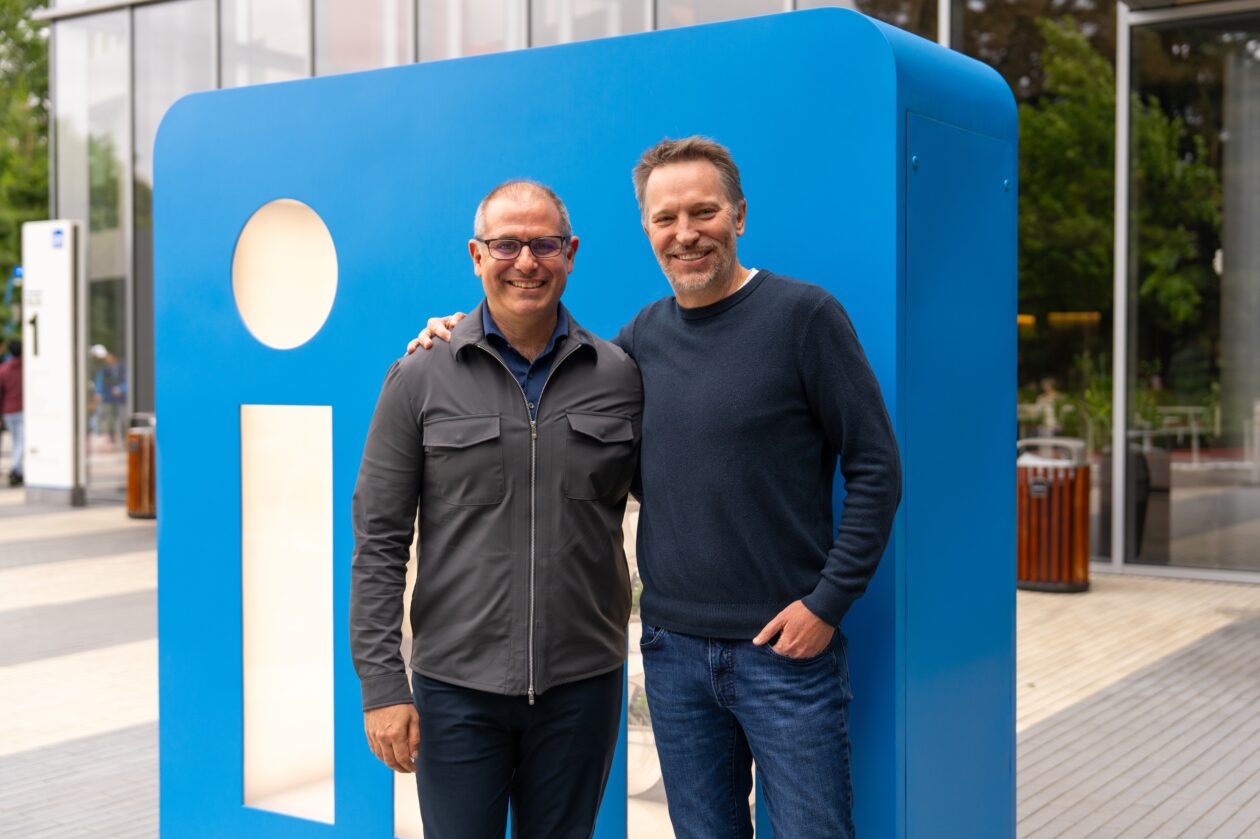
LinkedIn CEO Daniel Shapero, left, and Ryan Roslansky, EVP of LinkedIn and Microsoft Office, at LinkedIn headquarters. (LinkedIn Photo)
Roslansky joined LinkedIn in 2009 as chief product officer and became CEO in 2020. To continue in his role as Microsoft EVP would require relocating his family from the San Francisco Bay Area to the company’s Redmond headquarters.
“But my life and my family’s life are here in the Bay Area,” he said, adding, “The work now goes to leaders who are set up to take it further. I can’t wait to see what they do with it.”
Roslansky will leave the company at the end of the year.

 Login