❌

Reading view

There are new articles available, click to refresh the page.

How this longtime Google exec fits an insane amount of exercise into his weekly routine
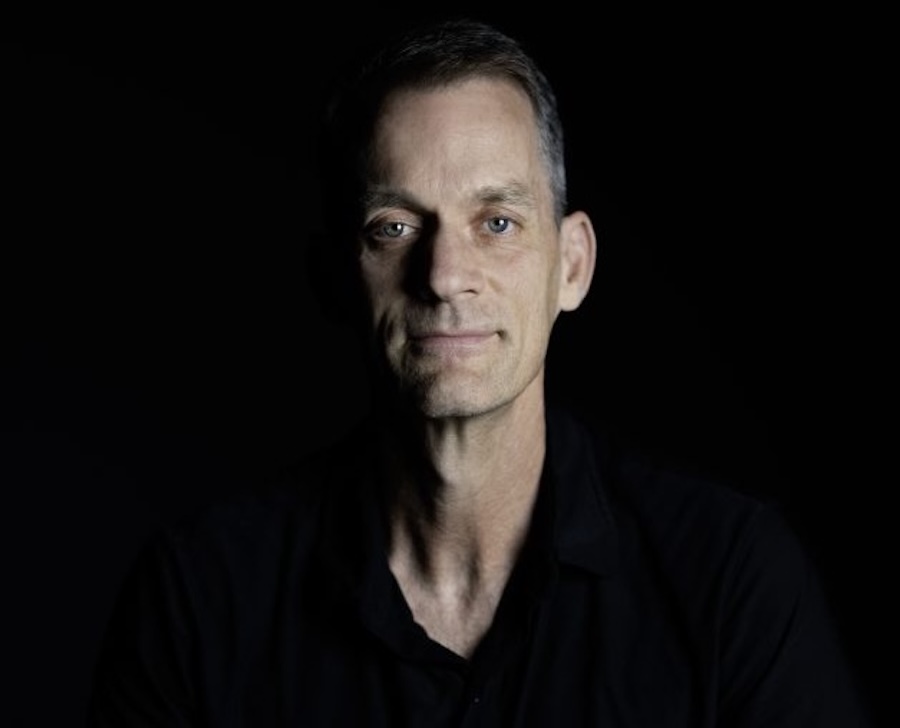
Jeff Dean, co-founder and CEO of Discovery Loop. (Photo via KDD.org)

Jeff Dean has spent decades flexing his brain to solve some of computing’s hardest problems. Turns out the Google legend and UW computer science alum has been pushing his physical limits just as hard.

In an exchange on X this week, the former Google chief scientist β€” who recently left the tech giant after 27 years to launch the scientific AI startup Discovery Loop β€” laid out a weekly training routine that looks less like a tech executive’s calendar and more like a triathlete’s.

In addition to running or biking to work three or four directions a week, Dean, 58, says he’s mixing in a couple trips to the gym, a couple yoga sessions, and a couple games of soccer in a 25-and-over league. He also does a longer run or bike ride on the weekend.

We got winded just scrolling through the comments.

Soccer (2 games/wk in my 25-and-over league), gym 2x/wk, yoga 2x/wk, run to work 3-4 directions/wk (8k each way), bike to work 3-4 directions/wk (8k each way), longer run or bike on weekend.

β€” Jeff Dean (@JeffDean) August 11, 2026

People wanted to know how Dean took care of his knees (squishy shoes), whether he came up with great ideas while exercising (definitely), when he showers (at work), and if he sleeps (usually seven hours).

In GeekWire’s Slack channel this morning, co-founder John Cook, a longtime soccer player, expressed his own surprise.

β€œHe’s playing soccer twice per week in an over-25 league β€” that is total bad ass,” Cook wrote. β€œI can barely run in my over-50 league!”

Dean earned his Ph.D. in computer science from the University of Washington in 1996 before joining Google as employee No. 30. He achieved tech-legend status by helping to build the company’s core computing architecture over nearly three decades.

His new venture, Discovery Loop, is an ambitious public benefit corporation aimed at using AI to automate the scientific method β€” running thousands of parallel experiments to accelerate breakthroughs in fields like drug discovery, materials science, and machine learning.

Dean’s dive into his exercise routine came up because of a slide he shared at KDD 2026, a conference in Jeju, South Korea. The slide was a play-by-play of his final 48 hours at Google (Aug. 5–7), detailing the whirlwind around his departure and startup launch.

Along with breaking the news to Google colleagues and announcing the launch of Discovery Loop, Dean spent last Wednesday responding to hundreds of well wishes β€” while squeezing in a yoga session and a soccer game. He went to bed at 2:30 a.m. and was up at 6:30 a.m. Thursday to respond to hundreds more messages.

He was technically unemployed for exactly one second at midnight on Thursday.

He probably spent it stretching.

Indeed, it has been quite a week, so I thought I'd share it with the KDD 2026 audience! For my Google colleagues who might have sent me internal chat messages after I closed my laptop for a final time on Thursday afternoon, I apologize for my lack of response!

(Zoomed in) https://t.co/lnBtuqM0q5 pic.twitter.com/VqyLMPBDSV
β€” Jeff Dean (@JeffDean) August 11, 2026

Elon Musk’s Starlink swagger, SpaceX vs. the cloud giants, and Seattle’s tech universe revisited

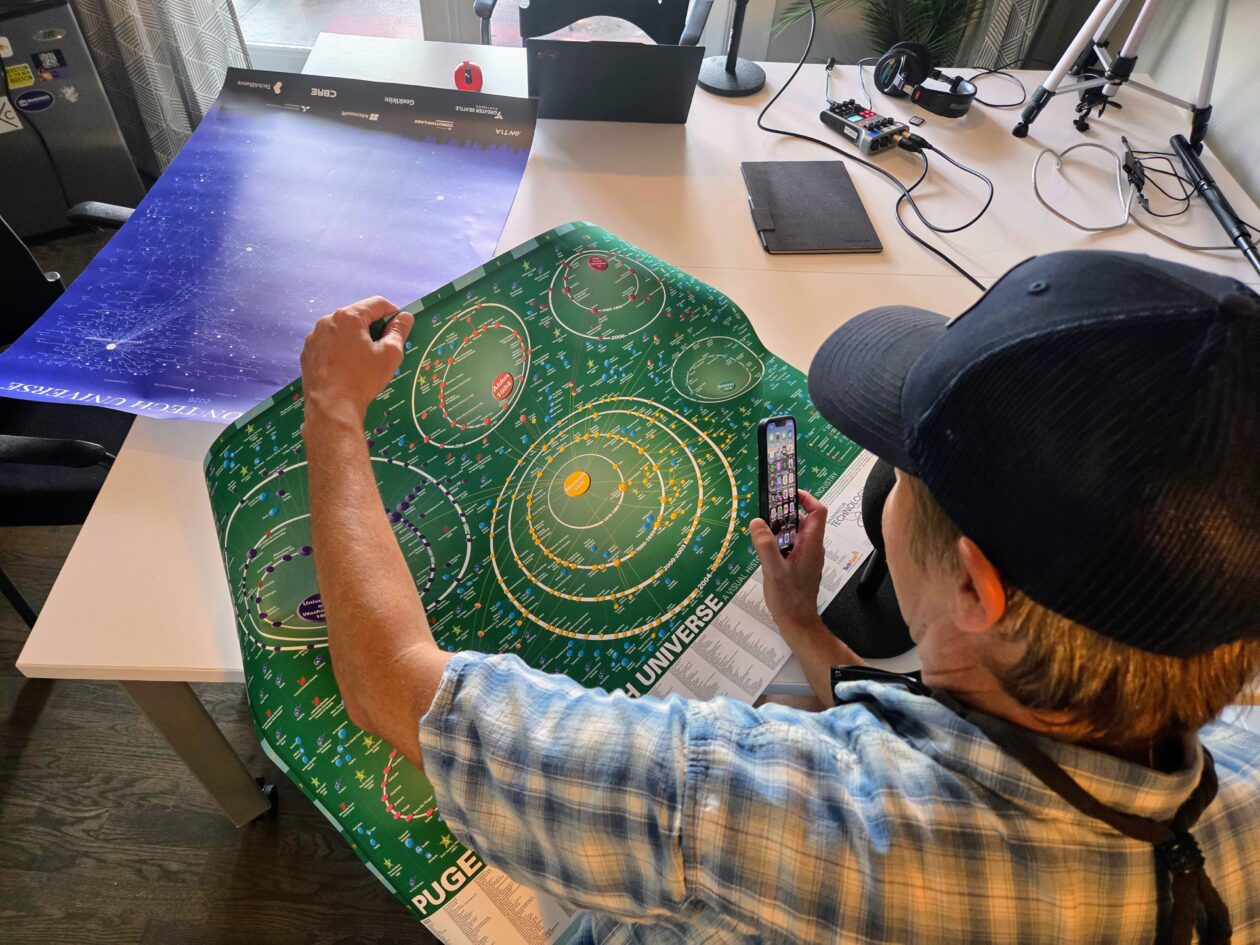
John Cook studies the 2009 Puget Sound Tech Universe map while recording this week’s GeekWire Podcast, with WTIA’s 2026 Washington Tech Universe map on the table behind him. (GeekWire Photo / Todd Bishop)

This week on the GeekWire podcast: SpaceX reports its first quarter as a public company, and Elon Musk says Starlink could deliver a majority of the world’s internet within a decade, leveraging production facilities in Redmond. Musk also explains the company’s data center ambitions, calling terrestrial infrastructure a trivial problem next to reusable rockets.Β 

Plus: we bring two Washington tech universe posters into the studio, 17 years apart. The 2009 original turns up gems including Boeing’s unlikely connection to Classmates.com, the 1990s forerunner to Facebook. It also brings back memories of Teledesic, the Craig McCaw venture backed by Bill Gates that tried to beam internet from space decades before Starlink.

Finally, the GeekWire Trivia Challenge returns with a timely question about Google’s origins.

Related stories and links

SpaceX’s first earnings call as a public company

Mapping Washington’s tech universe

GeekWire Trivia

Subscribe to GeekWire in Apple Podcasts, Spotify, or wherever you listen.

Audio edited and produced by Curt Milton.

The startup idea that convinced a UW computer science legend to leave Google after 27 years

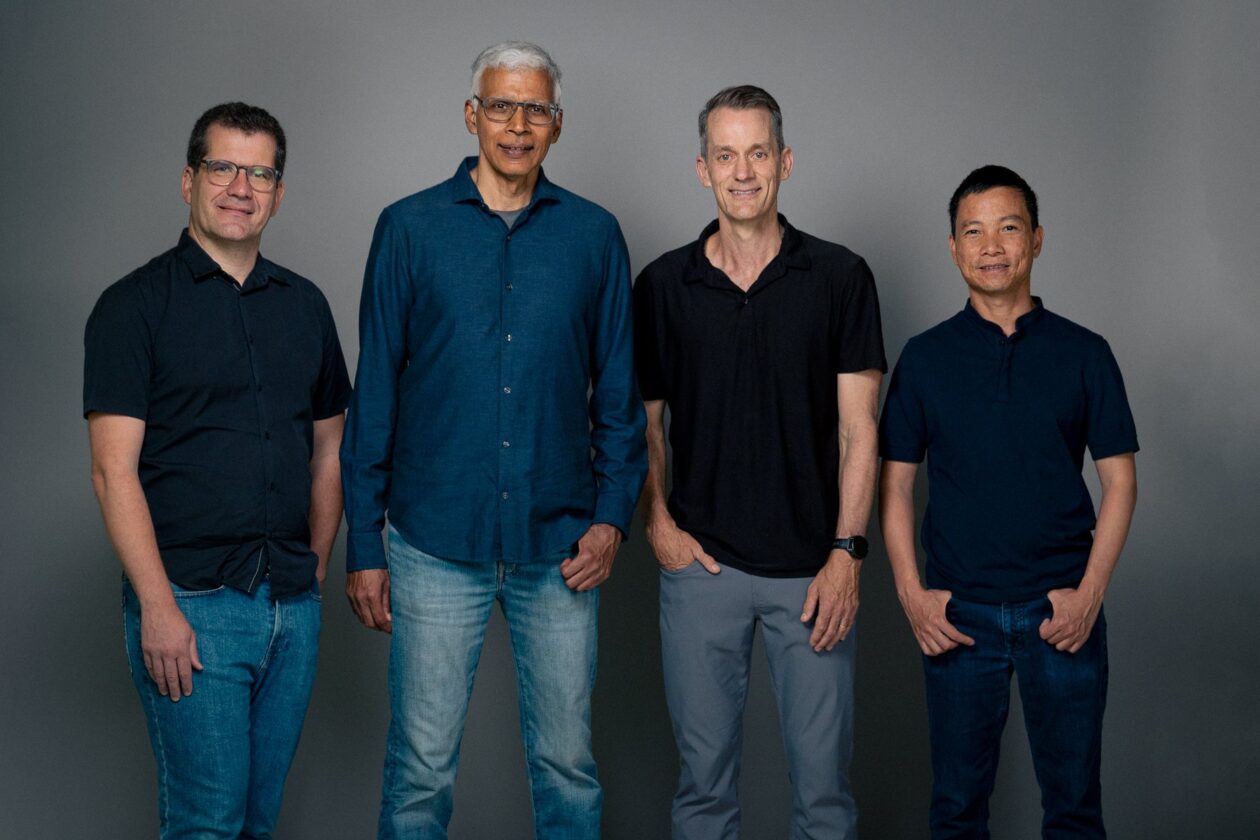
Google veterans leaving to launch Discovery Loop, from left: Oriol Vinyals, Sanjay Ghemawat, Jeff Dean, and Quoc Le. (Discovery Loop Photo)

Speaking in June at the University of Washington Allen School commencement, AI pioneer Jeff Dean told computer science graduates how he β€œgot the itch to join a startup in 1999,” landing at Google when it had a grand total of 20 people above what is now a T-Mobile store in Palo Alto.

Twenty-seven years later, now 58, the UW alum has the itch again.

Google announced Wednesday that Dean, its chief scientist, is leaving with three colleagues to launch Discovery Loop, a startup automating the process of scientific research: proposing experiments, running them, evaluating results, and iterating, thousands of times over.

β€œImagine a future where a handful of people can conduct scientific research and engineering tasks much more rapidly, and with higher quality, than massive teams of scientists and engineers do today,” they write on their website.

Discovery Loop is based in Palo Alto, with what it describes as a lean team of its own. Joining Dean are Google senior fellow Sanjay Ghemawat, his collaborator of more than two decades; Google DeepMind research VP Oriol Vinyals; and Google Brain co-founder Quoc Le.

Google is a founding investor and will supply computing power for at least the first year. Discovery Loop is structured as a public benefit corporation, with backing from Radical Ventures and Khosla Ventures (a name Seahawks fans will recognize from the team’s incoming ownership group).

The departures came as part of a broader shakeup announced in a memo from CEO Sundar Pichai. Demis Hassabis is handing off day-to-day leadership of Google DeepMind to become its chair and Alphabet’s chief scientist, while CTO Koray Kavukcuoglu steps up as SVP, overseeing Gemini model development. Alphabet shares fell about 4% after the announcement

β€œAfter an incredible 27-year run, Jeff Dean is at a moment where he wants to try something new, and we’re excited to support him in that,” Pichai wrote.

Dean, who earned his UW computer science Ph.D. in 1996, gave no hint of his plans at the Allen School commencement. He told Wired the idea came together only in recent weeks.

But the general theme was there. Listing problems he thought worth solving, he pointed the UW graduates toward β€œdeveloping tools that accelerate scientific discovery and engineering.”

β€œOne of the beauties of software,” he said during his commencement address, β€œis that small groups of people can build things that have enormous impact in the world.”

❌