The U.S. Air Force just gave itself a lot more room to sell Boeing’s aerial refueling tanker overseas. In a contract modification worth $13.4 billion, the Air Force raised the ceiling on an existing Foreign Military Sales agreement for the KC-46A Pegasus tanker from $5.7 billion to $19.1 billion, more than tripling how much business […]
If you ask most satellite companies aside from SpaceX, they will tell you the world doesn't have enough capacity for launching payloads into orbit. This is despite the blistering launch cadence we've seen around the world in recent years, led by SpaceX's Falcon 9 rocket.
Customers in any sector will, of course, usually welcome competition. Theoretically, competition will lead to lower prices and allow the best to rise to the top. It seems like the customers buying launch services were right. SpaceX is dialing back its Falcon 9 launch program, and there is no certainty about when SpaceX's reusable next-generation super-heavy-lift rocket, Starship, will carry anything to orbit besides the company's own Starlink satellites.
So it's no surprise satellite operators are cheering the success of a new launch provider. This was especially the case a few days ago, when Germany's Isar Aerospace reached orbit for the first time with its Spectrum rocket. The launcher delivered a batch of CubeSats to low-Earth orbit from a spaceport in northern Norway, and Isar tasted success after its first test flight ended in failure last year.
Japan’s Digital Agency has disclosed a cyberattack on a government network that may have exposed personal information belonging to approximately 246,000 public servants, contractors and other people involved in government work. The Digital Agency said on Sept. 11 that an…
Bitget Wallet has joined Japan’s Blockchain Collaborative Consortium as the country develops new rules for crypto services and regulators examine how self-custodial platforms should be treated. In a statement shared with crypto.news, Bitget Wallet said its membership in the Blockchain…
Boeing plans to offer Japan’s Ministry of Defense a drone it developed jointly with the Royal Australian Air Force, as Tokyo works out a new coastal defense concept built around unmanned aircraft, according to the Nikkei. Boeing’s defense division president, Steve Parker, told Nikkei the company will propose its MQ-28 Ghost Bat drone to the […]
An F-35B fighter squadron from South Carolina has taken over rotational duty in Japan, replacing a Hornet squadron under a U.S. Marine Corps program that keeps U.S.-based units cycling through the Pacific. Marine Fighter Attack Squadron 533, known as the Hawks, arrived at Marine Corps Air Station Iwakuni on September 5 under the Unit Deployment […]
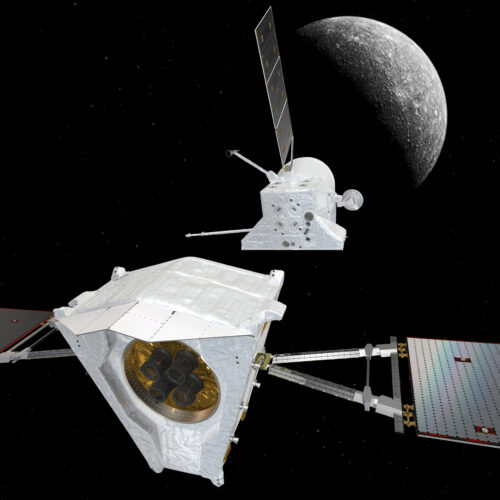
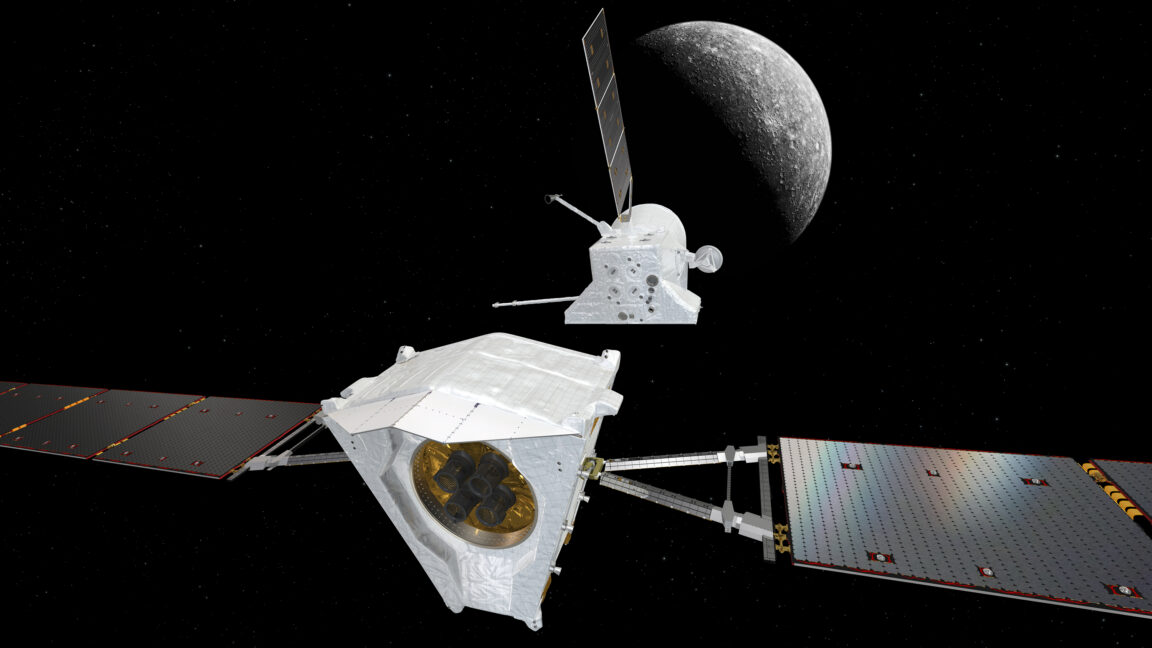
The BepiColombo mission cleared a major milestone this week in the final stretch of an eight-year interplanetary voyage to Mercury, the hard-to-reach, scorching hot iron world at the Solar System's innermost frontier.
The robotic science mission, with a price tag of nearly $2 billion, is led by the European Space Agency with contributions from Japan and the United States. Since its launch in 2018, BepiColombo has spiraled closer to the Sun using a combination of plasma propulsion and a series of flybys of Earth, Venus, and Mercury. The maneuvers changed the spacecraft's velocity and steered it toward a final encounter with Mercury later this year.
Next time it reaches Mercury, BepiColombo will be traveling at just the right speed for the planet's gravity to capture the spacecraft into orbit. Scientists working on interplanetary missions are accustomed to long waits for scientific payoffs. It took nearly 10 years for NASA's New Horizons spacecraft to travel from Earth to Pluto. It turns out traveling to fleet-footed Mercury and then entering orbit requires more energy, or delta-v, than sending a probe to fly by Pluto.
Japan Bitcoin Industry Co., Ltd. has debuted a self-custodial Bitcoin payments platform designed to help Japanese companies sell to international fans who are often shut out by traditional payment systems.
Using this week’s Bitcoin Asia conference in Hong Kong to introduce the product, JPI dropped Aurora — aiming to reach an audience that could not be serviced before.
The pitch is simple: anime, manga, games, and other Japanese content have a massive global following, but the payment rails supporting that content haven’t kept pace.
Aurora aims to close that gap by letting international customers pay in Bitcoin over the Lightning Network, while giving Japanese merchants a simple point-of-sale and API layer to manage invoicing, payment tracking, and integrations.
According to JBI, the market for Japanese anime content outside Japan reached ¥2.17 trillion in 2024, up 26% year-over-year — yet many overseas fans still struggle to pay for streaming subscriptions, digital merchandise and limited-access drops due to geographic payment restrictions.
The platform’s core design principle is that JBI never touches the money. Each merchant runs its own self-custodial Lightning node, receiving Bitcoin directly from customers.
JBI says this setup gives businesses cleaner regulatory footing, since the company isn’t acting as a custodian, while still handling the harder operational lift — node uptime, liquidity, accounting and auditing, and conversion to fiat — that has historically kept enterprises from adopting Bitcoin payments on their own.
JBI says aurora draws on lessons from its existing consumer business, UseBitcoin.jp, which has let customers buy digital gift cards — including au PAY, V-Preca and Kyash cards — using Lightning payments for the past two years.
The company is inviting media, prospective merchants and wallet providers to connect with the team at Bitcoin Asia 2026 in Hong Kong.
There may be hundreds of recipe for Vegetable Noodle Soup, but this version is one of the easiest you will ever make. This veg noodle soup recipe is loaded with vegetables, cooked in one single pot, and is so filling and comforting. Vegetable Noodle Soup When you are dieting having lots of soups really helps...
Kewpie Mayo is one of the most popular Japanese condiment that is loved by people all over the world. Kewpie Mayonnaise is known for its umami, sweet and rich creamy texture which is perfect for the world famous Japanese tamago sando. You need a handful of ingredients like egg yolks, oil, lemon juice, vinegar, mustard...
A rewards subsidiary of Kansai Electric Power has launched a loyalty-points conversion route into JPYC on Polygon, giving Japanese users a small but meaningful bridge between closed-loop reward points and on-chain stablecoin payments.
The integration involves MOACT’s rewards app, NORM Points, JPYC, Polygon, and HashPort Wallet. According to the validated notes, users can convert loyalty points into JPYC, a yen-pegged stablecoin, and then store or transfer those assets through HashPort Wallet.
Before this, the points were more limited, with redemption focused on gift cards and closed-loop rewards. The new route gives users access to a more flexible digital-money rail.
It is not a mass adoption moment on its own, but it is exactly the kind of practical consumer integration that stablecoin builders have been trying to unlock.
For more details, visit the official Jpyc platform.
TL;DR
MOACT, a Kansai Electric Power rewards subsidiary, has enabled loyalty point conversion into JPYC.
The integration uses Polygon and HashPort Wallet.
JPYC is a 1:1 yen-pegged stablecoin regulated under Japan’s Payment Services Act.
Why Loyalty Points Are A Natural Stablecoin Bridge
Loyalty points are already digital value.
They sit in apps, move inside closed systems, and represent spending power. The problem is that they are often trapped. A user may be able to redeem points for gift cards, discounts, or partner rewards, but not easily move them into broader financial activity.
If loyalty points can be converted into a regulated stablecoin, users may gain more flexibility. They can hold, transfer, pay, or interact with external wallets and services, depending on what the stablecoin and app allow.
That does not mean every rewards program should become crypto-based. But it does show why stablecoins fit naturally with points systems.
They turn isolated digital balances into more portable digital money.
JPYC Gives The Integration A Local Regulatory Shape
JPYC is important because this is a Japan-specific consumer payments story.
A yen-pegged stablecoin makes more sense for Japanese loyalty users than forcing everything through dollar-denominated tokens. It also fits Japan’s more structured approach to stablecoin regulation under the Payment Services Act.
That local context matters.
Stablecoin adoption is not going to look the same everywhere. In the US, the focus is often on dollar payment rails, treasury backing, and exchange liquidity. In Europe, MiCA compliance shapes the market. In Japan, yen-pegged stablecoins and regulated payment frameworks are more relevant.
The Kansai Electric integration sits inside that Japanese context.
It is about making points more usable, not about speculative token trading.
Polygon Adds The On-Chain Rail
Polygon’s role is to provide the on-chain infrastructure.
For consumer payments, fees and speed matter. Users are not going to tolerate high transaction costs or clunky settlement for small reward balances. A chain used for this kind of integration needs to be cheap enough, fast enough, and familiar enough for wallets and app developers.
Polygon has long positioned itself around payments, consumer apps, and enterprise integrations.
A loyalty-points-to-stablecoin route fits that strategy well. It is not as flashy as a major DeFi launch, but it may be more meaningful for ordinary users who are not actively trading crypto.
For stablecoins, real usage often looks mundane.
Rewards, remittances, small payments, wallet balances, settlement, and consumer app integrations may not create huge headlines, but they build habits.
HashPort Wallet Handles The User Layer
The wallet piece is also important.
Most users do not care what chain is underneath a rewards app. They care whether the conversion works, whether the balance appears, whether they can move it, and whether it feels safe.
HashPort Wallet gives the integration a user-facing layer.
That matters because many crypto payment experiments fail at the interface. The underlying stablecoin may work, but onboarding is too confusing. Keys, addresses, gas fees, wallet setup, and network selection can lose users quickly.
A rewards app that abstracts some of that complexity has a better chance.
Keep The Scale Realistic
This should not be overstated as Japan suddenly moving all loyalty programs on-chain.
It is a specific integration involving a specific rewards ecosystem, a specific stablecoin, and a specific wallet route. The user numbers, conversion volumes, and long-term retention still need to be proven.
But the direction is interesting.
Instead of asking consumers to buy crypto as an investment, this model introduces stablecoins through something they already understand: reward points.
That may be one of the more realistic paths for consumer stablecoin adoption.
A user does not need to believe in DeFi, trade tokens, or follow crypto markets. They just need a reason to convert points into a more flexible digital balance.
That is why the Kansai Electric / JPYC / Polygon integration is worth watching.
It is small, practical, and closer to how stablecoin adoption may actually happen.
This article is based on JPYC, Polygon, and related integration materials for the Kansai Electric rewards conversion.
This article was written by the News Desk and edited by Samuel Rae.
This report is based on information released by Jpyc. at Jpyc
Metaplanet Unit Secures ¥9.66B Financing As Bitcoin Treasury Plan Expands
Metaplanet’s Bitcoin strategy is expanding again, this time through a financing agreement tied to its subsidiary Bitcoin Japan.
The company said Bitcoin Japan signed an agreement with EVO Fund for financing of up to ¥9.66 billion, or roughly $59.5 million. The structure includes zero-coupon convertible bonds and stock acquisition rights, with an initial ¥662 million, or about $4 million, earmarked for immediate Bitcoin acquisition.
That distinction matters.
The full financing facility is not being put into Bitcoin immediately. The initial BTC allocation is much smaller than the total headline figure, while the remaining capital is expected to support broader private equity and operational expansion.
Even so, the deal adds another layer to Metaplanet’s growing role as one of Asia’s most visible Bitcoin treasury companies.
TL;DR
Metaplanet subsidiary Bitcoin Japan secured financing of up to ¥9.66 billion.
An initial ¥662 million is allocated for immediate Bitcoin purchases.
The structure uses zero-coupon convertible bonds and stock acquisition rights.
Metaplanet has become one of the clearest examples of the corporate Bitcoin treasury model outside the United States.
The basic idea is familiar now: raise or allocate capital, buy Bitcoin, hold it as a reserve asset, and turn the company into a public-market proxy for BTC exposure. MicroStrategy made that approach famous in the US. Metaplanet has helped carry the narrative into Japan.
The latest financing agreement shows the strategy becoming more structured.
Rather than simply announcing a spot purchase, Metaplanet is using a subsidiary-level financing arrangement with EVO Fund. That gives the company more flexibility and shows how Bitcoin treasury strategies can evolve into broader capital-market programs.
The immediate Bitcoin allocation is ¥662 million, which is meaningful but much smaller than the full ¥9.66 billion facility. That is an important nuance for investors.
The headline financing capacity is not the same as the amount being deployed into BTC on day one.
Why Convertible Financing Matters
Convertible bonds and stock acquisition rights are common tools for companies trying to raise capital while preserving flexibility.
For a Bitcoin treasury company, that kind of financing can be especially useful. It can provide capital for BTC purchases or business expansion without requiring immediate asset sales. But it can also create dilution or future equity issuance depending on how the instruments are structured.
That is why investors need to look past the Bitcoin headline.
A financing facility can support growth, but it also changes the company’s capital structure. Shareholders will want to know how much future issuance may occur, how the proceeds are used, and whether the Bitcoin strategy improves long-term value per share.
Metaplanet’s approach appears designed to balance immediate Bitcoin accumulation with broader business expansion.
The market will judge that balance over time.
Japan’s Bitcoin Treasury Story Is Getting More Serious
The Japanese angle is important.
Bitcoin treasury companies are no longer just a US phenomenon. Public companies in other markets are increasingly exploring BTC as a balance-sheet asset, especially where local currency weakness, capital-market conditions, or investor demand make the strategy attractive.
Metaplanet has been one of the most watched names in that trend.
Its continued financing activity suggests the company is not treating Bitcoin as a short-term trade. It is building a more durable structure around BTC exposure, fundraising, and related operations.
That could encourage other companies in Asia to examine similar models.
But it also raises the bar. Once a company becomes known for a Bitcoin treasury strategy, investors expect disciplined execution. Capital raises, BTC purchases, and reserve management all become closely watched.
The Market Needs Precision
The main thing to avoid is overstating the deal.
Metaplanet did not say the entire ¥9.66 billion facility is immediately being used to buy Bitcoin. The initial direct BTC allocation is ¥662 million. The rest supports a wider financing and operational plan.
That does not weaken the story. It makes it more accurate.
Bitcoin treasury strategies are becoming more complex. They involve financing instruments, subsidiaries, investor relations, dilution risk, and long-term capital planning. The companies that manage those pieces well may become more credible treasury vehicles. Those that rely only on headline purchases may face more scrutiny.
Metaplanet’s latest agreement shows the strategy maturing.
It gives the company new financing capacity, adds an immediate Bitcoin purchase allocation, and reinforces its position as a major non-US corporate BTC treasury name.
The next thing to watch is how quickly that initial allocation is executed and whether Metaplanet expands the BTC portion of the facility over time.
This article is based on Metaplanet company materials and its public statement.
This article was written by the News Desk and edited by Samuel Rae.
This report is based on information released in official primary source disclosures at primary source documentation.
Oyokodan literally translates to chicken and egg rice bowl. It is a Japanese classic comfort food often made in Japanese home. It is said to be wholesome and perfectly balanced in both nutrition and taste. The chicken and egg is cooked in dashi broth flavoured with onions, garlic, soy sauce, mirin and sugar. This dish...
Zaru soba is a popular Japanese cold noodle dish usually served with umami rich dipping sauce. The dipping sauce is made with mirin, soy sauce, dashi powder, water and sugar. Traditionally soba noodles are cooked, rinsed multiple times in cold water, bundled into small portions and served on a bamboo mat along side with tsuyu...

 Login
Login
 The U.S. Air Force just gave itself a lot more room to sell Boeing’s aerial refueling tanker overseas. In a contract modification worth $13.4 billion, the Air Force raised the ceiling on an existing Foreign Military Sales agreement for the KC-46A Pegasus tanker from $5.7 billion to $19.1 billion, more than tripling how much business […]





 Boeing plans to offer Japan’s Ministry of Defense a drone it developed jointly with the Royal Australian Air Force, as Tokyo works out a new coastal defense concept built around unmanned aircraft, according to the Nikkei. Boeing’s defense division president, Steve Parker, told Nikkei the company will propose its MQ-28 Ghost Bat drone to the […]
  An F-35B fighter squadron from South Carolina has taken over rotational duty in Japan, replacing a Hornet squadron under a U.S. Marine Corps program that keeps U.S.-based units cycling through the Pacific. Marine Fighter Attack Squadron 533, known as the Hawks, arrived at Marine Corps Air Station Iwakuni on September 5 under the Unit Deployment […]