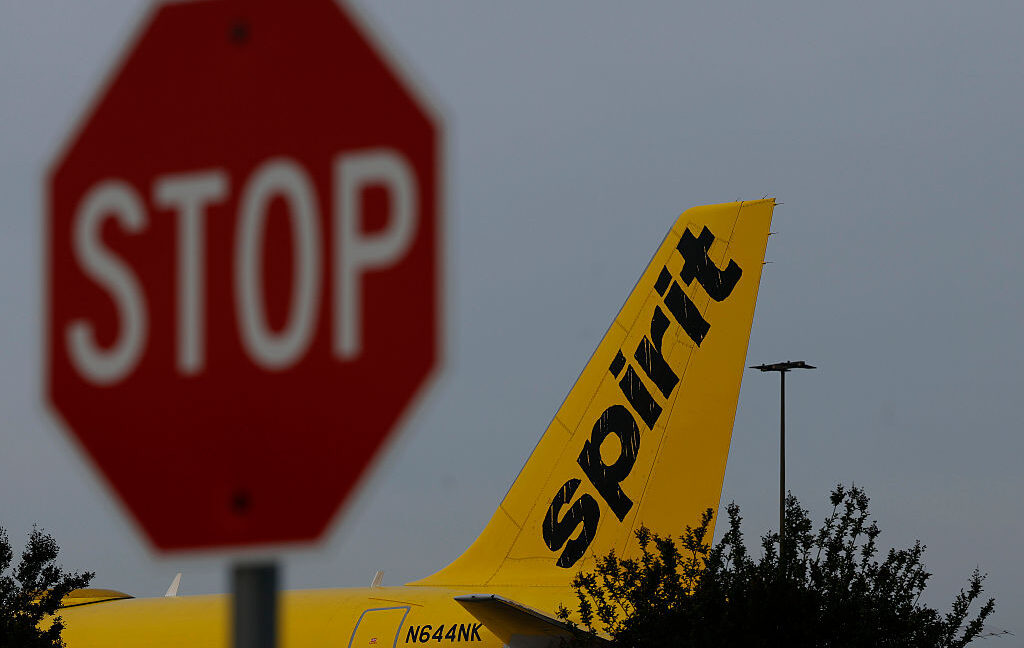
Doug Kreuzkamp was shocked when news outlets reported that Google won an auction to buy a huge amount of operational data as part of Spirit Airlines’ bankruptcy proceedings.
Kreuzkamp founded a startup called Springshot in 2011, which created a widely used proprietary platform that helps humans and AI systems improve airline efficiency and quickly solve logistics problems so flights can stay on time and airlines can operate as smoothly as possible. Hundreds of airports use it globally.
Springshot powered Spirit’s technology stack for the last three years, right up to the “very last flight,” Kreuzkamp told Ars. Yet his company got no notice when Spirit prepared to auction off a massive dataset that he thinks likely improperly includes a substantial amount of data and intellectual property (IP) that Springshot owns—not Spirit.
Apple says evidence from a former engineer’s MacBook strengthens its trade secret case against OpenAI as the companies clash over AI hardware and hiring.
Apple says evidence from a former engineer’s MacBook strengthens its trade secret case against OpenAI as the companies clash over AI hardware and hiring.
A federal judge has entered a final judgment requiring Guardant Health to pay more than $245 million to Seattle biotech TwinStrand Biosciences and the University of Washington over DNA sequencing technology developed at the university.
The judgment, entered Friday in U.S. District Court in Delaware, follows a 2023 jury verdict that found Guardant willfully infringed two patents covering TwinStrand’s Duplex Sequencing technology.
The case also establishes a continuing revenue stream for the university and TwinStrand from some of Guardant’s products.
Jesse Salk, co-founder of TwinStrand. (TwinStrand Photo)
The court’s final judgment includes $83.4 million in damages awarded by the jury for infringement through June 2023, plus $19.5 million in supplemental damages, $119.4 million in accrued royalties and $22.9 million in interest.
Going forward, Guardant is required under the judgment to pay a 6% royalty on covered sales through March 2033, when the patents expire.
The technology at the center of the case traces back to research at the University of Washington, where scientists, including co-founder Jesse Salk, developed Duplex Sequencing as a way to make DNA sequencing more accurate. Salk — who stepped down as CEO of TwinStrand in 2022 — now is the co-founder of cancer diagnostics startup CytoTerra.
The molecular biologist and clinical oncologist is the grandson of the late Jonas Salk, the scientist who discovered and developed the polio vaccine.
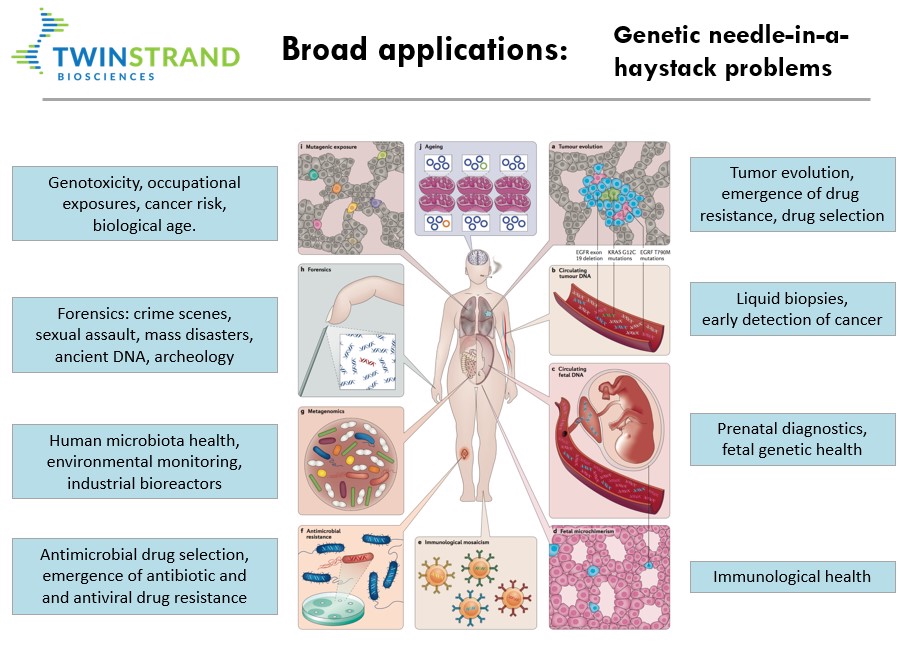
TwinStrand says its Duplex Sequencing technology can improve the accuracy of next-generation sequencing by more than 10,000-fold, allowing researchers to detect extremely rare genetic mutations that can be obscured by sequencing errors.
“Duplex Sequencing solved an accuracy problem the sequencing field had worked on for years, and this judgment affirms the jury’s finding that Guardant Health built products on that invention without a license,” said Chad Waite, chair of the TwinStrand board of directors, in a press release. “We remained steadfast in our conviction that the facts would prevail, and they have. We intend to see this through and stand firmly behind the intellectual property at the core of our technology.”
Salk and his colleagues from the University of Washington launched TwinStrand in 2015 to commercialize the technology. Based in Seattle, the startup raised funding from Madrona Venture Group, Soleus Capital, Janus Henderson Investors, Ridgeback Capital, Alexandria Venture Investments. Section 32 led a $50 million series B round in the company in 2021.
A jury found in November 2023 that Guardant willfully infringed the patents through 11 products and services. The products identified in the judgment include Guardant360, Guardant Reveal, Guardant Shield and other cancer-testing products.
The Delaware court subsequently rejected Guardant’s effort to overturn the verdict or obtain a new trial. In June, the court also awarded TwinStrand and UW ongoing royalties and supplemental damages. The final judgment now formalizes those awards.
Guardant is not accepting the ruling.
The California-based precision oncology company said Monday that it plans to appeal the judgment, arguing that the court’s order covers products that existed at the time of the 2023 trial and that many have since been discontinued or substantially upgraded. Guardant also said current versions of its Reveal and Shield products are excluded from the final district court order.
Guardant — founded in 2012 — said the judgment and collection of potential royalties will be stayed pending the appeal.
“We strongly disagree with this decision and will promptly be appealing for its overturn,” said John Saia, Guardant Health Chief Legal Officer, in a press release. “We have full faith in the strengths and merits of Guardant’s intellectual property and R&D and are confident we will ultimately prevail on appeal.”

 Login
Login