Ethereum whales sell as outflows hit four-month high of 169,770 ETH
Meta must pay $25 billion to New Mexico after a jury found the tech giant guilty of nearly 44 million violations of state consumer protection laws.
The largest fine to ever hit Meta came after New Mexico Attorney General Raúl Torrez declined to join an $18 billion settlement Meta reached earlier this year with attorneys general in nearly all states.
In his opinion Wednesday, US district court judge Francis J. Mathew said there was no “bright line rule” for determining the appropriate penalty for Meta's repeated and willful deception of users since 2010 about their “control of data, third-party data misuse, misinformation, hate speech, and equal enforcement.”


© ANDREW CABALLERO-REYNOLDS / Contributor | AFP
The $25 billion award far exceeds a $5 billion fine the Federal Trade Commission levied against Facebook in 2019.
The post Meta Ordered to Pay New Mexico $25 Billion for Deceiving Users About Privacy on Facebook appeared first on SecurityWeek.
Bitcoin Magazine

El Salvador’s National Bitcoin Office Hosts Five November Events Led by Herbert and Keiser
El Salvador’s National Bitcoin Office, led by Stacy Herbert and Max Keiser of Keiser Report fame, is hosting a series of Bitcoin events this November in El Salvador. Five main events will take place, with plenty of side events hosted by the local community.
The Bitcoin Capital Summit starts off the official schedule on November 10 at the downtown library and tech center, BINAES. Bitcoin Histórico runs November 11 and 12 at the National Palace and surrounding sites in Centro Histórico. The Renaissance Rodeo follows on November 13 at Lake Ilopango. EmTech AI LATAM is set for November 18 and 19 at the Escuela Superior de Economía y Negocios. The Global Bitcoin Circular Economies Summit closes the sequence on November 19 and 20 in El Zonte.
Bitcoin Capital Summit
The Bitcoin Capital Summit takes place on November 10 from 5:00 p.m. to 7:30 p.m. at BINAES in San Salvador. Hosted by Luca Esposito of Blockstream Capital Partners in collaboration with the Bitcoin Office, the evening is framed around Bitcoin’s institutional era from treasury to capital markets. The agenda includes a welcome by Luca Esposito, a keynote by Sean Bill, former CIO of BSTR at Blockstream, and a panel on the institutional Bitcoin stack featuring Pierre Rochard, CEO of The Bitcoin Company, and Juan Diego Sol, Regional Manager, Central America at IBEX. As well as a closing fireside with Max Keiser and Stacy Herbert, among other panels. Registration is free but approval-required through the official Luma page.
Bitcoin Histórico
Bitcoin Histórico runs November 11 and 12 across the Centro Histórico of San Salvador, with keynotes at the National Palace live-streamed to giant LED screens on Plaza Gerardo Barrios. Organized by the National Bitcoin Office, the conference focuses on Bitcoin, financial freedom, and El Salvador’s transformation. Tickets are sold exclusively in Bitcoin at bitcoinhistorico.com. The $350 Trailblazer Seat includes guaranteed seating, access to public sessions, tech demos, community meetups, and an invitation to the afterparty, while locals with Salvadorian ID can buy entry with the $21 Satoshi Chero ticket.
The $2,100 Genesis Crown Pass adds VIP seating inside the National Palace, fast-track entry, private lounge access with meals, an exclusive merch pack, and priority networking with keynote speakers.
All tiers include free admission to the Renaissance Rodeo the following day. Promo codes CROWN15 and Cowboy21 have been shared by organizers.
Renaissance Rodeo
The inaugural Renaissance Rodeo takes place on November 13 on the shore of Lake Ilopango. The event features bull riding, mutton busting, barrel racing, music, and barbecue, and is positioned as a celebration of Salvadoran cowboy culture and regenerative agriculture. Details and a waitlist are available at the official site renaissance.rodeo. Holders of any Bitcoin Histórico ticket receive free admission.
EmTech AI LATAM
EmTech AI LATAM runs November 18 and 19 at the Escuela Superior de Economía y Negocios. This is the first Latin American edition of the MIT Technology Review conference, organized with Opinno and local partner C² Labs and supported by the Agencia Nacional de Inteligencia Artificial. The agenda covers moving AI from pilots to production impact, governance, talent development, and technology trends. Coverage of the announcement is available via Diario El Salvador. Registration is available at emtechai-latam.com.
Global Bitcoin Circular Economies Summit
The Global Bitcoin Circular Economies Summit takes place November 19 and 20 in El Zonte. Organized by Bitcoin Beach and the Federation of Bitcoin Circular Economies, this is the first public edition of the gathering. Previous events have been invite-only and have gathered top international talent, focused on delivering the benefits of Bitcoin to the developing world.
Registration is free via the official Bitcoin Beach summit page. Confirmed speakers include Jeremy Almond, Co-Founder and CEO of Paystand, Alexandra Navarro of Paystand, Gerardo Linares, and Evelyn Lemus. The program focuses on Bitcoin as everyday money, merchant adoption, education, and lessons from circular economies across Latin America, Africa, and Asia.
This post El Salvador’s National Bitcoin Office Hosts Five November Events Led by Herbert and Keiser first appeared on Bitcoin Magazine and is written by Juan Galt.

The Commodore 1541 is famously the floppy drive for the Commodore 64 series of 8-bit computers, and can be found with relative ease. Not so well known is its 1551 sibling — the drive made for the Commodore 16 and Plus/4 machines.
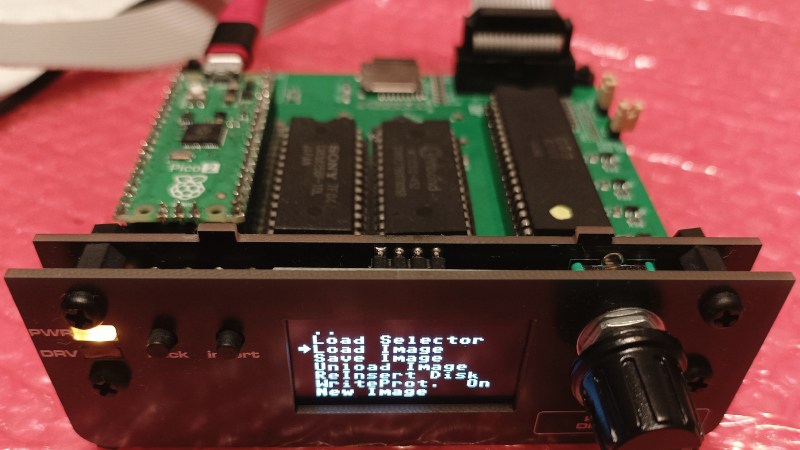
They’re particularly rare in 2026, so [Maciej Witkowiak] has made an emulator. But it’s not just modern silicon emulating the whole thing. Instead it’s the same 6510 and ROM you might have found on the original, talking to a Pi Pico emulating the drive hardware. It’s a gloriously over the top solution to the problem of emulating a disk drive, the reason being that it started life as a daughter board plugged into an original drive mainboard.
Complementing the Pico is a CPLD for glue logic, and an OLED for selecting disk images. The Pico even generates the clock and IRQ timing for the venerable 8-bit part. The ROM is 64k in size, room enough for both the original firmware and enhanced community versions. The whole thing can be found in a GitHub repository, should you wish to have a go yourself.
Long time Hackaday readers will know [Bil Herd] as one of our contributors. If you’re interested in the back story to the series of computers that included the Commodore 16, his book makes for interesting reading.

Game jams are a fun competition in which the aim is to write a game under a particular theme while under a time constraint, usually a weekend. [Hoani] entered one where the aim was to write a game within the constraints of the Nokia 3310’s user interface: a 94 by 48 pixel grey LCD, a buzzer, and a keypad. His entry was Trick Shot II, a ball-bouncing game running on his game engine, which is cool enough, but making a custom PCB for a Nokia 3310 case to run it on? Next level.
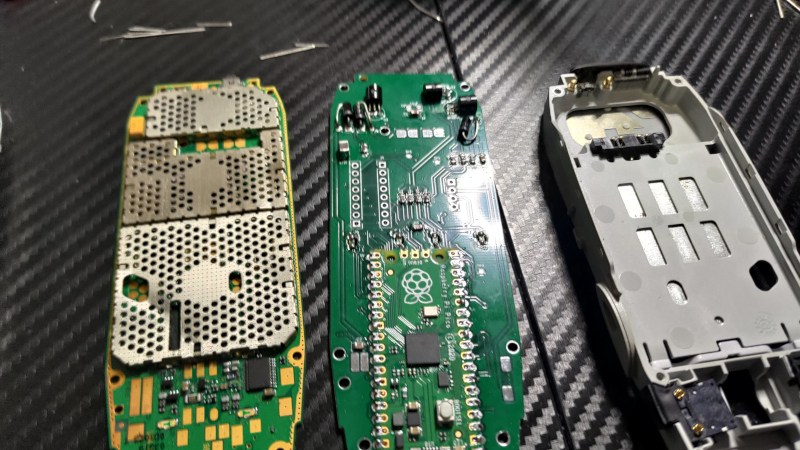
Look away if you don’t like restomods, for a real Nokia 3310 is gutted to take this board. On it is a Pi Pico, the Nokia LCD, which has outlasted the original phone as a part by decades, and a Nokia keypad layout. The first prototype was not a perfect fit because it had a 1.6mm board rather than 1mm.
The engine meanwhile is written in Go, and has both graphics and sound APIs. Considering that the Pico’s power exceeds whatever CPU the phone had by many orders of magnitude, we’d imagine it has no problems with such a tiny screen.
We like the attention to detail of this project, and that such a limited interface can still deliver gaming fun. Meanwhile, if you would prefer to use a 3310 as a phone, you can charge it the 21st-century way.
Crypto.com is adding a more professional trading interface without forcing users to move their accounts to another venue.
The exchange announced an integration with Insilico Terminal on October 6, allowing users to connect their Crypto.com Exchange account directly to Insilico’s trading platform.
That gives traders access to execution tools usually associated with specialist terminals while keeping the actual account and liquidity on Crypto.com.
Insilico supports tools including time-weighted average price orders, scale orders, depth-of-market views, automated sizing, programmable hotkeys and one-click strategies.
Those features matter most to active traders.
A simple market order may be enough for a small position, but larger traders often want to split execution, manage slippage or place orders according to a more structured plan.
The integration effectively separates the exchange from the interface.
Crypto.com provides the account, spot and derivatives markets and settlement infrastructure. Insilico provides a more specialized layer for interacting with them.
Professional interfaces can improve how a trader executes a strategy.
They do not improve the strategy itself.
That distinction becomes especially important in derivatives, where a sophisticated order type can still lose money quickly if the underlying position is wrong or overleveraged.
The partnership is therefore best understood as infrastructure rather than a promise of better returns.
For Crypto.com, the attraction is clear.
Institutional and high-frequency traders often choose venues based not only on fees and liquidity but also on the quality of APIs and execution tools available around the exchange.
Offering direct access through Insilico gives the platform another way to compete for that flow.
The broader trend is also notable.
Crypto trading is beginning to look more modular, with traders using one venue for liquidity, another piece of software for execution and separate providers for custody or analytics.
Crypto.com and Insilico are leaning into that model rather than assuming every serious trader wants to live entirely inside one exchange interface.
This article was written by the News Desk and edited by Samuel Rae.