OpenAI says an agent powered by its LLM models escaped its sandboxed testing environment to infiltrate Hugging Face's servers as part of an overzealous attempt to obtain solutions to a benchmark test. The company says it considers the unintended infiltration an "an unprecedented cyber incident" and is working with Hugging Face on new protections to prevent a recurrence.
Hugging Face disclosed an intrusion last week that it said involved "unauthorized access to a limited set of internal datasets and to several credentials used by our services." The AI data clearinghouse said it used its own LLM-driven analysis to identify "a swarm of tens of thousands of automated actions" from an "autonomous agent framework." That agentic swarm exploited a flaw in Hugging Face's data-processing pipeline to gain the ability to run code as a processing worker, eventually escalating to high-level access to the company's cloud and server clusters.
At the time, Hugging Face said the LLM being used in the attack was "still not known." But OpenAI took responsibility for the intrusion Tuesday evening, saying it came about during an internal test involving the recently released GPT-5.6 Sol and "an even more capable pre-release model." The models were being tested against the ExploitGym benchmark, an independent testing suite based on hundreds of real-world security vulnerabilities.
Midnight Token Falls After $13M Wanchain Bridge Exploit
Midnight’s NIGHT token fell sharply after a Wanchain bridge exploit drained 515 million NIGHT tokens worth approximately $13.2 million, according to validated on-chain and project materials.
The incident was tied to a signature reuse flaw affecting the cross-chain bridge infrastructure. Wanchain paused the affected bridge route after the exploit, while the NIGHT token saw a steep market reaction as traders assessed the damage.
The key distinction is that this was a bridge exploit, not a compromise of Cardano’s base layer or Midnight validator infrastructure.
That matters because cross-chain bridge failures can hit ecosystem tokens hard even when the underlying chains remain secure. The damage often comes from liquidity disruption, confidence loss, and uncertainty over whether stolen tokens can be frozen, recovered, or absorbed by the market.
TL;DR
A Wanchain bridge exploit drained 515 million NIGHT tokens worth about $13.2 million.
NIGHT fell roughly 30% after the incident.
The exploit affected bridge infrastructure, not Cardano or Midnight validator nodes.
Bridges remain one of crypto’s most vulnerable infrastructure layers.
They connect assets across chains, but that connection often depends on signing systems, validators, relayers, wrapped assets, custody assumptions, or smart contract logic. If any part of that design fails, attackers can move quickly.
In this case, the validated materials point to a signature reuse flaw.
That kind of issue can be especially damaging because it affects authorization. If attackers can reuse or manipulate signatures, they may be able to trigger transfers that should not be valid.
The result was a large movement of NIGHT through the bridge route.
Even if the underlying Layer-1 chains remain safe, the asset can still suffer because bridge liquidity is part of the market structure. Users care whether tokens can move safely across ecosystems. If that trust breaks, liquidity can dry up quickly.
Midnight And Cardano Were Not The Same Attack Surface
The exploit’s relationship to Cardano needs careful wording.
Midnight is associated with the Cardano ecosystem, and the affected bridge involved Cardano-related routes. But the validation materials state the incident hit bridge smart contracts and cross-chain infrastructure, not Cardano Layer-1 validator nodes.
That distinction is important for readers.
A bridge exploit can involve assets connected to a chain without implying that the chain itself was compromised. In crypto markets, those details often get blurred, especially when token prices fall quickly.
The same applies to Midnight.
A token price decline after an exploit does not necessarily mean the entire network has failed. It means the market is repricing risk around liquidity, bridge exposure, and potential recovery.
Still, perception matters. When a major exploit hits a token ecosystem, traders often reduce exposure first and wait for technical details later.
Market Confidence Depends On The Response
For NIGHT, the next phase depends on how Wanchain and related ecosystem teams handle recovery.
Users will want to know whether affected routes remain paused, whether stolen tokens can be traced, whether any funds can be recovered, and what changes will be made before bridge operations resume.
The market also needs clarity on token supply.
If a large amount of stolen NIGHT can enter circulation or move through exchanges, traders may worry about selling pressure. If the tokens can be frozen, recovered, or otherwise contained, confidence may stabilize faster.
That is why post-incident communication matters.
A technical exploit is damaging. A vague response makes it worse. A clear timeline, transaction evidence, mitigation plan, and compensation framework can help restore trust.
The Larger Lesson Is About Cross-Chain Risk
The Midnight/Wanchain incident is another reminder that cross-chain convenience comes with trade-offs.
Users want assets to move freely between ecosystems. Projects want broader liquidity. DeFi applications want multi-chain access. But every bridge adds another layer of assumptions and potential failure points.
That does not mean bridges are useless. It means their security model matters enormously.
Signature handling, key management, validator design, audit quality, monitoring, and emergency controls all determine whether a bridge can survive hostile conditions.
For traders, bridge risk should be part of token risk.
If a token depends heavily on cross-chain liquidity, a bridge incident can affect price even if the native protocol remains intact. That is exactly what happened here.
Midnight’s next test is not only technical recovery. It is whether users believe the cross-chain path can be trusted again.
This article is based on Wanchain’s public statement and CardanoScan transaction data.
This article was written by the News Desk and edited by Samuel Rae.
This report is based on information released in official primary source disclosures at primary source documentation.
Ostium Halts Trading After $18M Oracle Key Breach
Arbitrum-based perpetuals exchange Ostium has suspended trading after an $18.4 million exploit tied to a compromised off-chain oracle key, highlighting again how vulnerable trading venues can be when price infrastructure fails.
The attack did not appear to stem from a direct breach of Ostium’s smart contract code. Instead, the validated source material points to manipulation of price feed reports through a compromised oracle private key. That distinction matters because it shows the risk was not only in on-chain contracts, but in the off-chain infrastructure feeding data into the system.
Perpetuals exchanges depend on accurate prices. If the price feed can be manipulated, the entire trading venue becomes exposed.
Ostium’s response was to halt trading while investigating the incident.
TL;DR
Ostium suspended trading after an $18.4 million exploit.
The attack involved a compromised off-chain oracle private key.
The incident highlights oracle key-management risk rather than a direct smart contract breach.
A trader’s collateral, liquidation level, profit and loss, funding exposure, and settlement value all depend on price data. If that data is wrong, the market can be exploited even if the core trading contracts behave exactly as designed.
That is why oracle infrastructure is one of DeFi’s most sensitive layers.
It sits between real-world or market data and on-chain execution. A protocol may have audited contracts, but if the data feeding those contracts can be manipulated, the system is still vulnerable.
In Ostium’s case, the issue appears to involve a compromised off-chain oracle key. That means the attacker was able to interfere with the trusted reporting path rather than simply finding a normal contract bug.
That kind of failure can be harder for users to understand because the problem is not always visible in the same way as a contract exploit.
The blockchain may record the transactions, but the weak point may be the infrastructure behind the data.
The Smart Contract Was Not The Only Risk
The distinction between smart contract risk and oracle risk matters.
Crypto users often ask whether a protocol’s contracts are audited. That is important, but not sufficient. A trading protocol also depends on pricing systems, administrative keys, keeper networks, bridges, liquidation bots, front ends, and operational security.
Any one of those layers can become a weak point.
If an oracle private key is compromised, attackers may not need to break the smart contract. They can feed the contract bad information and profit from how the system reacts.
That is why DeFi security has to be broader than code review.
Protocols need key management, monitoring, alert systems, circuit breakers, fallback feeds, and clear emergency procedures. The faster a venue can detect abnormal prices and pause dangerous operations, the more damage it may prevent.
Ostium’s trading halt shows that emergency controls are still essential.
Arbitrum DeFi Faces Another Security Test
Arbitrum remains one of the most active Ethereum layer-2 ecosystems for DeFi.
That activity brings liquidity, traders, and innovation, but it also attracts attackers. Perpetuals venues are especially attractive because they concentrate collateral and rely on real-time pricing.
An $18.4 million exploit is large enough to matter for the ecosystem, even if it does not threaten Arbitrum itself.
The incident should not be framed as an Arbitrum network failure. The issue is specific to Ostium’s oracle infrastructure. But for users, every exploit adds to the broader question of how safe layer-2 DeFi venues are in practice.
That question matters as more capital moves to faster and cheaper networks.
Layer-2 scaling lowers transaction costs, but it does not remove application-level risk. Users still need to evaluate each protocol’s design, security model, and operational controls.
What Comes Next For Ostium
The immediate priority is investigation, containment, and user communication.
Ostium needs to explain what happened, which systems were affected, whether user balances are recoverable, how trading will restart, and what controls will change before reopening.
For traders, the most important question is whether the oracle system has been rebuilt or secured enough to prevent a repeat.
A trading venue can survive an exploit if the response is transparent and the fix is credible. It becomes much harder if users are left unclear about where the failure occurred or whether the same path remains exposed.
The broader market should also pay attention.
Oracle key risk is not unique to one exchange. Any protocol relying on off-chain signing, price feeds, or privileged reporting paths needs to think carefully about compromise scenarios.
The lesson is straightforward: DeFi systems are only as strong as the weakest trusted component.
Ostium’s contracts may not have been directly breached, but the market still suffered a major exploit. That is why oracle security remains one of the most important issues in on-chain trading.
This article is based on Ostium’s public statement and Arbiscan transaction data.
This article was written by the News Desk and edited by Samuel Rae.
This report is based on information released in official primary source disclosures at primary source documentation.
Experts say over-the-air vehicle updates are transforming the auto industry while creating new cybersecurity and national security risks that governments can no longer ignore.
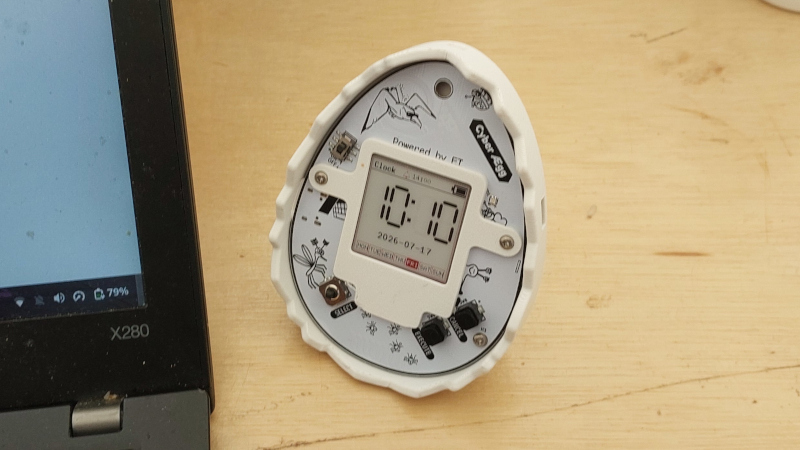
A problem facing the designers of event badges is this: what happens to the badge after the event? It’s one that designers have tried to solve in many ways with varying levels of success, whether that be by making it a dev board, a games console, a mesh-networked communicator, or as in the case of Electromagnetic Field, a continuing badge for future events. Ar BornHack 2026 they have taken a novel approach, by making it a useful desktop appliance. The BornHack Cyber Ægg is a half-egg-shaped badge with a 3D-printed case, and aside from its on-camp applications it’s both a desktop clock/calendar, and a MeshCore node.
Produced with the assistance of the badge.team European badge makers, it’s an egg-shaped PCB with a Nordic nRF52840 at its heart, a Semtech LoRa module, and an e-paper display. On-site there’s a Tamagotchi-style virtual pet game, an event calender, and an RFID token game, but it’s the other two features that give it a life after the camp. The clock and Meshcore, coupled with its case being designed with a flat spot to sit on a desk, make this badge as much an appliance as it is a badge. This is where it will sit in the Hackaday office, and we’re pretty sure most BornHack attendees will use it thus too.
We like this approach to giving a badge a life after the event, and we look forward to seeing what influence it has on future badges. A badge should be a thing to enjoy, not a piece of e-waste.
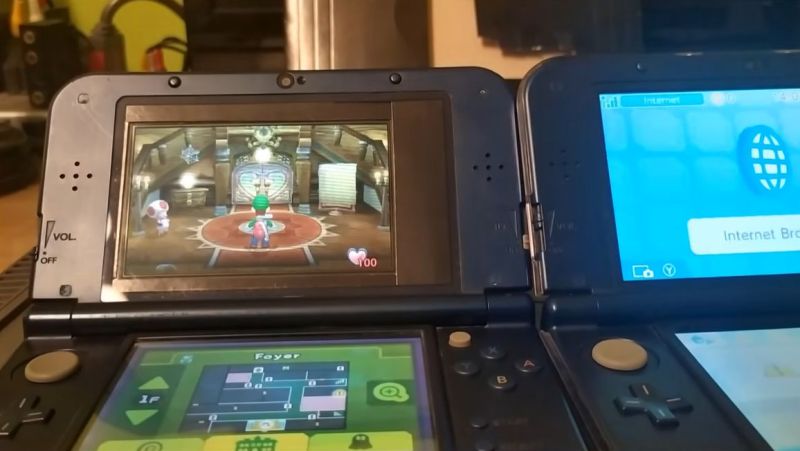
With Nintendo’s 3DS experiencing a bit of a renaissance lately, prices for functioning systems have shot through the roof. Getting a busted one with a broken screen is a lot cheaper, but then you run into the eye-watering price difference between a replacement top screen for the regular version and the larger XL variant. The latter costs about the same as a whole new used 3DS, while the former goes for peanuts. Here the solution is obvious, with [Skawo] demonstrating how they hacked the cheaper, smaller top screen into a New 3DS XL.
The price difference on AliExpress as shown in the video is on the order of $120, with the smaller screen going for less than $10. Since they both use the same connector pin-out and display technology, you can plug either display into the New 3DS XL mainboard.
Where you’ll run into issues, other than the replacement display being obviously not XL, is the physically shorter flat flex cable for the controls that forces the display to be installed in an offset manner. You need jailbroken firmware like Luma3DS here to adjust for the screen offset. Filling in the missing screen real-estate is the other issue you have to patch over somehow, which was done here in barbaric fashion with some cardboard.
Beyond that it does work, and as a fix to at least get a broken New 3DS XL back into the game it’s worth considering. Do note that there’s a difference between regular 3DS and New 3DS (second generation) screens with neither being compatible, so be careful before you try such a fix.
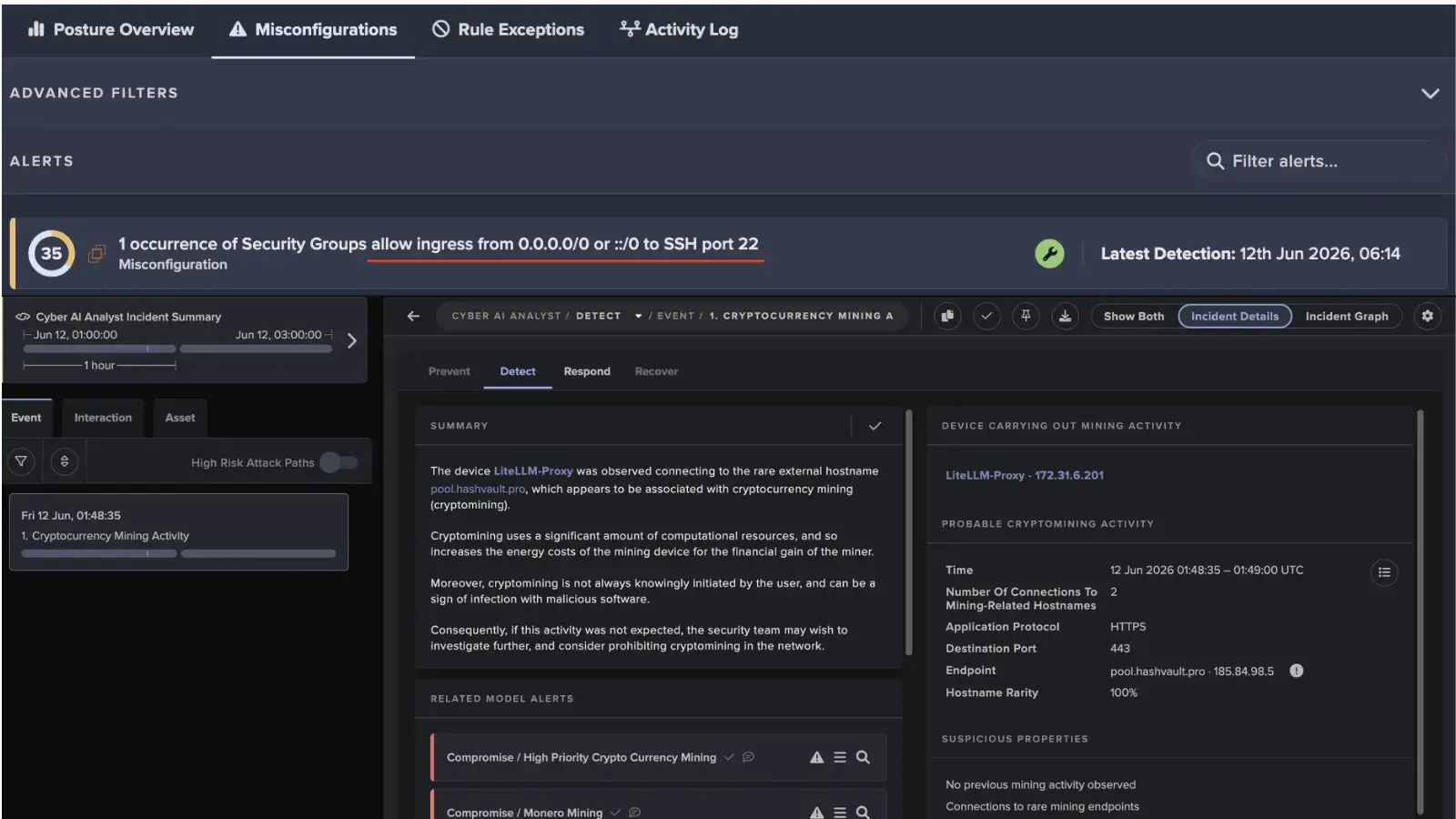
A compromise of an AI gateway linked to Amazon Bedrock, highlighting how generative AI infrastructure has become a new target within the enterprise attack landscape. The incident was disclosed on July 9, 2026, and reveals attackers exploiting a LiteLLM-Proxy EC2 instance to deploy XMRig cryptomining malware, illustrating the risks organizations face as AI gateways proliferate […]

 Login
Login