Reading view

There are new articles available, click to refresh the page.

The Gulf Bought Its Air Defense From Kyiv. We Sold Them The Radar.

Chief Warrant Officer 5 (Ret.) Joey Gagnard concluded nearly three decades of service in the U.S. military, retiring from the special operations community in early 2025. He serves as CEO of Atlas Special Projects and Director of Field Operations at Swarmer.

Disclosure: Atlas Special Projects leads investor delegations to Ukraine and maintains working relationships with Ukrainian drone manufacturers, some of which would benefit from the arrangements argued for below. The argument is my own.

Welcome to The Iron Triangle, the Cipher Brief column serving Procurement Officers tasked with buying the future, Investors funding the next generation of defense technology, and the Policy Wonks analyzing its impact on the global order.

Riyadh, spring 2026. Between February 28 and the April 8 ceasefire, Iran put roughly 6,400 missiles and drones into the Gulf states and Jordan, more than eighty percent of everything it fired at anyone. Six countries fought six separate wars against one coordinated adversary, with no shared early warning and interceptor stockpiles that ran thin in days. An Iranian drone struck a tactical operations center in Kuwait and killed six Americans.

Three suppliers answered the same incoming fire. Here is the ledger.

The United States answered with paper. Over $36.6 billion in Foreign Military Sales notifications to the Middle East in a single quarter, headlined by 730 PAC-3 MSE missiles to Saudi Arabia for $9 billion. That is a little over $12 million per round, aimed at a Shahed that costs about as much as a used pickup, on a delivery schedule measured in years.

Ukraine answered with people. Washington asked Kyiv on a Thursday to send interceptor teams to protect American bases in Jordan, and Kyiv said yes the same day. Within weeks about two hundred Ukrainian advisors were on the ground in Saudi Arabia, Qatar, and the UAE with interceptors that Ukraine sells for between $800 and $3,000 and builds at two thousand a day. Days after the Jordan request, the President went on Fox News Radio and said, “We don’t need their help in drone defense. We know more about drones than anybody.”

Turkey answered with a delivery date. Kuwait signed a government-to-government protocol with Aselsan, Havelsan, and Baykar for Hisar and Korkut air defense, and Riyadh, Doha, and Abu Dhabi opened their own talks with Ankara, because Turkey could put hardware on a ramp this decade and the American backlog for Patriot and THAAD runs to several years.

Then, on March 27, Saudi Arabia signed a ten-year defense partnership with Ukraine built around counter-drone technology and co-production facilities on Saudi soil. Qatar signed two days later. The UAS followed in April. Ten years each, minimum.

So the outcome of America’s largest arms-sales quarter in memory is that our closest Gulf partners now buy their sensors from us and their answer to the actual threat from Kyiv and Ankara. We sold them the radar. Somebody else sold them the thing that shoots.

Expensive Confetti

The arithmetic is not subtle, and the Gulf did it faster than we did. Iran can turn out hundreds of Shaheds a week. The U.S. builds roughly six hundred Patriot interceptors a year, for the whole world, with a waiting list. A Patriot battery is a good answer to a question Iran stopped asking in about 2019.

The Ukrainian answer is a different species. The Wild Hornets Sting costs about $2,500, flies at 195 miles an hour, fits in a duffel bag, and has killed nearly 4,000 Russian drones since may 2025. The SkyFall P1-SUN costs about $1,000, flies at 280 miles per hour, and took down 1,500 Shaheds in its first four months. One Ukrainian firm sold a thousand of them for $3.5 million, total, which is less than a third of one PAC-3 round. More than twenty Ukrainian companies now build interceptors and the Octopus alone is licensed to fifteen of them.

None of this makes the Patriot obsolete. Interceptor drones do not touch ballistic missiles ,and the 6,400 included plenty. But the Gulf learned in six weeks what Ukraine learned in three years: you defend against a thousand cheap things with two thousand cheaper things, and you save the twelve-million-dollar round for what it was built to hit.

Built in Munich

Here is the detail that turns the Gulf story into an Iron Triangle story. The Pentagon has bought exactly one interceptor with a Ukrainian combat record. In May, Joint Interagency Task Force 401 gave Perennial Autonomy, Eric Schmidt’s company, a three-year, $500 million ceiling for the Merops interceptor, a fifteen-thousand-dollar fixed-wing that has downed more than 4,000 Russian drones over Ukraine. It is the right buy. It is also built in Germany, through a partnership with Munich’s Twentyfour Industries.

The American flag interceptor, proven in Ukraine, bought by the Pentagon for the homeland, is made in Bavaria. This is not a scandal. It is a symptom. The design talent is in Kyiv, the production tooling is in Europe, and the one thing that has to be in the United States, the contract, is the only part we have managed to put here.

Meanwhile the July agreement that lets Ukraine sell to the Pentagon for the first time since 2022 approves six Ukrainian companies to ship about one hundred drones for testing under Drone DOminance, and contemplates, someday, Ukrainian production on American soil. One hundred drones. Kyiv ships that many to Riyadh before the coffee is brewed.

What an American Flag Would Actually Mean

Not an American airframe. That race is over; twenty Ukrainian firms iterate faster than any American line will for years, and pretending otherwise is how we ended up with a hundred test articles and a factory in Munich. The American contribution is the three things nobody else at the table can bring.

The first is the kill chain. An interceptor without a sensor network is expensive confetti with a propeller. Ukraine’s cheap drones work because they fly under a national acoustic and radar mesh that took three years to build. The Gulf has no such thing; the after-action reports say so. Turkey cannot integrate Korkut with Patriot and THAAD. The United States owns IBCS, the LTAMDS radars Kuwait just bought eight of for $8 billion, and the $4.5 billion discrimination radar the UAE is buying for THAAD. The offer writes itself: your thousand-dollar Ukrainian interceptor gets cued by our eight-billion-dollar sensor layer. That is the flag.

The second is the paper. Licensed co-production under FMS is a forty-year-old tool. Abrams in Egypt. F-16 in Turkey. Patriot itself in Japan. The structure is a trilateral: Ukrainian design and Ukrainian intellectual property, Gulf capital and final assembly to satisfy Vision 2030 localization, American components, integration, and the FMS wrapper that turns a purchase into a security relationship. The UK has already proven the licensing half, building Octopus interceptors in Britain at a thousand a month and sending them back to Ukraine.

The third is reciprocity. Kyiv’s own ask was one sentence: “We can help you fight against Shaheds. Help us fight against ballistic missiles.” Gulf money buys the interceptor line. A slice of the PAC-3 allocation that the Gulf money is already funding flows to Ukraine. Stings for Patriots. Three countries get what they cannot build, and the United States is the reason it happens.

What It Has Not Happened

Every obstacle is one I have written about before, which is the depressing part.

Start with ITAR. The moment a Ukrainian design is produced by an American licensee with American controlled content, it becomes ITAR-controlled, its re-export to Riyadh needs a DDTC license, and Kyiv loses the freedom to sell the same design to Oslo. Ukrainian founders already decline to domicile intellectual property here for exactly this reason. The fix is the one I argued for in July: a trusted-trader tier, or an AUKUS-style exemption scoped to the trilateral, with the IP staying in Kyiv and the United States as licensee rather than owner.

Then the parts bin. A thousand-dollar P1-SUN is a thousand-dollar P1-SUN because of Chinese motors, cells, and cameras. Under an American flag it must clear NDAA Section 848 and, if the Department of War is the buyer of record, the Blue UAS list. The cost of making the interceptor American is not the airframe. It is the audit and the re-sourcing, and nobody in the building has priced how much of the thousand dollars survives that. Turkey does not have this problem. That is the entire reason Turkey is winning the Gulf.

Then tempo. Ukraine signed three Gulf deals in about three weeks. FMS notification to first delivery is measured in Congressional recesses. Either the trilateral runs on Direct Commercial Sales with expedited licensing, or it is a press release.

And then the politics, which I will state once and then be finished. The Commander in Chief said we do not need their help days after his own government asked for it, and the Pentagon spent the spring resisting broader cooperation. The Gulf hosts Russian diplomacy. Kyiv keeps state control over exports, with its own forces first in line. None of these are fatal. All of them are real.

For the Procurement Officer. Your requirement is not an interceptor. It is a kill chain that accepts an interceptor you did not design. Write the sensor and command-and-control interface as the requirement and let the airframe compete, or you will spend the next POM cycle buying an American drone that arrives in 2029.

The Investment Thesis. The value in this market is not in the airframe and it never was. It is in the integration layer, the domestic component that lets a Ukrainian design survive Section 848. And the licensing paper. The company that can take a thousand-dollar Kyiv design and hand the Pentagon an American-compliant unit at two thousand, on a line this side of the Atlantic, is worth more than the company that designs the next one.

The Policy Wonk’s Warning. The security guarantee is being unbundled from the hardware. For seventy years those were the same product. Our partners are learning they can buy the guarantee from us and the shooting from someone else, and the day they discover they can buy the sensors elsewhere too, the guarantee is just a speech.

My Take. I have been in the room in Kyiv when founders explain, patiently, why they will not bring their IP to America. It is not ingratitude. It is that our export regime treats an ally’s design as a hostage the moment it touches our supply chain. We asked those same founders for help defending our bases in Jordan, and they sent people the same day, and then we told the world we did not need them. I have watched a lot of good capability lose to bad processes. I have not often watched it lose to bad manners.

The Risk. A co-production line in the Gulf is a leakage path to whoever the Gulf talks to next, and that list includes Beijing and Moscow, which is precisely why the British license sends its output home to Ukraine rather than into a third market. Iran is already fielding jet-powered Shaheds that outrun a Sting. And anyone who reads this as an argument to cancel the Patriot order has misread it; the 730 rounds to Riyadh are for the thing the drones cannot touch. The argument is not fewer Patriots. It is that a thousand-dollar problem should not be the one part of Gulf air defense that American has nothing to do with.

We spent the spring selling our partners the most sophisticated radar on earth. Kyiv and Ankara sold them what the radar is for. When the next 6.400 comes over the horizon and the Saudi interceptor that meets them has a Ukrainian design, Turkish neighbors, Chinese motors, and an American radar track, whose air defense is that?

The Cipher Brief is committed to publishing a range of perspectives on national security issues submitted by deeply experienced national security professionals. Opinions expressed are those of the author and do not represent the views or opinions of The Cipher Brief.

Have a perspective to share based on your experience in the national security field? Send it to Editor@thecipherbrief.com for publication consideration.

Read more expert-driven national security insights, perspective and analysis in The Cipher Brief
There Will be Unseen Costs to be Paid over the War in Iran. Who is Weighing Them?


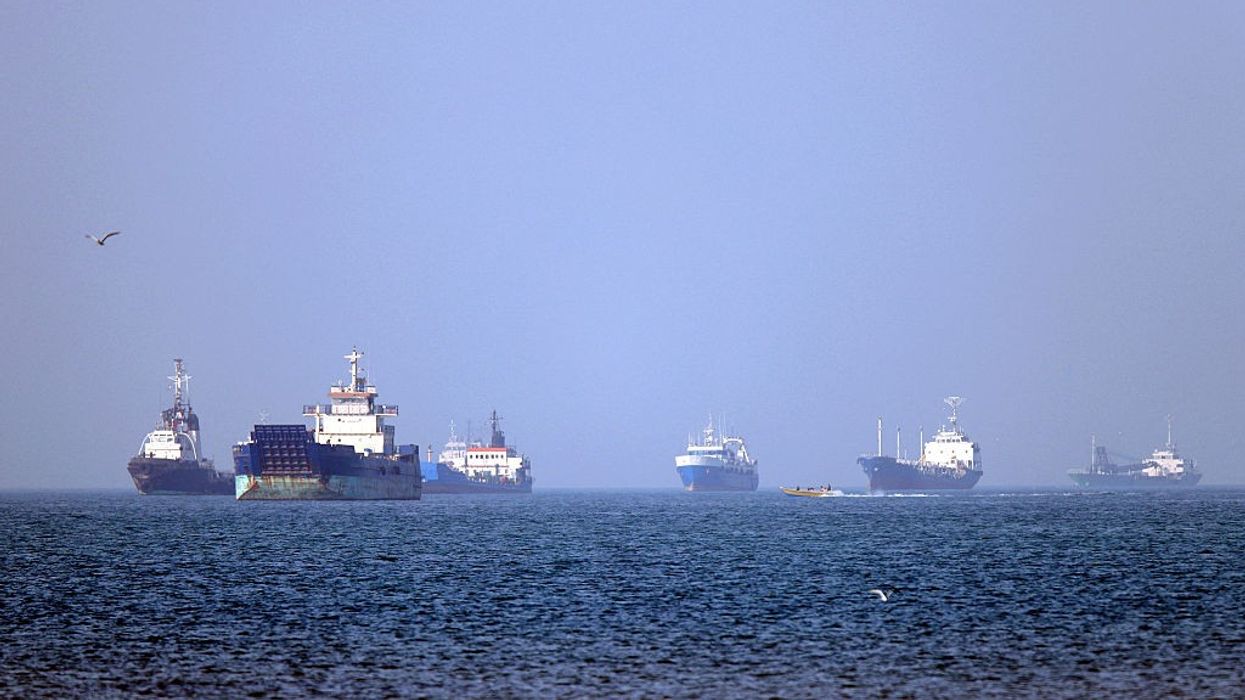
EXPERT INTERVIEW – With an interim agreement expected as early as today between the U.S. and Iran aimed at reopening the Strait of Hormuz to shipping traffic, experts are assessing the short and long-term costs of any deal.

As negotiators work on an agreement to re-implement a ceasefire and restart negotiations aimed at curbing Iran’s nuclear ambitions, there are questions about whether Iran will end up with more control over the strait than it enjoyed prior to the war and about the hidden costs that could include impacts on the sanctions packages that the U.S. has been using as a diplomacy tool to try and keep Iran’s malicious activities in check.

Cipher Brief Executive Editor Brad Christian spoke in-depth with former National Intelligence Manager for Iran at ODNI Norm Roule about the current “operational pause” and about the unseen costs of any deal. Their conversation has been lightly edited for length and clarity. You can also watch the interview on The Cipher Brief’s YouTube Channel.

THE INTERVIEW

Norman T. Roule

Norman Roule is a geopolitical and energy consultant who served for 34 years in the Central Intelligence Agency, managing numerous programs relating to Iran and the Middle East. He also served as the National Intelligence Manager for Iran (NIM-I)\n at ODNI, where he was responsible for all aspects of national intelligence policy related to Iran.

Christian: The situation with Iran has continued to progress in ways that maybe people didn't expect or anticipate when this war started. How do you describe where we are right now in terms of progress toward ending this war?

Roule: Where we are right now is in a lull. This is an operational pause. We're not approaching a significant core agreement. This is instead a period of coercive restraint. It's not a ceasefire. And Iran has continued to attack ships, but you're seeing the U.S. restrain its response again here to give diplomacy a chance. The president is showing considerable restraint. At the same time, the assets we have in the region are immensely powerful, immensely capable, and very well led. So, they have everything they need to do to undertake the dramatic operations the president has discussed. The diplomacy itself that's underway is a challenge. Each side is describing it dramatically differently.

If you look at the position of each side, there has been a consistent trend. The U.S. will announce negotiations, and the Iranians will deny negotiations are taking place. A few days later, there will be indirect negotiations through regional parties, still accomplishing the same things, but we're not at the table to talk about nuclear issues, missile issues, or militia issues as originally discussed.

The Iran-Oman mechanism that's being talked about right now in the press is likely being overstated by the Iranians and by some who would believe that concessions to Iran are the appropriate outcome from this crisis. Here's why it's being overstated: If tolls of any sort are charged, what happens to a shipper who refuses to pay? How does work in association with sanctions that have been imposed by the United States? Are American ships and American-related ships, allowed to pay Iran money? Through what mechanisms, what channels? Will we sanction other countries for paying Iran money through these channels? Iran has dictated which countries can enter the Persian Gulf and the bulk of this channel is through Iranian waters, but according to press reports, the Omanis must tell the Iranians who is transiting south. Iran's parliament has said no enemy countries can transit. Are Israeli or Israeli-related ships then banned from the Gulf? These are these are hugely consequential questions that are being glossed over by those who would say, ‘well, a deal is being worked out’. But this situation does show that while the U.S. absolutely has the military edge, it is restraining itself, and that has given Iran an ability to influence some would say, ‘control the pace’ of shipping in the Gulf. That shipping continues, and I've seen reports that as many as five million barrels of oil a day are now moving through the strait, which is going to reduce the pressure on oil markets, but this remains an unreliable waterway. Insurance rates remain very high and will remain high. And the blockade, of course, remains in place. This is a very delicate situation.

We also have to consider what happens if the Houthis look at the Iranian Oman deal and say, we want the same deal regarding the Bab el-Mandeb. What is the premise to refuse that? What would we do if the Houthis responded in their own way to attacking ships in the Red Sea?

So, we're in a very consequential period. And this is a period consequential for Iran because they're also in dire need of economic assistance. Their inflation is about 70%. Unemployment is horrific in many locations. I've seen figures as high as forty to forty-five percent in some areas. And the Iranians of course are showing defiance and claiming this isn't a problem, but this has got to be touching their decision making. And I think that's something the White House is considering.

Christian: President Trump has been very clear on where he stands on the issue of paying fees for passing through the Strait of Hormuz. Why is Iran pushing this issue when there were no fees in place before the war started? Is this one of Iran's most powerful points of leverage that they have over the strait? How are you thinking about their position on these fees?

Roule: It's a good question and I'm not putting a value judgment on it. I've tried to remain neutral on these issues. But those who advocate for making a deal with Iran, you know, diplomacy comes with severe consequences. If Iran is able to acquire control over the strait, will that collapse the international sanctions regime? For example, if Iran is able to control the strait in this regard, can it dictate which food shippers can come into Kuwait? If Iran controls the strait, it now has a permanent foot on the throat of the international community. And the idea that if we just do this, we can then build on trust with an IRGC government has no evidence in reality. Now that doesn't mean that it may not happen, but those who say you can build on this are not producing an argument that makes sense. Iran would be able to inject considerable power projection into the region in an unprecedented way, gaining billions of dollars, and that money would inevitably go to its missile program and proxies. And those who talk diplomacy with Iran, and you can see this when you look at social media statements or foreign affairs articles. The authors who speak most passionately and eloquently about engagement with Iran can't seem to acknowledge that people will die as a consequence. Now, that makes me sound like I'm opposed to this but I'm just giving you all the reasons why this is a problem.

The region, of course, has no desire for Iran to have this capability. But they also have no desire for a missile and drone war. That you either have a drone war, missile war, or give in to Iran, those are usually statements made by people who aren't professional diplomats, professional policymakers or have little understanding of the regional issues. There's going to be some sort of path in the middle that works if we're to protect and preserve sanctions as our tool against Iran's terrorism and other activities and if we’re to protect and preserve the national sovereignty and security of these countries who are our partners.

Also in the details of this deal are questions over whether the U.S. military would be banned from the Persian Gulf. The Iranians would have to approve the passage of U.S. military ships, which of course we wouldn't agree to, but the Iranians could claim that as a violation and things could unravel. We're going to land in a gray area on this if diplomacy is to succeed and it may not succeed.

Christian: In public statements, President Trump seems to be losing patience with the process. The president has said before that if Iran doesn't make this deal, that's it and we've witnessed similar red line crescendo moments before. You mentioned the IRGC led government. It's clear that they are running the country now. It's not clear how the diplomatic process is working, certainly by historical standards. What are your potential measures of success or indicators that the diplomatic process has run its course and what are you watching as potential next steps?

Roule: Throughout the last twenty years, various administrations, Democratic and Republican, have each said the same thing that we will try every possible diplomatic option for as long as possible and that all responses remain on the table. But once we've shown the world that we have tried every diplomatic option and the Iranians won't take yes for an answer, won't take diplomacy for an answer, then we'll be justified in using force.

I've been in congressional testimony where I've had Republicans and Democratic State Department officials insist that was U.S. policy. And that is congruent with the President's statements. He's basically saying, ‘Look, I'm going to give them every opportunity to negotiate’ because the consequences of a much broader conflict for the region, for the Iranian people, for civilians, for the U.S. war fighters who are risking their lives in the region, all of this will come into play.

We do have the assets in the region and our leadership in the military force there is exceptional and highly experienced. And based on the nature of the attacks conducted by the U.S. military in recent weeks, one can deduce a couple of points.

The first is that we know a lot about Iran's military architecture. And second, Iran has very little defense against our attacks because we've seen very little air defense or port defense as a result. Iran only has an offensive capacity. And it's attacking civilian architecture as well as U.S. military bases, not being used by the U.S. military, but nonetheless, they're bases where we have that presence. But at some point, if you believe in international values, we we've got to stand with our partners to protect them in a way that is congruent with their national interest and leadership approaches.

Christian: Over the weekend, news reports indicated that the Gulf states were the ones that convinced President Trump to not escalate this war right now. Do you have a sense of where the Gulf states are right now in terms of their approach to President Trump, their approach to Iran?

Roule: I think you need to have several different pillars in mind. First, let's talk about what the Gulf States have done that has been quite successful. Their defense against Iran has been very, very successful as a result of years of engagement with the United States and with the U.S. private sector, which is playing a large role in their successes and will play a role in their future successes in terms of defending against cyberattacks and drone and missile attacks. No air defense is perfect, but the performance by the GCC has been exceptional. And they have protected three things that we should applaud.

First, they've protected their own nationals and their own infrastructure, which is the duty of every state. They're protecting millions of other citizens to include hundreds of thousands of Americans who live in the region. They're keeping American lives safe with their air defense. And last, they've protected the international economy, preserving through their energy flows and their handling of the situation, the ability to maintain stable energy prices and distillate impact on subsidiary industries. All of that is exceptional.

At the same time, we've seen the Saudi military crisply respond to Houthi aggression with surgical strikes, and the Saudi military joining with the United States on strikes on Iraq, which is a first. And it's also a demonstration of the quality of Saudi Air Forces in general. So, there's a sense of extremely close partnership between our militaries. But how they move forward, you know, it is their neighborhood, so how they move forward in a world where there could be a major attack on Iran is likely going to mean that they're going to face more missile and drone attacks. They're going to want a voice in this.

They know their region better than we do. We should respect that. And I think that's what you saw last week in the reports of phone calls to the president, where he gave diplomacy a chance and was about to move, and I believe he was serious, based on my understanding. But he also took into consideration partners, people who have lives on the line and are trying to defend the world's economy and know their neighborhood very well. So, I'm not unhappy with what's happened. I don't think you can criticize that. That's a natural, organic and appropriate process.

Christian: Let's talk gray zone just for a moment. We've seen reports recently that the hacks against the water infrastructure in Minnesota could have involved Iran. We've seen reports that China, although not confirmed, was planning to deliver air defense systems to Iran. There's no doubt about the cooperation continuing between Russia and Iran. What are you looking at that some of us may be missing?

Roule: Press reports confirm what many observers have cited, and that is that Iran's cyber activities have continued unabated since this conflict began. Indeed, before the conflict, against multiple actors in the United States and largely that's been successfully defended against by our national cyber architecture, as well as the architecture of our Gulf partners. The president has disagreed with the assessment on Minnesota and other places, but that does fit with the past pattern of Iranian cyber activity against SCADA and other systems in the United States. and has been a longtime target of Iran itself. It is an attack on our national infrastructure, if it's proven. And if proven and we don't respond to it, the people in Tehran are going to say, ‘Well, there's no reason we shouldn't continue to do this’. So, I think that issue itself is pushing the White House towards alternative actions besides diplomacy. And in fairness, it has been a traditional standpoint of multiple administrations to say how we respond. Is it at a time and way of our choosing? We don't respond symmetrically, you know, we don't do the exact same thing back. So, if the United States were to respond with airstrikes against Iran’s cyber architecture, which would probably be a good thing in a conflict, that is an appropriate proportional response just done differently. And it would be congruent with multiple administrations' views and statements as to how they will treat Iranian aggression.

Christian: What are you looking for next? What are you paying the most attention to?

Roule: As I mentioned, if you give Iran control of the Strait of Hormuz, you're going to have consequences, not only in terms of whether they will ever negotiate seriously with us, but what does it mean for the Red Sea, and all sorts of other things? And those who say, well, we can work past that usually aren't in the Gulf, usually don't have children fighting right now and usually won't pay the price of those decisions. Not to say they won't be made, but we need to be upfront on those costs, and some of the issues aren't being discussed.

What I'm looking for is the conversation about those costs. And if it doesn't happen, that's a bad thing for everybody. The other issue is I think we need to look at is how the U.S. is going to respond to continued Iranian aggression. When does the U.S. restrain itself? Right now, the president is clearly, as he's announced, looking at de-escalation. But if the Iranians continue to probe with cyberattacks and missile and drone strikes, they've got to be addressed in a way that says to Iran, that there is a material price to be paid for that.

In the negotiating channels, I would look for any evidence that the U.S. is now directly dealing with the Iranians. That's unlikely to happen in the near term. That doesn't mean that diplomacy isn't occurring robustly through our partners, but any evidence of direct negotiations with the U.S. would be a very significant uptick.

And last, I would look for someone to address the issue of how any payments to Iran, involuntarily or otherwise, will impact the sanctions regime. Failure to address that is irresponsible in a policy world and indicates that maybe that's not being taken seriously.

And maybe one more point, and that is we should expect rhetoric on each side, but we should focus on what happens on the ground via the effervescent statements that are so often in the media.

Read more national security insights from experienced experts exclusively in The Cipher Brief.

Is Iran Controlling the Gulf Conflict?

Recent statements from President Trump indicate he is prepared to continue, or escalate, U.S. military strikes while simultaneously signaling he is open to continued negotiations. Some would see this as a reasonable offer of carrot or stick. But, having lost scores of ships, missiles, and military production facilities, U.S. actions still depend on what Iran does. This is allowing the regime leadership to control the pace of the conflict. How is this possible?

By his own words, President Trump is admitting the United States is in full-blown reaction-mode, granting Iran effective control over the tempo of both military operations and peace negotiations. This is a mistake, born of the obvious desperation of the White House to extricate itself from the black hole that is the Iran War, and that is increasingly proving to be a drag on Republican chances in the approaching midterms.

Iran is clearly playing the provocateur, poking the bear with selective strikes on shipping daring to test their illegal claim of administrating the Strait. They are paying the price by suffering increasingly focused destruction of their offensive coastal capabilities.

This is as it should be. Iran simply cannot be allowed to impose itself on the movement of shipping through an international waterway. But… the President’s quickly aborted claim that the U.S. military should receive a 20% gratuity for its efforts to keep the Strait open has predictably only muddied the issue further.

Who’s Really in Charge in Iran and What Do They Want?

The regime clearly sees itself in the dominant position. Or, at least, in a position to bear more pain, for now, than their adversary. I believe this likely reflects their own internal political dynamics, not unlike U.S. domestic politics driving much of Trump’s actions. But with Iran, this is a more factional disunity of opinion over the best course of action vice the overly unitary decision-making process the U.S. side is suffering from. I’ve written about this before in my 25 April post; ‘The Iranian Power Struggle’: “In my years at CIA dealing with Iran and Iranians, I observed many instances of such backroom political maneuvering, including a willingness to sabotage efforts by others engaged in back-channel deals. This was particularly the case when the counterpart was America. Publicly scorned as the “Great Satan”, but secretly coveted as the superpower of choice, individuals and factions knew that whoever secured a special relationship with America would be in the pole position going forward. The attitude was “if not me, then no one!”, essentially the grownup version of ‘King of the Hill.’

This may account for the regime’s inexplicable willingness to reject any compromise while continuing to absorb punishment; perhaps more to put pressure on their internal political rivals than to gain external military advantage. In the end, it is likely they will eventually call a halt to this by reengaging on negotiations when they determine they risk losing too much capability.

Exacerbating this, I would posit that the newly ascended Supreme Leader, Mojtaba Khamenei, may in fact be a phantom leader. Alive in some fashion, perhaps largely incapacitated, but not actually in charge. And even if able to coherently express his views, in no way nearly as powerful or influential as his father. The seemingly reckless actions of the regime in courting U.S. retaliation may in actuality reflect a lack of a coherent decision-making process as opposed to a unified one. I think it is quite possible that competing factions within the regime are using Mojtaba as an avatar while they maneuver for decisive advantage.

Regardless of which faction ultimately dominates, the implications for the United States remain how to break through to the regime’s decision-makers in the near term.

Hyperbole Weakens the U.S. Position

In the meantime, Trump’s regular stream of alternating obsequious and insulting, but always hyperbolic, ‘Truths’, the result of his obvious frustration over the regime’s unwillingness to accept what he is offering – whatever that might be at that moment - serves only to inflame and/or simply confuse an already chaotic situation. All resulting from the vaguely written and amateurish MOU that Trump himself signed.

As I wrote previously in a 12 April post, Hyperbole is Donald Trump’s love language. He continues to employ it almost daily, usually in reaction to a disappointment with the Iranian regime’s actions. And almost always to the detriment of his stated desire for peace. Unfortunately, the Iranian regime has been practicing this same language of hyperbole on an industrial scale for a generation. They understand both how to use it and counter it.

But the practice of diplomacy is a quiet profession. One that requires patience. One that requires expertise. One that requires steadiness and focus. None of which characteristics the President or his negotiators appear capable of exhibiting.

If I were to give the President a piece of advice, I would echo the words of David Ignatius in his most recent Washington Post column: “Just stop talking,” although more directly and less politely, “Just shut up and let the professionals do their job!”

What now?

I wrote about what may come next, after the permanent cessation of hostilities, in my 15 May post, Groundhog Day: “The issues facing Iran prior to the War were serious, in fact existential – a collapsing economy, hyper-inflation, severe water shortages, lack of electricity, and growing widespread popular anger and unrest – and are ongoing and only getting worse. Whatever the Iranian leadership looks like, it will have to address these issues. And it is not clear that they will be capable of doing this without outside help. This is where the U.S. and hopefully our Western allies come in: sanctions relief, and extensive economic and other assistance in exchange for real changes in policy and a pullback on objectionable activities and programs. The potential for this may, and I say may, have increased with the removal of Ali Khamenei from the Supreme Leader’s seat. But it will depend on whether his son and successor, Mojtaba, is less rigidly ideological than his father. We will see if he is willing to put the Iranian people ahead of the regime.”

Next steps

First, we need to significantly blunt the regime’s ongoing ability to project power and control the Strait of Hormuz. It needs to reopen and stay open. And it will. Both sides need it to, but not on the regime’s terms. The focused effort on degrading Iran’s coastal offensive capabilities should continue apace.

We need the regime to be forced to address the internal existential threats listed above. This is sure to absorb much of their time and money and may eventually consume them. And it may even bring them back to the negotiating table. Escalating military strikes on energy facilities and civilian infrastructure would serve only to alienate the Iranian population and distract from the Iranian leadership’s appalling incompetence, strengthening the regime. As part of this, the current MOU must be abandoned and recast in a more evenhanded manner, leading to permanent peace. Adhering to it as currently written will only ensure we will be forced to return in the future. As we are already seeing.

The current dynamic from the U.S. side is emotionally driven and self-defeating. The Iranians appear riven by paralyzing factionalism, with a hefty dose of hubris regarding their temporary advantage. Neither is a recipe for success. The question is not whether Iran can win a military confrontation with the United States. It cannot. The question is whether it can continue forcing Washington to react rather than act. For now, that answer appears to be yes.

For more reads like this, and to follow Mark on Substack, click here.

The Cipher Brief is committed to publishing a range of perspectives on national security issues submitted by deeply experienced national security professionals. Opinions expressed are those of the author and do not represent the views or opinions of The Cipher Brief.

Have a perspective to share based on your experience in the national security field? Send it to Editor@thecipherbrief.com for publication consideration.

Read more expert-driven national security insights, perspective and analysis in The Cipher Brief

❌