Reading view

There are new articles available, click to refresh the page.

Jimothy keeps on giving: Amazon and others match winning bid for raccoon art, to benefit food bank

A painting of Jimothy, the viral raccoon, by Seattle artist Ryan Henry Ward. (@henry_beyond_museums via Instagram)

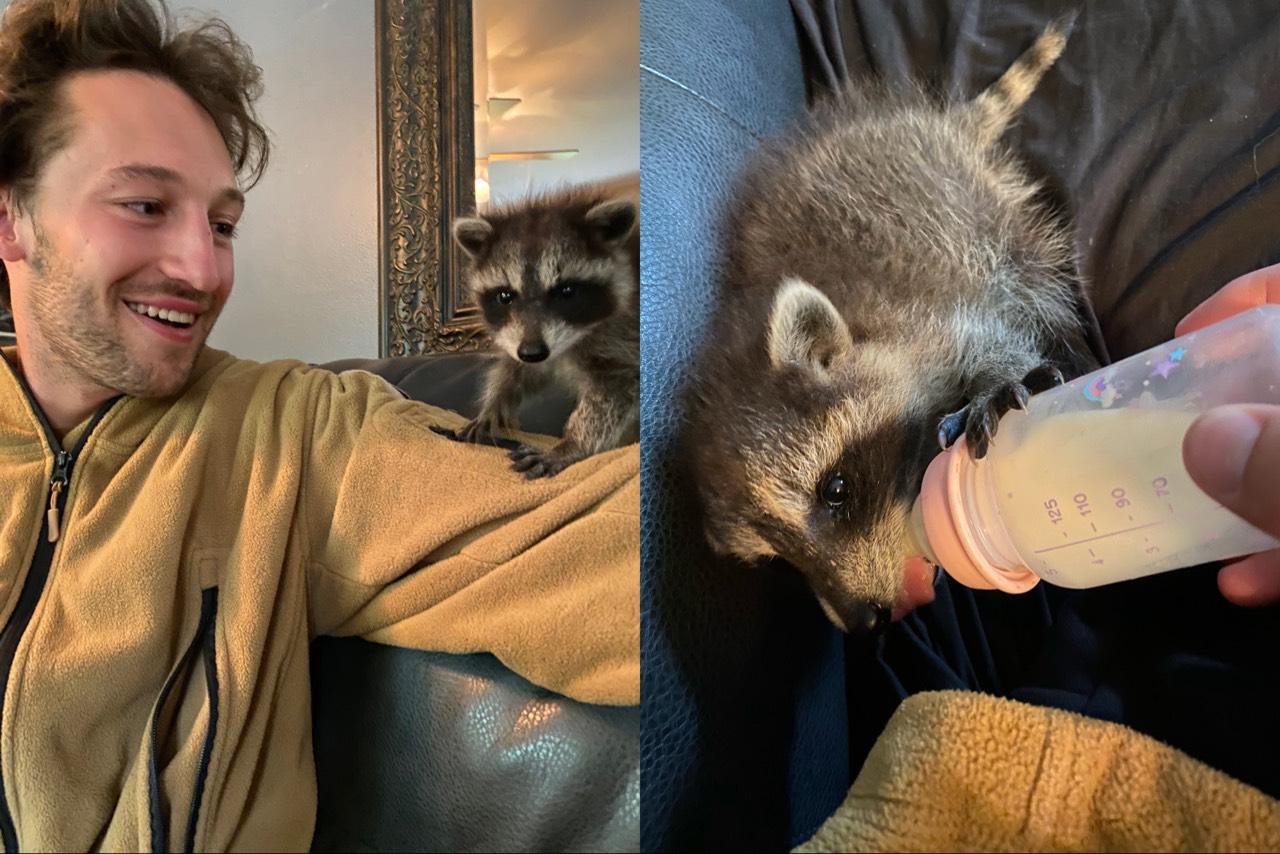
Jimothy isn’t just a viral internet sensation — he’s a cause for good.

A painting of the beloved raccoon by Seattle artist Ryan Henry Ward attracted a winning bid of $6,543.21 in an informal Instagram auction this weekend, with all proceeds directed to the Ballard Food Bank.

The winning bidder for the 24-by-24-inch painting was identified by Ward as Angela Galdabini, who posted a picture of the painting hanging on her wall.

Now the auction gift is going viral in its own way, attracting a matching donation from Amazon, which encouraged other Seattle-area companies to follow suit. According to the tech giant on Monday, T-Mobile, Alaska Air and Brooks have all gotten on board.

“When we saw a local artist giving back to the Ballard Food Bank, inspired by a little raccoon that’s brought so much joy, we wanted to help,” Kara Hurst, Amazon’s chief sustainability officer, said in a statement. “Amazon is proud to match the winning bid, and we’re calling on other Seattle-based companies to join us.”

Update: On Tuesday, Microsoft let us know that they, too, had committed funds to the food bank.

Jimothy seemed destined to be captured by Ward, a prolific muralist whose colorful, whimsical work is seen across the Seattle region on buildings, fences, garage doors and elsewhere. His art frequently features a variety of animals and other characters, including Sasquatch.

Ward called Jimothy “the hero we needed” in his Instagram post on Saturday, and said he was giving to Ballard Food Bank because the organization helped him through some of his hardest times.

The viral Jimothy sensation took off last week when the raccoon was spotted in Ballard and a video attracted millions of views on Instagram. The craze spread around the world and other videos have emerged online, sparking immense curiosity and adoration, and a flood of memes, artwork, food, crafts, poetry, songs and more. 

8-bit ‘Jimothy’: Viral sensation raids trash cans, eludes paparazzi in Seattle creator’s video game

The “Jimothy” video game features Seattle’s beloved raccoon making his way through assorted challenges. (Image via Chris Pirillo)

Jimothy, the short-spined Seattle raccoon, has become a global sensation whose likeness has been immortalized in artwork, clothing, songs and tattoos — and now a video game created in the creature’s hometown.

Tech enthusiast and entrepreneur Chris Pirillo launched an 8-bit NES-style video game called “Jimothy” this weekend in which players can control the movements of the critter as he raids trash cans, crosses streets to the park, sneaks past the paparazzi, and climbs to the safety of a big tree.

Pirillo says the missions are pulled straight from Jimothy’s real life. No doubt the animal is busy these days trying to dodge curious onlookers who are hoping to capture the next photo or video that feeds the masses on social media.

The viral Jimothy sensation took off last week when Kiana Hall spotted the raccoon in Seattle’s Ballard neighborhood and posted a video on Instagram — viewed by millions since — asking the question heard around the world: “What am I looking at?”

An earlier video of Jimothy, captured by a home security camera and posted on Reddit, ignited further curiosity and adoration, and now Reddit is flooded with sightings, memes, artwork, food, crafts, poetry and more. The Mariners put a Jimothy mascot in the Salmon Run. There’s even a Lego Jimothy.

Pirillo told GeekWire the game idea came to him on Saturday afternoon after seeing so many creatives flood his feeds with their own Jimothy fan art. He started to build a not-so-live tracker and realized it was a not-so-great idea. He hopes internet creativity is enough of a fix for the Jimothy-curious.

“This game is as close as any of us should ever get to him,” the game site states. “If you find yourself in his neighborhood: don’t go looking for him, don’t feed him, don’t try to touch him, and don’t crowd him for a photo.”

The game is easy enough to play, with challenges that are reminiscent of classic 1980s games “Frogger” and “Donkey Kong.”

Pirillo’s “Vibe Arcade” is loaded with other games he’s created. Earlier this year he vibe-coded a Resume Analyzer app and a pre-rejection letter generator called Dear Applicant to channel his frustrations with searching for a job.

Pirillo credits AI with changing the speed and ease with which a moment can go viral and be captured in new and creative ways.

“I remember when every big moment had a video game. But by the time a studio could create a video game around a meme pre-AI, the meme’s energy would have dissipated,” he said. “We are now at a day and age (certainly with AI as a tool) where almost literally anybody of any age or tech experience level can bring full-fledged experiences to life in just a few hours. We can simply talk our solutions into existence. It’s astounding.”

Pirillo built the game as a single HTML page, pitting OpenAI GPT 5.6 against Anthropic’s Claude Fable 5. One of the bigger challenges was getting the look of Jimothy right, as multiple AI models kept returning regular-looking raccoons.

Pirillo said he looks forward to sharing more about it all during a free vibe-coding community workshop in Seattle this Saturday.

His final takeaway for anyone looking to get in on the Jimothy hype — or whatever creature emerges next — is to not wait for the moment to pass.

“While it’s never been easier to make something, it’s also never been more challenging to get attention,” he said.

Ditch your smartphone for a flip phone for a month? This group wants Seattleites to try

Maggie Hollinbeck and James Wagar are leading the charge on Month Offline Seattle, a move to get people off their smartphones.

Seattle helped create the modern smartphone era. Now, nearly 40 people in the heart of one of the world’s biggest technology hubs are voluntarily putting theirs away.

The inaugural Month Offline Seattle cohort challenges participants to swap their smartphones for flip phones — or other “dumb phones” — for 35 days, gathering weekly for what organizers describe as part happy hour, part support group.

What started as a niche experiment in Washington, D.C. and Brooklyn has found an enthusiastic audience in Seattle, where organizers expected 10 to 20 participants but have already attracted the largest cohort outside those two cities.

Weekly programs are scheduled during the month-long detox from July 28 to Sept. 1, with activities on Tuesday evenings like bocce ball, bowling and mini golf slated to connect people in real time. There are also themed programs during the week, starting in week one with orientation and goal setting, and followed by topics such as “communication and relationships,” and “attention and boredom.” You can register here.

For a region like Seattle that’s home to Microsoft, Amazon, T-Mobile and a booming AI industry, the idea might sound almost rebellious. But organizers say the goal isn’t to reject technology — it’s to rethink how much of our lives should revolve around our smartphones.

James Wagar, a former investment banker and self-described techno-optimist who has carried a flip phone alongside his smartphone for years, teamed up with therapist and coach Maggie Hollinbeck, who describes herself as a techno-skeptic, to get the Seattle cohort launched. Together, they’re leading the gatherings, serving as the guides to those ready to take a break from their always-connected lifestyles.

“We (finally) seem to be at the beginning of a cultural moment with more people seriously evaluating their relationships with technology,” Wagar tells GeekWire. “Those using flip phones and simpler devices may be the canaries in the coal mine. While I remain a techno-optimist, the attention economy is not sustainable.”

Pick your favorite flip phone and disengage next month with Month Offline Seattle. Photos via James Wagar and Maggie Hollinbeck

Hollinbeck said she remembers when smartphones felt like a convenience — a way to replace multiple devices with one. But over time, she felt that same “rectangle of glass” had become harder to put down, prompting her to rethink her relationship with technology. She’s already ditched her Facebook and Instagram accounts, and was ready for the next step.

“I’m here to reclaim my time and attention, and I’m doing it in this way because I’ve found that it’s actually pretty hard to disentangle myself from this pocket-sized dementor,” said Hollinbeck. “It’s gonna take a village, so we’re building one.”

The concept has been spreading nationally through the Month Offline movement, but Seattle’s response has surprised the organizers. Most participants found the group not through social media, but through flyers, word of mouth, and conversations at neighborhood pubs during the FIFA World Cup.

Cohort members can use their own flip phone or purchase one at a discounted price of $10, and a commitment to subscribe for four months of discounted wireless service from dumb.co. That’s a total commitment of $42.

Denver, Austin, Los Angeles and Philadelphia also are jumping on the “Month Offline” bandwagon — which is kind of best described as a dry January for the tech obsessed. The organization says it is united by a common mission — “our commitment to attention liberation.”

Wagar and Hollinbeck are also encouraging a GeekWire reporter to join the movement.

So far, no takers.

Note: I actually tried a digital detox for one day back in 2013. Not sure I am ready for 35 days, 13 years later.

Recycler rescues mysterious trove of rare aerospace hardware, and sets out to discover its past

Tyler Rivers, founder and CEO of Seattle-area electronics recycler Living Green Technology, examines some of the artifacts he rescued this week, including vintage hybrid microcircuits, left, which showcase the delicate gold-bonded wiring and silicon architectures hidden inside. (Photos courtesy of Tyler Rivers)

A technological time capsule of artifacts from the Seattle region’s aerospace history was saved from the waste bin by an electronics recycler this week. Now he’s trying to solve the mystery: Who owned them, where did they come from, and what exactly are they, anyway?

Computer and electronic parts dating back nearly 50 years were among a donation of items dropped off at the Bellevue, Wash., location of Living Green Technology. Instead of the usual assortment of obsolete laptops, gaming consoles and tangled cords, the lot was like a pristine engineering archive consisting of gold-plated prototype chips, raw silicon architectures exposed under glass, and experimental fiber-optic cables used to pioneer early flight control systems.

Tyler Rivers, founder and CEO of the 13-year-old company, personally inspects weekly collections from his company’s public drop-off sites, and he instantly realized the pieces were far too rare to be shredded for their precious metals.

“I’m kind of the nerd for all this stuff,” Rivers told GeekWire on Wednesday. “I go down many, many rabbit holes with different things.”

Rivers was looking into whether the donor could be tracked down to help piece together the high-tech puzzle. He did his own digging and GeekWire also leaned on Google’s Gemini AI to help identify items in photographs Rivers shared. We’re hoping readers might also email us with their own insights.

For now, we’ve determined that the collection paints a picture of a highly specialized, Cold War-era engineering workspace focused on the physical dawn of modern aviation, spacecraft engineering, and early fiber-optic data networks. It includes:

Texas Instruments SBP9900X microprocessor: A rare, military-grade 16-bit processor from 1977 marked “Experimental.” Built using a specialized architecture resistant to extreme temperatures and ionizing cosmic radiation, this line of chips was famously utilized by NASA and military defense contractors for deep-space and missile guidance systems. (Check out this report on testing radiation-hardened microprocessors.)

A collection of vintage military, and aerospace-grade microelectronic components and hybrid microcircuits dating from the 1970s through the early 2000s. The Texas Instruments SBP 9900X is the long, gold and white ceramic DIP chip, a rare, military-grade 16-bit microprocessor built using Integrated Injection Logic technology. (Photo courtesy of Tyler Rivers)

Canstar 8×8 optical star coupler: A beautifully preserved, heavy-duty glass-and-metal fiber-optic coupler stamped “8X8 100/120/140.” This component physically fused fiber-optic strands together to split and route light signals — a critical building block for prototyping early, interference-proof “Fly-by-Light” flight control systems.

A rare, intact Canstar 8×8 Optical Star Coupler from the late 1970s or 1980s. (Photo courtesy of Tyler Rivers)

DDC Total-AceXtreme avionics module: A mechanical engineering sample marked by Data Device Corporation (DDC), a pioneer of 1970s and ’80s military flight systems. The component is designed for MIL-STD-1553, the standard data bus protocol that allows cockpit flight computers, sensors, and avionics to communicate with one another on military aircraft and spacecraft.

An assortment of hybrid microelectronics and multi-chip modules. Rather than sealing a single silicon die in plastic, hybrids integrate bare silicon dies, tiny resistors, capacitors, and hand-wound magnetic inductors directly onto a ceramic or metal substrate, connected by ultra-fine gold wire bonds. The DDC mechanical sample is at center top. (Photo courtesy of Tyler Rivers)

Un-lidded hybrid microcircuits: Custom-engineered ceramic and metal cavities housing bare silicon architectures connected by microscopic, gold-bonded wire arrays. These high-reliability hybrids were custom-crafted by hand for military and aerospace programs to pack dense electronic circuitry into compact, hermetically sealed packages.

Rivers has no formal aerospace, computer science or electronics background — he’s a 2012 University of Washington graduate in economics. He started his company as a college student while working at a UPS Store, setting up a drop-off bin on the counter to collect, repair, and resell old cell phones and iPods.

Today, in addition to public e-recycling, Living Green Technology assists businesses, government agencies and others in secure data destruction, asset recovery and more.

Rivers’ hands-on curiosity regularly follows him home. When unique or puzzling items show up at his public drop-off sites, he often takes them home to dissect them in his garage. Among his previous saves is a NASA laptop, complete with receipts and tagging showing it was modified for spaceflight.

“I pretty much deep dive and gather as much information as I can,” Rivers said. “Usually, sadly after that, I stick it on a shelf in my workshop and just leave it there until I figure out what I want to do next with it.”

This particular assortment of salvaged history offers a physical look at engineering hurdles solved decades ago, representing a transition period when computers were first being ruggedized to survive the extreme environments of military aviation and space flight.

The physical “pipes” and “plugs” of an early Fly-by-Light flight control system: A fiber-optic cable assembly labeled “1st Gen Array,” left, and a military-standard M38999 Series 3 metal shell connector featuring prototype optical seals. (Photos courtesy of Tyler Rivers)

For further insight, GeekWire reached out to Andrew “bunnie” Huang, a renowned hardware hacker, author, and MIT-trained electrical engineering Ph.D. widely known for his pioneering work in reverse engineering and open-source hardware. His blog is a hardware geek’s must-read.

After reviewing photos of the Bellevue haul, Huang pointed out that the collection may not actually be a single, unified archive from a lone aerospace project. Instead, he suspects it is the ultimate “collage” of high-tech souvenirs.

“The random tray of components on the black ESD foam… I almost would be inclined to think this was more of a collage of components kept by a technician from various projects,” Huang said. “There’s some pretty nice optical sensors in there with enormous active areas, a random segmented LED display, and an old 2K EEPROM.”

Given the Seattle region’s history around aviation, aerospace and technology, there are surely countless boxes stuck in garages, attics and storage spaces holding the artifacts of innovation.

Lāth Carlson is the former executive director of Living Computers: Museum + Labs, the now-closed Seattle institution founded by Microsoft co-founder Paul Allen as a home for vintage computing equipment. Carlson was accustomed to random boxes showing up on his doorstep.

“Many people don’t realize that most museums would not exist without collectors — people that say, ‘well, that seems like it’s worth keeping’ and put it in a box,” said Carlson, who now leads Seattle’s National Nordic Museum. “Sometimes we get really lucky and they end up being more right than they realize.”

Without speaking for local e-recycling outfits, Carlson recommended getting in touch before just leaving things at a museum, because most are bound by policy to dispose of such items.

For now, Rivers’ latest rescue is safe from the shredder, perhaps waiting for its full story to be uncovered.

Grunge meets slop: An AI time traveler visits 1992 Seattle when music, not tech, ruled the city

“Roxy” the AI time-traveling vlogger in front of the famed Crocodile Cafe music venue in what’s supposed to be 1992 Seattle. (@roxyintime via Instagram)

The best thing about Seattle’s grunge era is that it existed before the internet could completely spoil it — although the mainstream media, MTV and fashion designers eventually did their best.

None of them would be any match today for artificial intelligence.

In a new video we spotted on Instagram, a time-traveling vlogger under the handle Roxy In Time goes back to 1992 Seattle to explore the city’s music scene during its heyday. The result is grunge meets 2026 AI slop.

It’s an interesting study in how technology that’s very much being built and hyped in modern Seattle can be used to illustrate what the city sort of looked like more than three decades ago. In the video, it’s two years before the start of Amazon and another 15ish before cloud computing and a massive tech boom truly reshaped the region.

AI is being both celebrated and derided for its ability to help create content like Roxy’s time-traveling exploits. Where some see an innocent, weirdly educational history lesson, others can’t look past the replacement of human creativity, the excess of such material polluting social media channels, and the tech’s ability to deceive viewers in more dangerous ways.

Roxy is an AI-generated influencer — not a real person — with a penchant for visiting historically significant places, both real and imagined. She recently checked out L.A.’s Sunset Strip in 1987 and a New York speakeasy during Prohibition in 1929. In other videos she runs across fantastical figures including Paul Bunyan and Humpty Dumpty, and she visits cavemen in 30,000 B.C.

In the Seattle video, Roxy is dressed for the era’s part in a flannel, Nirvana T-shirt, ripped jeans and combat boots. She starts her tour by saying she’s in town to see the band Mudhoney play at Belltown’s Crocodile Cafe. But first she heads to Easy Street Records in West Seattle to browse records, tapes and CDs.

The video is populated with images of random musicians carrying guitars down the street, and people drinking coffee and reading actual print publications instead of staring at laptops. At The Central Saloon and OK Hotel in Pioneer Square, everyone has long hair, or a beanie, or both. Sweaty music fans in mosh pits seem to fit the timeline.

AI’s vision of 1992 Seattle: No laptops at the cafe! Garbled words on flyers! The grunge pit! (Screenshots via @roxyintime)

AI’s artistic limitations do come into focus in a few spots, especially when written words are displayed. The names of bands and clubs on music flyers — such as Comet Tavern — are a jumbled mess. Same goes for some of the names on record dividers at Easy Street, where the store’s neon wording also breaks apart.

Back at the Crocodile, Roxy is in line to see Mudhoney, and she’s confused by an opening act named Pen Cap Chew. Inside, as the show starts, she realizes that Pen Cap Chew is actually Nirvana, playing under the secret moniker because by that time the band was a worldwide sensation riding the success of the album “Nevermind.”

In perhaps the most realistic demonstration of being in 1992 — in a club where no one knows what a smartphone is yet — Roxy ends the video by saying she needs to stop recording.

“I’m putting this thing away, I’ve gotta watch this,” she says.

No way anyone would do that in 2026.

Archives to avatars: Famed historian is moved by Microsoft’s AI-powered Theodore Roosevelt at new library

The lifelike avatar of President Theodore Roosevelt, which relies on artificial intelligence to answer visitors’ questions, at the Theodore Roosevelt Presidential Library in Medora, N.D. (Theodore Roosevelt Presidential Library Photo via Microsoft)

“Speak softly and carry a big prompt.”

That’s not exactly how Theodore Roosevelt put it, but presidential historian Doris Kearns Goodwin found herself face to face with an AI-powered version of the 26th president at the newly opened Theodore Roosevelt Presidential Library in Medora, N.D. — and she had questions.

Goodwin is among the high-profile visitors to interact with the lifelike, immersive version of Roosevelt that is able to discuss his life, leadership and legacy.

A week after a visit from President Trump, Goodwin joined Microsoft President Brad Smith at the library to learn how the tech giant’s AI is being used to help the institution — and the Roosevelt avatar — speak directly to future generations.

“Who better to put our avatar to the test than American historian Doris Kearns Goodwin,” Smith wrote on LinkedIn on Sunday, where he shared a video of a clearly giddy Goodwin meeting the digital Roosevelt.

“I’ve been wanting to meet you for such a long time,” Goodwin said. “I feel like I’ve lived with you for 10 years of my life when I wrote a first book about you.”

Goodwin asked Roosevelt questions about his relationship with JP Morgan, the changing will of the country, and how it was presumed that when he neared death, Roosevelt would still be fighting and still be in the arena.

“I never cared how’d I’d be remembered by the historians,” the avatar said. “Still swinging, still loud, still on your feet. If folks say I managed that, well, I’m glad of it.”

A Pulitzer Prize-winning biographer who has written extensively about presidents and American history, Goodwin was moved by the interaction.

“Wow,” she said. “It’s amazing.”

The AI works as part of Box 1, the knowledge base backbone of the museum, powered by technology Microsoft helped create. According to a July 1 Microsoft blog post, the system is loaded with hundreds of thousands of archival documents, and AI is used to “organize, enrich and reconstruct fragmented materials into searchable, contextualized historical records.”

Box 1 and AI also power The Campfire Reading Room, a digital research tool that anyone anywhere in the world can use to search through Roosevelt’s writings, letters, images and historical materials.

Microsoft donated much of its work with the library through its AI for Good Lab. The company said it plans to release a paper documenting exactly how the technology works and to open source the software used in the project.

As technology evolves, the library will evolve with it, Microsoft said. When more documents are added to Box 1 or as generative AI improves, the Roosevelt avatar will automatically update with the additional context.

“That’s why we call it a living library,” said Laura Hoffman, senior director of the AI for Good Lab. “One of the most challenging things for cultural institutions is to continue to keep their experiences feeling relevant and fresh. This is what’s great about AI technology: It will continue to get better and better.”

Data vs. gut instinct: Seahawks coach leans into analytics to support, not drive, in-game decisions

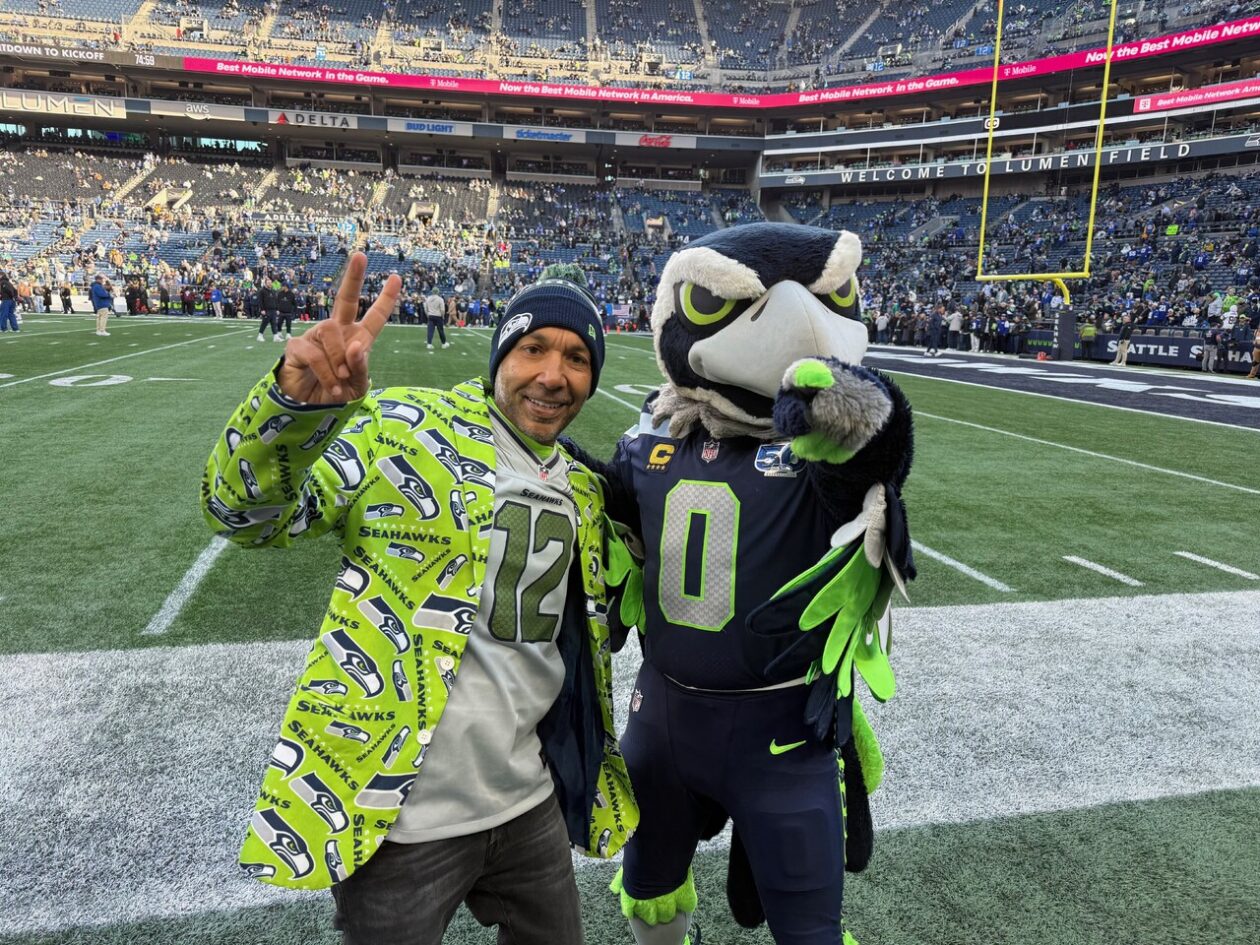
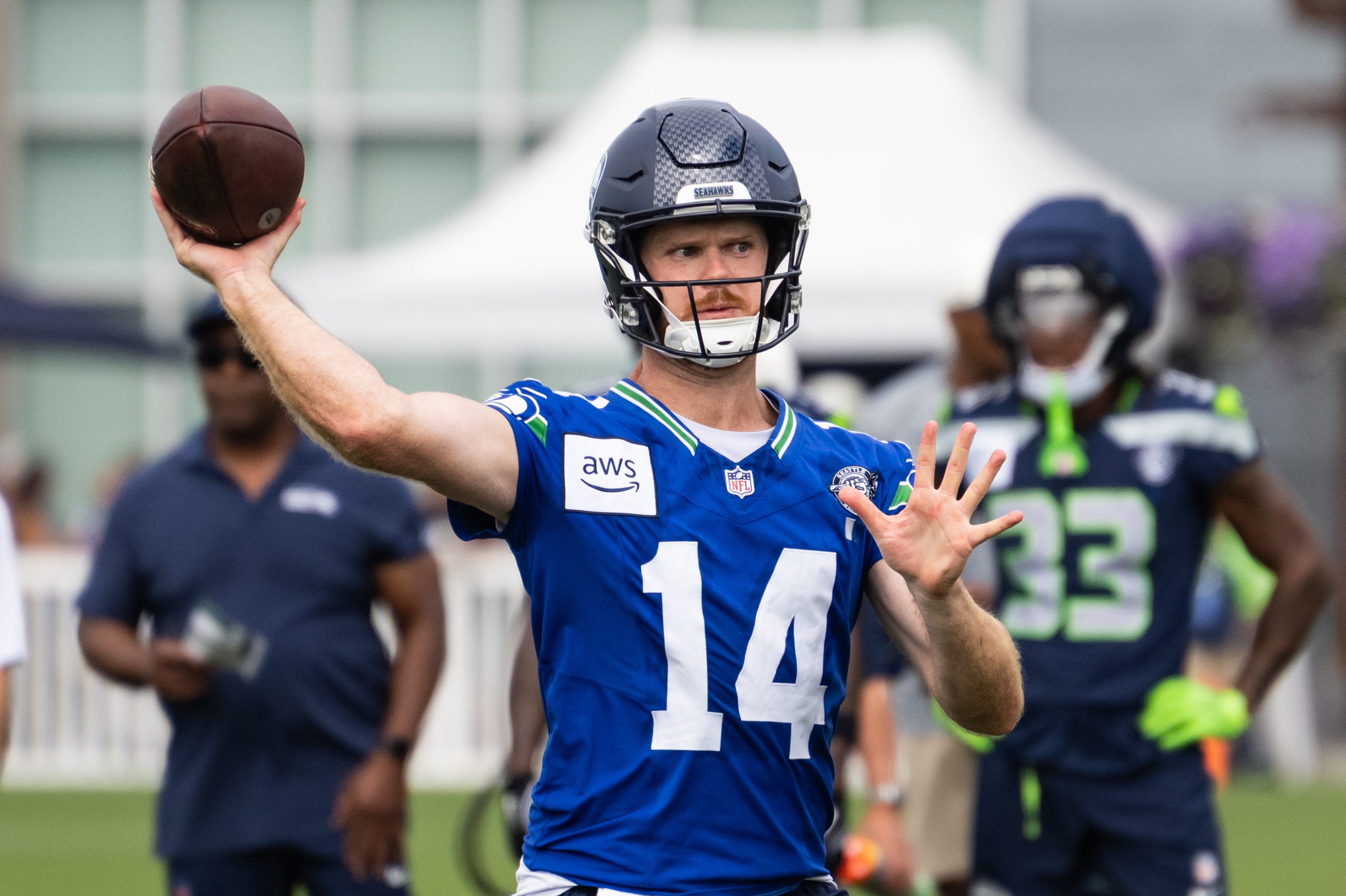
Seattle Seahawks head coach and self-professed football nerd Mike Macdonald just doesn’t understand why any coach or team would ignore the chance to lean into data and analytics.

“Why wouldn’t we use the best information out there?” he said during an interview this week on the Dan Patrick Show. “Why would you be scared about things that are going to possibly help you?”

Macdonald called himself a “psycho data guy” who needs “numbers and tendencies.” He has a new Super Bowl ring to show for his coaching style, but he’s also clear that while advanced technology and metrics may help support the team’s planning and in-game decisions, they don’t drive those decisions completely.

“You don’t have to do what the numbers say,” Macdonald said, adding that variables such as how a game is going, the feel for your own team, and gut instinct can all cancel out data suggestions.

That data-be-damned mentality came into play at the start of last season when the Seahawks, facing a 4th-and-1 from the San Francisco 49ers’ 19-yard line, ignored the analytical model that said to go for it. Macdonald opted to kick a field goal for a three-point lead and ended up losing when the 49ers came back and scored a touchdown.

Seattle started 0-1 and six months later won its second NFL title.

This year, Seattle opens against the New England Patriots, the team they beat 29-13 in Super Bowl LX.

Macdonald hasn’t learned much yet from that game, because he said he’s only watched it once, via tape and not the standard TV broadcast.

“Are you worried there’s a different ending?” Patrick laughed.

❌