People often ask me what my favorite food is to grill in the summer. You might be surprised to hear it’s not steak or ribs or pork loin. No, my number one favorite grill food this time of year is fish—especially swordfish. And nowhere does it taste better—or grill better—than at my summer home on Martha’s Vineyard.
Fish on the grill. Four words that strike terror into the hearts of even experienced grillers. For as much as grilling endows fish with incredible smoky succulence, there’s a lot that can go wrong. Will it stick to the grate? Will it fall apart when you turn it? Will the high heat of the fire dry it out?

Well, grilling fish is easy, but it isn’t always simple. The secret is choosing the right grilling method for the particular fish you’re cooking.
Choose the Right Grilling Method for Your Fish
Direct Grill It
Direct grilling—cooking the fish directly over the fire—is ideal for firm, meaty fish steaks, such as swordfish, tuna, and salmon. These fish have enough structure to stand up to high heat and flipping without falling apart.
Start with a hot, clean, well-oiled grill grate. Pat the fish dry and brush it lightly with oil before it goes on the grill. Once the fish hits the grate, leave it alone long enough to develop a good sear. When properly browned, it will release more readily from the grate. Turn it with a thin-bladed spatula and, whenever possible, flip it only once.
Swordfish is particularly well suited to this technique—one reason it remains one of my favorite fish to grill.
Try it:
These meaty swordfish steaks are seasoned with lemon and rosemary, coated with breadcrumbs, and direct grilled until golden brown. A lively salsa verde of parsley, lemon, garlic, and red pepper flakes finishes the dish.

Get The Recipe »
Indirect Grill It
Indirect grilling is ideal for whole fish, like snapper or salmon. Instead of positioning the fish directly over the fire, you cook it next to the heat with the grill covered. Think of your grill as a smoky outdoor oven.
This gentler method cooks the fish evenly from edge to center and is especially useful for larger fish that need more time over the fire. Brush the fish with oil, season it inside and out, and place it away from the direct heat. For an extra blast of wood smoke, toss a few wood chunks or chips onto the fire.
Try it:
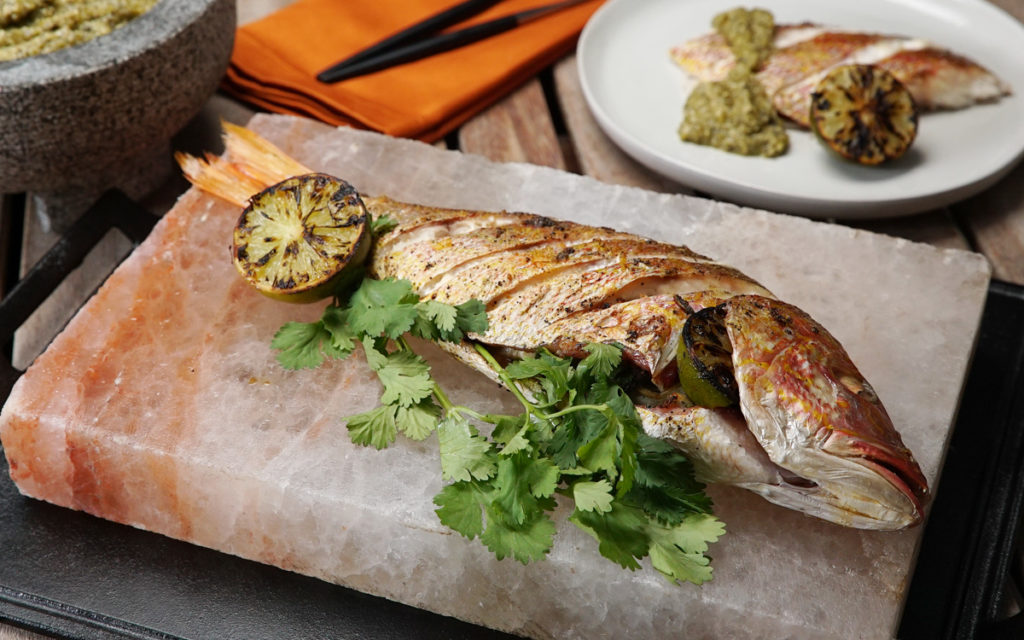
Whole snapper is stuffed with onion, garlic, cilantro, and poblano chile, then indirect grilled over wood smoke. Serve it with pipian, a Mexican sauce made with grilled vegetables and pumpkin seeds.
Get The Recipe »
Smoke It
Few foods take to wood smoke as enthusiastically as oily fish. Salmon, bluefish, and whitefish have enough natural fat to stay moist as they cook, while soaking up all that wonderful smoky flavor.
For the best results, brine or cure the fish first, then let the surface dry before it goes into the smoker. Alder is the classic wood for salmon, but apple, cherry, and other mild hardwoods work beautifully, too. Serve the fish hot from the smoker, or chill it and enjoy it later.
Try it:
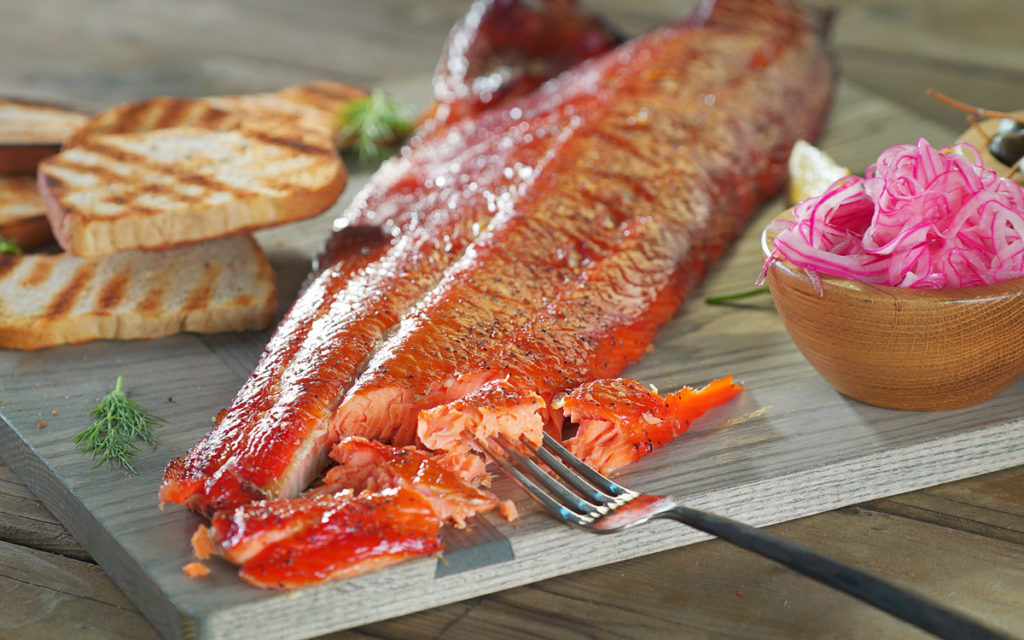
This salmon gets a New England twist with a cure of maple sugar, salt, black pepper, and lemon zest, followed by a drizzle of maple syrup. Smoking adds another layer of flavor to the rich fish.
Get The Recipe »
Griddle It
For delicate fish fillets—think sole, flounder, or black bass—a griddle or plancha can be your best friend. You get the intense heat and sizzling crust of the grill without the open spaces between the bars for the fish to stick to—or fall through.
Preheat the griddle until hot, then slick it lightly with oil. Lay on the fish and let it sear undisturbed before turning it with a thin-bladed spatula. The broad, solid cooking surface makes this one of the easiest ways to grill fragile fish and still get plenty of live-fire flavor.
Try it:
Thick ahi tuna steaks are coated with Cajun spices and seared on a screaming-hot plancha, cast-iron skillet, or griddle. The goal: an electrifying blackened crust with the center still beautifully rare, served with Cajun remoulade.

Get The Recipe »
Use a Grill Basket
A grill basket is cheap insurance for fish that has a tendency to stick, tear, or fall through the grate. It’s particularly useful for whole trout and small snapper, as well as delicate fillets like halibut and turbot.
Oil the basket well before adding the fish. Once it’s clamped securely inside, you turn the basket—not the fish. That means no wrestling with a spatula and far less chance of leaving half your dinner stuck to the grill grate. You still get plenty of heat, smoke, and char, but with considerably less drama.
Try it:
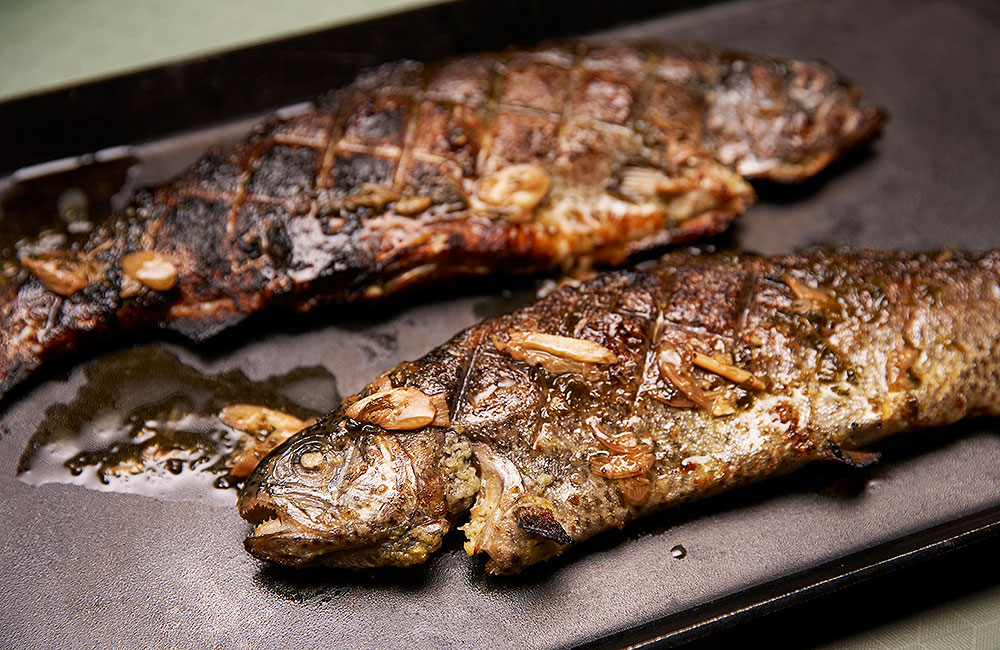
Whole trout are marinated with garlic, onion, celery, cumin, herbs, and sour orange juice, then grilled whole—using a fish basket if you like. Fried garlic sauce spooned over the fish gives it a powerful finish.
Get The Recipe »
Use a Cedar Plank
Planking is one of the most foolproof ways to grill fish. A cedar plank is ideal for fillets like salmon and striped bass, and because the fish never touches the grill grate, sticking and falling apart cease to be problems.
Set up your grill for indirect grilling. For extra flavor, char one side of the plank over the fire before adding the fish, then place the fish on the charred side and move the plank away from the direct heat. As the cedar plank heats, it perfumes the fish with wood smoke while helping keep it moist.
Try it:
A whole salmon fillet cooks on a cedar plank over indirect heat under a simple glaze of Dijon mustard, mayonnaise, and lemon zest. Serve the fish right on the plank for maximum effect.

Get The Recipe »
Use a Salt Slab
A salt slab turns your grill into a sizzling, mineral-rich plancha. It’s especially well-suited to delicate whole fish, such as snapper, black bass, and porgie, because the fish cooks on a solid surface instead of directly on the grate.
Heat the slab gradually to prevent cracking, then lay the fish right on top. The hot salt gives the exterior a beautiful sear while gently seasoning the fish as it cooks. And because there are no grill bars involved, there’s nothing for the delicate flesh to fall through.
Try it:
A whole rockfish cooks directly on a preheated Himalayan salt slab, where it sizzles and browns while being basted with garlic butter. A fresh melon-mint relish provides a cool counterpoint.

Get The Recipe »
Grill It in Leaves
Wrapping fish in leaves is an age-old grilling technique found throughout Asia, Latin America, and the Caribbean. It’s particularly useful for delicate fish: the leaves keep the flesh off the grate, trap moisture, and perfume the fish with an herbaceous smoke as they char over the fire.
Banana leaves are especially good for the job. Soften fresh leaves briefly over the grill, wrap the seasoned fish inside, and secure the package with toothpicks. The leaves take the punishment of the fire while the fish steams and smokes inside. No sticking. No falling apart. And when you open the package at the table, you get a blast of fragrant steam.
Try it:
Delicate halibut fillets are coated with a fragrant paste of lemongrass, Thai basil, garlic, cilantro, chiles, and sesame oil, then wrapped in banana leaves and grilled. The leaves protect the fish while adding an herbaceous smoke flavor.

Get The Recipe »
Grill It on a Stick
Sometimes the simplest grilling equipment is a sharpened stick and a good wood fire. This primitive method is perfect for camping, where fish can be positioned beside the embers and cooked by radiant heat rather than directly over the flames.
Thread the fish securely onto a sturdy stick or stake, then angle it toward the fire. Turn or reposition it as needed to cook both sides. Moving the fish closer to or farther from the embers gives you surprisingly precise control over the heat—and there’s no grill grate for the fish to stick to.
Try it: Salmon on a Stick
Know Exactly When It’s Done
There’s a fine line between perfectly cooked fish and fish that’s dry enough to make you reach for the tartar sauce. Don’t guess. Use an instant-read thermometer.
Whole fish: Insert the probe into the thickest part of the flesh just above the bone.
Fish steaks: Insert the probe through the side to the center.
Most fish: Cook to an internal temperature of 140° to 145°F.
Blue tuna: 100° to 110°F.
Rare tuna: 120° to 125°F.
Medium-rare tuna: 130° to 135°F.
Tuna plays by different rules. However you cook it, the center should stay gloriously rosy.
Fish, Fire, and Summer
Grilling fish doesn’t have to strike fear into the heart of even the most seasoned griller. Once you learn how to match the fish to the fire, the rest gets a whole lot easier.
The payoff? Fish that’s moist, smoky, succulent, and beautifully browned—the kind of meal that reminds you why fish belongs over a live fire in the first place.
The post The Ultimate Guide to Grilling Fish—Without Sticking, Drying Out, or Falling Apart! appeared first on Barbecuebible.com.

 Login
Login
 Print Recipe
 Pin Recipe