❌

Reading view

There are new articles available, click to refresh the page.

Kimmel's ABC show won't air interview with Democrat because of Trump FCC threats

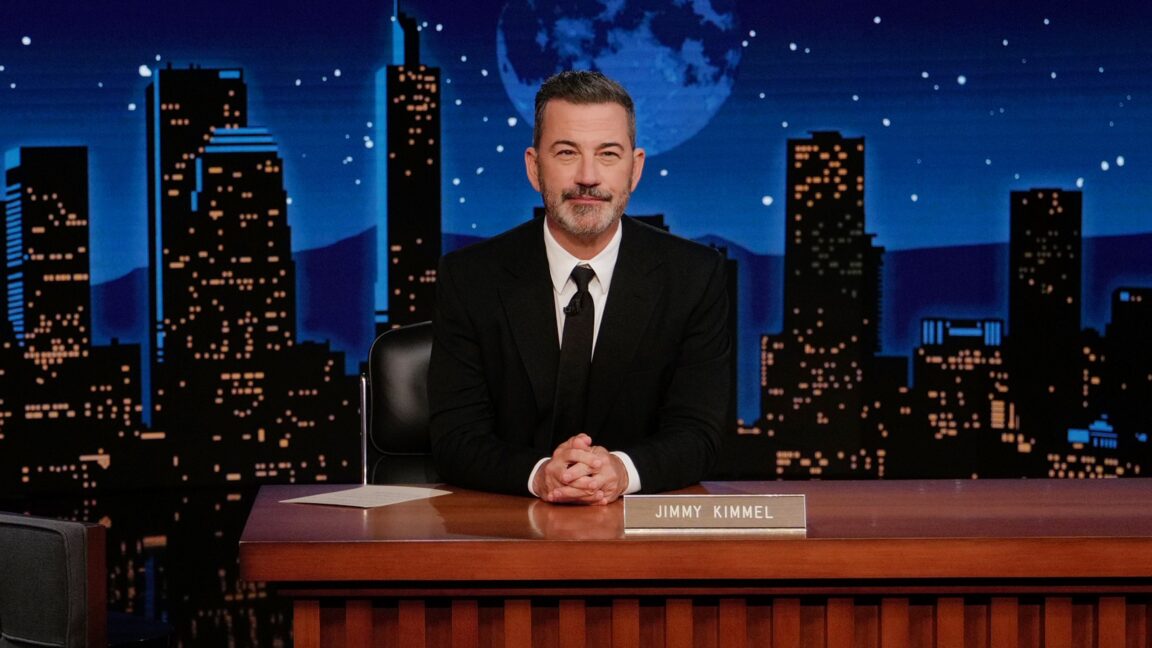
ABC's Jimmy Kimmel said he will be interviewing a Democratic candidate for Senate tonight, but the interview will be on YouTube only and not broadcast on TV because of threats made by the Federal Communications Commission.

Kimmel has been a prime target in the Trump FCC's attacks on ABC and its owner, Disney. In his monologue last night, Kimmel said he'll be interviewing Democrat James Talarico, a state representative who is running against Texas Attorney General Ken Paxton for a seat in the US Senate.

In previous years, such an interview would have aired on the broadcast show via local stations throughout the country, Kimmel said. This time, it will only be on the Jimmy Kimmel Live YouTube channel in order to prevent further trouble for individual stations that hold FCC licenses, he said.
Read full article

Comments

Β© Getty Images | Disney

Supreme Court forces TV stations to sell more election ads at steep discounts

In a victory for Republican campaign committees, the Supreme Court issued an order on Friday that forces broadcast TV stations to cut the prices of election ads purchased by political parties and joint fundraising committees. The September 4 ruling came in response to a petition filed by the National Republican Congressional Committee and National Republican Senatorial Committee.

The Supreme Court order was issued just in time for the start of a 60-day period before the election, in which broadcasters are required by US law to offer ad discounts to individual candidates. Because of the top court's order, TV stations must also give their lowest ad rates to political parties and joint fundraising committees, which face fewer limits on how much money they can raise and spend.

The legally required discount is known as the β€œlowest unit charge,” or LUC. A US law that applies to any licensed station that airs election ads requires that the lowest price be charged for β€œthe use of any broadcasting station by any person who is a legally qualified candidate for any public office in connection with his campaign.” The main legal question is whether β€œuse… by” a candidate can refer to ad time purchased on a candidate’s behalf by parties and joint fundraising committees.

Read full article

Comments

Β© Getty Images | Bloomberg

Trump admin fights ABC lawsuit as watchdogs worry Disney will settle with FCC

The Federal Communications Commission yesterday urged a court to dismiss a Disney lawsuit and let the FCC continue a proceeding that could end in the nonrenewal of ABC's broadcast licenses.

Meanwhile, two watchdog groups and individual viewers of ABC stations are trying to intervene in the lawsuit, saying they are worried Disney will agree to a settlement with the FCC that isn't in the public's interest. Disney opposed the motion, and a judge will have to decide whether the groups and individuals can act as intervenors in the case.

Disney sued the FCC on August 18, saying the agency is waging a β€œcampaign of censorship” to retaliate against ABC for speech that President Trump doesn't like. As the lawsuit gets underway, Trump continued his attacks on the media last weekend by demanding that the FCC punish or rebuke an NBC journalist for saying he has β€œmixed results” in his election endorsements.

Read full article

Comments

Β© Getty Images | Mike Kemp

FCC plans robocall scorecard to grade phone companies on spam call blocking

The Federal Communications Commission today said it will create a robocall mitigation scorecard to rate phone companies on how effectively they block illegal spam calls.

The scorecards could include call-blocking statistics along with data on customer complaints and enforcement actions. The FCC said scorecards could grade providers on a number scale, with letter grades, or by classifying providers as low risk, medium risk, or high risk.

"The Scorecard will empower consumers and encourage providers to continue to combat illegal robocalls by providing the public with an assessment of the effectiveness of voice service providers’ efforts to protect consumers from illegal robocalls," the FCC Consumer and Governmental Affairs Bureau said in a public notice.

Read full article

Comments

Β© Getty Images | BestForBest

Trump tells FCC to punish journalist for calling his election results "mixed"

President Trump yesterday demanded that the Federal Communications Commission punish or rebuke an NBC journalist for saying he has "mixed results" in his election endorsements. In the latest example of how Trump is using the FCC to harass reporters and news organizations that he dislikes, he said Meet the Press host Kristen Welker "will be reported to the FCC for rebuke or punishment" for what he claimed was a "purposeful inaccuracy."

"Kristen Welker, the Unpopular 'Hostess' of the once great Meet the Press, now considered Meet the Fake Press, just stated that Donald Trump has 'mixed results' on his Endorsements of Candidates, when the recent WINS of Darline Graham and Mike Mazzei, stand at 100% for the U.S. Senate, and 98% for the U.S. House, recently and over the longterm. How can anyone be allowed to say this, working for freely given Public Airwaves? Results are attached. Because of this purposeful inaccuracy, she will be reported to the FCC for rebuke or punishment," Trump wrote in a Truth Social post.

A separate post from Trump yesterday said, "THE FAKE POLLS USED BY OUR CROOKED MEDIA ARE OUT OF CONTROL, AND SOMETHING MUST BE DONE ABOUT IT. FCC TO THE RESCUE! President DJT." Trump also posted a rant on Friday about New York Times journalist Maggie Haberman, calling her "an unattractive person both inside and out" who "should be forced to turn over any and all money that she’s made through her fake reporting on me." Trump referred to Haberman throughout his post as "Maggot Haberman."

Read full article

Comments

Β© Getty Images | Alex Wong

GOP heads to Supreme Court after losing case over TV election ad prices

Republican campaign committees want the Supreme Court to mandate lower prices for election commercials on broadcast TV stations. If the court agrees, broadcasters would be forced to offer their lowest ad prices to political parties and joint fundraising committees.

For a more thorough description of the legal issues in the dispute, see this article that Ars published yesterday. In short, US law requires broadcasters to offer individual candidates the β€œlowest unit charge,” or LUC, during the 60 days before an election. The law helps level the playing field somewhat by letting candidates make their cases to voters who watch broadcast TV without needing to raise exorbitant sums of money.

The Trump administration, acting through the Federal Communications Commission, ordered broadcast TV stations to also give these discounts to political parties and joint fundraising committees, which face fewer limits on how much money they can raise and spend. Four Democratic candidates appealed, and a judges’ panel at the US Court of Appeals for the 4th Circuit ruled that the FCC order cannot be enforced because it contradicts the plain language of US law.

Read full article

Comments

Β© Getty Images | Bloomberg

Court blocks Trump FCC order that could flood broadcast TV with more election ads

A federal appeals court yesterday blocked a Trump administration decision that could have resulted in even more political advertisements appearing on broadcast television during the upcoming elections.

The Federal Communications Commission recently ordered broadcasters to offer the lowest advertising rates to political parties and joint fundraising committees. Four Democratic candidates challenged the decision in court, saying that only individual candidates are entitled under US law to receive what is called the "lowest unit charge," or LUC.

In a 2-1 vote, a judges' panel at the US Court of Appeals for the 4th Circuit agreed with the candidates and set aside the FCC decision that was scheduled to take effect on September 4. That's the start date of the 60-day period before the election in which broadcasters must offer the lowest ad rates to qualified candidates.

Read full article

Comments

Β© Getty Images | Patricia Marroquin

❌