
Reading view

There are new articles available, click to refresh the page.

Tech Moves: AWS data leader jumps to Oracle; Seattle Children’s names new CIO; Zillow’s new legal chief

Mehul Shah. (LinkedIn Photo)

Mehul Shah joined Oracle as group vice president for OCI data and storage services, ending a 14-year run at Amazon and Amazon Web Services.

In his last role at AWS, Shah led engineering and product for Amazon RDS for SQL Server, Oracle and Db2, and ran the launch and expansion of Oracle Database@AWS, the partnership that put Oracle’s database inside Amazon’s cloud.

“Through that collaboration, I saw firsthand that OCI shares the same DNA that inspired me to join Amazon back in 2012,” Shah said on LinkedIn, citing “deep curiosity, a passion to innovate, the courage to make bold decisions, and relentless drive to excel.”

Shah, who is based in Seattle, spent more than eight years at AWS, earlier leading real-time data streaming services including Amazon Data Firehose and Kinesis Data Streams, and serving as director and general manager of Amazon EMR. He started at Oracle this month.
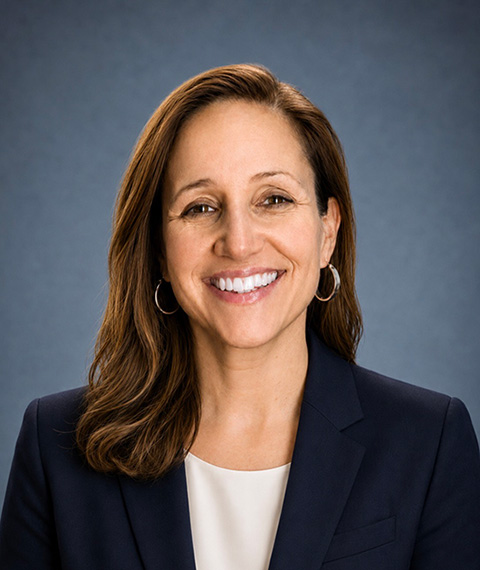
Dr. Natalie Pageler. (Seattle Children’s Photo)

Seattle Children’s named Dr. Natalie Pageler senior vice president and chief information officer, putting her in charge of digital strategy and IT operations for the pediatric hospital system.

Pageler comes from Stanford Children’s Health and the Stanford University School of Medicine, where she was division chief of clinical informatics and earlier spent a decade as chief medical information officer. She is a pediatrician and clinical informaticist with more than 20 years of experience.

Seattle Children’s CEO Dr. Christopher Longhurst followed a similar path. He was chief medical information officer at Stanford Children’s Health, the same role Pageler held, before spending a decade at UC San Diego Health, most recently as chief clinical and innovation officer.

Cassandra “Sandi” Knight. (Zillow Photo)

Zillow Group named Cassandra “Sandi” Knight its first-ever chief legal and policy officer, a role the Seattle company created this month as part of a broader leadership shuffle. Reporting to CEO Jeremy Wacksman, she oversees Zillow’s legal, compliance and government relations functions.

Knight joins from Google, where she spent four years as a vice president leading global civil litigation and discovery. She was previously vice president and chief litigation counsel at PayPal, and spent 11 years at Morgan Stanley in senior litigation and compliance roles.

She began her career as a trial lawyer at the San Diego Public Defender’s Office, the firm Keker & Van Nest and the San Francisco City Attorney’s office. She holds a law degree from Stanford and is based in the San Francisco Bay Area.

She arrives at a busy moment: Zillow and Redfin are set to go to trial Aug. 24 as defendants in an antitrust case brought by the FTC and five state attorneys general over the companies’ $100 million rental listings deal. Zillow has spent $26 million on the case so far this year.

Two longtime Zillow leaders are heading out:

  • Sara Bonert, vice president of industry engagement for Zillow Group and ShowingTime+, is leaving after nearly 20 years. One of Zillow’s earliest employees, she joined in the fall of 2006 as director of broker services, helped build Zillow’s first platform for taking in listing data, and signed the partner agreements that took the site from zero to a million listings in four months.
  • Jeff Tompkins, head of corporate real estate and operations, wrapped up almost five years with the company. Tompkins, who is based in Denver, ran Zillow’s workplace strategy across North America and beyond. He said he will share his next role soon.

Amir Pelleg. (Uber Freight Photo)

Amir Pelleg, a veteran of companies including Amazon and Convoy, is the new chief product officer at Uber Freight. He is based in Seattle, working out of the shared Uber and Uber Freight office on Second Avenue.

At Amazon, Pelleg was principal product manager for Kindle Fire, launched the Dash Button and initiated Alexa’s smart home controls, then incubated and launched Amazon Shipping in India, the U.K. and the U.S. as a director and general manager in Amazon Transportation.

He was a vice president on Convoy’s executive team until the Seattle freight startup shut down in 2023, then spent two and a half years at dental tech company Dandy.

“I’ve seen what works and what fails in digital freight,” Pelleg said in a Q&A posted by Uber Freight.

— Seattle’s Frazier Healthcare Partners added Wes Wheeler to its Growth Buyout team as an executive in residence, advising on diligence and on life science logistics and infrastructure.

Wheeler was most recently CEO of LabConnect, a central laboratory services company serving clinical trials, and before that president of UPS Healthcare, where he built a vertical of 10,000 employees across 35 countries. During Operation Warp Speed he was the primary industry interface to the U.S. government, overseeing distribution of more than 1.5 billion COVID-19 vaccine doses to over 100 countries.
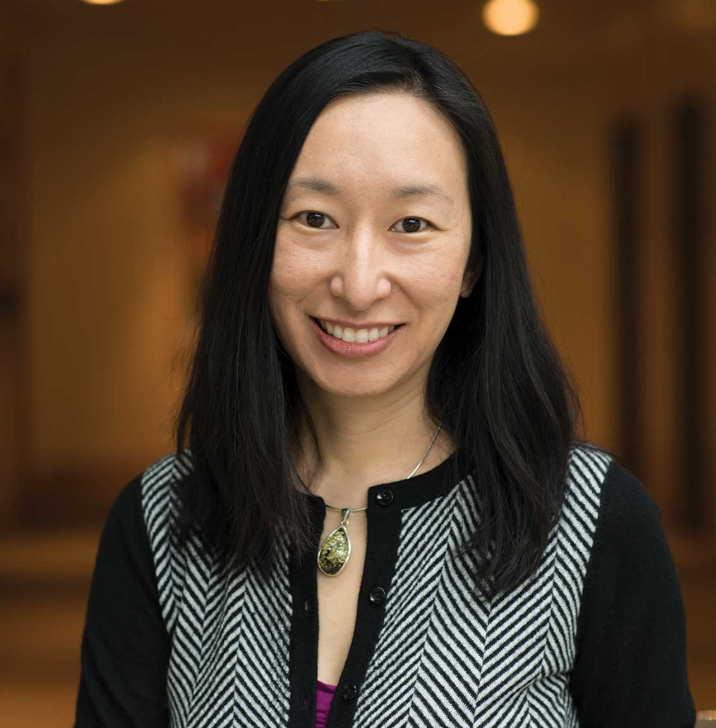
Dr. Heather Cheng. (Fred Hutch Photo)

Dr. Heather Cheng was announced as the inaugural recipient of the Marty Lazarus Weiden Family Endowed Chair at Fred Hutch Cancer Center, which will fund her work detecting, preventing and treating hereditary cancers.

Cheng is clinical director of cancer genetics programs at Fred Hutch and directs its prostate cancer genetics clinic. In 2016 she was part of a team that found more than 10% of men with advanced prostate cancer carry inherited mutations in DNA-repair genes such as BRCA1 and BRCA2.

The chair is named for Marty Lazarus Weiden, who was diagnosed with breast cancer in 1993 and died in 2001. The family learned only later that some of its members carry a BRCA mutation.

— Microsoft corporate vice president Darryl Willis was named to the board of ONE Nuclear Energy, a natural gas and advanced nuclear developer going public this quarter through a merger with Hennessy Capital Investment Corp.

Willis has led Microsoft’s energy and resources group since 2019. He was previously a Google Cloud vice president and a BP executive who ran the company’s Deepwater Horizon claims process and testified before Congress. He will officially join the board when the merger closes, and he is expected to chair its compensation committee.
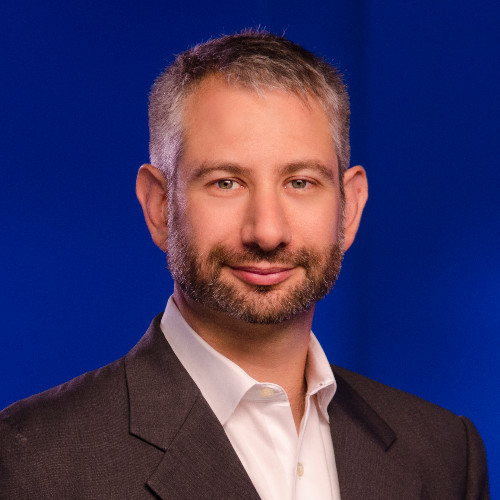
Jake Milstein. (LinkedIn Photo)

Jake Milstein was named head of healthcare solutions marketing at Zscaler, a return to healthcare cybersecurity. He joins from application security company Contrast Security and was earlier chief marketing and revenue officer at Critical Insight, the Bremerton, Wash.-based security firm acquired by Lumifi Cyber.

Before moving into technology, Milstein spent a decade at Seattle’s KIRO TV, including four years as news director.

Michele Mehl left Amazon Web Services after nearly two and a half years to become senior public relations manager at ALSO, arriving the same week the electric vehicle company announced a $150 million Series D round led by Prysm Capital.

ALSO builds the TM-B consumer electric bike and the TM-Q commercial delivery quad, and counts Amazon and DoorDash among its commercial partners.

Richard Van Bibber was named senior vice president of research and development at Verasonics, the Kirkland, Wash.-based maker of ultrasound research platforms used in fields including biomedical ultrasound, materials science and earth sciences.

Van Bibber has spent much of a 25-year medtech career in the Puget Sound region, including seven years as director of research at Kirkland’s Cardiac Dimensions and five years leading clinical affairs at Bellevue-based Aortica.

Dave Cotter joined the board of Nickson, the apartment-furnishing startup led by Cameron Johnson, alongside MarcyPen Capital Partners and Larry Braithwaite. Cotter is CEO of Greenwood and has previously worked at Amazon, Nordstrom, zulily, RealNetworks and Leafly.

PCC Community Markets president and CEO Krish Srinivasan will retire effective Jan. 29, 2027. Srinivasan was chief financial officer at Remitly and vice president of finance at Lyft before joining the Seattle grocery co-op as CFO, and earlier held leadership roles at Amazon and Microsoft.

Seattle Foundation named Elizabeth Wong as chief philanthropy officer, reporting to President and CEO Alesha Washington. Wong spent more than a decade at Foundation Source and earlier worked directly with the Gates family at the Bill & Melinda Gates Foundation.

And in case you missed it:

Jay Bartot, a co-founder of the airfare-prediction startup Farecast and former chief technology officer of Madrona Venture Labs, was named CTO of Lev, the Pioneer Square Labs spinout building an “AI co-founder” for entrepreneurs. Read more here.

Expedia Group is parting ways with at least eight vice presidents and senior vice presidents, and promoted five other leaders, as it reorganizes its product and technology groups around AI. Read more in this GeekWire story.
Internal memo: Eight execs out at Expedia Group in AI-driven shakeup

The Expedia Group logo at the company’s headquarters campus on the Seattle waterfront. (GeekWire Photo / Todd Bishop)

Expedia Group is parting ways with at least eight vice presidents and senior vice presidents in a major reorganization designed to reorient its product and technology groups around AI.

In an internal memo Tuesday, obtained by GeekWire, the Seattle-based online travel giant’s top product and technology leaders said “AI has radically changed what’s possible” over the past year, and that “work that once took weeks increasingly happens in hours.”

The company must “fundamentally change how we work, how we’re organized, and the technology we build,” wrote Chief Product Officer Shilpa Ranganathan and Chief Technology Officer Ramana Thumu in the memo (full text below).

They said the company is moving to “small end-to-end squads with clear ownership” and making AI and machine learning “part of every mission.”

This comes amid the online travel industry’s broader reckoning with the implications of artificial intelligence. AI agents are emerging as a new interface for travel, with the potential to relegate booking platforms to inventory sources behind the scenes unless they keep pace.

Expedia confirmed the departures in response to an inquiry from GeekWire.

“We’re evolving our Product and Technology organization to better align engineering and product teams with the brands and businesses they support,” an Expedia Group spokesperson said via email. “By bringing teams closer to the work and decisions, we can move faster and deliver more impactful experiences for travelers and partners.”

The spokesperson described the impact as “limited,” not saying how many roles were cut. “The majority of the changes involved employees moving to different teams or changes in reporting lines to better align talent and resources with business priorities,” the spokesperson said.

Most of the changes are to leadership scope and reporting lines, according to the memo, but “in a small number of cases, we made the tough decision to eliminate some roles.”

Reorg details: The most senior departure is Sachin Singh, SVP of book-to-trip technology, a former Amazon exec who joined Expedia in 2022 and served on the CTO leadership team. The memo credits him with advancing priorities “across checkout, payments, fraud prevention, servicing, and AI.”

Singh’s portfolio is being broken up. According to his LinkedIn profile, he led checkout, payments, fraud and risk, and post-booking self-service. The memo moves fraud and risk under Chief Information Security Officer Hilik Kotler, self-service under Ryan O’Neill, and payments product, technology and operations under Reena Patil and Debashis Saha.

Seven other leaders are also leaving, according to the memo: Sara Beckmann, Ian Butcher, Matt Esler, Amitabh Ghosh, Emil Riccardi, Fiona Stevenson and Shao Xie. Their LinkedIn profiles list them as vice presidents in product and technology roles including pricing, lodging, data platform, and travel platform and fraud.

The memo also lists promotions. Saha was elevated to senior vice president of travel foundations. Four leaders were promoted to vice president: Rajat Arora, Ryan Hillman, Ashwita Kaur and Ambrish Srivastava. All four were senior directors, according to their LinkedIn profiles.

Data, AI and agentic platforms all move under Xavier Amatriain, the former Google AI executive Expedia named as its first chief AI and data officer in December.

Rick Fast, senior vice president of platform engineering, becomes chief architect.

A third disruption for travel: In a May interview marking the company’s 30th anniversary, Expedia Group CEO Ariane Gorin described artificial intelligence as the third major technology disruption in Expedia’s history, after the internet and mobile. She said the AI era was “only starting to unfold.”

The online travel industry is facing the prospect that AI assistants could do to Expedia and Booking.com what those companies once did to traditional travel agents — inserting themselves between travelers and suppliers, and pushing the incumbents into the background. Marriott’s CEO has said AI booking agents will hurt online travel agencies more than they will hotels.

Expedia has been embedding itself in the new platforms as a hedge. It was a launch partner when OpenAI opened ChatGPT to outside apps, and began buying ads inside ChatGPT this year.

So far the disruption has moved slower than feared. When OpenAI pulled its Instant Checkout button from ChatGPT’s main interface in March and stepped back from processing travel transactions directly, shares of Expedia and Booking Holdings jumped significantly.

Expedia Group’s brands include Expedia, Hotels.com and Vrbo, along with Orbitz, Travelocity, ebookers and Wotif, plus its majority-owned hotel metasearch subsidiary, trivago.

The company ended 2025 with about 16,000 employees across nearly 50 countries, according to its most recent annual report, and said “approximately one half of our people work in technology roles” — putting the organization at the center of Tuesday’s memo at roughly 8,000 people.

Employment peaked above 25,000 in 2019, fell to 14,800 during the pandemic, and rebounded to 17,100 by the end of 2023, before a series of restructurings and layoffs in recent years.

Here’s the full text of the memo:

Hi Product and Technology teams,

We’re making some organizational changes to bring our teams closer together.

Our mission is to grow our business and build a platform that propels both our consumer and B2B businesses forward. To do this, we need to move a lot faster, and, over the past year, AI has radically changed what’s possible. Work that once took weeks increasingly happens in hours. To fully realize that opportunity, we must fundamentally change how we work, how we’re organized, and the technology we build. As we work differently, we will move faster from idea to outcome, organize into small end-to-end squads with clear ownership, make AI and Machine Learning part of every mission, and build products that scale.

Several teams have been piloting a different way of working that removes the usual constraints and provides squads and smaller cross-functional teams clear ownership. Our new structure considers what these teams have learned, that:

  • A lot of speed blockers are structural.
  • Decisions and accountability work best when teams are close to the work and have greater autonomy.
  • When used well, AI bridges gaps and scales knowledge in real-time.

Going forward, you should expect less time coordinating and waiting, and more time working together to build great experiences for travelers and partners.

What this means for you

Most changes are to leadership scope and reporting lines, bringing teams closer and simplifying our organization. In a small number of cases, we made the tough decision to eliminate some roles. Anyone experiencing a change directly has been informed.

Detailed placemats are posted on Basecamp, but some of the key changes are:

  • Dedicated Technology teams will be moved under each Brand Product leader: CJ Allen, Ritcha Ranjan and Eric Moore.
  • The Product & Technology team for Supply will be consolidated under Jonathan Holland.
  • The Product & Technology team for Fraud & Risk will be consolidated under Hilik Kotler.
  • Rick Fast is becoming Chief Architect.
  • Data, AI, and Agentic platforms are consolidated under Xavi Amatriain.
  • Product & Technology team for Self Service will be consolidated under Ryan O’Neill.
  • CRM (Customer Relationship Management) is moving from Marketing into Product & Technology under Reena Patil and Debashis Saha, respectively.
  • Payments Product, Tech & Ops will also be moving under Reena Patil and Debashis Saha, respectively.
  • Strategic Payment Partnerships is moving to Finance.

Experience Design under Rachel Been has made some adjustments to enable tighter alignment with our Product and Technology teams.

With this, Sachin Singh will be leaving Expedia Group. During his time on the CTO Leadership Team, we advanced key priorities across checkout, payments, fraud prevention, servicing, and AI that have had a real impact for travelers and the business.

We also want to recognize Sara Beckmann, Ian Butcher, Matt Esler, Amitabh Ghosh, Emil Riccardi, Fiona Stevenson, and Shao Xie, who will be leaving Expedia Group, and thank them for their leadership and contributions.

Additionally, Debashis Saha has been promoted to SVP, Travel Foundations and the following leaders have been promoted to Vice President: Rajat Arora, Ryan Hillman, Ashwita Kaur and Ambrish Srivastava.

Next Steps

Your leaders will be reaching out and hosting team meetings soon to walk through more context, org charts, and questions. In the meantime, head to Basecamp for more, including domain placemats, team charters, and more details.

This new structure is one step. The real work is in how we operate within it. It’s a new chapter for our teams as we deepen the partnership between Product and Technology and go after our big bets with speed and focus. We’re excited about what’s ahead, and we hope you will be too as you learn more about what this means for your day-to-day,

Thank you,

Shilpa & Ramana

❌