Reading view

There are new articles available, click to refresh the page.

Solana Ecosystem Tokens Outpace Broader Altcoin Market

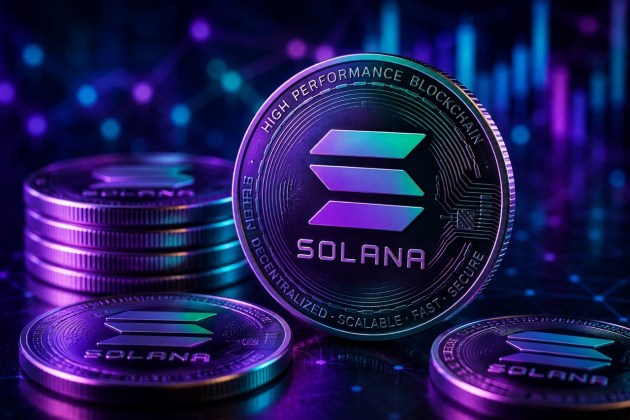
Solana ecosystem tokens have outpaced the broader altcoin market in recent performance benchmarks, giving traders another reason to watch the network’s internal rotation rather than SOL alone.

That is the interesting part here. Solana is not just one token story anymore.

When the ecosystem is active, capital can move through memecoins, DeFi tokens, infrastructure names, liquid staking assets, wallets, launchpads, and consumer-facing projects. Sometimes SOL leads. Sometimes the smaller ecosystem tokens move harder.

The latest performance data points to that second dynamic.

For more details, visit the official Coingecko platform.

TL;DR

  • Solana ecosystem tokens have outperformed broader altcoin benchmarks.
  • The move shows rotation inside the Solana ecosystem, not just demand for SOL.
  • Performance data should not be turned into a future price prediction.

Solana Rotation Has Its Own Rhythm

Solana has become one of the most active retail ecosystems in crypto.

Low fees and fast settlement make it easier for traders to move quickly between assets. That can create intense rotation when sentiment improves. Capital enters SOL, then spills into ecosystem tokens, memecoins, DeFi apps, and other smaller plays.

This is part of what makes Solana exciting.

It is also what makes it risky.

When liquidity is strong, ecosystem tokens can run faster than the broader market. When sentiment fades, those same tokens can fall quickly.

That is why performance benchmarks need context.

Ecosystem Tokens Tell A Different Story Than SOL

SOL is the network’s main asset.

It reflects broad investor appetite for Solana as an ecosystem. But smaller Solana tokens can show where traders are taking more specific risk. They may point to attention around a particular app, sector, launch, or narrative.

That makes ecosystem performance useful.

If multiple Solana-linked tokens are outperforming, it can suggest that activity is spreading beyond the base asset. That often happens when traders feel more confident and start looking for higher-beta opportunities inside a strong chain.

Outperformance Is Not Always Quality

This is worth saying clearly.

A token outperforming does not automatically mean the project is strong. Some moves are driven by speculation, thin liquidity, incentives, listings, or social momentum. Solana’s ecosystem has plenty of serious builders, but it also has plenty of fast-moving risk.

So the data needs a careful read.

The useful point is that Solana-linked assets are attracting attention. The harder question is which parts of that attention are durable.

Why Traders Watch Ecosystem Breadth

Breadth matters in crypto.

If only one asset is moving, the rally can be narrow. If many tokens within an ecosystem are moving, the market may be showing deeper participation.

For Solana, stronger ecosystem breadth can support the idea that the network is not only benefiting from SOL demand, but from wider on-chain activity and speculation.

That can feed back into the main network narrative.

But again, it is not automatic. Performance needs to be paired with usage, liquidity, developer activity, and product traction.

The Market Signal

The latest benchmark shows Solana ecosystem tokens running ahead of the wider altcoin market.

That tells us traders are taking risk inside the Solana ecosystem again. It also suggests that the network’s internal market remains lively after a strong August.

The next test is whether the move spreads into real activity.

If trading volume, app usage, and liquidity support the price action, the ecosystem story gets stronger. If the move is mostly speculative, it may cool quickly.

Either way, Solana remains one of the main places where altcoin rotation is happening.

This article draws on CoinGecko Solana ecosystem performance data.

This article was written by the News Desk and edited by Samuel Rae.

This report is based on information released by Coingecko. at Coingecko
BNB Chain August dApp Launches Point To Growing Ecosystem Activity

BNB Chain’s August ecosystem update showed continued growth in new decentralized applications, giving the network another activity signal beyond simple BNB price movement.

The update tracked new dApp launches and active project growth across the ecosystem during August. That kind of expansion matters because blockchain networks are ultimately judged by what users can actually do on them.

A token can rally on sentiment.

A chain grows when developers keep launching applications, users keep interacting, and infrastructure keeps supporting new activity.

For BNB Chain, August’s dApp growth gives the ecosystem a more practical story.

For more details, visit the official Bnbchain platform.

TL;DR

  • BNB Chain’s August update showed new dApp launches across the ecosystem.
  • The story is about application growth, not BNB price action.
  • New projects can strengthen network activity, but quality and usage still matter.

Why New dApps Matter

Decentralized applications are the user layer of a blockchain.

They are where trading, lending, gaming, payments, NFTs, social apps, tokenization, and on-chain tools actually happen. Without useful applications, a chain can have strong infrastructure but limited real demand.

That is why ecosystem updates matter.

They show whether builders are still choosing the network. A steady flow of new projects suggests developer interest remains active, even if broader market sentiment changes.

BNB Chain has long competed on low fees, large user reach, exchange-linked liquidity, and retail accessibility.

New dApp launches help keep that flywheel moving.

Activity Is More Important Than Announcements

Not every launch becomes meaningful.

Crypto ecosystems often celebrate new apps, but the market eventually asks harder questions. How many users arrive? How much liquidity appears? Do transactions grow? Are apps retained after incentives fade? Do projects create real utility or short-lived speculation?

That is the difference between ecosystem breadth and ecosystem depth.

BNB Chain’s August update is a positive sign, but the next layer is measurable usage.

Developers can launch dozens of applications. The winners are the ones that hold attention after the initial announcement.

BNB Chain’s Retail Advantage

BNB Chain has an advantage many ecosystems envy: distribution.

The network has historically benefited from Binance-linked familiarity, broad token support, low-cost transactions, and a large global retail base. That makes it easier for new dApps to reach users compared with smaller chains.

But distribution also brings noise.

Open ecosystems can attract strong builders, but also low-quality launches and copycat projects. That means curation and security remain important.

For users, the presence of new dApps is useful only if the applications are safe, liquid, and worth using.

Avoiding The Price Trap

BNB price action is not the center of this story.

The cleaner read is ecosystem activity. If new dApps increase transactions, liquidity, and user retention, that may support the network’s long-term relevance. But it should not be reduced to a short-term BNB price claim.

Networks are not built in one candle.

They are built through repeated developer activity and sustained user demand.

The Market Read

BNB Chain’s August dApp expansion shows that the ecosystem remains active even as competition across L1s and L2s intensifies.

Solana, Ethereum L2s, Avalanche, Sui, Base, Arbitrum, and others are all fighting for builders. BNB Chain’s ability to keep attracting new applications suggests it remains part of that competition.

The next test is whether those apps create durable on-chain activity.

For now, August gave BNB Chain another builder-side signal — and in a market obsessed with price, that is the more useful thing to watch.

This article is based on BNB Chain’s August ecosystem materials and public network updates.

This article was written by the News Desk and edited by Samuel Rae.

This report is based on information released by Bnbchain. at Bnbchain

Solana’s RWA Revolution: Why Wall Street Is Moving On-Chain

From tokenized Treasuries and institutional finance to real-world assets, Solana is positioning itself as one of the fastest-growing blockchain infrastructures for the future of capital markets.

The tokenization of real-world assets is rapidly becoming one of the largest opportunities in digital finance. As trillions of dollars in traditional assets begin migrating onto blockchain networks, the competition is no longer just about smart contracts — it is about building the infrastructure capable of supporting institutional capital. Among the leading contenders, Solana has emerged as one of the fastest-growing platforms for Real-World Assets (RWAs), combining high throughput, low transaction costs, and a rapidly expanding financial ecosystem.

Disclaimer: This content is for educational and informational purposes only and does not constitute financial, investment, or professional advice. We do not recommend any buying, selling, or holding of digital assets.
All views are the author’s own. Digital assets involve high risk and volatility, and readers should conduct their own research before making any decisions.
This report is not sponsored by any mentioned companies.

Business Model Analysis

Solana can no longer be considered just a layer 1 blockchain. In recent years, it has been transforming into a financial infrastructure capable of serving both crypto-native applications and institutional solutions in the field of tokenization of real assets. It is this transformation that is the main investment thesis of the project.

Solana’s greatest competitive advantage remains network effects. The large number of users, developers, DeFi protocols and liquidity creates barriers for competitors that are difficult to replicate with similar technological characteristics.

At the same time, Solana’s success increasingly depends not on technology, but on its ability to become a standard for new financial infrastructure. It is the scaling of RWA, stablecoins and institutional applications that determines the quality of business in the coming years..

Business rating: 9/10.

Financial Metrics

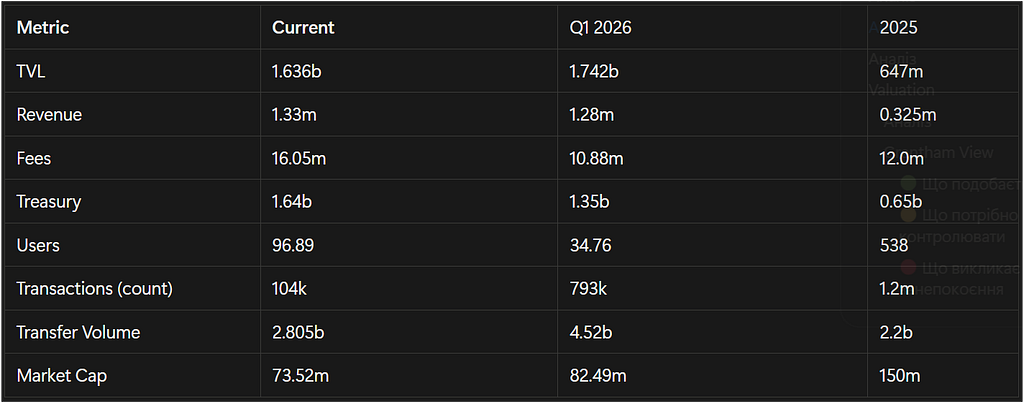
Current financials show a consolidation phase after an exceptionally strong 2025 cycle. The decline in TVL, fees, and revenues does not appear to be a structural problem, as the network continues to be among the world leaders in terms of the number of users, transactions, and transfer volume.

A particularly positive signal is the stable size of the Treasury. This provides a resource for further development of the ecosystem even in the event of a prolonged bear market.

In the next stages of analysis, it is worth assessing not the absolute values ​​of TVL, but the efficiency of network monetization — that is, whether revenues are growing faster than economic activity.

Financial rating: 8.6/10

Tokenomics

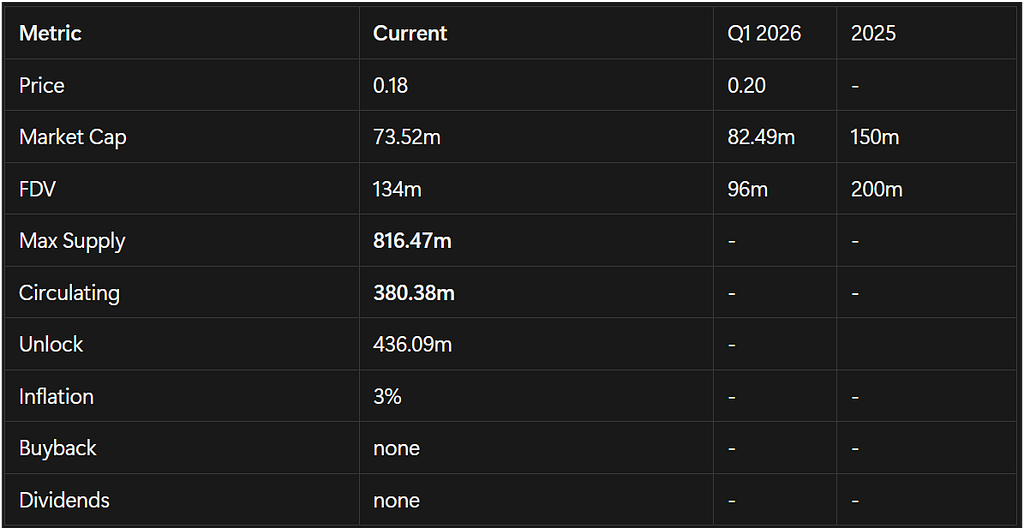
SOL remains one of the strongest utility tokens among Layer-1 networks. The demand for the token is directly related to the use of the network through the payment of fees, staking and participation in consensus.

However, from the perspective of a fundamental investor, tokenomics is not yet perfect. The main drawback remains the lack of a mechanism that would directly transfer the economic growth of the ecosystem to the token holders. In the long term, this aspect will determine how quickly the market capitalization can reflect the real growth of the business..

Tokenomics rating: 8/10

Valuation

Solana’s current valuation looks much more reasonable than it did at the peak of the previous cycle. The market has already priced in some of the over-optimism, while the network’s fundamentals remain strong.

For an investor, this means that Solana today looks more like a quality business with a moderate valuation than an over-capitalized speculative asset. However, the potential for further growth will largely depend on the development of the RWA sector and institutional use of the network..

Valuation Score: 8.3/10

Final Review

Solana has long ceased to be just a fast blockchain and is gradually becoming a full-fledged financial infrastructure for digital assets and tokenization of real assets. The business has strong network effects, a significant user base and one of the most active ecosystems in the crypto industry. At the same time, the current token economy does not yet fully reflect the fundamental strength of the network, and financial indicators after the peak of 2025 demonstrate a phase of normalization. For a long-term investor, Solana remains one of the highest-quality crypto assets, but its investment attractiveness will largely depend on the ability to convert the growth of the network into stable accumulation of value for SOL holders.

What is positive (✅):

  • one of the strongest blockchain ecosystems in terms of activity;
  • high speed and low fees;
  • large treasury and stable financial reserve;
  • growing use of Solana as an infrastructure for RWA;
  • strong institutional interest.

Main concerns (🔴):

  • the token does not yet have a strong mechanism for direct value accumulation;
  • financial metrics remain below 2025 peak values;
  • Solana’s valuation is still largely dependent on the overall crypto market cycle..

Answers to key questions:

Would I own the business outright?

Yes.

If Solana were a private company, it would be one of the highest-quality infrastructure businesses in the digital economy. It has strong network effects, one of the largest developer communities, high user activity, and is gradually becoming a platform for tokenizing real assets, stablecoins, and institutional financial applications. The combination of scalable technology, low costs, and a broad ecosystem creates high barriers to competition and provides long-term growth potential.

Would I buy the token under current economics?

Yes, but with some caveats.

SOL is one of the strongest tokens among Layer-1 networks due to its fundamental role in the ecosystem: it is used to pay fees, staking, and ensure network security. After a significant correction, the market valuation has become more justified relative to fundamental indicators.

At the same time, the main drawback remains the mechanism of value accumulation. The value of the token today depends mainly on the growth of network usage and market demand, and not on the direct distribution of economic results among SOL holders. This makes the investment thesis less predictable compared to businesses where shareholders directly receive a part of the value created.

What would need to change for an A+ rating?

Solana’s transition to A+ requires the fulfillment of several key conditions:

  • Sustained recovery of financial growth — a return to long-term growth in TVL, Revenue, and Fees independent of speculative market cycles.
  • Strengthening value capture for SOL — increasing the economic value accumulated by token holders through burning, staking, or other models that directly link the development of the network to the value of SOL.
  • Consolidating leadership in the RWA segment — transforming Solana into one of the main networks for tokenizing real assets with large-scale use by banks, funds, and large issuers.
  • Reducing revenue cyclicality — confirming that the network is able to consistently generate economic activity regardless of the phases of the crypto market.
  • Further strengthening institutional demand — increasing the number of large financial partnerships and real-world use cases that provide a long-term competitive advantage.

THE RESEARCHER


Solana’s RWA Revolution: Why Wall Street Is Moving On-Chain was originally published in Coinmonks on Medium, where people are continuing the conversation by highlighting and responding to this story.

Solana Address Growth Story Needs Real Usage, Not Just Bigger Wallet Counts

Solana’s growth story is often told through speed, fees, and developer momentum. Address growth adds another layer, but it needs to be read carefully. A higher wallet count can be encouraging, yet it does not automatically prove that a network has deeper economic activity.

That is the right way to look at the current Solana signal. The market wants to know whether user growth is sticky, whether dApps are retaining activity, and whether validators and applications are seeing enough demand to make the network’s momentum durable.

For more details, visit the official GitHub platform.

TL;DR

  • Solana address-growth data has returned to the discovery pack as a market signal.
  • The useful question is whether wallet growth translates into repeat users and real application demand.
  • The article should avoid overstating the GitHub proposal page as a direct on-chain dashboard.

Address Growth Is Only The First Question

New wallets can reflect real adoption, speculative farming, airdrop behaviour, or short-term campaign activity. That is why address counts are useful, but not complete. They need to be paired with fees, transactions, DEX activity, app usage, and retention.

For Solana, the positive case is that low fees and fast execution make it easier for users to keep coming back. The challenge is proving that those users are not just passing through.

What Would Make The Signal Stronger

The strongest confirmation would come from broader app-level data: more users on DeFi protocols, stronger NFT or gaming activity, sustained stablecoin transfers, and fee demand that does not disappear after incentives fade.

Until then, address growth is a constructive sign, not a finished thesis. Solana has the attention. The question is how much of that attention becomes durable network value.

Why The Detail Matters Now

The practical takeaway is that Solana stories now have to be read through both market structure and product execution. A headline can create attention, but the more durable signal is whether the underlying source points to real activity, a real filing, a real integration, or a measurable change in how users and institutions behave.

That is why this development is worth separating from ordinary market noise. It gives readers a specific point to track over the next few sessions rather than a vague reason to be bullish or bearish. If follow-up data confirms the direction, the story can build. If not, it still gives the market a clearer snapshot of where attention is concentrating today.

The Market Read

The cleaner way to read this story is not to force it into a simple bullish or bearish box. For Solana readers, the useful part is the change in context. A new filing, integration, market signal, or regulatory step can alter how traders think about the next few sessions even when it does not instantly change price.

That is especially true after the last few volatile weeks, when crypto has been dealing with a mix of ETF flows, legal updates, exchange listings, protocol upgrades, and shifting liquidity. The market is no longer reacting to one dominant theme. It is weighing several smaller signals at once, and that makes source-backed developments more important than ordinary chatter.

Why Readers Should Keep This On The Radar

For NewsBTC readers, the important question is what this changes from here. If follow-up data, filings, governance updates, or wallet movement confirm the direction, the story can develop into a larger market theme. If the next update is weak, delayed, or contradicted by new data, the market may quickly move on.

That is why the scope matters. This article is not treating the development as a guaranteed price trigger. It is treating it as a fresh signal inside a market that is trying to sort durable activity from short-term noise. The distinction is important because crypto narratives can move faster than the facts behind them.

The next thing to watch is whether this becomes part of a wider pattern. In some cases that means more institutional flows. In others it means stronger developer adoption, cleaner regulatory access, deeper exchange liquidity, or a clearer technical roadmap. Either way, the story is strongest if it is followed by measurable execution rather than another round of speculative headlines.

This article is based on Solana ecosystem materials and the source pack’s network-growth lead.

This article was written by the News Desk and edited by Samuel Rae.

This report is based on information from GitHub. at GitHub

❌