Login
Login
NASA, IBM Launch AI Foundation Model for Lunar Science
6 min read
NASA, IBM Launch AI Foundation Model for Lunar Science
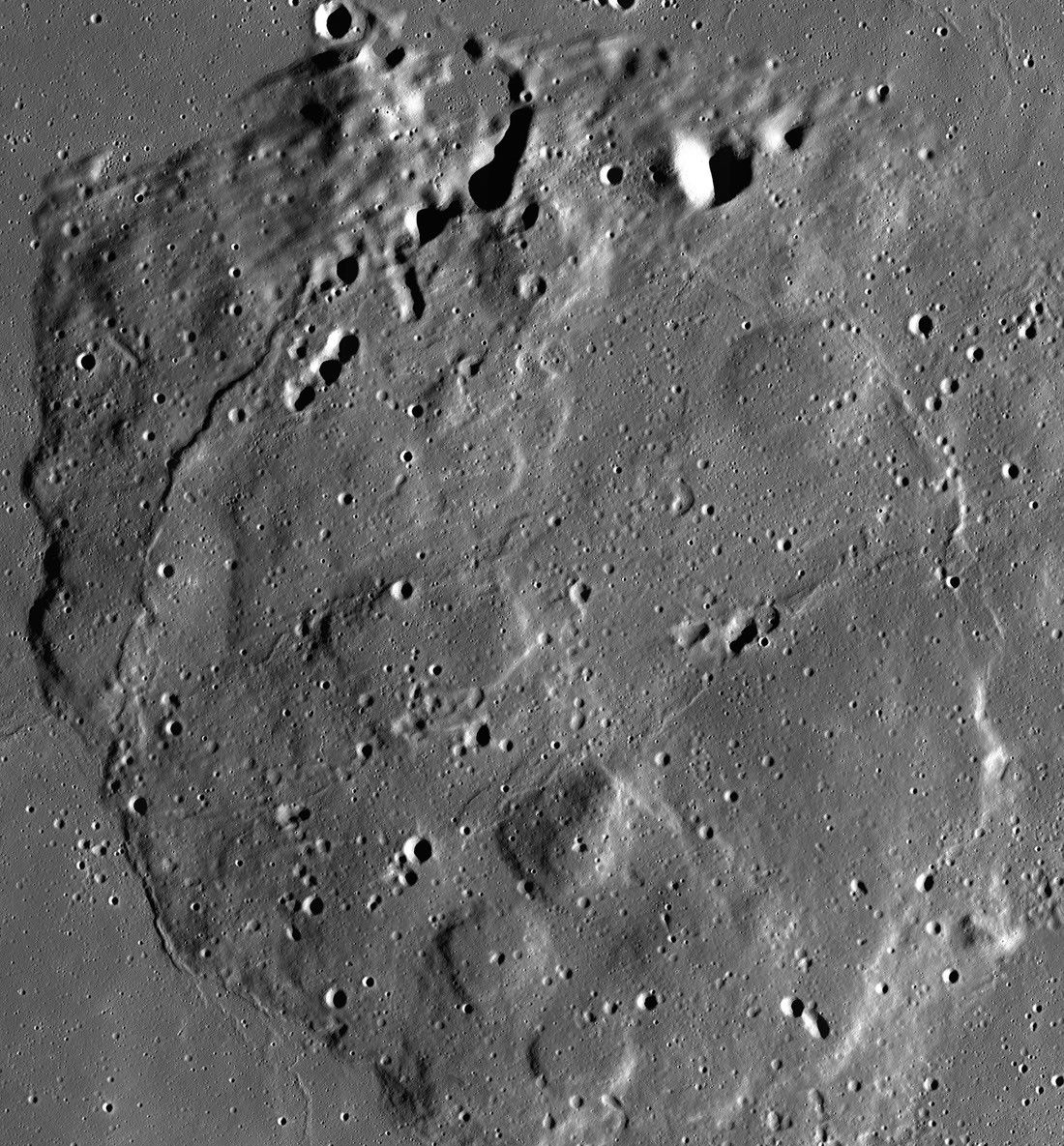
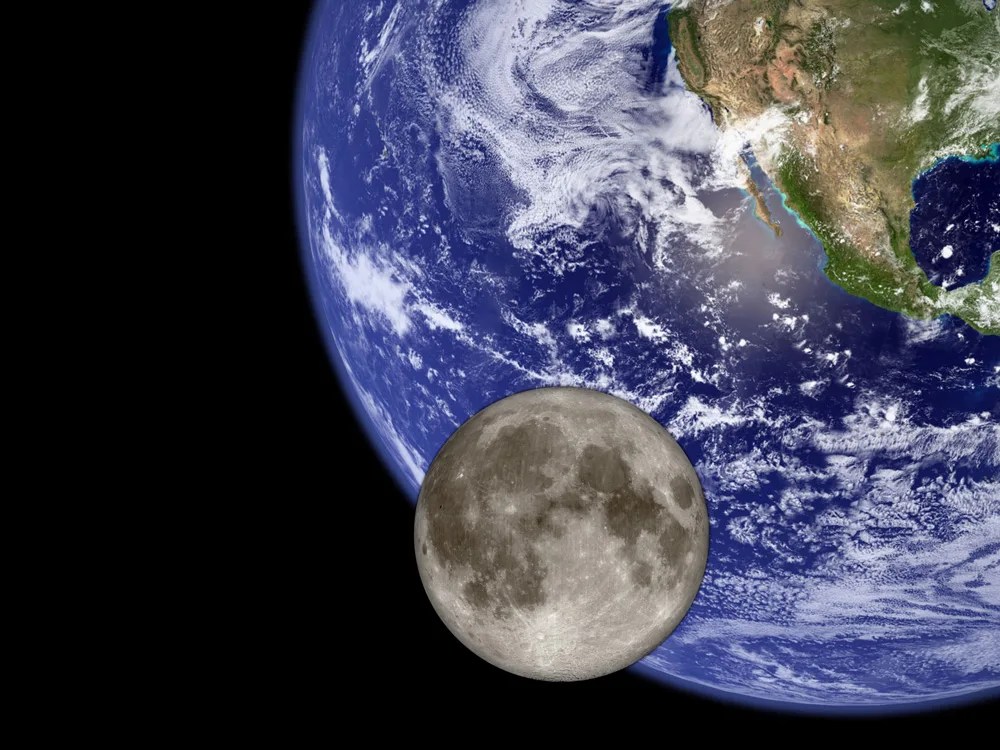
NASA is bringing artificial intelligence to the study of the Moon, helping researchers transform how they analyze the Moon’s surface. In an ongoing collaboration with IBM Research and several academic institutions, NASA has launched the NASA-IBM Lunar Foundation Model, among the first open-source AI models built specifically for lunar science. The model, trained primarily on data from NASA’s Lunar Reconnaissance Orbiter (LRO), is hosted publicly on Hugging Face for anyone to use, with the complete codebase available on GitHub for testing and experimentation.
The NASA-IBM Lunar Foundation Model supports the next generation of lunar science by helping researchers quickly analyze vast quantities of data to better understand the Moon’s surface. Using the model as a mapping tool, researchers can rapidly develop actionable strategies for evaluating the Moon’s rugged surface, understanding its geological past, and planning future lunar research.
“NASA has spent decades building an extraordinary scientific record of the Moon, but collecting data is only part of the job,” said Kevin Murphy, chief science data officer and acting chief data and AI officer at NASA Headquarters in Washington. “We also have to make data easier for scientists to explore and use. The NASA-IBM Lunar Foundation Model shows what’s possible when we bring AI to NASA’s petabytes of scientific data. That’s a real opportunity we see with AI: turning large-scale data into new discoveries.”
Unlike traditional models that require building and training specialized algorithms from scratch for specific tasks, foundation models are pre-trained on vast, unlabeled datasets. The broad knowledge they acquire through pre-training allows them to generalize across multiple scientific domains through quick fine-tuning, making foundation models both versatile and efficient in accelerating scientific research.
The NASA-IBM Lunar Foundation Model shows what’s possible when we bring AI to NASA’s petabytes of scientific data.
Kevin Murphy
NASA Chief Science Data Officer and Acting Chief Data Officer/Chief AI Officer
Data collected by NASA’s LRO over the past 17 years was well-suited for training this foundation model because it covers most of the lunar surface in detail. The data produced from the LRO mission is larger than all other NASA planetary missions combined, capturing an almost seamless, high-resolution mosaic of the entire Moon. The NASA-IBM model was trained on roughly 2 million image tiles from this dataset, comprising more than 1 million high-resolution camera images at 1-meter resolution and nearly 964,000 multispectral images at 100-meter resolution. The model also was trained on high-resolution Moon imagery and terrain data from multiple other missions such as NASA’s GRAIL (Gravity Recovery and Interior Laboratory), NASA’s Lunar Prospector, and JAXA’s (Japan Aerospace Exploration Agency) Selenological and Engineering Explorer.
Because the foundation model is already pre-trained on this dataset, planetary scientists can adapt the model to many different lunar research tasks such as mapping craters, spotting young volcanic features, and estimating where ice may exist near the lunar poles by using only small amounts of labeled data. For researchers who study the Moon’s polar ice, the NASA-IBM model can help them estimate where ice patches are likely to be stable, on and below the surface. Dark areas like the Moon’s permanently shadowed regions remain cold enough to trap and preserve ice for up to billions of years. Studying these areas offers insight into the Moon’s history and presents an opportunity to map potentially usable resources for future space exploration.

While the Moon is thought to no longer be volcanically active, it once experienced dynamic geological processes. For researchers studying lunar volcanism, the NASA-IBM model accelerates the identification of unusual looking volcanic features known as irregular mare patches. Because these structures appear relatively young, they challenge established timelines for lunar cooling, and mapping them could help scientists piece together a more accurate understanding of the Moon’s thermal evolution.
The model also can map surface features, such as craters, more efficiently than manual methods. Every crater is formed by an impact, making crater counts and measurements essential for dating the lunar surface and reconstructing solar system history. The foundation model helps speed up the process of identifying and measuring craters, allowing scientists to focus on interpreting findings and determining their implications for exploration.

Overall, the model matched or exceeded the performance of several other strong baseline models across all evaluated tasks, achieving comparable results on crater mapping and segmentation of irregular mare patches, while demonstrating a clear advantage on estimating polar ice stability.
The NASA-IBM Lunar Foundation Model is part of the agency’s Office of the Chief Science Data Officer’s strategy for AI for science — a larger, ongoing collaboration between NASA and IBM aimed at using advanced AI to explore our planet and solar system. It joins a growing collection of AI models developed through this partnership, including:
- The Prithvi Models: a family of models pre-trained on Earth observation data and designed to support applications such as disaster monitoring, flood mapping, crop yield prediction, and hurricane prediction.
- The Surya Model: a heliophysics model trained on high-resolution solar observation data to predict space weather phenomena such as solar flares which can disrupt power grids and satellite operations.
Within NASA, the Impact AI team at the agency’s Marshall Space Flight Center in Huntsville, Alabama, collaborated with scientists in the agency’s Science Mission Directorate Planetary Science Division, NASA’s Goddard Space Flight Center in Greenbelt, Maryland, and NASA’s Ames Research Center in California’s Silicon Valley, to build the NASA-IBM model. The model is an example of open science in action, uniting experts from NASA, industry, and academia to turn raw data into a resource for lunar discovery. To support the global research community, the team released comprehensive machine learning-ready pre-training datasets and benchmark collections alongside the model, which is integrated into the open-source TerraTorch toolkit. Supported by a companion paper available on Hugging Face, this open release ensures reproducible research and equips scientists worldwide to build, compare, and refine AI models for the future of lunar exploration.
The science team, assembled by NASA Headquarters, included experts from the Universities Space Research Association in Huntsville, Alabama; the SETI Institute in Silicon Valley, California; the University of Maryland, Baltimore County in Catonsville, Maryland; Howard University in Washington, D.C.; NASA’s Science Mission Directorate Planetary Science Division; NASA Ames; and NASA Goddard.
For more information about NASA’s strategy of developing foundation models for science, visit:
https://science.nasa.gov/artificial-intelligence-science