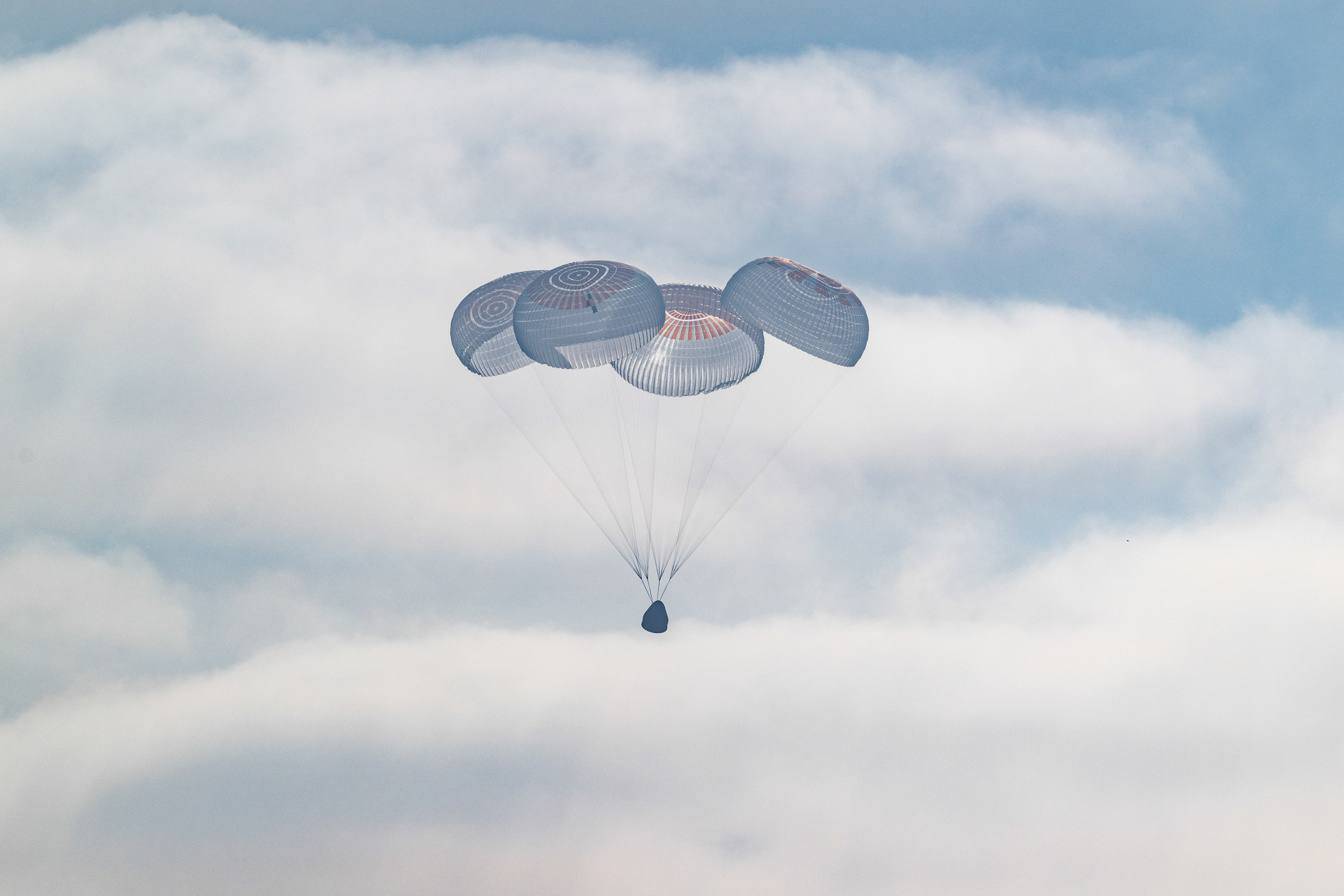
The SpaceX Crew Dragon Freedom spacecraft is seen moments before splashing down in the Pacific Ocean off the coast of California in this Oct. 8, 2026, photograph. Aboard were NASA’s SpaceX Crew-12 members NASA astronauts Jessica Meir and Jack Hathaway, ESA (European Space Agency) astronaut Sophie Adenot, and Roscosmos cosmonaut Andrey Fedyaev. The four spent nearly eight months aboard the International Space Station.
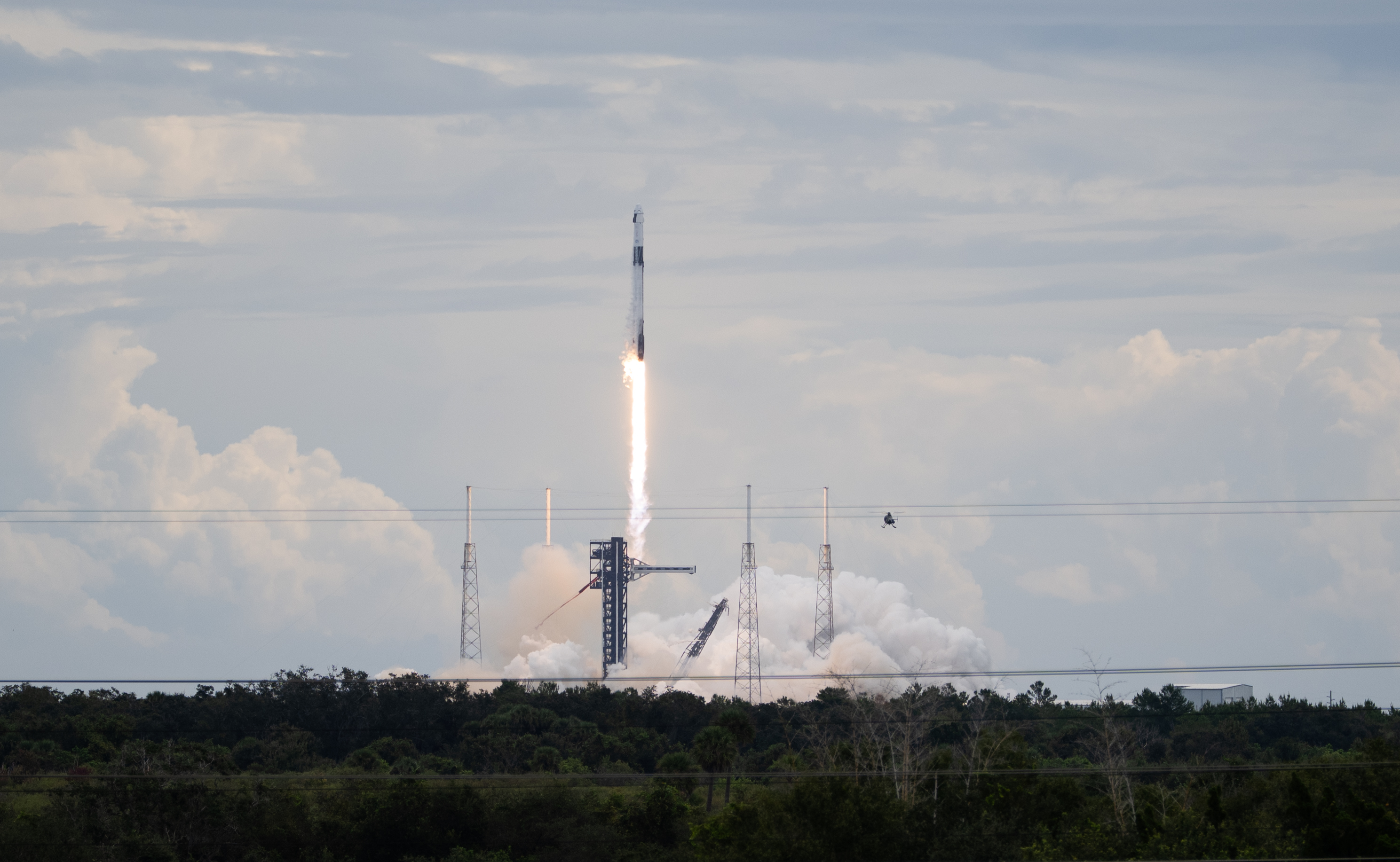
In this Oct. 1, 2026, photo, a SpaceX Falcon 9 rocket and Dragon spacecraft launch from Space Launch Complex 40 at Cape Canaveral Space Force Station in Florida. The spacecraft is carrying NASA astronauts Jessica Watkins and Luke Delaney, CSA (Canadian Space Agency) astronaut Joshua Kutryk, and Roscosmos cosmonaut Sergey Teteryatnikov to the International Space Station for a long-duration science mission. They are expected to dock at the space station at 7 p.m. EDT.
NASA will stream Crew‑13’s arrival across multiple platforms. The agency’s live broadcast begins at 5:20 p.m. EDT. Learn where to watch at: https://www.nasa.gov/live
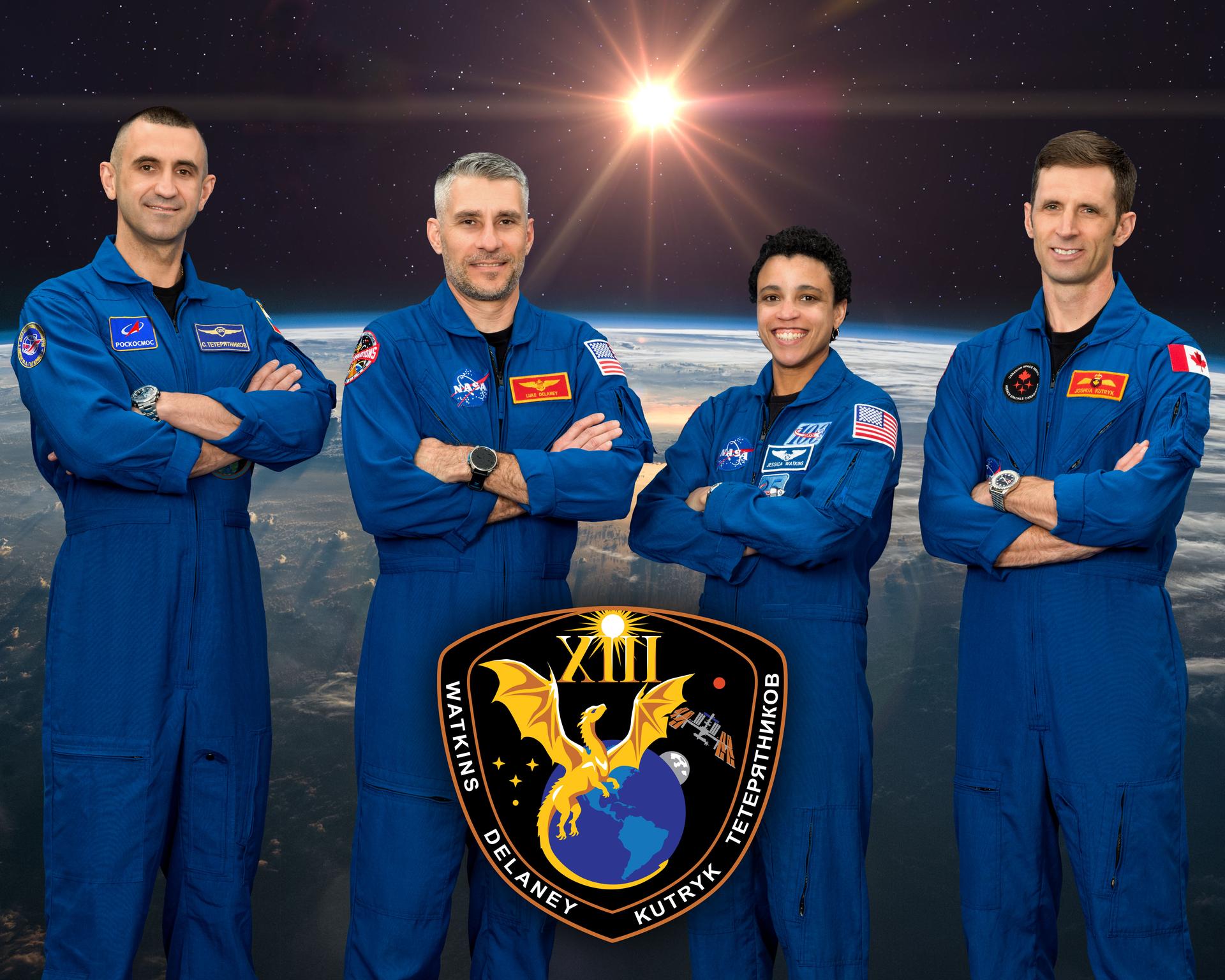
The four members of NASA’s SpaceX Crew-13 mission to the International Space Station pose together for an official crew portrait. From left are Roscosmos cosmonaut Sergey Teteryatnikov, NASA astronauts Luke Delaney and Jessica Watkins, and CSA (Canadian Space Agency) astronaut Joshua Kutryk.
Credit: NASA/Bill Stafford
Editor’s note: This advisory was updated Sept. 30, 2026 with an updated time for the prelaunch news conference.
NASA will provide live coverage of prelaunch, launch, and docking activities for the agency’s SpaceX Crew‑13 mission to the International Space Station.
Live coverage will stream through a variety of platforms. Learn where to watch online:
Crew‑13 is scheduled to launch at 11:10 a.m. EDT, Thursday, Oct. 1, from Space Launch Complex 40 at Cape Canaveral Space Force Station in Florida, with docking planned for about 7 p.m. The SpaceX Dragon spacecraft will carry NASA astronauts Jessica Watkins and Luke Delaney, CSA (Canadian Space Agency) astronaut Joshua Kutryk, and Roscosmos cosmonaut Sergey Teteryatnikov to the International Space Station for a long-duration science mission.
Any events in person are only open to previously credentialed media. Call details are available to media upon request.
NASA’s Crew-13 mission coverage is as follows (all times Eastern and subject to change based on real-time operations):
Wednesday, Sept. 30
6 p.m.: Prelaunch news conference with the following participants:
Dr. Lori Glaze, associate administrator, Human Spaceflight Mission Directorate, NASA Headquarters
Dana Weigel, manager, Low Earth Orbit Program, NASA’s Johnson Space Center in Houston
Mathieu Caron, director, Astronauts, Life Sciences, and Space Medicine, CSA
William Gerstenmaier, vice president, Build and Flight Reliability, SpaceX
Arlena Moses, launch weather officer, Cape Canaveral Space Force Station’s 45th Weather Squadron
Media may ask questions in person and via phone. Limited auditorium space will be available for in-person participation. For the dial-in number and passcode, please contact the NASA Kennedy newsroom no later than one hour prior to the beginning of the news conference at: ksc-newsroom@mail.nasa.gov.
Thursday, Oct. 1
9:20 a.m.: Launch coverage begins
11:10 a.m.: Launch
Following the conclusion of launch coverage, NASA will provide audio-only discussions between Crew-13, the space station, and flight controllers during Dragon’s transit to the orbital complex.
12:45 p.m.: Postlaunch news conference with the following participants:
NASA Administrator Jared Isaacman
Dr. Lori Glaze, associate administrator, Human Spaceflight Mission Directorate, NASA Headquarters
Dana Weigel, manager, Low Earth Orbit Program, NASA Johnson
Mathieu Caron, director, Astronauts, Life Sciences, and Space Medicine, CSA
Julianna Scheiman, director, NASA Science and Dragon Programs, SpaceX
Media may ask questions in person and via phone. Limited auditorium space will be available for in-person participation. For the dial-in number and passcode, please contact the NASA Kennedy newsroom no later than one hour prior to the beginning of the news conference at: ksc-newsroom@mail.nasa.gov.
NASA’s live Crew-13 coverage returns with rendezvous and docking streaming on a variety of platforms. The planned 7-hour, 50-minute trip from launch to docking on Oct. 1 will be the fastest by a U.S. spacecraft in space station history.
5:20 p.m.: Arrival coverage begins
7 p.m.: Targeted docking to the forward-facing port of the station’s Harmony module
8:45 p.m.: Hatch opening followed by welcome remarks
All times are estimates and could be adjusted based on real-time operations after launch. Follow the space station blog for the most up-to-date operational information.
Once aboard the station, the crew members will conduct a brief handover with the agency’s SpaceX Crew-12 mission, which is expected to begin its return to Earth no earlier than Monday, Oct. 5. NASA will share additional details on Crew-12’s return after Crew-13’s arrival.
NASA will provide a live video feed of Space Launch Complex 40 approximately six hours prior to the planned liftoff of the Crew-13 mission. Pending unlikely technical issues, the feed will be uninterrupted until the prelaunch broadcast begins on NASA+, approximately two hours prior to launch. Once the feed is live, find it online at: http://youtube.com/kscnewsroom.
Media who need access to NASA live video feeds may subscribe to the agency’s media resources distribution list to receive daily updates and links.
Audio-only coverage
Launch audio also will be available on Launch Information Service and Amateur Television System’s VHF radio frequency 146.940 MHz and KSC Amateur Radio Club’s UHF radio frequency 444.925 MHz, FM mode, heard within Brevard County on the Space Coast.
Attend launch virtually
Members of the public may register to attend this launch virtually. NASA’s virtual guest program for this mission also includes curated launch resources, notifications about related opportunities or changes, and a stamp for the NASA virtual guest passport following launch.
NASA website launch coverage
Launch day coverage of the mission will be available on the NASA website. Coverage will include live streaming at 9:10 a.m. on Oct. 1, and blog updates as the countdown milestones occur.
On-demand streaming video and photos of the launch will be available shortly after liftoff. For questions about countdown coverage, contact the NASA Kennedy newsroom at 321-867-2468. Follow countdown coverage on the commercial crew blog.
Watch, engage on social media
Follow the Crew-13 mission on X, Facebook, and Instagram by following and tagging these accounts:
NASA has delivered on its goal of safe, reliable, and cost-effective transportation to and from the International Space Station from the United States through a partnership with American private industry. This partnership is opening access to low Earth orbit and the International Space Station to more people, more science, and more commercial opportunities. For more than 25 years, people have continuously lived and worked aboard the space station, advancing scientific knowledge and demonstrating new technologies that enable us to prepare for human exploration of the Moon as we prepare for Mars.
For more information about the Crew-13 mission, visit:
Boeing’s Starliner spacecraft that launched NASA’s Crew Flight Test astronauts Butch Wilmore and Suni Williams to the International Space Station is pictured docked to the Harmony module’s forward port. This long-duration photograph was taken on July 3, 2024, from the orbital complex as it soared 256 miles above the Arabian Sea off the coast of Mumbai, India.
Credit: NASA
On Monday, NASA and Boeing provided an update on the company’s Starliner spacecraft, including adding additional crew missions and certifying a new rocket for crew transportation to low Earth orbit.
“We are living through the most exciting era of space exploration since Apollo,” said NASA Administrator Jared Isaacman. “As this domain continues to open, there will be growing demand for launch vehicles, transfer stages, landers, and, of course, spacecraft that carry astronauts. NASA has been committed to having multiple crew transportation options since the beginning of the Commercial Crew Program. We have worked closely with Boeing to address the issues identified on previous Starliner flights, and we intend to see this vehicle return to flight in support of the International Space Station and future commercial destinations.”
The agency intends to exercise options for a fifth and sixth flight to and from the space station using Starliner, and will work with Boeing and United Launch Alliance to certify the Vulcan rocket for use after the Atlas V rocket’s final flight.
“We are starting with an uncrewed Starliner-1 mission to the International Space Station to validate the improvements made to the spacecraft and gather the flight data we need,” said Isaacman. “From there, we will use what we learn, continue implementing the corrective actions identified by our Program Investigation Team, and complete the testing and certification required for crewed flight. Our current plan is to return astronauts on Starliner-2 by 2028.”
NASA’s commercial crew efforts aim to preserve a U.S. crew transportation capability for ensuring continued access to space. The work is challenging, however, it is essential for responsibly concluding space station operations, transitioning to commercial space stations, and expanding commercial access.
In February, NASA released findings from the agency’s Program Investigation Team outlining the programmatic and technical issues resulting in an uncrewed return of the Starliner during its first crewed flight in 2024. In total, the investigation identified 61 recommendations to NASA to ensure that future missions meet the high standards required for human spaceflight.
The report specifically identified issues with Starliner’s service module reaction control thrusters operating outside of their engineering qualification, which resulted in the loss of control experienced during its Crew Flight Test. Through significant ground testing and analysis, NASA and Boeing learned the service module thruster performance issues resulted from a combination of factors, including the thermal environment and features inherent in its design.
Based on the findings, Boeing has made thermal modifications to the spacecraft’s service module which NASA will evaluate for improved performance on Starliner-1. NASA and Boeing also have jointly decided to implement an additional thruster valve design modification in support of spacecraft certification and future crewed flights.
The uncrewed Starliner-1 has the potential to fly in December of this year or January 2027. It will serve as an engineering evaluation mission to verify improved thermal environments, obtain necessary performance data for system qualification, and identify residual risk ahead of crewed missions.
“Starliner’s next flight is a critical step on the path to achieving full system certification and ensuring a sustained human presence in low Earth orbit,” said Dana Weigel, manager of NASA’s Low Earth Orbit Program. “With the safety of our space station crew and the public as our highest priority, we will test Starliner’s propulsion system through targeted demonstration objectives and disciplined operational controls. These steps are essential to validating Starliner’s thermal performance which is a key element for the certification.”
Following the flight, NASA and Boeing will complete the service module thruster valve design modification, which is focused on addressing poppet seal extrusion and its adverse effects on thruster performance. Boeing also will implement other improvements across the spacecraft including installation of new crew module thrusters, batteries, and minor modifications to the parachute system for increased performance and reliability in support of system certification.
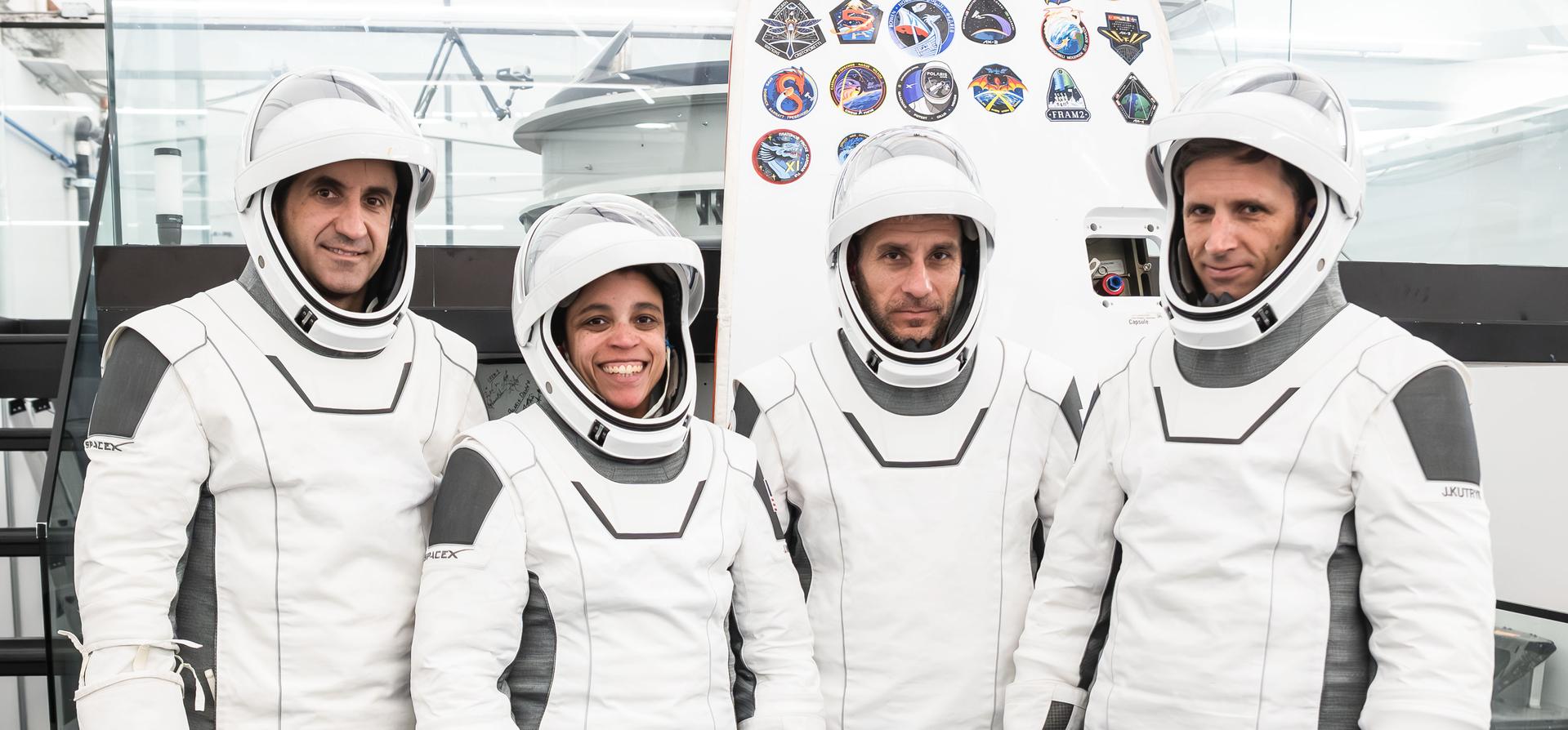
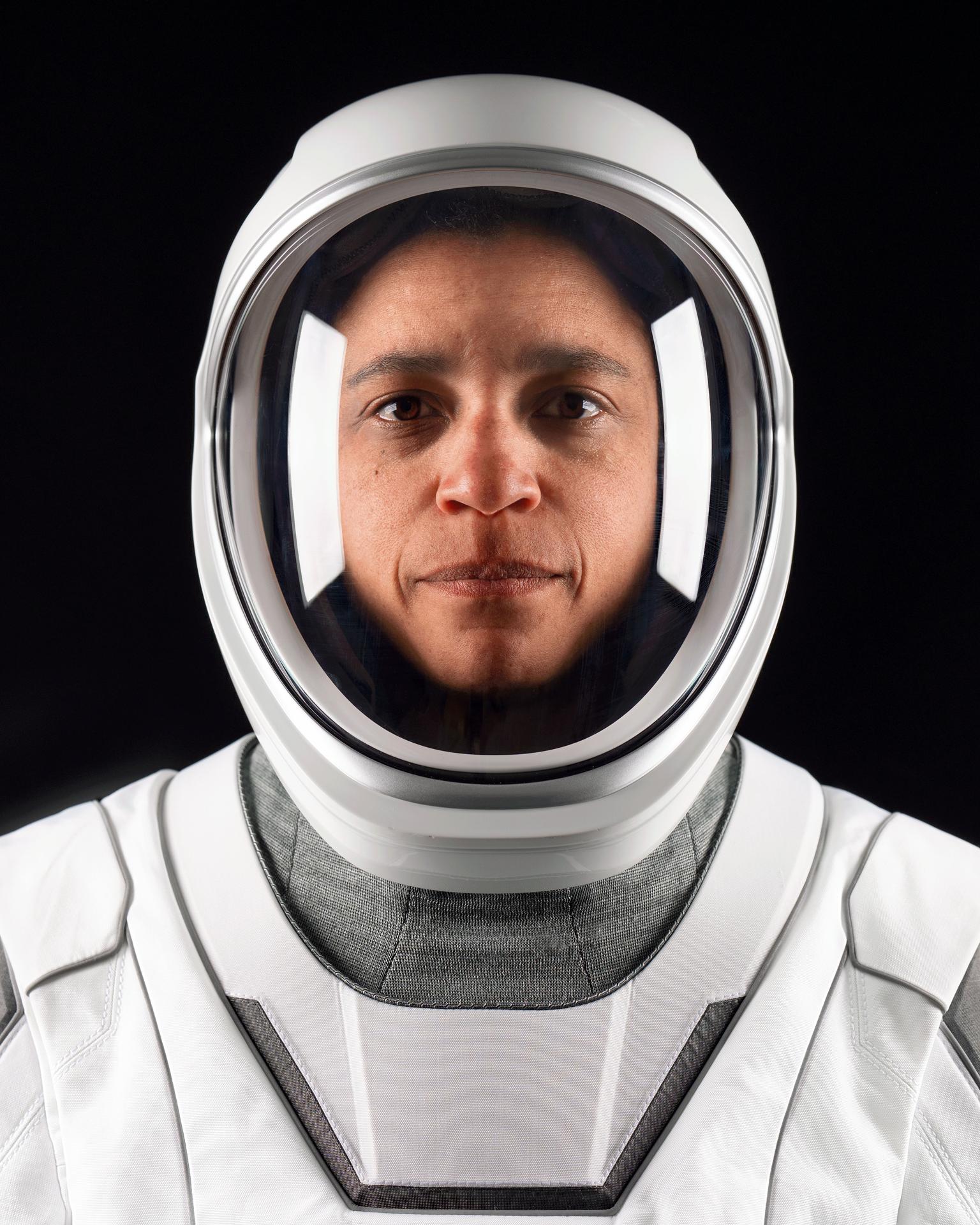
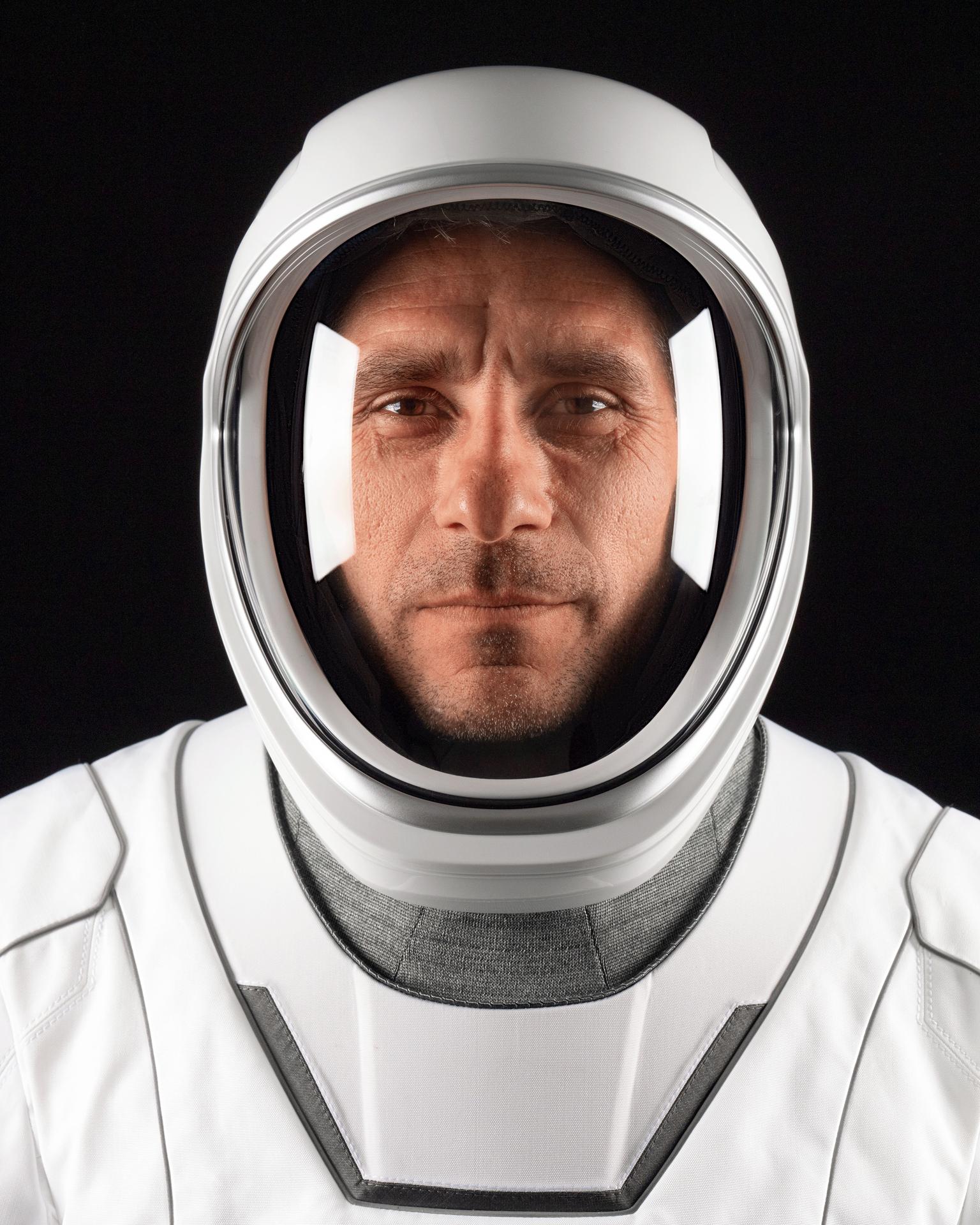
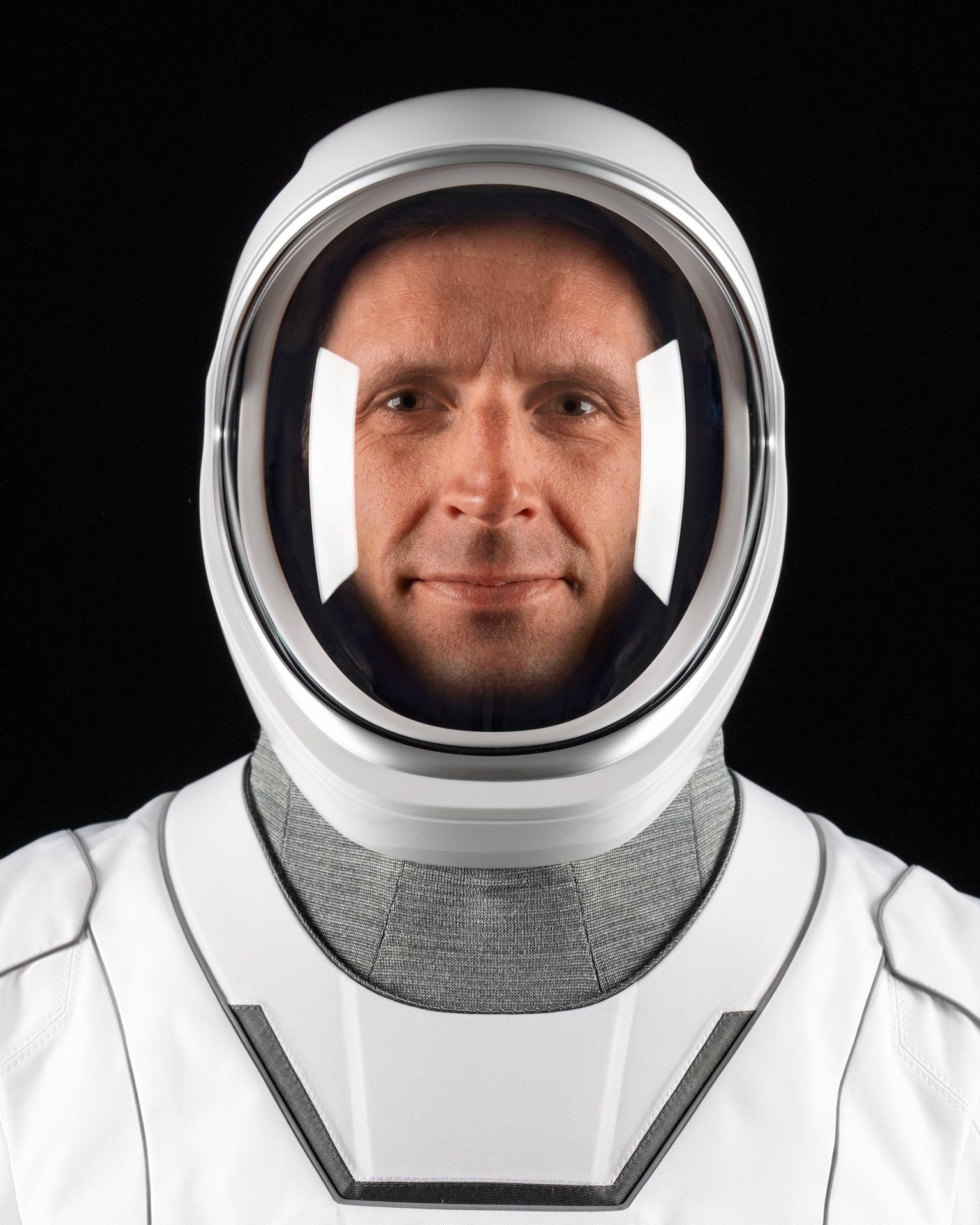
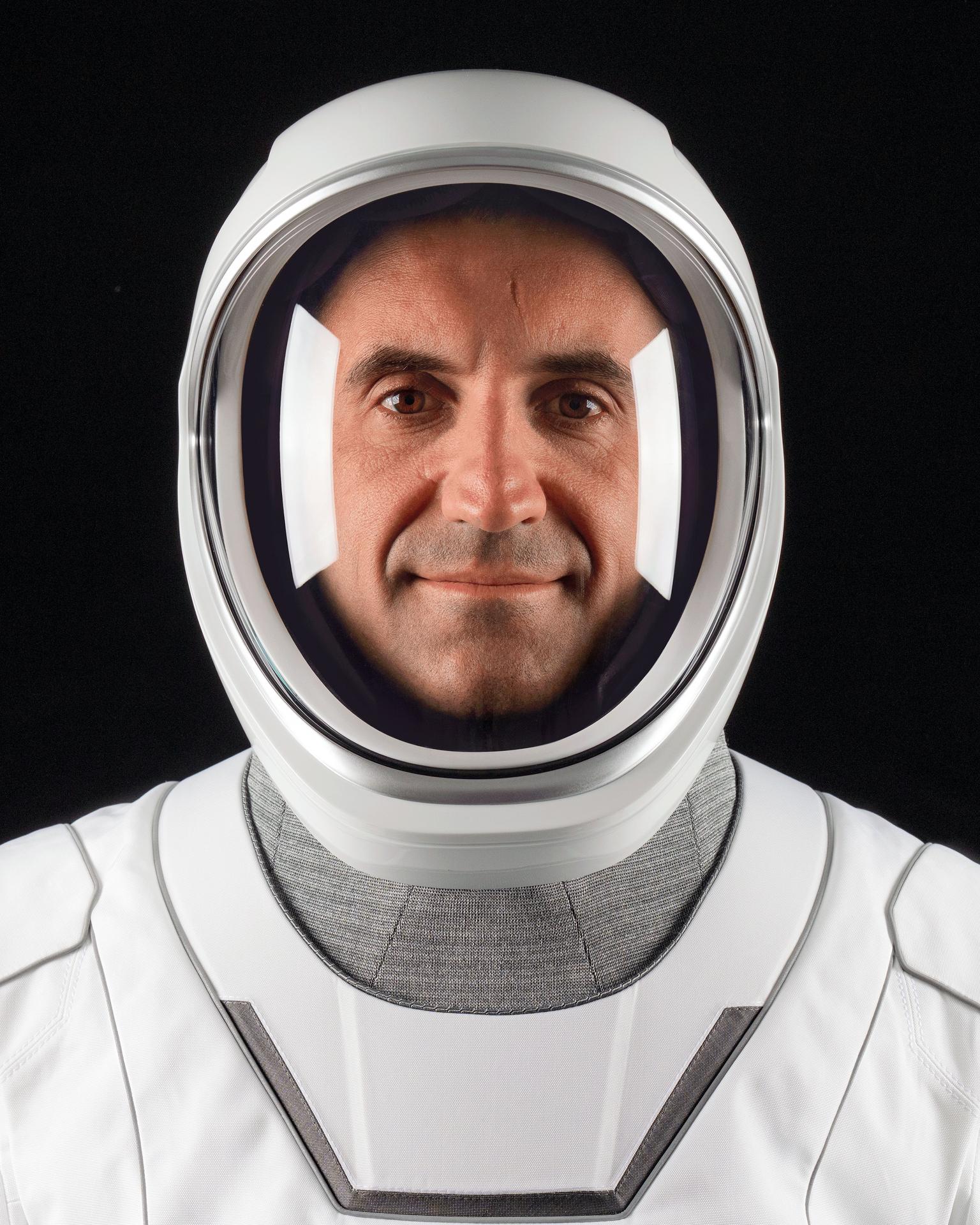
The SpaceX Crew-13 members pose for a portrait in their pressure suits during a preflight training session at the company’s headquarters in Hawthorne, California. From left are, Roscosmos cosmonaut Sergey Teteryatnikov, NASA astronauts Jessica Watkins and Luke Delaney, and CSA (Canadian Space Agency) astronaut Joshua Kutryk.
SpaceX
Four crew members are set to launch to the International Space Station as part of NASA’s SpaceX Crew-13 mission to perform research, technology demonstrations, and maintenance aboard the orbiting laboratory.
NASA astronauts Jessica Watkins and Luke Delaney will support the mission as spacecraft commander and pilot, respectively, joined by CSA (Canadian Space Agency) astronaut Joshua Kutryk and Roscosmos cosmonaut Sergey Teteryatnikov as mission specialists. Crew-13 will lift off no earlier than 11:10 a.m. EDT, Thursday, Oct. 1, from Space Launch Complex 40 at Cape Canaveral Space Force Station in Florida and join the space station’s Expedition 75 crew. Throughout its long‑duration mission, the crew will conduct science experiments to advance research and technology for future Moon and Mars missions and improve life on Earth.
“During the mission, the crew will help researchers treat heart disease and Parkinson’s disease by studying human stem-cell derived tissues that can help improve medicine, disease modeling, and pharmaceutical testing,” said Dana Weigel, manager of NASA’s Low Earth Orbit Program at the agency’s Johnson Space Center in Houston. “They also will explore crop production, which is important for longer-duration spaceflight missions, help us better understand blood flow abnormalities that we see in space, and test new diagnostic medical equipment for monitoring crew health.”
The flight is the 13th crew rotation mission with SpaceX to the space station as part of NASA’sCommercial Crew Office.
Support teams continue to progress through Dragon preflight milestones for Crew-13 and are preparing a SpaceX Falcon 9 rocket booster for its third flight. Up in orbit, NASA’s SpaceX Crew-12 is preparing to return to Earth after a brief handover once Crew-13 arrives.
After all rocket and spacecraft system checkouts are complete and all components are certified, teams will mate Dragon to Falcon 9 in SpaceX’s hangar at the launch site. The integrated spacecraft and rocket will then roll to the pad, where it will be raised vertically for a dry dress rehearsal with the crew and an integrated static fire test before launch.
The quartet will fly aboard a SpaceX Dragon spacecraft named Grace. This spacecraft previously flew in summer 2025 in support of private astronaut mission Axiom Mission 4.
Meet Crew-13
Commander Jessica Watkins
NASA astronaut Jessica Watkins, commander of NASA’s SpaceX Crew-13 mission to the International Space Station, poses for a portrait in her pressure suit at SpaceX headquarters in Hawthorne, California.
SpaceX
This will be the second flight to the space station for Watkins, who was selected as a NASA astronaut in 2017. She grew up in Lafayette, Colorado, and earned an undergraduate degree in geological and environmental sciences from Stanford University, as well as a doctorate in geology from the University of California, Los Angeles. As a geologist, Watkins studied the Martian surface and was a member of the Curiosity rover science team at NASA’s Jet Propulsion Laboratory in Southern California. She first launched to the space station aboard NASA’s SpaceX Crew-4 mission, spending a total of 170 days in space across Expeditions 67/68 in 2022. She will be the first NASA astronaut to launch twice aboard a SpaceX Dragon spacecraft. Follow Jessica on X and Instagram.
Pilot Luke Delaney
NASA astronaut Luke Delaney, pilot of NASA’s SpaceX Crew-13 mission to the International Space Station, poses for a portrait in his pressure suit at SpaceX headquarters in Hawthorne, California.
SpaceX
Selected as a NASA astronaut in 2021, Delaney earned a bachelor’s degree in mechanical engineering at the University of North Florida and a master’s degree in aerospace engineering at the Naval Postgraduate School. The Florida native is a distinguished naval aviator who participated in exercises throughout the Asia-Pacific region and flew missions in support of Operation Enduring Freedom. As a test pilot, Delaney evaluated developmental aircraft systems and served as a test pilot instructor. He also worked as a research pilot at NASA’s Langley Research Center in Hampton, Virginia, where he supported airborne science missions. This is Delaney’s first spaceflight.
Mission Specialist Joshua Kutryk
CSA (Canadian Space Agency) astronaut Joshua Kutryk, mission specialist of NASA’s SpaceX Crew-13 mission to the International Space Station, poses for a portrait in his pressure suit at SpaceX headquarters in Hawthorne, California.
SpaceX
The Crew-13 mission also is the first spaceflight for Kutryk. Prior to his selection as a CSA astronaut in 2017, he served as a CF-18 fighter pilot, flying missions in support of Canada’s NATO, U.N., and North American Aerospace Defense Command commitments. A native of Fort Saskatchewan, Alberta, Kutryk worked as an experimental and operational test pilot at the Aerospace Engineering Test Establishment in Cold Lake, Alberta. Kutryk received a bachelor’s degree in mechanical engineering from the Royal Military College of Canada in Kingston, Ontario, and is a distinguished graduate of the United States Air Force Test Pilot school in Edwards, California. He has master’s degrees in space studies, flight test engineering, and defense studies. Follow Josh on X and Instagram.
Mission Specialist Sergey Teteryatnikov
Roscosmos cosmonaut Sergey Teteryatnikov, mission specialist of NASA’s SpaceX Crew-13 mission to the International Space Station, poses for a portrait in his pressure suit at SpaceX headquarters in Hawthorne, California.
SpaceX
This mission will be Teteryatnikov’s first trip to the orbiting laboratory. He graduated from the Naval Academy, St. Petersburg, Russia, in 2011 as an engineer specializing in ship power plant operations. Before his selection as a test cosmonaut, Teteryatnikov served in various naval engineering roles, including undersea vessels and specialized engine room operations. He was selected for the Gagarin Research and Test Cosmonaut Training Center Cosmonaut Corps in 2021 and has served as a test cosmonaut since 2023.
Mission Overview
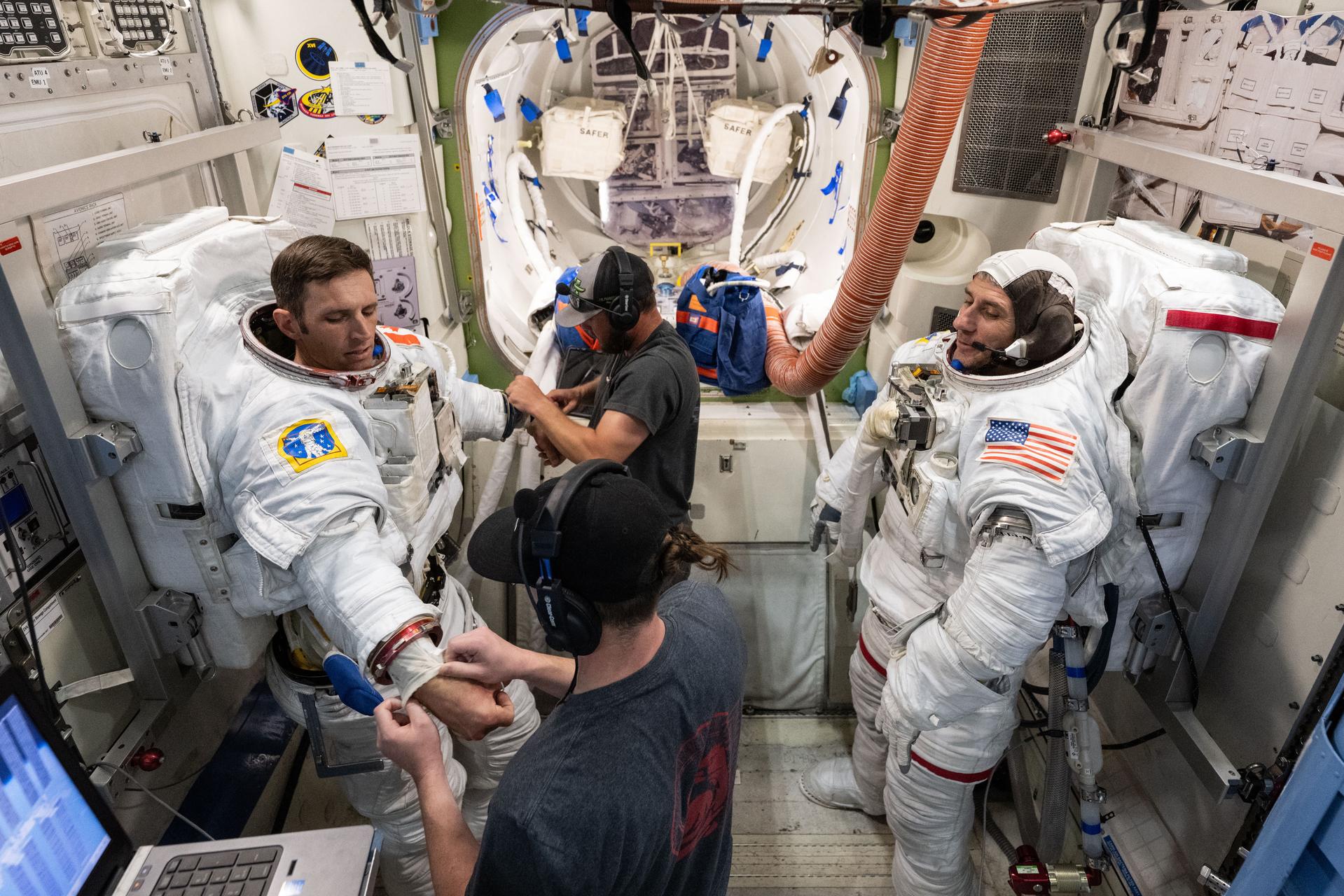
CSA (Canadian Space Agency) astronaut Josh Kutryk (left) and NASA astronaut Luke Delaney (right), with assistance from training specialists, practice suiting up in spacesuits in an International Space Station airlock simulator at Johnson Space Center’s (JSC) Space Vehicle Mockup Facility in Houston, Texas. Astronauts familiarize themselves with spacesuit systems and procedures and practice Quest airlock operations before conducting spacewalk training at JSC’s Neutral Buoyancy Laboratory in simulated microgravity.
NASA/Josh Valcarcel
Following liftoff, Falcon 9 will accelerate Dragon to approximately 17,500 mph. Once in orbit, the crew, along with NASA and SpaceX mission control, will monitor a series of maneuvers guiding Dragon to the forward-facing port of the station’s Harmony module. The spacecraft is designed to dock autonomously, but the crew can take manual control if necessary.
After docking, Crew-13 will be welcomed aboard the station by the seven-member Expedition 75 crew, including NASA astronauts Jessica Meir, Anil Menon, and Jack Hathaway, ESA (European Space Agency) astronaut Sophie Adenot, and Roscosmos cosmonauts Pyotr Dubrov, Andrey Fedyaev, and Anna Kikina. After a short handover period, the crew will bid farewell to the Dragon spacecraft carrying NASA’s SpaceX Crew-12 crew of Meir, Hathaway, Adenot, and Fedyaev.
While aboard the orbiting laboratory, Crew-13 will welcome NASA’s SpaceX’s 35th commercial resupply mission in the fall for station resupply and the delivery of International Space Station Roll-Out Solar Arrays. The crew also will welcome NASA’s Northrop Grumman Commercial Resupply Services-25 mission later this year.
For more than 25 years, people have lived and worked continuously aboard the International Space Station, advancing scientific knowledge and making research breakthroughs not possible on Earth. The space station helps NASA understand and overcome the challenges of human spaceflight, expand commercial opportunities in low Earth orbit, and build on the foundation for long-duration missions to the Moon, as part of the Artemis program, and to Mars.
Learn more about the space station, its research, and crew, at:

 Login