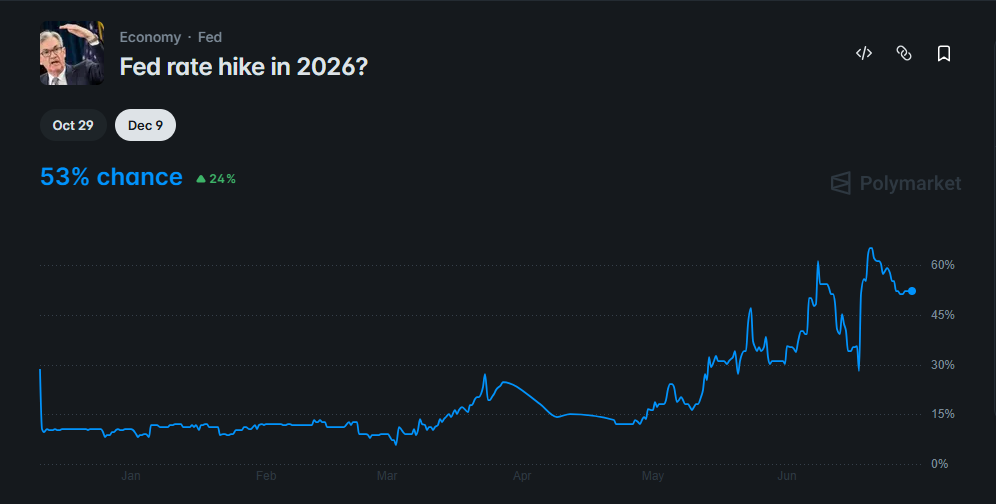
Kalshi settles bets with a rulebook and a person applying it. Polymarket settles them with a token-holder vote. World settles them with a data feed, no panel, no dispute window, nobody to call. Three live models now, and each one fails differently.
Chainlink has expanded its CCIP infrastructure across Avalanche and Polygon, adding a cross-chain token standard designed to make programmable token transfers cleaner between the two networks.
That sounds technical, and it is. But the point is simple enough: crypto still has a cross-chain problem.
Users and developers want assets to move across ecosystems without relying on fragile wrappers, one-off bridges, or awkward liquidity routes. Chainlink’s Cross-Chain Interoperability Protocol is one of the infrastructure bets trying to solve that, and this Avalanche-to-Polygon deployment gives developers another route for moving tokens between major networks.
It is not a LINK price story. It is a plumbing story. And in crypto, plumbing often matters more than the headline suggests.
For more details, visit the official Blog platform.
TL;DR
Chainlink CCIP has expanded cross-chain token infrastructure across Avalanche and Polygon.
The integration is designed around programmable token transfers.
The story is about interoperability infrastructure, not a LINK price prediction.
Why Cross-Chain Tokens Are Still Hard
Crypto is multi-chain now, whether anyone likes it or not.
Ethereum, Avalanche, Polygon, Solana, BNB Chain, Arbitrum, Optimism, Sui, and dozens of other networks all have their own liquidity, apps, users, and developer communities. That creates opportunity, but it also creates friction.
Assets do not naturally move between chains.
Historically, users have relied on bridges, wrapped assets, liquidity pools, and third-party routing systems. Some work well. Some are clunky. Some have been hacked. Some create confusing versions of the same token across different networks.
That is the mess Chainlink CCIP is trying to tidy up.
Avalanche And Polygon Are Natural Targets
Avalanche and Polygon both sit in the part of crypto where interoperability actually matters.
Avalanche has leaned into subnets, institutional deployments, and app-specific blockchain infrastructure. Polygon has built around Ethereum scaling, consumer apps, and broad EVM compatibility. If assets and messages can move more safely between networks like these, developers get more room to build products that are not trapped inside one ecosystem.
That is the real attraction.
A token does not need to live in one place forever. A user does not need to care which chain is under the hood if the experience is smooth enough. A developer does not need to choose between ecosystems if infrastructure can connect them safely.
That is the dream, anyway.
Wrapper Risk Is The Thing Everyone Remembers
Bridge risk has been one of crypto’s ugliest lessons.
Some of the largest hacks in the industry have come from cross-chain infrastructure. The reason is obvious: bridges hold or control a lot of value, and if the security model breaks, the losses can be huge.
That is why any system promising safer cross-chain token movement gets attention.
The Chainlink CCIP model is meant to reduce reliance on fragile wrapper structures and give projects a more standardized framework. That does not mean every implementation is risk-free. It means developers have another infrastructure option that is designed specifically for cross-chain transfer logic.
In a market full of custom bridges, that standardization matters.
Do Not Overread The Token Impact
It is tempting to turn every Chainlink integration into a LINK price catalyst.
That is too simple.
More integrations can support Chainlink’s infrastructure narrative, but token impact depends on usage, fees, staking design, payment flows, broader market demand, and whether developers actually build meaningful activity on top of the deployment.
The operational news is strong enough on its own.
Chainlink is continuing to push CCIP into major ecosystems. That helps keep it relevant as crypto becomes more fragmented.
The Market View
This Avalanche and Polygon integration is another sign that cross-chain infrastructure is becoming a serious battleground.
The winners may not be the loudest chains. They may be the networks and protocols that make it easier for users and developers to move without thinking too much about what is happening underneath.
That is where CCIP wants to sit.
If the standard gains traction, Chainlink could become more deeply embedded in the movement of assets across chains. For now, the update gives developers on Avalanche and Polygon another tool for building cross-chain token systems with fewer moving parts.
This article draws on Chainlink’s CCIP integration materials.
This article was written by the News Desk and edited by Samuel Rae.
This report is based on information released by Blog. at Blog
Chainlink has recorded nine new integrations across five blockchains in its latest weekly ecosystem update, adding another set of deployments to its oracle and infrastructure network.
The update covers integrations across multiple services and chains, reinforcing Chainlink’s role as one of crypto’s main data and interoperability providers.
This is not a LINK price prediction.
It is an operational development story. More integrations show that protocols continue to use Chainlink infrastructure, but they do not automatically translate into immediate token price movement.
For more details, visit the official Blog platform.
TL;DR
Chainlink recorded nine integrations across five blockchains.
The update spans multiple services and ecosystem deployments.
The news should be framed as infrastructure adoption, not LINK price speculation.
Why Integrations Matter For Chainlink
Chainlink’s business is infrastructure.
Protocols use its services for price feeds, data, automation, proof-of-reserve, cross-chain messaging, and other functions that smart contracts cannot reliably handle alone.
That means integrations are a useful activity signal.
Each new integration shows another application or network choosing Chainlink’s infrastructure layer. One integration may be small. But repeated integration updates can show that Chainlink remains embedded across the market.
That is important in a multi-chain environment.
Five Blockchains Shows Breadth
The five-chain spread matters because crypto is no longer centered on one network.
Applications launch across Ethereum, L2s, alternative L1s, appchains, and specialized ecosystems. Infrastructure providers need to support that fragmentation.
Chainlink’s multi-chain reach is one of its main strengths.
If developers can access familiar oracle services across different environments, it lowers the friction of building across chains. That helps Chainlink remain relevant even as liquidity and users move between ecosystems.
Lending markets need asset prices. Derivatives platforms need settlement references. RWAs need off-chain valuations. Stablecoin systems may need reserve or price data. Automated strategies need triggers.
Without reliable oracles, many DeFi products cannot work safely.
That is why Chainlink’s integration updates matter even when they do not sound flashy. They show the continued buildout of the data layer that many applications rely on.
Do Not Overstate Token Impact
The market often tries to connect every integration directly to LINK.
That is too simple.
Integrations may increase usage, but token impact depends on fee models, staking design, payment flows, demand for LINK, broader market conditions, and how the services are monetized.
The operational signal is real. The immediate price conclusion is not automatic.
That is the careful way to read the update.
What Comes Next
The next question is whether these integrations drive meaningful activity.
A deployment becomes more important when it supports real liquidity, large user bases, high-value assets, or essential infrastructure. Integration count is useful, but usage depth matters more.
Still, Chainlink continues to show breadth.
Nine integrations across five blockchains is another reminder that oracle and data infrastructure remain central to crypto’s growth.
For LINK holders and DeFi builders, the signal is steady rather than explosive: Chainlink remains deeply woven into the multi-chain application stack.
This article is based on Chainlink’s latest weekly integration update.
This article was written by the News Desk and edited by Samuel Rae.
This report is based on information released by Blog. at Blog
Charles Schwab is expanding its crypto platform beyond Bitcoin and Ethereum, adding support for Solana, Avalanche, and Chainlink exposure, according to validated platform materials.
The move is notable because Schwab is not a crypto-native exchange. It is one of the largest brokerage names in US finance, and its product decisions can shape how traditional investors access digital assets.
The expansion suggests that regulated investor demand is moving beyond the two largest crypto assets.
Bitcoin and Ethereum remain the core institutional products. But Solana, Avalanche, and Chainlink are now being treated as liquid enough, recognizable enough, or strategically relevant enough to enter the next layer of brokerage crypto access.
For more details, visit the official Schwab platform.
TL;DR
Charles Schwab is expanding crypto access beyond Bitcoin and Ethereum.
Solana, Avalanche, and Chainlink are being added to the platform.
The move should not be described as a spot ETF launch or custody approval unless Schwab’s materials say so.
Why Schwab Matters
Schwab brings traditional-market credibility.
When a major brokerage expands crypto access, it can lower the barrier for investors who do not want to use offshore exchanges, self-custody, or complex wallet setups. That matters because many investors prefer familiar account infrastructure.
Schwab’s move also helps normalize crypto as a broader asset class.
Bitcoin and Ethereum were the obvious starting points. Adding more assets suggests the platform sees demand for exposure beyond BTC and ETH.
That is a meaningful shift.
Solana, Avalanche And Chainlink Offer Different Narratives
The three added assets are not interchangeable.
Solana is a high-throughput smart contract network with a large retail and DeFi ecosystem. Avalanche has focused heavily on subnets, institutional deployments, and tokenized asset infrastructure. Chainlink provides oracle and cross-chain data services used across many crypto applications.
Together, they give investors exposure to different parts of the digital asset market.
That may be the point. A broader platform can let investors express views on smart contracts, tokenization, infrastructure, and cross-chain data rather than only holding the two largest assets.
Not The Same As ETF Approval
The distinction is important.
Platform support does not mean the SEC has approved spot ETFs for all three assets. It does not necessarily mean Schwab is offering direct custody in every possible sense. The exact product structure matters.
Investors need to understand whether they are trading spot crypto, accessing exposure through a specific wrapper, or using another product type.
The headline is access expansion. The details determine what kind of access.
Brokerage Distribution Could Shape Altcoin Demand
If major brokerage platforms keep expanding crypto menus, the altcoin market could change.
Many investors currently access smaller crypto assets through exchanges. Brokerage access could bring a different kind of buyer: retirement-account investors, advisory clients, portfolio allocators, and retail traders who prefer traditional platforms.
That may increase liquidity and visibility for supported assets.
But it may also create a sharper divide. Assets supported by major brokerages could gain legitimacy, while unsupported tokens may remain more purely crypto-native.
The Clean Read
Schwab’s expansion is another sign that crypto access is moving into mainstream financial platforms.
Bitcoin and Ethereum are no longer the whole conversation. Solana, Avalanche, and Chainlink are being pulled into the next wave of brokerage-supported digital asset exposure.
The move does not settle regulatory questions. It does not guarantee demand. It does not turn every altcoin into an institutional asset.
But it does show that one of the biggest names in brokerage is willing to widen the digital asset menu.
That matters for the market’s next phase.
This article is based on Charles Schwab platform materials and related public information.
This article was written by the News Desk and edited by Samuel Rae.
This report is based on information released by Schwab. at Schwab
NUVA has integrated Chainlink data feeds to support pricing infrastructure for real estate-backed DeFi and tokenized asset products.
The integration, announced on August 24, is designed to provide decentralized pricing data for tokenized real estate assets. That can help users trade fractional real estate exposure with on-chain oracle verification.
This is a technical infrastructure integration.
It does not mean real estate tokenization has achieved broad retail adoption. It means a platform building in the RWA category is adding Chainlink data infrastructure to support its product design.
TL;DR
NUVA integrated Chainlink data feeds for real estate-backed tokenization.
The integration supports decentralized pricing data.
The development is infrastructure-focused, not proof of mass RWA adoption.
Why Real Estate Needs Reliable Data
Real estate tokenization depends on trustworthy pricing.
Unlike liquid crypto assets, real estate does not trade continuously on public exchanges. Valuations can depend on appraisals, market comps, income streams, geography, liquidity, and legal structure.
That makes oracle infrastructure important.
If tokenized real estate assets trade on-chain, users need confidence that pricing data is reliable, timely, and resistant to manipulation. Without that, DeFi products built around real estate collateral can become fragile.
Chainlink’s role is to provide a data layer that helps support those markets.
RWA Tokenization Is Becoming More Specific
Real-world asset tokenization used to be discussed in broad terms.
Now the category is breaking into more specific product types: tokenized Treasuries, private credit, real estate, money-market funds, equities, bonds, invoices, and commodities.
Each category has different data needs.
Real estate is especially complex because assets are less liquid and less standardized than securities or Treasury bills. That makes infrastructure choices more important.
NUVA’s Chainlink integration is one piece of that stack.
Chainlink Keeps Expanding Beyond Price Feeds
Chainlink is best known for crypto price feeds, but its infrastructure is increasingly used across tokenization and off-chain data use cases.
For RWA platforms, the appeal is not only token pricing. It is the ability to connect external data to smart contracts in a way that DeFi applications can use.
That can include prices, proof of reserves, asset values, interest rates, and other reference data.
As tokenized assets grow, oracle networks become more important because they sit between real-world information and on-chain execution.
Do Not Overstate Adoption
The careful framing is important.
An oracle integration is not the same as mass adoption. It does not prove that retail users are widely trading tokenized real estate. It does not guarantee liquidity or regulatory success.
It does show that RWA builders are continuing to assemble the infrastructure needed for more usable products.
That is still worth covering.
Tokenization cannot scale without reliable pricing, compliance, custody, and settlement infrastructure. Data feeds are one part of that foundation.
What Comes Next
The next question is whether NUVA’s products attract meaningful users and liquidity.
If tokenized real estate assets begin trading actively with reliable pricing infrastructure, the integration becomes more important. If activity remains small, it stays a technical milestone.
For Chainlink, the development adds another RWA-related integration to its ecosystem.
For NUVA, it strengthens the infrastructure behind its real estate tokenization model.
The broader takeaway is that RWA tokenization is moving from narrative to plumbing. The less glamorous data layer may decide how much of the market actually works.
Chainlink has announced 12 new integrations across 10 blockchains, adding another weekly update to its growing cross-chain data and infrastructure footprint.
The integrations span DeFi, liquidity, and data services, according to Chainlink’s update. The development reinforces Chainlink’s position as one of the most widely used oracle and infrastructure networks in crypto.
That does not mean LINK’s price must move.
This is an operational development story, not a price prediction. The point is that Chainlink continues to expand its network reach across multiple ecosystems.
TL;DR
Chainlink announced 12 new integrations across 10 blockchains.
The integrations cover DeFi, liquidity, and data services.
The update should be framed as infrastructure growth, not LINK price speculation.
Why Integrations Matter
Oracle networks live or die by usage.
Chainlink’s value to developers comes from the reliability and breadth of its data, automation, cross-chain, and infrastructure services. Each new integration adds another example of a protocol depending on Chainlink infrastructure.
That matters because crypto applications need external information.
Lending markets need prices. Perpetuals need market data. RWAs need off-chain references. Cross-chain applications need messaging. Automated systems need triggers. Chainlink has spent years positioning itself as the connective layer for those needs.
A weekly integration update is not dramatic by itself, but the accumulation matters.
Multi-Chain Reach Is The Main Signal
The 10-chain spread is important.
Crypto is increasingly multi-chain. Applications no longer build only on Ethereum or one L2. Liquidity, users, and protocols are spread across many networks. Infrastructure providers need to support that reality.
Chainlink’s cross-chain presence helps it stay relevant across ecosystems.
If a new DeFi protocol launches on a newer chain, it still needs trusted data. If a tokenized asset platform expands to another network, it still needs pricing and verification. Chainlink wants to be the default provider for those needs.
DeFi Still Depends On Oracles
DeFi remains one of the clearest use cases for oracle infrastructure.
Lending protocols, derivatives platforms, synthetic assets, structured products, and automated vaults all require accurate and timely data. Bad oracle data can lead to bad liquidations, wrong pricing, and user losses.
That is why oracle reputation matters.
Protocols tend to choose infrastructure providers with track records, broad integrations, and battle-tested systems. Chainlink’s continued integration flow helps maintain that reputation.
Do Not Overstate The Market Impact
It is tempting to turn every Chainlink integration update into a token-price story.
That would be the wrong framing.
Integrations can support long-term network utility, but they do not automatically create immediate price movement for LINK. Token economics, fee capture, staking demand, market sentiment, and broader liquidity all matter.
The clean read is operational.
More protocols are using Chainlink services across more chains. That strengthens the infrastructure narrative, but it is not a guarantee of market performance.
What Comes Next
The next thing to watch is depth, not just count.
Twelve integrations sound good, but the market will want to know which ones drive meaningful usage, fees, liquidity, or developer adoption. A small integration and a major protocol integration are not equal.
Still, breadth has value.
Chainlink’s ability to keep adding integrations across many networks shows that its infrastructure remains in demand. As crypto becomes more multi-chain and data-dependent, that role may become even more important.
For now, the latest update adds another layer to Chainlink’s infrastructure story: more chains, more integrations, and continued relevance across the DeFi stack.
Nethermind has ended its role as a LayerZero Decentralized Verifier Network participant and moved its cross-chain node operations to Chainlink CCIP.
The Ethereum engineering firm will now operate as a Chainlink CCIP node operator. That makes the move significant, but it should be framed carefully.
This is not proof that LayerZero is collapsing. It is not proof that Chainlink has replaced LayerZero across the whole market. It is one major infrastructure provider choosing to align its cross-chain operations with CCIP.
Still, infrastructure decisions like this matter because cross-chain security is one of crypto’s most sensitive areas.
TL;DR
Nethermind has ceased its LayerZero DVN role.
The firm is moving cross-chain node operations to Chainlink CCIP.
The move reflects one provider’s infrastructure choice, not a full market-wide replacement of LayerZero.
Why Nethermind’s Move Matters
Nethermind is not a random validator.
It is a well-known Ethereum engineering firm with experience across client development, infrastructure, research, and protocol operations. When a firm like that changes its cross-chain infrastructure alignment, the market pays attention.
Cross-chain systems depend heavily on trust assumptions.
Users and developers need to know who is verifying messages, what security model is being used, and how failure modes are handled. Node operators and verifier networks are part of that trust stack.
Nethermind moving to Chainlink CCIP adds another recognizable name to CCIP’s operator set.
Chainlink CCIP Keeps Building Institutional Credibility
Chainlink has positioned CCIP as a cross-chain messaging and interoperability standard with a center on security and institutional use cases.
Adding Nethermind supports that pitch.
A stronger node operator set can help CCIP compete for projects that want cross-chain connectivity but are wary of bridge risks. After years of bridge hacks and cross-chain failures, security branding matters.
For Chainlink, the move is another piece of infrastructure credibility.
The more reputable operators join CCIP, the easier it becomes for protocols, enterprises, and public-sector projects to treat it as a serious option.
LayerZero Still Remains A Major Player
The market should not turn this into a winner-takes-all story.
LayerZero remains one of the most prominent cross-chain messaging protocols in crypto. Nethermind leaving its verifier role is meaningful, but it does not mean every project will follow, or that LayerZero no longer has demand.
Cross-chain infrastructure is still competitive.
Different projects may choose different systems based on security assumptions, cost, integration, governance, speed, liquidity, and ecosystem relationships.
Nethermind’s move says something about its own priorities. It does not settle the whole market.
Cross-Chain Security Is Under More Scrutiny
This shift also reflects a bigger trend.
Projects are becoming more careful about cross-chain risk. Bridges and messaging systems can become high-value targets. A failure can affect multiple chains and protocols at once. That makes verifier design, node operators, risk controls, and emergency procedures critical.
Infrastructure providers need to prove they can handle that responsibility.
Nethermind’s move toward CCIP suggests the firm sees Chainlink’s model as a better fit for its cross-chain operations.
What Comes Next
The next signal will be whether other major operators make similar moves.
If more infrastructure providers leave alternative verifier roles and join CCIP, Chainlink’s cross-chain position strengthens. If the market remains split, then this becomes one notable migration inside a broader multi-protocol landscape.
For now, the move is meaningful but not absolute.
Nethermind has chosen Chainlink CCIP for its cross-chain node operations. That gives CCIP another credibility boost, while keeping the wider interoperability race very much alive.
On-chain data tracked through Arkham shows a Chainlink whale moving 800,000 LINK, worth roughly $6.8 million, from Coinbase into custody on July 30.
The validated notes say the transfer brought the receiving wallet’s total holdings to 5.315 million LINK, valued at more than $44 million. Chainlink’s spot market, meanwhile, has been consolidating below the $9 level.
That makes this a classic whale story: interesting, but easy to overread.
A large LINK transfer can point to accumulation, custody management, institutional positioning, or a simple wallet reorganization. It does not automatically mean a breakout is coming.
Still, when a wallet this large adds to its holdings during consolidation, Chainlink traders pay attention.
Arkham data shows a whale moving 800,000 LINK from Coinbase to custody.
The receiving wallet reportedly holds 5.315 million LINK after the transfer.
The move is notable, but it does not guarantee price direction.
Why Exchange Withdrawals Get Attention
Crypto traders often watch exchange withdrawals because they can suggest assets are moving into longer-term custody.
If tokens leave an exchange, they may be less immediately available for sale. That can be read as a bullish signal, especially when the transfer is large and the asset is consolidating.
But the interpretation is never automatic.
A withdrawal might be internal custody. It might be a fund moving assets between accounts. It might be collateral management. It might be preparation for OTC activity. It might simply reflect security preferences.
That is why the safest framing is that the transfer shows large-holder activity, not guaranteed accumulation.
In Chainlink’s case, the size is large enough to matter, but not enough to decide the market by itself.
Chainlink’s Market Still Needs A Catalyst
LINK has long been one of crypto’s most important infrastructure tokens because Chainlink sits at the center of oracle services, data feeds, proof-of-reserve tools, cross-chain messaging, and institutional data integrations.
But infrastructure importance does not always translate neatly into token momentum.
The market still asks familiar questions: how does usage affect token demand, how much value accrues to LINK, and whether new integrations create stronger economics for holders.
A whale moving 800,000 LINK into custody can add interest, but it does not answer those questions.
For LINK to move decisively, traders usually need either stronger market-wide conditions, clear Chainlink-specific catalysts, or a technical breakout backed by volume.
The Wallet Size Is The Interesting Part
The receiving wallet’s reported total of 5.315 million LINK is what makes the story stand out.
A wallet holding more than $44 million worth of LINK is not a casual retail account. Large wallets can influence sentiment because traders assume the holder may have more information, deeper conviction, or a longer time horizon.
Sometimes that assumption is wrong.
Whales can be wrong, too. They can hedge elsewhere, rebalance, or move assets for reasons invisible to outside observers.
Still, large-holder movements are part of the market’s information layer. They do not prove the future, but they show where capital is moving.
Custody Is Becoming A Bigger Theme
The Coinbase-to-custody element is also relevant.
As crypto matures, more large holders are moving assets through institutional custody systems rather than leaving balances exposed on trading venues. That can be about security, compliance, reporting, or internal controls.
For Chainlink, a custody movement may therefore say as much about holder profile as it does about market direction.
If larger investors are holding LINK through more formal custody routes, that fits the broader institutionalization of crypto infrastructure assets. But again, one transaction is not enough to make a sweeping claim.
The move is notable because of size and timing, not because it guarantees a new trend.
A Measured Signal For LINK Traders
The correct read is simple.
A large wallet moved 800,000 LINK from Coinbase into custody while LINK was consolidating below $9. The receiving wallet is now much larger, and traders will naturally watch whether more similar movements follow.
If additional whale withdrawals appear, the accumulation narrative becomes stronger. If the market fails to respond or the wallet later moves tokens back to exchanges, the signal weakens.
For now, this is a clean on-chain event with limited but real market relevance.
Chainlink remains one of crypto’s most important infrastructure networks. Whether that turns into near-term price momentum is a separate question.
This article is based on Arkham-linked on-chain data covering the 800,000 LINK transfer from Coinbase custody channels.
This article was written by the News Desk and edited by Samuel Rae.
This report is based on information released by Arkhamintelligence. at Arkhamintelligence
United Stables Crosses $1B As stablecoin“>Chainlink Data Feeds Secure U Token Collateral
United Stables’ U token has crossed $1 billion in market capitalization, with Chainlink Data Feeds providing pricing and collateral data infrastructure across its deployment chains.
The milestone matters because stablecoins are becoming one of the clearest areas where oracle infrastructure is not optional. A dollar token needs users to trust its collateral, pricing, and redemption assumptions. If those data points are weak or opaque, the stablecoin becomes harder to integrate into DeFi.
Chainlink’s role here is to provide external data feeds that help support automated collateral auditing and pricing across the U stablecoin ecosystem.
That does not mean U’s growth directly creates guaranteed value for LINK holders. It does, however, show Chainlink continuing to sit close to one of crypto’s most important infrastructure categories: stablecoin collateral verification.
TL;DR
United Stables’ U token has passed $1 billion in market capitalization.
Chainlink Data Feeds are used for collateral and pricing infrastructure.
The milestone strengthens Chainlink’s stablecoin infrastructure narrative, but does not automatically imply LINK token fee growth.
Why Stablecoin Data Matters
Stablecoins are only as credible as the data behind them.
Users want to know whether a token is properly backed, whether collateral is priced correctly, and whether the system can handle market stress. DeFi protocols need that information too, especially if they accept a stablecoin as collateral or use it inside lending, trading, or liquidity pools.
A stablecoin can exist on-chain, but the value of its collateral may depend on off-chain or cross-chain information. If a protocol is using tokenized assets, reserves, or multi-chain collateral, it needs reliable data to keep the system aligned.
Chainlink has spent years building that role across DeFi.
The U token crossing $1 billion gives the market another example of stablecoin growth depending on data infrastructure rather than just issuance.
Chainlink’s Role Is Infrastructure, Not Hype
Chainlink’s strongest use case has always been infrastructure.
Price feeds, proof-of-reserve tools, cross-chain messaging, and data services are not always the loudest stories in crypto, but they are essential for serious financial applications. Stablecoins in particular need dependable data because they sit at the centre of trading and liquidity.
If a stablecoin grows quickly without strong data support, protocols may hesitate to list or integrate it.
By using Chainlink Data Feeds, United Stables is trying to provide a clearer foundation for collateral and pricing assumptions. That can make the U token easier for DeFi markets to evaluate.
The key point is that Chainlink is not making the stablecoin valuable by itself. It is providing part of the infrastructure that helps other systems interact with it more safely.
That distinction matters for readers and for LINK holders.
U’s Growth Shows Stablecoin Competition Is Widening
The stablecoin market is still dominated by the biggest names, but new issuers continue to find room.
A $1 billion market cap is not small. It suggests U has moved beyond a tiny experimental token and into a more serious liquidity category. The next question is whether that supply becomes active across DeFi, payments, or institutional flows.
Market cap alone is not enough.
A stablecoin can grow in supply but remain concentrated in a small number of wallets or protocols. The healthier signal is broad usage: trading volume, lending integrations, payment activity, and resilience during volatility.
That is what the market will watch next.
For United Stables, crossing $1 billion creates a credibility milestone. For Chainlink, the integration supports its case that stablecoin issuers need robust oracle infrastructure as they scale.
What LINK Holders Should And Should Not Read Into It
LINK holders will naturally pay attention to any stablecoin using Chainlink infrastructure.
That is reasonable. More integrations can strengthen Chainlink’s network position and reinforce its role as a default data layer for crypto finance. But the market should be careful not to overstate the direct token impact from one stablecoin milestone.
Using Chainlink Data Feeds does not automatically mean large fee accrual for LINK holders. The relationship between adoption, revenue, token economics, and price can be indirect.
The stronger takeaway is strategic.
Stablecoins are becoming more important, more regulated, and more infrastructure-dependent. Chainlink is positioning itself as a key provider for that environment. If more issuers rely on Chainlink for pricing, collateral, and reserve-related data, the network’s institutional relevance increases.
That is the real story here.
U crossing $1 billion is a stablecoin milestone. Chainlink’s role shows how much stablecoin growth now depends on reliable data infrastructure.
This article is based on Chainlink and DeFiLlama materials.
This article was written by the News Desk and edited by Samuel Rae.
This report is based on information released in official primary source disclosures at primary source documentation.
Chainlink CCIP Joins Central Bank Digital Asset Pilots
Chainlink’s Cross-Chain Interoperability Protocol is being used in central bank digital asset and tokenized settlement pilots, putting CCIP inside one of the more important institutional experiments in blockchain infrastructure.
The validated materials point to Chainlink’s role in pilots connected to Brazil’s Drex initiative and Hong Kong’s Ensemble network, as well as HKMA’s e-HKD+ work involving ANZ Bank’s A$DC. These are not commercial production systems. They are trials and experiments, but they matter because they show how public blockchain infrastructure concepts are being tested by regulated institutions.
For Chainlink, the significance is clear.
CCIP is being positioned as a cross-chain messaging and settlement layer for environments where security, interoperability, and compliance matter. Central bank pilots are exactly the kind of setting where those requirements are strict.
TL;DR
Chainlink CCIP is being used in central bank digital asset pilots.
The work involves experiments connected to Brazil’s Drex, Hong Kong’s Ensemble, and e-HKD+ initiatives.
These are trials, not full commercial production deployments.
Why Central Bank Pilots Matter
Central bank digital asset pilots are easy to dismiss because many never become full production systems.
But pilots still matter. They reveal what institutions are testing, which infrastructure models are being considered, and where the future of settlement may move.
In this case, the theme is interoperability.
A digital asset system is not very useful if it cannot interact with other networks, currencies, or settlement environments. Cross-border trade, tokenized deposits, CBDCs, stablecoins, and tokenized assets all require secure communication between systems.
That is where Chainlink CCIP enters the picture.
The protocol is designed to send messages and transfer value across chains. In institutional pilots, that capability can be used to test payment-versus-payment settlement, cross-border asset movement, and connectivity between different digital asset networks.
Drex, Ensemble, And e-HKD+
Brazil’s Drex project and Hong Kong’s Ensemble network are part of a broader institutional push to explore tokenized settlement.
Drex is Brazil’s digital real initiative, while Ensemble is Hong Kong’s tokenization sandbox. Connecting these types of systems can help test whether tokenized trade and payment flows can settle more efficiently across borders.
The e-HKD+ program adds another layer, especially with ANZ’s A$DC involvement.
Together, these pilots show that institutions are not only experimenting with isolated digital currencies. They are testing how different tokenized systems might communicate.
That is important because the future is unlikely to be one chain or one central bank system. It will probably involve many regulated networks, payment systems, asset platforms, and public or private settlement layers.
Interoperability is therefore not optional. It is core infrastructure.
Chainlink’s Institutional Push
Chainlink has spent years building beyond simple price feeds.
Oracles remain important, but the project’s broader institutional pitch now includes proof-of-reserve, cross-chain messaging, tokenized asset infrastructure, and secure data movement. CCIP is central to that push.
Central bank pilots help strengthen that positioning.
They show that Chainlink is being tested in environments where reliability and risk controls matter more than retail hype. That does not guarantee long-term adoption, but it gives the project credibility in a part of the market that moves slowly and carefully.
For LINK holders, the important question is whether these pilots eventually translate into durable usage.
Trials can generate headlines without creating sustained demand. Real production adoption is harder. It requires regulatory approval, technical integration, institutional coordination, and clear economic value.
That is why the article needs to stay measured.
Pilots Are Not Production
The biggest risk is overstating the status.
These are pilots and experiments. They do not mean central banks have adopted Chainlink for full-scale CBDC deployment. They do not mean every digital currency will use CCIP. They do not guarantee commercial revenue.
But they do matter.
Institutional blockchain adoption often begins with controlled trials. If the infrastructure performs well, it can move into deeper testing or more formal integration. If it fails, institutions move on.
Chainlink’s presence in these pilots puts it in the room for that process.
For the broader crypto market, this is another sign that tokenized settlement is becoming a serious institutional theme. The sector is moving beyond simple asset issuance toward questions of interoperability, cross-border settlement, and programmable financial infrastructure.
CCIP’s role in these pilots shows where Chainlink wants to sit in that future.
This article is based on Chainlink materials related to the Drex and digital asset pilot work.
This article was written by the News Desk and edited by Samuel Rae.
This report is based on information released by Chainlink. at Chainlink
Chainlink is drawing technical attention after chart analysis pointed to a bullish pennant forming on LINK, with buy volume beginning to recover as price compresses into a narrowing range.
The setup, shared by crypto analyst Gopal, suggests traders are watching for a breakout after a period of consolidation. A bullish pennant typically forms when price tightens after a strong move, with buyers and sellers compressing volatility before the next directional push.
For LINK, the pattern matters because Chainlink already has one of the stronger infrastructure narratives in crypto. The token is tied to oracles, data feeds, proof-of-reserve, cross-chain messaging, and institutional blockchain rails. When that fundamental narrative meets a clean technical setup, traders tend to pay attention.
But like all chart patterns, the pennant needs confirmation.
It usually appears after price moves higher, then consolidates inside a narrowing structure. The market pauses, volatility compresses, and traders wait to see whether buyers can regain control.
If price breaks above the pennant with volume, the pattern can signal continuation. If price breaks down instead, the setup fails.
That is the important line for LINK.
The current analysis points to compression and rebounding buy volume, but the market still needs confirmation. Traders will want to see price push through resistance rather than simply move sideways inside the structure.
Volume matters because it shows whether the breakout has real participation. Without volume, a move above resistance can fade quickly.
Chainlink Has A Stronger Backdrop Than Many Altcoins
LINK is not just a chart trade.
Chainlink remains one of crypto’s most important infrastructure projects. Its oracle networks support DeFi applications, pricing data, proof-of-reserve systems, automation, and cross-chain messaging. The project also continues to appear in institutional tokenization and financial-market infrastructure discussions.
That gives LINK a stronger fundamental backdrop than many speculative altcoins.
Still, the token does not always capture that narrative cleanly. Chainlink can be widely used while LINK price still moves with the broader altcoin cycle. That is why technical setups become important. They give traders a way to judge when the market is starting to reward the narrative.
A bullish pennant with improving volume can suggest that buyers are returning. It does not prove a major move is coming, but it gives traders a structure to watch.
The Breakout Needs Confirmation
For LINK bulls, the next step is simple: break above the pennant and hold.
A clean breakout would show that compression is resolving in favour of buyers. Ideally, that move would come with stronger volume and a broader altcoin market that is not fighting the trend.
If LINK breaks out while Bitcoin and Ethereum are stable, the setup becomes more credible. If LINK attempts to break out during a weak market, traders may be more cautious.
Support also matters. A failed breakout that drops back into the pennant can weaken confidence quickly. A breakdown below the structure would shift attention to lower support and suggest the market was not ready for continuation.
That is why technical traders tend to wait for confirmation rather than buying every early pattern.
LINK’s Infrastructure Narrative Still Helps
The reason LINK technical setups attract attention is that Chainlink has a clear story behind the chart.
Cross-chain communication, real-world asset tokenization, data feeds, and institutional crypto infrastructure are all live themes. Chainlink sits close to each of them. If the market rotates back into higher-quality infrastructure tokens, LINK is one of the assets traders are likely to revisit.
The bullish pennant setup may therefore become more important if it lines up with renewed demand for infrastructure names.
But the market still has to show it.
For now, LINK is compressing, buy volume is improving, and traders have a clear level to watch. That is enough for a technical setup, but not enough for a confirmed breakout.
The next move will decide whether this becomes a continuation pattern or another failed altcoin rally attempt.
This article is based on the referenced X chart post and TradingView market data.
This article was written by the News Desk and edited by Samuel Rae.
This report is based on publicly available market and on-chain data. at X
Aave Picks Chainlink CCIP As Default Standard For Cross-Chain sGHO
Aave governance has moved to make Chainlink CCIP the default standard for cross-chain sGHO transfers, reinforcing the role of security-focused infrastructure in DeFi’s next phase.
The Aave governance proposal focuses on launching sGHO cross-chain and using Chainlink’s Cross-Chain Interoperability Protocol as the default option. The wider Delivery Infrastructure, known as a.DI, still uses a multi-bridge architecture for redundancy, but CCIP is positioned as the standard route for this specific cross-chain flow.
That distinction matters.
DeFi has spent years learning that bridges are one of the most sensitive parts of the stack. Cross-chain systems can unlock liquidity and improve user experience, but they also introduce risk. Aave’s decision shows that major protocols are increasingly treating cross-chain communication as a security decision, not just a convenience feature.
TL;DR
Aave governance has selected Chainlink CCIP as the default standard for cross-chain sGHO.
The proposal sits inside Aave’s broader a.DI cross-chain infrastructure.
The move highlights DeFi’s growing focus on secure cross-chain messaging.
Why Cross-Chain Infrastructure Matters For Aave
Aave is one of DeFi’s most important lending protocols.
As DeFi spreads across multiple networks, Aave needs infrastructure that can move information and value safely between chains. That is especially important for GHO and sGHO, where liquidity, accounting, governance, and risk controls have to remain consistent across environments.
Cross-chain expansion is useful, but it is also dangerous if handled poorly.
Many of crypto’s largest exploits have involved bridges or cross-chain infrastructure. The reason is simple: bridges often sit between different consensus systems, custody models, liquidity pools, and message-passing mechanisms. If something goes wrong, the losses can be large and fast.
For a protocol like Aave, the bridge standard is therefore not a minor technical choice.
It affects user trust, governance execution, stablecoin liquidity, and the way the protocol expands beyond one network.
Why Chainlink CCIP Was Chosen
Chainlink has positioned CCIP as a security-first cross-chain messaging and transfer standard.
The pitch is that major protocols need more than a basic bridge. They need risk controls, decentralized oracle infrastructure, and a model that can support large-scale cross-chain communication without relying on a single fragile route.
Aave’s proposal reflects that direction.
Using CCIP as the default route for sGHO suggests Aave wants a standard that can support cross-chain expansion while reducing operational risk. At the same time, the validation materials make clear that the broader a.DI system remains multi-bridge. That means CCIP is not the only infrastructure in the architecture, and alternative bridges are not simply being switched off.
That is the right nuance.
In complex DeFi systems, redundancy matters. A default route can provide consistency, while a multi-bridge design can help avoid dependence on one provider.
GHO Needs Stronger Distribution
The GHO stablecoin has always needed distribution to grow.
A stablecoin’s success depends on more than minting. It needs liquidity, integrations, cross-chain availability, lending demand, and confidence in how it is managed. Making sGHO easier to move across networks can help expand its utility.
That is where CCIP can matter.
If users and protocols can move sGHO more safely between chains, Aave can support broader GHO adoption without forcing activity to remain concentrated in one environment. That can improve liquidity and make GHO more useful across DeFi.
But the stablecoin market is competitive.
USDC, USDT, DAI, and newer stablecoin models already dominate much of the liquidity conversation. GHO needs clear advantages to gain share. Cross-chain accessibility is one part of that, but not the whole story.
Aave still has to build demand for GHO itself.
DeFi Is Becoming More Infrastructure-Led
The proposal also shows where DeFi is heading.
Early DeFi growth was often about yield, liquidity mining, and fast deployments. The next phase is more infrastructure-heavy. Protocols need safer cross-chain communication, more formal risk controls, better governance execution, and deeper integrations between networks.
That is a more mature market.
It may not produce the same kind of retail excitement as meme-token speculation, but it is the work required for DeFi to support larger amounts of capital.
Aave choosing CCIP as the default standard for sGHO is part of that shift. It shows that leading protocols are thinking carefully about how to expand without repeating the bridge failures of earlier cycles.
For Chainlink, the decision strengthens CCIP’s role as a core infrastructure product. For Aave, it gives sGHO a clearer cross-chain path. For DeFi users, it may eventually mean a smoother experience moving between networks.
The important point is not that every bridge problem is now solved. It is that major protocols are becoming more selective about the infrastructure they trust.
This article is based on the Aave governance forum and Chainlink CCIP materials.
This article was written by the News Desk and edited by Samuel Rae.
This report is based on information released by Aave Governance. at Aave Governance
Chainlink Labs executive Andrew McCormick has framed the CLARITY Act as a major potential unlock for institutional crypto, arguing that clearer rules could help break the compliance deadlock that has kept larger financial players cautious around digital assets.
That is a useful angle because institutional adoption is no longer just about whether banks, asset managers, or funds are interested in crypto. Many clearly are. The bigger question is whether their legal and compliance teams are comfortable enough to approve real allocations, tokenization projects, and on-chain market infrastructure.
The CLARITY Act sits directly inside that debate. It aims to clarify how digital assets should be treated under US market structure rules, including where SEC oversight ends and CFTC authority begins.
For Chainlink, the issue is especially relevant. The project has spent years positioning itself as infrastructure for tokenized assets, cross-chain settlement, data feeds, and institutional blockchain adoption. If regulatory uncertainty eases, that infrastructure story becomes easier to sell.
Chainlink Labs’ Andrew McCormick described the CLARITY Act as a major institutional crypto unlock.
The core issue is whether clearer SEC/CFTC boundaries can reduce compliance hesitation.
Chainlink’s role in tokenization and market infrastructure makes the regulatory debate directly relevant to its long-term adoption story.
Compliance Is Still The Gatekeeper
Crypto often talks about institutional adoption as if it is purely a demand problem.
That is only partly true. Many institutions have been studying digital assets for years. Some already offer products, custody, trading, or tokenization pilots. But large-scale adoption depends on more than interest. It depends on internal approval, legal comfort, risk limits, board-level confidence, and regulatory clarity.
That is where the CLARITY Act matters.
If a financial institution cannot clearly classify an asset or service, it has a problem. A trading desk may like the opportunity. A product team may see client demand. But compliance can still block the move if the legal treatment is uncertain.
That is the bottleneck McCormick is pointing toward.
Outdated securities-law frameworks have been a common complaint across crypto because many rules were built around traditional intermediaries, not programmable networks, tokenized assets, and decentralized settlement rails. The industry does not simply want looser treatment. It wants clearer treatment.
Clearer rules can be strict and still useful. The worst environment is one where firms cannot tell in advance which regulator will claim authority or what compliance route is available.
Why Chainlink Cares About Market Structure
Chainlink’s regulatory interest is not abstract.
The network’s long-term story is tied closely to institutional infrastructure. Chainlink provides oracle services, market data, proof-of-reserve tools, cross-chain communication, and other rails that can support tokenized assets and on-chain finance.
Those use cases depend heavily on regulated institutions becoming comfortable with blockchain systems.
A bank exploring tokenized collateral needs to know what it can issue, how settlement works, and which rules apply. An asset manager considering on-chain fund units needs legal certainty. A market infrastructure provider needs confidence that data, identity, and transfer mechanics can operate inside a compliant framework.
If the CLARITY Act helps define those boundaries, projects like Chainlink may benefit indirectly.
That does not mean LINK price automatically reacts to every legislative step. Regulatory progress is not the same as token demand. But it can improve the environment for the infrastructure layer that Chainlink is trying to serve.
The important point is that regulation can act as a blocker or an accelerator. For institutional crypto, it has often been both at once.
The CFTC/SEC Boundary Is The Key Fight
The CLARITY Act debate matters because it goes to the core question of who regulates what.
If digital assets are treated as securities, they sit under one set of expectations. If they are treated as commodities, another structure applies. Some assets may need more nuanced treatment depending on issuance, decentralization, network maturity, and how they are used.
The market has spent years trying to infer these answers from enforcement actions, court cases, speeches, and settlements. That is not enough for institutions managing large amounts of capital.
A clearer SEC/CFTC boundary could help exchanges, token issuers, custodians, DeFi interfaces, and asset managers understand what they can do. It could also reduce the fear that a product considered acceptable today might become an enforcement target tomorrow.
That kind of uncertainty is exactly what compliance departments dislike.
For institutional tokenization, the stakes are high. The market needs rules around custody, settlement, disclosures, collateral, intermediaries, and secondary trading. Chainlink’s infrastructure can support parts of that stack, but institutions still need legal permission to use it.
The Unlock Is Not Guaranteed
It is worth keeping this measured.
The CLARITY Act is not law yet. Even if it advances, details matter. A bill can create clarity in one area while creating new friction in another. Regulators can interpret language aggressively. Institutions can still move slowly even after legislation passes.
But the reason the debate matters is clear.
Crypto does not need institutions to be reckless. It needs them to have a framework that lets them participate responsibly. If the CLARITY Act moves the US closer to that, then McCormick’s “unlock” framing makes sense.
For Chainlink and similar infrastructure projects, the opportunity is not simply more trading. It is a larger role in the plumbing of tokenized finance.
That future still depends on adoption, execution, and actual regulatory outcomes. But the connection between clearer rules and institutional participation is real.
This article is based on Chainlink Today and House Financial Services Committee materials.
This article was written by the News Desk and edited by Samuel Rae.
This report is based on information released by Chainlink Today. at Chainlink Today
Bridge security is one of those crypto topics that only gets attention when something breaks. Mantle’s decision to migrate Super Portal infrastructure to Chainlink CCIP is a reminder that serious networks cannot afford to treat cross-chain transfers as an afterthought.
The reason is simple: bridges have historically been among the most expensive failure points in crypto. When they fail, they do not just create technical headaches. They can threaten liquidity, confidence, and the credibility of whole ecosystems.
For more details, visit the official Chainlink platform.
TL;DR
Mantle is migrating its Super Portal bridge infrastructure to Chainlink CCIP.
The move is designed to strengthen cross-chain transfer security.
Bridge infrastructure remains one of crypto’s most important risk points.
Why Mantle’s Choice Matters
Mantle is not just adding another integration badge. It is changing the infrastructure that helps assets move between environments. That makes the decision more consequential than an ordinary partnership headline.
Chainlink CCIP is designed to provide secure cross-chain messaging and transfer functionality. For a large ecosystem, using a more established cross-chain framework can reduce some of the risk that comes with maintaining custom bridge logic.
The Cross-Chain Security Race
As more liquidity moves across L2s, appchains, and modular networks, the bridge layer becomes even more important. Users may not care what system handles the transfer, but they definitely care if funds get stuck or stolen.
That is why infrastructure upgrades like this matter. The next phase of crypto scaling will depend not just on faster chains, but on safer connections between them.
Why The Detail Matters Now
The practical takeaway is that Chainlink stories now have to be read through both market structure and product execution. A headline can create attention, but the more durable signal is whether the underlying source points to real activity, a real filing, a real integration, or a measurable change in how users and institutions behave.
That is why this development is worth separating from ordinary market noise. It gives readers a specific point to track over the next few sessions rather than a vague reason to be bullish or bearish. If follow-up data confirms the direction, the story can build. If not, it still gives the market a clearer snapshot of where attention is concentrating today.
The Market Read
The cleaner way to read this story is not to force it into a simple bullish or bearish box. For Chainlink readers, the useful part is the change in context. A new filing, integration, market signal, or regulatory step can alter how traders think about the next few sessions even when it does not instantly change price.
That is especially true after the last few volatile weeks, when crypto has been dealing with a mix of ETF flows, legal updates, exchange listings, protocol upgrades, and shifting liquidity. The market is no longer reacting to one dominant theme. It is weighing several smaller signals at once, and that makes source-backed developments more important than ordinary chatter.
Why Readers Should Keep This On The Radar
For NewsBTC readers, the important question is what this changes from here. If follow-up data, filings, governance updates, or wallet movement confirm the direction, the story can develop into a larger market theme. If the next update is weak, delayed, or contradicted by new data, the market may quickly move on.
That is why the scope matters. This article is not treating the development as a guaranteed price trigger. It is treating it as a fresh signal inside a market that is trying to sort durable activity from short-term noise. The distinction is important because crypto narratives can move faster than the facts behind them.
The next thing to watch is whether this becomes part of a wider pattern. In some cases that means more institutional flows. In others it means stronger developer adoption, cleaner regulatory access, deeper exchange liquidity, or a clearer technical roadmap. Either way, the story is strongest if it is followed by measurable execution rather than another round of speculative headlines.
This report is based on information from Chainlink.
This article was written by the News Desk and edited by Samuel Rae.

 Login
Login