The U.S. Air Force just gave itself a lot more room to sell Boeing’s aerial refueling tanker overseas. In a contract modification worth $13.4 billion, the Air Force raised the ceiling on an existing Foreign Military Sales agreement for the KC-46A Pegasus tanker from $5.7 billion to $19.1 billion, more than tripling how much business […]
The U.S. Navy has awarded General Dynamics Mission Systems a contract worth up to $184.25 million to move a new electronic warfare component for the EA-18G Growler into full-rate production. The contract covers manufacturing of the Next Generation Electronic Attack Unit, known as NGEAU, along with sustainment support for the unit and future sustainment work […]
Boeing has moved into the next phase of competition to build the U.S. Army’s second interceptor for its Integrated Fires Protection Capability, or IFPC, air defense system, the company announced September 9. Boeing is developing the missile with Anduril Industries, which will supply the solid rocket motor. The interceptor is meant to defend fixed and […]
Boeing plans to offer Japan’s Ministry of Defense a drone it developed jointly with the Royal Australian Air Force, as Tokyo works out a new coastal defense concept built around unmanned aircraft, according to the Nikkei. Boeing’s defense division president, Steve Parker, told Nikkei the company will propose its MQ-28 Ghost Bat drone to the […]
The U.S. State Department has approved a possible $5 billion sale of Joint Direct Attack Munition kits to Saudi Arabia, notifying Congress on September 4 of a deal covering more than 10,000 guidance kits and bombs. It is one of the largest single munitions packages Washington has cleared for a foreign buyer in years, and […]
University of Washington College of Engineering Vice Dean Jihui Yang, right, and professor Xu Chen walk a robot dog on the UW campus. (Photo courtesy of Xu Chen)
Robotics jobs in the Pacific Northwest are multiplying faster than universities can train people to fill them. The University of Washington thinks it has an answer — or at least a start.
The university capped enrollment at 35 students for the inaugural cohort. More than 30 people had already signed up for an information session before applications even opened. It’s an early signal, engineering leaders say, of pent-up demand from regional powerhouses racing to hire engineers who can operate at the intersection of AI, software and hardware.
Program leaders say that skill set is rooted in a traditional, narrowly focused engineering degree that hasn’t kept pace with the rapid evolution of technology. UW is betting that the fix lies at the intersection of AI and hardware, echoing an industry buzzword called “physical AI.”
“Robotics is no longer confined to a single discipline,” said Xu Chen, a UW engineering professor and director of the Boeing Advanced Research Collaboration, who played a large role in the committee that designed the new programs. “The future will need a wide variety of robotics knowledge, and that’s what we built these programs to deliver.”
Applications opened Sept. 1 and will close Sept. 10, with UW aiming for a roughly one-week turnaround before notifying applicants. For its inaugural year, the university is intentionally keeping things small: 25 seats in the master’s program and 10 in the certificate track, which is designed for working professionals who want robotics training without leaving their jobs.
Chen said the small first cohort is by design, not a limitation. The goal, he emphasized, is to get the fundamentals right before scaling up. He expects the programs to roughly triple in size within three to five years.
“Companies are seeing newer potential in robotics as advanced computing and the wave of AI technology mature,” Chen said. “They see that their workforce will benefit from a modern robotics program, and that need is really what drove this.”
Getting there will take machines, and lots of them. UW is purchasing robots and computing hardware for its initial course offerings while also leaning on industry donations: robots, GPUs, and computing infrastructure among them, according to Chen.
Amazon and Microsoft anchored the effort early; the list of partners has since grown to include NVIDIA, Boeing, Dassault Systèmes — the French software company behind design tools like SolidWorks — and at least one smaller robotics manufacturer.
“The industry board was incredibly supportive from the start,” Chen said. “We’ve had almost a year of continuous meetings and collaboration with them and with representatives across our own engineering departments.”
The broader structure of the program is meant to make it easier for students from different corners of engineering, such as electrical, mechanical and computer science, to land in the same classroom and eventually choose their own path deeper into robotics through electives.
The program is also drawing on UW’s existing research muscle in the region. It taps directly into the Boeing Advanced Research Collaboration, which Chen directs, along with robotics labs inside the Paul G. Allen School of Computer Science & Engineering. That gives students a line into the same research infrastructure that already feeds Seattle’s aerospace and e-commerce giants.
The university’s ambitions extend well past this fall’s launch. Chen said UW has already mapped out longer-term plans for an undergraduate robotics degree and, eventually, a Ph.D. program, with the two new offerings serving as the foundation.
For now, the clearest sign of the program’s ambitions arrived this summer in an unlikely form: a pack of robot dogs let loose on UW’s campus.
“Seattle’s hills make it a uniquely difficult place for robots to move around, which is exactly why it’s a great place to study it,” Chen said.
Both students and faculty got a chance to operate the robots directly, Chen said. It was a hands-on moment that underscored how much more accessible robotics technology has become in just the last few years.
“It was exciting to see the students so happy to see the robots,” Chen said. “That’s the kind of energy we want to build this program around.”
U.S. Special Operations Command has awarded Boeing a $55.4 million order to supply Active Parallel Actuator Systems and related parts for the MH-47G special operations helicopter fleet, according to a Department of War contract announcement. The order, issued under a basic ordering agreement, will be performed primarily at Boeing’s Ridley Park, Pennsylvania, facility and is […]
The U.S. Navy has awarded Boeing a $12.7 million contract modification to upgrade electronic components on the MQ-25 Stingray, the Navy’s first operational carrier-based drone, according to a Department of War contract announcement. The modification covers non-recurring engineering and integration work on an updated Radio Frequency Blanker Unit and an Encrypted Mass Storage System with […]
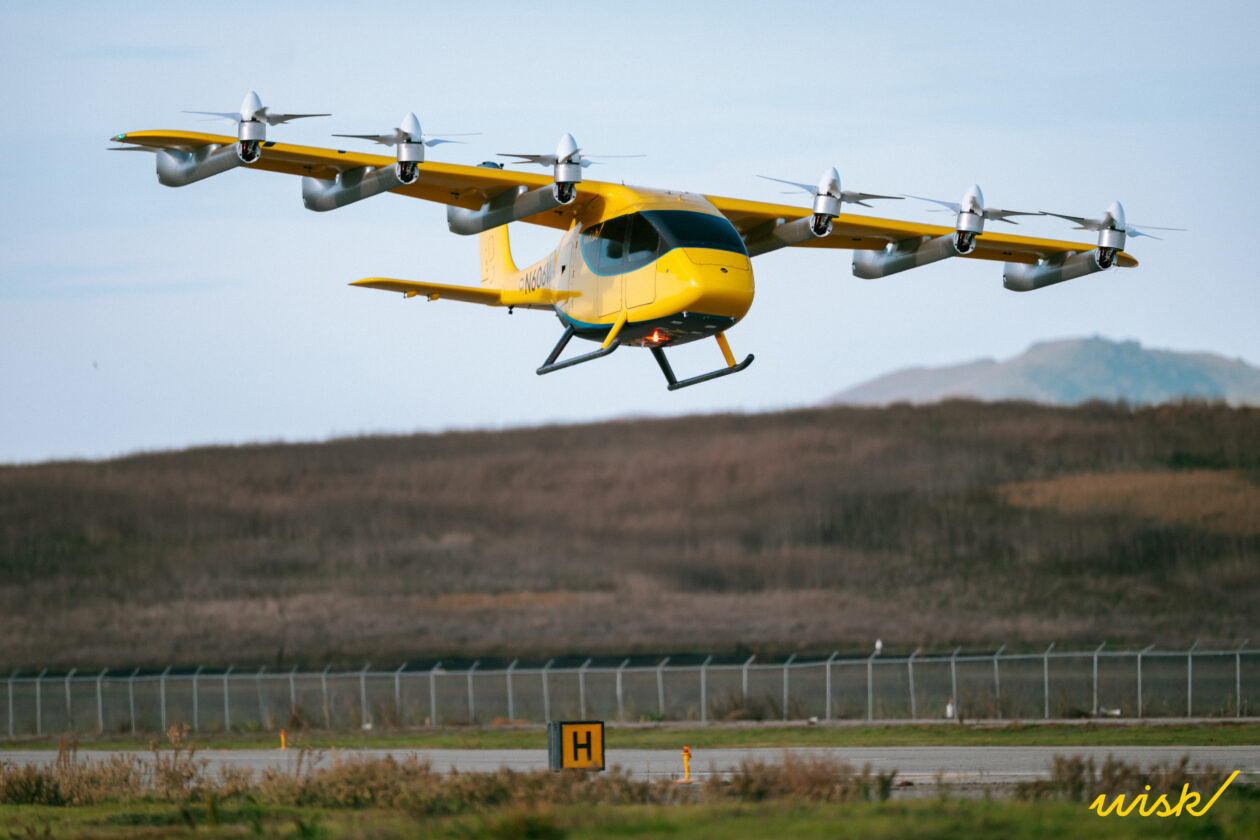
Wisk completed the first flight of its Generation 6 autonomous, all-electric eVTOL last year. Photo via Wisk
Archer Aviation is acquiring three Boeing subsidiaries focused on autonomous aircraft, airspace management and unmanned systems, a deal that will significantly expand the electric aircraft maker’s business into defense and add more than $200 million in annual revenue.
The companies announced the deal Monday, saying Archer will acquire Wisk Aero, SkyGrid and Insitu. The transaction is expected to close by the end of 2026, subject to regulatory and other closing conditions.
The deal brings together Archer’s work on electric vertical takeoff and landing aircraft, unmanned aircraft and artificial intelligence with Boeing’s investments in autonomous flight and defense technologies.
The transaction represents a major expansion by Archer beyond its core effort to develop electric air taxis. The company said the three Boeing businesses operate across 35 countries and collectively have nearly two million flight hours.
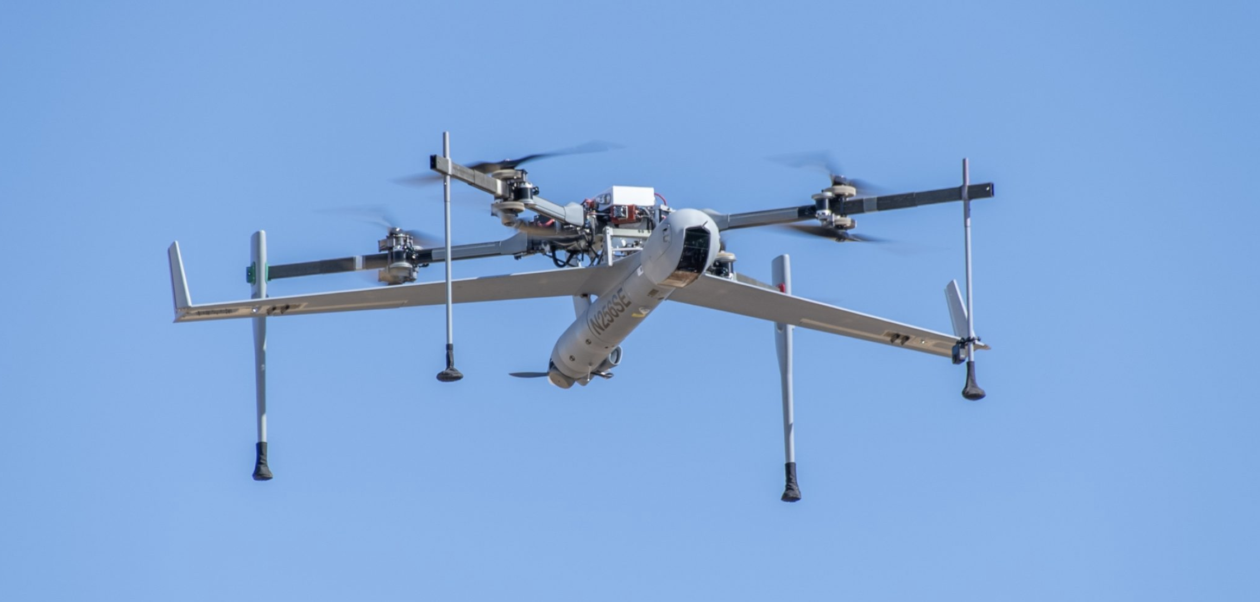
Bingen, Wash.-based Insitu, which develops and manufactures uncrewed aircraft systems for intelligence, surveillance and reconnaissance, is the largest piece of the acquisition from a defense perspective. The profitable unit has manufactured and deployed more than 3,500 unmanned aircraft and supports military customers in 35 countries, according to the companies. Founded in 1994, Insitu was acquired by Boeing in 2008 for about $400 million.
Insitu’s portfolio includes small unmanned aircraft systems, vertical-takeoff-and-landing capabilities and software designed to support military intelligence and surveillance operations. It has offices in the U.S., Australia, the U.K. and the United Arab Emirates.
With over 1.6 million combat flight hours, Insitu’s ScanEagle is used in defense. Photo via Insitu
Mountain View, Calif.-based Wisk was formed in 2019 as a joint venture between Boeing and Kitty Hawk Corp. and has since developed autonomous electric aircraft. The company — which raised $450 million from Boeing in 2022 — has designed, built and flown six generations of its eVTOL air taxi systems and conducted more than 1,700 flight tests.
Austin, Texas-based SkyGrid provides software for managing increasingly automated airspace, including systems designed to coordinate aircraft and integrate autonomous vehicles into the broader aviation system.
Archer said it plans to combine those capabilities with its own artificial intelligence platform, known as ZEE, which the company describes as a foundation model for aerospace and defense applications.
“This is a watershed moment for Archer and the future of physical AI in aerospace and defense,” Archer founder and CEO Adam Goldstein said in a statement. “This is the next big step forward in becoming a diversified platform, rapidly growing our revenue base and bringing scale to our business.”
The transaction also creates a new strategic relationship between Archer and Boeing.
As part of the deal, Boeing will take a stake in Archer and enter into a collaboration and technology-sharing agreement with the company. Boeing will receive class A shares in Archer worth approximately 19.75%. After the transaction closes, Boeing’s shares will amount to a roughly 16.5% ownership stake in Archer, according to The New York Times.
It will also retain access to Wisk’s core autonomous flight technology for use in its current and future commercial and defense aircraft.
“This transaction is a win-win for Boeing and Archer,” Brian Yutko, Boeing’s vice president of Commercial Airplanes Product Development, said in a statement. “It allows Wisk, SkyGrid and Insitu to accelerate capability development and time to market while ensuring Boeing capitalizes on its investments in these technologies over the past two decades through continued development in our core businesses.”
For Boeing, the transaction provides a way to retain exposure to the technologies while shifting the three businesses into Archer, where they can be combined with its aircraft and AI efforts.
Archer, based in Silicon Valley, is developing its Midnight electric air taxi which it touts as a “new way to move through cities.” Monday’s deals also increasingly expand Archer’s focus to defense applications and other aircraft technologies.
Shares of Archer soared in Monday trading, up more than 7 percent.
John Cook studies the 2009 Puget Sound Tech Universe map while recording this week’s GeekWire Podcast, with WTIA’s 2026 Washington Tech Universe map on the table behind him. (GeekWire Photo / Todd Bishop)
This week on the GeekWire podcast: SpaceX reports its first quarter as a public company, and Elon Musk says Starlink could deliver a majority of the world’s internet within a decade, leveraging production facilities in Redmond. Musk also explains the company’s data center ambitions, calling terrestrial infrastructure a trivial problem next to reusable rockets.
Plus: we bring two Washington tech universe posters into the studio, 17 years apart. The 2009 original turns up gems including Boeing’s unlikely connection to Classmates.com, the 1990s forerunner to Facebook. It also brings back memories of Teledesic, the Craig McCaw venture backed by Bill Gates that tried to beam internet from space decades before Starlink.
Finally, the GeekWire Trivia Challenge returns with a timely question about Google’s origins.
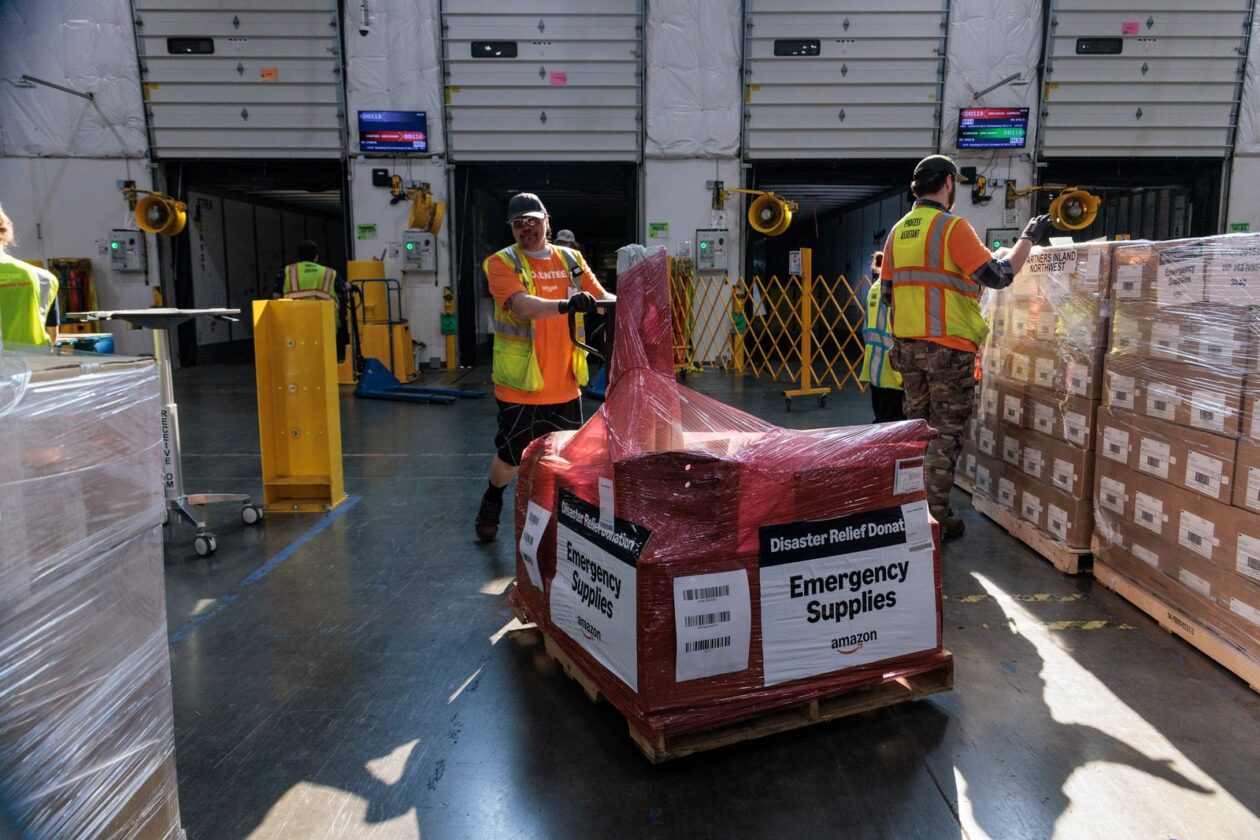
Amazon has 12 Disaster Relief hubs around the world — including this one in California handling wildfire relief supplies — designed to respond quickly to natural disasters with delivery of emergency materials. (Amazon Photo)
Amazon’s Disaster Relief team responds with emergency supplies to support victims of crises around the world. Recent efforts have provided aid following a hurricane in Jamaica, earthquakes in Venezuela and wildfires in France.
Devastation from wildfires on the eastern side of Washington hit especially close to home — for Amazon and number of companies in the state.
The Seattle-based tech giant announced this week that it is donating a range of supplies to assist nearly 65,000 people who have been evacuated from their homes in the Spokane area, as crews battle three major wildfires that have destroyed hundreds of homes and businesses.
“Washington is home to Amazon and to tens of thousands of our employees. As the situation evolves, we remain committed to supporting our employees and the wider community affected by the Spokane wildfires,” Abe Diaz, Amazon’s head of Disaster Relief, said in a statement.
Through its work with the American Red Cross, Save the Children, and local nonprofits in Spokane, Amazon is helping to donate and deliver more than 26,000 emergency supplies, including air purifiers, masks, diapers, and hygiene kits for displaced families. Heavy-duty gloves, boots, and hydration packets for firefighters are also arriving this week, and a second wave of donated supplies will follow.
Amazon relies on 12 Disaster Relief hubs across seven countries, and aid for Spokane is coming from a hub that opened in California’s San Bernardino Valley in 2024.
The global network first launched in the U.S. in 2021 and enables the company to respond to natural disasters in just a couple of days or less. The company says that since 2017, it has donated and delivered more than 30 million essential supplies in response to over 200 disasters around the world.
In a post on LinkedIn on Wednesday, Kara Hurst, chief sustainability officer at Amazon, said the fires created “a living nightmare” in Eastern Washington.
“Every natural disaster is one too many, but the latest one hits especially hard,” she wrote.
Amazon is not alone in providing aid.
Boeing announced that it’s donating $250,000 from its Charitable Trust to assist those impacted by Washington wildfires.
The aerospace company said the funding will support the Innovia Foundation of Eastern Washington and Northern Idaho, to help nonprofits, businesses and community organizations provide relief.
Boeing employs more than 65,000 people in Washington. The company said it will match qualifying employee contributions made to charitable gift match programs in support of relief efforts.
F5 is assisting its employees and others in the broader Spokane community impacted by the fires, the company told GeekWire Wednesday.
The Seattle-based networking and security giant has a significant presence in Spokane Valley.
“The safety and well-being of our team members are our highest priorities during this challenging time of rapid evacuations and profound uncertainty,” an F5 spokesperson said, adding that the company is committed to ensuring employees have the resources they need to recover and rebuild.
To assist those directly affected, F5 said it is actively mobilizing support through two primary avenues:
Direct Employee Assistance: Offering immediate aid to impacted employees through the F5er Emergency Relief Fund. Fully sustained by F5, the fund delivers direct financial relief to employees facing hardships, emergency evacuations, and long-term recovery efforts due to natural disasters.
Community Donation Matching: F5 launched dedicated donation campaigns to nonprofits actively providing on-the-ground relief and matches employee donations and volunteer time — up to $5,000 USD annually per employee.
A visualizer from Microsoft’s AI for Good Lab, which uses satellite imagery to show buildings in the Spokane, Wash., area damaged by wildfire. (Image via data.humdata.org)
Microsoft’s AI for Good Lab is putting its technology to use in the form of a building damage visualizer that uses satellite imagery to show the effects of the Spokane fires.
The lab supports HASTE (High-speed Assessment and Satellite Tracking for Emergencies), an open-source, no-code platform that turns vast amounts of data into actionable insights. Responders can assess destruction faster and more accurately, supporting relief and recovery efforts.
So far in the Spokane area, 16,171 buildings have been analyzed, with 624 buildings (3.9%) identified as damaged. Another 49 (0.30%) could not be analyzed due to smoke, haze, or clouds. Microsoft stresses that the results are considered preliminary and on-the-ground validation will be needed for an accurate understanding of the full impact.
Microsoft also told GeekWire that an employee giving campaign was launched to raise funds for the American Red Cross’s wildfire relief fund and the Innovia Foundation’s Spokane Complex Wildfire Response Fund. “With all employee donations fully matched by Microsoft, we remain committed to assisting those directly affected,” a Microsoft spokesperson said.
T-Mobile is providing a range of services to help keep communities, customers, and first responders stay connected in the wake of the disaster. These include:
Free Wi-Fi, device charging and supplies at its Five Mile Plaza Experience Store at 1910 W. Francis Ave. in Spokane.
Unlimited talk, text and data to T‑Mobile, Metro by T‑Mobile, USCellular, Assurance Wireless, Mint and Ultra customers in impacted areas who don’t already have it.
Activation of T-Satellite with Starlink in impacted areas, enabling compatible devices to send basic text messages and text-to-911 if traditional connectivity is disrupted, while also delivering Wireless Emergency Alerts.
Wi‑Fi, device charging support and power packs at the Spokane Convention Center.
The Bellevue-based wireless provider, which is relaying updates online at its Emergency Response Hub, said it is also working to ensure that cell tower sites remain in operation after having restored service at each site. And T-Mobile is coordinating with state and local agencies to assess community needs and identify additional opportunities to support first responders and residents.
Starbucks is providing support through its foundation to the American Red Cross and World Central Kitchen, and the Seattle-based coffee giant said it’s continuing to assess additional opportunities to support recovery efforts in Spokane.
Customers at Starbucks coffeehouses across Washington, Oregon, Idaho and Alaska are invited to join in giving to the Red Cross’s Washington Wildfires 2026 campaign, a spokesperson told GeekWire.
Starbucks partners (employees) who are looking to help during times of need, or year-round, can contribute to the Caring Unites Partners (CUP) Fund, a financial assistance program funded by partners, for partners.
The company is also offering a double match for Starbucks partner donations made to American Red Cross – Disaster Relief; Feeding America – Disaster Response; and World Central Kitchen – Disaster Relief Efforts.
Washington Secretary of State Steve Hobbs announced that his office has activated its Disaster Relief Center (DRC) to encourage donations for communities hit by wildfires across Central and Eastern Washington.
The DRC operates as a specialized program under the Office of the Secretary of State’s Combined Fund Drive (CFD). The portal aggregates verified, registered crisis-relief nonprofits so state employees, retirees, and the broader public can quickly connect with vetted organizations providing immediate aid.
“In times of crisis, I know Washingtonians’ first thought is ‘How can I help?'” Hobbs said in a statement. “Anyone looking for a way to support our neighbors in Eastern Washington can feel confident their donations will go directly to organizations doing life-saving work on the ground.”
Washington Attorney General Nick Brown’s office is also encouraging people to take precautions to ensure wildfire relief donations go to reputable charities.
“The destruction in Spokane is heartbreaking, and generous people across our state want to help,” Brown said in a news release Wednesday. “It’s important to give safely to ensure your hard-earned money is helping those in need.”
The city of Spokane is accepting donations through its H.O.M.E. Starts Here Fund, which had attracted $234,000 from more than 1,100 donors by Wednesday.
The AG’s office is providing online tips to guide those giving to non-profits or charities.

 Login
Login
 The U.S. Air Force just gave itself a lot more room to sell Boeing’s aerial refueling tanker overseas. In a contract modification worth $13.4 billion, the Air Force raised the ceiling on an existing Foreign Military Sales agreement for the KC-46A Pegasus tanker from $5.7 billion to $19.1 billion, more than tripling how much business […]
  The U.S. Navy has awarded General Dynamics Mission Systems a contract worth up to $184.25 million to move a new electronic warfare component for the EA-18G Growler into full-rate production. The contract covers manufacturing of the Next Generation Electronic Attack Unit, known as NGEAU, along with sustainment support for the unit and future sustainment work […]
  Boeing has moved into the next phase of competition to build the U.S. Army’s second interceptor for its Integrated Fires Protection Capability, or IFPC, air defense system, the company announced September 9. Boeing is developing the missile with Anduril Industries, which will supply the solid rocket motor. The interceptor is meant to defend fixed and […]
  Boeing plans to offer Japan’s Ministry of Defense a drone it developed jointly with the Royal Australian Air Force, as Tokyo works out a new coastal defense concept built around unmanned aircraft, according to the Nikkei. Boeing’s defense division president, Steve Parker, told Nikkei the company will propose its MQ-28 Ghost Bat drone to the […]
  The U.S. State Department has approved a possible $5 billion sale of Joint Direct Attack Munition kits to Saudi Arabia, notifying Congress on September 4 of a deal covering more than 10,000 guidance kits and bombs. It is one of the largest single munitions packages Washington has cleared for a foreign buyer in years, and […]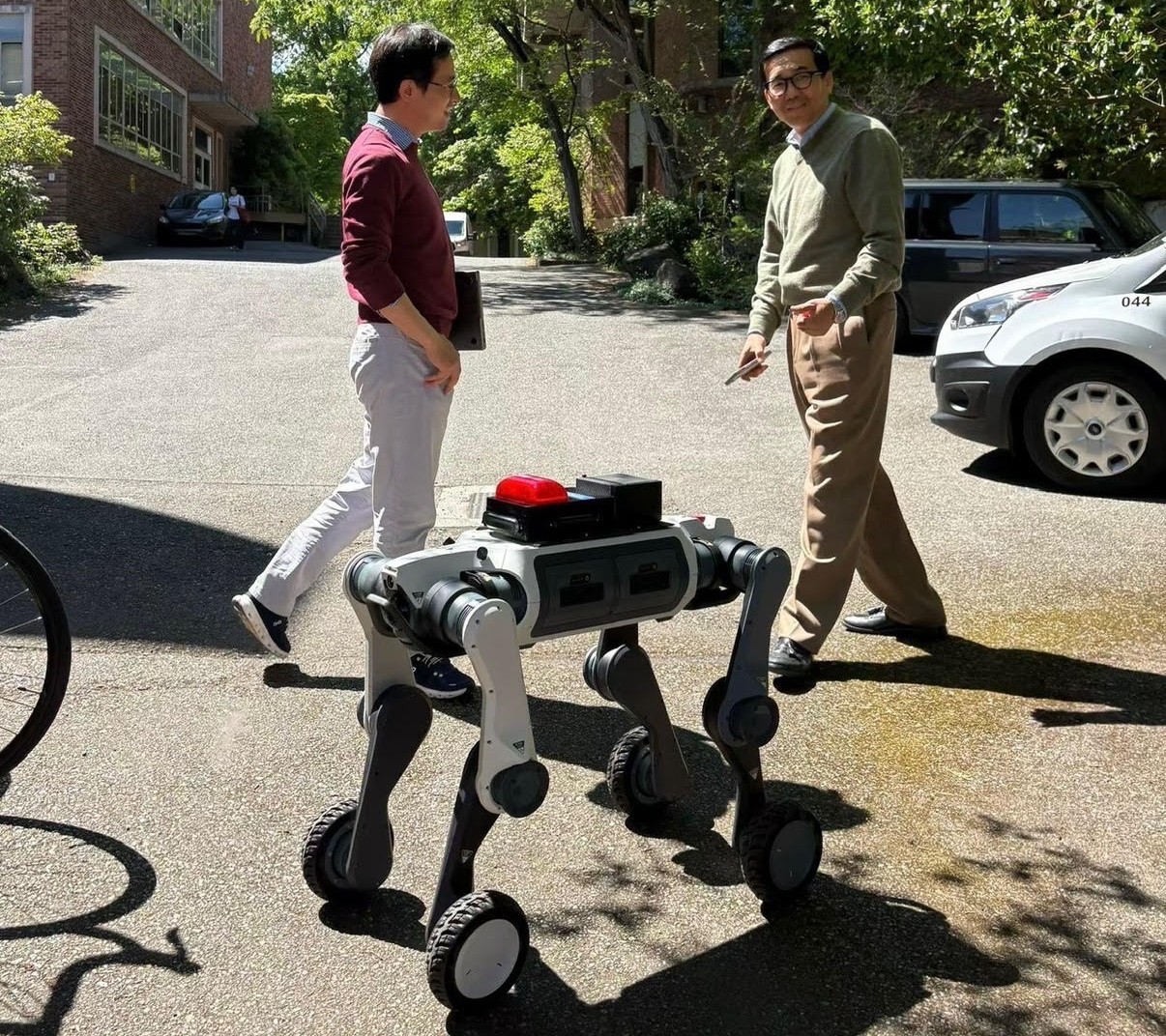
 U.S. Special Operations Command has awarded Boeing a $55.4 million order to supply Active Parallel Actuator Systems and related parts for the MH-47G special operations helicopter fleet, according to a Department of War contract announcement. The order, issued under a basic ordering agreement, will be performed primarily at Boeing’s Ridley Park, Pennsylvania, facility and is […]
  The U.S. Navy has awarded Boeing a $12.7 million contract modification to upgrade electronic components on the MQ-25 Stingray, the Navy’s first operational carrier-based drone, according to a Department of War contract announcement. The modification covers non-recurring engineering and integration work on an updated Radio Frequency Blanker Unit and an Encrypted Mass Storage System with […]