❌

Reading view

There are new articles available, click to refresh the page.

Luxor Announces $16M Funding Round to Scale AI Compute, Derivatives


Bitcoin Magazine

Luxor Announces $16M Funding Round to Scale AI Compute, Derivatives

AI hardware is sold out, and the companies that cut their teeth in Bitcoin mining are moving in. Luxor just raised $16 million in a round led by CMT Digital to scale its cloud platform, GPU hardware business and compute trading. Ethan Vera of Luxor and Sam Hallene of CMT Digital join BMTV to explain why Bitcoin mining expertise translates so well into AI compute.

Chapters:
00:00 Luxor Raises $16M to Take Bitcoin Mining Expertise Into AI
01:17 Why CMT Digital Backed the Luxor Team
02:54 What Bitcoin Mining Teaches AI Infrastructure
03:48 Luxor Cloud: Runners, Sandboxes and Code Review
04:51 Sandboxes for AI Agents
05:43 GPU Demand: Nvidia Sold Out for the Year
07:12 Compute Derivatives and Liquidity for AI Markets
08:12 Luxor’s Full-Stack Compute Ecosystem
10:24 Why Luxor Chose Strategic Investors
12:08 Bitcoin Mining Is Still a Core Pillar

#Bitcoin #BTC #BitcoinMining #Luxor #EthanVera #SamHallene #CMTDigital #AI #AICompute #AIInfrastructure #GPU #Nvidia #AIAgents #DataCenters #ComputeDerivatives #BitcoinMiners #Compute #EnergyGrid #BMTV #BitcoinMagazine

DISCLAIMER: The views and opinions expressed in this show are those of the participants and do not necessarily reflect the official policy or position of BTC Inc., Bitcoin Magazine, or any affiliated entities. This content is provided for informational and educational purposes only and should not be construed as investment, legal, tax, or accounting advice. Nothing contained in this show constitutes a solicitation, recommendation, endorsement, or offer to buy or sell any securities or financial instruments. Viewers should consult their own advisors before making financial or business decisions.

This post Luxor Announces $16M Funding Round to Scale AI Compute, Derivatives first appeared on Bitcoin Magazine and is written by Patrick Green.
Tether Wins Mining Industry Support For Its Open Automation Toolkit

Tether is trying to make Bitcoin mining equipment easier to operate as one system. Its October 24 announcement brings 15 industry participants behind an open software framework, shifting the focus from buying more machines to making existing infrastructure work together.

TL;DR
  • Mining companies, hardware makers and pools have committed to integrations with Tether’s MDK.
  • The framework provides a common software interface for otherwise separate equipment.
  • A stable 1.0 release remains a target for the end of 2026.

The challenge is connecting a mixed mining fleet

Tether’s announcement names participants including Bitdeer, Bitmain, Canaan, MicroBT, Foundry and Block’s Proto. Their commitment is to build and maintain integrations. It is not a disclosed purchase order, a new Bitcoin reserve or evidence that every participating company has already converted its mining sites.

The MDK product description separates those integrations into equipment adapters, a core runtime and a gateway for applications. An operator could connect machines and supporting infrastructure through that common interface instead of building a completely different control system for each vendor.

Consider a site that changes cooling equipment while retaining its miners. Monitoring software should not need to be rebuilt from scratch merely because the hardware mix changes. Consistent interfaces can reduce that repeated engineering work, although the quality of each integration still determines how reliably an application behaves.

That concern is different from the capacity additions in NewsBTC’s reporting on Soluna and Bitdeer’s Texas expansion. More electrical capacity creates room to mine; operating software determines how effectively a complicated site uses the equipment connected to it.

Automation will need evidence beyond a participant list

The public documentation already offers a demonstration environment with mock hardware, a gateway and a dashboard. That gives developers a place to examine the design before connecting software to real equipment. Testing against simulated devices and controlling a live industrial site are materially different stages.

An automated controller can make a mistaken instruction faster than a person can. Useful deployments therefore need clear permissions, reliable measurements and a way to stop or override actions. An open interface makes those controls possible to inspect; it does not prove that any particular installation has implemented them well.

The economics also remain site-specific. NewsBTC’s coverage of recovering network hashrate and Bitdeer’s mining and AI operations illustrates the competing pressures operators face. Lower integration costs could help, but MDK has not supplied a universal figure for electricity savings or higher mining margins.

The useful milestones are maintained adapters, successful installations and measured operating improvements. Industry support gives the toolkit a broader starting point. Demonstrating dependable control across different sites is the work still ahead.

Written by the News Desk and edited by Samuel Rae.

Bitcoin Hashrate Reclaims One Zettahash As Mining Competition Rebounds

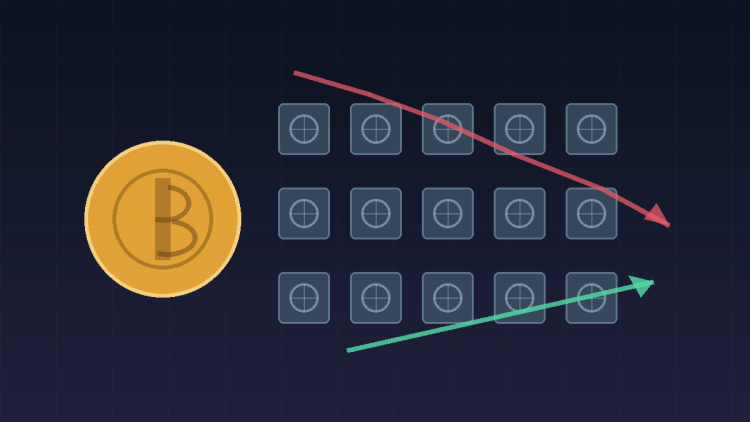
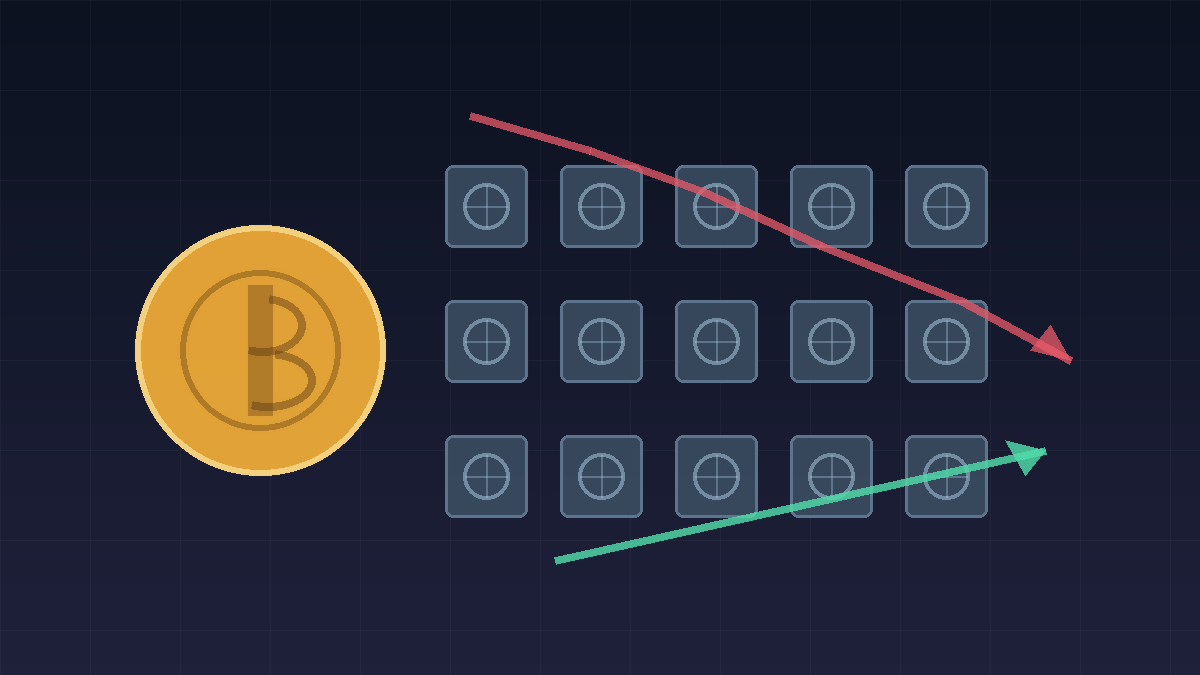
TL;DR: BlocksBridge reported Bitcoin’s seven-day hashrate above one zettahash in the week to October 22. Mining competition has recovered despite companies shifting some infrastructure toward AI.

A mining company can switch strategy without making Bitcoin mining any easier for the businesses that remain. New network data puts that distinction in focus.

In its October 22 Miner Weekly report, BlocksBridge Consulting said the network’s seven-day average hashrate had recovered above one zettahash per second, its highest level since March 3. One zettahash is equivalent to 1,000 exahashes per second.

The report also recorded a 5.92% increase in mining difficulty on October 16. Together, the figures show that announcements about individual operators leaving mining cannot be treated as a direct measure of network-wide competition.

A Mining Exit Does Not Necessarily Remove The Machines

BlocksBridge’s analysis separates a site’s future use from the fate of the equipment installed there. A facility can shift toward AI infrastructure while Bitcoin mining machines are sold or relocated, allowing them to contribute computing power elsewhere.

That distinction does not establish where every additional unit of hashrate came from. It does explain why corporate announcements and network data can point in different directions without contradicting each other.

For an operator that keeps mining, the relevant competitive field is the worldwide network. A rival’s strategic exit only reduces that field if the associated computing capacity actually disappears and is not offset by activity elsewhere.

The same caution applies to expansion plans. Announced capacity, installed machines and equipment actively submitting work are different stages. Only the last contributes to observed network performance.

Hashrate, Difficulty And Revenue Measure Different Things

A hashrate figure is an estimate of computational work, not a direct meter reading from every miner. Blockchain.com’s chart methodology explains that estimates use block production and difficulty; short periods can fluctuate because finding blocks involves randomness. A seven-day average helps smooth that noise.

That is why the time window matters. The reported one-zettahash milestone refers to a seven-day average through the October 22 report, not a guaranteed reading at every moment since then or a separate 30-day measure.

Mining difficulty is the protocol’s adjustment to the work required to find a block. The Bitcoin developer documentation describes a recalculation every 2,016 blocks, targeting roughly two weeks for that interval. Faster block production generally leads to a harder target for the next period.

Revenue is another question. More network computing power does not automatically mean more income for each machine. With other conditions unchanged, an operator supplying the same amount of work faces a smaller relative share when competing capacity expands.

Profitability also depends on the value of block rewards and fees, power costs and equipment efficiency. A rise in Bitcoin hashrate therefore cannot, by itself, establish whether a miner’s margins improved.

The rebound is evidence of renewed network competition over the reported period. Its commercial significance rests on who can supply that work economically, rather than on whether a prominent company has changed its strategy.

Written by the News Desk and edited by Samuel Rae.

Block’s Proto Mining Hardware Gets A Smaller Entry Point With Sazmining

TL;DR: Sazmining is offering individual Proto immersion hashboards at $4,187 each, with financing and managed hosting. The arrangement lowers the upfront hardware purchase but does not remove Bitcoin mining‘s ongoing costs or profitability risk.

Buying into industrial Bitcoin mining usually means dealing with noisy equipment, electricity contracts and cooling infrastructure. A new offering built around Block’s Proto hardware takes a different approach: purchase a single hashboard and leave the hosting to someone else.

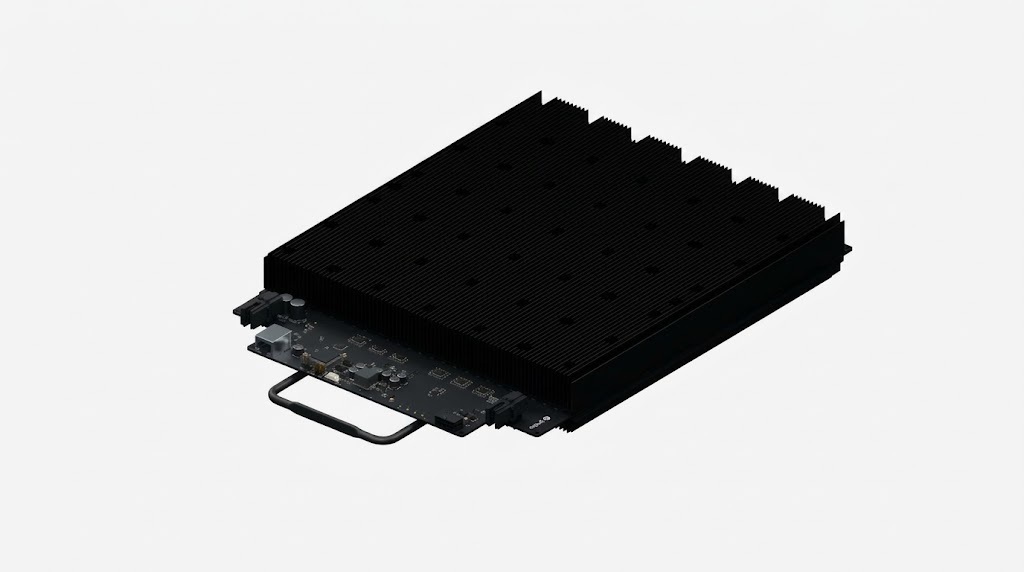
Sazmining lists Proto immersion hashboards configured for approximately 204 terahashes per second, with efficiency of roughly 15 joules per terahash. Three boards make up a full Proto Immersion Module, but customers can start with one.

The advertised hardware price is $4,187. Its financing option requires $1,397 upfront followed by 18 monthly payments of $155, at a stated 0% interest rate. A separate hosting and maintenance fee of $153 a month applies, covering power at the quoted service rate and operational support.

Those recurring charges are central to the economics. A lower entry price does not mean free mining, and the Bitcoin received depends on network difficulty, rewards, uptime, fees and the market price of BTC. A hashboard can be technically efficient and still produce disappointing returns for its owner.

For Block, the offer broadens the potential audience for its Proto equipment. For Sazmining, it packages industrial hardware into a managed service that customers can purchase in smaller units.

The appeal is convenience and modularity. The question for buyers is whether the projected mining revenue comfortably covers all the costs that continue after the hardware purchase.

Binance Pool To Close November 10, Giving Bitcoin Miners Weeks To Move

TL;DR: Binance will discontinue its mining pool and related services at 07:00 UTC on November 10, 2026. Miners must redirect their machines before the shutdown to avoid an interruption in mining activity.

Bitcoin miners connected to Binance Pool have a firm deadline: November 10. The exchange announced on October 13 that its mining pool, along with a range of related products, will stop operating at 07:00 UTC on that date.

The closure is wider than the pool’s basic block-reward service. Binance says it is also withdrawing Pool Savings, Cloud Mining, its Transaction Accelerator and several supporting features, including mining pool APIs and hashrate alerts.

For miners, the practical step is straightforward but time-sensitive. Machines currently pointed at Binance’s mining endpoints will need to be reconfigured for another pool before the cutoff. After that time, new shares and hashrate submissions will no longer be accepted or credited by Binance Pool.

There is a financial housekeeping task, too. Binance has asked users to deal with active savings positions and ensure their accounts can receive any outstanding rewards or refunds. Eligible balances will be handled under the relevant product terms and compliance requirements, rather than disappearing automatically at the moment of shutdown.

Binance has described the move as part of an ongoing product review. It has not established in its closure notice that a specific hashrate decline caused the decision, so claims about the precise commercial reason should be treated cautiously.

The announcement does not mean Binance is shutting down its Bitcoin exchange or spot trading operation. It is an exit from one part of the mining-services business, with an immediate operational consequence for miners who still use it.

Sazmining Now Sells Jack Dorsey’s Proto Immersion Hashboards 

Bitcoin Magazine

Sazmining Now Sells Jack Dorsey’s Proto Immersion Hashboards 

Bitcoin mining just got a lower barrier to entry. 

Sazmining announced Thursday that it is now selling Proto’s immersion hashboards directly to individual and institutional buyers through its mining-as-a-service platform. Previously, the hardware was mostly in the hands of large-scale operators.

Each hashboard delivers roughly 200 TH at around 15 J/TH, and buyers own them outright while Sazmining handles deployment, monitoring and maintenance at a US facility. Mining rewards go straight to the owner’s wallet.

The move follows a multi-megawatt supply deal between Sazmining and Proto — the bitcoin mining arm of Jack Dorsey’s Block (NYSE: XYZ) — which both companies expect to expand as demand grows.

“Because of our aligned-incentive model, Sazmining only earns when we produce bitcoin for our clients,” said Kent Halliburton, CEO and co-founder of Sazmining. 

He also pitched mining as a form of bitcoin acquisition diversification: rather than paying the market price on the day of purchase, a miner’s costs are spread across the machine’s working life.

Wyoming-based Sazmining, founded in 2018, operates renewable-powered facilities across the US, Paraguay, and Norway. It says its fleet runs more than 20 percentage points ahead of the Bitcoin network’s carbon-free share.

Proto is Jack Dorsey’s Block’s bitcoin mining play. The Twitter founder has spent years arguing bitcoin is the foundation of “a more open financial system,” funding everything from Cash App’s buy-and-send rails to the Bitkey self-custody wallet, and he framed mining as the obvious missing piece back in 2021: “Bitcoin mining should be as easy as plugging a rig into a power source.” 

Block formally announced it was building an open bitcoin mining system in January 2022, with the stated aim of making mining “more distributed and efficient.”

This post Sazmining Now Sells Jack Dorsey’s Proto Immersion Hashboards  first appeared on Bitcoin Magazine and is written by Mathew Di Salvo.

❌