❌

Reading view

There are new articles available, click to refresh the page.

Mosaic: The Art Hidden in Bitcoin

Bitcoin Magazine
Mosaic: The Art Hidden in Bitcoin

A mosaic is an artwork assembled from fragments. From ancient Roman floors to Byzantine churches, artists have used pieces of stone, glass, and ceramic to construct images that have endured for centuries.

For the generative artist known as BitArt, those fragments are satoshis (or sats), the smallest units of bitcoin.

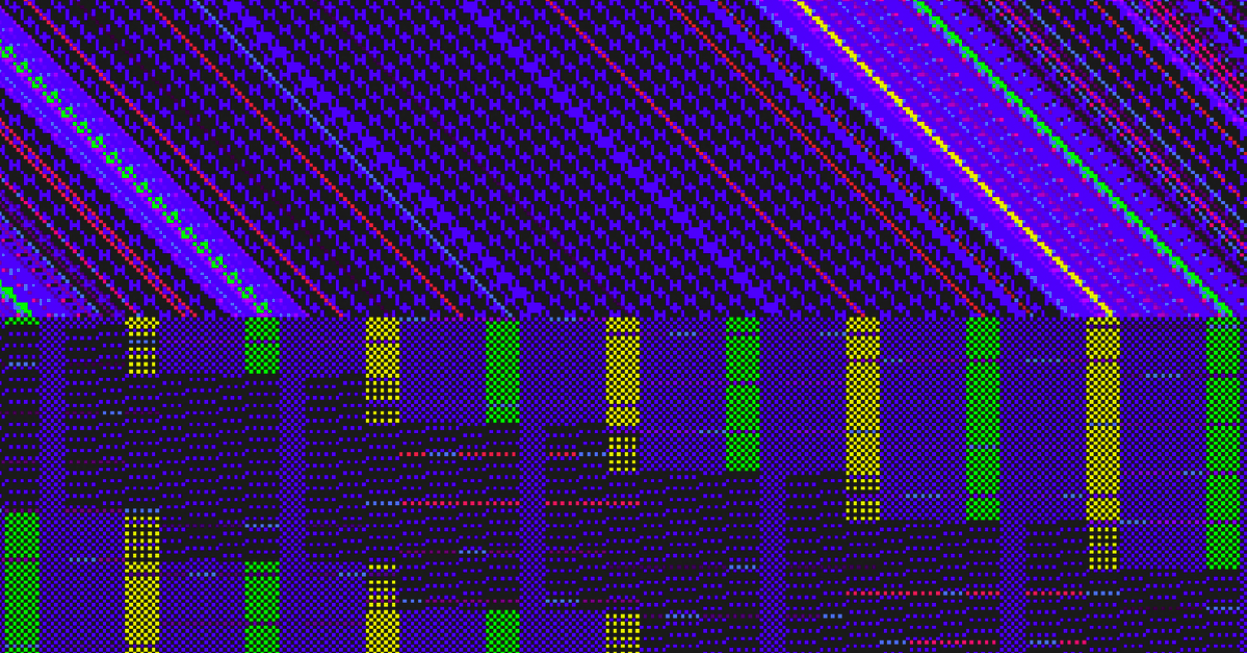
In Mosaic, a continuously evolving artwork developed through the Bitcoin Art Society (BAS), the numerical properties of satoshis are translated into color and spatial coordinates. Each contribution adds to an expanding composition of pixels resembling digital textiles, early computer graphics, or abstract paintings.

Rather than illustrating bitcoin through familiar iconography, Mosaic treats the network itself as artistic material. Satoshi positions and unspent transaction outputs (UTXOs) become inputs for a rule-based system that determines the artwork’s appearance. BitArt begins with bitcoin’s underlying data and allows an image to emerge.

The approach recalls conceptual artist Sol LeWitt’s proposition that an artwork can exist as a set of instructions rather than a singular handcrafted object. Generative artists such as Vera Molnár and Manfred Mohr similarly explored how mathematical systems and computational procedures could produce visual compositions. Mosaic extends this tradition into an economic network shaped by transactions and human decisions.

The scale is extraordinary. According to BitArt, Mosaic now contains more than 127 million tiles and one billion layers. Viewing every layer at a rate of one per second would take over 30 years.

The Mosaic (detail), BitArt (2026)

The project has also expanded into sound. Its musical component draws from the same satoshi data that generates the imagery, translating numerical values into an evolving score. Together, these elements create an audiovisual artwork shaped by bitcoin’s underlying structure and the contributions of its participants.

These experiments form part of the broader ambitions of Bitcoin Art Society, founded by Serge Ajamian and Yara Al Chammaa to support the creation, exhibition, and preservation of digital art on bitcoin.

For Al Chammaa, preservation is particularly personal. Following the 2020 Beirut Port explosion, which destroyed much of the artwork housed in her family’s gallery, she began reconsidering how cultural heritage might survive physical destruction. That experience helped inform BAS’s interest in bitcoin as a potential medium for preserving cultural works beyond the vulnerabilities of physical institutions.

BAS has since presented bitcoin-native digital art internationally, including Mosaic accompanied by live musicians at the Galileo Galilei Planetarium in Buenos Aires. Its inaugural artist residency features BitArt and CyberSea, whose practices investigate generative systems and blockchain-native artistic production.

Yet permanence raises questions beyond the durability of bitcoin’s ledger. Software-based art has long challenged museums to preserve not only underlying materials but also the technologies and experiences through which artworks are encountered. For Mosaic, what constitutes the artwork: the code, the rendered image, the accumulated contributions, or the experience of navigating the system?

At Bitcoin Amsterdam 2026, Mosaic will be presented on the conference’s main-stage LED installation, bringing its intricate visual structures to an architectural scale, similar to BAS’s immersive presentation at the Galileo Galilei Planetarium in Buenos Aires.

Ahead of the event, I spoke with BitArt about the project’s artistic origins, collective authorship, and the possibility of preserving an artwork that may never be finished.
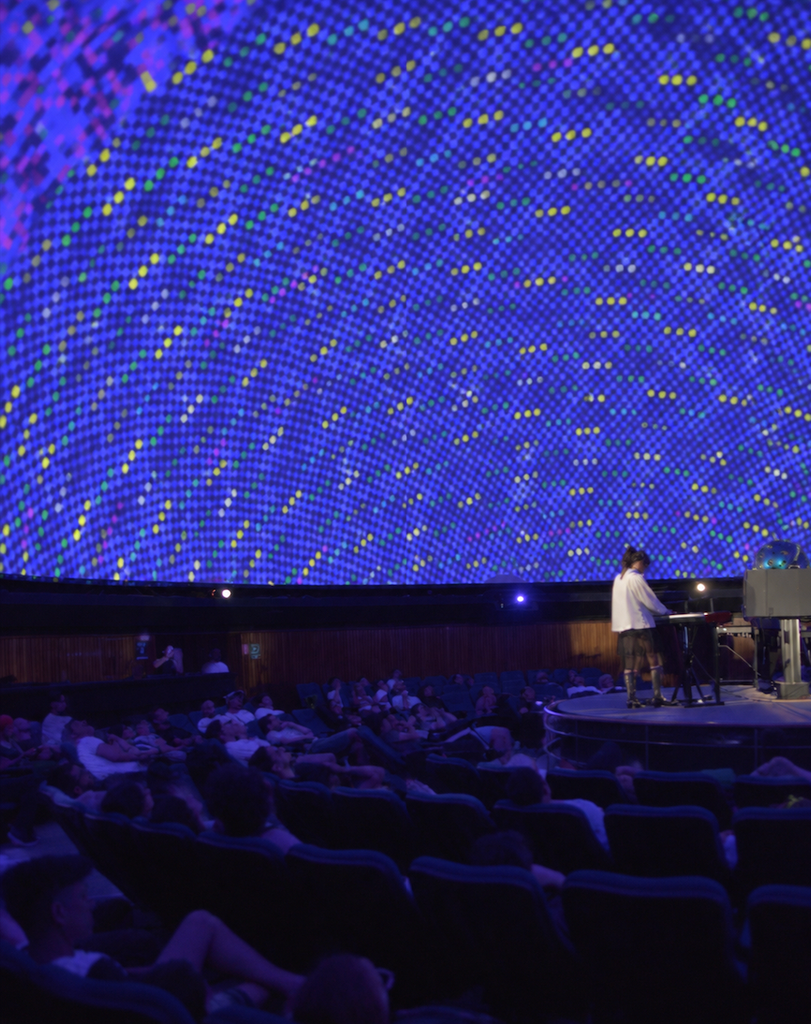
Ordinals Buenos Aires presented by Bitcoin Art Society, immersive projection featuring BitArt (2025)

BMAG: You’ve described bitcoin as a time-based transactional medium rather than simply a platform for displaying art. What first led you to recognize its underlying mathematical and economic structures as artistic material, and how did that thinking develop into Mosaic?

BitArt: Bitcoin records the movement of value through a sequence of events secured by computational work, creating a history that becomes increasingly difficult to reverse. What interests me is not just the individual event, but the sequence of events that led to it. In the context of art, this shifts the question from “What is the artwork?” to “What had to happen for the artwork to become what it is?”

With the advent of the Ordinals protocol, it became possible to assign a unique number to every satoshi. This opened up new possibilities.

From there, Mosaic developed almost naturally. I only had to highlight what was already there. Once every satoshi has an assigned ordinal number, it becomes relatively straightforward to determine its position and derive its color or musical parameters through a set of rules.

The interesting part is that these structures emerge from a system driven by human decisions, rather than one designed to produce art.
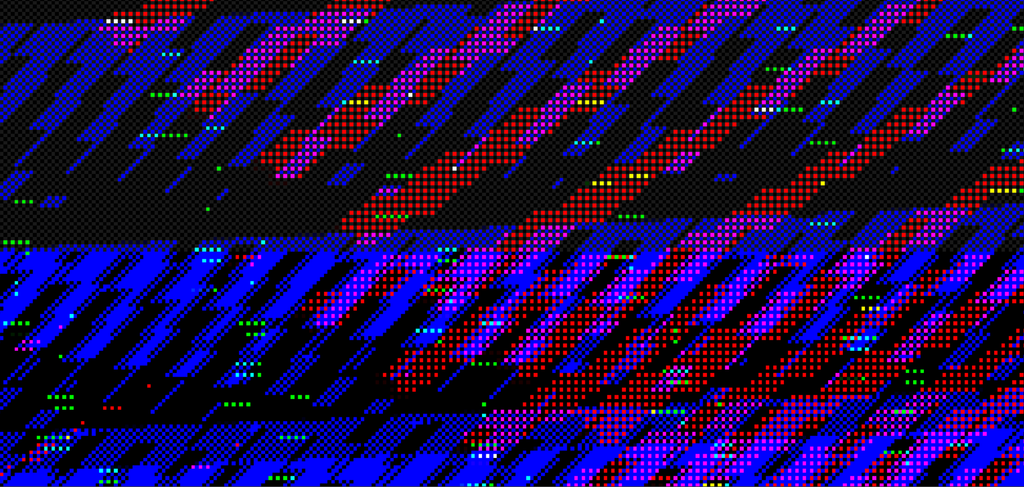
The Mosaic (detail), BitArt (2026)

BMAG: Artists from Sol LeWitt to Vera Molnár have explored how predetermined rules can produce unexpected visual outcomes. In Mosaic, how do your decisions shape the system, and where does bitcoin’s underlying data take over?

BitArt: In a sense, Mosaic continues the tradition of rule-based art explored by LeWitt and Molnár, and builds on the concept of protocol art explored by Holly Herndon and Mat Dryhurst. But it introduces yet another layer: the input is the accumulated result of human decisions within an economic system.

My artistic decisions determine the rules of interpretation, but the underlying data determines the resulting visual and sonic structures.

The rules are deterministic, but the results are not necessarily predictable in practice. I find that tension particularly interesting. The artist creates the conditions under which something can emerge, rather than specifying what it should look or sound like.

BMAG: Participants contribute to Mosaic through their own transactions, becoming part of a composition that no single person controls. Does that make them collectors, collaborators, or something else?

BitArt: I think of authorship as something distributed across several layers.

Perhaps the most interesting aspect is that individual intentions can generate collective structures that nobody intended. Everyone contributes something specific, but the larger composition belongs to the system as a whole.

A participant can be a collector, but also becomes a contributor to the artwork’s evolving structure. The distinction between collecting and creating becomes less clear. Each contribution changes the work, but nobody, including myself, controls the resulting composition.

Authorship becomes less about controlling an outcome and more about establishing the conditions under which it can emerge.

Conceptual visualizations of artwork communication and collaboration in gallery settings, BitArt (2026)

BMAG: You’re developing a system for the upcoming Postmasters exhibition that will allow visitors to speak directly with artworks and receive responses. How does this differ from participating in Mosaic through bitcoin transactions? Are these different forms of communication through computational systems? 

BitArt: Yes, both are intentional acts mediated by computational systems, but there is an important semantic distinction. 

A contribution to Mosaic through a Bitcoin transaction is a non-verbal gesture that becomes part of a verifiable record. We can establish exactly what happened and how it changed the artwork. The action leaves a trace that the system can process directly. 

Speaking to an artwork is different. Natural language must first be interpreted and translated into the formal language the artworks use to communicate. 

In the first case, the action produces a verifiable change in the artwork’s state. In the second, it initiates a process of interpretation. 

Both are expressions of human intention, but one establishes a computational fact, while the other opens up a space for interpretation. 

Ordinals Buenos Aires presented by Bitcoin Art Society, immersive projection featuring BitArt (2025)

BMAG: You’ve written about the creative uncertainty that emerges during programming and experimented with the relationship between real time and bitcoin’s block time. How important are unpredictability, chance, and duration to your practice? Has Mosaic produced results that surprised you or challenged your original intentions?

BitArt: I designed the algorithm for Mosaic to be as simple as possible. It’s deterministic, so its results are technically predictable and reproducible. From a technical standpoint, there shouldn’t be any surprises. Nonetheless, the results are full of unexpected and surprising elements.

I think there is an important distinction between something being computationally predictable and our ability to anticipate or comprehend its results.

Currently, Mosaic contains over 127 million tiles and over 1 billion layers. To view all the layers at a rate of one layer per second would take over 30 years. There are many things that have surprised me, and I’m still discovering new ones.

The temporal divergence between real time and Bitcoin’s block time is also interesting to me. Bitcoin evolves according to its own rhythm, independently of how and when we observe it. This introduces another dimension of duration into the artwork.
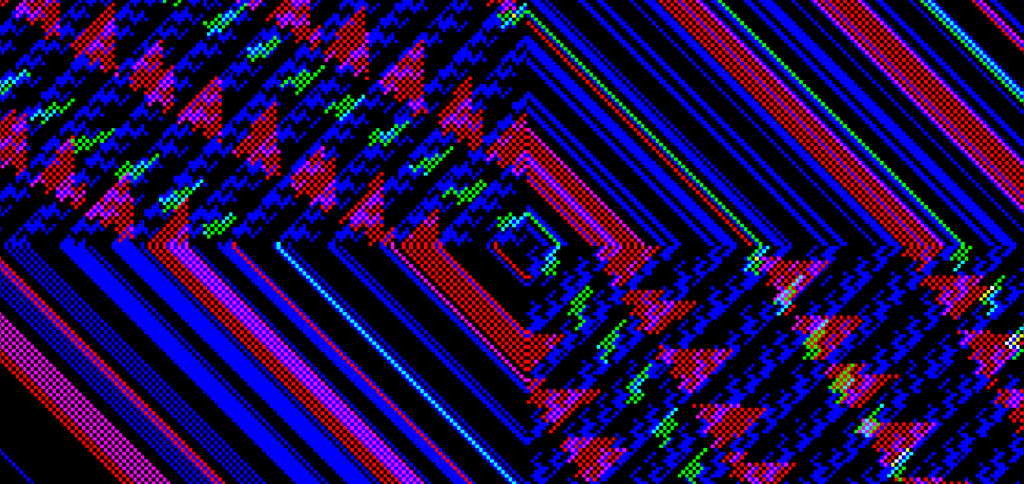
The Mosaic (detail), BitArt (2026)

BMAG: The introduction of sound adds another dimension to Mosaic, with musical compositions generated from the same data that determines the visual structure. What can sound reveal about the underlying system that an image cannot?

BitArt: From the very beginning, Mosaic was built on three fundamental ideas.

The first is the possibility of capturing traces of human intention within a financial, algorithmic system and revealing visual and sonic structures from them.

The second is the development of a formal system in which Mosaic becomes meta-aware, in the sense of being self-referential and introspective, and capable of communicating and collaborating with other artworks. 

The third is collective creation. Anyone can contribute to Mosaic and become part of its evolving structure.

Looking at Mosaic from any of these perspectives reveals something different about it. In the case of sound, it reveals melodic, harmonic, contrapuntal, and rhythmic structures that aren’t necessarily apparent in the visual representation.

Yet within the digital realm, the structures underlying the image and the music are closely related, sometimes almost identical. Perhaps the way we think about visual, sonic, and programmatic structures as separate domains is itself a limitation.
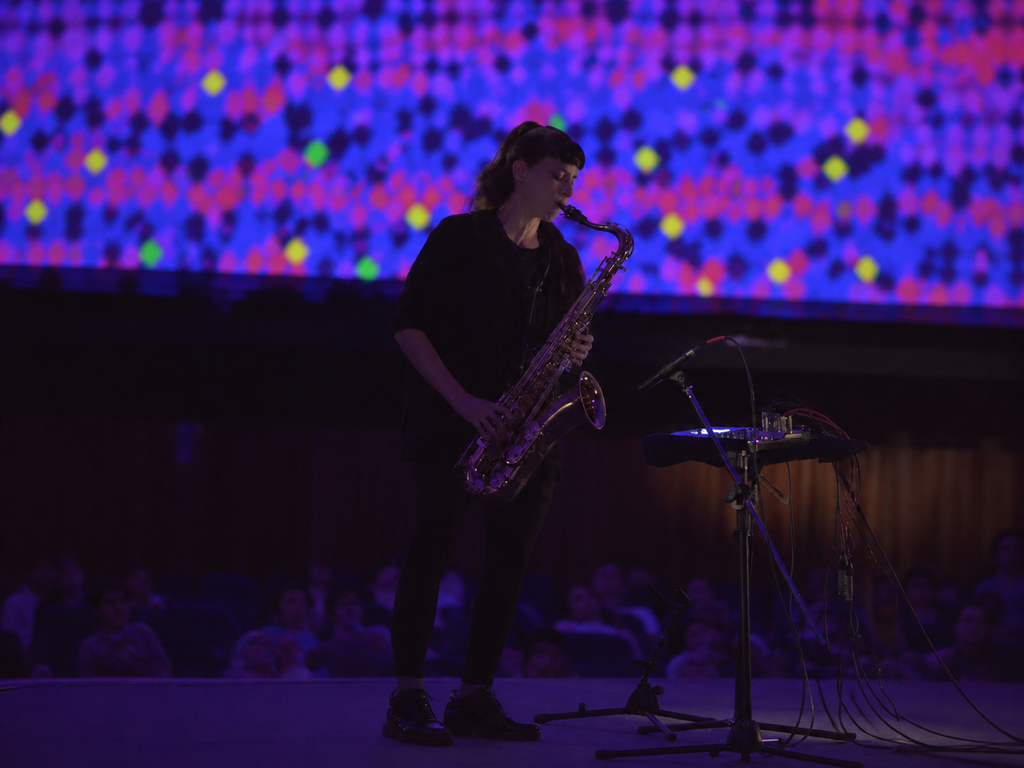
Ordinals Buenos Aires presented by Bitcoin Art Society, immersive projection featuring BitArt (2025)

BMAG: Your practice has been presented in contexts including the Whitney, ZKM, and ICC Tokyo, institutions with significant histories in digital and media art. Where do you see Mosaic within the broader history of generative and systems-based art? What does working directly with bitcoin make possible that earlier computational media did not?

BitArt: I see Mosaic as part of the tradition of generative and systems-based art, but I’m particularly interested in extending that tradition beyond the generation of images and sound.

I’m currently working on a show at Postmasters gallery in New York City in collaboration with BAS. The show will present Mosaic in communication and collaboration with other artworks.

In principle, any artwork that can be represented digitally can join the conversation, whether it’s Leonardo’s Mona Lisa, Malevich’s Black Square, an artwork inscribed on Bitcoin, or music as diverse as traditional folk songs, Nine Inch Nails’ 34 Ghosts IV, and Ravel’s Boléro.

Through the system I mentioned earlier, these artworks can reference themselves and one another, exchange statements, and initiate collaborations using a machine-readable formal language. What’s particularly interesting is that the audience will also be able to join these conversations by speaking directly with the artworks in natural language.

Historically, discourse about art happened outside the works themselves, in texts, institutions, discussions, and criticism. Artworks remained largely silent objects of interpretation. By giving artworks the formal means to reference one another, reason about themselves and others, and exchange verifiable statements, the project treats discourse itself as artistic material.

Art history normally describes influence retrospectively. Here, through collaborations between artworks, influence becomes operative. Influence becomes something artworks can perform.

Bitcoin introduces another dimension by providing a shared, ordered, and verifiable record of these exchanges and the artworks’ histories of collaboration. Unlike a conventional computational environment, this record can exist independently of any single artist, institution, or platform.

The artwork is no longer simply the result of a process or the process itself. It becomes a participant in an ongoing process of interpretation, communication, and creation.

The Mosaic (detail), BitArt (2026)

BMAG: Mosaic has already been presented in immersive environments, including the Galileo Galilei Planetarium in Buenos Aires. For Bitcoin Amsterdam, the work will be adapted for large-scale main-stage LED screens. How does that change the way audiences encounter the work, particularly when its original form is interactive and continuously evolving?

BitArt: The surface of the artwork is not fixed, and it is not what constitutes the artwork. It’s a manifestation of its state at any given time.

I like BAS’s approach of presenting it in intimate settings, large-scale immersive environments, and anywhere in between. Each setting allows the audience to experience a different aspect of the same underlying system.

In an interactive environment, the viewer navigates Mosaic individually, while on large-scale screens, the experience becomes collective. The audience encounters the artwork as it unfolds, rather than exploring it directly.

For the Postmasters show, I’m also developing a physical component that will provide yet another way of experiencing Mosaic.

What interests me is that the artwork can take on very different forms without changing its underlying identity. The presentation changes, but the system that constitutes the work remains the same.

Exhibition & Further Reading

Explore BitArt’s evolving Mosaic project through Bitcoin Art Society, learn more about its exhibitions and artist residencies, and follow BAS on X.

BAS will also present Art on Bitcoin: BAS Night at WiHH Gallery (What Is Happening Here) in Amsterdam on November 6, from 8–11 PM. Hosted in collaboration with Bitcoin Amsterdam, the evening brings together artists, collectors, and the bitcoin community for an exhibition and reception featuring food, music, and conversation. RSVP here.

Read more from BMAG’s Bitcoin Amsterdam series: The Undercurrent: Three European Artists on Making Money Visible and The Architecture of Money: Mapping Financial Power in the Age of Bitcoin.

The Bitcoin Museum & Art Gallery (BMAG) organizes international exhibitions, auctions, and artist collaborations exploring bitcoin and its cultural implications.

BitArt’s Mosaic will be featured on the main-stage LED screens at Bitcoin Amsterdam, November 5–6, 2026, as part of BMAG’s programming. Join us in Amsterdam and use code BA26-BMAG20 for discounted admission. Get your tickets here.

This post Mosaic: The Art Hidden in Bitcoin first appeared on Bitcoin Magazine and is written by Dennis Koch.

Senator Bill Hagerty: Expanding the U.S. Strategic Bitcoin Reserve, & the Future of Dollar Hegemony


Bitcoin Magazine

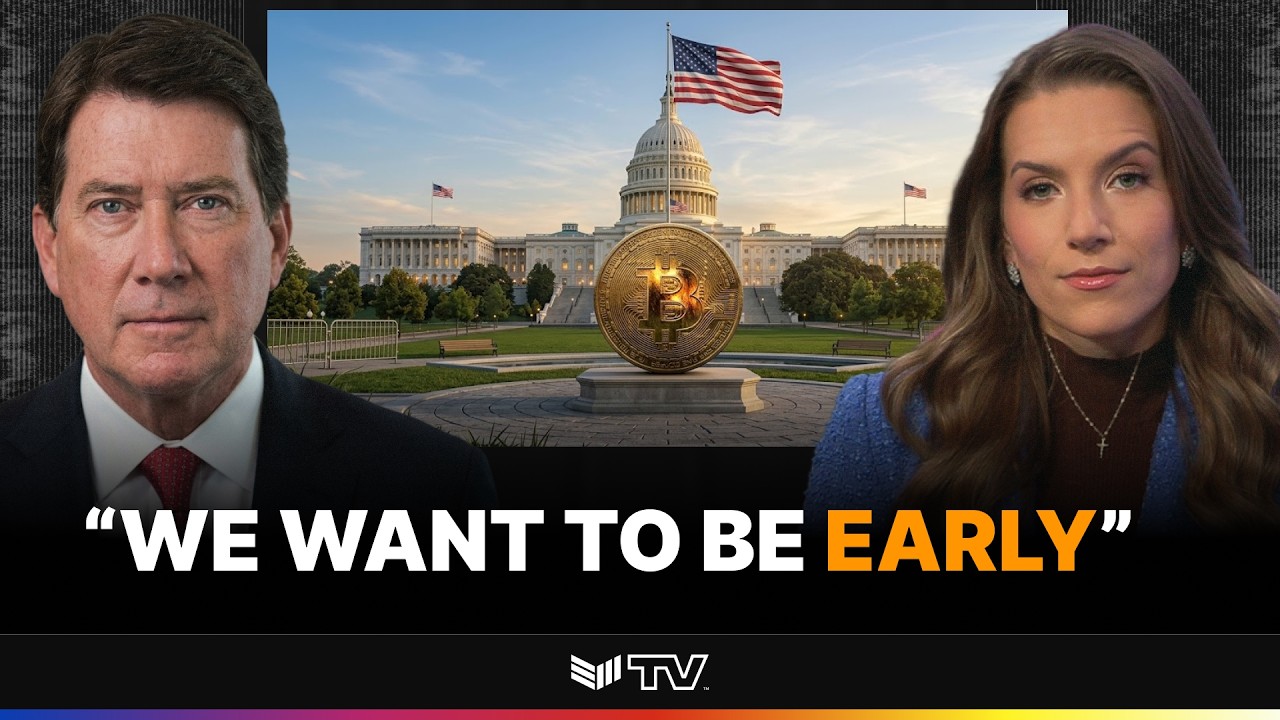
Senator Bill Hagerty: Expanding the U.S. Strategic Bitcoin Reserve, & the Future of Dollar Hegemony

Senator Bill Hagerty says the only answer some in Congress have is a central bank digital currency, and that’s “absolutely not consistent with freedom and liberty.” In this in-studio interview, he explains how uncertainty let former SEC chair Gary Gensler attack the industry, why a light government touch helps innovation thrive, and what Congress can realistically get done before the new session in January.

Chapters:
00:00 Senator Bill Hagerty on What’s Next for the Clarity Act
01:38 Democrats, Ethics Provisions and the Stablecoin Rewards Debate
03:04 How the SEC and CFTC Are Regulating Crypto Without Congress
04:43 How the GENIUS Act Will Change Payments and Settlement
07:08 Stablecoins, Treasury Demand and U.S. Dollar Dominance
08:31 The U.S. Strategic Bitcoin Reserve and 200,000 Bitcoin
10:54 Why Americans Are Still Skeptical of Crypto
13:18 Bitcoin Mining, TVA and Tennessee’s Energy Buildout
17:14 Bitcoin Businesses in Nashville and Why CBDCs Threaten Freedom
18:36 What Congress Can Pass Before the New Session in January

DISCLAIMER: The views and opinions expressed in this show are those of the participants and do not necessarily reflect the official policy or position of BTC Inc., Bitcoin Magazine, or any affiliated entities. This content is provided for informational and educational purposes only and should not be construed as investment, legal, tax, or accounting advice. Nothing contained in this show constitutes a solicitation, recommendation, endorsement, or offer to buy or sell any securities or financial instruments. Viewers should consult their own advisors before making financial or business decisions.

This post Senator Bill Hagerty: Expanding the U.S. Strategic Bitcoin Reserve, & the Future of Dollar Hegemony first appeared on Bitcoin Magazine and is written by Patrick Green.

Grant Cardone Bets $1 Million on Bitcoin’s Comeback

Bitcoin’s recent struggles have sparked another heated argument between investors, and this time, there’s a potential $1 million wager involved.

Real estate investor Grant Cardone has challenged venture capitalist Jason Calacanis to bet on whether Bitcoin can return to its previous all-time high within two years.

The disagreement follows Calacanis’ prediction that Bitcoin will never reach another record and could fall toward $57,000 over the next 12 months.

Cardone sees a different future. He believes Bitcoin can recover, and he’s willing to put a substantial amount of money behind that expectation.

TL;DR

  • Grant Cardone has offered Jason Calacanis a $1 million wager that Bitcoin will reach $126,210.50 by October 28, 2028.
  • Calacanis expects Bitcoin to fall toward $57,000 within a year and believes its previous record will never be surpassed.
  • Other Bitcoin supporters have proposed similar bets, but Calacanis has not publicly accepted Cardone’s challenge.

A $1 Million Challenge Over Bitcoin’s Future

The dispute began after Calacanis shared a pessimistic outlook for Bitcoin on October 27.

He argued that investors should consider shifting their attention toward artificial intelligence, suggesting that Bitcoin offers fewer opportunities for future growth.

His prediction was particularly bold: Bitcoin would revisit $57,000 and never surpass its previous all-time high.

Cardone responded the following day with a direct financial challenge.

He offered to wager $1 million that Bitcoin would reach at least $126,210.50 by October 28, 2028.

The proposed target is slightly higher than Bitcoin’s October 2025 record of approximately $126,080.

Cardone also suggested placing the money with an independent third party to ensure the winner receives payment.

We should emphasize that this remains a proposed wager, not a confirmed agreement.

Calacanis has responded publicly but hasn’t accepted Cardone’s terms.

Why Jason Calacanis Expects Bitcoin To Fall

Calacanis’ concerns focus on declining investor enthusiasm and the movement of capital away from Bitcoin.

He pointed to withdrawals from spot Bitcoin exchange-traded funds as evidence that demand could weaken further.

His argument also reflects a broader question facing investors: whether Bitcoin can continue attracting capital when other technologies, particularly artificial intelligence, offer competing opportunities.

We wouldn’t dismiss those concerns entirely.

Bitcoin has experienced a difficult year, and declining institutional demand can place additional pressure on prices.

However, ETF outflows don’t necessarily indicate that every category of investor is abandoning the market.

Different institutions buy and sell for different reasons.

As we follow Bitcoin market developments, separating short-term trading decisions from longer-term investment strategies remains important.

Bitcoin Supporters Join The Million-Dollar Debate

Cardone isn’t the only investor challenging Calacanis’ prediction.

Bitcoin advocate Fred Krueger has proposed another $1 million wager, although his suggested deadline extends to October 2036.

Hollywood producer and Bitcoin supporter Terence Michael also offered to participate in the dispute.

Meanwhile, JAN3 CEO Samson Mow and Blockstream CEO Adam Back expressed interest in supporting Cardone’s challenge.

The reactions demonstrate how divided investors remain about Bitcoin’s future.

Some believe the latest downturn represents another temporary correction. Others question whether Bitcoin can regain the momentum that previously pushed prices to record levels.

For us, the more interesting question isn’t who wins an argument online.

It’s whether Bitcoin can attract enough sustained demand to justify another major rally.

Bitwise Predicts A Much Higher Bitcoin Price

The disagreement arrives alongside a considerably more optimistic forecast from investment manager Bitwise.

In its October 28 Bitcoin outlook, the company raised its projected Bitcoin price for 2036 to approximately $1.6 million.

That represents an estimated compound annual growth rate of 34.3%.

Bitwise bases its forecast partly on growing institutional adoption, limited Bitcoin supply, and demand for assets that could preserve purchasing power over time.

However, the company also identifies significant risks, including quantum computing, technological disruption, and unfavorable regulatory changes.

These are projections rather than guaranteed outcomes.

We think it’s important to distinguish a financial model covering ten years from Cardone’s much shorter two-year wager.

Both express confidence in Bitcoin, but they rely on very different time horizons.

Can Bitcoin Reach Another Record By 2028?

When Cardone issued his challenge, Bitcoin was trading near $80,847, approximately 36% below its previous peak.

Reaching his $126,210.50 target from that level would require a gain of roughly 56%.

That’s a substantial recovery, although Bitcoin has experienced larger percentage moves during previous market cycles.

Several factors could influence the outcome, including institutional investment, ETF demand, economic conditions, and regulatory developments.

We’ll also be monitoring changes in the wider cryptocurrency market, where Bitcoin’s performance often influences investor sentiment.

For now, Cardone’s challenge has attracted considerable attention, but no million-dollar agreement has been finalized.

The next two years may provide an answer to the price question, regardless of whether the wager ever takes place.

When will the next crypto bull run happen?

Bitcoin has recovered from its summer lows, but investors still face an uncertain start to November as demand improves unevenly and US interest rates remain elevated. Investors heading into November are weighing Bitcoin’s recent gains against the selling that could…

Bitcoin ETFs Find New Support From Long-Term Investors

Bitcoin ETFs are experiencing an interesting change in ownership. Some of Wall Street’s biggest trading firms have been reducing their positions, while sovereign wealth funds and wealth managers are quietly increasing theirs.

At first glance, declining institutional holdings might suggest that investors are losing interest in Bitcoin. But the latest research from Galaxy tells a more complicated story.

The investors leaving the market appear to be motivated largely by shrinking trading profits, while other institutions are treating Bitcoin as an investment worth holding through volatility.

We believe the difference between these two groups deserves more attention than the selling figures alone.

TL;DR

  • Nine major Wall Street firms reduced their spot Bitcoin ETF exposure by approximately 68,000 BTC between September 2025 and June 2026.
  • Sovereign investment funds and wealth managers increased their holdings, with other reporting institutions collectively adding 20,000 BTC.
  • Declining profits from Bitcoin futures arbitrage appear to be a major reason behind the institutional selling.

Why Are Major Wall Street Firms Selling Bitcoin ETFs?

According to Galaxy Research, institutions reporting their holdings to the US Securities and Exchange Commission owned approximately 355,000 BTC-equivalent in spot Bitcoin ETFs at the end of September 2025.

By June 2026, that figure had dropped to around 307,000 BTC, a decline of 14%.

However, just nine financial firms accounted for 68,000 BTC in reduced exposure, exceeding the overall institutional decline of 48,000 BTC.

Those firms included Goldman Sachs, Millennium Management, Brevan Howard, and Tudor Investment.

That means the remaining institutional investors collectively increased their exposure rather than following the largest sellers.

For us, this is the most revealing part of the research. Institutional Bitcoin demand hasn’t disappeared; ownership is shifting between different types of investors.

The Trading Strategy Behind The Sell-Off

One reason for the selling involves a strategy known as the cash-and-carry trade.

Instead of purchasing Bitcoin ETFs solely because they expect prices to rise, some hedge funds simultaneously buy spot exposure and sell Bitcoin futures.

The goal is to capture the difference between the two prices while limiting exposure to Bitcoin’s direction.

This strategy becomes less attractive when futures premiums decline.

In Galaxy Research’s analysis, the annualized premium on front-month Bitcoin futures fell from an average of 7.9% before Bitcoin’s October 2025 peak to 4.8% in the 30 days ending October 21, 2026.

That left only a small advantage over short-term US Treasury bills, even before trading expenses.

For some institutions, maintaining the positions simply stopped making financial sense.

We shouldn’t automatically interpret those sales as a negative forecast for Bitcoin’s price.

Sovereign Funds See A Different Opportunity

While trading-focused institutions reduced exposure, several longer-horizon investors moved in the opposite direction.

Morgan Stanley’s wealth management business, Abu Dhabi’s Mubadala, and the Abu Dhabi Investment Council were among the buyers identified in Galaxy’s research.

Across other reporting institutions, approximately 20,000 BTC-equivalent was added during the period.

These purchases suggest that some investors continue to view Bitcoin ETFs as a useful way to gain cryptocurrency exposure through established financial markets.

Sovereign funds and wealth managers can have different investment objectives from hedge funds.

Rather than relying on short-term price differences, they may focus on portfolio diversification and longer-term opportunities.

Of course, institutional purchases don’t guarantee that Bitcoin prices will rise.

Still, we see an important distinction between investors closing a trading strategy and investors abandoning an asset altogether.

Bitcoin ETF Investors Have Held Up Better Than Prices

Galaxy’s research also points to a surprising difference between Bitcoin’s price performance and ETF ownership.

From the October 2025 peak to the July 2026 trough, Bitcoin ETF holdings declined approximately 11%, while Bitcoin’s price fell around 53%.

That suggests ETF investors, as a group, held on to much more of their exposure than the price decline might imply.

The funds have also accumulated approximately 87,000 BTC since Bitcoin’s June low.

We find this especially interesting because the increase occurred while leveraged futures positions were shrinking.

It raises the possibility that recent buying reflects more direct investment demand rather than another wave of arbitrage activity.

For readers tracking Bitcoin news, these ownership patterns offer useful context beyond daily ETF inflow and outflow figures.

What Could This Mean For Bitcoin’s Next Move?

The next round of institutional filings will help determine whether this shift is continuing.

Current comparisons rely on holdings reported through June 2026, so they don’t fully capture how institutions positioned themselves during the third quarter.

We’ll be watching whether sovereign funds and wealth managers continue accumulating while hedge funds remain less active.

A recovery in futures premiums could also bring trading firms back into the market.

However, the larger question is whether Bitcoin ETFs are developing a more stable base of investors.

As we follow developments across the cryptocurrency market and the blockchain industry, we think the changing composition of institutional ownership will be an important trend to monitor.

Bitcoin’s future won’t depend on one category of investor. But understanding who is buying, who is selling, and why can give us a clearer picture of the market.

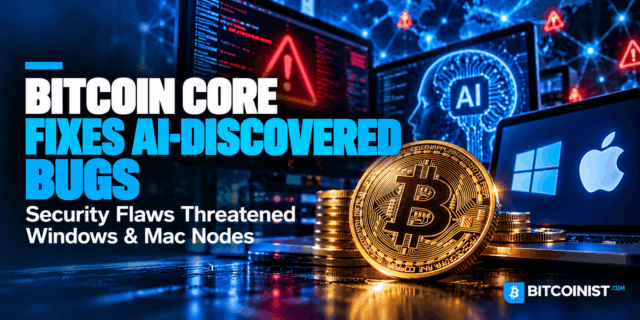
Bitcoin Core Fixes 3 Security Bugs Discovered by AI

Bitcoin Core developers have released security updates after an AI-powered code scan uncovered three vulnerabilities, including one that could allow attackers to crash Bitcoin nodes running on Windows and macOS.

The findings were made public on October 28, after developers verified the issues and distributed fixes across supported software versions.

The timing is particularly interesting. Bitcoin Core recently changed its security disclosure policy because artificial intelligence is making certain software weaknesses much easier to discover.

For people operating Bitcoin nodes, the message is straightforward: keeping software updated is becoming more important as vulnerability research accelerates.

TL;DR

  • Bitcoin Core disclosed three vulnerabilities discovered through AI-assisted code scanning, including a flaw that could crash nodes running on Windows, macOS, and BSD.
  • Security fixes are available in Bitcoin Core versions 29.5, 30.4, 31.2, and 32.1.
  • Developers are speeding up vulnerability disclosures as AI tools make previously hidden software weaknesses easier to find.

AI Discovers A Bug That Can Crash Bitcoin Nodes

The most serious concern involves how Bitcoin Core handles certain network connections on operating systems other than Linux.

An attacker connected to a vulnerable node could send specially handled TCP data that causes the software to consume increasing amounts of memory.

Eventually, the affected node could run out of memory and crash.

The vulnerability was discovered on October 23 through Project Loupe, an automated code-scanning initiative developed by Elias Rohrer at Spiral.

Bitcoin Core contributor Gregory Sanders verified the finding before it reached the project’s security team.

According to Bitcoin Core’s official security advisory, the issue affects Windows, macOS, and BSD systems. Linux nodes are not vulnerable to this particular flaw because they use a different mechanism for monitoring network connections.

Importantly, this is a denial-of-service vulnerability. The advisory does not describe an attack that allows someone to steal Bitcoin from a wallet.

Two More Vulnerabilities Raise Questions

The same investigation uncovered two additional weaknesses.

One involved outdated peer connections that could remain open while messages accumulated in memory.

Under certain conditions, this could gradually exhaust a node’s resources and interfere with normal operation.

The third issue concerned the files Bitcoin Core uses to reverse blockchain changes during reorganizations.

An attacker with substantial mining capabilities could theoretically create conditions that corrupt these records and force affected nodes to shut down.

However, developers classified that vulnerability as low severity because exploiting it would require highly impractical circumstances.

The distinction matters. Not every security flaw presents the same level of danger, even when the technical description sounds alarming.

For anyone following Bitcoin developments, these disclosures offer a useful reminder that maintaining the network involves continuous software improvements.

Bitcoin Core Changes How It Reports Security Problems

Perhaps the biggest development isn’t the vulnerabilities themselves, but how quickly they were disclosed.

Previously, Bitcoin Core could keep certain security issues confidential for extended periods, giving node operators time to install fixes before details became public.

That approach becomes less effective when automated tools can independently rediscover the same weaknesses.

Under the updated policy, vulnerabilities considered easy to discover can receive faster patches and public advisories.

We can understand the reasoning. Keeping a flaw secret provides limited protection if someone else can find it with a relatively simple AI-assisted scan.

The challenge is balancing faster disclosures with sufficient testing.

Developers must ensure urgent security updates don’t introduce additional problems.

What Bitcoin Node Operators Should Know

Bitcoin Core has released patched versions 29.5, 30.4, 31.2, and 32.1.

Operators running affected versions should review the official release information and update their software.

There is one important limitation: the fix for the undo-file vulnerability does not fully protect 32-bit systems or nodes storing blockchain data on FAT32 drives.

Those configurations remain exposed to that particular issue.

For exchanges, miners, and businesses relying on Bitcoin infrastructure, software maintenance is an operational priority.

A node that crashes may temporarily stop validating and relaying transactions, potentially disrupting services that depend on it.

The broader blockchain industry faces similar challenges as software systems become more complex.

AI Is Changing The Future Of Crypto Security

AI-assisted security research presents both an opportunity and a challenge.

Developers can examine large codebases more efficiently, identify overlooked problems, and address vulnerabilities before they cause serious damage.

Unfortunately, attackers may benefit from those same capabilities.

That’s why Bitcoin Core’s decision to accelerate disclosures deserves attention.

Rather than assuming that keeping vulnerabilities confidential will always protect users, developers are adapting to a world where finding bugs may become considerably easier.

We’ll be watching how this approach affects future security updates, particularly as more AI-generated reports reach cryptocurrency development teams.

For now, the latest fixes demonstrate that Bitcoin’s security depends not only on its underlying cryptography but also on the people maintaining the software.

As we continue covering cryptocurrency security and industry news, that distinction will remain important.

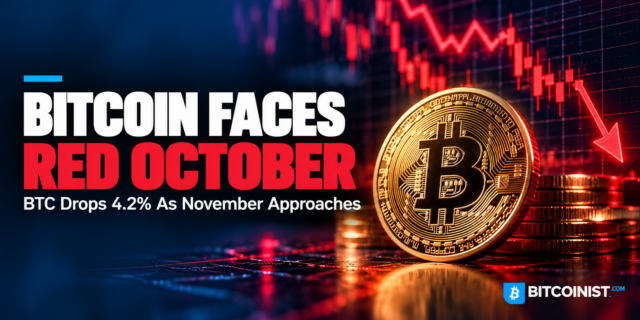
Bitcoin Faces Another Red October as Price Drops 4.2%

Bitcoin’s reputation for strong October rallies is facing another test. After five consecutive years of gains during the month, the cryptocurrency is now on track for its second negative October in a row.

Data from CryptoQuant shows Bitcoin falling 4.2% between September 30 and October 25, with its price slipping from $83,567 to $80,051.

That’s a disappointing result for a month traders often call “Uptober.” But with several days remaining before October closes, the final outcome is not yet settled.

What concerns us more is the weakness in buying demand, which could make a sustained recovery difficult as November approaches.

TL;DR

  • Bitcoin declined 4.2% through October 25, putting it on course for a second consecutive negative October.
  • CryptoQuant data shows October gains averaged 18.1% between 2020 and 2025, making this year’s performance particularly disappointing.
  • Weak spot demand and cautious investor sentiment could keep Bitcoin under pressure heading into November.

Bitcoin’s Uptober Streak Is Losing Its Shine

October has delivered some of Bitcoin’s strongest monthly performances in recent years.

In 2020, BTC gained 27.6%. The following year brought an even larger increase of 40%, while October 2023 delivered a 28.5% rally.

The returns weren’t always spectacular. Bitcoin rose just 5.5% in October 2022 and 10.9% in 2024. Nevertheless, the cryptocurrency managed to finish every October from 2020 through 2024 in positive territory.

That pattern changed in 2025, when Bitcoin recorded a 3.8% loss.

Now, with October 2026 showing a 4.2% decline through the 25th, the market faces the possibility of another disappointing finish.

The contrast is striking. CryptoQuant’s chart places the average October return for 2020–2025 at 18.1%.

We wouldn’t treat that historical average as a prediction, though. Seasonal patterns can provide context, but they offer little protection when market conditions change.

Weak Bitcoin Demand Adds To Market Concerns

The October decline is not simply a matter of disappointing historical expectations.

Recent on-chain indicators suggest buyers have become increasingly cautious.

According to CryptoQuant’s October 27 market analysis, Bitcoin spot demand had remained negative since October 14. The firm’s estimates also showed cumulative demand falling by approximately 76,000 BTC over the preceding 30 days.

Another concerning signal came from the Coinbase premium, which measures the price difference between Bitcoin trading on Coinbase and other exchanges.

The indicator remained negative throughout October, suggesting weaker buying interest from US-based market participants.

We see these demand figures as more useful than the Uptober narrative alone. Bitcoin needs sustained buying activity to support a meaningful recovery, regardless of what the calendar suggests.

Key Price Levels Could Shape Bitcoin’s Next Move

With Bitcoin trading near $80,000 in the chart’s October 25 snapshot, attention is turning to potential support levels.

CryptoQuant identified the 73,000–77,600 range as an important area to monitor if selling pressure continues.

Several technical indicators fall within that region, including Bitcoin’s 365-day moving average and the realized price of short-term holders.

These levels are not guaranteed to hold. However, they provide reference points for evaluating whether the market is stabilizing or entering another period of weakness.

A recovery above recent trading levels would offer a more encouraging signal, particularly if accompanied by stronger spot demand.

For now, we’ll be watching price action alongside developments in the broader Bitcoin market, rather than relying on seasonal expectations.

November Could Bring A Different Market Environment

October’s weakness does not automatically mean November will follow the same direction.

Bitcoin has experienced both substantial gains and steep losses during November in previous years.

That mixed history is a reminder that monthly performance patterns can change quickly.

Upcoming economic developments may also influence investor sentiment. The Federal Reserve’s October 28 policy decision and the US midterm elections scheduled for November 3 are among the events traders are monitoring.

Interest-rate expectations, institutional investment flows, and broader risk appetite could all affect Bitcoin’s direction.

We will also be following changes across the cryptocurrency market, where shifts in Bitcoin sentiment frequently influence other digital assets.

Can Bitcoin Avoid Another Negative October?

The immediate question is whether Bitcoin can recover enough before October 31 to finish the month in positive territory.

A reversal remains possible, but the latest demand indicators suggest buyers have work to do.

Even if October ends in the red, that outcome alone would not establish the direction of Bitcoin’s next major move.

What matters more is whether demand improves, institutional capital returns, and important price levels remain intact.

As we continue tracking Bitcoin price developments, those signals will help us assess whether the current weakness is temporary or part of a longer correction.

For now, Uptober is falling short of its reputation. November may offer a fresh opportunity, but the market will need more than historical optimism to support a recovery.

Luxor Announces $16M Funding Round to Scale AI Compute, Derivatives


Bitcoin Magazine

Luxor Announces $16M Funding Round to Scale AI Compute, Derivatives

AI hardware is sold out, and the companies that cut their teeth in Bitcoin mining are moving in. Luxor just raised $16 million in a round led by CMT Digital to scale its cloud platform, GPU hardware business and compute trading. Ethan Vera of Luxor and Sam Hallene of CMT Digital join BMTV to explain why Bitcoin mining expertise translates so well into AI compute.

Chapters:
00:00 Luxor Raises $16M to Take Bitcoin Mining Expertise Into AI
01:17 Why CMT Digital Backed the Luxor Team
02:54 What Bitcoin Mining Teaches AI Infrastructure
03:48 Luxor Cloud: Runners, Sandboxes and Code Review
04:51 Sandboxes for AI Agents
05:43 GPU Demand: Nvidia Sold Out for the Year
07:12 Compute Derivatives and Liquidity for AI Markets
08:12 Luxor’s Full-Stack Compute Ecosystem
10:24 Why Luxor Chose Strategic Investors
12:08 Bitcoin Mining Is Still a Core Pillar

#Bitcoin #BTC #BitcoinMining #Luxor #EthanVera #SamHallene #CMTDigital #AI #AICompute #AIInfrastructure #GPU #Nvidia #AIAgents #DataCenters #ComputeDerivatives #BitcoinMiners #Compute #EnergyGrid #BMTV #BitcoinMagazine

DISCLAIMER: The views and opinions expressed in this show are those of the participants and do not necessarily reflect the official policy or position of BTC Inc., Bitcoin Magazine, or any affiliated entities. This content is provided for informational and educational purposes only and should not be construed as investment, legal, tax, or accounting advice. Nothing contained in this show constitutes a solicitation, recommendation, endorsement, or offer to buy or sell any securities or financial instruments. Viewers should consult their own advisors before making financial or business decisions.

This post Luxor Announces $16M Funding Round to Scale AI Compute, Derivatives first appeared on Bitcoin Magazine and is written by Patrick Green.

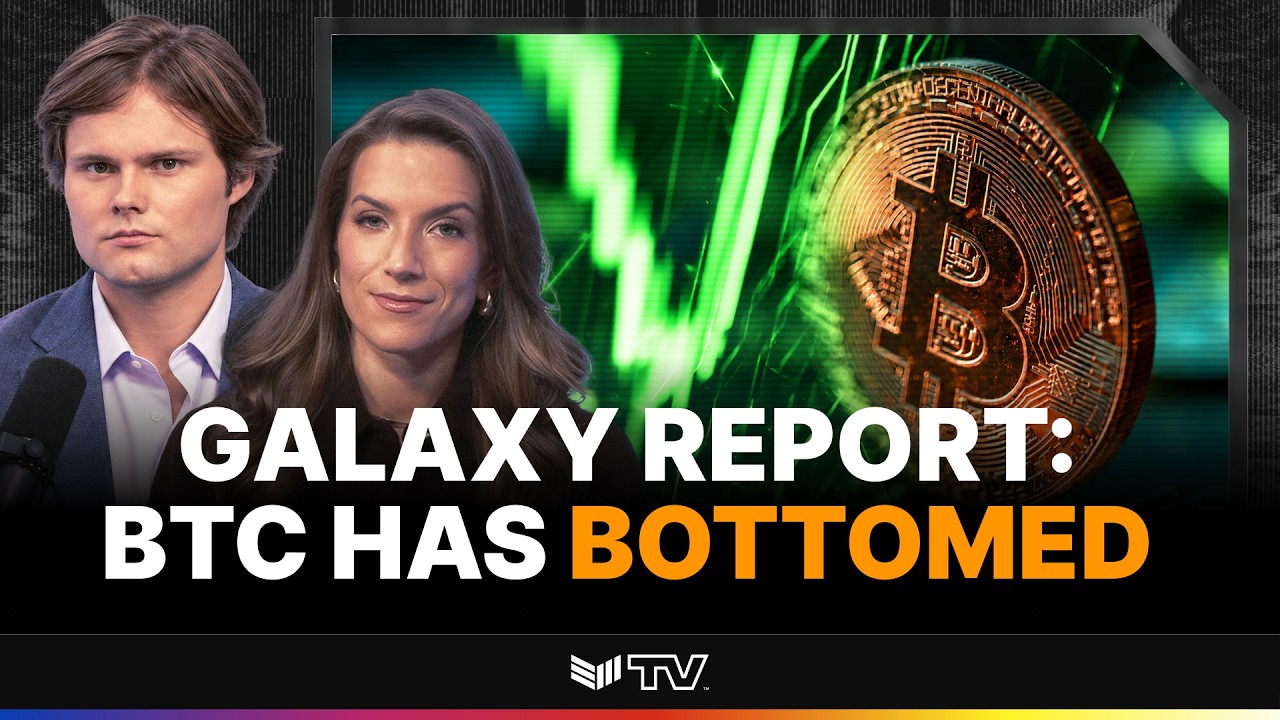
Galaxy Asset Management: “Now Is The Time” to Buy Bitcoin


Bitcoin Magazine

Galaxy Asset Management: “Now Is The Time” to Buy Bitcoin

“We believe the bottom is in.” That’s the call from Galaxy’s head of firmwide research, Alex Thorn. Bitcoin closed back above its 50-week moving average the week of September 20 and has kept that trend, and Galaxy notes that the four prior reclaims after 20-plus weeks below never closed more than 8.4% under the reclaim level in the following year. Here’s why the whole call comes down to the 50-week moving average.

DISCLAIMER: The views and opinions expressed in this show are those of the participants and do not necessarily reflect the official policy or position of BTC Inc., Bitcoin Magazine, or any affiliated entities. This content is provided for informational and educational purposes only and should not be construed as investment, legal, tax, or accounting advice. Nothing contained in this show constitutes a solicitation, recommendation, endorsement, or offer to buy or sell any securities or financial instruments. Viewers should consult their own advisors before making financial or business decisions.

This post Galaxy Asset Management: “Now Is The Time” to Buy Bitcoin first appeared on Bitcoin Magazine and is written by Patrick Green.

Samara Asset Group CEO: Bitcoin Treasury Companies a “Disservice to Shareholders”


Bitcoin Magazine

Samara Asset Group CEO: Bitcoin Treasury Companies a “Disservice to Shareholders”

A CEO whose company holds Bitcoin as its primary treasury reserve says he hates the term “Bitcoin treasury company,” and that the market is rejecting every pure treasury play except Strategy. Patrick Lowry of Samara Asset Group joins Grace Remington and Sean Hagan to explain why “digital gold” was “stupid marketing” that turned Bitcoin into an investment instead of money, and why that framing is exactly why Bitcoin dips every time the Fed talks about hiking. He lays out how Samara uses Bitcoin as working capital instead, parking venture fund commitments in it and liquidating on capital calls regardless of price.

Chapters:
0:00 “I Hate the Term Bitcoin Treasury Company”: The Market Is Rejecting Pure Plays
1:05 Why “Digital Gold” Was Stupid Marketing That Made Bitcoin an Investment
2:13 Hold vs. Use: How Samara Runs Bitcoin as Working Capital for 20+ Funds
3:59 Capital Calls Explained: Parking VC Commitments in Bitcoin Across Halving Cycles
7:17 The Hurdle Rate Problem: Why Holding Bitcoin Can Be a Disservice to Shareholders
11:46 MSCI’s Non-Operating Company Decision and the 1940 Act Loophole
13:37 Bitcoin, Ethereum and XRP: What Happens If Altcoin Treasuries Trigger a Backlash
15:21 Europe Went Backwards: BaFin, the First Bitcoin ETP and Post-Merkel Overregulation
20:20 France’s Bond Crisis and Why Germany Won’t Bail Out the French
23:30 What Rising Sovereign Yields Mean for Bitcoin and Why It Dips on Fed Hikes

DISCLAIMER: The views and opinions expressed in this show are those of the participants and do not necessarily reflect the official policy or position of BTC Inc., Bitcoin Magazine, or any affiliated entities. This content is provided for informational and educational purposes only and should not be construed as investment, legal, tax, or accounting advice. Nothing contained in this show constitutes a solicitation, recommendation, endorsement, or offer to buy or sell any securities or financial instruments. Viewers should consult their own advisors before making financial or business decisions.

This post Samara Asset Group CEO: Bitcoin Treasury Companies a “Disservice to Shareholders” first appeared on Bitcoin Magazine and is written by Patrick Green.

Bitcoin Price “Climbing the Wall of Worry” – Early Signs of Bull Market | Michael Sullivan


Bitcoin Magazine

Bitcoin Price “Climbing the Wall of Worry” – Early Signs of Bull Market | Michael Sullivan

Bitcoin is holding near $80K, yet the crowd has never seemed less excited and that might be the most bullish signal of all. Michael Sullivan, software engineer and author of Bitcoin Sentiment Weekly, breaks down what language-based sentiment data says about this market. He explains why excitement, conviction and desire are washed out to levels he compares to 2015, and why that looks like the early stages of a disbelief rally.

Chapters:
00:00 Michael Sullivan on Bitcoin and Currency Decay
00:58 Bitcoin’s Pullback From $86K: Is This a Disbelief Rally?
02:10 Bitcoin Sentiment Compared to 2015 and 2022
03:50 How to Tell When the Bitcoin Market Is Overheated
05:05 Measuring Excitement, Conviction and Desire in Bitcoin
06:42 The Next Bitcoin Bull Run Narrative: Bitcoin and AI
08:12 Investor Psychology: Buying Near All-Time Highs vs. DCA
09:42 Bitcoin and Traditional Finance Growing Together
10:54 Why Short-Term Bitcoin Holders Are So Frustrated
12:52 How AI’s Deflation Strengthens the Case for Bitcoin

DISCLAIMER: The views and opinions expressed in this show are those of the participants and do not necessarily reflect the official policy or position of BTC Inc., Bitcoin Magazine, or any affiliated entities. This content is provided for informational and educational purposes only and should not be construed as investment, legal, tax, or accounting advice. Nothing contained in this show constitutes a solicitation, recommendation, endorsement, or offer to buy or sell any securities or financial instruments. Viewers should consult their own advisors before making financial or business decisions.

This post Bitcoin Price “Climbing the Wall of Worry” – Early Signs of Bull Market | Michael Sullivan first appeared on Bitcoin Magazine and is written by Patrick Green.

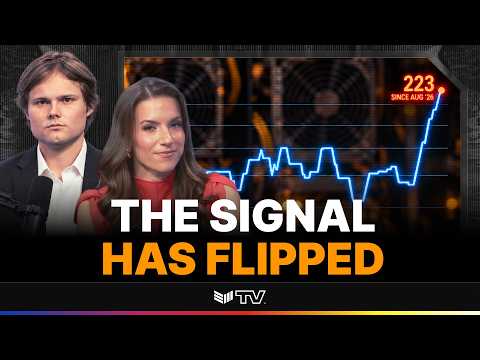
BTC Hash Ribbon Signal Flipped: Bitcoin Miners Show the Bottom Might Be In


Bitcoin Magazine

BTC Hash Ribbon Signal Flipped: Bitcoin Miners Show the Bottom Might Be In

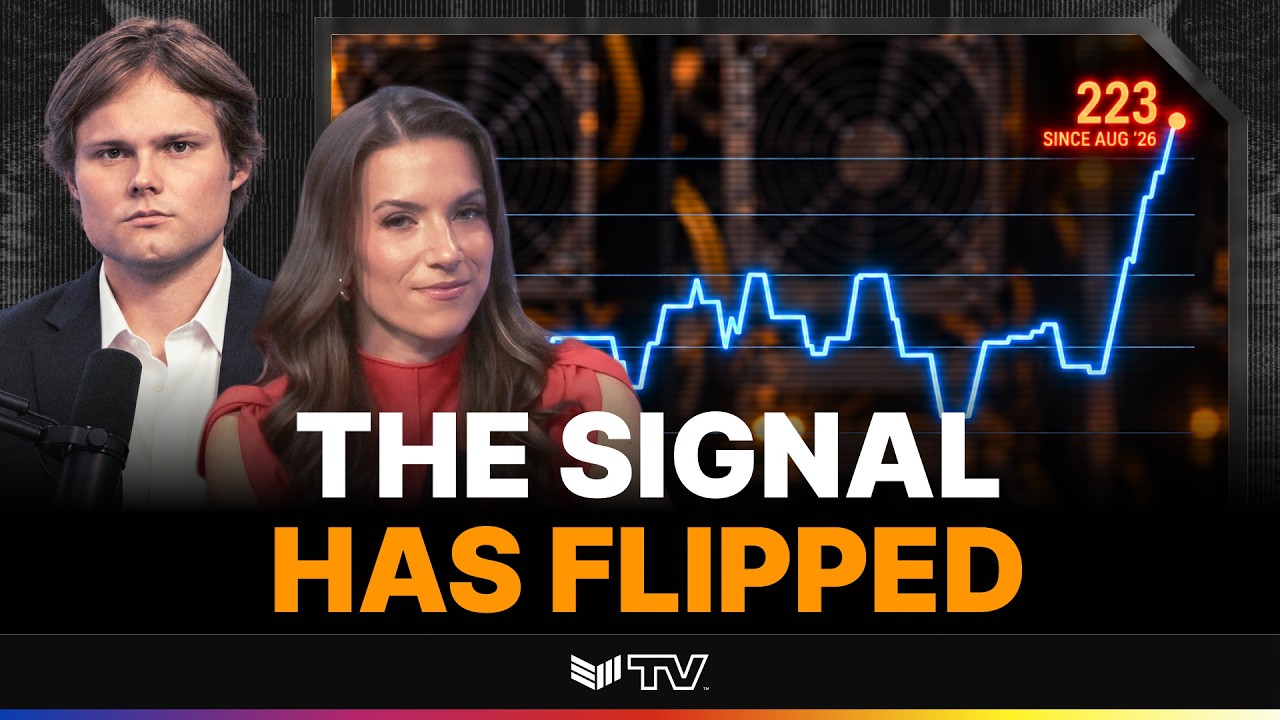
The hash ribbon recovered on August 26 and has held for 61 days. Historically, Bitcoin was higher one year later in six of seven counted recoveries, about a 72% edge. Sean Hagan breaks down the signal, the misses (15 of 231, notably April 2021 at -17%), the January signal still 12% underwater, and why the 30-day hash rate at roughly 1.1 ZH, up 13% from July, says the worst of the miner stress is behind us. Grace Remington asks the right question: if miners left voluntarily, is the signal still reliable?

Chapters:
0:00 The Hash Ribbon Explained: Counting Miner Capitulation Days Since 2011
0:26 A New Record: 223 of 365 Days in Capitulation vs. 141 in 2012
1:01 Why This Cycle Is Different: Miners Left for $100 Billion in AI Contracts
1:48 More Like the 2021 China Ban Than 2018 or 2022
2:14 The Timing Still Fits: Capitulation Peaked 56 Days After the June 30 Low
2:37 Hash Ribbon Recovered 61 Straight Days, Hash Rate Up 13% From the Low
3:20 Price Agrees: MVRV Above Its Average and Bitcoin Above the 50-Week
3:58 Is the Signal Reliable If Miners Left Voluntarily? Higher 6 of 7 Times
5:18 Could Hash Rate Come Back From AI as the Build-Out Hits Bottlenecks?
6:52 A Backward-Looking Chart With a 70%-Plus Directional Track Record

DISCLAIMER: The views and opinions expressed in this show are those of the participants and do not necessarily reflect the official policy or position of BTC Inc., Bitcoin Magazine, or any affiliated entities. This content is provided for informational and educational purposes only and should not be construed as investment, legal, tax, or accounting advice. Nothing contained in this show constitutes a solicitation, recommendation, endorsement, or offer to buy or sell any securities or financial instruments. Viewers should consult their own advisors before making financial or business decisions.

This post BTC Hash Ribbon Signal Flipped: Bitcoin Miners Show the Bottom Might Be In first appeared on Bitcoin Magazine and is written by Patrick Green.

❌