Reading view

There are new articles available, click to refresh the page.

NASA Names Two Artemis II Astronauts to Emeritus Program
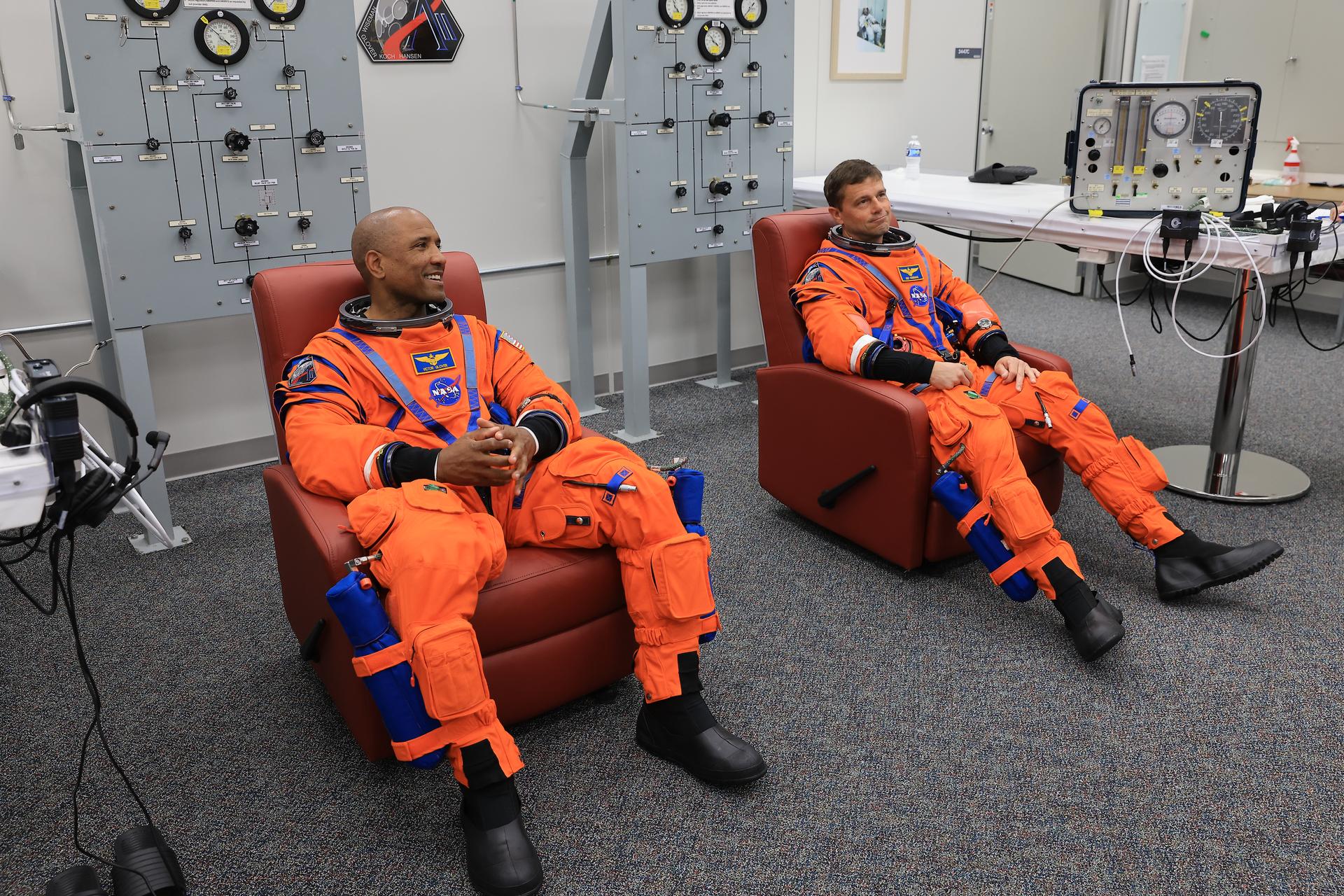
From left, NASA astronauts Victor Glover, Artemis II pilot and Reid Wiseman, Artemis II commander, are seated in chairs wearing orange jumpsuits. Behind them are two large gray panels with dials. The two astronauts are listening attentively and they prepare to conduct leak checks on his spacesuit inside the crew suit-up room in the Neil A. Armstrong Operations and Checkout Building at the agency’s Kennedy Space Center in Florida on Wednesday, April 1, 2026, ahead of the Artemis II test flight.
From left, NASA astronauts Victor Glover, Artemis II pilot, and Reid Wiseman, Artemis II commander, conduct leak checks on their spacesuits inside the crew suit-up room in the Neil A. Armstrong Operations and Checkout Building at the agency’s Kennedy Space Center in Florida on Wednesday, April 1, 2026, ahead of the Artemis II test flight.
Credit: NASA/Kim Shiflett

Following their landmark Artemis II mission earlier this year, distinguished NASA astronauts Victor Glover and Reid Wiseman are transitioning in September to emeritus status at the agency’s Johnson Space Center in Houston.

In an emeritus role, individuals with a high degree of technical and professional knowledge can continue to support the agency by donating their time to train and mentor the current workforce. This allows the agency to maintain access to top talent in a specialized consultant role, while simultaneously providing the individual with the flexibility to pursue other opportunities.

“I’ve had the privilege of knowing Reid and Victor for years, and both exemplify the leadership, character, and commitment that define NASA at its best.” said NASA Administrator Jared Isaacman. “Reid commanded Artemis II after previously spending 165 days aboard the International Space Station, while Victor brought his experience as a naval aviator, test pilot, and Crew-1 astronaut to his role as pilot. Together, they took on one of the most challenging missions in human spaceflight and helped return America to the lunar environment. As Reid and Victor transition to emeritus status, I’m grateful they will continue sharing what they learned with our astronauts, flight controllers, and engineers as we prepare for Artemis III in 2027 and the missions that follow.”

Glover will support aerospace, leadership, and public service efforts as he transitions within and outside of NASA. He’s committed to transferring his knowledge of Orion and its spacecraft systems, among other expertise, to future Artemis missions.

“As I grow into this new role, NASA and spaceflight remain a meaningful part of my journey of service,” said Glover. “I’m excited to keep uplifting my friends and cheering them on as they reach for the Moon. Together, we’ll keep pushing boundaries and inspiring the next giant leap.”

Wiseman is set to share his spaceflight experience with colleagues ahead of the agency’s Artemis III mission in low Earth orbit to test rendezvous and docking capabilities between Orion and commercial human landing systems.

“There is no better place to work, and there are no better people to work with, than those in this agency,” said Wiseman. “NASA gave me tremendous responsibility, supported me through two space missions, and my time as chief astronaut, and was always there for my family when we needed it most. I’m thrilled to continue serving future missions and programs through the emeritus program.”

“Reid and Victor’s commitment to exploration, steady leadership, and service to our astronaut corps and our nation have made a lasting impact,” said Vanessa Wyche, director of NASA’s Johnson Space Center in Houston. “Throughout their careers, they have each brought excellence, humility, and purpose to every role they have held at NASA. Their contributions have helped advance our mission and inspire those around them, leaving a legacy that will continue to shape the future of human spaceflight. We are immeasurably grateful for all they have given to NASA and are glad that this is not the end of their journey with the agency.”

“Reid and Victor are trusted teammates whose professionalism, calm leadership, and unwavering commitment to NASA have strengthened our office and inspired everyone around them,” said Scott Tingle, chief of the Astronaut Office at Johnson. “As they transition into their emeritus roles, they leave a legacy of operational excellence that will continue shaping the astronaut corps for years to come. We’re grateful that they will still be part of our community, sharing their experience and insight as they begin this next chapter.”

Among their many accomplishments at NASA, as Artemis II crew members, Glover and Wiseman were two of the four astronauts to first launch on top NASA’s SLS (Space Launch System) rocket aboard the Orion spacecraft for a mission around the Moon. Following a 10-day mission with crewmates NASA astronaut Christina Koch and CSA (Canadian Space Agency) astronaut Jeremy Hansen, they safely splashed down on April 10 as the first humans to travel to lunar orbit in more than 50 years, ultimately flying farther in space than anyone had before.

Support and knowledge transfer from both Glover and Wiseman is critical for the upcoming Artemis III mission as NASA prepares to return American astronauts to the lunar surface on the Artemis IV mission in 2028.

To learn more about NASA astronauts, visit:

https://www.nasa.gov/astronauts

-end-

George Alderman / Cheryl Warner
Headquarters, Washington
202-356-1600
george.a.alderman@nasa.gov / cheryl.m.warner@nasa.gov
Share

Details

Last Updated
Sep 09, 2026

NASA Astronaut Jonny Kim Departs Agency to Continue Military Service

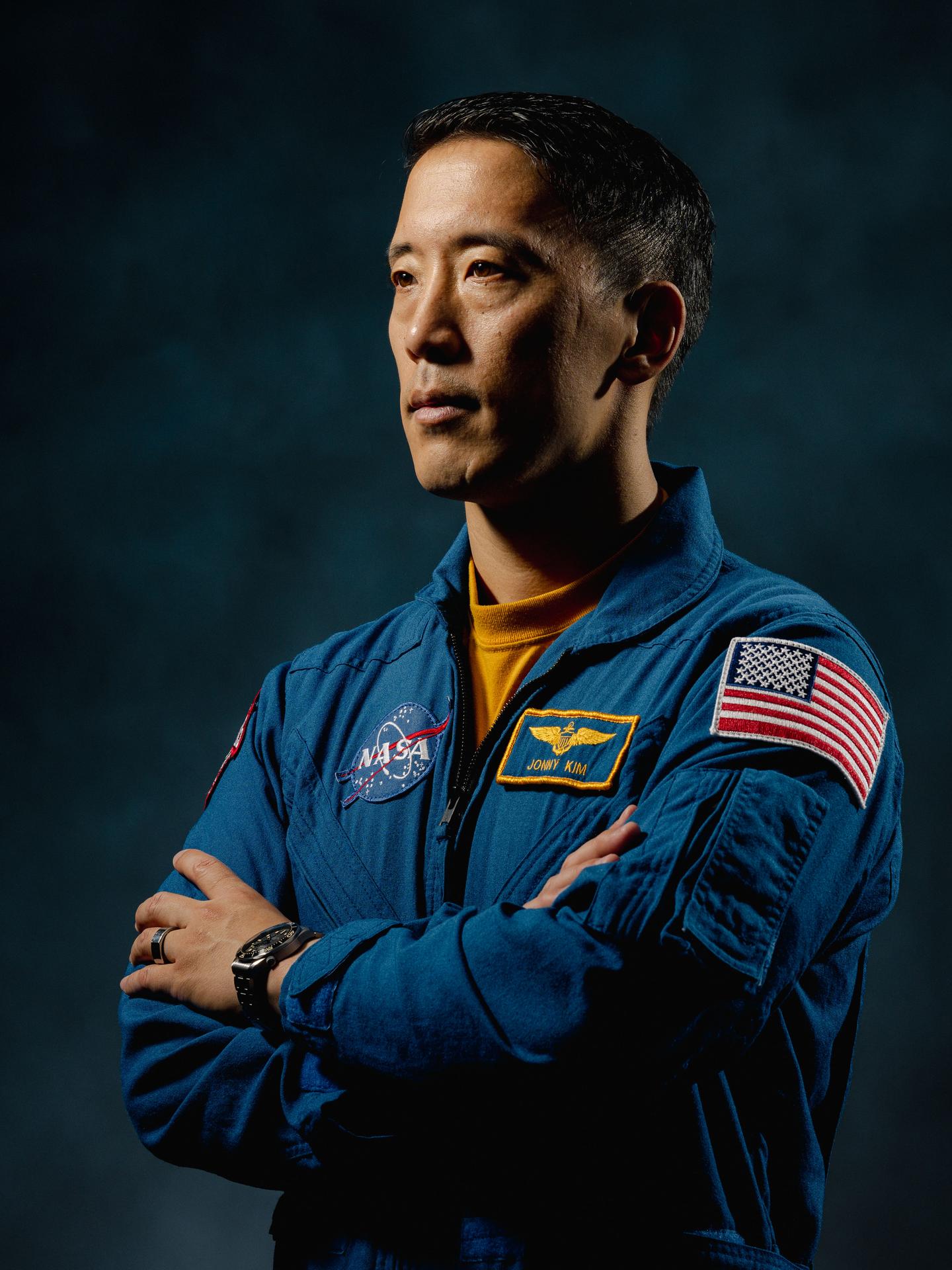
NASA astronaut Jonny Kim poses for a portrait at NASA’s Johnson Space Center in Houston, Texas.
NASA astronaut Jonny Kim poses for a portrait at NASA’s Johnson Space Center in Houston.
Credit: NASA/Josh Valcarcel

After nearly a decade of service to NASA, including an eight-month science expedition aboard the International Space Station, astronaut Jonny Kim’s last day at the agency is Thursday. He will continue serving as lieutenant commander in the U.S. Navy.

Kim launched to the space station in April 2025 aboard the Soyuz MS‑27 spacecraft to conduct scientific research as a flight engineer during Expeditions 72/73. During the mission, he orbited Earth 3,920 times, traveled nearly 104 million miles, and contributed to a broad range of scientific investigations spanning technology development, Earth science, biology, and human research critical for future exploration.

“Jonny Kim represents the very best of NASA, a person who continually pushed the boundaries of exploration while inspiring countless others,” said NASA Administrator Jared Isaacman. “His contributions aboard the International Space Station advanced critical science that will shape NASA’s future missions for decades to come. We are grateful for his dedication to our nation and to the pursuit of knowledge, and we wish him success as he continues his service in the U.S. Navy.”

Serving as the U.S. Operating Segment lead for the second half of Expedition 73, Kim oversaw operations across the station’s international modules. During the expedition, the station achieved a historic milestone when every available docking port was occupied for the first time in 25 years. He also commanded the Canadarm2 robotic arm during the first capture of Northrop Grumman’s new Cygnus XL spacecraft, securing 11,000 pounds of supplies for the station. Kim and his Roscosmos crewmates landed safely in Kazakhstan in December 2025.

“Jonny has been an integral part of the agency, and his immeasurable impact will be felt for generations to come,” said Vanessa Wyche, director of NASA’s Johnson Space Center in Houston. “From advancing groundbreaking science to inspiring the next generation, Jonny has been an incredible source of inspiration to our nation. His exceptional talent, determination, and grit will leave a lasting legacy at NASA.”

Kim was selected as a NASA astronaut in 2017 and completed two years of astronaut candidate training, which included instruction in space station systems, Russian language, robotics, T‑38 flight operations, geology, survival training, and spacewalk preparation.

He later supported station operations as a capsule communicator, or capcom, in NASA’s Mission Control Center at Johnson. Kim also contributed to Artemis program development through his work in the astronaut exploration branch, leading the astronaut crew operations branch, and serving as increment lead for Expedition 65. His experiences as a Navy SEAL, physician, and naval aviator provided unique perspectives in mission operations and crew support.

“Jonny approached every assignment with humility, precision, and steadfast commitment to the mission,” said Scott Tingle, chief of the Astronaut Office at NASA Johnson. “His combination of medical training, operational experience, and engineering insight strengthened our team and contributed to advancements in exploration and space station operations.”

Born in Los Angeles, Kim enlisted in the U.S. Navy after graduating high school in 2002. He trained as a hospital corpsman and completed Basic Underwater Demolition/SEAL training before joining SEAL Team Three. Over the course of more than 100 combat operations, he served as a medic, sniper, navigator, and point man, earning the Silver Star, Bronze Star with Combat “V,” and numerous additional commendations.

He earned a bachelor’s degree in mathematics from the University of San Diego and a doctor of medicine from Harvard Medical School. He completed his internship at Massachusetts General Hospital and Brigham and Women’s Hospital in Boston. Kim became a dual-designated naval aviator and flight surgeon, completing flight training at Naval Air Stations Corpus Christi in Texas and Whiting Field in Florida, and aerospace medical training at the Naval Aerospace Medical Institute at Naval Air Station Pensacola.

Kim is returning to active duty to finish out the remainder of his military career within naval aviation training.

“Contributing to space exploration and serving NASA has been the honor of a lifetime,” said Kim. “Throughout my career, I’ve learned that beyond the missions, the training, and the hardware, success always comes down to the people. They are our greatest asset, and leading with love and empathy is how we achieve the impossible. I look forward to carrying my commitment to service, my enduring love for space and technology, and the hard-earned lessons of this past decade into my next chapter to make a meaningful impact on humanity’s future.”

To learn more about NASA’s astronauts and human space exploration, visit:

https://www.nasa.gov/astronauts

-end-

Jimi Russell
Headquarters, Washington
202-358-1100
james.j.russell@nasa.gov

Anna Schneider
Johnson Space Center, Houston
281-483-5111
anna.c.schneider@nasa.gov

Share

Details

Last Updated
Aug 27, 2026
Editor
Jessica Taveau

NASA Astronaut Mike Fincke Leaves NASA, Career Includes 4 Spaceflights

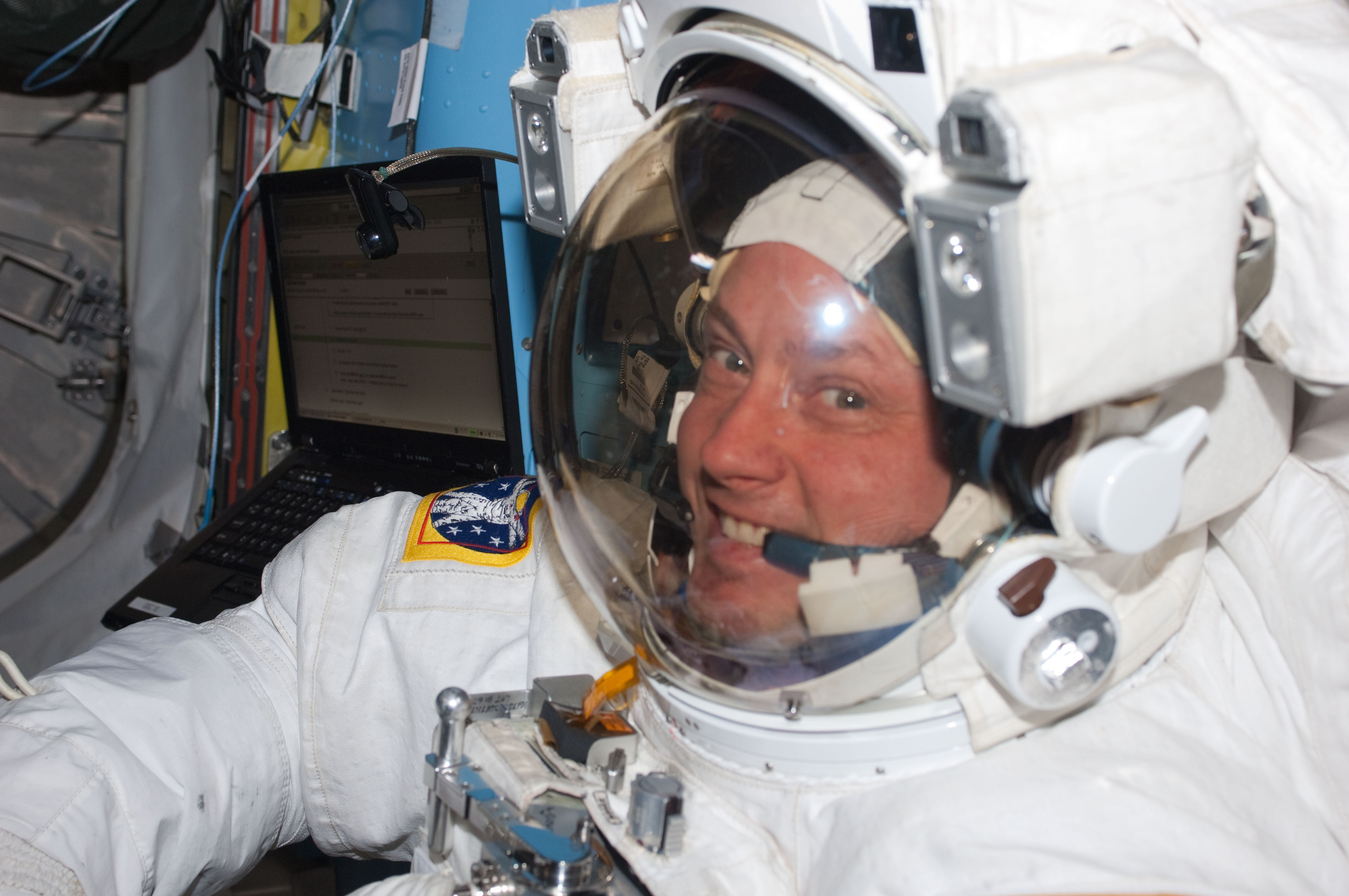
NASA astronaut Mike Fincke is pictured inside the International Space Station’s Quest airlock prior to the start of the third spacewalk for the STS-134 mission.
Credit: NASA

NASA astronaut Mike Fincke is departing the agency on Wednesday after 30 years of service. Throughout his career, he flew four missions, spent 549 days in space, and completed nine spacewalks in support of the International Space Station.

“Few people have had the opportunity to shape as many chapters of NASA’s history as Mike Fincke,” said NASA Administrator Jared Isaacman. “Over a remarkable career, Mike served our nation as a pilot, engineer, astronaut, and mentor. From long-duration missions aboard the International Space Station to helping prepare the Artemis generation, his contributions have helped position NASA for what comes next. The success we’re building on today is possible because of people like Mike, who dedicated their careers to moving our space program forward and preparing the next generation to carry the mission even further. I’d like to congratulate Mike on an incredible career and thank him for his decades of service to NASA, our nation, and the countless people who had the opportunity to learn from and fly alongside him.”

He ranks fourth among NASA astronauts in accumulated time in space, and his spacewalks total 48 hours and 37 minutes. Most recently, Fincke piloted NASA’s SpaceX Crew‑11 mission, which launched in August 2025 and returned in January. During the mission, he served as a flight engineer for International Space Station Expedition 73 and commander of Expedition 74.

Fincke joined NASA’s 16th astronaut class in 1996 and first flew to space in 2004 aboard Soyuz TMA‑4 in support of the space station’s Expedition 9. Serving as a science officer and flight engineer, he helped maintain station systems and performed four spacewalks. He returned to space in 2008 on Soyuz TMA‑13 as commander of Expedition 18, preparing the space station for its transition to six‑person crews at the time and completing two more spacewalks.

In 2011, Fincke flew on STS‑134, the final flight of space shuttle Endeavour. As mission specialist and robotic arm operator, he completed three spacewalks and helped deliver and install the Alpha Magnetic Spectrometer.

“Mike’s remarkable career reflects three decades of dedication to NASA’s mission and the advancement of human spaceflight,” said Vanessa Wyche, director of NASA’s Johnson Space Center in Houston. “From his time aboard the International Space Station to his commitment to mentoring the next generation, Mike has made an immense impact across our agency. His legacy of service, mentorship, and dedication to exploration will continue to inspire the generations to come.”

Throughout his career, Fincke bridged spacecraft development, flight testing, and mission operations. Early in the International Space Station Program, he helped test and integrate several of the station’s initial modules before launch. His flight experience spanned multiple generations of human spacecraft, including two missions aboard Soyuz, one aboard the space shuttle, and later piloting the SpaceX Dragon.

Fincke was a foundational contributor to NASA’s Commercial Crew Program. As chief of the Astronaut Office’s Commercial Crew Branch, he worked to ensure astronaut needs, crew safety, and human spaceflight experience informed development of the nation’s next generation of crewed spacecraft. He spent five years supporting Boeing’s Crew Flight Test program training as a crew member and backup pilot, contributing to flight software, systems integration, integrated testing, and spacecraft interfaces.

Fincke also supported station operations from the ground as a crew test support team member in Russia, a capsule communicator, or capcom, and crew procedures team lead. He helped translate complex engineering and operational requirements into clear instructions for crews working in orbit. His continuity across development, integration, mission support, and long‑duration flight gave him an end‑to‑end perspective on space station assembly and operation.

“Mike approached every assignment with experience, humility, and an unwavering focus on the mission,” said Scott Tingle, chief of the Astronaut Office at NASA Johnson. “Whether flying aboard the station, supporting crews from the ground, or helping shape the spacecraft that future crews will rely on, he consistently strengthened our team. His legacy is woven into the way we fly today.”

A native of Emsworth, Pennsylvania, Fincke holds bachelor’s degrees in aeronautics and astronautics and in Earth, atmospheric, and planetary sciences from the Massachusetts Institute of Technology, where he also studied in the Soviet Union through an exchange program with the Moscow Aviation Institute. He earned master’s degrees in aeronautics and astronautics from Stanford University and in planetary geology from the University of Houston, Clear Lake.

Fincke is a retired U.S. Air Force colonel and distinguished graduate of the U.S. Air Force Test Pilot School. He served as a space systems engineer and flight test engineer at Edwards and Eglin Air Force Bases and later as the U.S. flight test liaison to the Japanese‑U.S. XF‑2 fighter program at Gifu Air Base in Japan. He accumulated more than 2,000 flight hours in more than 30 aircraft types.

“After exactly 30 years, I am departing NASA, but I remain deeply committed to the work of exploration.” Fincke said. “NASA gave me the extraordinary privilege of serving alongside remarkable people, flying and helping develop spacecraft, and contributing to the International Space Station from its earliest days through command in orbit. I am profoundly grateful to my crewmates, the teams on the ground, our international partners, and the families who make this work possible. I am excited to carry those lessons forward and help prepare the next generation of engineers, explorers, and leaders. Together, we will return humanity to the Moon, travel to Mars, journey outward to the planets and moons beyond Earth, and someday reach for the stars – all while caring for Earth, the most beautiful planet in our solar system.”

To learn more about NASA’s astronauts and space exploration, visit:

https://www.nasa.gov/astronauts

-end-

Jimi Russell
Headquarters, Washington
202-358-1100
james.j.russell@nasa.gov

Anna Schneider
Johnson Space Center, Houston
281-483-5111
anna.c.schneider@nasa.gov

Share

Details

Last Updated
Aug 12, 2026

Taking Flight to Prepare for Space

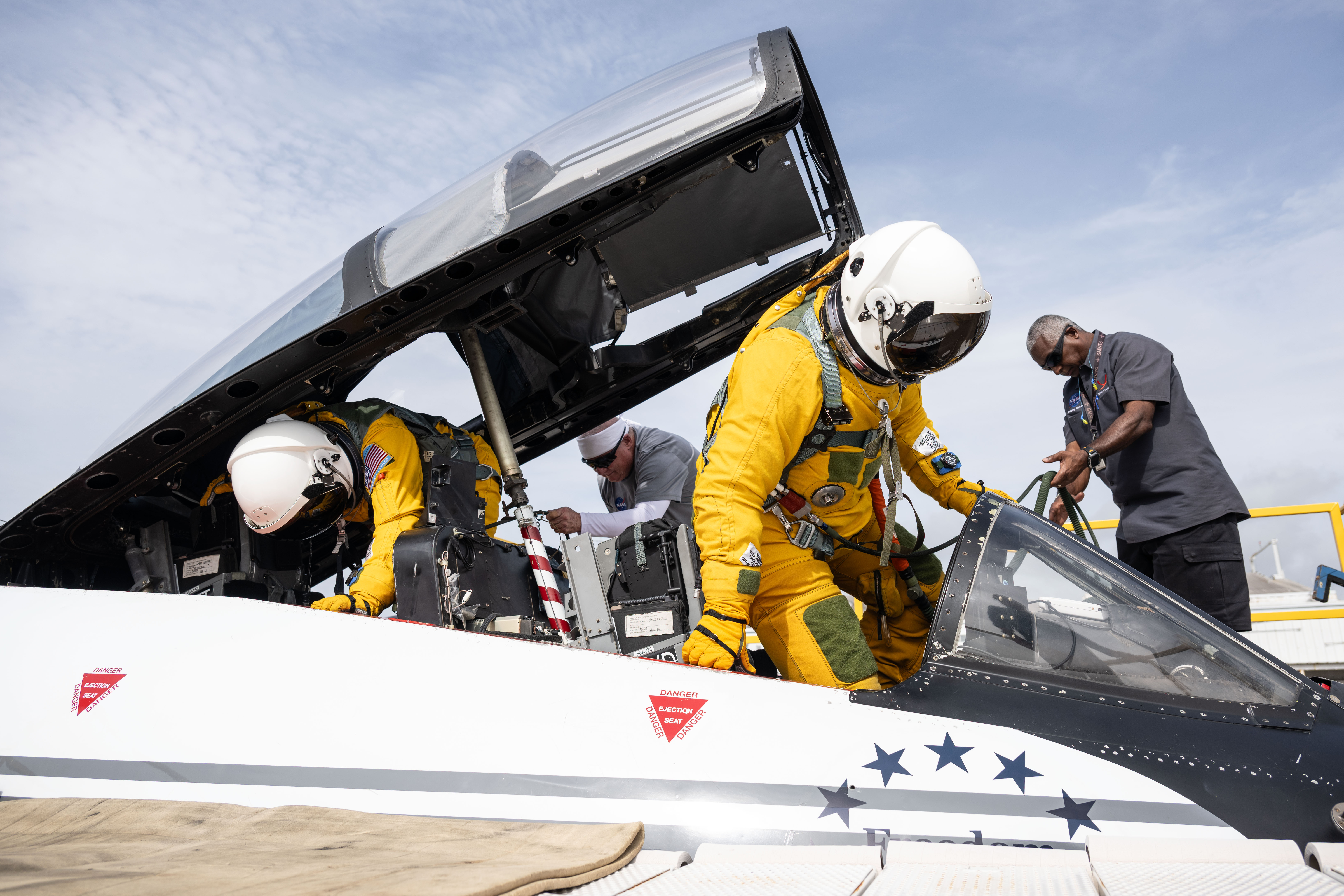
Two people in slim yellow spacesuits and white helmets climb into an airplane as technicians work around them.
NASA/Josh Valcarcel

NASA astronaut Adam Fuhrmann (right, in yellow) prepares for a training flight aboard NASA’s WB-57 aircraft in this July 16, 2026, photo.

These high-altitude flights train the crew to work in a tight environment and operate aircraft systems while in a pressure suit, preparing them for future missions to the International Space Station, Moon, or beyond.

Image credit: NASA/Josh Valcarcel

❌