Bitcoin’s time has come in Asia — especially with a changing regulatory landscape — and its people and companies should take advantage.
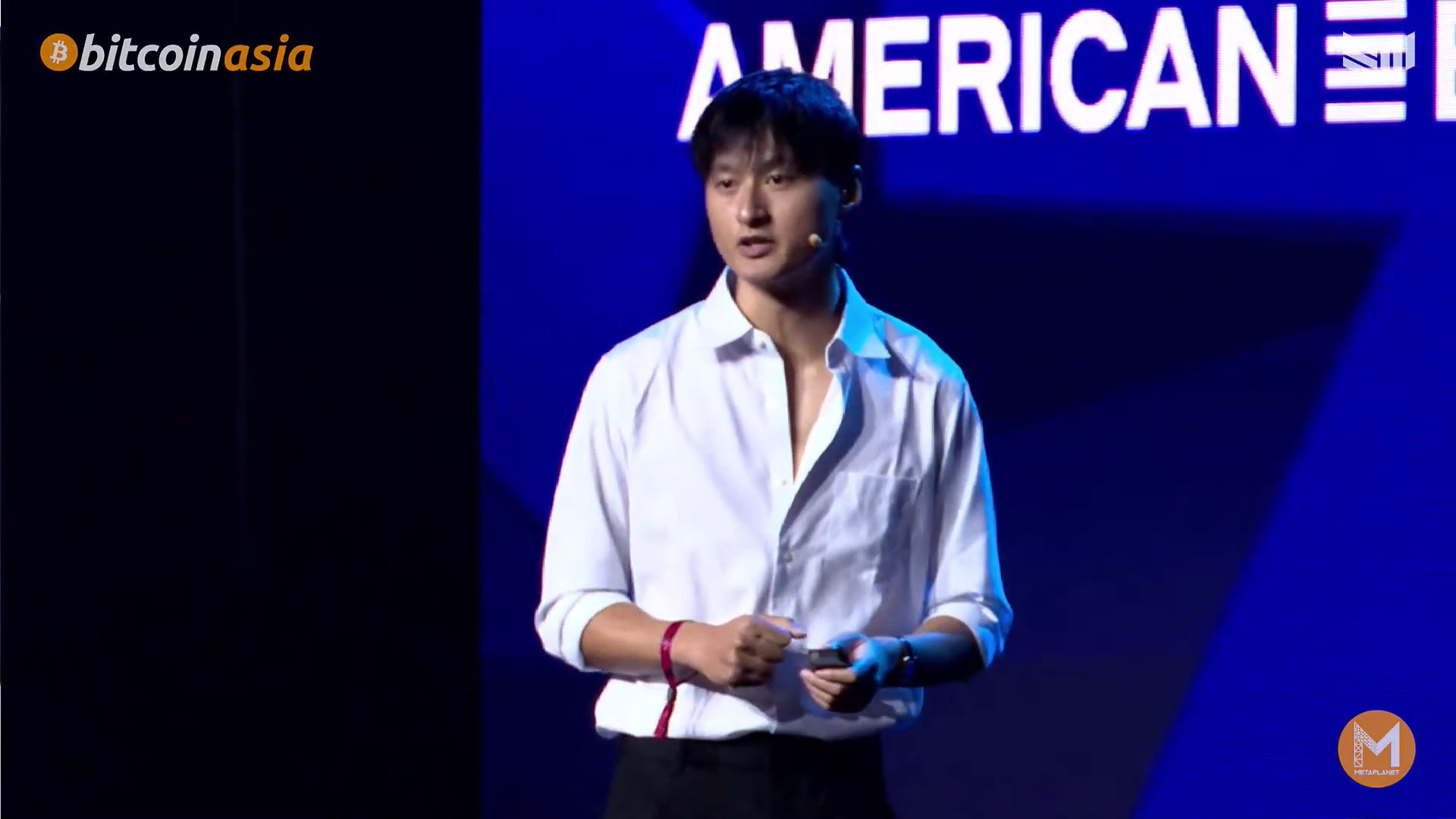
That was the message Metaplanet CEO Simon Gerovich gave at this year’s Bitcoin Asia conference, where on Friday he spoke of how his company went from failing to the third biggest bitcoin treasury in the world.
Bitcoin Asia kicked off on Thursday in Hong Kong, bringing the biggest names in the space to Hong Kong to talk about everything from treasury companies to building apps from scratch.
JUST IN: Japanese public company Metaplanet CEO says the bottom for Bitcoin's price is in
"The buyers arriving now aren't going anywhere. I believe the bottom is in. And I'm expecting a much brighter rest of the year." pic.twitter.com/zz0RUxspSz
“The previous cycles belonged to the West, and the first Asian cycle has already started,” Gerovich said. “The only question left is who builds it. Will you?”
Often dubbed Asia’s answer to Nasdaq-listed Bitcoin treasury Strategy, Metaplanet pivoted from its core hotel and technology business to buying Bitcoin in 2024. The Tokyo Stock Exchange now holds 43,000 bitcoins worth about $3.3 billion at today’s prices.
Gerovich said in his speech that his company was small and going nowhere fast until it started putting bitcoin on its balance sheet, basically allowing investors to buy exposure to the biggest digital coin via its regulated shares.
He said that the strategy is a major opportunity for Asian companies, which can now capitalize on the changing regulatory landscape and the growing interest in Bitcoin.
Asian nations, including Japan, Hong Kong, and Singapore, are making regulatory changes to support digital assets.
Gerovich noted that Japan in particular is a country where its citizens have saved like no other part of the world — and that capital can now be put to good use.
“Hoarding cash has stopped making sense, and every household in Japan can now feel it,” he said.
“Japanese households hold roughly 14 trillion dollars in financial assets. About half of that sits in bank deposits, earning almost nothing, and that’s just Japan, add Korea, Southeast Asia, and the wealth managed out of this place, Hong Kong, and you’re looking at the deepest pools of patient savings on Earth.
“And for the first time in a generation, these savings are looking for somewhere to go.”
Gerovich added that Asian companies, institutions, and savers should take advantage of the current market conditions and build the Bitcoin infrastructure in their own regions.
“The end of the cash hoarding strategy and new rules are arriving at exactly the same time, and together, they set up what I think is the single biggest opportunity in Asian markets today,” he added.
Speaking at Bitcoin Asia in Hong Kong on Thursday, Damian Chen, VP of growth at the Starknet Foundation, demonstrated how funds vulnerable to future quantum attacks can be secured without requiring a network-wide fork, thanks to the company’s latest solution.
“This is a monumental moment,” Chen said. “This is the first post-quantum-resistant Bitcoin transaction on bitcoin mainnet today. It required no soft forks; it required no hard forks; it required no core protocol upgrades, and it’s live today.”
The transaction happened using a method created by StarkWare researcher Avihu Levy. It works like this: Bitcoin transactions sit briefly in a public queue before confirmation. During that window, they expose cryptographic material that a sufficiently powerful quantum computer could use to forge a signature and steal the funds before the transaction is confirmed.
But rather than accepting the first valid signature, his method generates millions of signature candidates until it finds one with a specific structural property that doesn’t expose that vulnerable material while waiting in the mempool.
This “signature grinding” is deliberately computationally expensive — a single transaction takes hours to produce — but that cost is what makes it resistant to quantum shortcuts.
Touting Quantum safe Bitcoin transactions — dubbed “QSB” — to institutions, Chen said that even if attackers have a fund’s private keys, they couldn’t make a fraudulent transfer.
“QSB introduces a new hash authorization, and so an attacker with a sufficiently capable computer, even if they have your exposed public key, even if they derive your private key from your public key, even if they try to use that to authorize a spend to move your coins out of your wallet, those things are not enough for them to do so,” he said.
It’s worth noting that ordinary Bitcoin nodes currently don’t recognize this non-standard transaction format, so it couldn’t go into the public mempool and instead had to be handed straight to a miner willing to accept it — with mining company MARA’s Slipstream service being the one that mined the QSB transaction.
Quantum researchers have warned that a time will come when Bitcoin’s software — which underpins the biggest and strongest computer network in the world — will need to be upgraded to deal with quantum computing.
While some crypto VC firms have urged action, top Bitcoin developers have argued that many of today’s quantum computers have limited capabilities, and have only demonstrated trivial computations.
Still, they have noted that their development could arrive unexpectedly — just like advances with artificial intelligence — and have started developing some solutions.
Chen added: “The question to me has never been when will quantum arrive. We all know quantum will arrive at one stage, but the question to me has always been, how long will it take for you to be ready when quantum does arrive?”
Tune in to the Bitcoin Asia 2026 Day 1 livestream, featuring CZ, Gracy Chen, Justin Sun and more global Bitcoin leaders live from Hong Kong — the center for ...
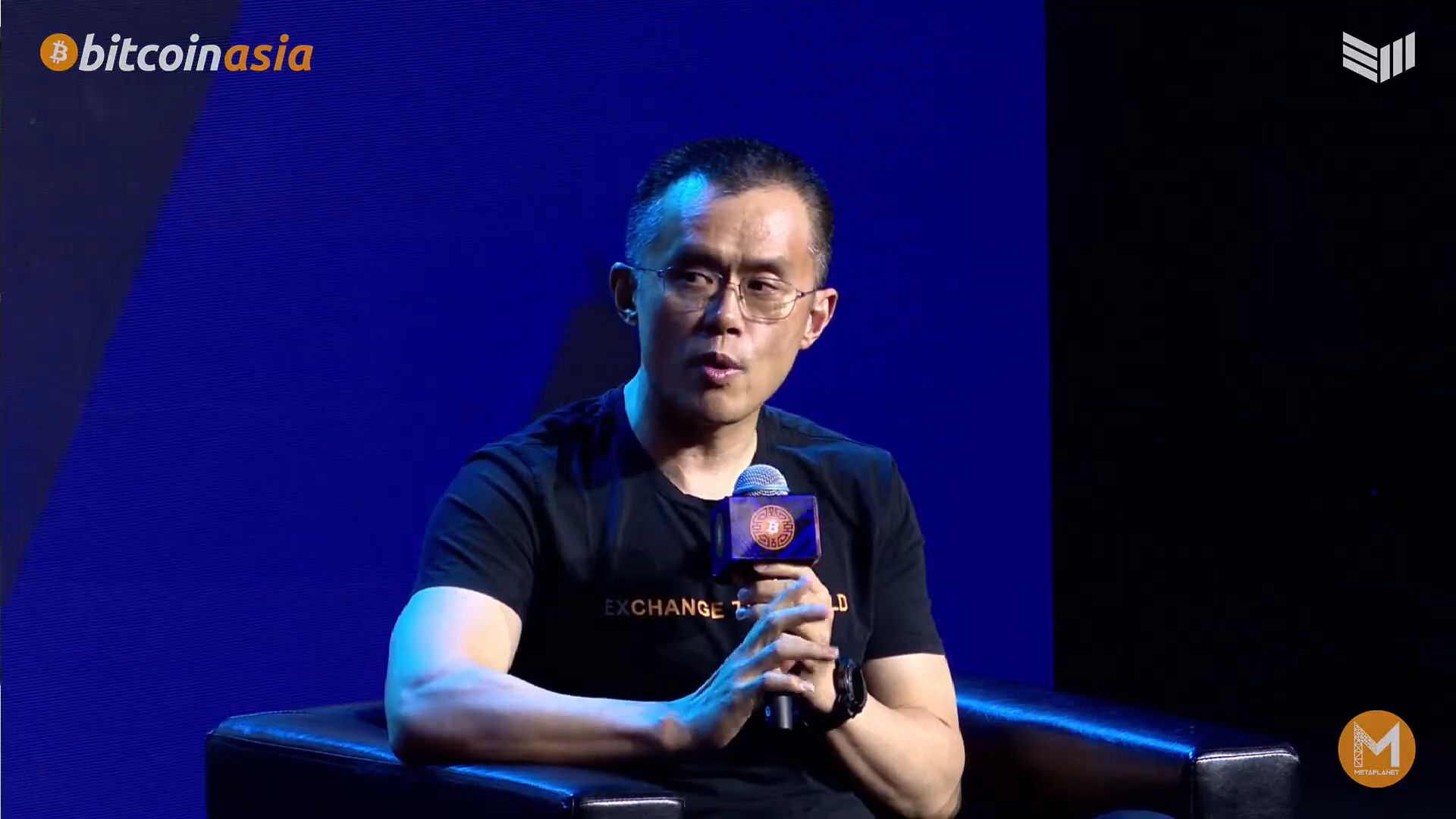
Binance founder Changpeng “CZ” Zhao has said that Bitcoin will hit $1 million dollars per coin sooner than we think — and eventually surpass gold’s market value.
Speaking at this year’s Bitcoin Asia on Thursday, the crypto entrepreneur also said that Bitcoin is “dangerous” for countries that don’t use it.
Bitcoin Asia kicked off on Thursday in Hong Kong, bringing the biggest names in the space to Hong Kong to talk about everything from treasury companies to building apps from scratch.
JUST IN: Former Binance CEO CZ says "I think for Bitcoin to hit $1,000,000 would be a good thing. And it'll happen."
“I think for Bitcoin hitting a million dollars would be a good thing — it will happen,” CZ said. “You think we need 25 years for that to happen? No, I actually don’t think we need 25 years, I think it’s going to happen much quicker.”
CZ continued: “Bitcoin will, for sure, become more important than gold,” adding that large counties would over the years realize that the leading cryptocurrency is a “much better asset.”
Bitcoin’s price started surging last week on news that the U.S. Treasury would at least double the size of its liquidity-support buyback operations. The announcement last week hurt the dollar but non-yielding assets like Bitcoin and gold have benefited.
The price of Bitcoin has jumped nearly 12% over the past seven days, touching as high as $81,160 this week before dropping again to its current price of $80,520.
Bitcoin’s $1.6 trillion market cap is still well below gold’s $32.2 trillion value.
Regarding nation state adoption, CZ said that countries that don’t end up adopting Bitcoin will lose out — just like with other emerging technologies, such as AI.
“If you think about AI, which country doesn’t want to hold the AI technology itself? Not investing in AI technology, not promoting the AI industry in your country, is dangerous for you,” he said.
“Many countries view Bitcoin as this dangerous thing — it’s not. Bitcoin is much more dangerous if you don’t use it: you’re missing out.”
He added that countries making the move to shift into Bitcoin would take time but would eventually happen.
Kaspersky links OctLurk and SilkLurk to cyberespionage attacks stealing passwords, emails and files from government systems in six countries since January 2025.

 Login
Login
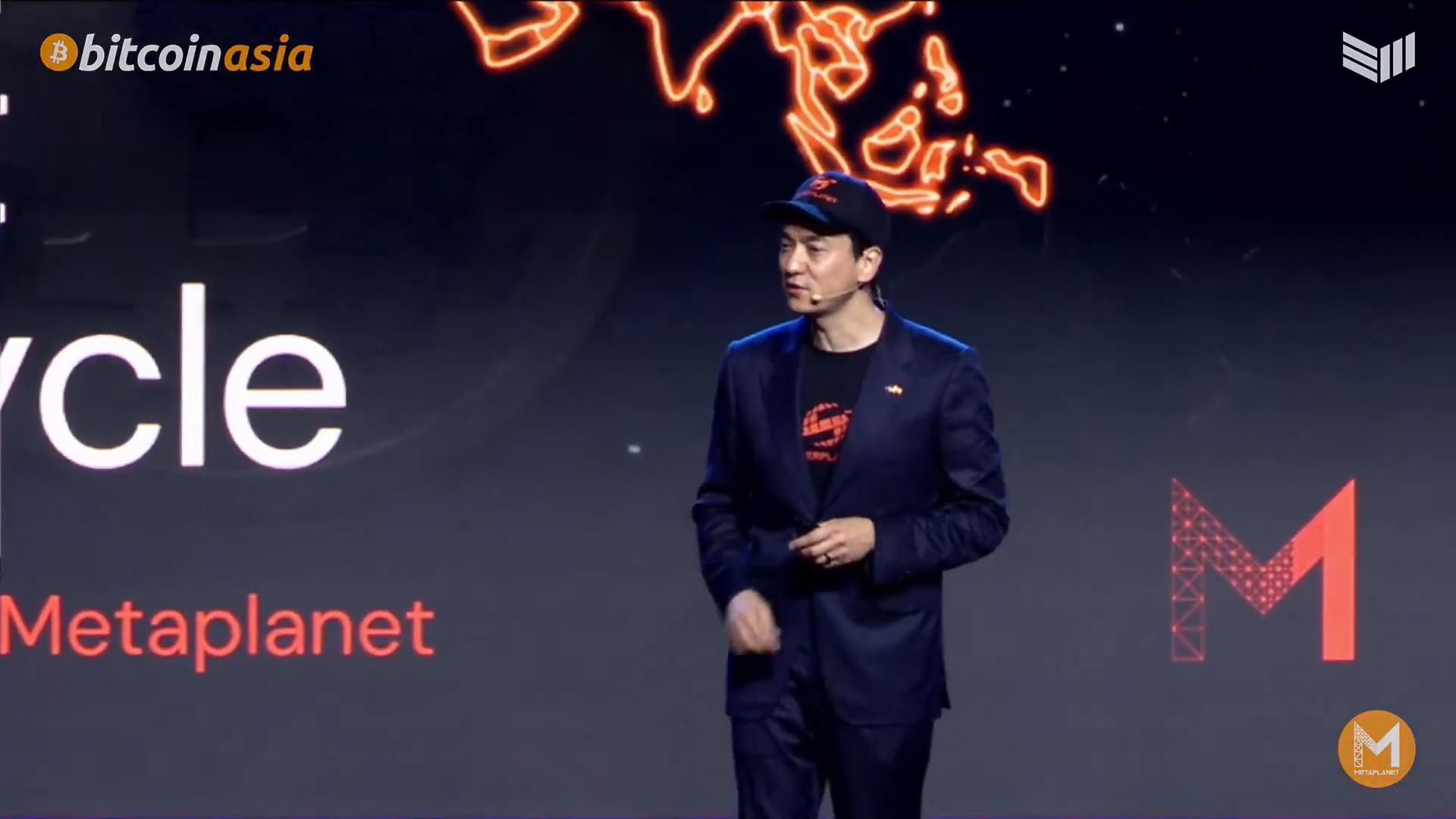
 Japanese public company Metaplanet CEO says the bottom for Bitcoin's price is in