❌

Reading view

There are new articles available, click to refresh the page.

Bigger than Bing or Xbox: Microsoft’s OpenAI haul reaches $10B in quarterly revenue

Sam Altman and Satya Nadella shake hands on stage in front of the OpenAI logo
OpenAI CEO Sam Altman and Microsoft CEO Satya Nadella at OpenAI’s DevDay in November 2023. (GeekWire File Photo / Todd Bishop)

OpenAI generated $10 billion in revenue for Microsoft in the quarter ended Sept. 30, about 11% of the Redmond company’s total revenue, according to its quarterly filing Wednesday.

The amount is up sharply. In the fiscal year that ended in June, Microsoft recorded $24.1 billion in revenue from its business with OpenAI, or about $6 billion a quarter on average.

That $10 billion surpasses some of Microsoft’s longest-running businesses. Xbox brought in $5.4 billion in the quarter. Search and advertising, which includes its Bing search engine, generated $6.6 billion. Windows licenses sold through PC makers, along with Surface and other Microsoft devices, brought in $3.6 billion.

The total covers revenue-sharing payments from OpenAI, as well as other business between the companies, such as OpenAI’s use of Azure to train and run its AI models. Microsoft didn’t say how much came from each, or how much of Azure’s growth came from OpenAI.

Azure revenue rose 48% to $33.2 billion in the quarter, beating Wall Street’s expectations and the company’s own forecast of 44% to 45% growth.

Microsoft has begun disclosing its revenue from OpenAI because its stake of about 24% makes OpenAI a “related party” under accounting rules, requiring it to report the business they do with each other.

Microsoft first reported the number in its annual report in July, as a full-year total. This is the first time it has given a quarterly figure.

The original AI alliance: Microsoft first invested in OpenAI in 2019, eventually committing $13 billion, and became its exclusive cloud provider. ChatGPT ran on Azure when it launched in late 2022.

The companies have loosened their ties since then. OpenAI restructured as a public benefit corporation in October 2025, and Microsoft gave up its right of first refusal to supply OpenAI’s computing capacity. OpenAI committed to buy an additional $250 billion in Azure services. An April 2026 agreement gave OpenAI broader freedom to use other cloud providers.

OpenAI has also agreed to keep sharing revenue with Microsoft through 2030.

In addition, Microsoft sells access to OpenAI’s models to business customers through its Azure OpenAI Service, and the models became the foundation for its Copilot products, putting Microsoft at the front of the generative AI boom. That revenue comes from Microsoft’s own customers, so it isn’t part of the $10 billion.

Microsoft, for its part, now builds its own AI models and offers models from Anthropic and others.

Many customers, not a few: Asked by Bernstein Research analyst Mark Moerdler whether AI growth on Azure was coming from big businesses or AI-native companies, Microsoft CEO Satya Nadella didn’t mention OpenAI.

He said he doesn’t want Azure’s AI business to depend on a few big customers, and that broad adoption by businesses is just getting started.

Nadella described it as “a decade-long thing,” and contrasted it with relying on “four customers who buy a lot of capacity from you” to show a few quarters of growth. That, he said, is “not a business as far as I’m concerned.”

He added that Microsoft has large customers who want to buy capacity, “and as long as the pricing is right, we may sell them some. If not, we will be patient.”

Later in the call, Goldman Sachs analyst Gabriela Borges brought up the fact that OpenAI made up 11% of revenue. Nadella didn’t address the number but praised OpenAI’s latest models and said customers are increasingly mixing models from different companies, or training their own.

He cited Microsoft’s tools for routing each task to whichever AI model handles it best. If you use AI coding agents, Nadella said, you want Anthropic and OpenAI “to compete for your workload, not like once a quarter, but for every task.”

New risk language: Microsoft also expanded a warning in its quarterly filing about the risks of depending on outside AI providers. The company builds products such as Copilot on AI models from outside companies, including OpenAI and Anthropic. It now says it has “limited visibility into or control over” how those models are designed, trained, secured and tested.

Without naming OpenAI or Anthropic, the same section notes that some of these AI partners are also “significant customers of Azure,” and that the benefits Microsoft expects from those relationships “may not be realized or sustained.” It says those partners could change how much they buy, and that Microsoft itself may change how it allocates scarce data center capacity or prices it.

Microsoft is an investor in both companies. According to its latest filing, it owns about 24% of OpenAI, down from about 25% in June and about 27% after OpenAI’s restructuring a year ago, and has put $12.0 billion of a promised $13.0 billion into the company.

In addition, Microsoft agreed last year to invest up to $5 billion in Anthropic, and its results for the June quarter included a $3.2 billion gain on that investment. Microsoft hasn’t disclosed the size of its Anthropic stake, and Anthropic’s IPO filing earlier this week didn’t specify it either.

Amazon earnings preview: AWS is booked up, and Wall Street wants to know what comes next

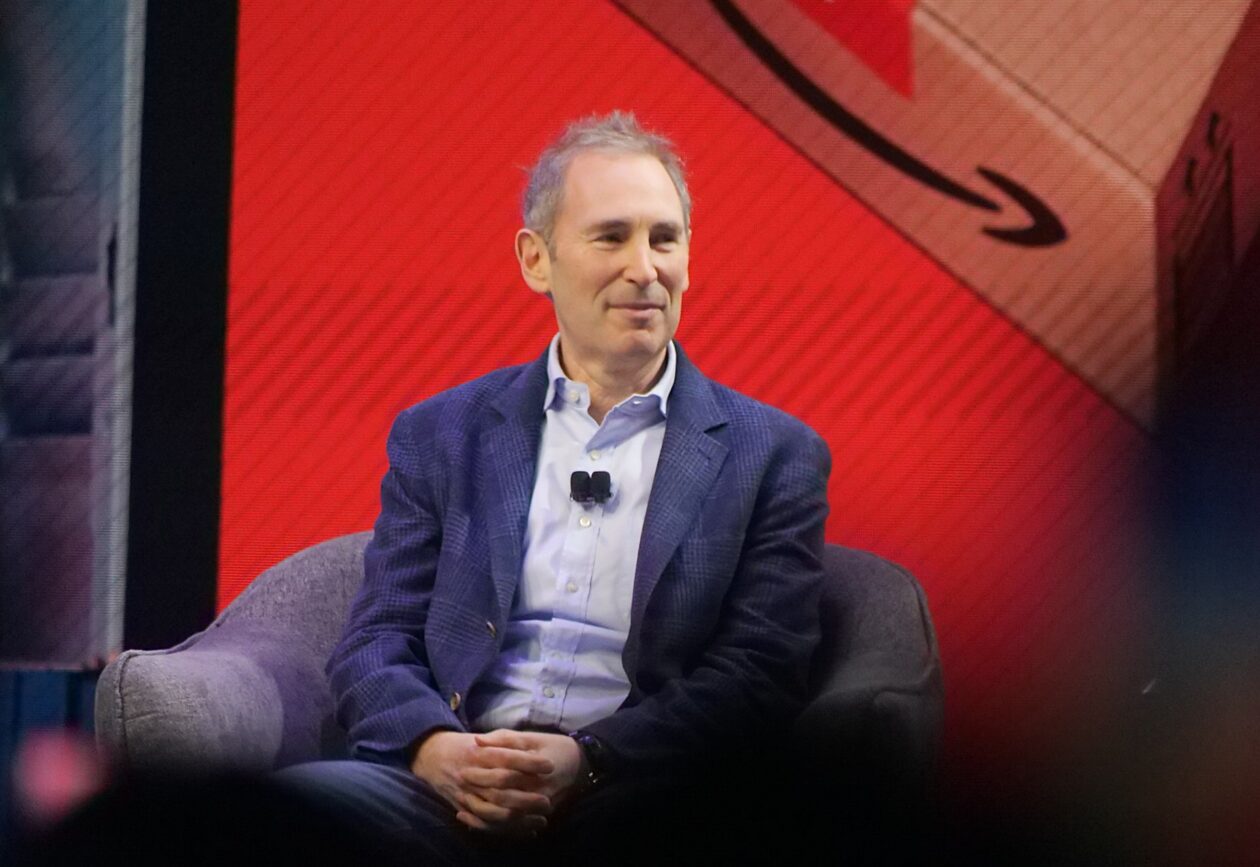
Amazon CEO Andy Jassy smiles while seated onstage in front of a red screen showing the Amazon logo.
Andy Jassy says Amazon “could invest a lot more” in AI infrastructure “and it wouldn’t be a bad use of capital.” (GeekWire File Photo / Todd Bishop)

Amazon reports third-quarter earnings Thursday afternoon with more demand for its cloud services than it can serve, driven by AI labs such as Anthropic and OpenAI along with growth in its traditional cloud business.

One big question for Wall Street going into the report is what Amazon might signal about next year’s spending as it tries to keep up with that demand.

CEO Andy Jassy said on an Andreessen Horowitz podcast last week that AWS capacity is largely booked for this year and next, along with “a good chunk of ’28.”

Amazon has said it expects to spend about $220 billion on capital expenditures this year, largely on AI and cloud infrastructure, up from its earlier plan of $200 billion. Even at that level, Jassy said, Amazon is “leaving a meaningful amount of demand on the table.”

Past spending pushed Amazon’s free cash flow to negative $7.6 billion for the 12 months ending in June, as the cost to add data centers, chips and other equipment exceeded the cash its operations brought in. Jassy gave no indication of slowing down, saying the company “could invest a lot more and it wouldn’t be a bad use of capital.”

Core numbers: Analysts expect revenue of about $202 billion, up 12% from a year ago, according to Yahoo Finance. That’s at the top of Amazon’s own forecast of $197 billion to $202 billion.

Analysts expect earnings of $1.96 per share, about the same as a year ago.

Amazon’s sales growth will likely look slower this time, about 12%, down from 20% last quarter. A big reason is timing. Prime Day, the company’s biggest sales event of the year, fell in the second quarter this year, rather than the third quarter as it did last year, so this quarter is up against a tougher comparison.

Amazon estimated in July that the shift would take nearly 4 percentage points off its growth rate this quarter. It hits online store sales hardest: analysts expect them to grow only about 3%, according to Zacks.

AWS: Amazon Web Services, the company’s cloud business, generates the majority of its operating profit. AWS revenue grew 37% to $42.2 billion in the second quarter, its fastest pace since 2021 and the fifth straight quarter of faster growth.

Analysts expect AWS revenue of about $45.4 billion this time, up 37.5%, according to Zacks. Wedbush is more optimistic, projecting growth of about 41%.

AWS had $496 billion in signed contracts it hadn’t yet delivered as of June, more than double the year before. That means its growth depends largely on how quickly Amazon can bring new data centers online.

“Capacity, not demand, is the constraint,” Yorkville Ives analyst Dan Ives wrote of the industry in a note Sunday.

Jassy said on the a16z podcast that running AI models is still “an order of magnitude too expensive” for businesses to use them widely, and that Amazon’s custom chips, including its Trainium AI processors, are a big piece of bringing that cost down. Amazon said in July that its chip business was on pace for more than $25 billion in annual revenue.

Anthropic stake: Amazon’s reported earnings could look very different. That’s because its profit fluctuates significantly depending on the value of its stake in Anthropic.

Last quarter, $53.4 billion in pre-tax gains, mostly on Anthropic, pushed Amazon’s earnings to $5.75 per share, against expectations of $1.82.

Anthropic filed paperwork Monday for a planned IPO on the Nasdaq. Amazon’s stake in the AI company was valued at about $190 billion as of June 30, according to Amazon’s latest quarterly filing. That includes about $92 billion in gains on convertible notes, a form of loan that turns into stock, which haven’t yet been counted in Amazon’s profit. Those notes would convert to Anthropic stock when it goes public.

Anthropic is also one of Amazon’s biggest cloud customers. Its IPO filing shows commitments to spend at least $110 billion on Amazon’s computing capacity into the 2030s, behind the $114.5 billion it committed to Google, as GeekWire reported Tuesday. Anthropic also said in the filing that it has asked its cloud providers for more computing power than they were willing to supply.

Shopping agents: Amazon blocked Meta’s new Muse AI agent from its store last month, escalating a fight over who controls the customer relationship when software does the buying. Amazon said Muse broke its rule requiring agents to identify themselves.

Agents that shop on a customer’s behalf could bypass Amazon’s advertising business, which depends on people browsing its pages. Ad revenue grew 26% to $19.8 billion last quarter, and analysts expect about $20.8 billion this time, up 18%, according to Zacks.

“Investor questions remain on agentic commerce risk, particularly to advertising, but we see limited risk,” Wedbush analyst Ygal Arounian wrote in an Oct. 16 note, citing Amazon’s logistics advantage and its role connecting shoppers with sellers.

Amazon is trying to give shoppers fewer reasons to look elsewhere. It now lists 250 million products sold on other retailers’ sites, about 2.5 times as many as in March, The Information reported Wednesday. On the seller side, Amazon opened its tools to outside AI agents in September, starting with Anthropic’s Claude.

Cloud rivals: Microsoft and Alphabet report quarterly results Wednesday afternoon, a day before Amazon. Microsoft’s report is its first under a new structure that breaks out Azure cloud revenue every quarter.

Check back with GeekWire on Thursday afternoon for coverage.

Etzioni on AI: Is Anthropic worth $2 trillion? Do the napkin math with this handy calculator

Anthropic filed to go public on Monday under the ticker ANT, and you may end up owning the stock soon even if you never buy it directly, because index funds and ETFs will be required to buy it within weeks of its debut.

Anthropic’s bankers are reportedly valuing Anthropic between $1.5 trillion and $2 trillion. Below is a simple, interactive tool to help you form your own opinion of what’s an appropriate valuation for Anthropic.

Disclaimer: this is highly simplified, and I’m not an investment advisor.

The Anthropic IPO Calculator

The whole IPO debate comes down to two numbers nobody knows: how much revenue Anthropic will have in 2028, and how much of it will be profit. Pick yours.

Anthropic told investors $195 billion. Today it runs at $67 billion a year. Meta’s is $243 billion.
Anthropic’s is 11% now by its own accounting. Amazon 14%, Meta 31%, Netflix 33%, Apple 33%, Alphabet 34%, Nvidia 66%.
How many dollars the market pays for each dollar of yearly profit. Netflix 17x, Nvidia 22x, Meta 25x, Alphabet 26x, Apple 34x. Fast-growing stocks have traded at 50x and above.
Your number
IPO valuation
$2T

Your number = revenue × margin × profit multiple. The IPO valuation is $2 trillion, the top of the reported range. The arithmetic ignores two things that roughly cancel: a 2028 profit is worth about 17% less today than the same profit earned now, and Anthropic’s $132 billion in cash adds about 7% to any result. Big Tech multiples are market value divided by the latest quarter’s operating profit, annualized; margins are operating margins from the latest quarter. Anthropic’s figures are from its S-1 and the forecast it gave investors. This is arithmetic, not investment advice.

Anthropic IPO warns its AI could blackmail people, become sentient, end humanity

The Securities and Exchange Commission's publication on Monday of Anthropic's S-1 form—ahead of a heavily anticipated initial public offering—has led to plenty of discussion of whether the company's quickly ballooning revenues will be able to overcome its even higher costs. But amid the numbers and forward-looking optimism about AI "rapidly transform[ing] every sector of the global economy in ways greater than the impact of industrialization, electricity, semiconductors, and the internet," Anthropic also spends an inordinate amount of time in its S-1 laying out the myriad risk factors that could bring the company down.

Across 93 pages and over 70,000 words, Anthropic's S-1 "Risk Factors" section discusses literally hundreds of potential problems that could negatively impact its business in the coming years. Many of these potential risks are the kind of standard worries about competition, costs, customer acquisition, and potential regulation that almost any business must worry about. But some risks highlight interesting potential points of failure for Anthropic specifically and the hype-filled AI bubble more generally.

After wading through Anthropic's book-length treatise on its greatest risks, we've narrowed the list to the seven most surprising, interesting, or thought-provoking potential problems. Consider this a far-from-comprehensive look at what potential Anthropic investors should keep in mind.

Read full article

Comments

© Aurich Lawson | Getty Images

Microsoft earnings preview: Employee buyouts, AI spending and a new financial scorecard

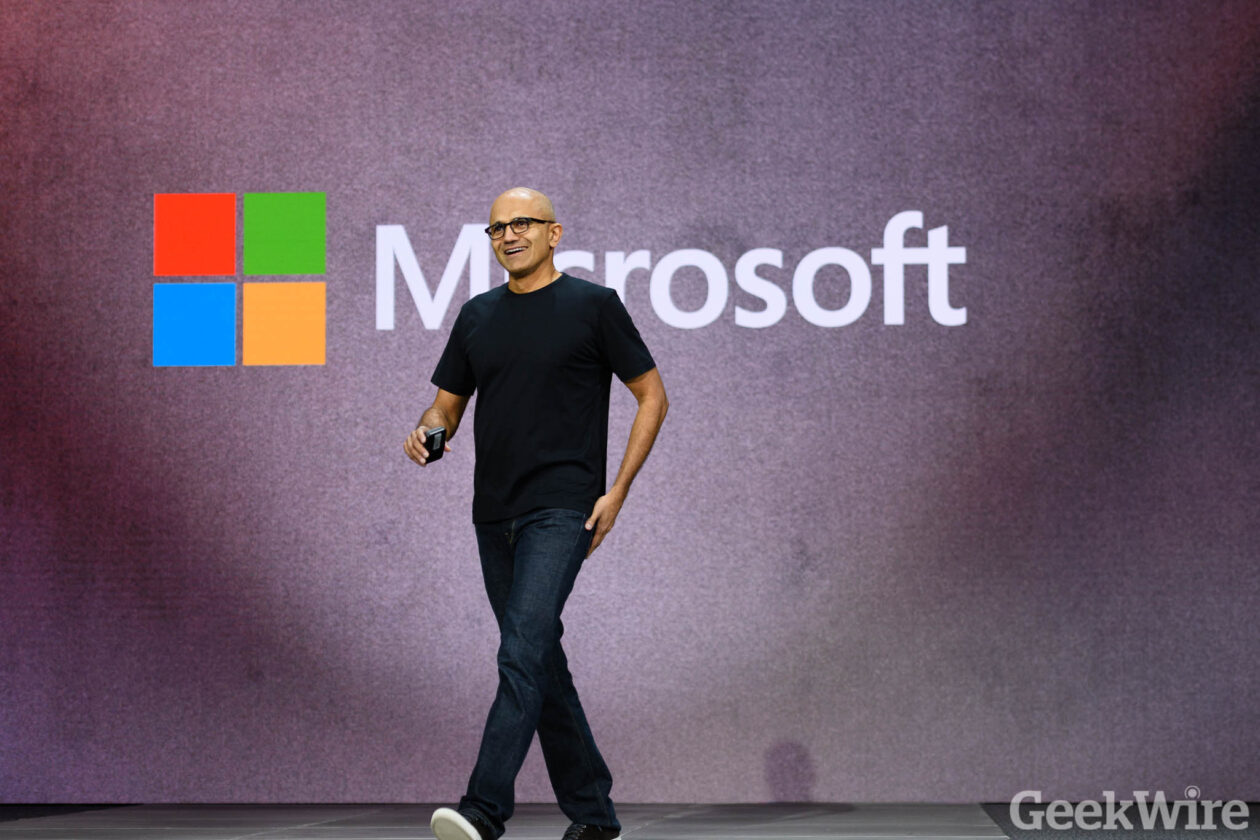
Satya Nadella walks across a stage in front of a large Microsoft logo.
Satya Nadella & Co. report quarterly earnings under a new financial structure Wednesday. (GeekWire File Photo / Kevin Lisota)

Update, 10/28: Microsoft’s Azure cloud business brought in $33.2 billion in revenue in the September quarter, up 48% from a year earlier, blowing past the company’s own forecast and beating Wall Street’s expectations. Read the full story.


Microsoft’s earnings report Wednesday will come two days after the company offered buyouts to about 60,000 people, roughly a quarter of its employees. The call gives executives their first chance to say what the offer will cost, and to explain how it fits with the company’s long-term view of its workforce.

Whether or not they go into those details, it’s one of several issues to watch in Wednesday’s report, the first under Microsoft’s new reporting structure. Anthropic’s IPO filing on Monday adds another storyline, showing how much the Claude maker has agreed to spend on Microsoft’s cloud.

Coming into the report, Microsoft’s stock is near its high. Microsoft closed Monday at $532.60, about 2% below its record close of $543.45 on Oct. 13, after gaining roughly $1.4 trillion in market value since late June.

Here are the key numbers and issues heading into Microsoft’s results for the first quarter of its 2027 fiscal year, ended Sept. 30.

Core numbers: Analysts expect revenue of $90.75 billion, up nearly 17% from a year ago, and earnings of $4.72 per share, up 14%, according to Yahoo Finance. Microsoft’s own forecast was $89.85 billion to $90.95 billion, so Wall Street is looking for a result near the top of that range.

In July, Microsoft reported $90 billion in revenue for the June quarter, well above the $87.7 billion analysts expected.

A new scorecard: Microsoft announced in September that it would sort its business into two groups instead of the three it had used since 2015. This is the first quarter under the new setup.

The first, dubbed Agents and Infra, includes Azure, Microsoft 365, Dynamics, LinkedIn’s recruiting and sales tools, and server and productivity licensing. It brought in 81% of Microsoft’s revenue and 88% of its operating income in fiscal 2026, based on figures Microsoft recast under the new structure.

Microsoft expects Agents and Infra revenue of $75.15 billion to $75.75 billion this quarter, which would be growth of about 22% to 23%, by GeekWire’s calculation.

The other group, Devices and Consumer, includes Windows, Xbox and search advertising. Microsoft expects it to bring in $14.7 billion to $15.2 billion, down 5% to 8% from a year earlier.

Azure, in dollars: Microsoft started disclosing Azure’s annual revenue last year, when it passed $75 billion, and topped $100 billion in fiscal 2026. Starting this quarter, it reports the figure every quarter. It also changed what counts as Azure: GitHub’s cloud business and Security Copilot now fall under Microsoft 365, and its healthcare cloud moved to a new industry unit.

Counted that way, Azure brought in $29.4 billion in the June quarter, up 42%. Microsoft expects growth of 44% to 45% this quarter, not counting currency fluctuations, which would put Azure at roughly $32 billion, by GeekWire’s calculation. That compares with the roughly 45% Microsoft projected in July, under the old definition.

Hitting that forecast may not be enough. Investors are looking for about 46%, BNP Paribas analyst Stefan Slowinski wrote in a note Monday. In January, Azure beat Microsoft’s own forecast and the stock still fell 10%, because investors had privately expected more.

“Azure moves the stock, but the read that matters is whether capacity is absorbed as fast as it lands,” wrote Dan Ives of Yorkville Ives in a note last week.

Capital spending: Microsoft expects capital expenditures of more than $50 billion for the quarter, which would be a record. That’s up from $41 billion in the June quarter and $34.9 billion a year earlier.

An accounting change reduces what Microsoft reports as capital spending, without reducing its planned investment. Microsoft now assumes its data center buildings will last 25 years instead of 15. As a result, more of its data center leases will be classified in a way that doesn’t count as capital spending, CFO Amy Hood said on the July earnings call.

That change alone lowered Microsoft’s capital spending estimate for calendar 2026 to about $175 billion, from the roughly $190 billion it projected in April. Hood said the company’s actual spending plans hadn’t changed.

Cloud margins: Microsoft Cloud gross margin came in at 65% last quarter, better than expected but down from a year earlier. Microsoft said it expects the figure to be relatively stable this quarter. It also expects operating margins to be roughly flat with a year ago.

Workforce: The new “voluntary exit” offer, announced Monday by Chief People Officer Amy Coleman, covers participating teams in the U.S., Canada, the U.K. and India. It has no age or tenure requirement and extends to some vice presidents. Employees have until the first week of December to decide, and Microsoft hasn’t said how much the offer will cost or when it will record the charge.

For the spring retirement program, Hood disclosed the cost on the April earnings call: about $900 million, with roughly $350 million in cost of revenue and $550 million in operating expenses. The charge showed up in the following quarter. About 30% of the 8,750 eligible employees accepted.

The new offer is less generous. It matches Microsoft’s standard severance, without the extended healthcare of the spring program, and the company expects a much smaller share of people to take it. But the pool of eligible employees is nearly seven times larger.

Microsoft says the offer doesn’t mean it needs fewer people. Coleman said in July that the company was studying whether to make voluntary exits a regular part of managing its workforce. It has told investors to expect operating margins roughly flat this quarter and down less than a point for the full fiscal year, even with record capital spending.

Nadella has addressed this before. In a July 2025 memo to employees, after Microsoft laid off about 15,000 people, he acknowledged the “uncertainty and seeming incongruence” of thriving financially while cutting jobs. “This is the enigma of success in an industry that has no franchise value,” he wrote.

In his annual shareholder letter last week, he focused on Microsoft’s spending on AI infrastructure. “Based on the demand we see and the efficiencies we are driving, I am confident in the long-term returns on our investments,” Nadella wrote. “We are building against a growing book of business tied to this secular shift.”

Microsoft had about 223,000 employees as of June 30, before it cut 4,800 jobs in July and more in September. The Information reported this month that Azure President Girish Bablani told leaders in his group to find ways to cut costs by at least 20%. Microsoft called the report inaccurate and said Azure leadership had not directed teams to develop cost-cutting plans.

Copilot: Microsoft said in July that businesses were paying for more than 30 million Microsoft 365 Copilot seats, up from 20 million in April. That’s still only about 7% of the more than 450 million commercial Microsoft 365 seats.

The bigger change is in how Microsoft charges for Copilot and its other AI tools. In July it added usage-based billing alongside per-seat pricing. It’s also pushing customers toward E7, a new premium bundle that includes Copilot. Microsoft expects Microsoft 365 commercial cloud revenue to grow about 17% this quarter, not counting currency swings, a number that now includes GitHub.

The BNP Paribas analyst Slowinski, who attended Microsoft’s Frontier Tour event in London last week, wrote that partners are seeing more customers roll out Copilot company-wide. Partners also told him that Microsoft now ties 35% of E7 sales incentives to how much customers use features like Cowork.

Anthropic and OpenAI: Anthropic’s S-1 filing shows the company has committed to spend at least $44.9 billion with Microsoft from November 2026 to May 2033, up from the $30 billion Azure commitment announced last November. That’s well below its minimum commitments to Amazon ($110 billion) and Google ($114.5 billion).

Microsoft agreed last year to invest up to $5 billion in Anthropic. Its results for the June quarter included a $3.2 billion gain on that investment.

OpenAI remains the bigger factor. Microsoft’s commercial remaining performance obligation (RPO), the measure of signed contracts it hasn’t yet delivered on, reached $678 billion last quarter, up 84% from a year earlier. Without OpenAI, the backlog grew 25%. OpenAI told investors its annualized revenue approached $50 billion at the end of September, The Information reported, lower than earlier reports of about $70 billion.

Windows: Microsoft expects revenue from Windows licenses sold to PC makers, along with its own devices, to fall a little more than 20%. Higher memory prices are making PCs more expensive, and PC makers are still working through extra inventory.

What’s next: Alphabet also reports Wednesday afternoon, and Amazon reports Thursday, setting up a side-by-side look at Azure, Google Cloud and AWS.

Anthropic is aiming to go public the week of Nov. 16, according to the Wall Street Journal.

Check back Wednesday afternoon for coverage.

Who’s getting Anthropic’s compute spending? IPO filing shows where the tech giants really stand

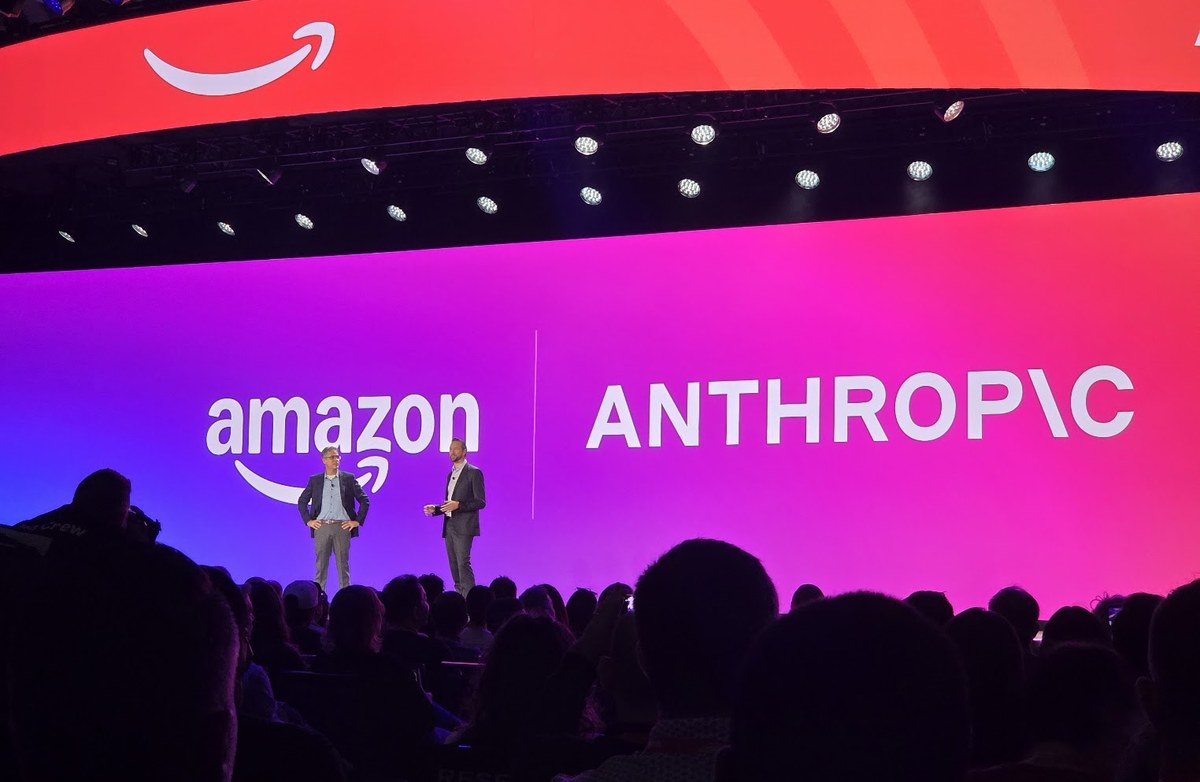
Two men stand on a stage in front of large screens showing the Amazon and Anthropic logos, with an audience in the foreground.
Chris Jones, director of Seller Assistant at Amazon, left, and Eric Burns of Anthropic’s Applied AI team on stage at Amazon Accelerate in Seattle in September. Anthropic’s IPO filing shows Google getting a bigger share of the AI company’s computing spending than Amazon, one of its largest investors. (GeekWire Photo / Todd Bishop)

Anthropic’s IPO filing reads like a ledger of who’s getting paid in the AI boom. The Seattle region’s tech giants are on the list, but they aren’t at the top.

The prospectus, filed Monday with the Securities and Exchange Commission, details more than $750 billion in computing deals, including firm commitments and estimated future spending, and offers clues about what its founders and biggest investors stand to gain ahead of the company’s planned Nasdaq listing under the ticker ANT.

Amazon and Microsoft have invested billions in Anthropic and won high-profile spending commitments from the Claude maker. But both trail Google, chipmaker Broadcom and Elon Musk’s SpaceX in their shares of Anthropic’s planned spending on computing power, the filing shows.

Following the compute money: Google’s chips are the biggest winner. Anthropic has lined up roughly $400 billion in computing capacity, mostly over the next seven years, based on Google-designed AI chips, known as tensor processing units or TPUs.

That total includes $114.5 billion to Google directly through July 2033, $161.2 billion in equipment leases with chipmaker Broadcom, and an estimated $125 billion to $150 billion in additional TPU capacity from 2028 to 2031.

Broadcom’s leases are the largest single arrangement in the filing. The five-year leases provide TPU-based hardware for data centers operated by other companies on Anthropic’s behalf.

Elon Musk’s SpaceX is next. Anthropic agreed to spend up to $120.5 billion through 2029 for computing capacity from SpaceX’s AI subsidiary, formerly known as xAI, which runs a rival AI lab.

The filing says payments will reach about $3.1 billion a month once all the capacity is delivered, which Anthropic expects in December. The agreements run into 2029, though either side can cancel on 90 days’ notice after early 2027.

Amazon is still a big winner. Anthropic committed in April to spend at least $110 billion with Amazon Web Services over 10 years, through April 2036, and AWS Trainium is one of four chip families that Anthropic uses to train and run its models.

Microsoft’s piece is smaller, which reflects its later start. The company was aligned closely with OpenAI for years before striking its own deal with Anthropic.

Anthropic has committed to spend at least $44.9 billion on Microsoft’s Azure cloud from November 2026 through May 2033, the filing shows. That’s up from the $30 billion Azure deal announced in November 2025. The deal has been amended twice since, most recently this month.

Claude is built into Microsoft 365, and former Microsoft CFO Chris Liddell joined Anthropic’s board in February.

Two smaller providers have deals in the same range as Microsoft’s. Anthropic agreed to spend up to about $44.6 billion with Nscale, a U.K.-based AI infrastructure company, and about $41.3 billion with GPU cloud provider Lambda, both for capacity powered by Nvidia chips, according to the filing.

Will Anthropic need it all? Most of the commitments can’t be canceled, and the deals with Microsoft, Google and Amazon require Anthropic to pay “regardless of actual usage,” according to the filing.

So far, the demand is there. Anthropic’s revenue hit $11.6 billion in the second quarter, up from $787 million a year earlier, and the company posted its first operating profit, $974 million. It still had a $66.3 billion net loss, mostly from accounting charges tied to its soaring valuation.

The company says it has “consistently operated in a compute-constrained environment where customer demand exceeds available compute.”

Its compute commitments assume that demand keeps growing. Anthropic spent less than $2 billion a month on compute and infrastructure in the second quarter. The SpaceX deal alone is expected to cost about $3.1 billion a month at full capacity.

Paper fortunes: Amazon’s biggest payoff is its stake, which it valued at $190.4 billion as of June 30 in its quarterly SEC filing. That includes convertible notes with $6.2 billion in principal that Amazon valued at $97.9 billion. The notes would convert into stock, subject to a 12% ownership cap that Amazon can waive.

Amazon is scheduled to report third-quarter results Thursday, its first earnings report since Anthropic’s filing. The Seattle-based company has updated the value of its Anthropic holdings in each of its quarterly filings this year, so a new number could come this week.

Google put $10 billion into Anthropic’s latest funding round and can invest up to $20 billion more under a March financing deal. The filing doesn’t give ownership percentages for Amazon, Google or Microsoft. It says only that the three companies have each made “significant equity investments” in Anthropic.

Anthropic’s seven co-founders hold roughly 230 million to 245 million shares each, worth about $14 billion apiece at the latest private funding price. The company also gave its own Public Benefit Fund about 847 million shares, or 5% of its fully diluted stock as of June 30, worth about $50 billion at that price.

Anthropic could begin formally marketing its IPO to investors as soon as the week of Nov. 9, Bloomberg reported, citing people familiar with the matter. It is aiming to go public the following week, according to the Wall Street Journal. The company expects the offering to match or beat the size of SpaceX’s IPO, according to Bloomberg. SpaceX raised $75 billion in June, the largest IPO on record.

Former GitHub CEO launches rival platform built for AI coding agents

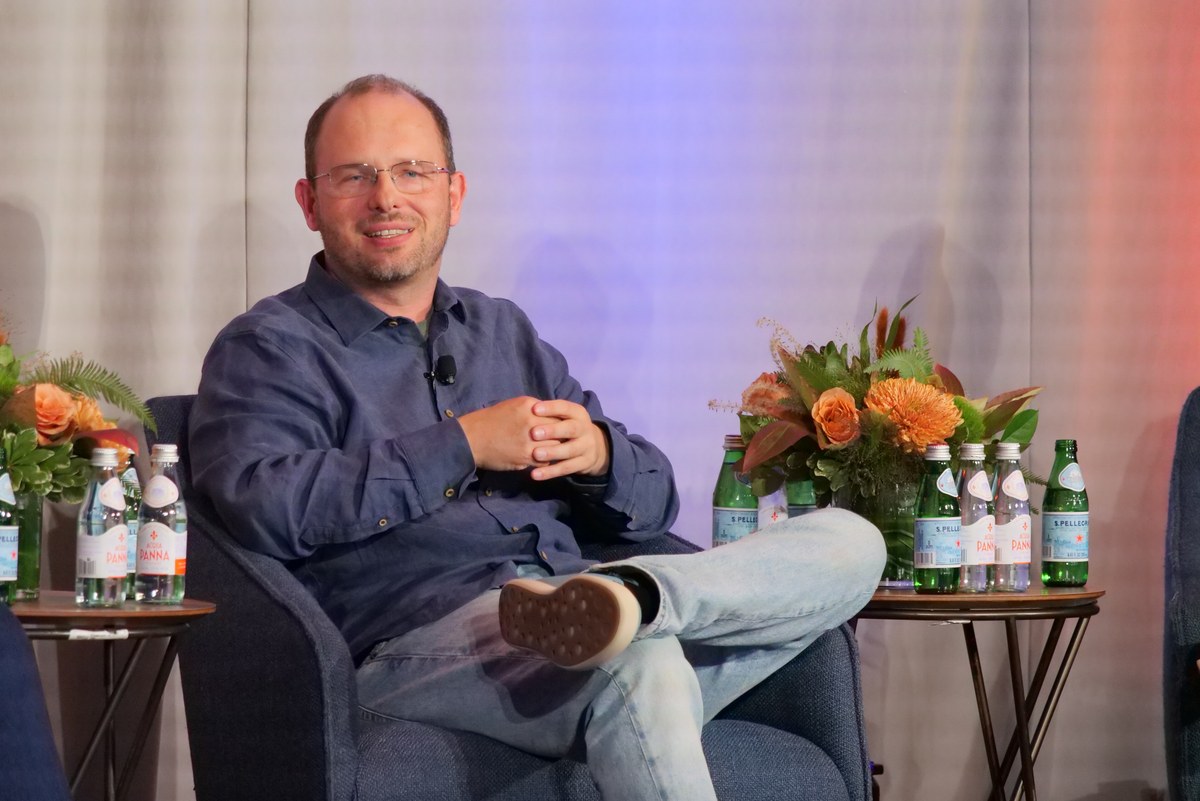
Thomas Dohmke, wearing glasses and a blue shirt, smiles while seated in an armchair on stage during a panel discussion.
Entire CEO Thomas Dohmke, speaking last month at Madrona’s IA40 Summit in Seattle, says AI agents have made code review a much bigger bottleneck for developers. (GeekWire Photo / Todd Bishop)

A startup led by former GitHub CEO Thomas Dohmke is introducing its own platform for storing, reviewing and shipping code written by AI agents, competing with the company he used to run.

The startup, Entire, on Monday unveiled what it calls a Git forge — a service for hosting code, reviewing changes and running builds, the core of what GitHub does — designed for teams whose AI agents write code faster than people can review it. The company is pitching it as an alternative to GitHub.

The news comes two days before GitHub’s annual Universe conference in San Francisco. Microsoft acquired GitHub for $7.5 billion in 2018 and has since folded it into its CoreAI division.

The biggest change is Trails, Entire’s replacement for the pull request, the standard way developers propose and review code changes. The pull request “has become an audit log that only the agent reads,” Dohmke wrote in a blog post Monday. Instead of reading through every changed line, developers see a dashboard of scores from AI agents evaluating the code on each update.

According to Entire, multiple AI agents check the quality of each change, so developers can merge code without reading every line. Teams can also require a person’s sign-off, or passing automated tests, before any code goes in, the company said.

The launch comes as GitHub strains under the load from AI agents. The platform has had several significant outages in recent months, including one in August that lasted nearly eight hours. GitHub is moving from its own data centers to Microsoft’s Azure cloud to add capacity. GitHub said developers and agents made 7.38 billion commits, or saved code changes, on the platform in September alone.

Dohmke, who is based in Bellevue, Wash., left GitHub last year after nearly four years as CEO. Entire says it now has 50 employees. The company is fully remote.

Entire isn’t alone in rethinking code hosting for AI agents. AI coding company Cursor launched its own code-hosting service, Origin, in August. And Anthropic recently described building its own source control system as the number of code changes it merged each day grew from about 2,500 in May to more than 30,000 in September.

With the latest updates, Entire now lets developers host private code repositories directly on its service in the U.S., Europe, India and Australia, and says its service can handle up to 89 times as many code pushes per second as GitHub, based on its own benchmarks. It’s partnering with Buildkite and Depot on build and test pipelines, giving developers a way to move off GitHub Actions. Public repositories and self-hosting are on the roadmap.

Entire is also adding what it calls Continuous Memory, which lets AI agents search past coding sessions for the context behind earlier changes. The company says one part of it, a map of the codebase, cut token use by up to 71% in its testing.

That goes beyond the startup’s July launch, which mirrored existing GitHub repositories on a faster network rather than replacing them. Developers can still mirror from GitHub, or now move their code to Entire instead.

Microsoft’s venture arm M12 was among the backers of Entire’s $60 million seed round in February. Felicis led the round, with participation from Seattle-based Madrona and Basis Set Ventures, along with individual investors such as Yahoo co-founder Jerry Yang and Y Combinator CEO Garry Tan.

“Code review was always a bottleneck,” Dohmke said at a Madrona event last month. “I’ve never worked in a software company where I didn’t wait for somebody else to review my pull request, and you have to ping people in Slack three times. And there was this one guy that had to review everything because he knew what to look for. And now that bottleneck is 10 times bigger.”

Bitcoin Price Hovers Near $80,000 as Traders Await Fed Decision

Bitcoin Magazine

Bitcoin Price Hovers Near $80,000 as Traders Await Fed Decision

Bitcoin price traded near $80,000 on Monday, after falling about 2% earlier in the session. The price has dipped below that level several times in recent days and recovered each time.

Selling pressure has been building. Spot Bitcoin ETFs recorded about $635 million in outflows on October 22. A brief drop below $80,000 last week also triggered roughly $800 million in liquidations of long positions, or bets that prices would rise.

The next major test to look out for is the Federal Reserve’s two-day meeting, which ends October 28. The Fed raised its target range to 3.75% to 4% in September, and its minutes suggested another increase could come by year-end. 

Most recent market odds favor the Fed holding rates steady, though those odds have shifted. Traders are watching Fed Chair Kevin Warsh’s remarks for signs of a December hike.

Higher interest rates typically pull money away from risky assets, including crypto. Broadly speaking, a hold could keep bitcoin price between roughly $80,000 and $88,000. A rate hike could push it toward the lower end of that range.

Bitcoin price backdrop

Geopolitical tensions are also weighing on markets. Oil rose above $100 a barrel in early September as strikes between the U.S. and Iran escalated. Higher energy prices feed into inflation, which affects the Fed’s decisions. 

In tech, Anthropic is reportedly preparing an initial public offering that could value the AI company near $965 billion. The timing has shifted toward the weeks before the November midterm elections, but no date has been confirmed. 

U.S. stocks surged a bit Monday as investors geared up for a busy week of Big Tech earnings and the Federal Reserve’s interest-rate decision. The Nasdaq rose 0.8%, the S&P 500 gained 0.6%, and the Dow climbed 0.3%. 

Alphabet and Microsoft report Wednesday, followed by Amazon Thursday, while markets largely expect the Fed to hold rates steady. 

AI-related stocks rallied following Anthropic’s IPO filing. Tesla jumped 6%, while Meta plans to raise up to $95 billion for AI investments. 

As of writing, bitcoin price trades at $80,215, down nearly $4,000 or 4.75%, on the month. Over the past month, prices have ranged from a high of $86,806.95 to a low of $79,397.76. Bitcoin price peaked above $86,000 in early October, then slid toward $80,000 in the second week of the month. 

A brief rally around October 21 pushed it back near $84,000, but those gains faded within days. Trading volume over the past 24 hours reached about $18.12 billion. 

Bitcoin price remains far below its all-time high of $126,277.05.

bitcoin price

This post Bitcoin Price Hovers Near $80,000 as Traders Await Fed Decision first appeared on Bitcoin Magazine and is written by Micah Zimmerman.

As Anthropic goes public, it warns of AI’s catastrophic and existential risks to humanity

Anthropic has officially filed to go public, and buried inside its S-1 is a blunt warning about the technology at the center of its business. The maker of Claude AI says advanced AI could cause everything from large-scale cyberattacks and geopolitical instability to catastrophic or even existential risks for humanity. The warnings take up a […]

❌