Of all the AI-powered video editing tools out there, Adobe Firefly might be the mightiest and the most convenient of the bunch. It's packed with features that smoothly integrate into your workflow when you need them. If you're starting from the beginning and want to generate material from a prompt, you can use Firefly. Not just for video, either. It lets you add stock images and even audio. Or if you have your media already and need to tweak it closer to perfection, there's an extensive set of editing tools that offer studio-level quality and control over everything from lighting to sound effects.
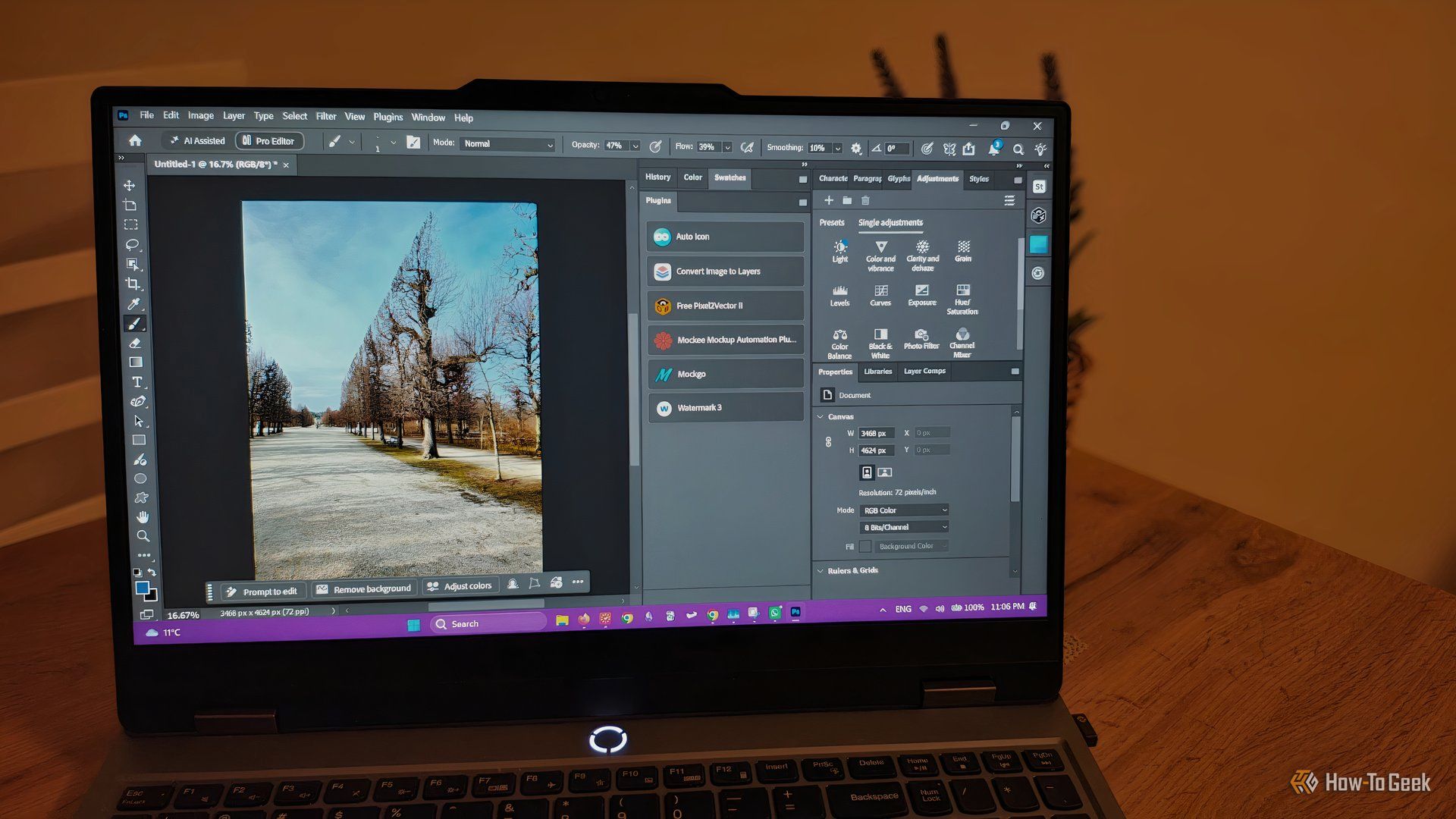
Beyond frequent updates and native integrations with some AI tools that reduce busywork, Photoshop's easy access to thousands of third-party plugins is another reason why it still manages to maintain its spot as the industry standard.
Adobe Creative Cloud offers some of the best applications for creative jobs. The only drawback? You have to pay up to $70 a month—or about $840 per year—to access them. There are first-year promotions available, but even those add up to about $740 per year. That is a big commitment, especially considering the annual subscriptions come with hefty early termination fees.
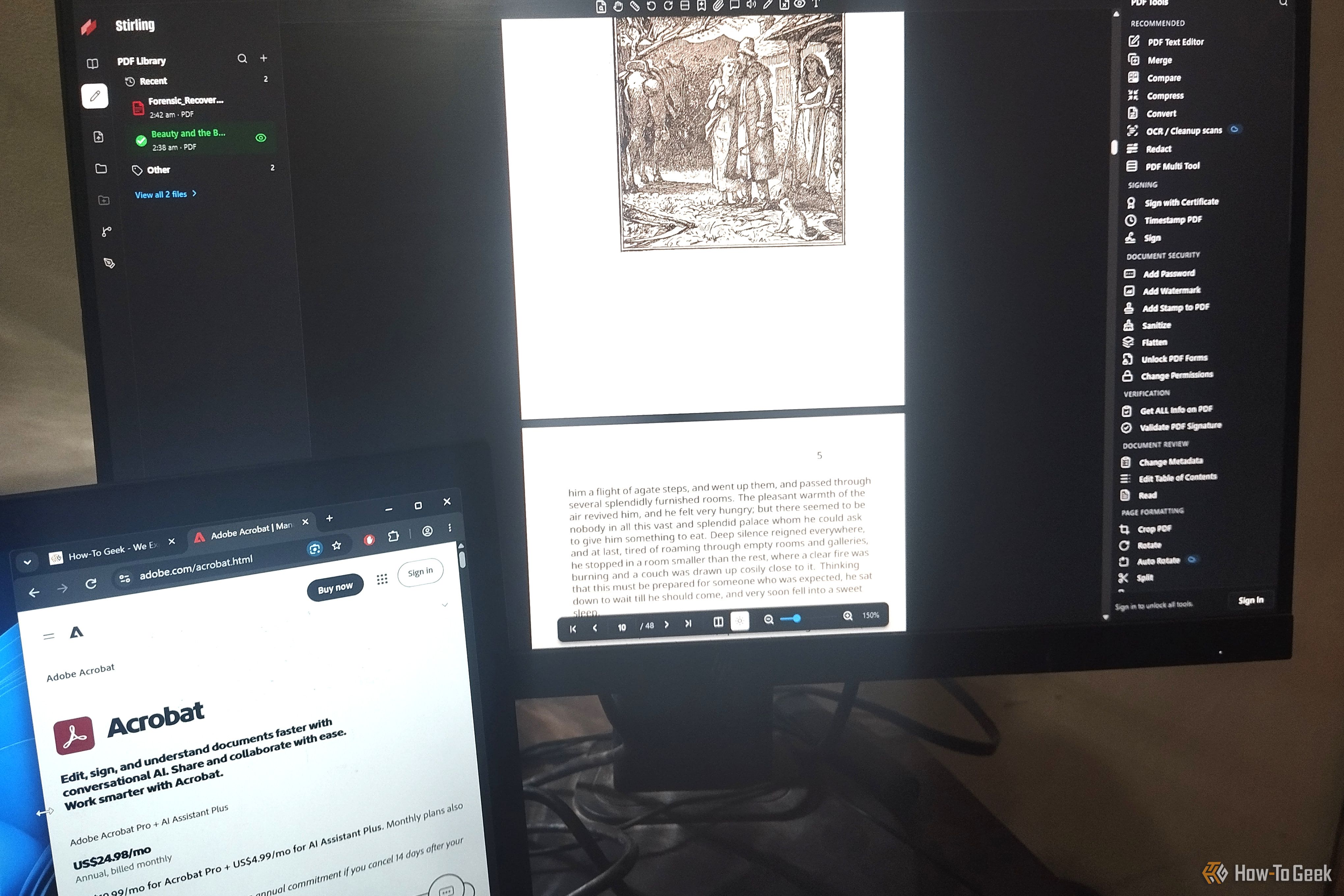
Adobe Acrobat is a go-to PDF tool for many people, but you don't necessarily need a subscription to handle everyday tasks. Free alternatives like PDFgear on Windows and Preview on Mac can handle many common PDF tasks.
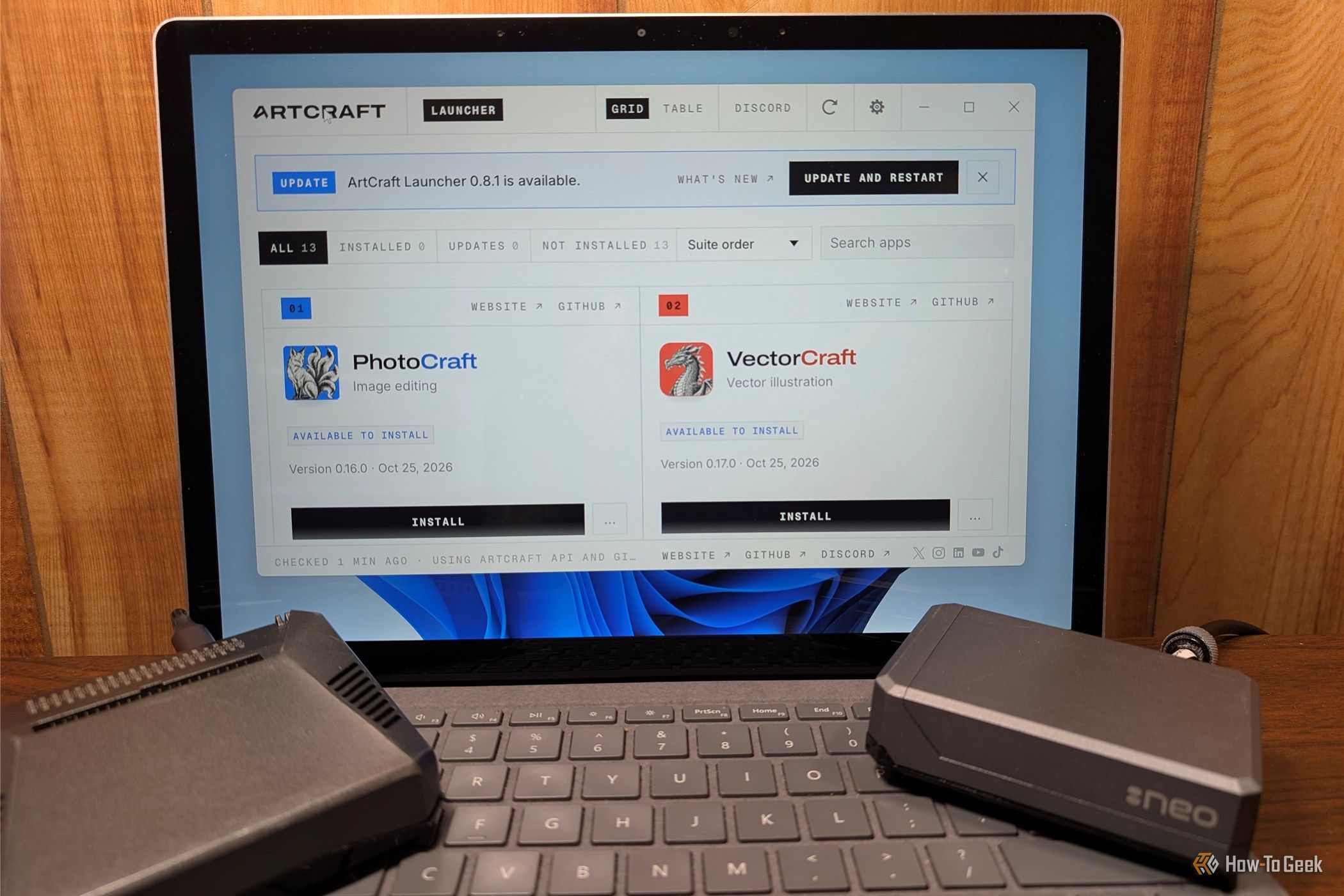
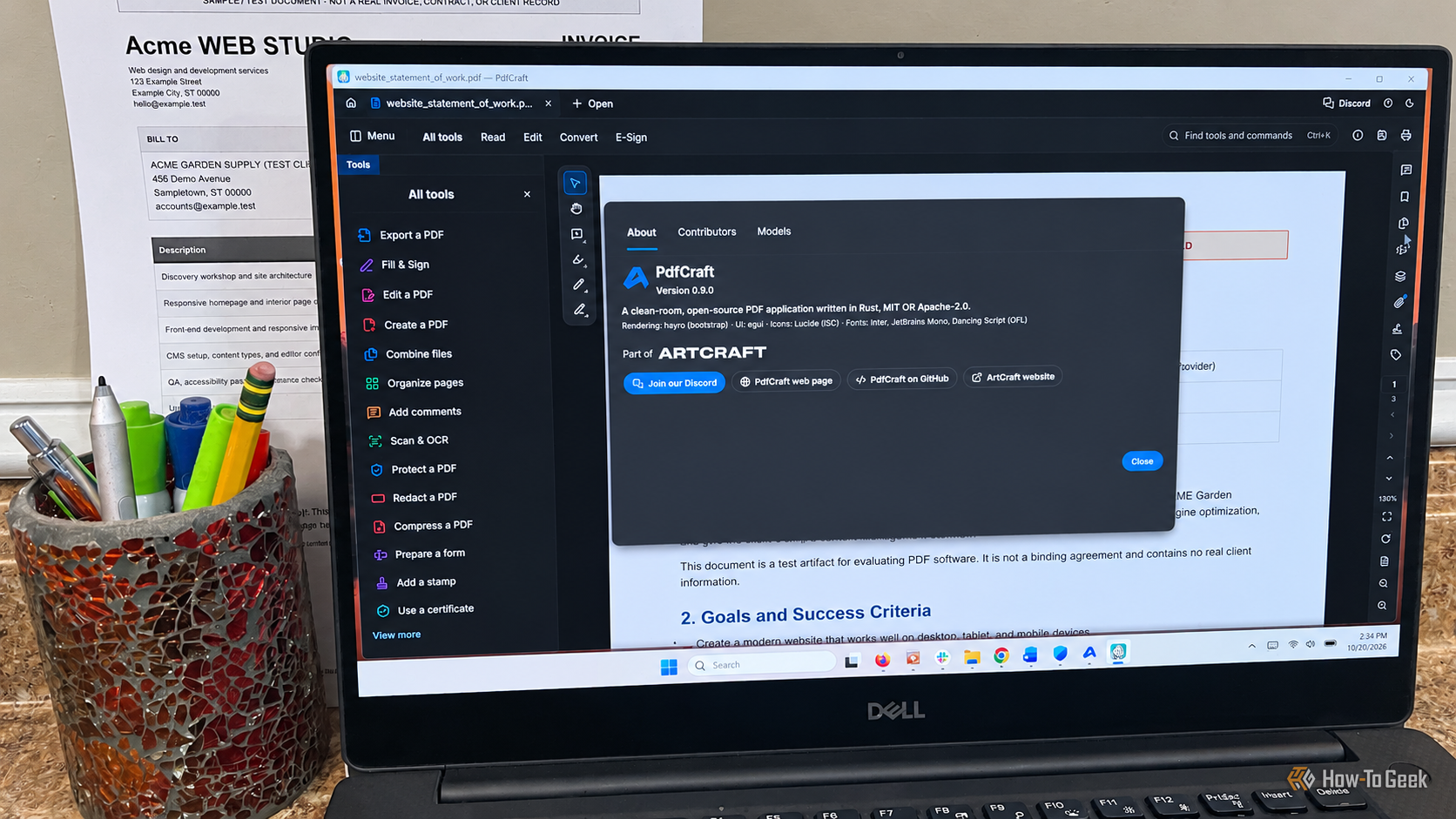
Like many people, I've never been a fan of software subscriptions, especially for applications I only use occasionally. I also enjoy testing new software and finding free alternatives to paid applications. So when I recently wrote about ArtCraft’s ambitious collection of open-source alternatives to Adobe Creative Suite, it got me thinking. I downloaded the entire ArtCraft suite and spent quite a bit of time testing the different apps.
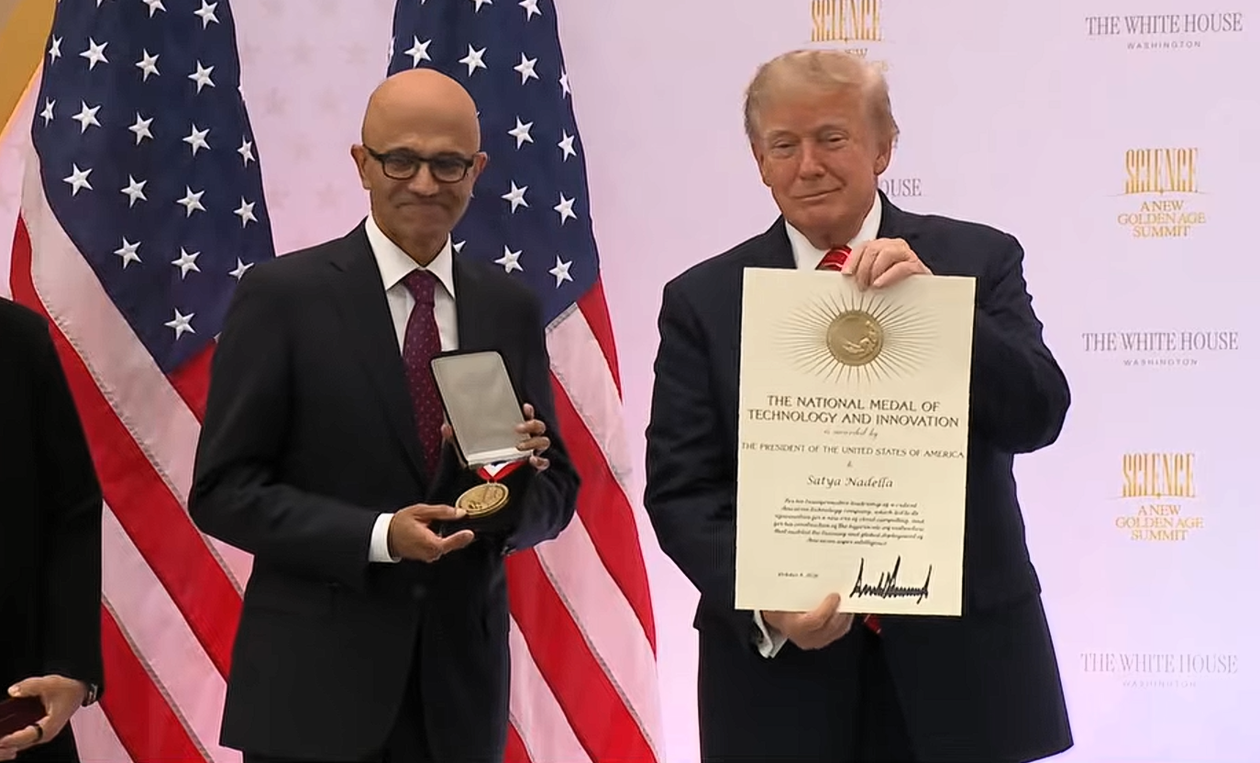
Microsoft CEO Satya Nadella receives the National Medal of Technology and Innovation from President Trump on Thursday at the “Science: A New Golden Age” summit in Washington, D.C. (White House video screenshot)
The Trump administration suspended Microsoft from the federal program the company uses to help foreign workers stay in the U.S. permanently, accusing the tech giant of abusing the system.
Vance said Microsoft laid off 6,000 American workers last year while getting 6,300 H-1B visas and nearly 3,000 green cards, which he said amounted to replacing U.S. employees with lower-paid foreign workers.
“There has been no company in the United States, unfortunately, that has abused the system more than Microsoft,” Vance said at the news conference, while adding, “Our message to Microsoft is you’re a great American company, but you’ve got to hire great American workers.”
Microsoft’s response: In a statement, the company said 80% of the roughly 6,000 H-1B applications it filed last fiscal year were to extend or change the status of people who already work for the company. The rest were for new hires who were already living in the U.S. legally, a group equal to about 1% of its U.S. workforce.
“They are not new arrivals to our country,” the company said.
Microsoft said it pays H-1B employees “the same as any other employees doing comparable work,” that its wages are “among the highest of all H-1B filings,” and that the vast majority of its U.S. employees are Americans.
The statement didn’t mention the suspension, but the company said it looks forward to “providing the Administration with additional information.”
Details of the penalty: The suspension covers the Labor Department’s Permanent Labor Certification program, known as PERM. It’s usually the first step when a company sponsors a foreign employee to live and work in the U.S. permanently. To get approved, the employer has to advertise the job and show the government that no qualified American worker was available.
Labor Secretary Keith Sonderling said the department won’t accept new applications from Microsoft or process the ones it already has pending. The move doesn’t stop Microsoft from applying for H-1B visas, the temporary work visas that many PERM applicants hold.
The department also suspended Adobe and six IT outsourcing firms: Cognizant, Infosys, Tata, Wipro, HCL and Capgemini.
Trump didn’t mention the suspension at the ceremony. Introducing Nadella, he credited him with making Microsoft “an early leader in superintelligence” and said, “Satya, we are honored to give you the National Medal of Technology and Innovation. It is so well deserved.”
The official citation honored Nadella “for his transformative leadership of a critical American technology company” and for building the “hyperscale infrastructure that enabled the training and global deployment of American superintelligence.”
Tech industry reaction: The announcement drew pushback in Seattle’s tech community.
“There has been a continuous, nonstop deluge of immigration-related news leading up to the midterms,” said Xiao Wang, co-founder and CEO of Boundless, a Seattle startup that helps people navigate the U.S. immigration process.
Wang pushed back on Vance’s characterization of H-1B workers as “foreign indentured servants,” noting there are wage requirements to prevent underpayment of employees. He emphasized the economic benefits of educating and employing the students and workers who seek these visas — and what happens if they’re discouraged or prevented from coming to the U.S.
“What I have been trying to warn folks about is the long-term chilling effects that would be detrimental to the long-term prosperity and competitiveness of the United States,” he said.
Wang said the idea that the layoffs and recruitment of foreign-born workers are linked doesn’t make sense. “Layoffs and hiring are not one for ones of each other, especially at giant companies like Microsoft,” he said.
Someone laid off from a gaming division at Microsoft isn’t interchangeable, for example, with an H-1B employee who’s an expert in agentic AI for a Copilot role, he said.
Priyanka Kulkarni, founder and CEO of the immigration technology company Casium, previously worked at Microsoft for more than a decade building enterprise AI technology. She personally navigated H-1B status before becoming a permanent resident.
“I worked alongside people from around the world whose expertise helped build technology used by American businesses every day,” she said, adding, “America wants to lead in AI. That requires attracting and retaining exceptional people, and giving them confidence that they can build a future here.”
Kulkarni called the phrase “foreign indentured servants” troubling, and said it exposes a contradiction in the administration’s action.
“If the concern is that workers depend too heavily on their employers, blocking their path to permanent residency could deepen that dependence,” she said. “Permanent residency gives people more freedom to change jobs, negotiate pay, and start businesses.”
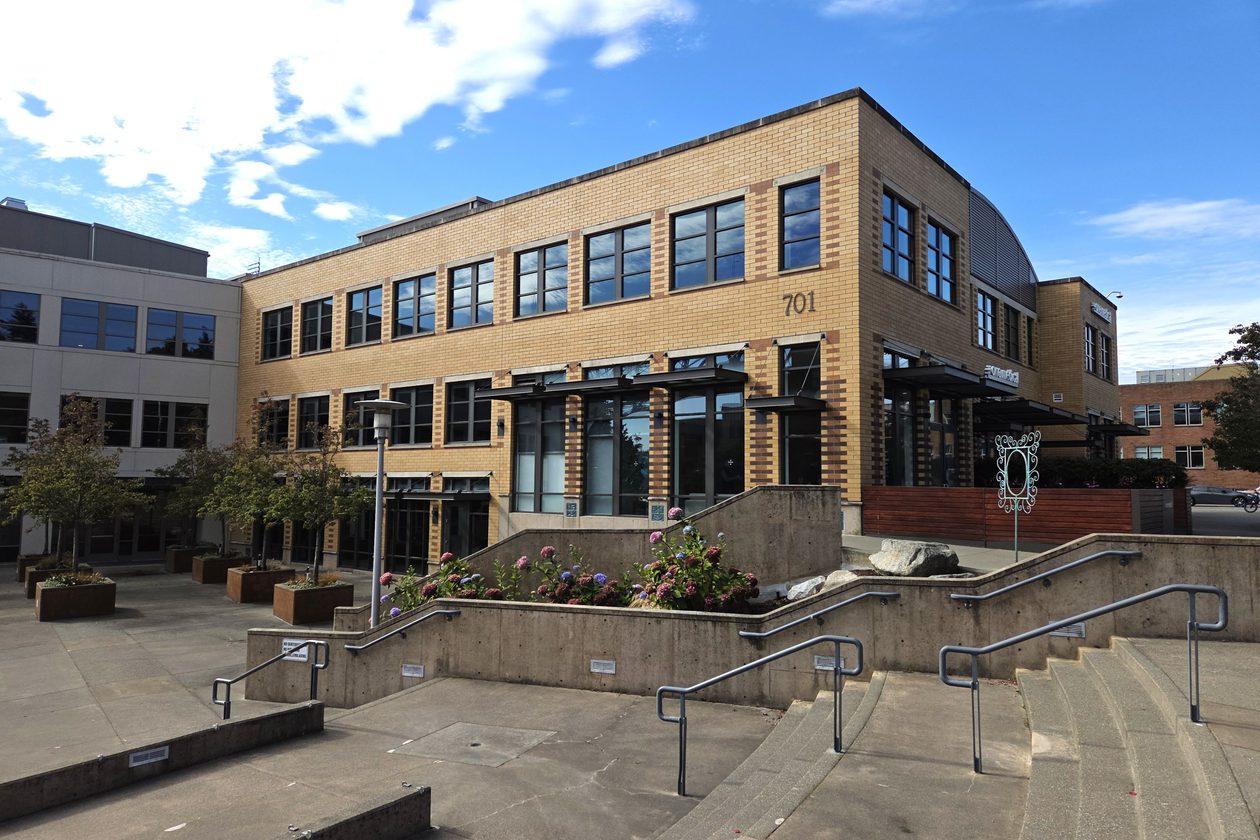
701 N. 34th St. in Seattle’s Fremont neighborhood, where Outreach plans to move its HQ early next year. (GeekWire Photo / Todd Bishop)
Outreach confirmed plans to move its headquarters from Interbay to Seattle’s Fremont neighborhood early next year, joining a campus that Adobe has anchored since the late 1990s.
The sales technology company, which was valued at more than $4.4 billion in a 2021 funding round, has grown to about 800 employees from 680 in late 2024.
The company will take one floor at Fremont Lake Union Center, a three-building, roughly 424,000-square-foot campus on North 34th Street owned by Kilroy Realty. Outreach’s new space is at 701 N. 34th St., a four-story building next door to Adobe’s longtime Seattle office.
Outreach CEO Abhijit Mitra disclosed the move to the Puget Sound Business Journal, saying it would bring more face-to-face collaboration. Outreach confirmed the plans to GeekWire. The company is currently based at 333 Elliott in Interbay, where it leased the top three floors of the Martin Selig Real Estate building in 2018. It has since cut back to two floors, the PSBJ reports.
The move will bring Outreach back to Fremont. Before 333 Elliott, the company occupied about 26,000 square feet in the neighborhood, subleased from Tableau, GeekWire reported at the time.
Adobe, which established its Seattle presence by acquiring PageMaker maker Aldus in 1994, moved to the Fremont campus from Pioneer Square in 1998, becoming the anchor tenant of what was then called Quadrant Lake Union Center.
Tableau remains in the neighborhood. The Salesforce unit renewed its lease in July on roughly 114,000 square feet at its Data 1 building, 744 N. 34th St.
Google plans to eventually leave its longtime Fremont offices and is in the process of consolidating its Seattle employees in South Lake Union, GeekWire reported last year.
Founded in 2014, Outreach makes AI tools that research prospects, take notes during sales meetings, coach reps in real time and update CRM systems. Its customers include Zoom, Siemens and Snowflake. Co-founder Manny Medina stepped down as CEO in 2024, and Mitra, who joined in 2023 as president of product and technology, took over.

 Login