Bending Spoons is buying Miro for $1.36 billion, a huge dip in valuation for the workplace collaboration startup, which was valued at $17.5 billion in late 2021.
Anthropic reportedly ended talks to acquire Decart AI for $6 billion after due diligence, though the companies could still pursue a future partnership.
Anthropic reportedly ended talks to acquire Decart AI for $6 billion after due diligence, though the companies could still pursue a future partnership.
Teachally founder Daniel Bernstein is also known in Seattle tech as the founder of Sandlot Games.
Daniel Bernstein spent much of the past decade as an M&A advisor, selling other people’s software companies. This time the company was his own, and he found a buyer in McGraw Hill.
The education publishing giant on Wednesday announced the acquisition of Teachally, a small startup led by Bernstein in Bothell, Wash., that uses AI to help teachers build and customize lessons, assignments and assessments aligned to state standards.
Financial terms weren’t disclosed. The deal has closed, and all five employees have joined McGraw Hill, with Bernstein taking the title of senior advisor for Teachally integration and growth. He declined to say what the company sold for or how much it had raised, but said the outcome was good for him and his investors.
“We didn’t take in a pile of money,” Bernstein said, explaining that the company brought in a small group of angels and was able to stay focused and effective.
The five-person team is spread across three continents: Bernstein and a colleague in the Seattle area, co-founder and CTO Rushil Makkar in Melbourne, Australia, a customer success lead in Arizona and a developer in Ethiopia.
Bernstein is best known in Seattle tech circles for Sandlot Games, the game studio he started in a spare bedroom in Bothell in 2002 and sold to Digital Chocolate in 2011, after developing casual gaming hits including “Cake Mania” and “Tradewinds.” He later founded the mobile game startup UpTap.
Bernstein spent the following decade on the other side of deals, as a software M&A advisor at Corum Group and then at his own firm, Hemisphere Partners, which ran Teachally’s sale.
Teachally raised a small round from local angels about nine months ago, and later opted to try an M&A process. An edtech M&A specialist representing the company approached a small group of potential buyers, and Bernstein said he hit it off immediately with McGraw Hill over a shared view of what curriculum and instruction should look like in the age of AI.
Teachally focuses on teachers rather than students, developing technology for what the industry calls high-quality instructional materials, or HQIM, which is the standards-aligned curriculum that many states and districts have pushed schools to adopt.
The startup was working with about eight school districts at the time of the sale — fully commercialized, Bernstein said, but “still very much an early stage company.” It was named a top edtech product for curriculum and instruction by District Administration magazine in January.
Bernstein said he had to learn an entirely new industry after two decades in games. The M&A work helped: he’d taken other edtech companies to market before building one.
Teachally itself started as something else. The company was founded as EZ Reward, maker of EZ Stickerbook, a digital sticker chart teachers used to reward students and message parents. Bernstein pivoted the company about three years ago to focus on AI for teachers.
McGraw Hill, which went public last year and reported $2.1 billion in revenue in its most recent fiscal year, said the deal will let it develop and localize K-12 curriculum faster and put AI tools in front of teachers already using its content.
“This acquisition provides a great opportunity to accelerate our AI strategy in ways that directly support educators and strengthen how we develop and deliver our K–12 products globally,” said Jana Thompson, interim president of the company’s School group, in the announcement.
Teachally is now live as a McGraw Hill product, with its own page on the company’s site.
Bernstein said it’s a second exit both for him and for some of the angels who have backed him along the way. “It’s a good Seattle story once again,” he said.
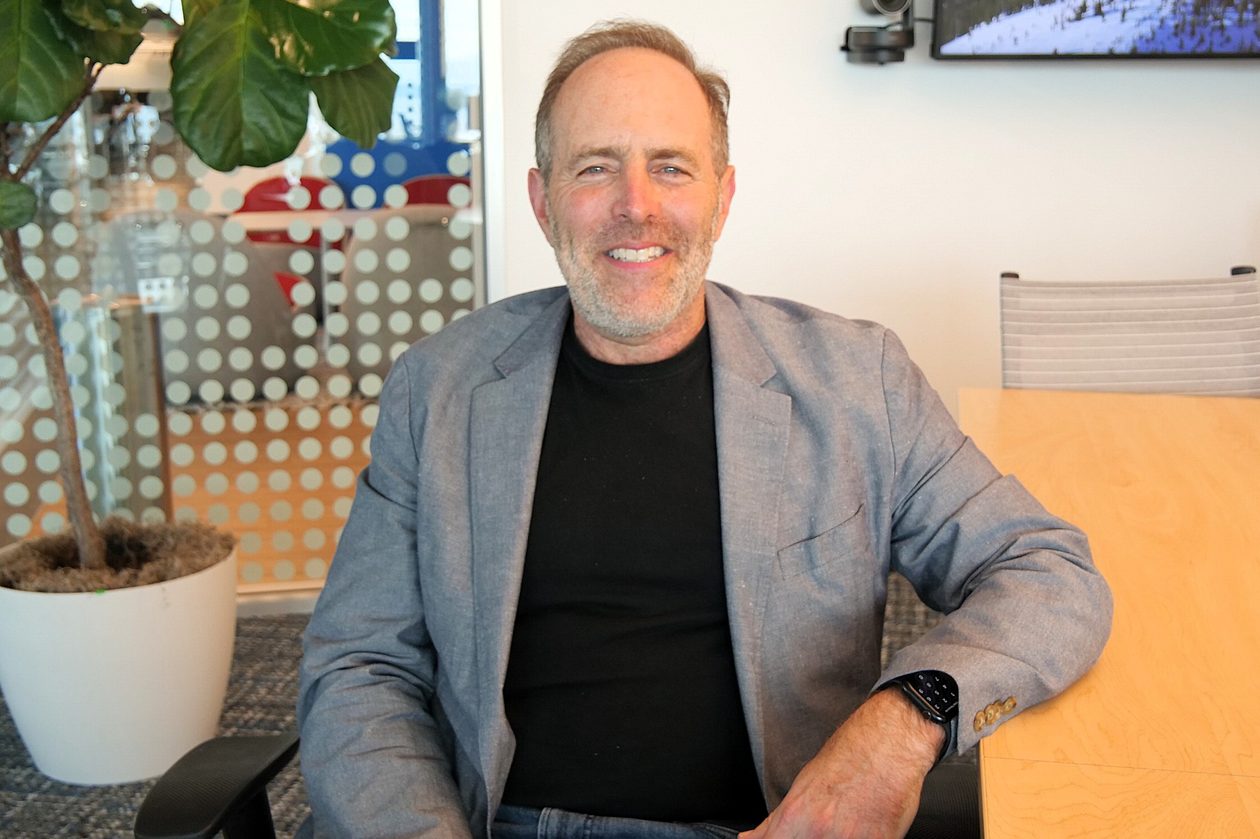
Seismic CEO Rob Tarkoff inside Highspot’s longtime offices in Seattle. (GeekWire Photo / Todd Bishop)
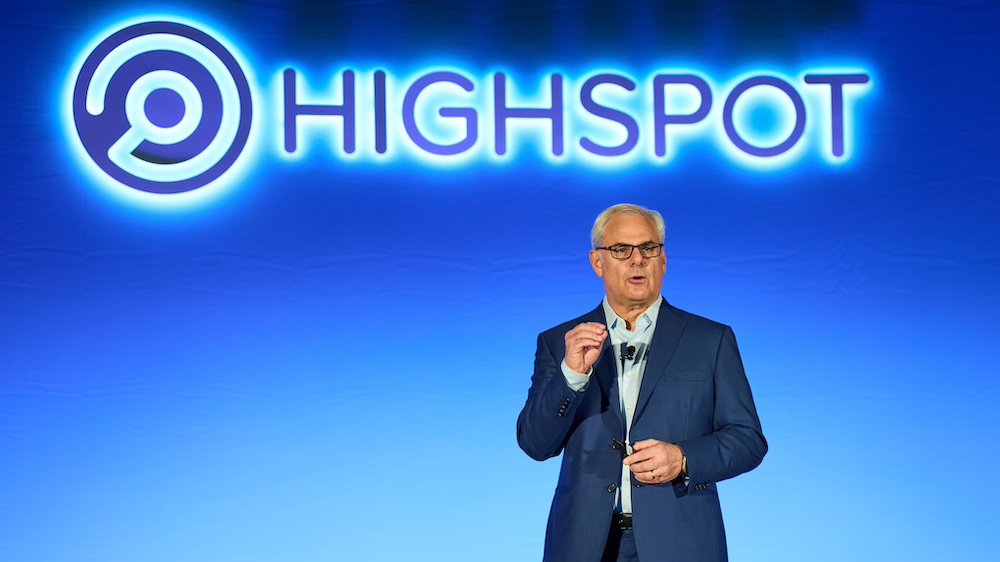
Highspot’s branding is still everywhere inside its longtime headquarters at World Trade Center East, overlooking the Seattle waterfront. But outside the corner office that once belonged to the sales software company’s co-founder and CEO, “Seismic” is scribbled on the whiteboard.
That’s how fresh the merger is. Two weeks after San Diego-based Seismic took over its Seattle-based rival, Seismic CEO Rob Tarkoff is in town this week for the first board meeting since the combination was completed, and the inaugural gathering of the combined company’s senior leadership team.
Highspot and Seismic sell sales enablement software: systems that manage the pitch decks, case studies and training materials salespeople use, and track which ones help close deals.
Founded in 2011 by Robert Wahbe and two former Microsoft colleagues, Highspot raised $650 million and held the top spot on the GeekWire 200, our ranking of the region’s privately held tech companies, prior to the merger. Wahbe, its CEO until the deal closed, is now on Seismic’s board.
Highspot co-founder Robert Wahbe, who led the company until the merger closed and now serves on Seismic’s board. (Highspot Photo)
Tarkoff, a lawyer by training who spent much of his career in corporate development and M&A, became Seismic’s CEO in October 2025, succeeding co-founder Doug Winter. He had previously spent seven years running Oracle’s customer experience business.
Tarkoff addressed a wide range of questions from GeekWire in an interview Monday afternoon in Wahbe’s former office, which now serves as an ad hoc meeting room.
Here are the main takeaways from the interview:
A $600 million company: Tarkoff disclosed the combined company’s annual recurring revenue for the first time, putting it at about $600 million, with about $200 million of that coming from Highspot.
That makes the combined business three times the size Highspot was on its own and 50% bigger than Seismic. Tarkoff said the larger size will be an adjustment for people across both companies as they come together. “We’re getting closer to being a billion dollar company,” he said.
The companies did not disclose the financial terms of the deal, and Tarkoff declined to say whether the transaction put Highspot above or below the $3.5 billion valuation it reached in 2022.
Tim Porter, managing director at Madrona, which led Highspot’s Series A in 2014, called it a “multi-billion-dollar merger” in a post after the deal closed. Porter, who serves as a board observer at Seismic following the combination, wrote that Madrona hopes to help build the combined company into “a truly iconic AI software company, through a potential IPO and beyond.”
Permira, the private equity firm that has backed Seismic since 2020, remains the controlling shareholder of the combined company.
Impact on jobs: Seismic said when the deal closed that Highspot had more than 700 employees and that the combined company would have about 1,700 total. Tarkoff said in a statement at the time that the companies were “carefully evaluating our organizations to identify areas of overlap,” and that “any decisions will be communicated directly and proactively to employees.”
Since then, word of initial job cuts has started to emerge on LinkedIn and other online forums, but the company has not provided specifics or disclosed any numbers.
Asked for an update on job reductions this week, Tarkoff said, “We did our best to try to find roles for everybody that we could, but there’s always some level of overlap where you don’t need two people doing a task that requires one.”
Tarkoff did not provide numbers or address the question of whether more job cuts are coming. He said the company feels “really good about where we are from a go-forward staff perspective,” while adding: “We will continue to push performance and push growth and acceleration.”
Seismic’s future in Seattle: Tarkoff said Seismic will keep Highspot’s Seattle offices at World Trade Center East, where the company has a long-term lease. He called Seattle “one of the top centers of excellence for tech talent,” citing the ability to recruit from Amazon, Microsoft and others.
There will be no designated Seattle site leader, he said, describing the office as one of the company’s major centers rather than a headquarters.
However, several senior leaders of the combined company are based in Seattle, including Kurt Berglund, who led engineering at Highspot and is now Seismic’s senior vice president of AI.
Others include chief human resources officer Kimberly Schultz, who joined Seismic in June after 11 years at Amazon, where she led the team responsible for integrating acquisitions and divestitures, and Lucas Welch, VP of brand and communications, who spent nearly eight years at Highspot.
Tarkoff said a number of the company’s top engineers are based in Seattle as well.
Seismic’s other major locations include San Diego, Boston, Toronto, Vancouver, B.C., London and Hyderabad, India, where Tarkoff said the company has more than doubled its presence. Gurpreet Singh Pall, who was Highspot India’s chief operating officer, now leads Seismic’s India operations.
Product plans: The current Highspot and Seismic platforms both will continue to be sold and supported for the time being, Tarkoff said. He declined to set a timetable for eventually consolidating them, saying customers will move to a new platform when one is ready.
Now that the companies are able to work directly together, he said they’ve come to see that the two products are closer than he understood before the deal closed. Seismic has focused on complex enterprise workflows and regulated industries, financial services in particular, while Highspot built for a broader market of upper mid-market and lower enterprise customers.
With two teams no longer building the same things, he said, engineering can move to new work — more AI agents, additional content governance features, and deeper industry-specific workflows such as archiving and records retention.
Rivals are making the opposite case. Ali Akhtar, CEO of Letter AI, wrote in a LinkedIn post last week that mergers in the category turn companies inward for quarters or years, predicting “stalled innovation, layoffs, and distractions from delivering customer value,” and a period of reduced support for customers on legacy platforms. Akhtar is offering to buy out their contracts.
Pricing: Tarkoff said seat-based subscriptions aren’t going away, because enterprises want predictable costs. He said he’s skeptical of the usage-based pricing some AI vendors have adopted, pointing to high-profile examples of companies blowing past their budgets.
“Token-maxing is not really a good model long term, because it’s just going to force enterprises to use less,” he said.
He said Seismic is working toward pricing tied to outcomes rather than usage.
The Salesforce question: A week after the Seismic-Highspot merger closed, Salesforce and Anthropic announced Claudeforce, making Claude the default model across Slack and parts of Salesforce’s Agentforce platform.
Salesforce is both a channel and a rival for Seismic. Seismic’s software sells through the Salesforce AppExchange, and its Aura AI runs inside Agentforce, Salesforce’s agent platform. At the same time, Salesforce’s Sales Cloud includes its own sales enablement tools. And Agentforce agents increasingly do work that enablement platforms have owned.
Asked whether the partnership makes Salesforce a tougher competitor, Tarkoff said no.
As sellers start working inside Claude rather than inside individual applications, he said, the assistant will call each company separately — Salesforce for customer records, Seismic for approved content and sales materials. That makes Seismic a peer of Salesforce inside Claude, rather than an add-on inside Salesforce’s own product.
“It actually puts us more on an even playing field with Salesforce,” he said.
But Salesforce is considerably further along. Claudeforce launched with a Salesforce plugin carrying 37 prebuilt sales skills, in pilot now and due in open beta this month.
Much of the early analysis of the Salesforce-Anthropic partnership saw it as evidence that enterprise AI is consolidating around a few deep platform alliances rather than opening up.
Seismic’s next fiscal year begins Feb. 1. Tarkoff said he expects to spend much of the intervening months on the road with customers and employees. Seismic plans to give the first detailed look at its new product roadmap at its Shift conference, Oct. 12-15 in Carlsbad, Calif.
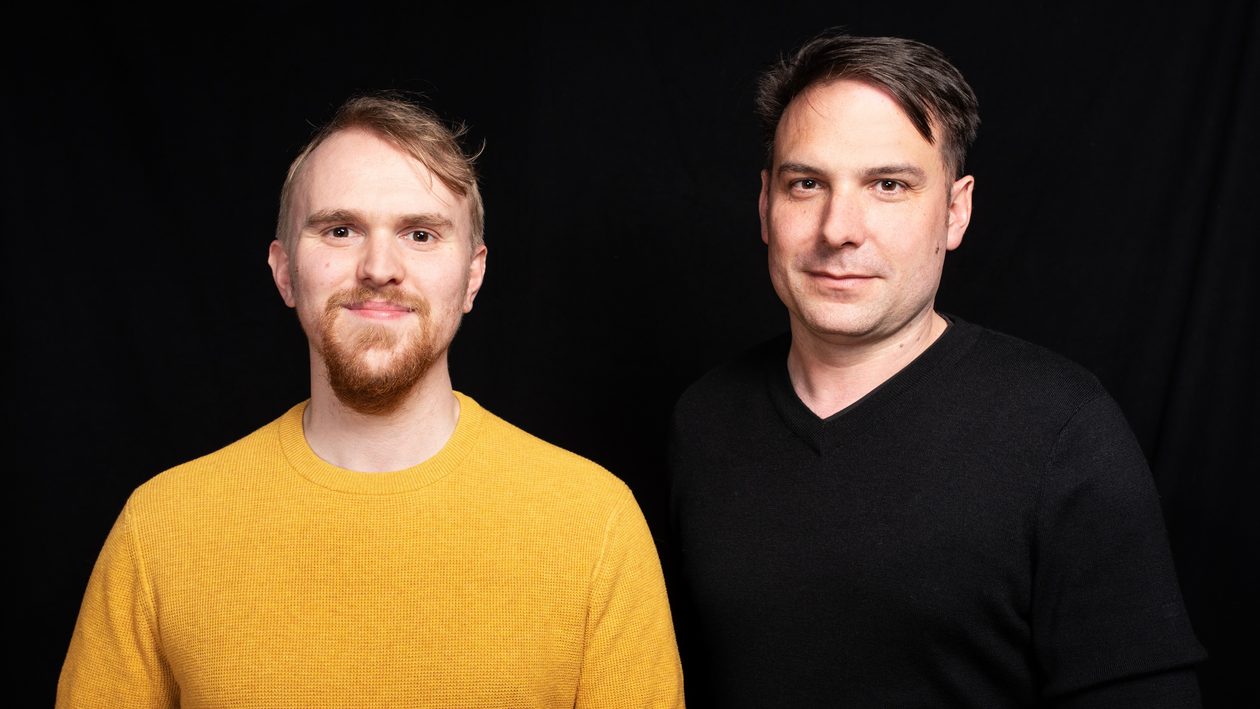
DuckDB creators Mark Raasveldt, left, and Hannes Mühleisen. (DuckLabs Photo)
Amazon has agreed to acquire DuckLabs, the company behind DuckDB, the fast-growing open-source database that has become a favorite of developers looking to analyze large amounts of data without the cost and setup of a cloud data warehouse.
Employees of DuckLabs will join Amazon Web Services, including co-founders and DuckDB creators Hannes Mühleisen and Mark Raasveldt, who will continue leading the team and setting the project’s technical direction. They will remain based in Amsterdam, where the team will continue developing DuckDB and related projects.
Amazon says it is not acquiring the DuckDB open-source project itself. DuckDB will remain free and open source under the MIT license, overseen by the nonprofit DuckDB Foundation, as will the related DuckLake and Quack projects, according to DuckLabs.
Financial terms were not disclosed. Amazon said it has signed a definitive agreement and expects the acquisition to close shortly. DuckLabs said it expects to become part of AWS in early September.
Larger shifts in cloud data
The deal fits Amazon’s broader push to turn S3, its flagship cloud storage service, into a place where customers analyze data rather than just store it. It gives Amazon a team experienced in building fast, lightweight analytics software that runs directly against data sitting in cloud storage.
The move comes as the data industry shifts toward keeping information in open formats in cloud storage, where it can be queried directly rather than loaded into a separate warehouse.
The shift puts pressure on companies like Snowflake and Databricks, which sell the compute and governance layer on top of stored data. Both are major AWS partners as well as competitors, with large numbers of customers running on Amazon’s cloud.
AI has raised the stakes, driving up both the volume of data companies keep in the cloud and the cost of analyzing it. Amazon says DuckDB is a natural fit for AI agents, which query data much the way people do, poking and experimenting with small sets before deciding what they want.
DuckLabs said it has worked closely with AWS in recent years, including on DuckDB support for Amazon’s S3 Tables and SageMaker Lakehouse.
“DuckDB is an incredible open source project with an amazing community; it is broadly used and very much loved by S3 customers today,” said Andy Warfield, an AWS vice president and distinguished engineer, in a press release announcing the deal.
‘That’s Amazon’s playbook’
One of the companies watching closely is in Seattle. MotherDuck, which sells a cloud service built on DuckDB, was founded in partnership with the DuckLabs team and has worked with it closely for four years. Three of its engineers are among the top 10 outside contributors to the DuckDB project.
MotherDuck CEO Jordan Tigani. (LinkedIn Photo)
In a blog post Wednesday, MotherDuck CEO Jordan Tigani said Amazon is following a familiar pattern. “That’s Amazon’s playbook, after all: wait until an open source project gets big enough, then launch it as a service,” wrote Tigani, who helped start Google’s BigQuery and spent a decade there before co-founding MotherDuck in 2022.
He expects Amazon to do exactly that with DuckDB: “After all, they’re not acquiring Duck Labs just because they love open source,” he wrote. “We welcome the competition.”
He said the deal is likely to be good for DuckDB, because Amazon has a financial reason to keep the project open and healthy. “If DuckDB becomes the standard, it is going to drive a lot more compute on their infrastructure, which is where they make their money,” he wrote.
Tigani said DuckLabs is being kept as a wholly owned subsidiary with its organization intact, and that the DuckDB Foundation has “iron clad control over the DuckDB IP.”
MotherDuck also said it is now offering enterprise support for DuckDB — which it had previously steered clear of to avoid competing with DuckLabs. Tigani said the company has Mühleisen and Raasveldt’s “explicit blessing” to take it on now that they are joining Amazon.
Five years, no venture capital
DuckLabs was founded a little more than five years ago as a long-term home for the DuckDB development team. The company turned down venture capital, stayed owned by its founders and employees, and grew to more than 30 people in Amsterdam, funding itself through support and feature-development contracts.
In a blog post, Mühleisen and Raasveldt wrote that they had come to worry DuckDB’s growth would outpace their ability to support it, and that their small company “could become a bottleneck for the project.” Building a larger sales and operations organization, they wrote, would have pulled the team away from the technical work that made DuckDB successful.
Nine days before the acquisition was announced, Mühleisen and Raasveldt published a preview of DuckDB 2.0, due this fall, declaring that the release “kicks off the year of DuckDB as a server.” It adds Quack, which lets one DuckDB instance serve data to others over a network, along with work aimed at speeding up queries against data held in object storage such as S3.
DuckLabs said the DuckDB Foundation will add a technical advisory board, giving leading community members input on the project’s technical direction. The company also plans to let DuckDB run extensions signed by outside developers and organizations.
Three months after closing its $6.75 billion purchase of Press Ganey Forsta, Qualtrics is cutting jobs across the combined company — a reduction that the experience-management technology company says reflects duplication between two organizations that were built independently.
The cuts are global, including the company’s dual headquarters in Seattle and Provo, Utah, and its international offices. Qualtrics is not publicly disclosing how many jobs were cut, and did not break out numbers by office, region, or job function.
One clue: Qualtrics sent impacted Seattle employees layoff notices under the Worker Adjustment and Retraining Notification Act, or WARN, according to one copy reviewed by GeekWire. The notice covers workers at Qualtrics Tower, 1201 Second Ave., its Seattle headquarters.
The Washington law applies only to layoffs of 50 or more at one site — so at least that many jobs were cut at the Seattle HQ. As of publication time, Qualtrics had not appeared in the Washington or Utah state WARN databases, which can sometimes lag the notices to employees by a day or more.
Qualtrics CEO Jason Maynard
Individual employees learned their status by email Wednesday morning.
In a memo to employees, obtained by GeekWire, Qualtrics CEO Jason Maynard called the acquisition a “defining milestone” for the company but said it “meant making hard decisions about what the organization needed to operate and function as a single uniform team.”
“Since the acquisition closed, we’ve gone function by function, team by team, to understand where we have overlap and determine what we needed to do to move forward as one company,” he wrote, noting that the decisions were “made based on the structure of our combined organization: the roles we need, the capabilities we are building toward, and where we have duplication.”
Qualtrics makes software that companies use to collect, analyze, and adapt to feedback from customers and employees, a category of technology that it branded “experience management.”
Current and former employees posting publicly Wednesday on LinkedIn and other forums described cuts spanning departments and offices, including Seattle, Provo and international locations, and hitting both the legacy Qualtrics and Press Ganey Forsta sides of the business.
The Press Ganey Forsta acquisition, announced in October and completed in May, added what Qualtrics called the largest healthcare experience dataset in the industry. Press Ganey Forsta, based in Indiana, was itself the product of earlier mergers, and its Forsta products competed directly with Qualtrics.
The cuts follow a leadership shakeup in April, when Maynard removed five senior executives and outlined a broader reorganization spanning marketing, customer operations, IT and corporate development. Maynard, who joined from Oracle, became CEO in February.
It’s not the first round of cuts under private equity ownership. Qualtrics cut about 780 jobs, roughly 14% of its workforce, in October 2023 under then-CEO Zig Serafin, who cited complexity from years of rapid hiring. It had cut about 270 jobs earlier that year.
Qualtrics has been owned by private equity firm Silver Lake and Canada Pension Plan Investment Board since 2023, when they acquired it for $12.5 billion. It was the second time the company changed hands in under five years, following SAP’s $8 billion acquisition in 2019 and a 2021 IPO.
The new Highspot by Seismic branding, which replaced the company’s standalone logo Tuesday. (Highspot by Seismic Image)
Highspot’s merger with Seismic was completed Tuesday morning, ending the Seattle-based sales software company’s run as an independent business and folding one of the region’s biggest enterprise technology players into a San Diego-based rival.
The combined company is now operating under the Seismic name, led by Seismic CEO Rob Tarkoff. Highspot co-founder and former CEO Robert Wahbe is expected to join Seismic’s board of directors, as announced in February. Permira, the private equity firm that has backed Seismic since 2020, remains the controlling shareholder.
The Highspot name isn’t disappearing entirely. Its product is now branded “Highspot by Seismic.”
Tuesday’s announcement named Seattle as one of the R&D locations — along with San Diego, Boston, Vancouver, Toronto, London and Hyderabad and other sites — where the combined company’s 700-plus product, engineering, data science and AI employees are based.
Seismic will keep Highspot’s Seattle and Vancouver offices, adding to its global footprint, Tarkoff said in a statement responding to GeekWire’s questions.
The combined company has about 1,700 employees globally. Highspot’s total headcount was more than 700 at the time of the deal closing, according to Seismic. The company didn’t say how many of those employees are in Seattle.
“As with any merger of this scale, Seismic and Highspot are carefully evaluating our organizations to identify areas of overlap and integrate our company for near and long-term growth,” Tarkoff said. “Any decisions will be communicated directly and proactively to employees.”
Seismic says it has 2,500 customers and 3.5 million users, and plans to invest more than $100 million a year in research and development.
Financial terms of the deal, originally announced in February, were not disclosed. Highspot had raised $650 million since launching in 2011. Its last publicly disclosed valuation was $3.5 billion, set in 2022 when it raised $248 million in a round led by B Capital Group and D1 Capital Partners.
Other backers included Madrona, ICONIQ Growth, Salesforce Ventures, Sapphire Ventures and Tiger Global Management.
Highspot held the No. 1 spot on the GeekWire 200, our list of the top privately held tech companies in the Pacific Northwest, until the merger was announced in February. Companies come off the list after mergers and acquisitions that fold them into other entities. Everett-based fusion energy company Helion Energy took over at No. 1 in the March update.
Post updated with comment from Seismic CEO Rob Tarkoff on the Seattle offices and workforce.

 Login
Login