Login

2026 Hackaday Supercon: All the Speakers!

We announced our first round of speakers, and then the workshops, and we were going to dribble out updates on the rest of the speakers as they came in, but then time slipped away from us. So we are left here announcing a veritable cornucopia of twenty wonderful talks that you absolutely won’t want to miss.
Supercon is just about a week away, and there are still a few tickets left, so grab them now before it’s too late.
And the talks are just half the fun. Between food, merriment, a killer badge with the biggest e-paper display that you’ve ever seen, and all the assorted shenanigans, it’s the highlight of our hacking year. Come join us!

Rare Circuits: How we Used and Abused a $1 MCU to create the Aerospace Village Radio SAO
Software-Defined Radios have evolved from once being exquisite lab equipment to now an affordable tool accessible to hobbyists, thanks in large part to projects like HackRF and the $40 RTL-SDR. That got us thinking, are there any existing RF chips we could repurpose to make an even simpler and lower-cost SDR?
This talk dives into how we reverse-engineered the black box of the $1 TI SimpleLink Wireless MCU’s RF subsystem, and jailbroke it to unlock additional RF modes and custom protocols. We will demonstrate how we are able to receive analog AM, FM, and even raw IQ samples on this supposedly “digital RF” MCU, and developed our own tools to gain further insight into how the radio operates. Putting these capabilities together, we recount how we leveraged all of this to create the “Charlie” radio SAO for Aerospace Village and made it receive analog airband, stereo FM, UAT, and more! We also demonstrate how we made our unassuming SSD1306 OLED produce 4-level grayscale with perfect VSync, and the silicon-level hacking it took to pull it off!

Rover Tracks: A Retrospective on the Open Source Rover and What’s Next
The Open Source Rover has taken on a new life ever since the v2 release three years ago. In that time, I’ve joined the community of rover builders and become a maintainer on the project myself, doing outreach at community events and development work on the rover where I can.
In the time since I’ve been a maintainer, I’ve learned quite a few lessons about the practical and philosophical aspects of engineering for a project like this. I hope to be able to share some of what I’ve learned (changes I’ve had to make to my rover, improvements that can be made, what it’s like to be “the rover guy” at Maker Faire), and what comes next for both my own rover and the project at large.

Designing Devices: Not Just PCBs in Boxes
PCBs and their enclosures are often designed as separate things, but the best results come from designing them together. This talk covers practical considerations to design boards with the final device in mind, account for the differences between CAD models and real hardware, and create enclosures specifically for FDM 3D printing. We’ll look at real-world tolerances, connector placement, production variance, clearances, overhangs, extrusion widths, layer heights, and other small details that can make the difference between a design that looks right in CAD and one that actually fits together.

Blinkenlights That Remember: The Unsigned Firmware on your PC’s RAM
The RGB glow on your sick gaming PC comes from somewhere, and that somewhere is a microcontroller controlled by a program and a kernel module that the manufacturer ships. But if your vendor’s app can push a new lighting style to that microcontroller, why not a whole new firmware update? Is there anything actually stopping arbitrary firmware from being written to your RAM’s RGB controller?
I went looking for answers with Ghidra and my RAM’s onboard controller will happily accept and run firmware of my choosing, and I can make it do basically whatever I want. I will demonstrate a few of these possibilities live.
How to Rob a Bank Without Really Trying
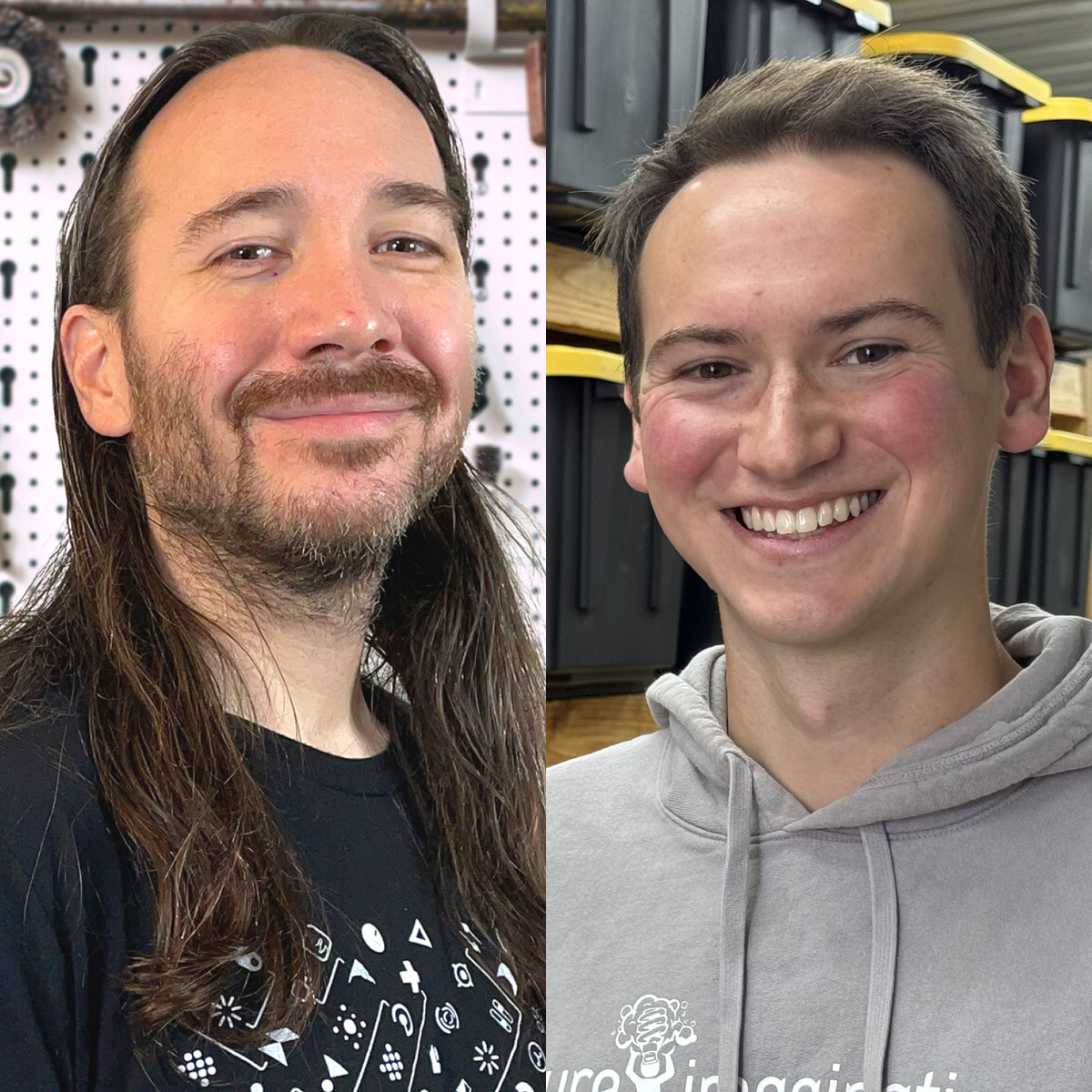
Have you ever wondered how exploding bank dye packs work? During this talk, you will learn all about how banks utilize embedded electronics to either track or paint bank robbers. Using equipment purchased from auctions, MakeItHackin and Danner Cronise will cover the electronics hidden in stacks of cash, the various equipment inside banks to trigger a remote detonation, and how these electronics have evolved over the decades.
Can these protective measures be foiled… find out during this exclusive Supercon talk.

No Refresh Button: The Case For (and Against) Putting a Browser on Your Device
A user interface running in Chrome on a Raspberry Pi looks like any other web app from the outside. Underneath, most of the usual assumptions start to fall apart. This talk covers what actually changes when you ship on a device instead of a server: hardware owns the state, WebSockets replace REST because screen updates are often triggered by hardware sensors, and both memory and CPU limits become a real constraint.
It also covers why the trade is usually still worth making. The upside is options: rendering and layout are handled for you, there’s a library or a pattern for almost anything you need, and a large community to ask when something breaks. See this all come together in a device that uses RFID for input.

EDA for Everyone: PCB Design in the Agentic Era
What if ANYONE could ship hardware? What if that what-if wasn’t a what-if? Find out how the next wave of open-source design software puts the power to create in your hands. (Editor’s note: this talk contains parody and hacks in about equal measure.)
LoRa and Beyond
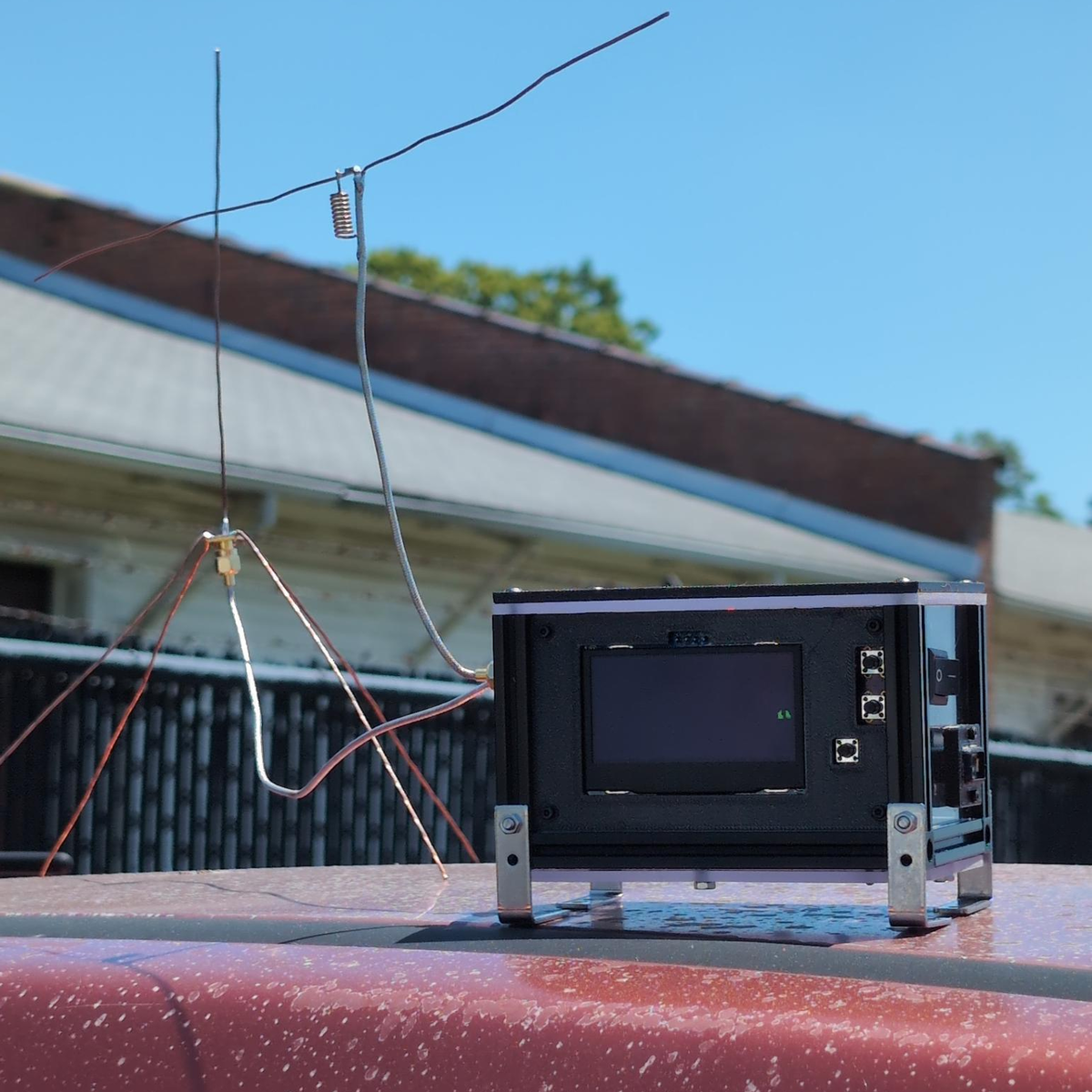
This talk explores building a small ground station for receiving LoRa satellite communications with affordable parts and custom made antennas. This project was built from the ground up without using existing frameworks like tinyGS.

Achieving Quality Photoresist Uniformity on Asymmetric Substrates
The most popular method for fabricating nano-scale structures is with photolithography. The first step in any photolithography process is to coat a thin, uniform coating of photoresist on the substrate. Typically this is spun on, however if the substrate is not rotationally symmetric, strong edge effects can hurt thickness uniformity. I present a few different methods for increasing uniformity of photoresist coating. In particular increased uniformity on the silicon substrates (50mm x 100mm x 30mm) from 12% to 1%, which is close to industry standard uniformity on wafers. I will discuss various other photoresist coating techniques for oblong substrates as well.

Beyond the Breadboard: Bringing PCB Fabrication into the Makerspace
This talk explores an in-house PCB fabrication workflow developed for a university makerspace that uses a fiber laser to selectively ablate copper from PCB blanks.I’ll share how the process was developed, what was learned along the way, and how access to rapid PCB fabrication has expanded what students can design, build, and iterate on during their engineering courses.
HM and I (Down the Rabbithole of Human Machine Interfacing)
This talk is for anyone who loves tactile inputs and physical controls, whether they’re on the big screen or in real life. We will be talking about human-machine interfaces (HMI for short), have evolved, and how fictional and real systems have shaped each other along the way. We’ll walk through three of our own designs, each with a distinct purpose. Every one is a real build, so we’ll cover the whole design, from hardware planning, firmware, and even the software that connects a computer to the machine interface. Finally, we’ll look at the future of HMI design and the growing role Agent-to-Agent (A2A) AI now plays in designing control systems.
How many neurons does it take to pump a swing?
Back in 2020, I became interested in applying reinforcement learning to teach a robot how to pump a swing, inspired by the Cook’s paper “It takes two neurons to ride a bike” and YouTube videos of gymnastic robots by Hinametetu. It’s an elegant toy problem with beautiful nonlinear dynamics and it turns out you can get away with just one neuron using a Q-learning approach. Now, in the blistering, chaotic summer of AI, it’s seems like an appropriate time to revisit this idea and ask what we can learn from this simple toy example for building physical intelligence.

The Hardware of Superconducting Quantum Computing
Superconducting quantum systems represent a new frontier for quantum simulation and computation. In this talk, I will discuss the technologies and hardware behind these systems – what is a transmon qubit? how do we control and measure its state? As the field is so new, much of what we use is adapted from technologies hardware hackers are familiar with. This talk will emphasize how we adapt and use common equipment for quantum measurement and control.

How to Make and Have Feelings
Touch is an integral part of our lives, but how does it work? It’s easy to say “your skin senses pressure” but it can also tell you about things like the grain of a piece of wood, or that an animal’s fur is soft. The biomechanics of touch are a fascinating and complex topic without wide understanding. In this talk we will peel the covers back by discussing science’s current understanding of the collection of systems the human body uses to feel, and how it can infer things like texture from those rudimentary signals.
Expect to learn about how amazing our biological systems are, and how you can leverage that in different ways give people different haptic experiences.

Spinning E-textile Yarns
This talk will be about e-textile materials and how to make your own when you can’t find commercially available options. E-textile materials include conductive thread, yarn, fabric, and wool roving, but these are hard to find from reliable sources (especially if you are a hobbyist maker and not looking to buy in bulk.) Methods I will be covering in the talk include hand-plying, drop spindle plying, core spinning, and supercoil. Hand plying is taking a single strand and introducing additional twist into it, then folding it in half and letting it twist back on itself. Drop spindle plying is similar, but using a weighted spindle to add more twist in less time. Core spinning is taking an overspun single and wrapping it with wool roving in the opposite direction. Supercoil is similar to core spinning, but instead of wool roving, another overspun single is twisted around a core.

The Perfect BLEnd: Reverse Engineering a Bluetooth-Controlled Smart Blender for Better Smoothies
Have you ever gone to make a smoothie, only to have the blades spin fruitlessly while the fruit sticks just out of reach on the walls of the cup? I’ve wrestled with a “smart” blender over this and other issues on many occasions, often resorting to tossing the single serving cup to dislodge stubborn pieces of fruit. Or perhaps you have another smart device that one day stops working because the vendor decided to stop updating the app for newer phones.
In this talk, I’ll share how I learned to reverse engineer BLE devices in order to control the exact settings used by the blender, including initial failures and how I overcame them — along with quickly creating an alternative for controlling the blender when the app stopped working after an iOS update. And in the end, we’ll create a custom blending profile for the perfect blend!

How to build things that people care about in the age of AI
In today’s age of abundant information, anyone with a computer can build and anyone with an opinion can make it known. How do you filter out the noise to build something that people actually care about? Learn how to combine the mental frameworks of engineer and a storyteller, cutting through the clutter and creating things that truly matter.

Finding a Loop: Creative Uses for e-Waste
Artists, makers, and engineers must begin to explore creative, non-industrial approaches to managing e-waste. This talk chronicles experimentation with a niche source of e-waste – one record label’s backlog of unsellable compact discs. Learn about the mid-2010’s enthusiasm for recycled CD filament, the benefits of salvaged metal foil, and embracing the chaos of creative re-use.

StageReady: a standalone, portable device for natural, studio grade vocal pitch correction in real time
We all love singing, but at some point we also realize that perhaps the performance sounds better inside our own heads than outside it. If there were a tool to bridge this gap, it would surely appeal to just about everyone. That tool does exist, it’s real-time pitch correction. So why are we all not carrying our own personalized pitch corrector with us?
Currently, real-time pitch correction requires studio grade hardware, but we create a real-time auto-tuner that can be personalized to a singer’s voice while pitch-correcting under real-time latency constraints on an edge device.
It does so by separating the voice into two parts: the resonant character that makes each person sound like themselves, and the underlying vocal source that sets the note. It corrects only the pitch, while a neural network running on chip’s AI accelerator rebuilds a natural, breathy vocal source at the corrected pitch.
Secrets of Ghidra: Reverse Engineering Proprietary Smart Home Sensors
After digging some old sensors from a security system I had out of a bin to integrate with Home Assistant, I realized several of them used a proprietary protocol used by a system I no longer used. Fortunately, a fellow enthusiast and tinkerer had just recently discovered you could dump the firmware of the humble TI MSP430 based device. That’s when I decided to dust off Ghidra and try to figure out what this device was doing.
Along the way, I’ve learned some great lessons on how to use the tool Ghidra to decompile monolithic microcontroller firmware. In this presentation I’ll share my journey with the tips that I wish I known before I started. For example, to understand the firmware, you need to pull resources from anywhere you can and look at the device as a whole to understand the inner workings. As a result, I was able to crack the protocol and give new life to hundreds of dollars of sensors that would still be collecting dust in a bin.
[If you read this far, you probably want tickets. Just sayin’.]