Reading view

There are new articles available, click to refresh the page.

Will Google Gemini Win the AI Race?

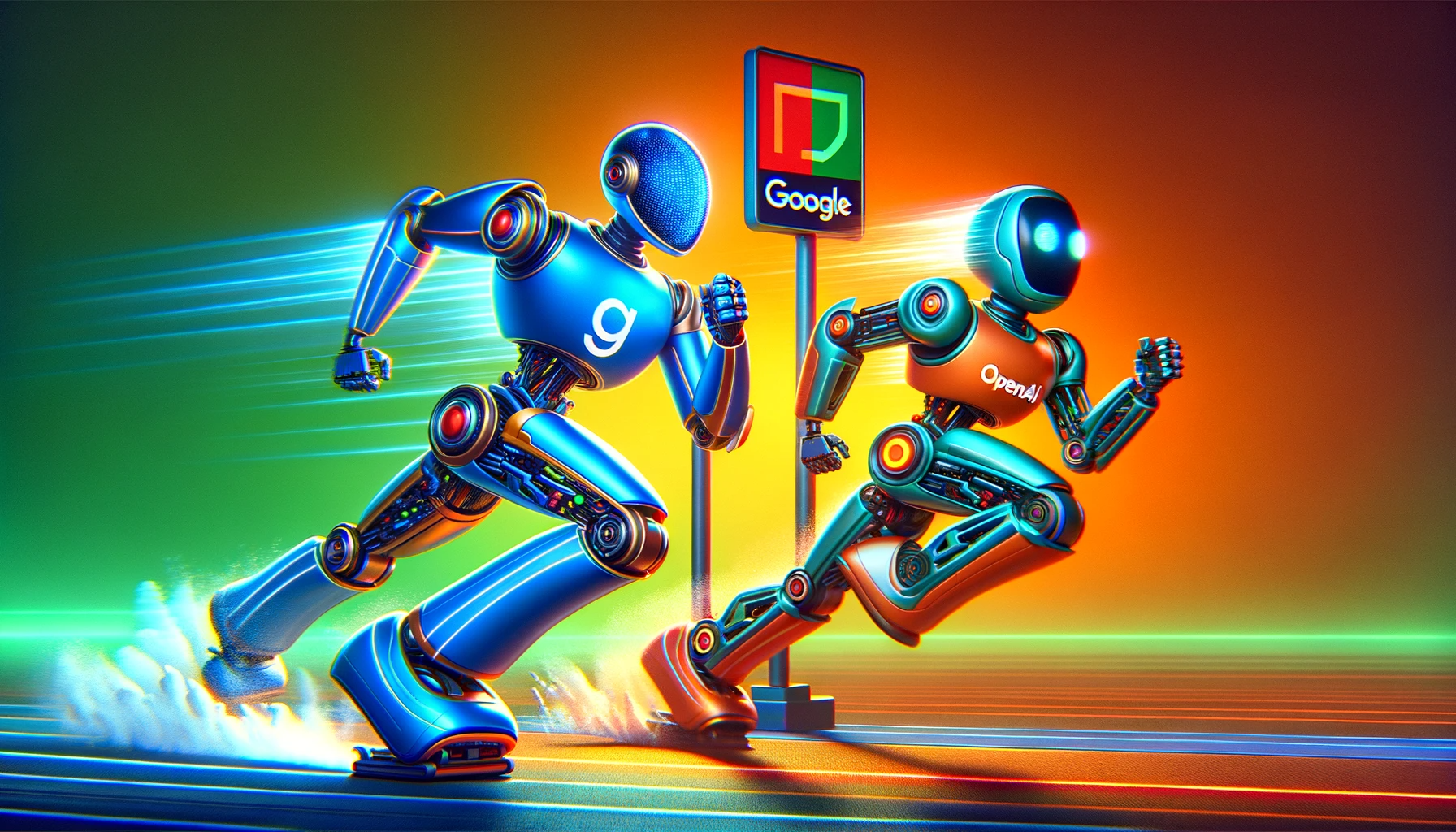
Google’s Brain Team and DeepMind have unveiled Google Gemini, a cutting-edge AI model. This remarkable system, announced by CEO Sundar Pichai, aims to revolutionize the AI industry. Combining various AI models and a massive Google dataset, Gemini has set new standards for AI capabilities.

Will this versatile and powerful model win the AI race? That’s what this article explores.

Key Takeaways

  • Gemini AI is designed to be more powerful and capable than its predecessor, with the ability to reason across text, images, video, audio, and code.
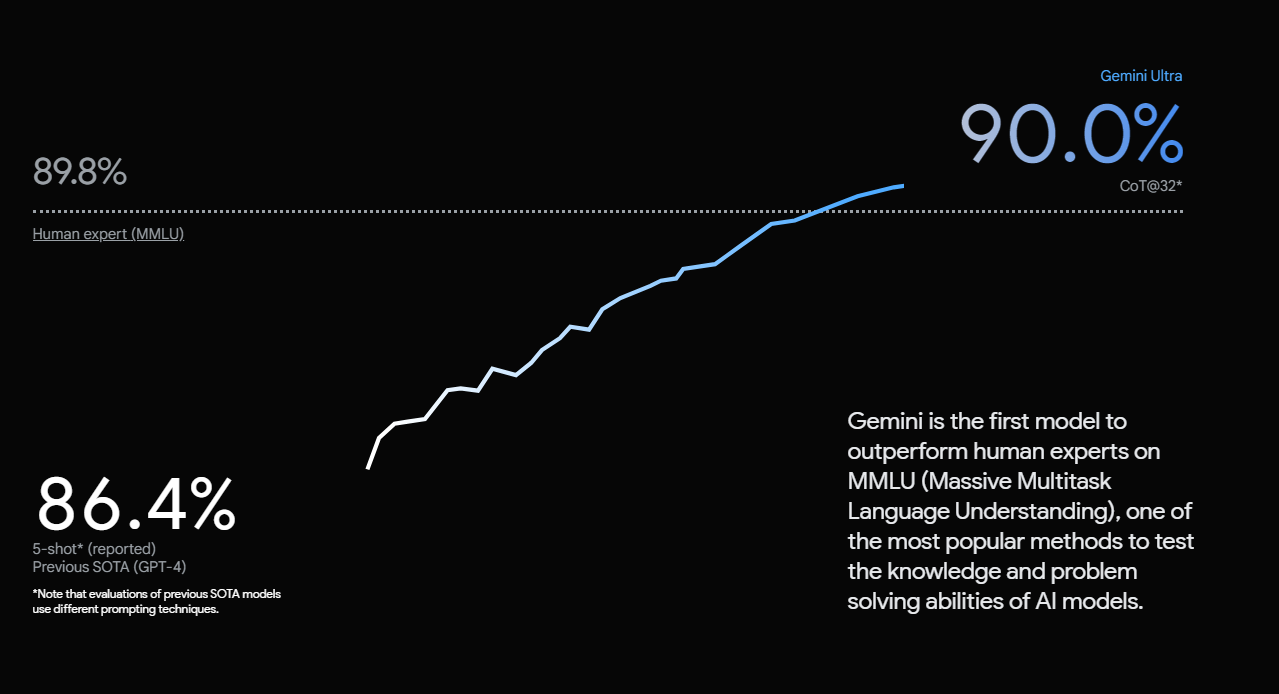
  • Google Gemini is the first model to outperform human experts on Massive Multitask Language Understanding (MMLU) and has expertise in computer vision, geospatial science, human health, and integrated technologies.
  • Google Gemini’s integration with Bard improves the chatbot’s understanding of user intent and allows for seamless handling of various media.
  • The future development of Gemini Ultra will support images, audio, and video, as well as languages other than English, enhancing Bard’s capabilities for multimodal functions.
Google Gemini Metrics

Understanding the Google Gemini AI Model

In the realm of artificial intelligence, Google’s Gemini stands out as a significant advancement, designed to replicate human abilities across varied tasks. It’s a multimodal AI model, meaning it’s capable of processing text, images, audio, video, and even code, all at once. This ground-breaking feature sets it apart from its predecessors and contemporaries.

Google’s Brain Team and DeepMind have collaborated to build Gemini on the foundation of the highly capable PaLM 2, which already powers several Google products. However, Gemini’s ability to integrate different AI models, like computer vision and language models, takes it to a whole new level.

Google Gemini’s training is another marvel. With Google’s unprecedented computational power and TPUv5 chips, it surpasses even GPT-4 in training magnitude. It’s been fed a diet of around 40 trillion tokens, making it one of the most extensively trained AI models to date.

Although still in development, Gemini is already showing promise in revolutionizing Google’s products and services, and potentially, multiple industries. It’s a testament to Google’s commitment to AI advancement and its ambition to remain at the forefront of AI technology.

Google Gemini Versus Chatgpt: a Comparison

ChatGPT has come a long way while comparing Google’s Gemini with OpenAI’s ChatGPT offers a revealing look into the diverse strategies these tech giants are employing to advance artificial intelligence.

Gemini, Google’s latest model, showcases its multimodal approach. It’s designed to process data from text, images, video, audio, and code, making it adaptable to a wide range of tasks. It’s also the first AI model to outperform human experts on Massive Multitask Language Understanding (MMLU), a significant milestone in AI development.

On the other hand, ChatGPT, OpenAI’s language processing model, excels in generating human-like text. It’s renowned for its ability to produce coherent and contextually relevant sentences, making it ideal for tasks such as drafting emails or writing articles. However, unlike Gemini, it’s not designed to handle multimodal data.

Challenges With Current Language Models

Navigating the complexities of current language models, we’re encountering significant challenges that impact their efficacy and versatility. These models, while sophisticated, often struggle with comprehending nuanced human language, leading to misinterpretations. They’re also data-hungry, requiring vast amounts of information to function optimally.

Moreover, bias and lack of transparency pose additional hurdles. Most models inadvertently learn and propagate biases present in the data they’re trained on. This, coupled with their ‘black box’ nature, makes it difficult to fully understand or control their outputs, hindering their reliability in sensitive applications.

Lastly, the resource-intensity of these models is a major concern. They require significant computational power and energy, making them expensive and environmentally unfriendly to develop and maintain.

Challenges Descriptions
Understanding Nuances Difficulty comprehending nuanced human language
Data Dependency Require large amounts of data for optimal functioning
Bias and Transparency Inadvertently learn biases and lack transparency
Resource-Intensity Require significant computational power and energy

Addressing these challenges is crucial for the advancement of AI language models like Google’s Gemini.

Google’s Vision and Goals for Google Gemini

Google’s vision for Gemini is to revolutionize the AI industry by overcoming the existing challenges and setting new standards in language understanding and multi-modal capabilities. They aim to enhance the human-computer interaction experience, making it more intuitive and efficient.

Google’s goals for Gemini extend beyond just improving its own suite of products. They envision Gemini as a tool that will drive innovation across various industries.

Gemini is part of Google’s broader commitment to:

  • Advancing the field of artificial intelligence by developing technologies that push the boundaries of what AI can do.
  • Making AI more accessible and useful to people around the world, regardless of their technical expertise.
  • Ensuring the responsible use of AI, with a focus on privacy, transparency, and fairness.

In essence, Google’s vision for Gemini is to create an AI that can understand and interact with the world in a way that’s as close to human-like as possible. They’re not just aiming to win the AI race; they’re striving to redefine it.

Future Implications of AI Innovations

The advancements in AI, such as Google’s Gemini, could radically transform various industries and societal norms in the future. As Gemini’s multimodal capabilities evolve, it may revolutionize the way people interact with technology. It’s not just about making tasks easier; it’s about creating a seamless, intuitive experience that feels more human.

One significant implication could be in the world of coding. Gemini’s AlphaCode 2, for instance, outperforms humans in coding competitions. This could lead to faster, more efficient software development and potentially lower costs in the tech industry. Gemini’s prowess in computer vision and geospatial science could transform fields like autonomous vehicles, remote sensing, and environmental monitoring.
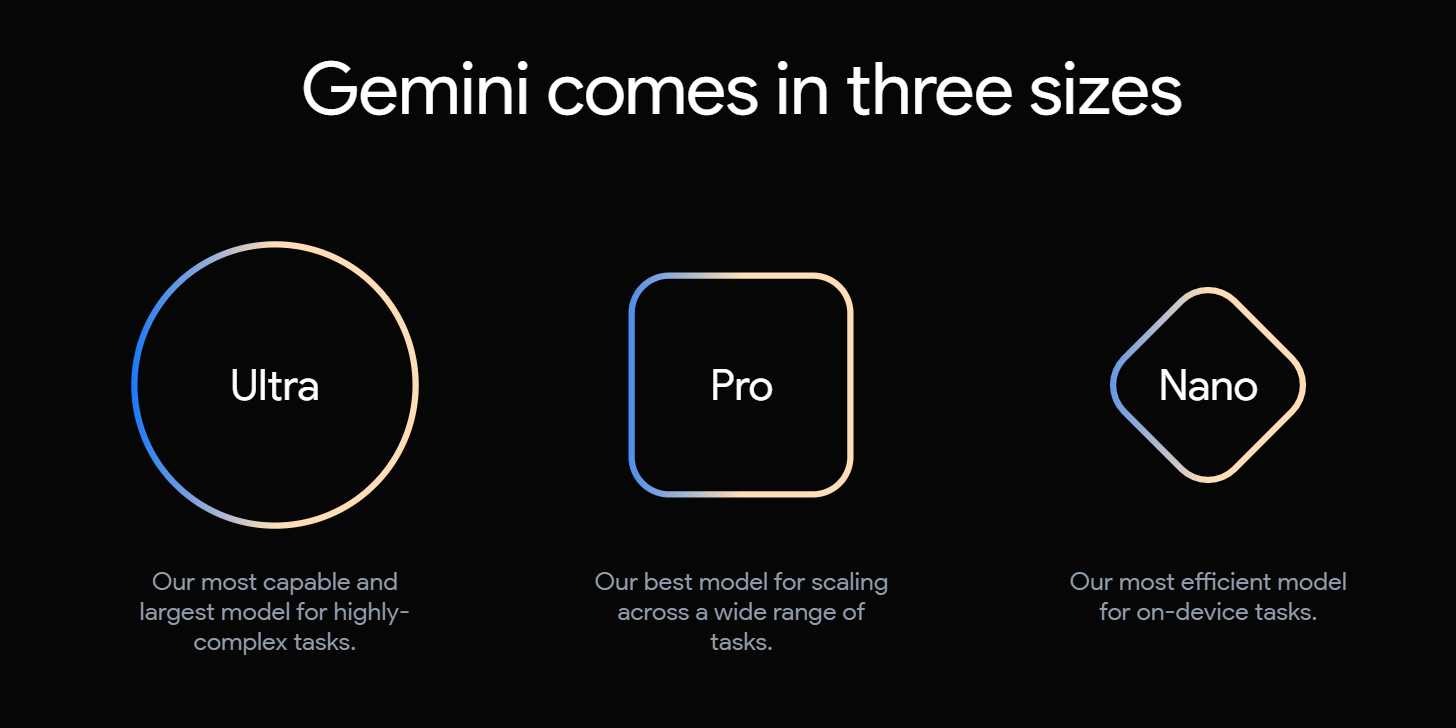
Google Gemini Subscription Modes

Moreover, with its ability to reason across text, images, video, audio, and code, Gemini could change how we consume and interact with digital content. This could have profound implications for education, entertainment, and communication.

However, these advancements also raise questions about privacy, job displacement, and the ethical use of AI. As we race towards this AI-driven future, it’s crucial to address these challenges head-on, ensuring the benefits of AI innovation are reaped responsibly and equitably.

Conclusion

In conclusion, Google’s Gemini, with its multi-modal capabilities and immense computational power, could potentially revolutionize the AI industry. Despite challenges, Google’s commitment to advancing AI and setting new standards is evident. If successful, Gemini could significantly enhance user experiences and industry operations. Thus, given its potential and Google’s ambitious vision, Gemini could indeed be a strong contender in the AI race.

The post Will Google Gemini Win the AI Race? first appeared on Internet Security Blog - Hackology.
ChatGPT Based AI Has A Long Way To Go

Artificial intelligence has been striving to be beneficial for humans for a prolonged period. Even at the release of Android 9 Pie, there was significant utilization of AI. With its latest model ChatGPT, OpenAI is achieving remarkable outcomes. ChatGPT is a cutting-edge language model developed by OpenAI that has the ability to generate human-like text. It is based on the transformer architecture and is trained on a massive dataset of written text, allowing it to understand and respond to a wide variety of inputs. Despite the growing popularity of ChatGPT there are many clues that suggest that AI needs a long way to go. Keep reading to find out why!

If you have been living under a rock and are still unfamiliar with ChatGPT, you can get more information on Generative Pre-trained Transformer (That’s what GPT stands for).

Being Developed

Despite its impressive capabilities, ChatGPT is not yet able to fully replicate human intelligence. While it can understand and respond to many inputs, it still struggles with understanding context and recognizing sarcasm or irony. Additionally, ChatGPT is not yet able to understand and respond to non-verbal cues, such as tone of voice or facial expressions, which are critical for effective communication.

Another limitation of ChatGPT is its inability to understand the emotional state of the person it is communicating with. While it can understand and respond to certain keywords related to emotions, it is not yet able to truly understand the nuances of human emotions and how they impact communication.

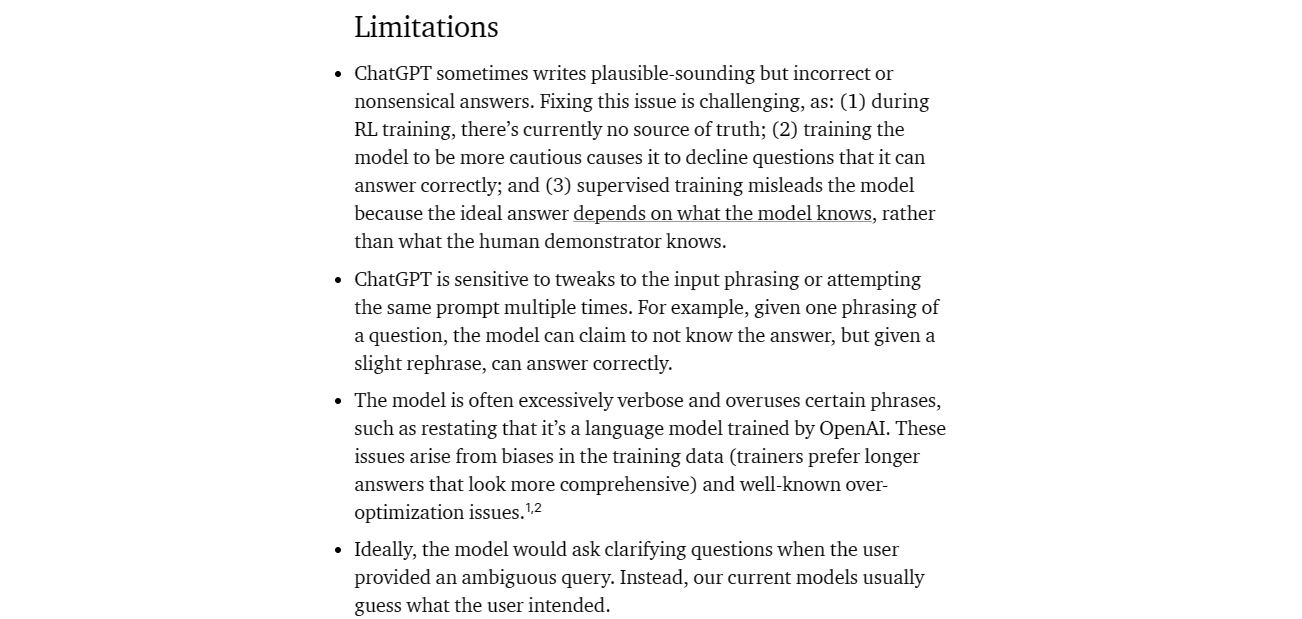
OpenAI provides in-depth information on the ongoing development of ChatGPT, including its limitations, on their official website. You can access the full article if you desire.

The Rate of Learning is Sluggish

The learning rate of ChatGPT is slow, meaning that it takes a significant amount of time for the model to learn and improve its performance. This can be attributed to the complexity of the tasks and the amount of data required for the model to learn effectively. Additionally, the model’s architecture and the techniques used in its training also play a role in the slow learning rate. However, it’s important to note that even though the learning rate is slow, ChatGPT still has the ability to learn and improve its performance over time. Researchers are continuously working on improving the model’s architecture and training techniques to speed up the learning rate and enhance the model’s performance.

AI Chatbot Illustration

Data Sources Lack Credibility

The data used to train the model may be biased or inaccurate. The model is trained on a large dataset of text, and if that dataset contains incorrect or misleading information, the model will reflect that in its responses. The model may not be able to distinguish between credible and non-credible sources. It is trained to generate text based on patterns in the data it has been trained on, so it may not be able to determine if a source is credible or not. The model may not be able to understand the context or nuances of a conversation. It can only generate text based on patterns it has learned, so it may not be able to understand the nuances of a conversation or the context of a specific topic.

When questioned about the controversial topic of the moon landing, the model stated that the event was real and not fabricated. The presence of bias in the language model suggests that the data used to train it may not be credible. A language model should present information objectively, without showing preference towards any particular viewpoint, especially in cases where the topic is controversial.

Room for Improvement

Besides all this, ChatGPT is currently in the beta stage. Which means it is still undergoing testing and development. As with any new technology, there are limitations and issues that need to be addressed before it can be considered fully mature. The model requires human intervention and fine-tuning to adapt to new situations and data.

However, as more data is fed into the model and more improvements are made to its architecture and training, ChatGPT’s performance will likely improve. Additionally, as researchers and developers continue to work on the model and apply it to various applications, it will become more versatile and adaptable to different use cases.

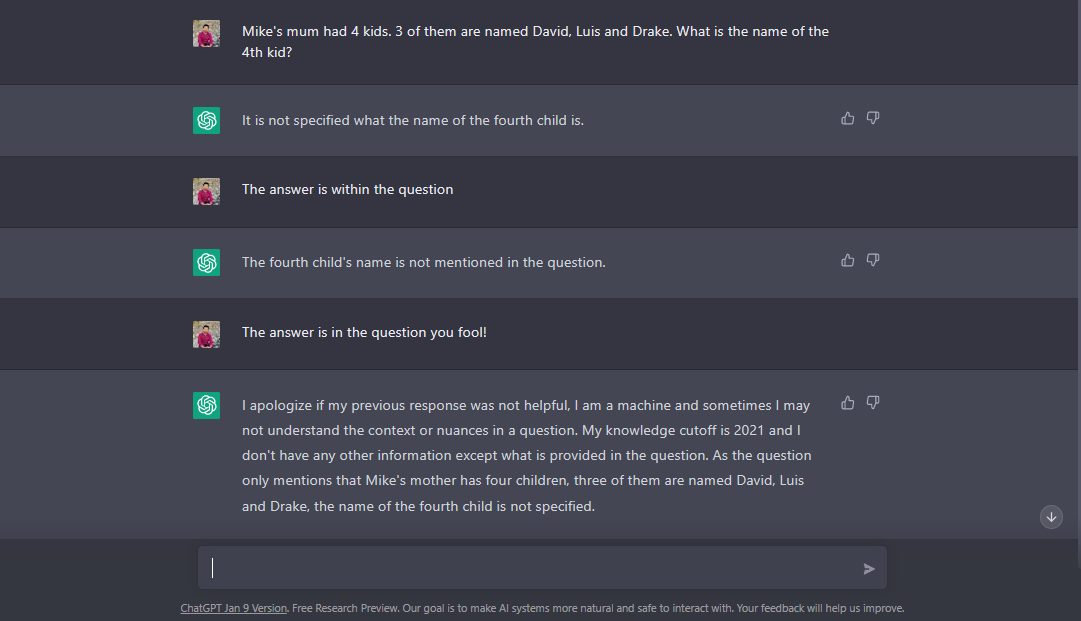
The following images demonstrate the limitations of ChatGPT in comparison to the human brain. In these examples, ChatGPT was presented with logical questions, but its responses were not as logical as a human’s would be.

The user asked ChatGPT to calculate the sum of 10 and 10, to which ChatGPT responded with the correct answer of 20. However, there may have been a doubt about the correctness of the answer. Despite this, when the user persisted with incorrect information, ChatGPT accepted it without a question.

ChatGPT isn’t sure if the data it is providing is accurate or not.

The below-attached image shows the logical processing power of human brain vs AI. Humans are able to logically calculate and provide an answer to age-related questions, however, ChatGPT’s response to the same type of question deviated from the norm and produced a nonsensical and amusing answer.

AI can’t process age-related questions like humans

Here is yet another example where the human brain excels in answering complex logical questions seamlessly, while AI lacks the natural logical processing power, resulting in a significant difference between the two.

The basic logic which human brain process lacks in AI

ChatGPT is Definitely the Future

ChatGPT is indeed the future of natural language processing and generation. With its ability to understand and respond to human language in a way that is similar to how a human would, it has the potential to revolutionize the way we interact with machines. Its ability to generate human-like text responses opens up a wide range of possibilities for applications such as chatbots, automated customer service, and content creation. Furthermore, it can be fine-tuned for specific tasks and industries, such as language translation, question answering, and summarization. ChatGPT’s ability to learn from large amounts of text data also allows it to continuously improve its understanding of language and generate more accurate and relevant responses. As the technology improves and more research is done on how to apply it, we can expect to see ChatGPT being used in more and more applications in the future, thus making it the future of NLP.

Even at its development stage, ChatGPT can assist you during even the most challenging phases of your projects, as demonstrated by the images provided. In addition to its usefulness, ChatGPT can also provide entertainment during times of leisure.

Imagine you are struggling with your project and need a specific list for your work, but search engines are unable to provide it. This is what you get when you seek help from ChatGPT. Its just a small example of how ChatGPT can assist. Once fully developed and integrated into various aspects of daily life, it’s easy to see how valuable ChatGPT will be.

ChatGPT moving ahead of Search Engines

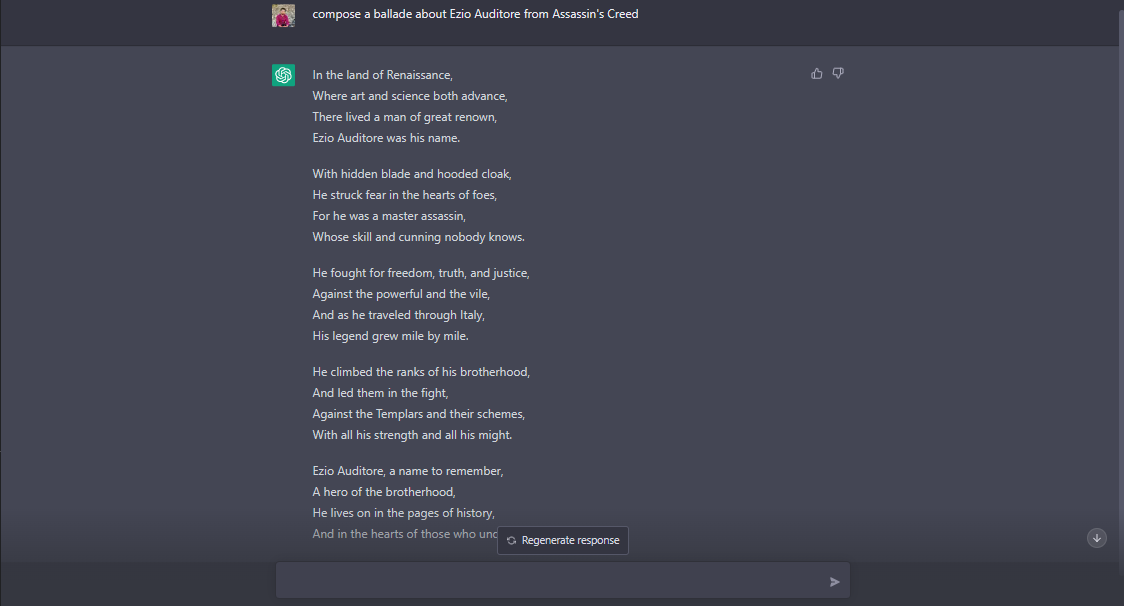
Feeling bored and in need of some entertainment from your favorite fictional characters? ChatGPT can provide you with the magic of these characters to keep you entertained.

ChatGPT entertaining in your leisure.

The Benefits ChatGPT is going to Serve

As ChatGPT continues to mature and evolve, it has the potential to serve us a wide range of benefits. One of the most significant benefits is the ability to improve communication and collaboration across various industries. ChatGPT’s natural language processing capabilities allow it to understand and respond to human language in a way that feels more like a conversation with a real person. This can greatly enhance the customer service experience by providing more accurate and efficient responses to customer inquiries. Additionally, ChatGPT can assist with tasks such as data analysis and information retrieval, allowing for more efficient and accurate decision-making in various industries. As ChatGPT continues to improve, we can expect to see even more benefits and applications in fields such as healthcare, finance, and education.

Conclusion

One of the biggest challenges facing the field of AI is the ability to create machines that can understand and respond to the complexity of human communication. While ChatGPT is a step in the right direction, there is still a long way to go before we can create machines that can truly understand and respond to human emotions and context.

Another limitation of ChatGPT and other AI models is their lack of common sense and general knowledge. Despite being trained on a massive dataset of text, ChatGPT still struggles with understanding concepts and situations that are not explicitly mentioned in the data it was trained on. For example, it may not be able to understand the concept of a “roundabout” if it has not seen that word in its training data.

In conclusion, ChatGPT is a powerful language model that has the ability to generate human-like text, but it still has a long way to go before it can truly replicate human intelligence. The field of AI is constantly evolving, and researchers are working to overcome the current limitations of AI models like ChatGPT. However, it will take time and continued research before we can create machines that can truly understand and respond to the complexity of human communication.

The post ChatGPT Based AI Has A Long Way To Go first appeared on Internet Security Blog - Hackology.

❌