Reading view

There are new articles available, click to refresh the page.

Microsoft Unveils New Bing with AI Integration and Its Amazing

Microsoft Unveiled New Bing with AI Integration. This integration represents a major step forward for the search engine. It allows Bing to better understand the context and intent behind users’ queries and respond in a more conversational and intuitive manner. The new Bing not only offers a faster and more efficient way to find information but also takes user privacy into consideration, implementing strict privacy policies to protect personal information.

New Bing’s chat, as well as the search feature, will allow users to find what they’re looking for faster and more easily than ever before. In this article, we will take a closer look at what makes the new Bing different from other search engines, its privacy protection measures, and its search capabilities. We will also provide a step-by-step guide on how to join the waitlist to gain early access to the new Bing.

How is New Bing Different from other Search Engines?

One of the key ways in which New Bing stands out from other search engines is its ability to understand the context and intent behind a query. This makes it easier for users to find exactly what they are looking for, even if their search terms are a little vague. For example, if a user searches for “best restaurants in New York”, New Bing takes into account the user’s location, personal preferences, and past search history to present a list of the most relevant restaurants in New York.

New Bing also has the ability to understand and respond to users’ follow-up questions. For example, if a user asks a question about a particular topic, Bing can provide an answer and then follow up with additional information or related queries. This ability to engage in a back-and-forth conversation with users helps to further improve the accuracy and relevance of Bing’s search results.

Is User’s Privacy Maintained in New Bing?

When it comes to privacy, Microsoft has taken great care to ensure that user’s personal information is protected when using the new Bing. The company has implemented strict privacy policies and measures to guarantee that user data is only used for the purpose of providing better search results. Microsoft recognizes the importance of privacy in the age of AI-powered services and is committed to preserving users’ privacy. While no technology can be 100% secure, users can feel confident that their privacy is a top priority for Microsoft and that they are taking the necessary steps to protect it.

A Sneak Peek at New Bing’s Search Capabilities

Microsoft has been working to improve Bing’s search algorithms and has added new features that are aimed at making the search experience more personalized and efficient. The new Bing now includes a sleek design and a more intuitive interface, which makes it easier for users to quickly find what they are looking for.

The integration of AI technology into the new Bing search engine has led to a remarkable improvement in its responsiveness to user queries. You will be amazed at the quick and accurate search results Bing will provide to your queries. The integration of AI into the new Bing search engine has elevated the user experience to a whole new level, leaving users thoroughly impressed with the results. A few examples are listed below.

Upon asking “Plan me a workout for my arms and abs with no situps and no gym equipment. It should only take 30 minutes”, the AI-integrated new Bing delivered remarkable and accurate answers to users’ queries besides showing the typical web results.

Microsoft Unveiled New Bing with AI Integration
New Bing Responding to User’s Query about Diet Plan

Similarly, when asked to “Write code to find the Fibonacci sequence in Python,” the AI-powered Bing provided a complete and proper code, instead of just directing users to typical websites.
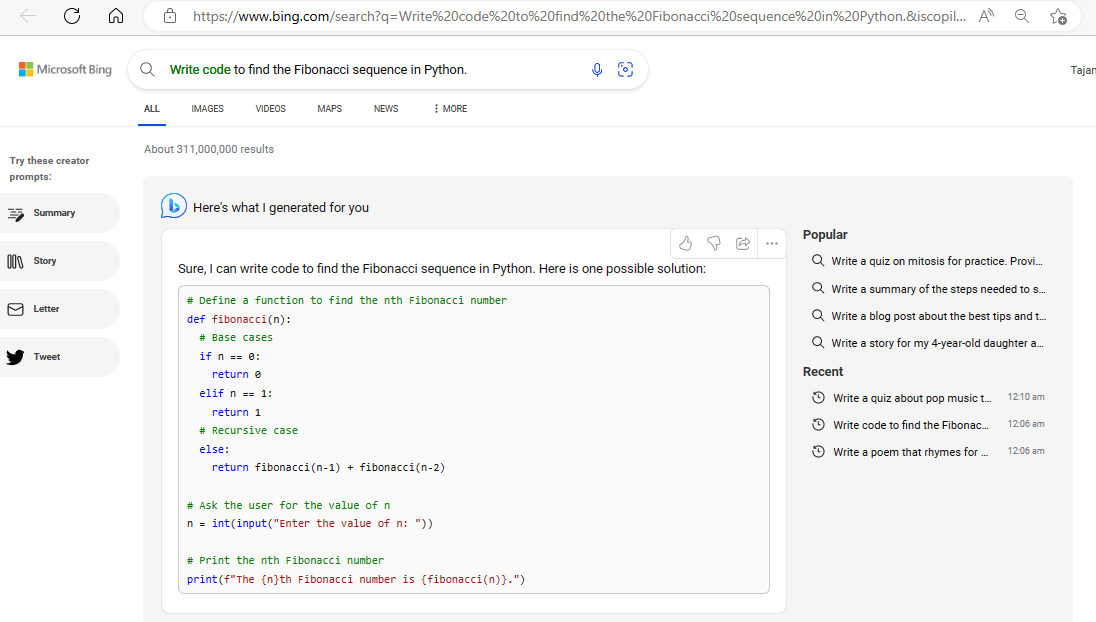
Bing Providing user with the python code in response to their query

Here’s another video showcasing the new Bing and demonstrating how cool and intelligent it is.

New Bing: The Search Engine that Gets You!

The integration of AI into search engines like Bing is going to revolutionize the way we search for information online. New Bing, equipped with cutting-edge AI technology, will be able to offer a more intuitive and personalized experience for users. With its advanced natural language processing capabilities, New Bing will be able to understand and respond to questions in a way that is more human-like and less like a machine. This means that users will no longer have to worry about typing in exact keywords or phrases to get the results they are looking for. Instead, they will be able to ask questions in their own words and receive answers that are both relevant and accurate.

How to Access New Bing?

While the new Bing is not yet publicly available, you can sign up for the waitlist to gain access as soon as it goes live. The process of joining the waitlist is straightforward and requires only a few simple steps, which are as follows:

1. Visit the Bing website and select the chat icon located at the top bar as shown in the image below.
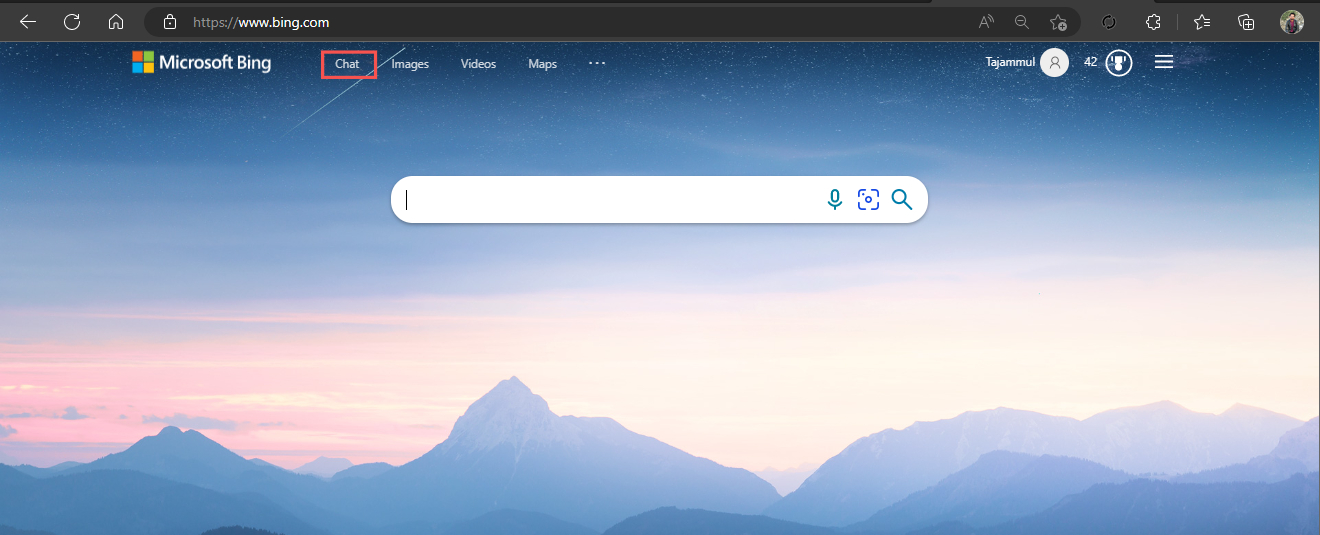
2. Upon following the link, you will be taken to the Bing AI page where a pop-up will appear inviting you to join the waitlist.

3. Simply click the “Join Waitlist” button to complete the process. You will then be added to the waitlist and a message confirming this, “You’re already on the waitlist,” will be displayed as depicted in the image below.
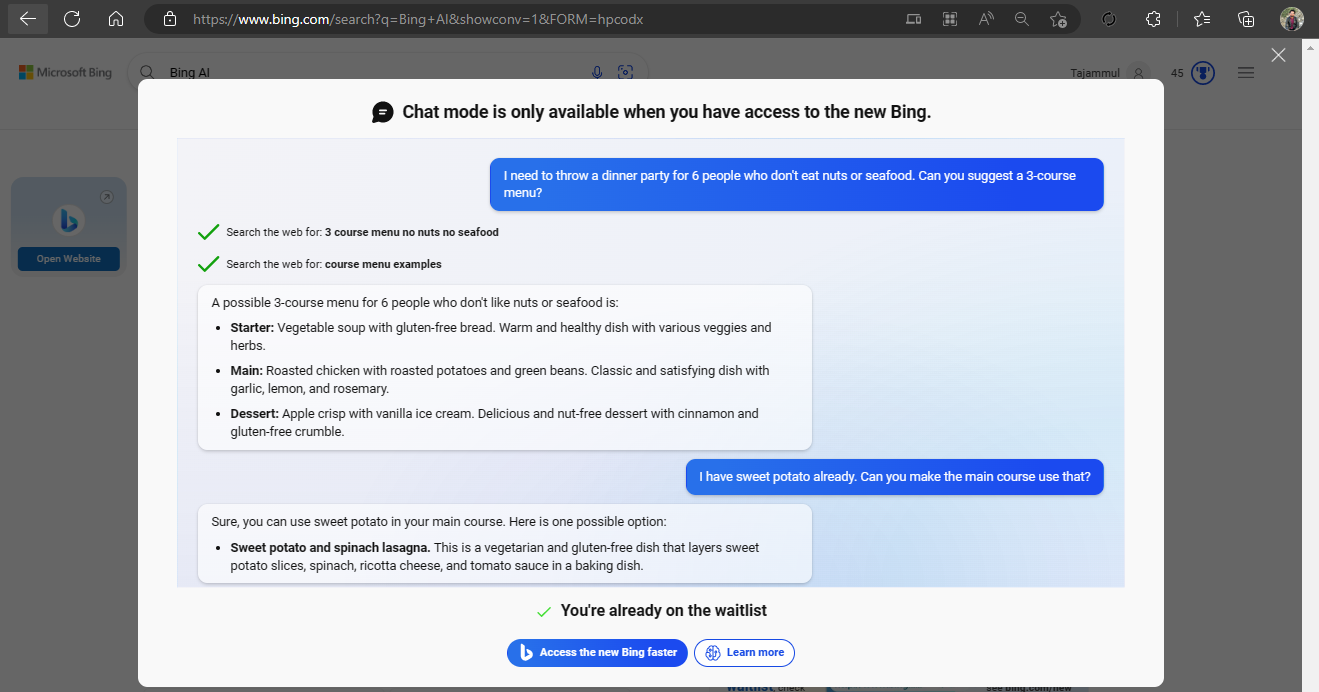
4. Now you are in the waitlist and you will have the advantage of accessing the new AI-powered Bing ahead of the general public and receive all its benefits.

Conclusion

In conclusion, the new Bing powered by OpenAI’s ChatGPT is a major advancement for Microsoft’s search engine. With its AI integration, users can now experience a more conversational and intuitive search. Here, users can pose queries in natural language and the queries are accurately addressed. Microsoft has taken great care to ensure that users’ privacy is protected, implementing strict privacy policies and measures. The new Bing includes a sleek design and improved algorithms, delivering quick and accurate results. Although it is not yet publicly available, users can sign up for the waitlist to gain early access to the new Bing. In conclusion, the new Bing is a testament to Microsoft’s commitment to using AI to enhance the user experience and is sure to be well-received by users everywhere.

The post Microsoft Unveils New Bing with AI Integration and Its Amazing first appeared on Internet Security Blog - Hackology.
How To Write Code With OpenAI’s Latest Tool ‘Codex’

OpenAI is currently generating buzz as its intelligent chatbot, ChatGPT. The Chabot gathers data from the web to answer a wide range of questions. Although its responses may not always be correct. ChatGPT has piqued people’s interest and sparked discussions about the future role of artificial intelligence. Keep reading to know how to use Codex for Software writing?

The company has also been developing Codex, a less well-known service that has the potential to revolutionize the way developers work. This new tool is a ChatGPT-like AI model that can write software. This makes it a powerful tool for developers. In this article, we’ll explore why Codex won’t replace developers and will instead create more demand for their skills.

OpenAI Codex

How Does Codex Work?

First and foremost, it’s important to understand what Codex does and how it works. Codex is a tool powered by the GPT-3 model that has the capability to generate code in multiple programming languages such as Python, JavaScript, and C++. It uses advanced natural language processing techniques to understand the requirements given by a developer and then writes the code accordingly. The tool is designed to save time for developers by handling routine coding tasks such as writing boilerplate code. This allows them to concentrate on more complex tasks.

How To Use Codex For Software Writing?

To use Codex, you need to provide it with the details of the software problem you want to solve. You can do this by describing the problem in natural language. Your instruction should outline the requirements and specify the programming language you want to use. Codex will then generate a code solution based on its understanding and its training data.

For instance, if you were trying to build a web application that displays the current weather, you could provide Codex with the following information: “I want to build a web application that displays the current weather for a specific location. I want to use JavaScript.” Codex would then generate a code solution that implements this requirement. This will include the code for fetching the weather data and displaying it on a web page.

It’s a good idea to review the code generated by Codex. In this way, you can then make any necessary modifications to ensure that it meets your requirements. To use Codex, you may need to have some basic knowledge of programming and software development, as well as experience working with the specified programming language.

Using Codex via API Key

Codex API is a set of APIs provided by OpenAI that allow you to access the functionality of their large language models. With Codex API, you can programmatically perform various language-related tasks. These include text generation, question answering, text summarization, and more.

To use Codex API, you need to make API requests over the internet. This is typically done using a programming language like Python or JavaScript. The API request contains the input data, such as a text prompt or a question, and the API key. The response from the API contains the results of your query, which can be processed and used in your applications.

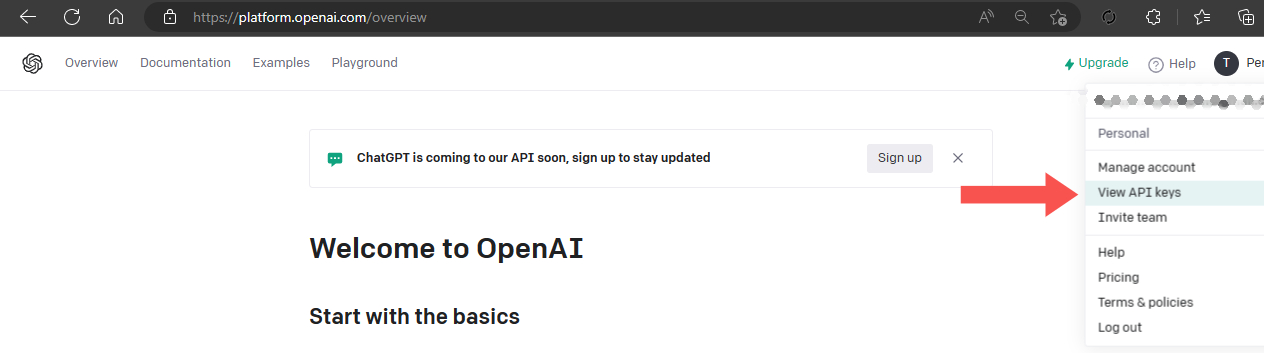
Here is how you can get your API key from OpenAI and can call it in Python.

  1. Login to your OpenAI account, or create one.
  2. In the upper right corner, click on your account profile.
  3. Select View your API keys. (as shown below)
  4. You can copy an existing key or create a new one.
How to use Codex for Software writing?
How to get your API keys?

The next step is to utilize your Codex API key in a programming language. In this article, we will use Python as an example.

To install the official Python bindings for Codex, execute the following command in your Python terminal:

pip install openai

Why Codex Can’t Replace Humans?

Software development is a complex and ever-evolving field. The technology used to build software changes rapidly, and new tools and frameworks are constantly being introduced. Developers have to stay up-to-date with these changes in order to work efficiently. They have to be able to adapt to new tools and technologies. When it comes to Codex, it operates on a pre-programmed set of algorithms and does not have the ability to learn and adapt to new technologies.

Codex requires a significant amount of input and guidance from a human developer to function effectively. It cannot write code without specific instructions and parameters. All this conclude that developers must still be involved in complex projects. That’s the reason Codex will not replace developers any soon. Although we can say, it will augment their abilities and help them work more efficiently.

Conclusion

Codex is not a replacement for the creativity and innovation that developers bring to the table. Software development requires a great deal of creativity and problem-solving skills. Developers must be able to think outside the box and come up with innovative solutions to complex problems. However, Codex is limited by its pre-programmed algorithms and cannot generate creative solutions on its own. Developers bring a unique perspective, problem-solving abilities, and creativity to the table, which cannot be replicated by Codex or any other AI tool. The future of software development is not one of replacement but of collaboration between humans and AI, and Codex will play a crucial role in this collaboration by making the development process more efficient and streamlined.

The post How To Write Code With OpenAI’s Latest Tool ‘Codex’ first appeared on Internet Security Blog - Hackology.

Microsoft Search Engine to get smart with OpenAI. Here is all you need to know.

Microsoft has recently announced its partnership with OpenAI, a leading artificial intelligence research laboratory, to integrate the latter’s advanced chatbot technology into Bing, Microsoft’s search engine. This move is part of Microsoft’s efforts to make Bing a more powerful and intelligent search platform, and it hopes that OpenAI’s chatbot will help achieve this goal. Keep reading below to find out how OpenAI to make Bing Smarter.

One of the key advantages of using a chatbot for search is that it allows users to ask more complex and detailed questions, as they would when speaking to a human

What is OpenAI?

OpenAI is a research organization that was founded in 2015 with the goal of advancing the field of artificial intelligence (AI) in a way that is safe and beneficial for humanity. The organization is dedicated to conducting research and developing AI technologies that are transparent and explainable, with the aim of building trust between humans and AI systems.

One of the key technologies developed by OpenAI is the GPT (Generative Pre-trained Transformer) language model, which is a type of AI that is able to generate human-like text. The GPT model has been used to create a variety of applications, including language translation, content generation, and chatbots. Thus Microsoft has decided to partner with OpenAI’s chatbot which will help their search engine get smarter in terms of complex search responses.

Why does Microsoft partner with OpenAI?

Bing has long been seen as a distant second to Google when it comes to search engines, and Microsoft has been working hard to close the gap. One way it has sought to do this is by improving Bing’s ability to understand and interpret natural language queries. By partnering with OpenAI and integrating its chatbot technology, Microsoft hopes to further enhance Bing’s natural language processing capabilities and make it more adept at answering complex and nuanced queries.

How OpenAI can help Bing be smarter?

The chatbot technology developed by OpenAI is based on machine learning algorithms and natural language processing techniques. It allows the chatbot to understand and respond to user queries in a way that is similar to how a human would. This is achieved through the use of advanced machine learning models that are trained on vast amounts of data, allowing the chatbot to understand the context and meaning of words and phrases.

One of the key advantages of using a chatbot for search is that it allows users to ask more complex and detailed questions, as they would when speaking to a human. This is in contrast to traditional search engines, which often struggle to understand more complex queries and can only provide results based on the specific keywords used in the search.

Is OpenAI really going to make Bing Smarter?

The chatbot’s ability to understand and respond to natural language queries is expected to make Bing a more powerful and useful tool for users, especially when it comes to finding information on more specialized or niche topics. It is hoped that the chatbot will be able to provide users with more accurate and relevant results, leading to a better overall search experience.

In addition to improving the search experience for users, Microsoft also hopes that the integration of the chatbot will help to drive traffic to Bing and increase its market share. By offering a more intelligent and intuitive search experience, Microsoft hopes to attract more users to Bing and convince them to use the search engine over competitors like Google.

You can read about the latest technologies, news, and many more here.

Conclusion

It is worth noting that Microsoft is not the only company to have recognized the potential of chatbots in search. Other companies, such as Apple and Amazon, have also integrated chatbot technology into their respective search engines, Siri and Alexa. These chatbots are able to provide users with more accurate and relevant results, and also offer a more personalized and interactive search experience.

We just hope OpenAI doesn’t start recommending users to download Chrome

Overall, Microsoft’s partnership with OpenAI and the integration of the latter’s chatbot technology into Bing is a promising development for the search engine. It is hoped that the chatbot will help to make Bing a more powerful and intelligent search platform and that it will drive traffic and increase market share for the search engine. Time will tell whether the chatbot will be able to achieve these goals, but there is no doubt that it represents an exciting step forward for Bing and the future of search.

The post Microsoft Search Engine to get smart with OpenAI. Here is all you need to know. first appeared on Internet Security Blog - Hackology.

❌