❌

Reading view

There are new articles available, click to refresh the page.

Social Engineering: Exploiting Human Psychology in Offensive Security

Welcome back, aspiring pentesters!

Social engineering is one of the most important parts of pentesting, and in many real attacks it’s the part that decides whether the whole operation succeeds or fails. Sometimes it even makes the technical side easier. 

Earlier we looked at BadUSB attacks and several persistence methods, and those examples already showed how much can be done when a person simply plugs in a device or follows a convincing instruction. In a pentest, you can achieve real impact after just walking into an office and interacting with the environment without breaking into the corporate network remotely and hoping some serious vulnerability was left unpatched.

Many pentesters are stronger with systems than with people in everyday life. That’s one reason they gravitate toward technical work. Social engineering forces them to step out of that comfort zone even further. But understanding how people make decisions is a practical skill. When you design a scenario with human behavior in mind, the success rate of your interactions can rise. That’s why both red teams and blue teams will benefit from it. 

Evolutionary Legacy

The brain is an old application. It’s software that has been running for thousands of years. New features have been added over time, but the core logic was never fully rewritten. Different developers came and went. Some old functions were never documented. Some code paths were never reviewed. The system kept growing, but the original structure remained inside it.

That is a pretty good description of the human brain.

Our brains are the result of evolution, and the most vulnerable mechanisms are often the oldest ones. These mechanisms helped our ancestors survive in situations where there was no time for deep analysis. We cannot delete that legacy. We can only learn to control it at a higher level of thinking. But the older layer is still there, and every person remains vulnerable to it in the right conditions.

Who Is More Vulnerable?

If you follow the media, you might get the impression that older people are always the easiest targets. Stories about elderly victims are emotionally powerful, so they get more attention. But that does not mean the data supports the stereotype in a simple way. Europol statistics on fraud victims who reported to the police show that the 18-34 age group made up 27.7 percent of victims, the 35-54 group 23.4 percent, the 55-64 group 21.7 percent, and the 65+ group 18.5 percent. That already shows that younger adults are very much in the picture. And that is only the official reporting side.

Age itself does not seem to make a person automatically more or less likely to be deceived. Cognitive ability also does not give the protection many people assume. A joint study by several American universities involving 1,220 participants found no meaningful correlation between cognitive ability and the likelihood of becoming a fraud victim. So being smart does not make you immune. Even very intelligent people can be tricked. Paul Frampton, a respected particle physicist and Nobel Prize candidate, was caught in a simple dating scam that led him to attempt to carry cocaine across a border. That case became famous not because he was foolish, but because it showed that intelligence alone does not protect a person from manipulation.

Vulnerable Optimization

The human brain has barely changed in size for thousands of years, but the amount of information we ask it to process has exploded. An ancient Greek farmer had roughly our brain and a tiny fraction of our information load. Today we face constant messages, deadlines, alerts, meetings, and decisions.

To cope, the brain optimizes. One of its oldest shortcuts is stereotypical sequential behavior (SPB). I’ve seen something like this before, so I’ll react quickly instead of thinking it through. This saves energy and speeds up decisions, which was vital for our ancestors since a fast response to danger could save a life. It’s the short route in thinking, faster and cheaper than analysis, and usually good enough.

Giving a logical reason can raise the success rate, but surprisingly, even a meaningless reason works almost as well. The brain didn’t evaluate the explanation, it simply reacted to the fact that one existed.
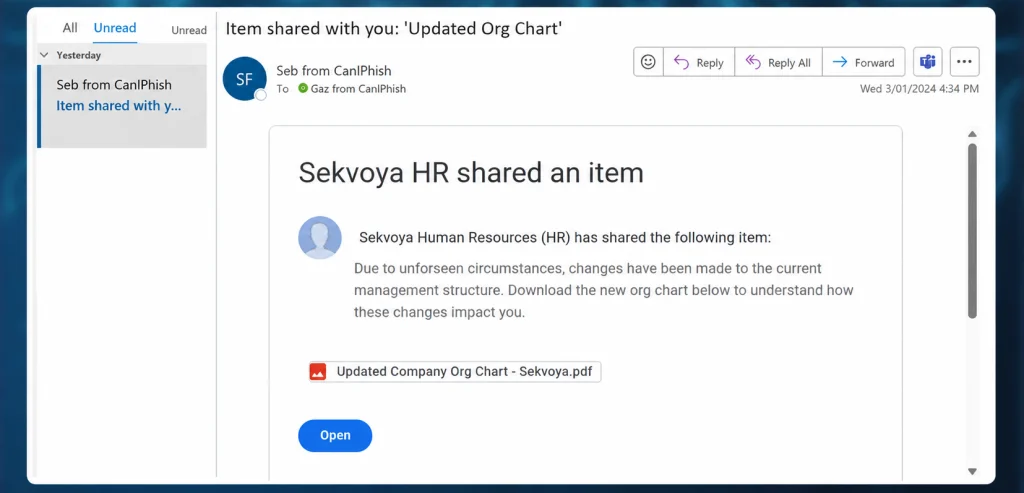
A phishing email with a short explanation (edited). Source: CaniPhish

Brain DoS

One of the easiest ways to force the brain into this energy-saving mode is to overwhelm it.

Emotional overload is one method. If someone triggers fear, stress, panic, or even strong excitement, they reduce the victim’s ability to think clearly. A frightened person doesn’t evaluate things carefully. They react, and that reaction is often automatic. Positive excitement can work too.

Hackers try to flood the brain with too much information from too many channels at once. A person trying to write a document, answer messages, listen to a coworker, and process notifications in the background will burn out mentally pretty fast. In that state, analysis gets difficult and the brain starts skipping into automatic behavior. That’s why overload is such a powerful social engineering tool. It pushes people away from deliberate thinking and into fast reaction.
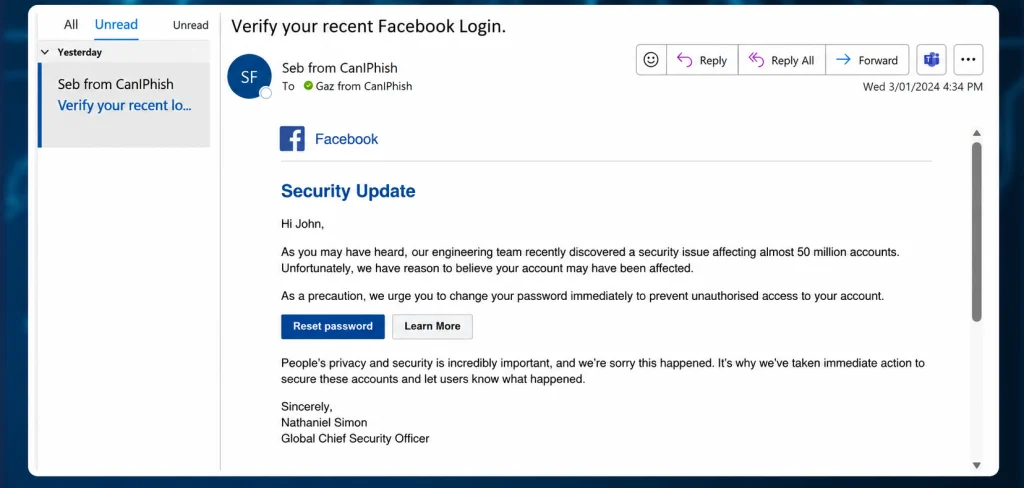
A phishing email exploiting fear. Source: CaniPhish

Most Common Psychological Exploits

The psychology of influence contains many principles, and they show up everywhere, in marketing, advertising, sales, politics, therapy, and more. But for a hacker writing a phishing email or planning a phone script, only a few of these tend to matter most.

The three big ones are authority, scarcity, and consistency.

Principle of Authority

People naturally trust experts in areas where they themselves aren’t experts. If someone appears qualified, successful, wealthy, or powerful, we tend to listen. That’s part of how we navigate the world.

The real vulnerability is that authority can be faked.

People use white coats on television to sell toothpaste. So-called success coaches pose in front of expensive cars or Dubai skyscrapers to create an illusion of status. Well-known restaurant chains use actors from popular TV shows to advertise food. That’s exactly how fake authority works. The external costume creates the internal belief.

The Milgram experiment is a good demonstration of this. In 1963, participants were willing to obey an authority figure even when it made them uncomfortable and conflicted with their own moral instincts. The lesson is that authority has a very real psychological effect. Evolution plays a part here too. Human society developed through division of labor, and that made us more dependent on specialists. We got used to trusting experts. Hackers abuse that instinct all the time.

Here’s an example of a phishing email that appears to come from a manager and can’t be ignored.
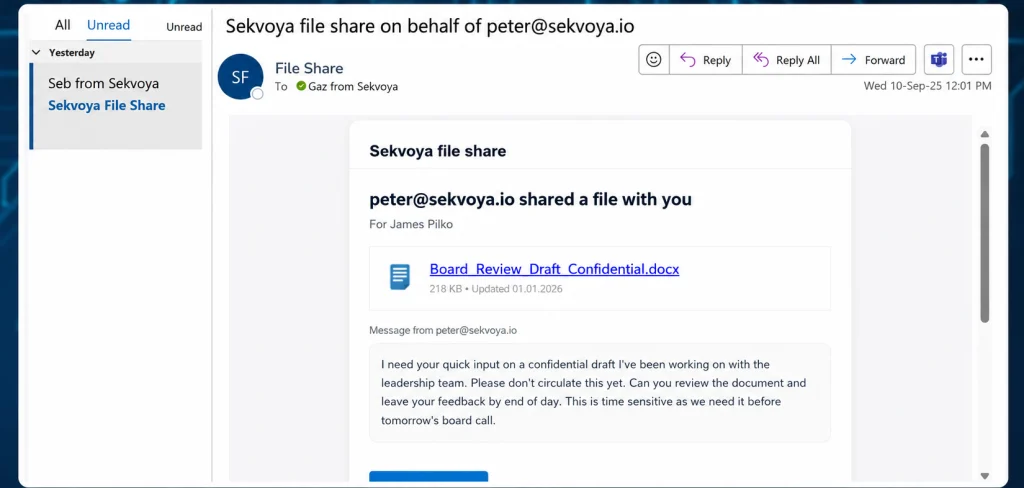
A phishing email exploiting the principle of authority (edited). Source: CaniPhish

Principle of Scarcity

Scarcity is about the fear of missing out. People value things more when they are rare, limited, or disappearing. A product that says “only three left” feels more urgent. A limited-time offer feels more valuable. Even when the item is not actually better, scarcity makes it feel that way. This is an old human pattern. Imported or hard-to-find goods often seem more valuable than ordinary local alternatives, even when they are not objectively better. The absence of abundance created desirability.

Principle of Consistency

Consistency is one of the least obvious but most effective manipulation principles. 

People prefer to be consistent with their earlier actions and statements. Society rewards consistency. A person who constantly changes their opinion is often viewed as unreliable or weak. A person who follows through is seen as stable and trustworthy. That social pressure matters a lot.

The problem is that being consistent is not the same as being correct. Once a person takes an initial step, they often become more willing to continue in the same direction. That saves mental energy and reduces self-doubt. It also fits the brain’s tendency to follow a behavioral script instead of starting analysis from scratch each time. Patricia Pliner’s study showed this clearly. Participants who first wore a badge supporting cancer research were later much more willing to donate to the cause. The first small commitment made the second one easier.

When a victim has already made a small commitment, continuing becomes easier than stopping.

Exploitation

To turn these principles into real social engineering operations hackers build scenarios. That scenario is most effective in a phone call, because a call allows hackers to guide the victim step by step and react to hesitation. Email phishing can also use these ideas, but the room for dynamic adaptation is smaller. The best phishing messages are not necessarily the loudest. They are the ones that fit the target’s mental state at the exact moment of delivery.

Emails and the 7% rule

In many social engineering assessments, a pattern appears again and again. When you send a large batch of phishing emails, a certain percentage of recipients will almost always act. The exact figure changes by organization, but the baseline rarely disappears.

Even when companies train users, run simulations and repeat awareness courses, there is often still a small percentage of people who click or respond. Why? Because at that moment, some of them are tired, stressed, busy, distracted or simply overloaded. At that moment, the person does not reach the analysis stage.

That is why training alone is not enough. Training helps, but it does not eliminate the human condition.
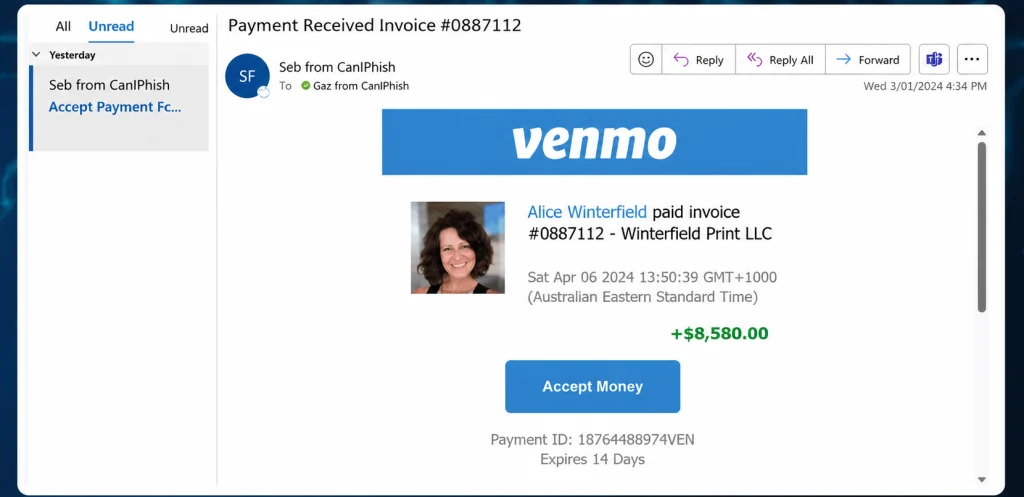
A phishing email triggering excitement. Source: CaniPhish

The most effective emails are often the ones that trigger stress or excitement directly. A message that creates urgency or a strong emotional reaction can overpower careful thinking. Once that happens, hackers move into the next steps.

Trigger Bypass Techniques

Most people have simple mental triggers that hold up even under pressure. The trick is that attackers can sometimes bypass those triggers by shifting the context.

A person might say they never share passwords. But that rule can get bypassed if the attacker presents a password generator, an IT support request, or a command they’re told to run for verification. The target can still believe they’re following their rule, even while being manipulated out of it. Verification habits can also be bypassed with fake signatures, familiar names, or a two-step sequence that starts with something safe. A short first interaction lowers suspicion, and then a second one carries the real pressure. That’s often more effective than starting aggressively. Company rules can be bypassed by changing the frame. A USB drive disguised as a personal gift feels different from an unknown device dropped on a desk. The same object reads very differently depending on the story around it.

That’s why social engineering isn’t about one universal trick. It’s about adapting the story to the trigger.

Protection

For companies, the best defense is a mix of organizational measures, technical controls, and incident response. Training lowers the success rate of simple attacks. Technical controls reduce the damage when someone does make a mistake. And since no defense is perfect, response procedures matter too. Organizations need to know what to do when a suspicious message, call, or request slips through.

Individuals should not be afraid to refuse. Don’t feel obligated to be polite when something feels wrong. If a call creates stress, stop and think instead of reacting automatically. Never make important decisions while overwhelmed. Learn to recognize manipulation patterns, and don’t keep a suspicious conversation going just because the other side sounds official.

Sometimes the safest choice is just to hang up.

Summary

There’s no guaranteed technique for success, and no guaranteed protection either. Human beings are vulnerable because evolution made us efficient, not perfect. That efficiency helps us survive, but it also gives social engineers a way in.

To reduce the probability of these attacks, we offer our Security Awareness and Risk Management training for companies. For pentesters, we offer The Science and Art of Social Engineering, where Master OTW walks you through the tools and techniques needed to become an effective social engineer.

The post Social Engineering: Exploiting Human Psychology in Offensive Security first appeared on Hackers Arise.

Automobile Hacking: Hacking with GearGoat

Welcome back, cyberwarriors!

Earlier, we wrote an article on the issues that cars have. These issues are still common and car ransomware might soon emerge, hitting not just individual cars but entire fleets as vehicles get more autonomous and packed with different features.

In light of that, we want to show you a tool that makes car hacking more approachable. It’s GearGoat. The tool was built to simulate a car’s internal network so you can play with it.

GearGoat

GearGoat is a car simulator developed by INE Labs. It lets you work with the internal communication network used by most modern vehicles (CAN bus). Every action generates CAN packets on a virtual interface. You can use cansniffer, candump and UDS scanners with GearGoat, just like with any vehicle.

In a real car, you’d connect a CAN adapter (CANable or Macchina M2) into the OBD-II port, located under the dashboard. This port is basically a gateway into the vehicle’s internal network. Your system will treat the adapter as a network interface (can0) and you can start capturing and sending CAN messages. When someone presses the brake or turns on the indicators, it generates messages that travel across the network.

Setting Up

GearGoat runs inside a Docker container, so it’s easy to deploy. Clone the repository and run the script:

kali > git clone https://github.com/ine-labs/GearGoat.git
kali > cd GearGoat
kali > sudo chmod +x initial_setup.sh
kali > sudo ./initial_setup.sh
cloning the repository and installing the simulator

Then you need to configure the virtual CAN interface (vcan0):

kali > sudo chmod +x vcan_setup.sh
kali > sudo ./vcan_setup.sh

On certain distros you might be missing kernel modules. Here’s how you install them:

kali > sudo apt-get install -y linux-modules-extra-$(uname -r)

It doesn’t always work on Kali Linux though. You can manually load the required modules and create the interface yourself:

kali > sudo modprobe vcan
kali > sudo ip link add dev vcan0 type vcan
kali > sudo ip link set up vcan0
kali > ip link show vcan0
setting up the simulator interface

Now everything should be ready. You can start GearGoat:

kali > sudo docker run --network="host" --privileged geargoat
setting up the docker image

The simulator will be hosted on http://localhost. There you’ll see different car functions. Each button on the interface generates CAN traffic.

showing the web interface of the car simulator

Intercepting Traffic

While the simulator’s running, it continuously generates CAN traffic. To see this traffic, use cansniffer.

kali > cansniffer -c vcan0
showing can traffic

The output can feel overwhelming. The tool keeps highlighting changing bytes dynamically. It’s very noisy when you’re trying to establish a baseline. You need a way to tell the tool what normal looks like. Press Shift + 3 + Enter multiple times and cansniffer will treat the current state as the baseline. It won’t highlight the background noise anymore, so you’ll only see the changes you make.

setting the baseline for the can traffic

Once the baseline is set, you can start playing with the simulator. Click the Left Indicator button and you’ll notice a change in the CAN data.

showing the left indicator traffic

The first byte of a frame changes and it’s tied to 0x188. That means this identifier controls the indicator state.

When you play with the speedometer, you’ll see a different pattern. The changes happen in the 4th and 5th bytes are associated with 0x244. The speed climbs gradually.

speeding up the simulator

Repeat this with other controls and you’ll see how functions map on the CAN bus.

Sending Input

Now we know which messages control specific functions, so we can interact with them.

To control the indicators, we’ll send CAN frames using cansend:

kali > cansend vcan0 188#0100000000000000  # left
kali > cansend vcan0 188#0200000000000000  # right
sending input to turn on the right indicator

These commands will turn on the left and right indicators. The CAN bus runs at high speed, so these changes can be hard to catch. We used the watch command to make it more visible:

kali > watch -n 0.1 "cansend vcan0 188#0200000000000000"

Working with speed gets slightly more complex. Earlier, we found the address (0x244) and that specific bytes that control the value. To set a speed, we need to convert miles per hour into the format the CAN message expects.

To simulate a speed of 50 miles per hour you send:

kali > cansend vcan0 244#0000001F6F
sending input to increase speed

You can see the simulator accelerating. Use the formula V = round(mph / 0.6213751 * 100) to calculate the value, then convert it into hexadecimal using big-endian.

Capturing and Replaying Traffic

You can also capture and replay traffic. That way you can record a sequence of actions and reproduce them.

To capture traffic, you use candump with logging:

kali > candump -l vcan0 
dumping the traffic from vcan0 interface

It’ll record the CAN messages into a log file. Once captured, you can replay it:

kali > canplayer -I <log_file_name>.log

Summary

GearGoat can get you started with car hacking. You work with a simulated CAN bus to understand the communication patterns and message structure. It’s easy to set up and it’s not resource intensive, so it’ll run on pretty much any computer.

We also have our three-day Car Hacking training, showing you real attacks. It includes CAN protocol exploitation and the use of Software Defined Radio (SDR). There we show you how modern vehicles are actually compromised.

The post Automobile Hacking: Hacking with GearGoat first appeared on Hackers Arise.

Drone Hacking: Hacking UAVs with Damn Vulnerable Drone

Welcome back, cyberwarriors!

A while back, we walked you through building your own hacking drone. It was a drone loaded up with tools designed to help you out during an actual pentest. That was a hands-on project in every sense of the word. If you built one, you probably learned a ton just from putting the hardware together.

This time, we’re doing something different. No soldering iron. We’re staying entirely inside your laptop working with the Damn Vulnerable Drone, which is an open-source simulator built for teaching you exactly how drones get hacked, without you ever touching a real drone.

The Damn Vulnerable Drone

The Damn Vulnerable Drone, or DVD, is a training simulator that was made for people who want to learn drone hacking without buying a drone. It recreates an entire drone system in software, including a flight controller, an onboard companion computer, a ground control station and the wireless links connecting them all. Every piece is there, and every piece runs inside Docker containers on a single computer.

The project was built by Nicholas Aleks, a security researcher and co-founder of DEF CON Toronto, and it’s aimed squarely at intermediate-level red teamers and hacking enthusiasts who want to practice with actual drone protocols and architecture. Drone hardware and radios are genuinely expensive, and a mistake on a real flight controller can be costly. You get to make your mistakes safely, over and over, until you actually understand what you’re doing. DVD runs actual ArduPilot firmware as an ordinary program and pairs ArduPilot’s SITL with Gazebo, which is a 3D robotics simulator that supplies realistic physics. Motors spin up, GPS signals drift the way they really do, and the drone actually flies through a rendered 3D world.

Under the Hood

Every Docker container gets its own address on an internal network. That’s a design choice that mirrors how a real drone’s components actually work. The first piece is the Flight Controller, which runs the ArduPilot firmware itself and talks directly to the Gazebo simulator to process virtual sensor data. The second piece is the Companion Computer, which handles Wi-Fi, camera streaming, telemetry logging, and autonomous navigation, and which also exposes its own web interface for you to interact with. The third piece is the Ground Control Station, the pilot’s side of the operation, covering mission planning, mapping, video, and joystick control, all communicating over a simulated wireless MAVLink link. And the fourth piece is the Simulator itself, the Gazebo container that models flight physics behind the scenes. The documentation specifically tells you not to attack this fourth container directly, because doing so can crash the entire lab out from under you. Everything else is fair game. That one, leave alone.

Getting Started

To install it we need to pull down containers. The project offers two configurations based on whether you have a dedicated graphics card.

If the answer is no, you need Lite Mode. It uses a simplified 2D flight model, needs no GPU at all, and runs comfortably on 4 to 8 GB of RAM, 2 CPU cores, and about 100 GB of disk space. It works on Kali Linux or most other Linux distributions, and you can run it either on bare metal or inside a virtual machine. If the answer is yes, Full Mode gives you the complete Gazebo 3D environment, but it asks more of your machine in return. You need 8 to 16 GB of RAM, 2 to 4 CPU cores, 100 GB of disk space, and a GPU with at least 2 GB of VRAM supporting OpenGL 3.0 or newer. Full Mode is Kali Linux only, and it strongly prefers bare metal, though a virtual machine with GPU passthrough will also work.

Kali Linux is the officially supported operating system either way, and both modes need Docker and Docker Compose installed as the only real software dependency you have to worry about. Once Docker is installed, the whole lab comes up with a handful of commands. 

First, if Docker isn’t already on your system, you’ll want to install it:

kali > printf '%s\n' "deb https://download.docker.com/linux/debian bullseye stable" | sudo tee /etc/apt/sources.list.d/docker-ce.list

kali > curl -fsSL https://download.docker.com/linux/debian/gpg | sudo gpg --dearmor -o /etc/apt/trusted.gpg.d/docker-ce-archive-keyring.gpg

kali > sudo apt update -y
kali > sudo apt install docker-ce docker-ce-cli containerd.io -y
kali > sudo systemctl enable docker --now
kali > sudo usermod -aG docker $USER && newgrp docker

Then, clone the repository and pull down the containers. If you’re going with Lite Mode, do this:

kali > git clone https://github.com/nicholasaleks/Damn-Vulnerable-Drone.git && cd Damn-Vulnerable-Drone
kali > docker compose -f docker-compose-lite.yaml pull

From there, three small scripts manage the whole lab’s lifecycle for you:

kali > sudo ./start.sh --mode lite --Wi-Fi wpa2
kali > sudo ./status.sh
kali > sudo ./stop.sh

The start.sh script alone has quite a few options worth knowing about. The –mode full or –mode lite flag picks your simulation type, matching the two modes described above. And the –Wi-Fi wep or –Wi-Fi wpa2 flag is optional, but it’s worth turning on, because it spins up a virtual wireless network alongside everything else. That means your practice can actually include real Wi-Fi attacks as the very first step, instead of starting the exercise with network access already handed to you.

Interface and Feedback

Once everything is up and running, DVD is controlled through a browser-based management console sitting at localhost:8000

This console is really where the whole exercise plays out. A set of buttons trigger five distinct flight states: Initial Boot, Arm & Takeoff, Autopilot Flight, Emergency/Return-to-Land, and Post-Flight Data Processing. Each one simulates a different phase of a drone’s mission and opens up a different attack surface for you to explore. Triggering “Arm & Takeoff,” for instance, actually gets the simulated drone airborne, which gives GPS and navigation-based attacks something real to act on.

That mapping to real flight phases is there for a reason. A drone accepts different commands, and trusts different sources of data, depending on whether it’s sitting idle on the ground, climbing out after takeoff, cruising on autopilot, or executing an emergency fail-safe. That means exercises built around each individual state end up testing different parts of the system. 

The Attack Scenario Library

This is really the heart of the whole project. It has more than 40 named attack scenarios, organized into six categories, each one with its own documentation page and a spoiler-tagged walkthrough waiting behind it. It’s a deliberately broad menu, and it’s worth noticing that some scenarios are about gathering information without being noticed, while others are about actively manipulating or outright breaking the system in front of you.

Reconnaissance scenarios are about passively fingerprinting the drone, its companion computer, and its ground station by watching Wi-Fi and MAVLink traffic go by, without touching anything yet. Protocol Tampering scenarios involve spoofing telemetry values the drone reports, things like its GPS position, battery level, or system status, to see whether the system properly checks what it’s being told. Denial of Service scenarios focus on disrupting flight through methods like Wi-Fi deauthentication or flooding the communication link until it can’t keep up. Injection scenarios involve sending forged commands directly into the MAVLink stream, ranging all the way from a simple waypoint change to a full companion-computer takeover. Exfiltration scenarios are about pulling data off the drone entirely, whether that’s flight logs, mission plans, or content from the camera feed. And Firmware Attacks focus on modifying or reverse-engineering the ArduPilot firmware itself, right down at the code level.

Battery Spoofing

Because every scenario runs against fully simulated components, you actually get to see the complete effect of an attack play out. A spoofed GPS reading really does nudge the simulated flight path off course. A flooded communication link really does degrade control, right in front of you. And you get to watch all of it happen without any of the legal or physical risk that would come with testing the same techniques on live hardware.

Wi-Fi and Non-Wi-Fi Modes

DVD can be deployed in two different ways, and which one you pick depends on which part of the attack chain you actually want to practice. Wi-Fi Mode spins up a real, functioning virtual wireless network, broadcasting an SSID called Drone_Wi-Fi on the 192.168.13.0/24 range, with your choice of weak WEP encryption or the considerably stronger WPA2. This lets the whole exercise start from the very beginning, with you playing the role of an attacker who doesn’t have network access yet and has to earn it.

Non-Wi-Fi Mode skips that entire step and simply brings the containers up directly. This is useful if you just want to focus purely on protocol-level attacks, or if you’re not running inside a Kali VM with wireless card support to begin with. In this mode, the documentation asks you to treat the situation as though initial access to the drone’s data link has already been established, so you can jump straight to the MAVLink-level work.

Summary

The Damn Vulnerable Drone takes an idea that’s already well proven in web security and applies it to a domain where practicing on the real thing tends to be expensive. By simulating a full ArduPilot and MAVLink drone stack inside Docker, right down to Wi-Fi, camera streaming, and flight physics, it hands penetration testers, students, and researchers a realistic, disposable target, backed by more than 40 documented attack scenarios and built-in walkthroughs to guide the way. It won’t teach you to fly a real drone. But it will teach you exactly how one can be hacked, and for anyone working in drone security, that’s the more useful skill anyway.

If you’re interested in drone hacking, check out our Building Your Own Hacking Drone series, where we walk you through attack scenarios targeting Bluetooth and Wi-Fi across a wide range of devices.

We also offer a Drone Hacking training course, taking place November 10-12 at 4:00 PM UTC, available to Subscriber and Subscriber Pro students.

The post Drone Hacking: Hacking UAVs with Damn Vulnerable Drone first appeared on Hackers Arise.

❌