 Login

[New Threat Trend Data] When Bad Actors Use Reality Against Us

“Is it real?” has become a common question across our digital lives thanks to the rise of AI-generated content.


“Is it real?” has become a common question across our digital lives thanks to the rise of AI-generated content.

The U.S. FBI and the Cybersecurity and Infrastructure Security Agency (CISA) have issued joint advisories warning of election-themed scams targeting voters and spear phishing attacks targeting election officials.


Researchers at Malwarebytes warn that job seekers are increasingly vulnerable to scams as AI enables them to take a “spray-and-pray” approach to job applications.
Users who have automated their job application process are more likely to forget where they’ve applied, and an unsolicited message from a recruiter may seem more plausible. Job seekers can also be more willing to overlook or ignore red flags associated with scams, since they’re anxious to avoid missing an opportunity.


Insights from Attempted Intelligence, Episode 2, hosted by Matt Duren, SVP of AI and data, KnowBe4 and Harlan Parrott, VP of AI innovation, KnowBe4.
AI data centers are one of the most debated topics in the world right now. Some people worry about the energy and water it takes to run them. Others see the foundation for the next wave of AI advances. Both camps have a point.

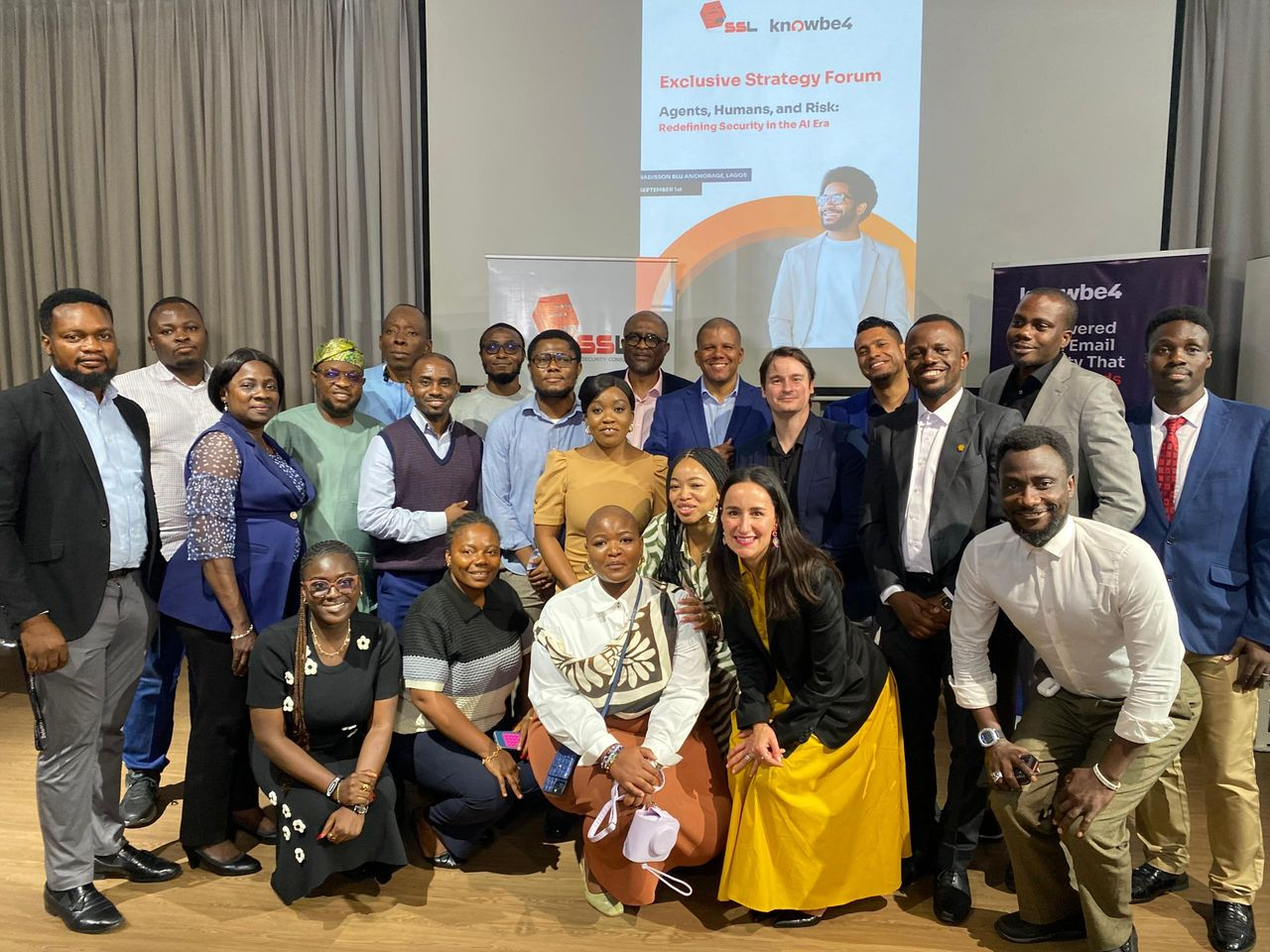
As organizations across Africa adopt AI, automated tools and autonomous systems, the digital threat landscape is changing rapidly. Traditional security awareness training historically focused on bridging knowledge gaps, but today's most urgent challenges are fundamentally behavioral, and they involve more than just human employees.


91% of Americans have been targeted by a scam, and 17% have fallen victim to one, according to a new survey by Consumer Reports. Notably, 20% of respondents said the latest scam they encountered was personalized, indicating that attackers are increasingly using automation and public or leaked information to craft targeted phishing attacks.


A phishing campaign is using AI-themed lures to target employees who operate advertising accounts, according to a new report from Island. The campaign is launched from a phishing platform that poses as a portfolio of AI advertising tools, using branding from Gemini, Claude, ChatGPT, Perplexity, and Muse. The platform’s operator added a fake Muse Ads lure eight days after Meta launched its Muse AI agent.


Ransomware attacks involving data theft have surged by 275% in 2026, according to a new report from Zscaler. Attackers exfiltrated more than 896.2 terabytes of data from victim organizations, more than seven times the amount stolen during the 2023–2024 reporting period.

Lead Analysts: Karthikeyan D, Prabhakaran Ravichandhiran, Jeewan Singh Jalal


At any given moment, there’s an employee somewhere in the world tuning out of a phishing training module that was translated from another language. Every word is rendered correctly, yet the learner still stops paying attention.
In these situations, the translation often gets the blame for not engaging the learner, but the real culprit is design. When training isn’t made for international consumption in the first place, the module is set up for failure regardless of what happens when it reaches the translator.


41% of CISOs said an audio deepfake targeted their organization within the last 12 months, according to a new survey by Gartner. Additionally, 36% of respondents said employees were targeted by deepfake video calls over the past year.
Craig Porter, Director Analyst at Gartner, noted that social engineering and human deception remain at the core of these AI-assisted attacks.


Agent Risk Manager, KnowBe4’s AI agent security product in the KnowBe4 Platform, integrates with the Claude Compliance API to help organizations monitor Claude activity and detect risks in real time.


Scammers are using AI to generate phishing pages that impersonate antivirus products, according to Malwarebytes.

Lead Analysts: Shikhar Dalela, Maddhav Grandy and Jeewan Singh Jalal


Researchers at Microsoft are tracking an AI-assisted phishing campaign that sent over a million emails attempting to conduct payment diversion scams.


A massive phishing campaign is using invisible Unicode tag characters to evade security filters, according to researchers at Microsoft. This technique, known as “ASCII smuggling,” has grown popular over the past year for launching AI prompt injection attacks, but the same tactic can hide suspicious text in emails.


AI tools are drastically improving the speed of the reconnaissance stage of targeted social engineering attacks, according to researchers at ESET. Attackers can use these tools to trawl the internet for publicly available information about potential victims, and incorporate this information into personalized spear phishing attacks.


Threat actors are increasingly leveraging AI hallucinations to plant phishing links and other malicious content in AI output, IEEE Spectrum reports. Large language models (LLMs) sometimes fabricate information, including web domains, when answering users’ questions. Attackers are registering these hallucinated web domains to host phishing pages.


A recent survey from Experian found that 60% of companies report fraud losses that are “somewhat or significantly higher” than in previous years, with a majority of respondents citing AI-generated phishing attacks as their top AI-related fraud concern.


A new phishing kit is using generative AI to fully automate voice phishing (vishing) attacks, according to researchers at Group-IB.
The phishing platform, called “Balonx,” includes a module dubbed “CallFlow” that the researchers say “represents a fundamental evolution” in the phishing-as-a-service market. This module uses four commercial AI services to conduct the attacks: OpenAI’s GPT-4o-mini, ElevenLabs’s AI voice generator, OpenAI Voice, and OpenAI Whisper.

