❌

Reading view

There are new articles available, click to refresh the page.

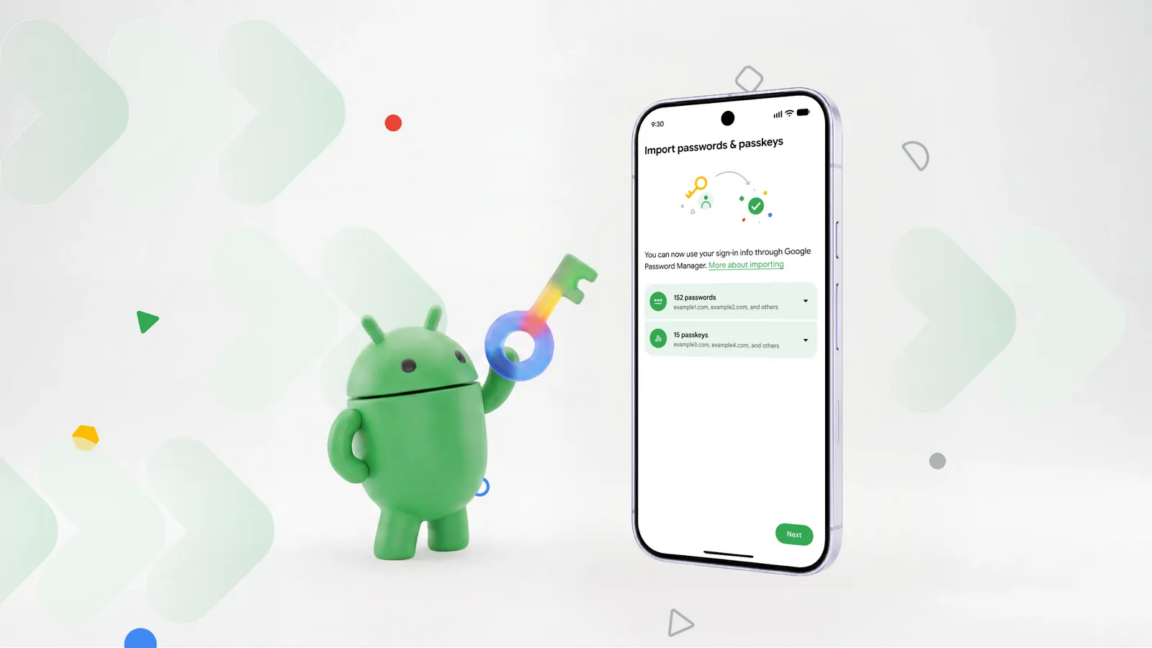
Android can now securely migrate your logins between password managers

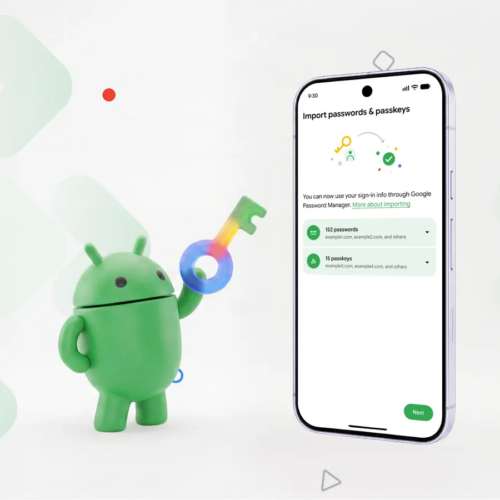
As longer, more complex passwords have become a necessity, remembering all those strings of numbers, letters, and special characters has become nearly impossible. Password managers can solve that problem, but what happens when you want to move to a different login organizer? Sure, you could manually type all your logins into a new app, but now Android can do that for you without the tedium.

Google designed the new login transfer process to happen entirely on your phone, so you need the corresponding apps installed with your credentials synced. To start the move, you'll have to find the import option in the app you want to use. The location of that feature will vary, but in Google Password Manager (built into Android), it's near the top under the settings tab.

The import option in Google Password Manager will plug in to the new migration system, while export still just creates an unencrypted CSV with your passwords that can be dumped into any app. It will be similar in other apps, so make sure to start the process in the app you want to use. Currently, this works in Google's app, 1Password, Bitwarden, and Dashlane.
Read full article

Comments

Β© Google

Apple's long-rumored foldable becomes reality with the $2,000 iPhone Duo

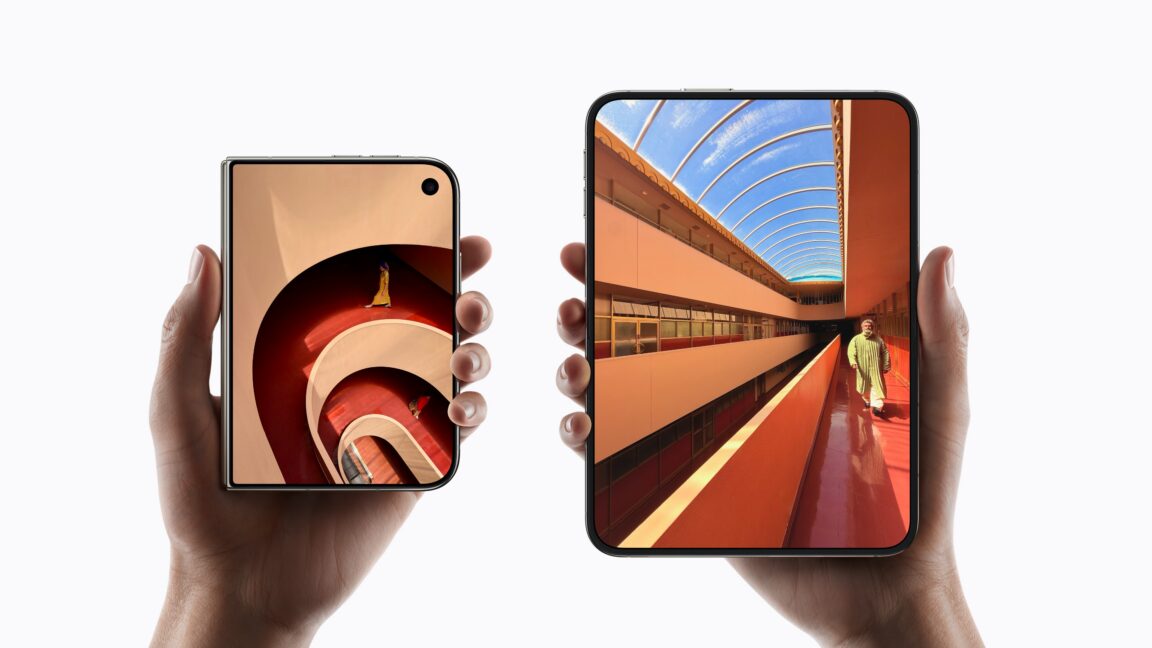
Apple ended today's hardware event with one of its classic "One more thing" reveals. Some smartphone makers have been offering foldable phones for the better part of a decade, but Apple has now joined the fray with the iPhone Duo after years of speculation.

This device is undeniably the most capable iPhone ever, as well as the most expensive. It's not as spendy as many expected, though, starting at $1,999. That's in the same range as foldables from Google and Samsung.

An iPad in your pocket

The iPhone Duo would have looked like a totally fresh take on the foldable design a few months ago, but Samsung has made waves with the Galaxy Z Fold 8. Like that phone, the iPhone Duo has a wider, shorter chassis. Apple prefaced its reveal with a denunciation of foldables that open into a square aspect ratio. While that shape can accommodate two portrait apps side by side pretty well, it's bad at almost everything else, stretching single apps awkwardly and leaving videos with gargantuan black bars.

Read full article

Comments

Β© Apple

Google complies with EU rules for travel searches, says the new results stink

As the world's largest search engine, Google is often a target of Europe's Digital Markets Act (DMA), which seeks to rein in Big Tech. The European Commission hit Google with a hefty 460 million euro ($543 million) fine in July for preferring its own services in searches for travel and shopping. Google has now made changes in accordance with the European Union's wishes, but it claims the result is a massive reduction in search quality.

If you don't live in Europe and perform a search for, say, hotels, Google will helpfully provide myriad sponsored links, booking recommendations, and price-comparison tools in its results. The problem is that this content isn't organicβ€”Google includes links and offers contingent on its business interests. To get to the regular search results for these types of lucrative searches, you have to scroll way down the page. Companies that partner with Google can get more exposure, but the European Commission says this creates an unlevel playing field.

"To comply with DMA requirements, we're making significant changes to Search in Europe," Google's Nick Fox told Reuters. "These changes ​degrade the user experience for ​Europeans, boosting online intermediaries ⁠at the expense of local businesses and removing helpful features people rely on every day."

Read full article

Comments

Β© Aurich Lawson

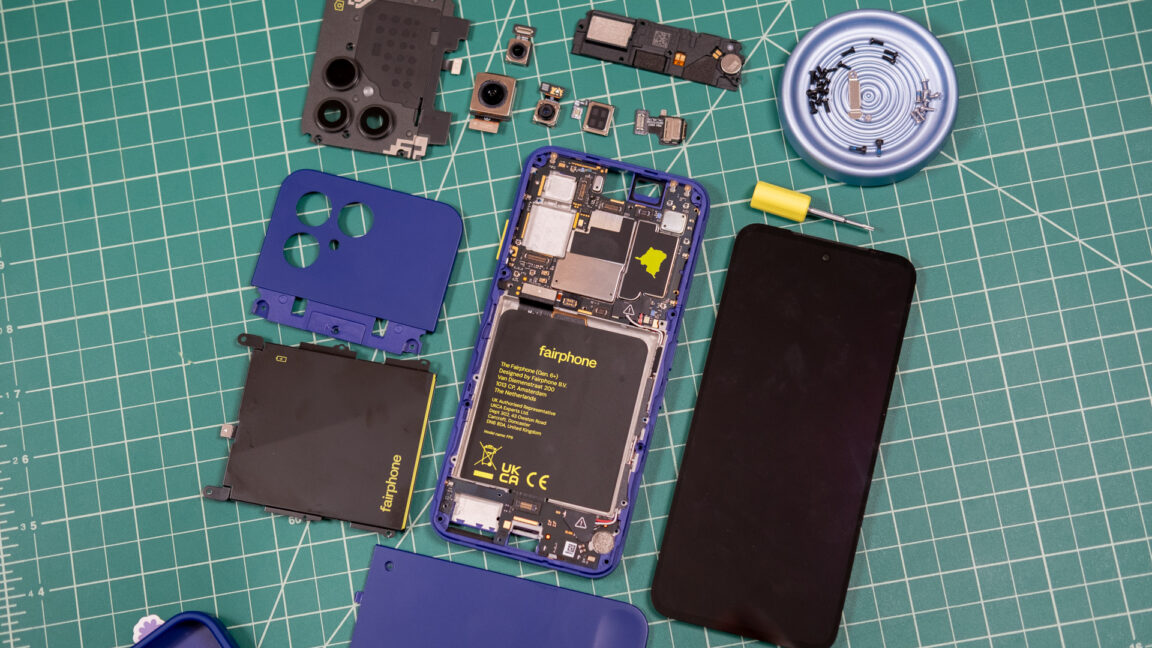
Nearly impossible? How Fairphone built the ethical, repairable Fairphone Gen 6+

Smartphone longevity didn't used to matter. In the past, before you could wear out or break a phone, there was always some shiny new thing to buy. Today, we expect our smartphones to go the distance, but they've also become less repairable and, in many cases, more fragile. Fairphone, a Dutch smartphone maker that has just entered the US market, thinks about phones differently.

The new $650 Fairphone Gen 6+ is designed both for longevity and easy repairability. There are trade-offs to this approach if you're used to the standard glass and aluminum sandwiches filled with glue, gaskets, and teeny-tiny screws. But the drawbacks could be worth it for the right buyer. Fairphone CTO Chandler Hatton told Ars that Fairphone's goal is to provide a compelling mobile experience while also enabling the user to "fully own" their device. At the end of the day, this is what a lot of people say they want in a smartphone.

Take it apart, put it back together

These days, Google, Samsung, and Apple support phones with software updates for the better part of a decade, but will the hardware last that long? And what happens when it needs a repair? You may be out of luck or out a lot of money, but Fairphone prioritizes the self-repair experience.

Read full article

Comments

Β© Ryan Whitwam

Google releases Gemini 3.8 Flash, its third Flash model in six weeks

Google hasn't released a frontier-level Gemini Pro AI model since early 2026, but it sure loves rolling out new Gemini Flash variants. Today, Google is announcing its third Flash model release in just six weeks, making it more likely that we'll never see the promised Gemini 3.5 Pro. But no matter, says Google, because Gemini 3.8 Flash is its best reasoning and coding model yet.

Gemini 3.8 Flash comes in two variations. There's the standard Flash, which Google describes as a "workhorse" model that's good for anything from agentic tasks to software development. Then we have Gemini 3.8 Flash Cyber, which runs on the same foundations but has been tuned for vulnerability detection and mitigation.

For developers, Google has the same pitch as it did for the 3.7 Flash release just a couple of weeks ago. API access to the model is available at an "introductory rate" through the end of the year: $0.75 per million input tokens and $3.75 per million output tokens. The regular price will be $1.50 / $7.50, but it's likely there will be new models available long before the price changes. Google probably sees the lower prices as a necessity given that other AI labs have recently dropped token pricing to keep increasingly wary businesses engaged with AI tools.

Read full article

Comments

Β© Aurich Lawson

US court rules Google will not have to sell ad exchange after losing antitrust case

A US federal judge has sided with Google, ruling that the company will not have to sell its online advertising exchange (previously known as AdX). The US Department of Justice (DOJ) sought this remedy in the long-running ad tech antitrust trial, which Google lost in 2025. However, the remedies imposed upon Google for that loss are shaping up to be minimal.

In this case, the DOJ and a coalition of states sought to prove that Google leveraged its immense market power in online display ads to reduce the reach of competitors. Government lawyers argued that Google had "rigged" ad auctions to give itself an advantage. While the court agreed that Google illegally locked publishers into using its exchange, it did not agree that Google had broken the law when it came to the tools used by advertisers.

Despite the mixed ruling, the DOJ argued during the remedy phase that forcing Google to sell its ad exchange, which facilitates connections between ad buyers and sellers, was the best way to level the playing field. But that won't happen. While the ad exchange represents a relatively small part of Google's revenue, forcing the company to sell may have sent ripple effects through the rest of its ad business. It would also have been a powerful message to Big Tech firms, which have successfully knocked back a recent wave of antitrust cases.

Read full article

Comments

Β© Ryan Whitwam

New Android Drop adds remembered items in Find Hub, makes anti-nausea dots official

Let's be frank: Some of Google's recent Android feature Drops have been duds, offering little more than an expansion of Gemini summaries and chat functions. The new September Drop does have some Gemini flavor, but there are non-AI goodies, too. Your messaging threads are getting prettier and more useful, and those nifty Motion Assist dots that began appearing last week are rolling out widely. And even the Gemini expansion is not without utility.

Since this is an Android Drop rather than a Pixel Drop, these features are coming to a wider range of devices. The OS version does matter, though. If you're on Android 16 or higher, you can now tell Gemini to log the location of items that don't have a tracker tag attached. Just tell the AI where you put something, and include a photo if you like.

Remembered items in Find Hub

This information will be logged in Find Hub, which has thus far been used for locating phones, earbuds, and tracker tags. You can ask Gemini to recall that information or simply check Find Hub yourself the next time you forget where you put that item.

Read full article

Comments

Β© Ryan Whitwam

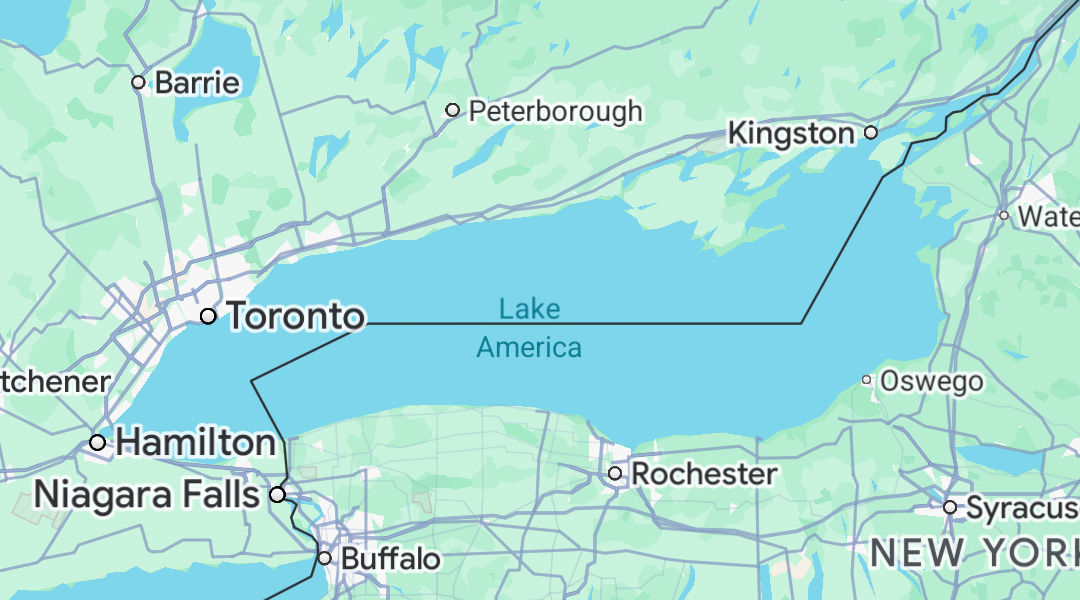
Google Maps renames "Lake Ontario" to "Lake America" even faster than US government

Trade talks between the US and Canada broke down last week, leading to a wave of tariffs and retaliatory tariffs. US President Donald Trump also fell back on an old favorite to needle his opponents, signing an executive order on Thursday to rename Lake Ontario to "Lake America."

The body of water, which straddles the US-Canada border, gave its name to the Canadian province rather than the other way around. Regardless, the US government now refers to this great lake as Lake Americaβ€”or it will soon. Official US government maps have yet to be updated, but Google wasted no time adopting the new, Trumpian name.

Google began rolling out this change for US users on Saturday. The company posted a brief update on its Google Maps blog, noting that it follows the US Geographic Names Information System (GNIS) for its maps, so the company implies it had no choice but to rename Lake Ontario in Google Maps, which is the most popular mapping platform in the US by a wide margin.

Read full article

Comments

Β© Google

Google announces Gemini 3.5 Transcribe for AI-powered speech-to-text

While we wait (possibly in vain) for Gemini 3.5 Pro to launch, Google is releasing a different model in the 3.5 branch. The company has announced Gemini 3.5 Transcribe, an AI model designed to streamline voice input by editing out "ums" and corrections, outputting polished AI text. This model already powers the Gboard "Rambler" feature on the Pixel 11, but it's about to appear throughout the Google ecosystem.

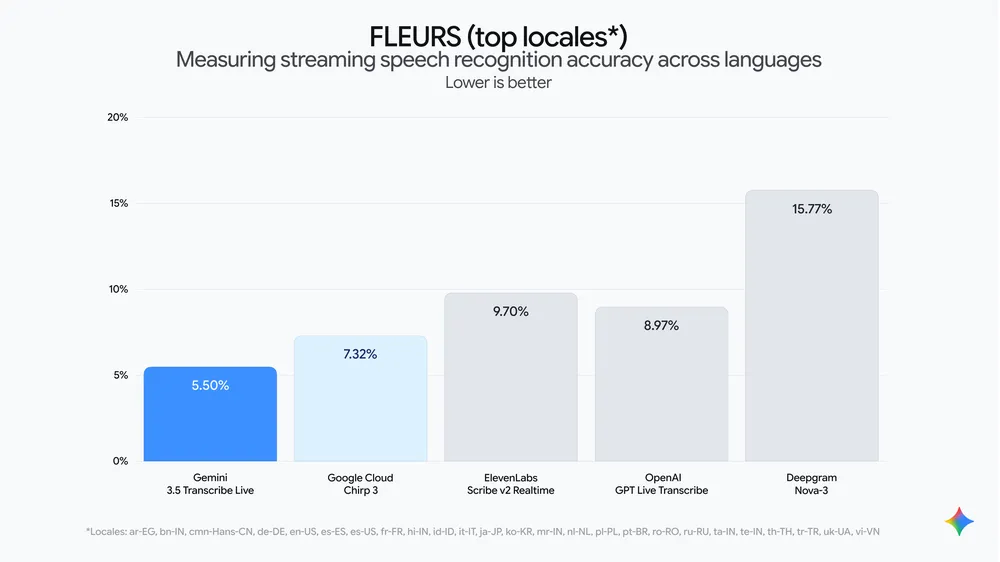
According to Google, Gemini 3.5 Transcribe is much faster and more accurate than its previous voice-to-text engine, known as Chirp 3. The new AI model should be about 70 percent faster from voice to final transcribed text, and the live-speech error rate has dropped to 5.5 percent. That's only a little better than Chirp 3, which Google measures at 7.32 percent. Still, it's a pain to fix typos when you're using voice input, so any improvement here is beneficial.

Credit: Google

Read full article

Comments

Β© Aurich Lawson

Google's anti-nausea Motion Assist dots finally rolling out on Android

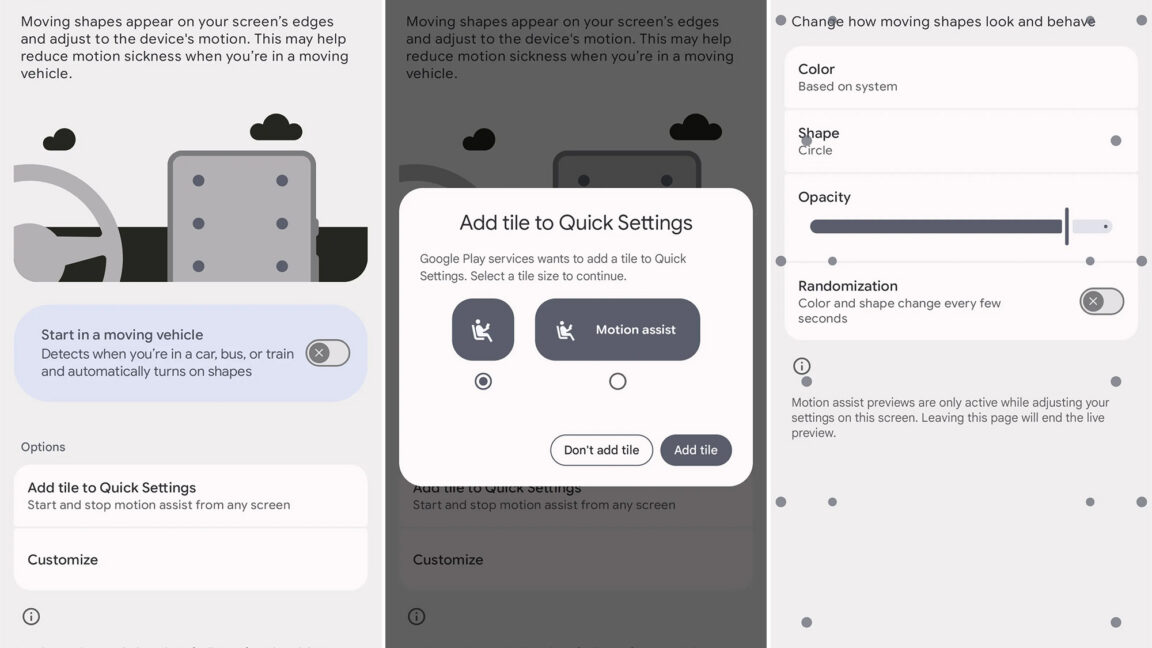
Some people are cursed with motion sickness, which can make it impossible to read or use a phone in a moving vehicle without suffering waves of nausea. There's a surprisingly simple trick that can make smartphones usable in such situations. Apple deployed it on the iPhone a couple of years ago, and now Google's own version is finally coming (slowly) to Android.

Motion sickness is caused by a disagreement between what your inner ear senses and what your eyes see. If you're looking at a book or a screen while in a car, the sensory mismatch can lead to a pretty unpleasant time. As part of iOS 18 in 2024, Apple released a feature called Motion Cues that places a network of moving dots on the screen to alleviate motion sickness, and it seems to work surprisingly well. Google's version is similar, but it's called Motion Assist.

Google began testing Motion Assist back in 2024, but it never expanded beyond an internal test until now. Android Authority reports Motion Assist is appearing on Pixel phones running Android 17, but there's no app or update you can install to get the featureβ€”it's being delivered by Play Services as part of a staged rollout.

Read full article

Comments

Β© Android Authority

Motorola's GrapheneOS phones will launch in 2027 priced higher than Pixels

Several months ago, Motorola and the makers of GrapheneOS announced a team-up that would expand support for the privacy-centric OS to beyond Google's Pixel phones. The announcement, however, was bereft of details. Now, the creators of the OS have taken to Mastodon (naturally) to provide an update. Moto's GrapheneOS phones are on track to launch in 2027, but they'll cost a pretty penny.

The upcoming Moto devices won't ship with GrapheneOS, but they will be fully supported by the project with help from Moto itself. So far, only Pixel phones have met GrapheneOS's strict hardware requirements to ensure the highest level of security and privacy. The software, which is based on Android, includes features like enhanced memory protection, granular network permissions, customizable app sandboxing, and a duress code that can be used to wipe your phone. (That last one got an activist charged with a felony earlier this year after he used it to delete his data during a customs interrogation.)

According to the GrapheneOS team, the upcoming Moto phones will be premium flagship devices. The team expects pricing to be even higher than Pixel phones, which is saying something. The current Pixel lineup starts at $900 for the base model Pixel 11, a $100 increase from last year. The Pixel 11 Pro XL price has gone up to a whopping $1,300 this year.

Read full article

Comments

Β© Motorola

❌